Boba Fett – Vintage SW
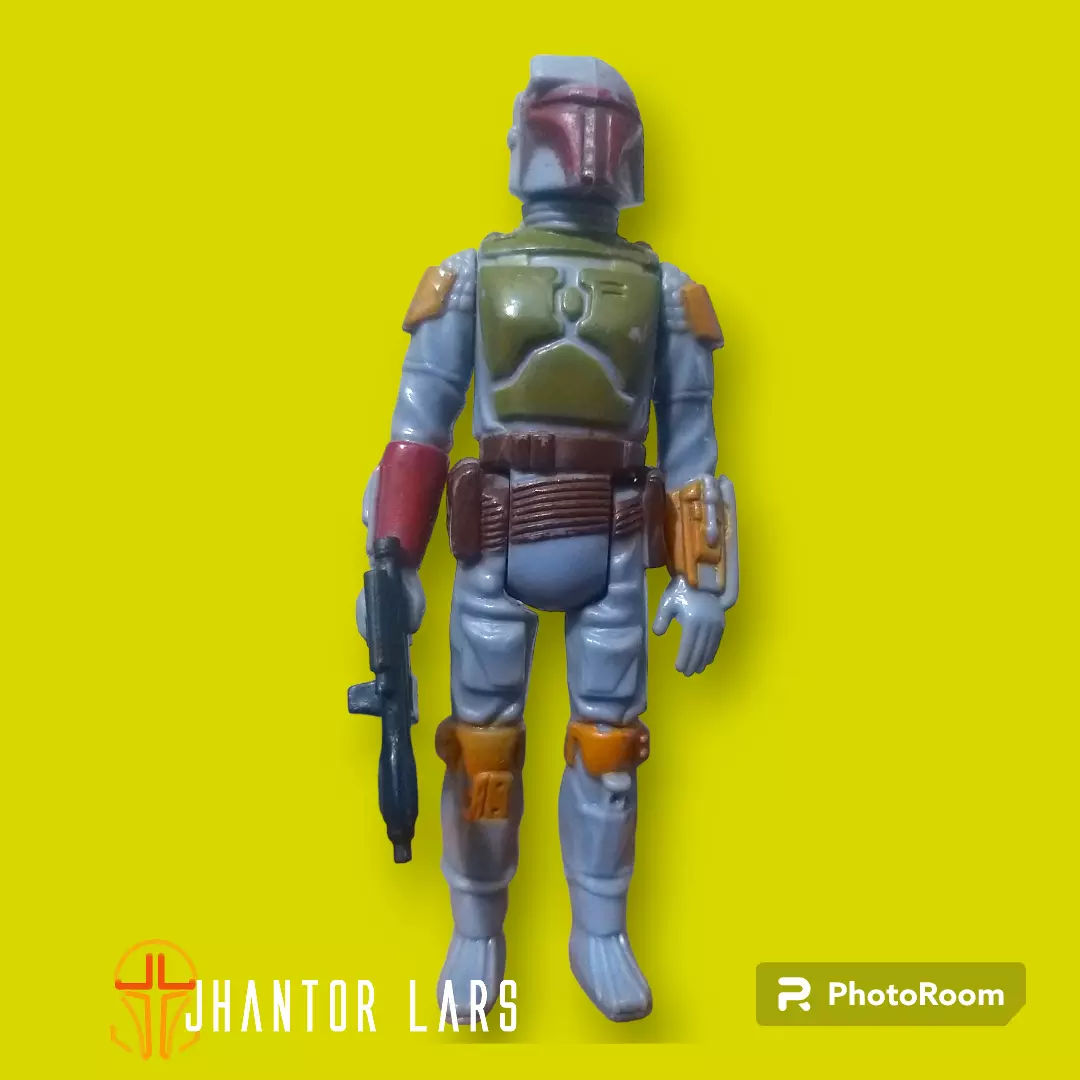
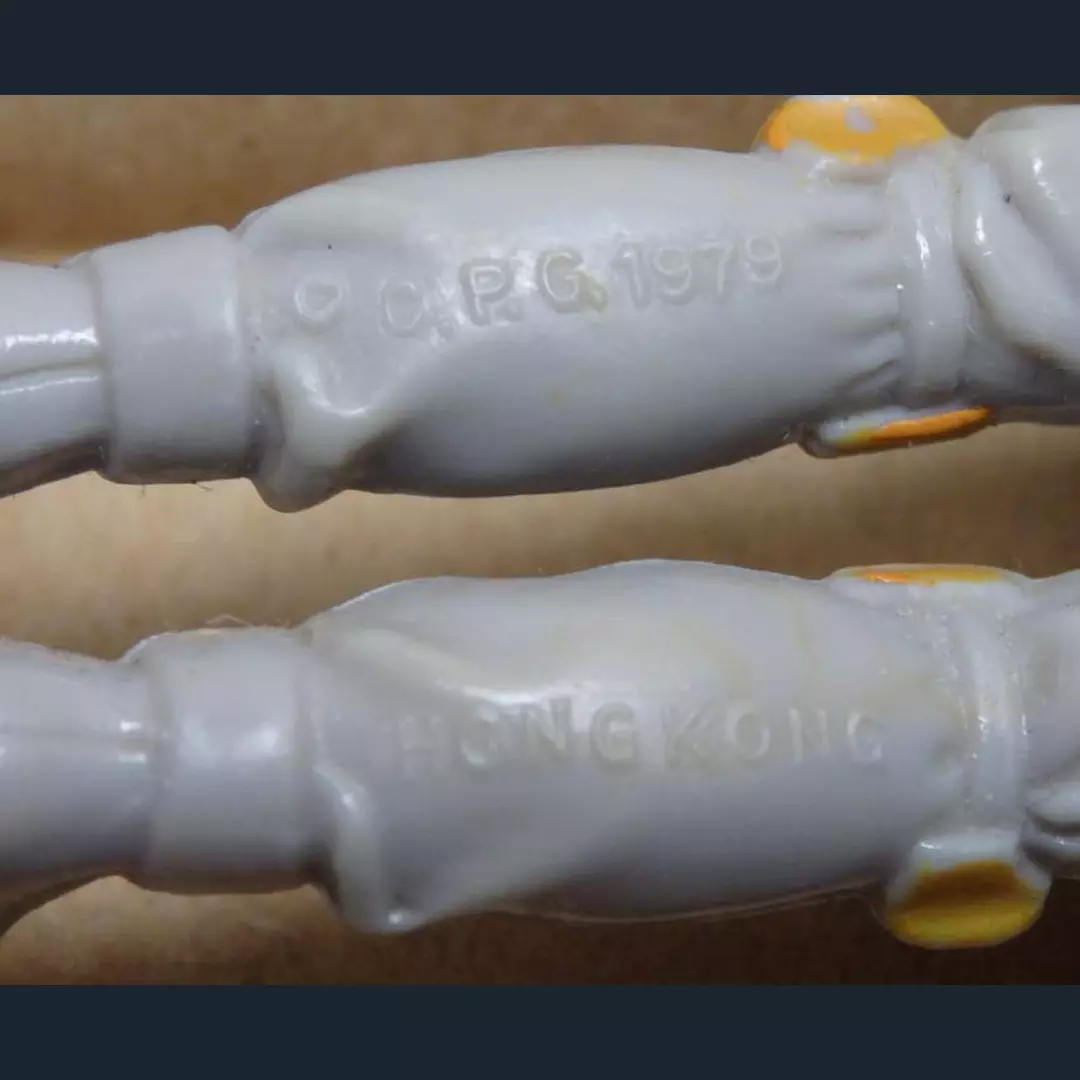
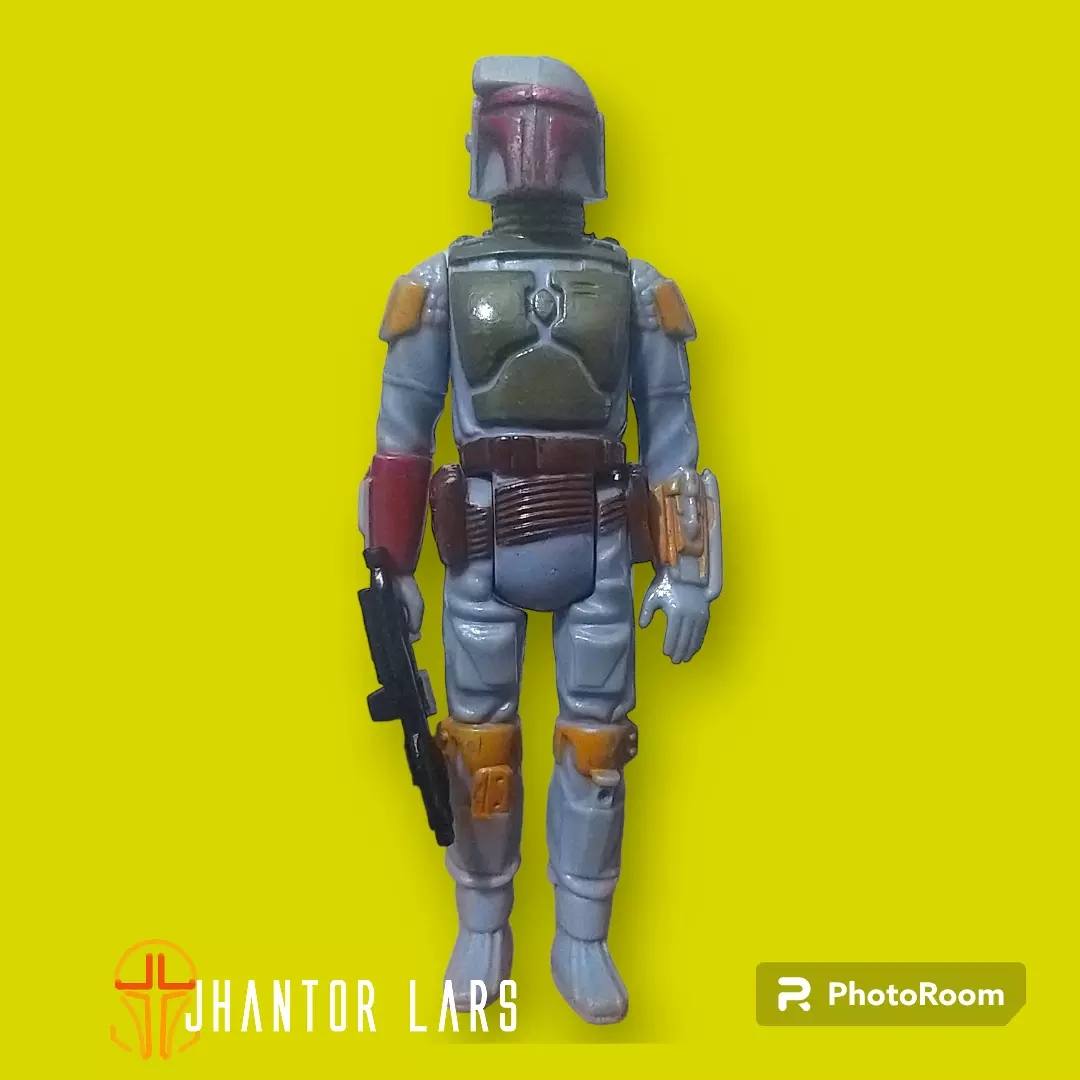
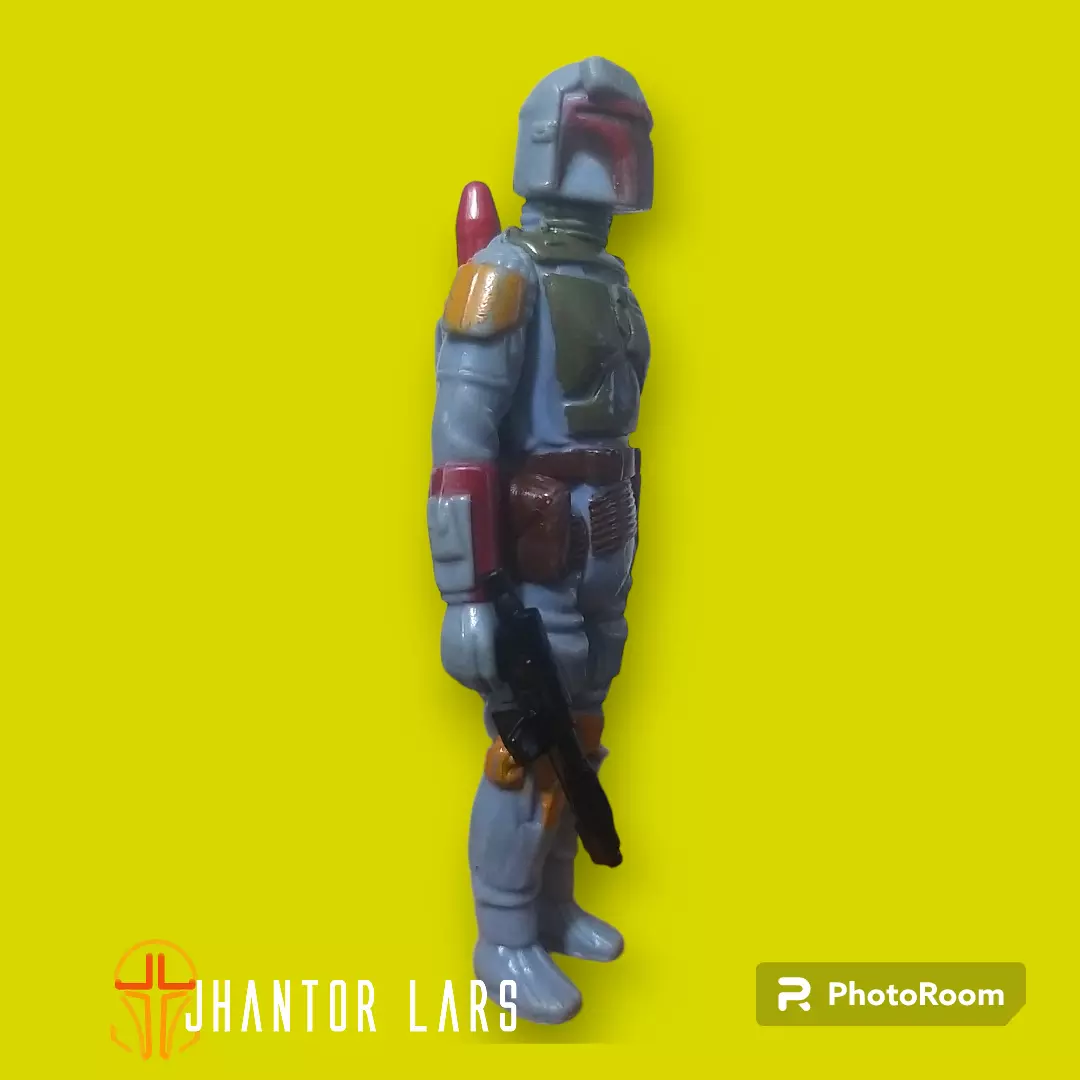
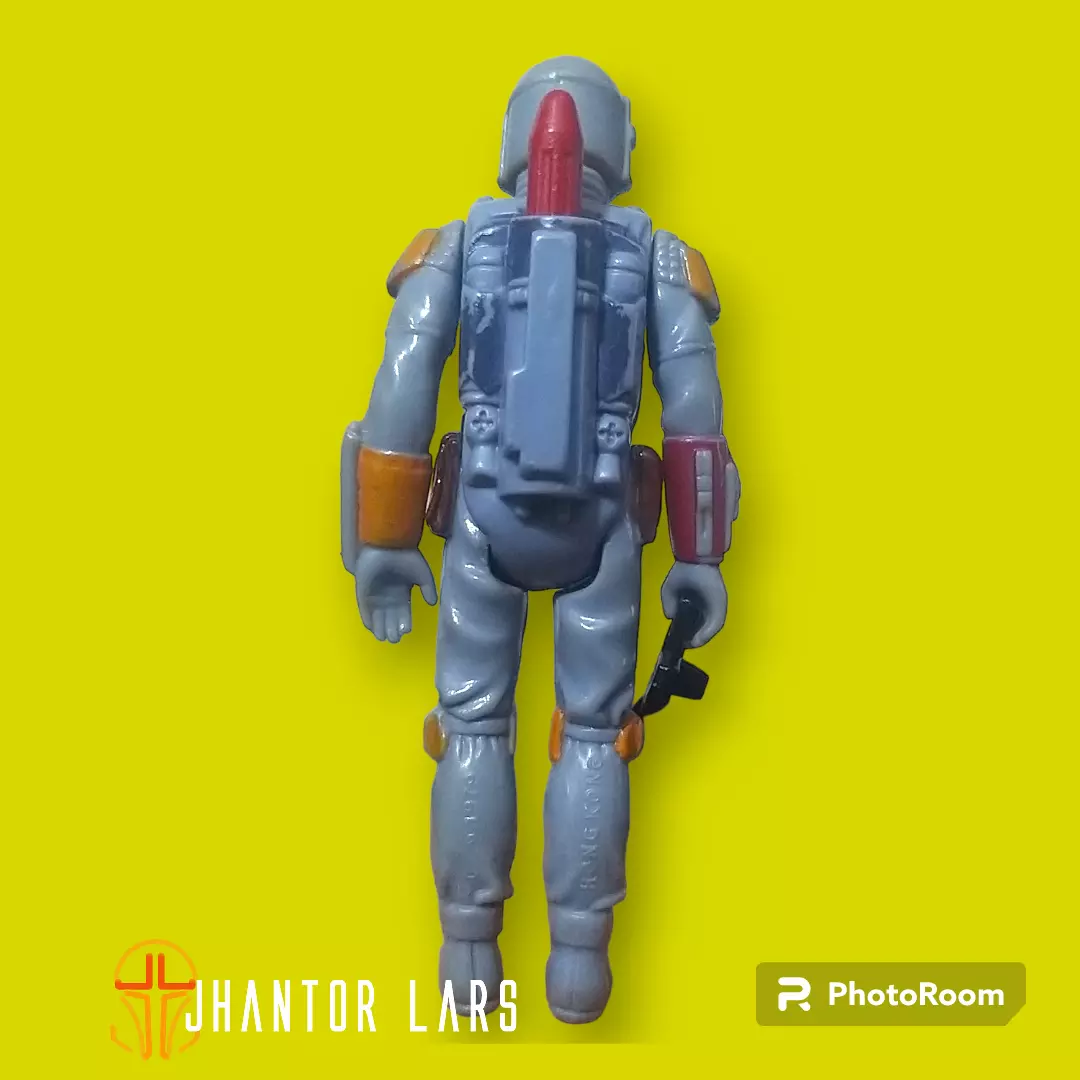
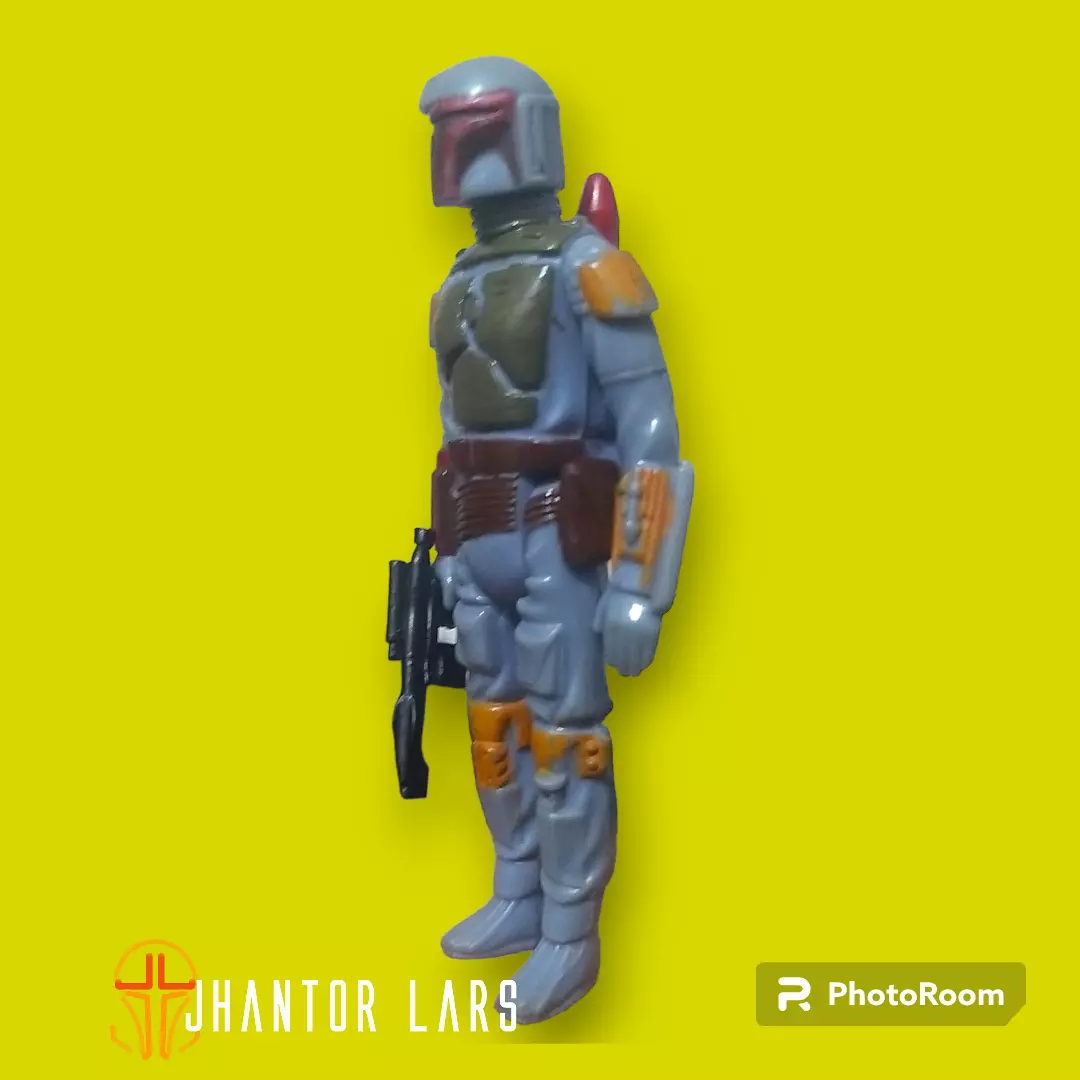
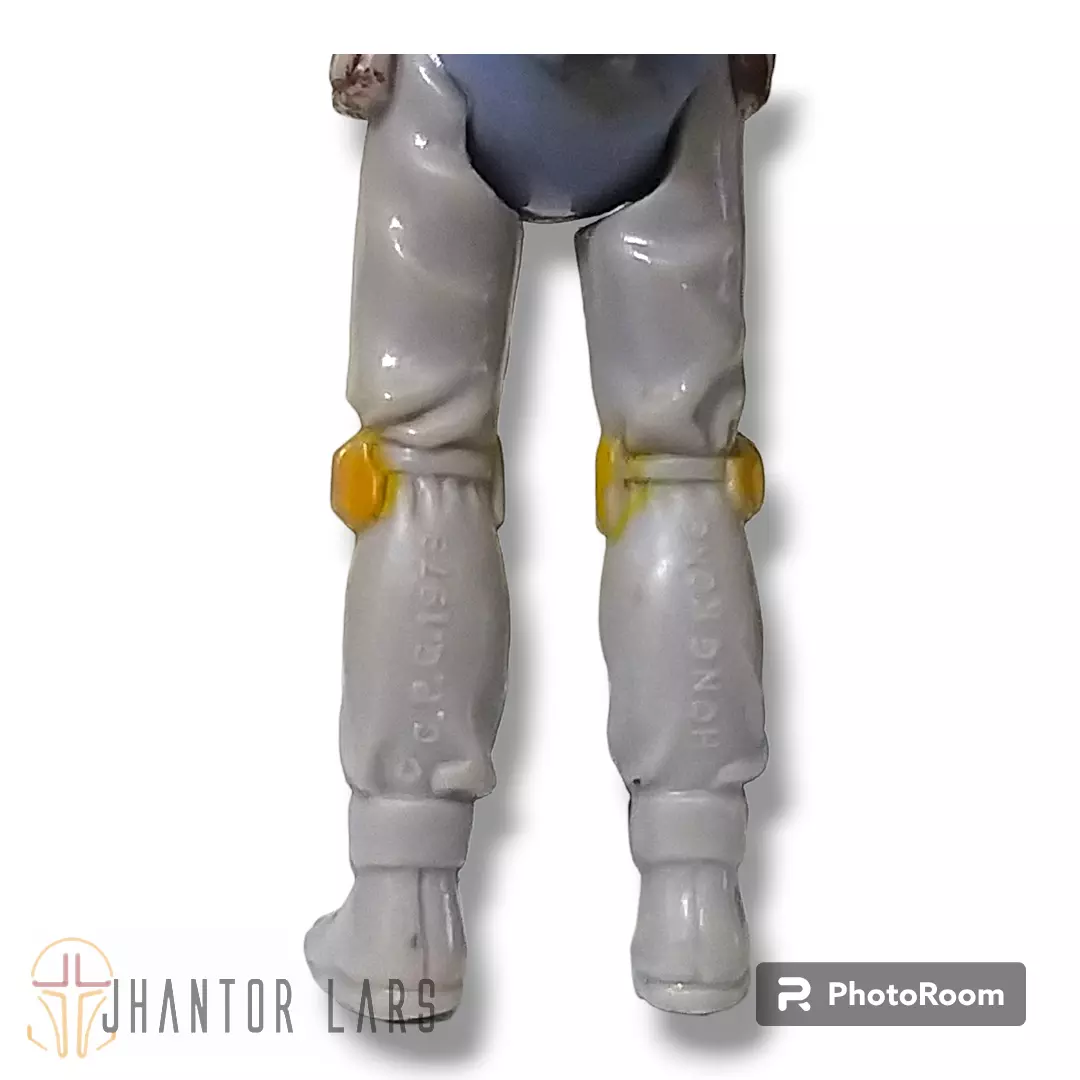
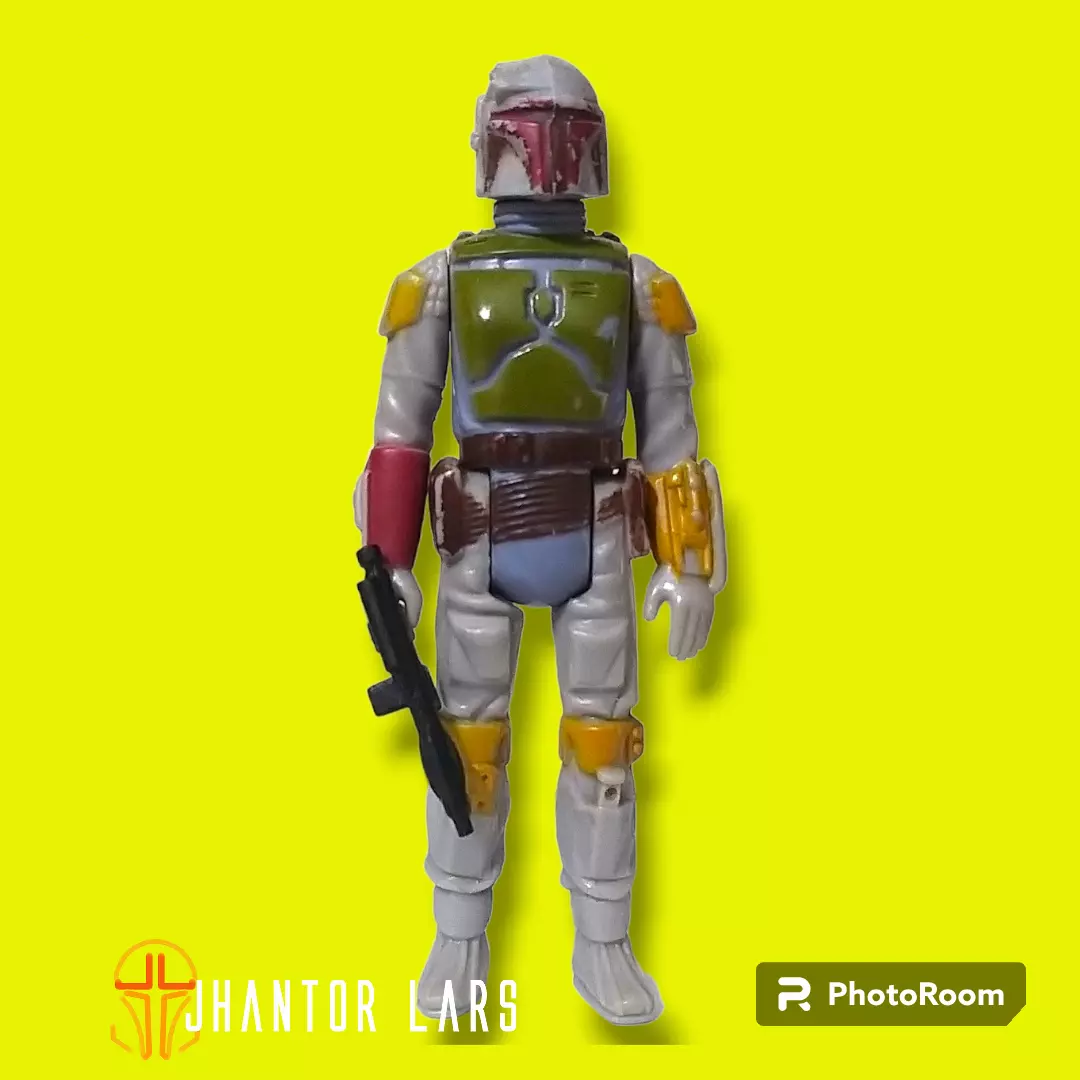
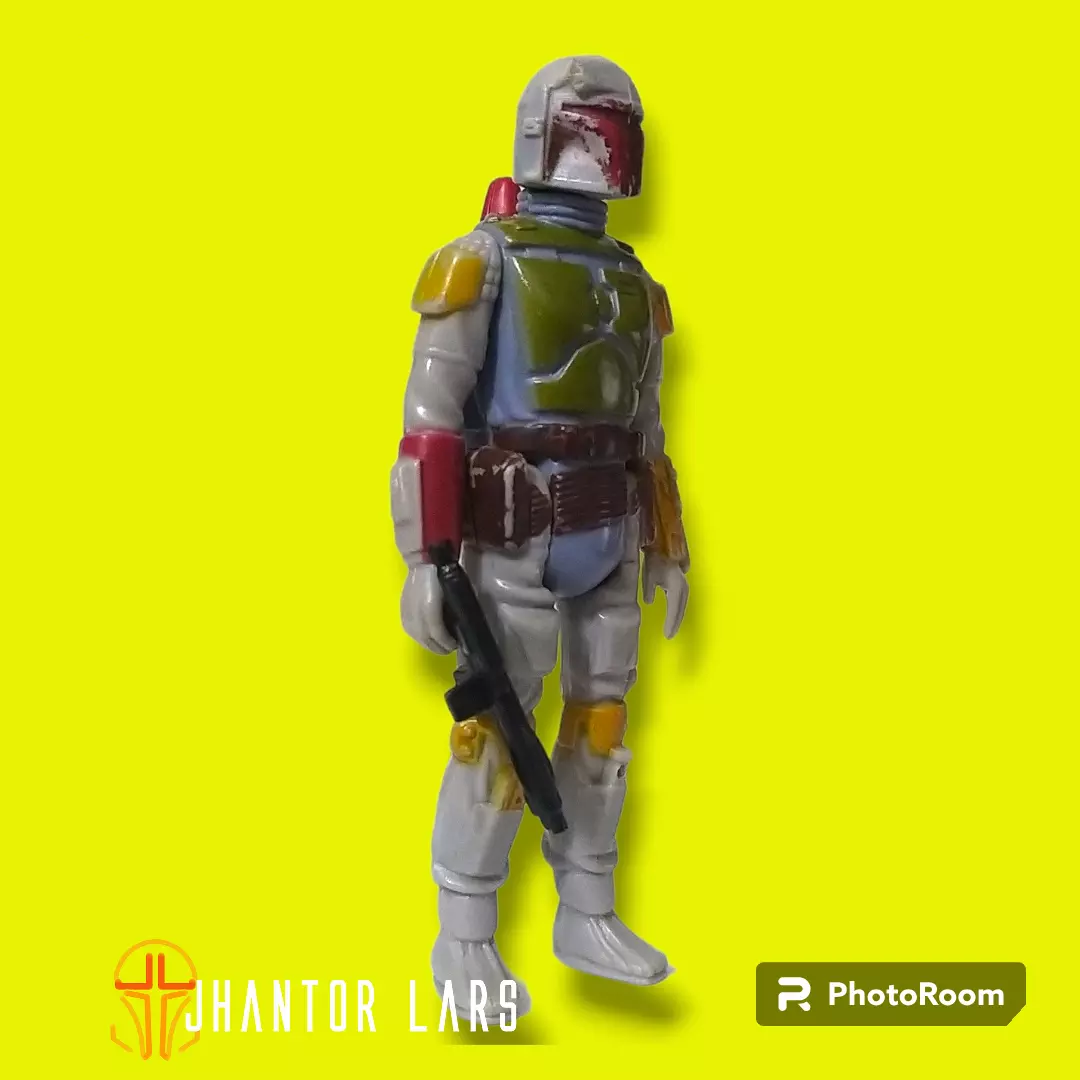
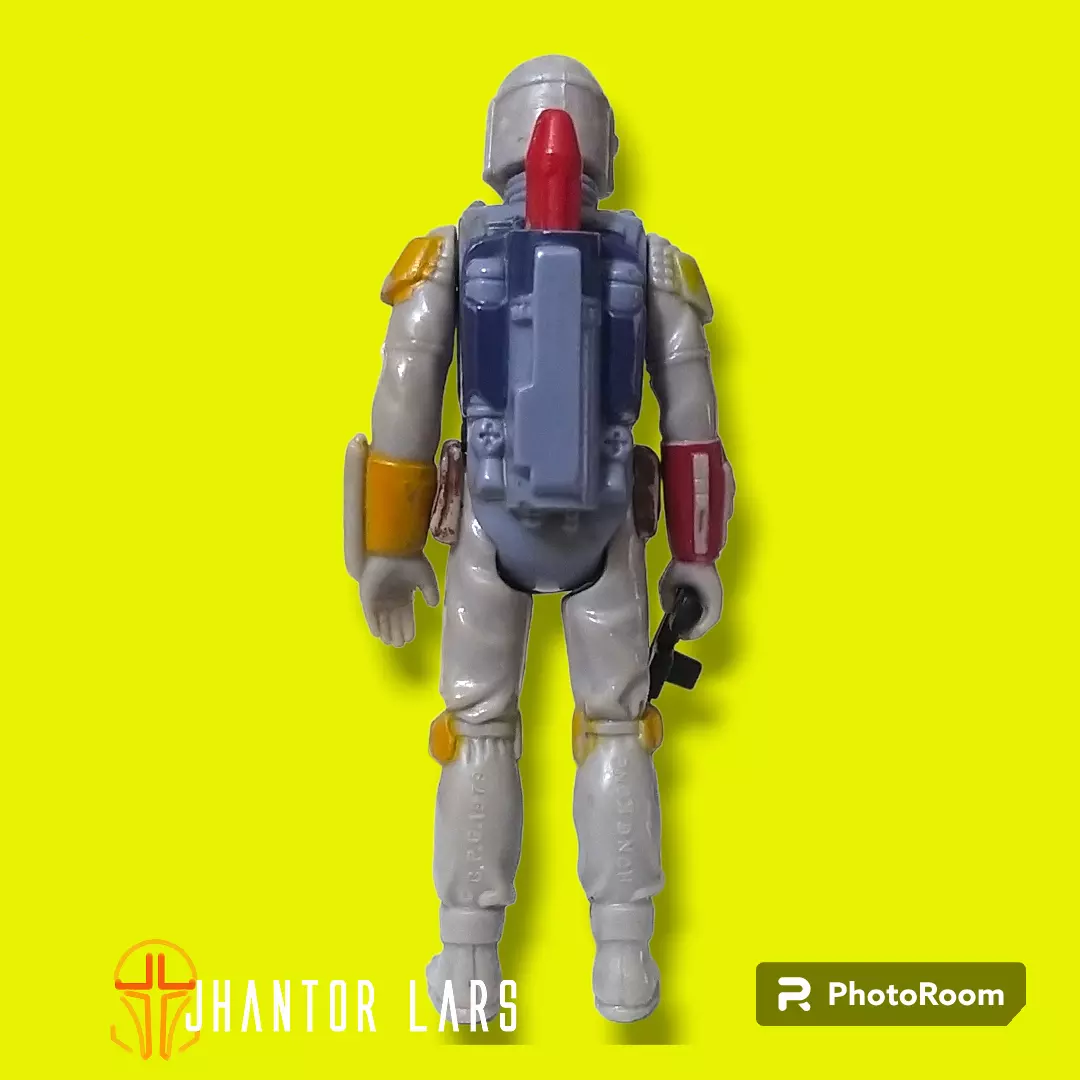
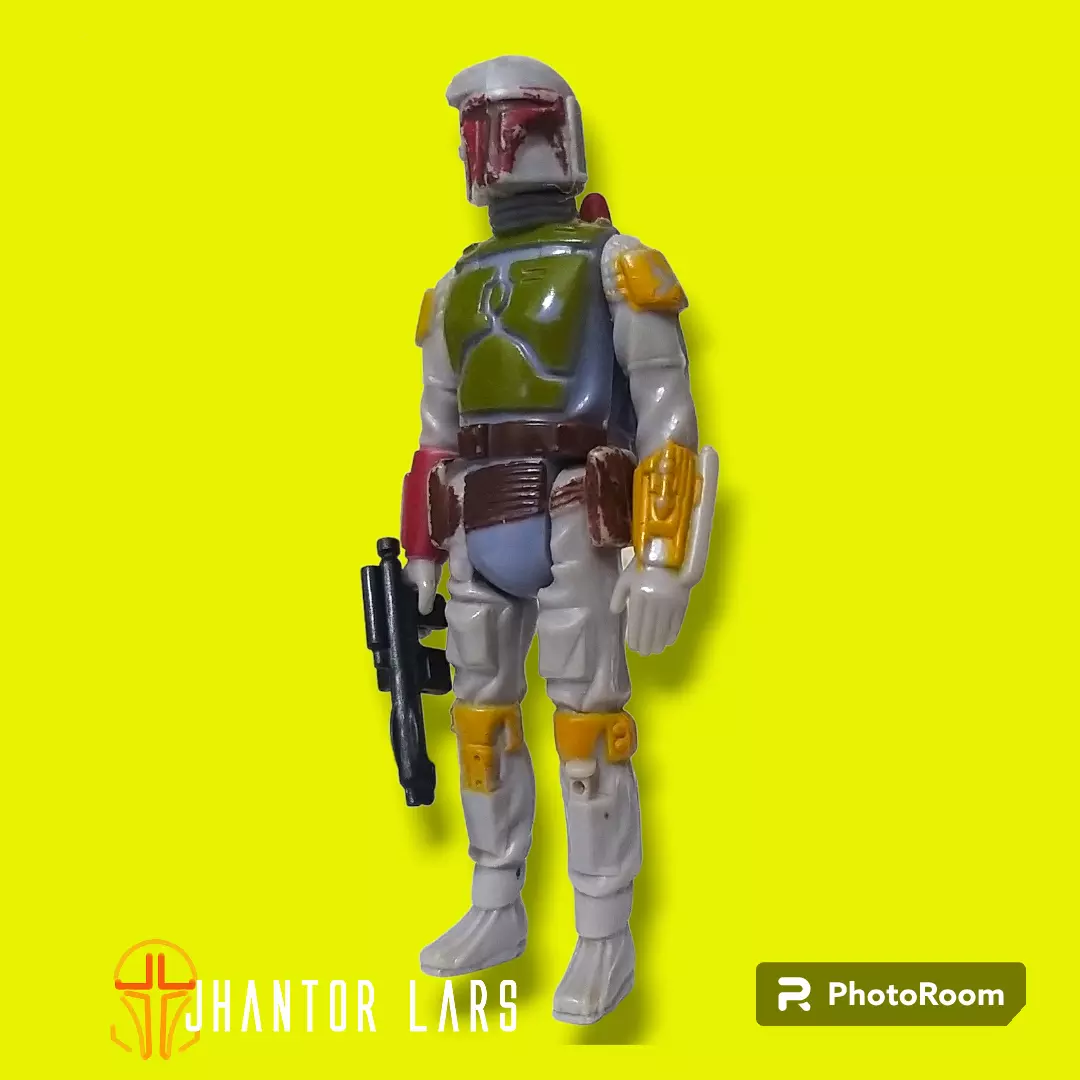
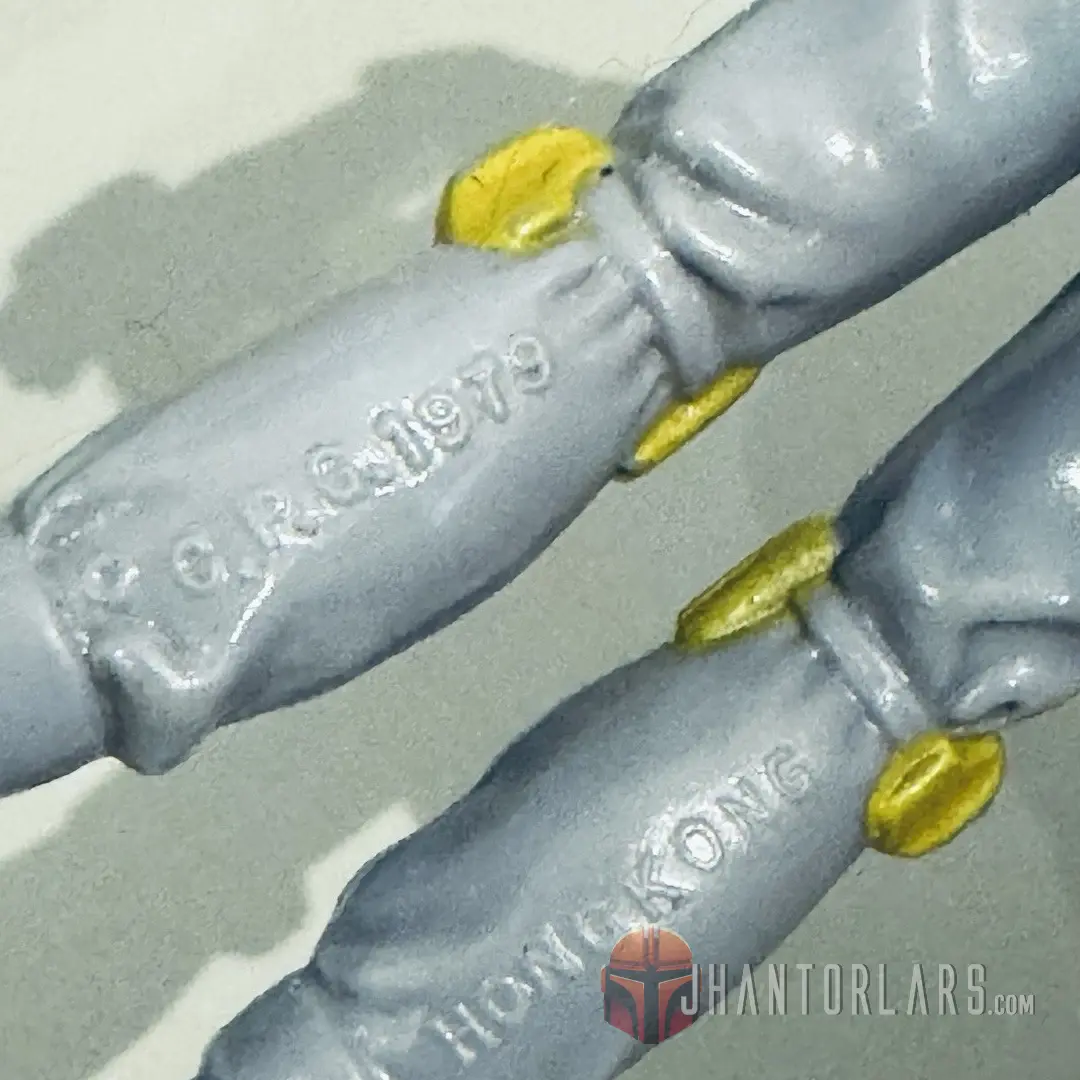
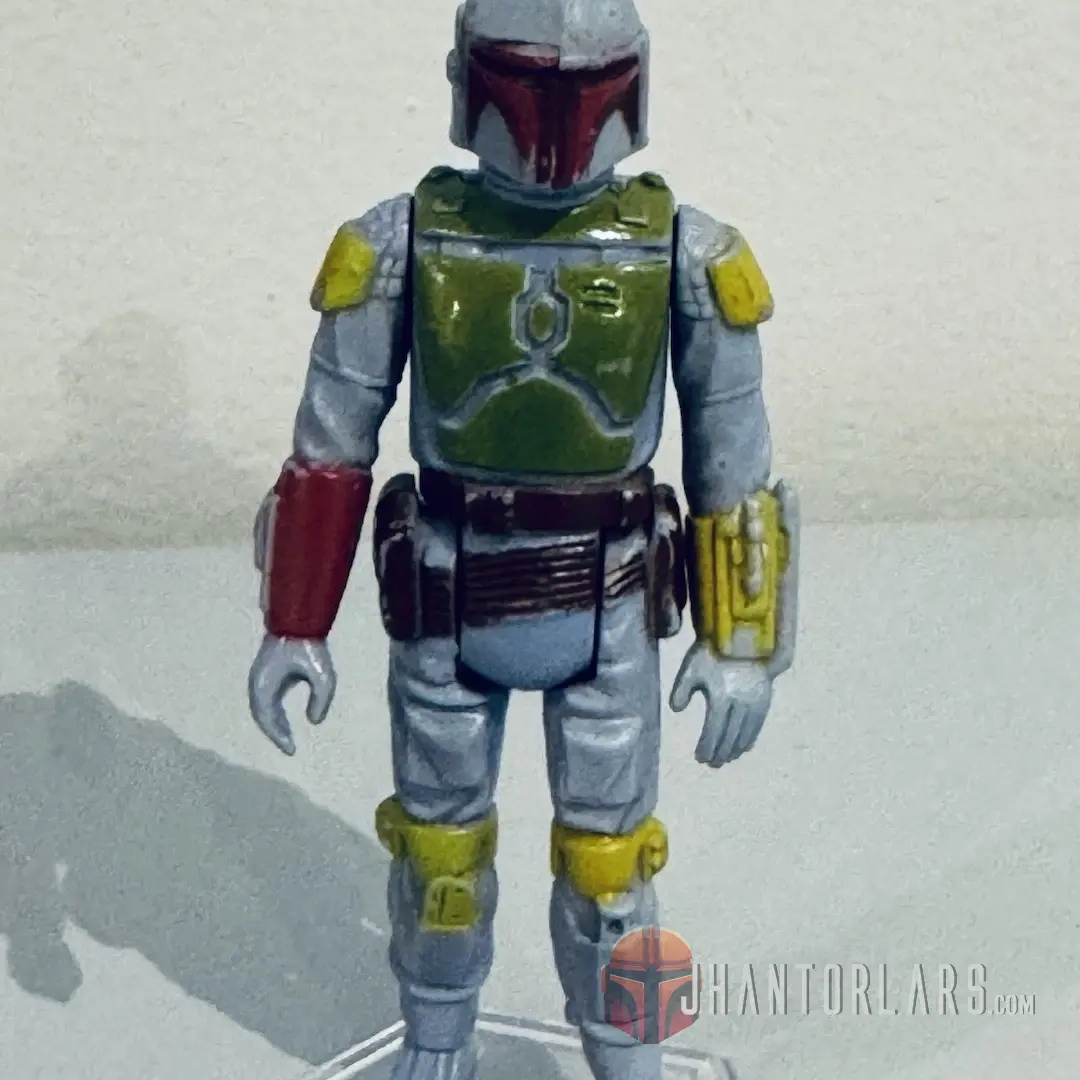
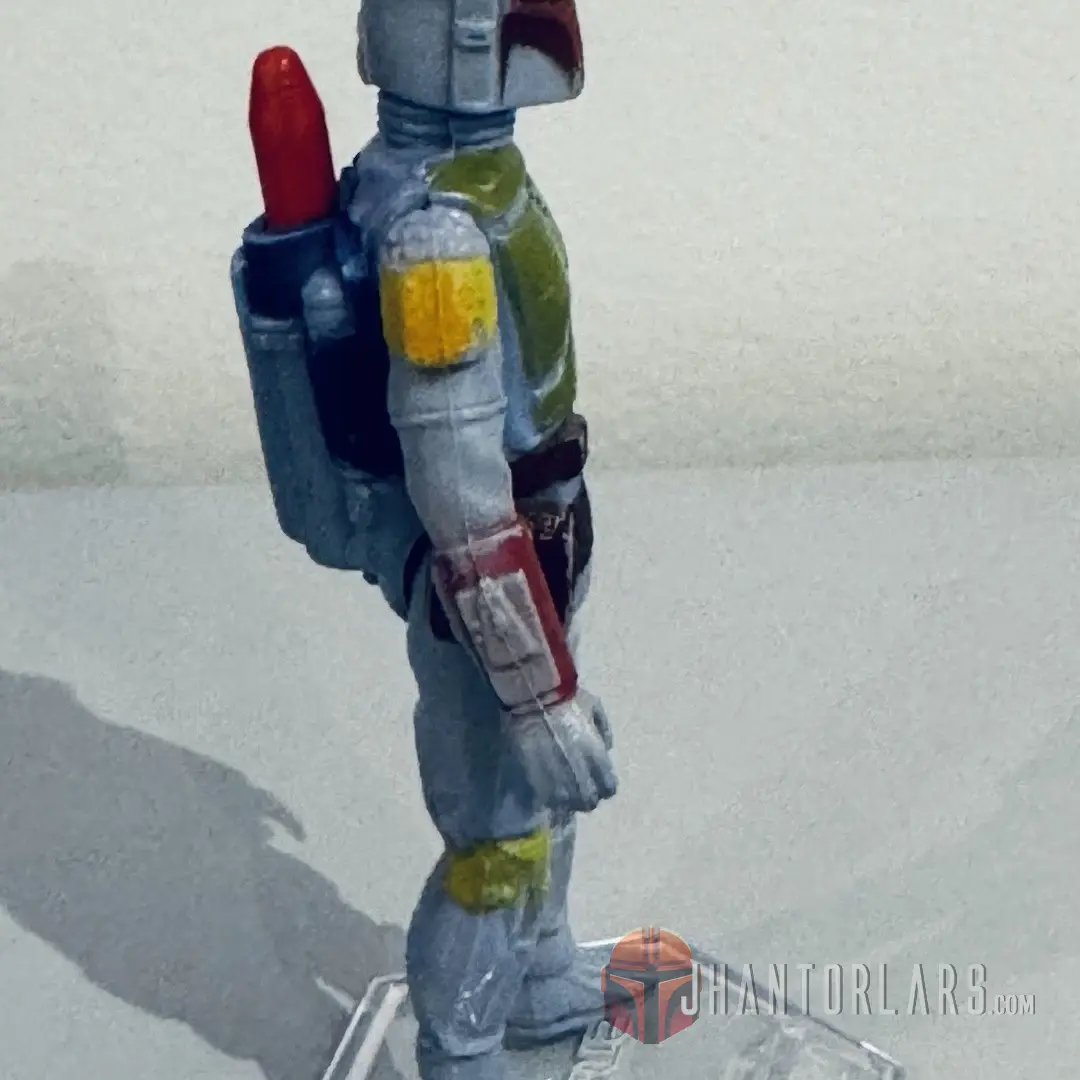
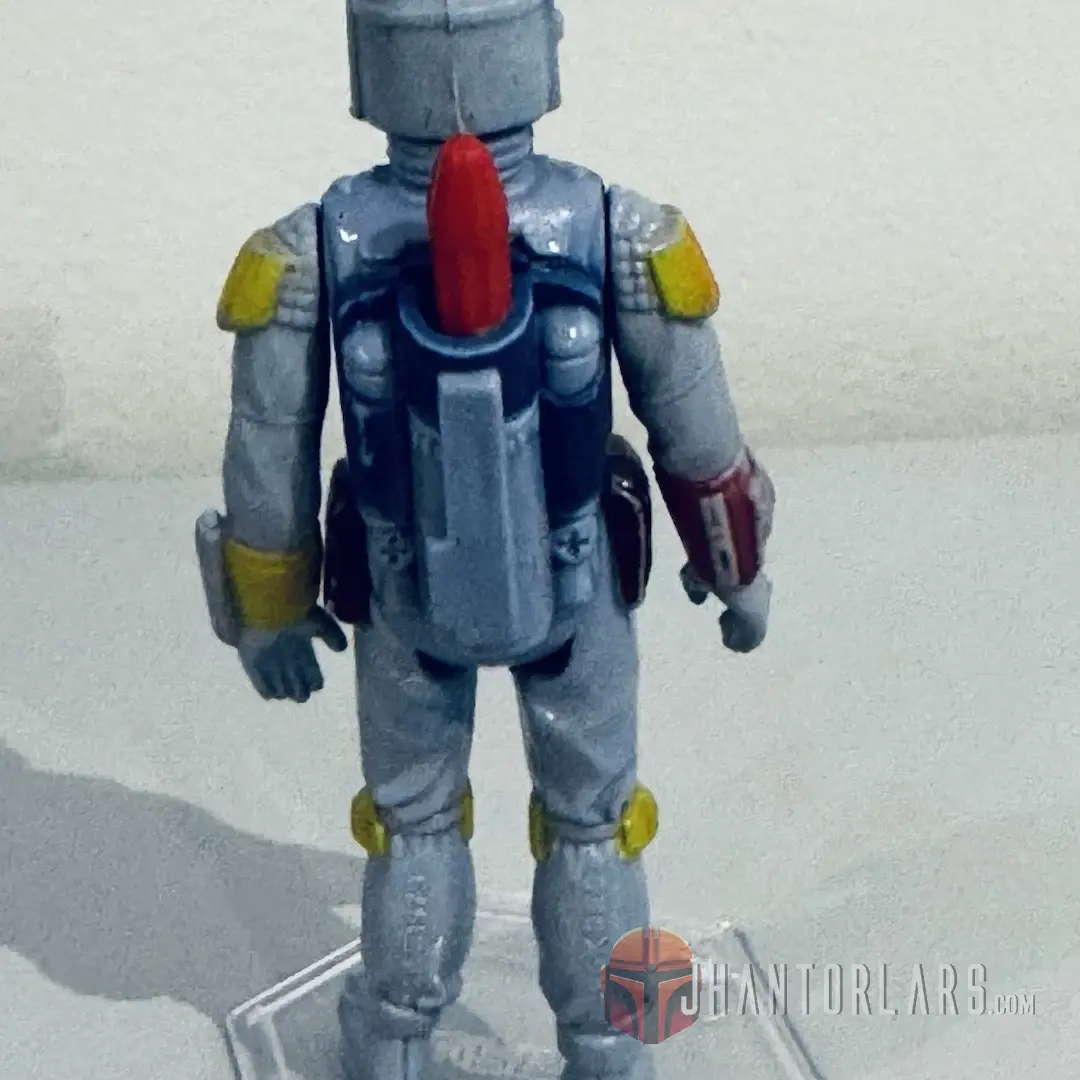
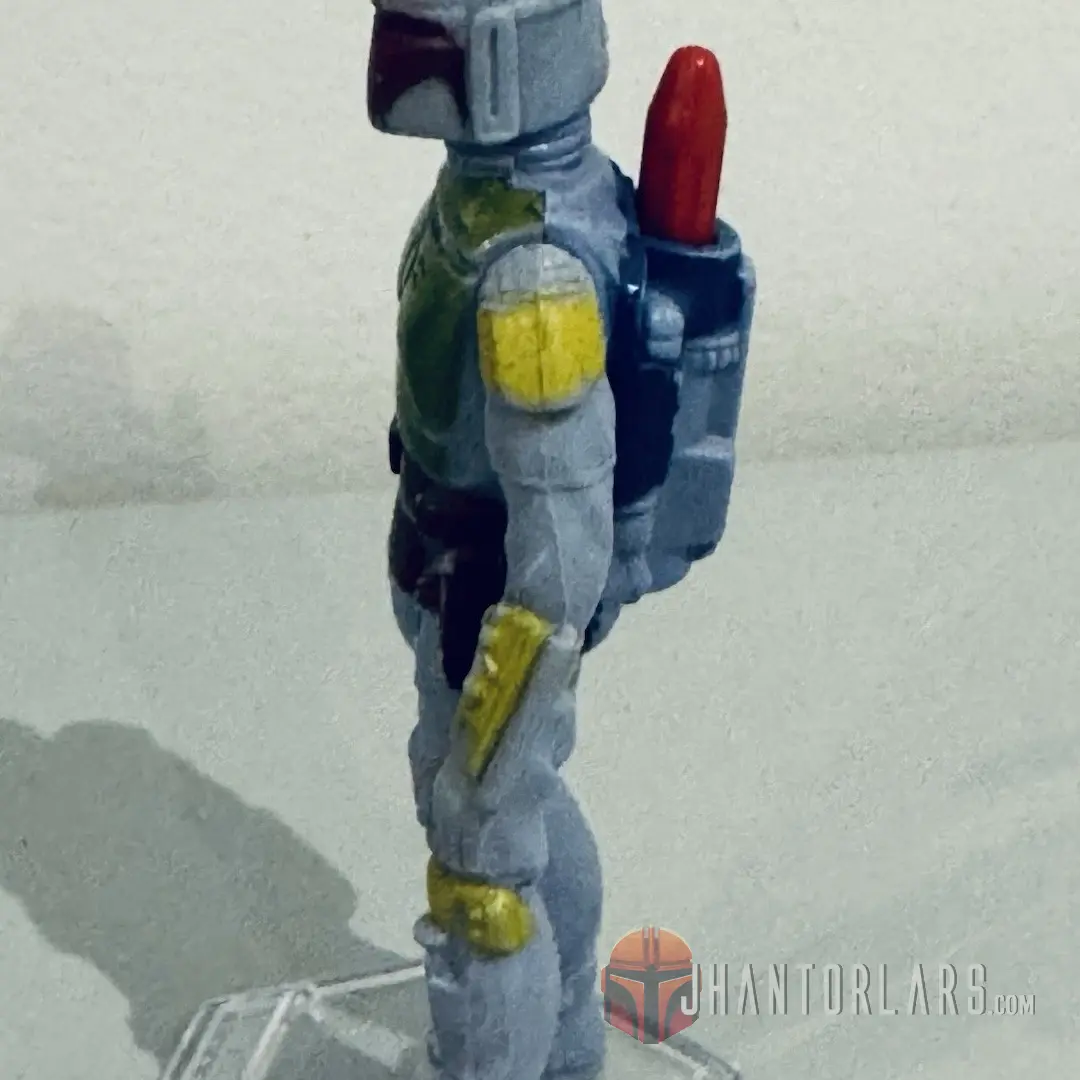
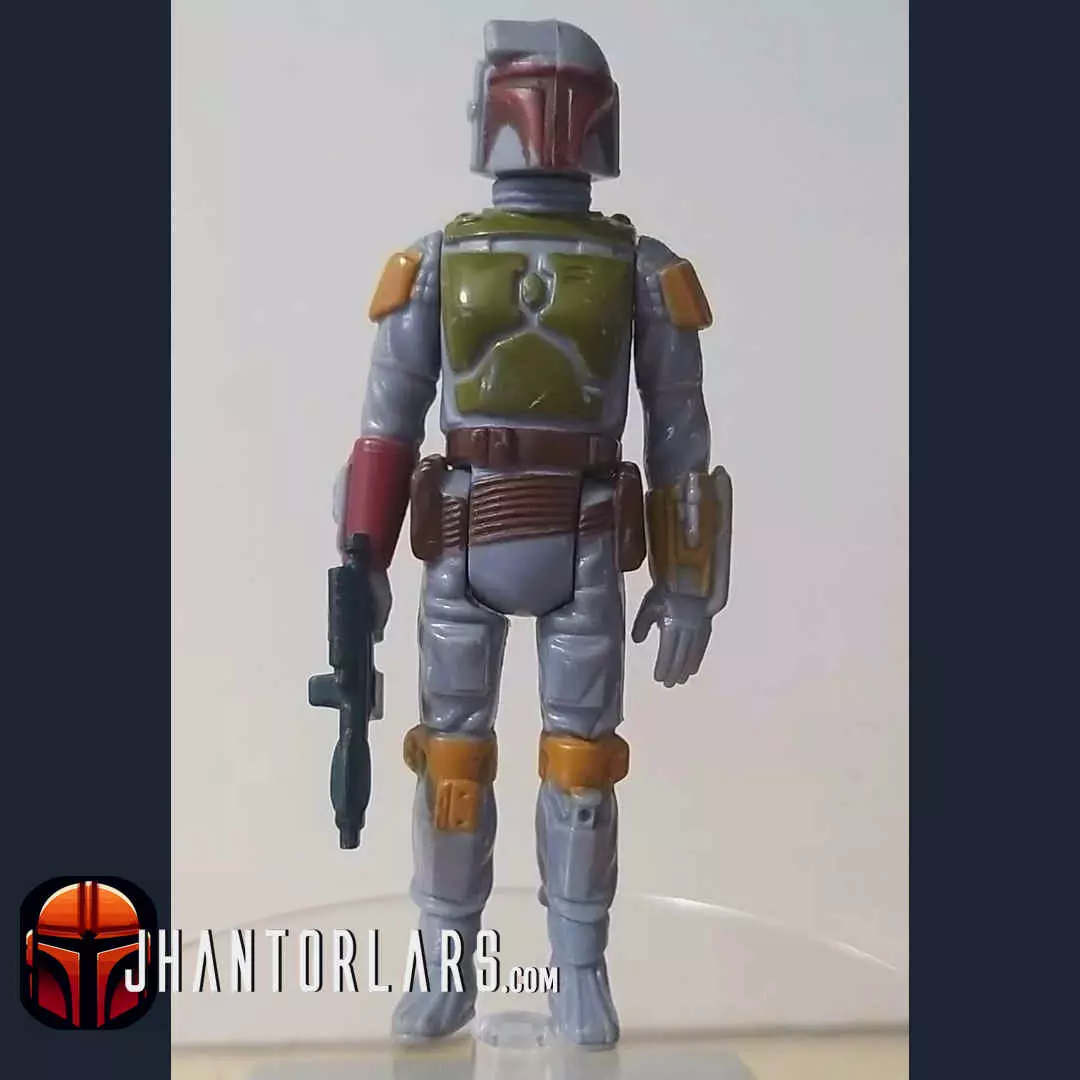
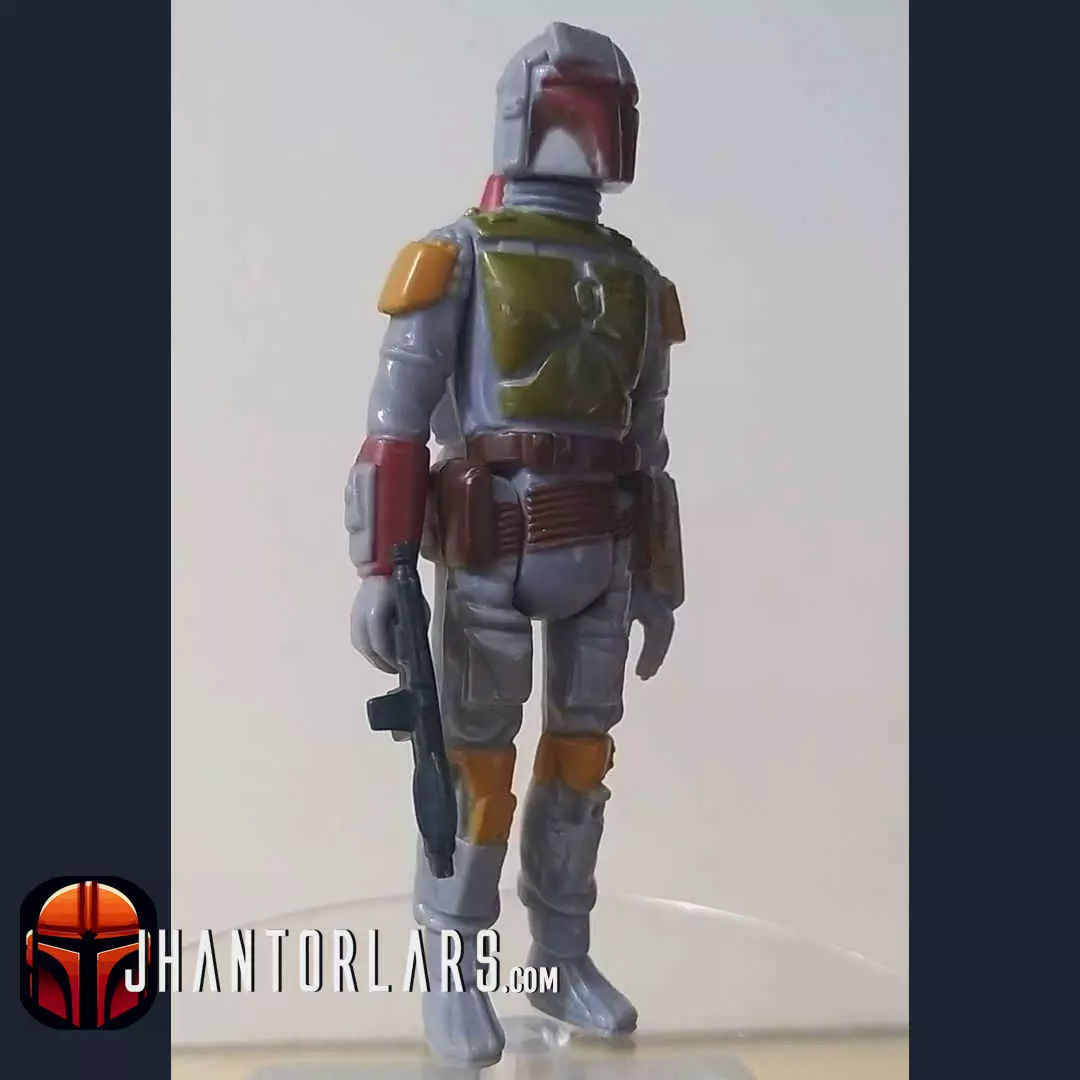
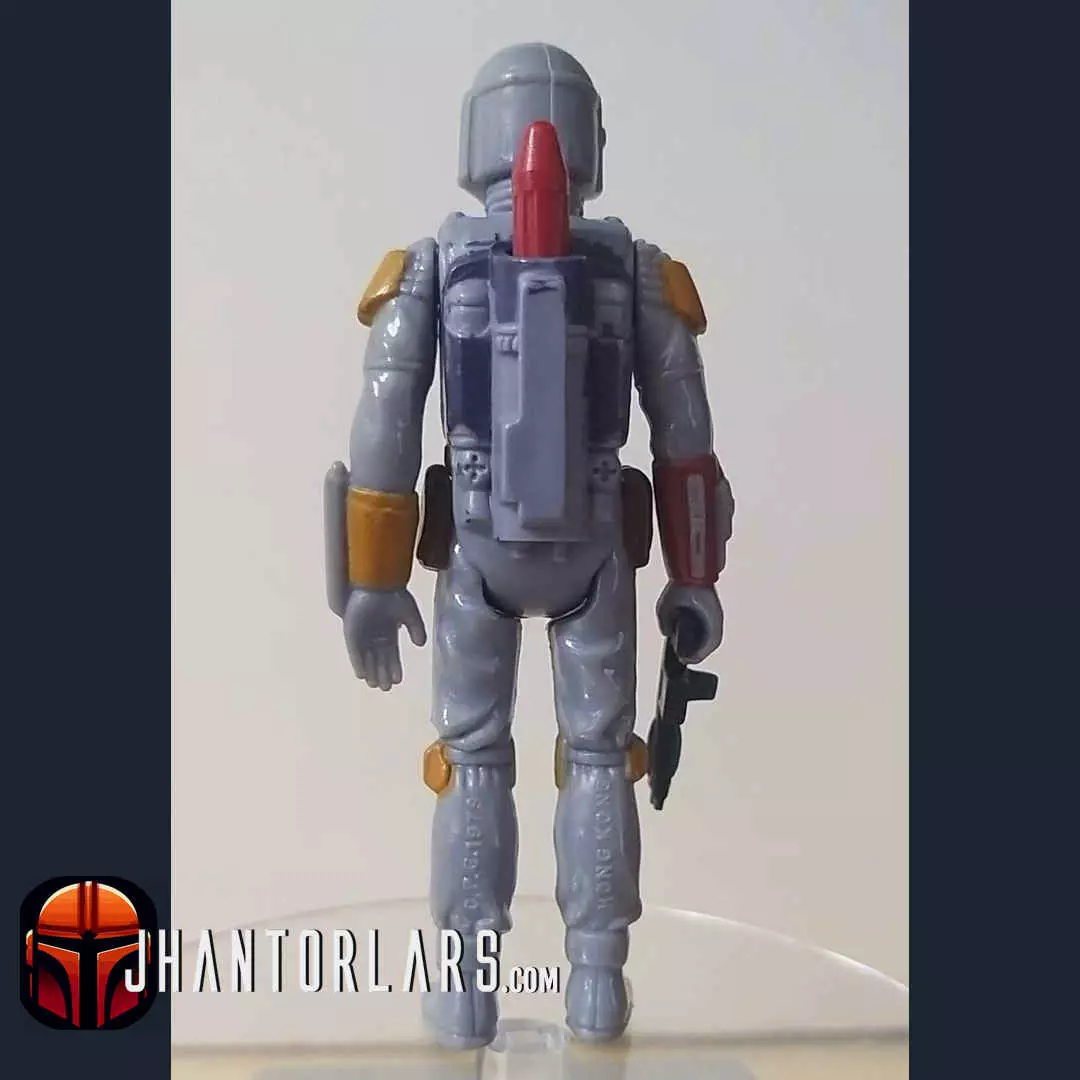
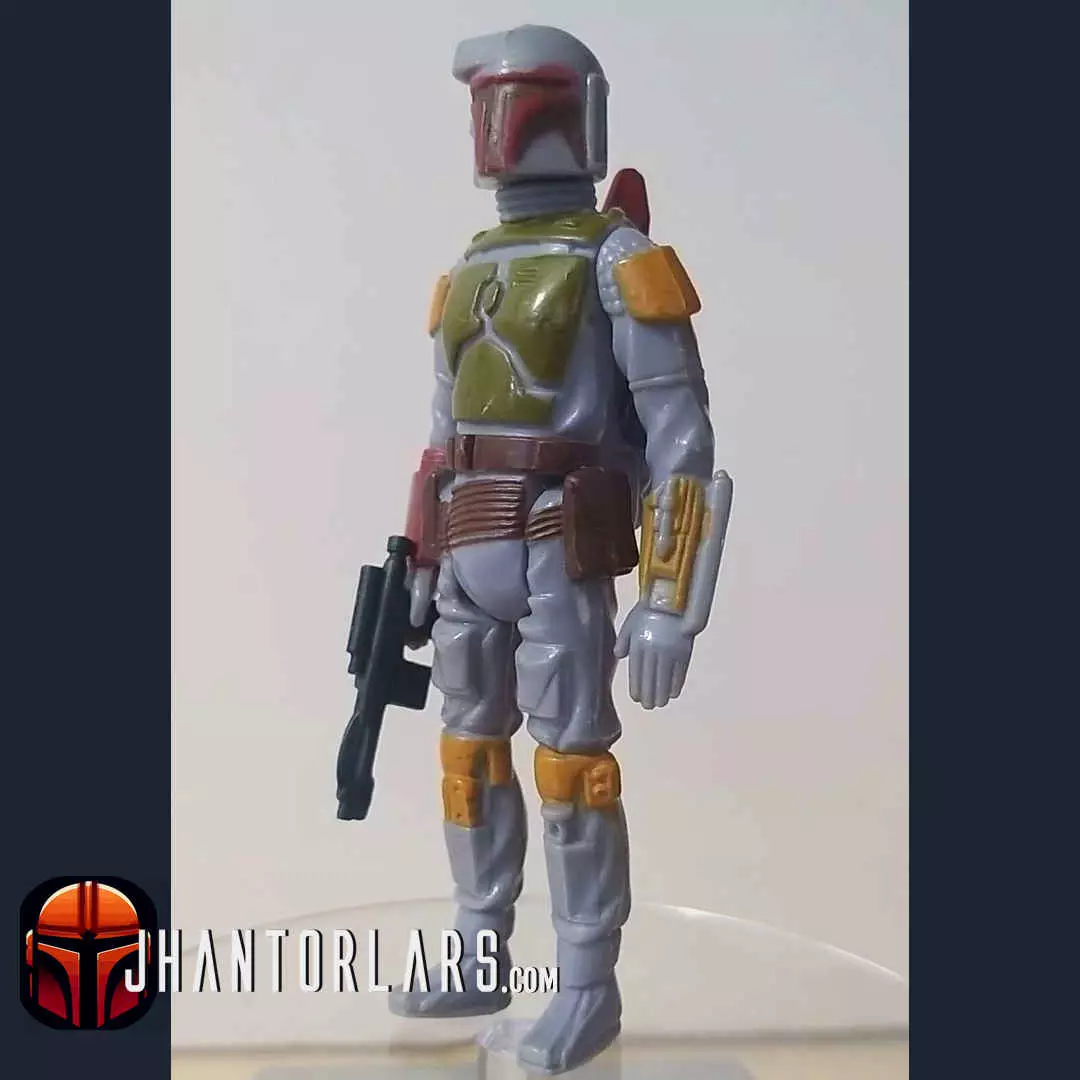
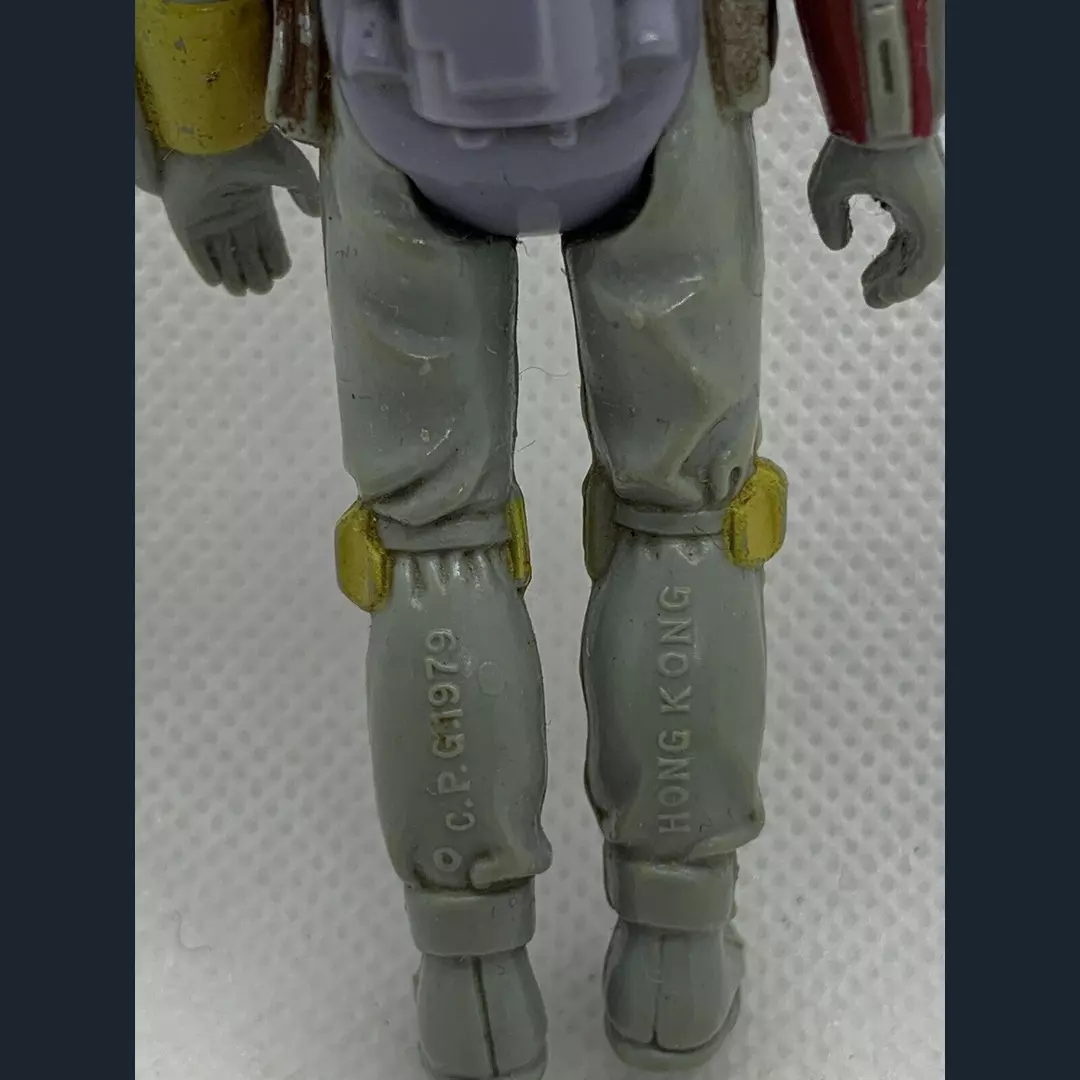
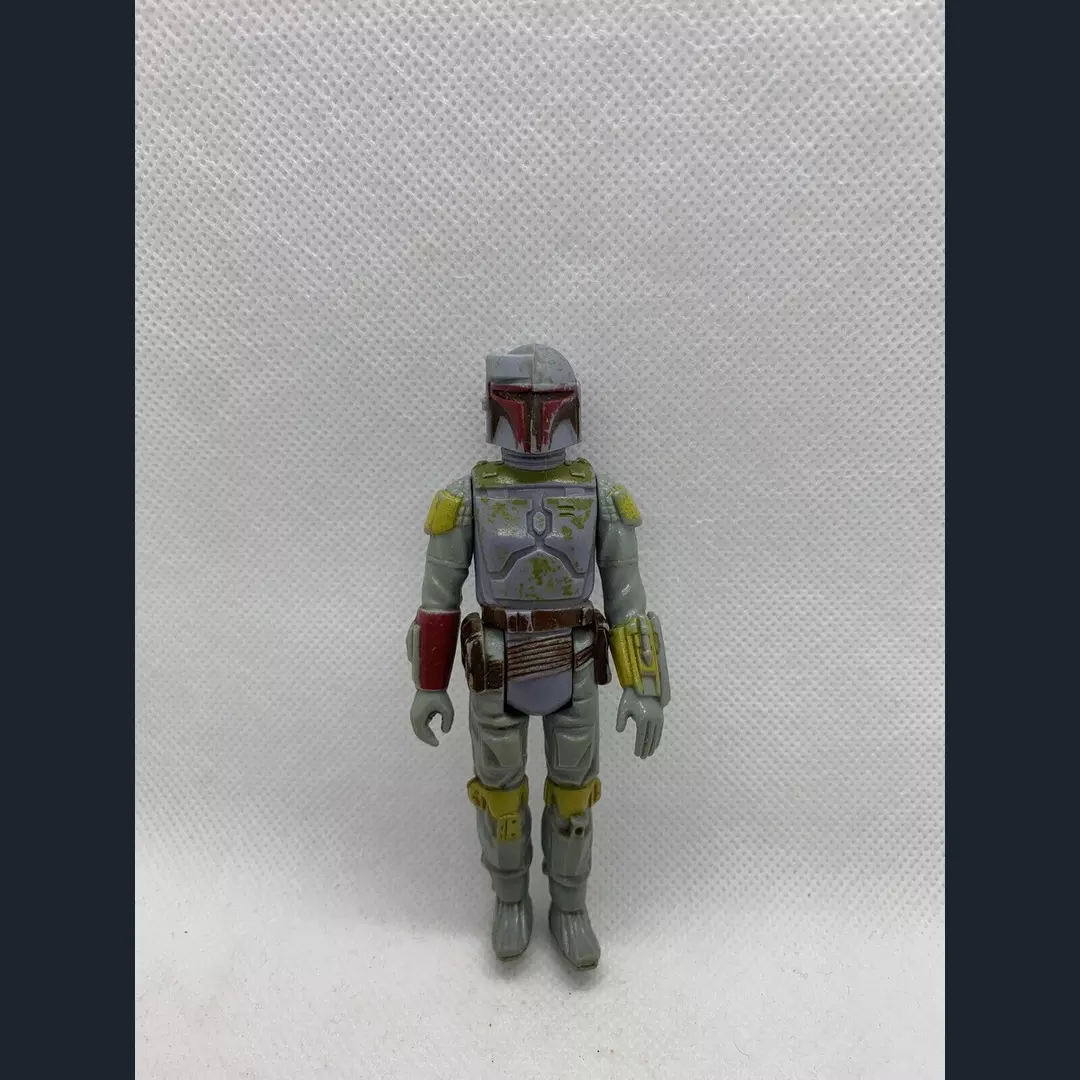
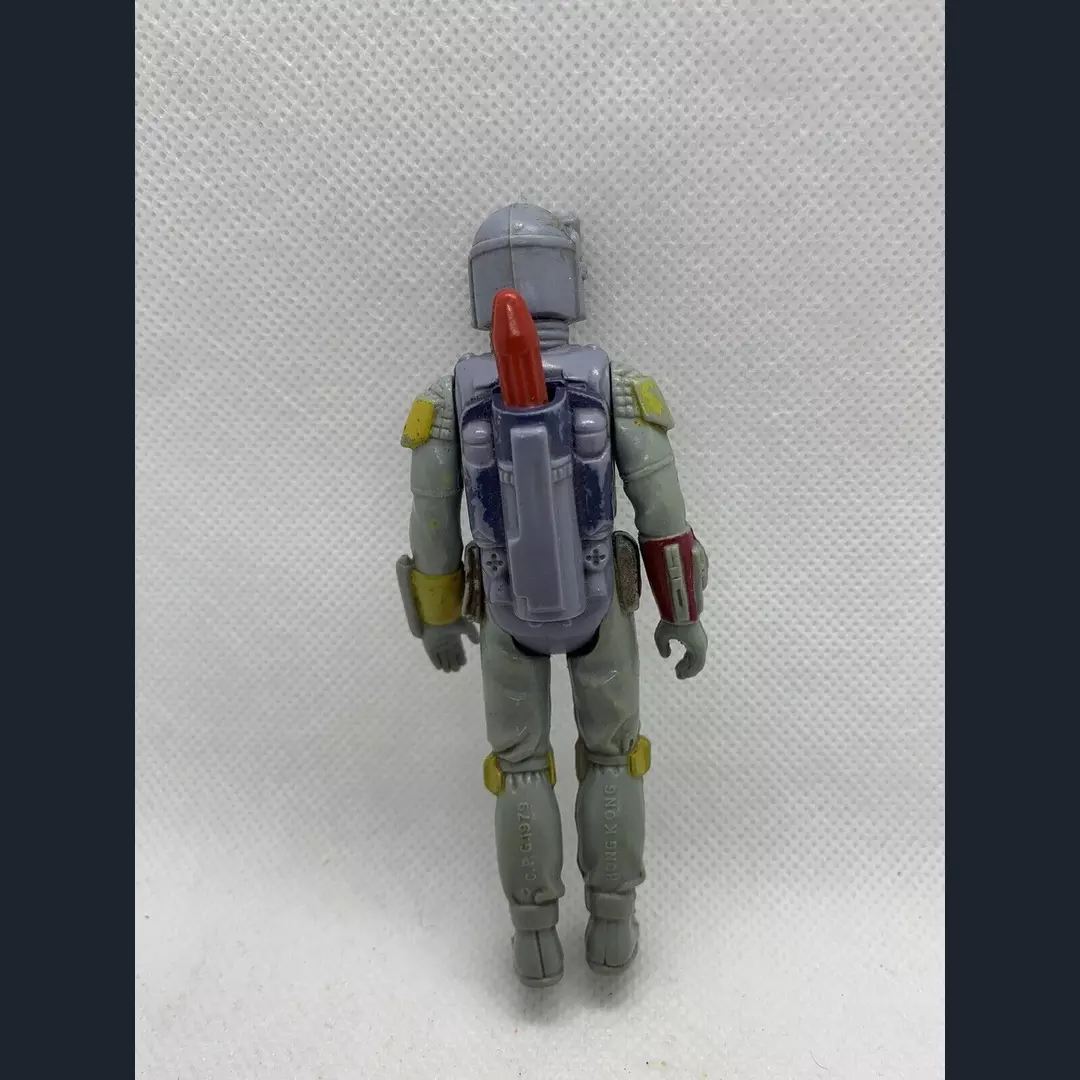
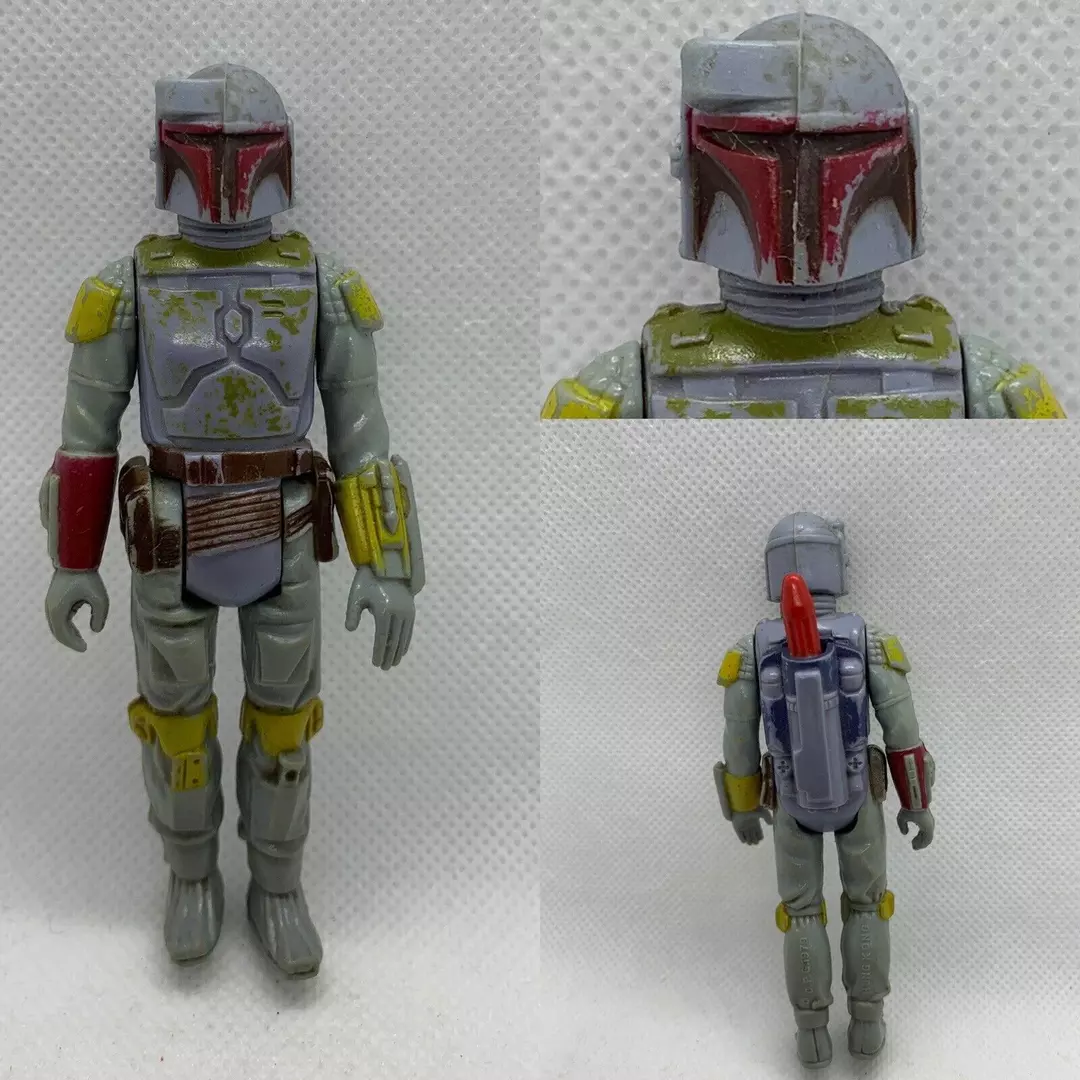
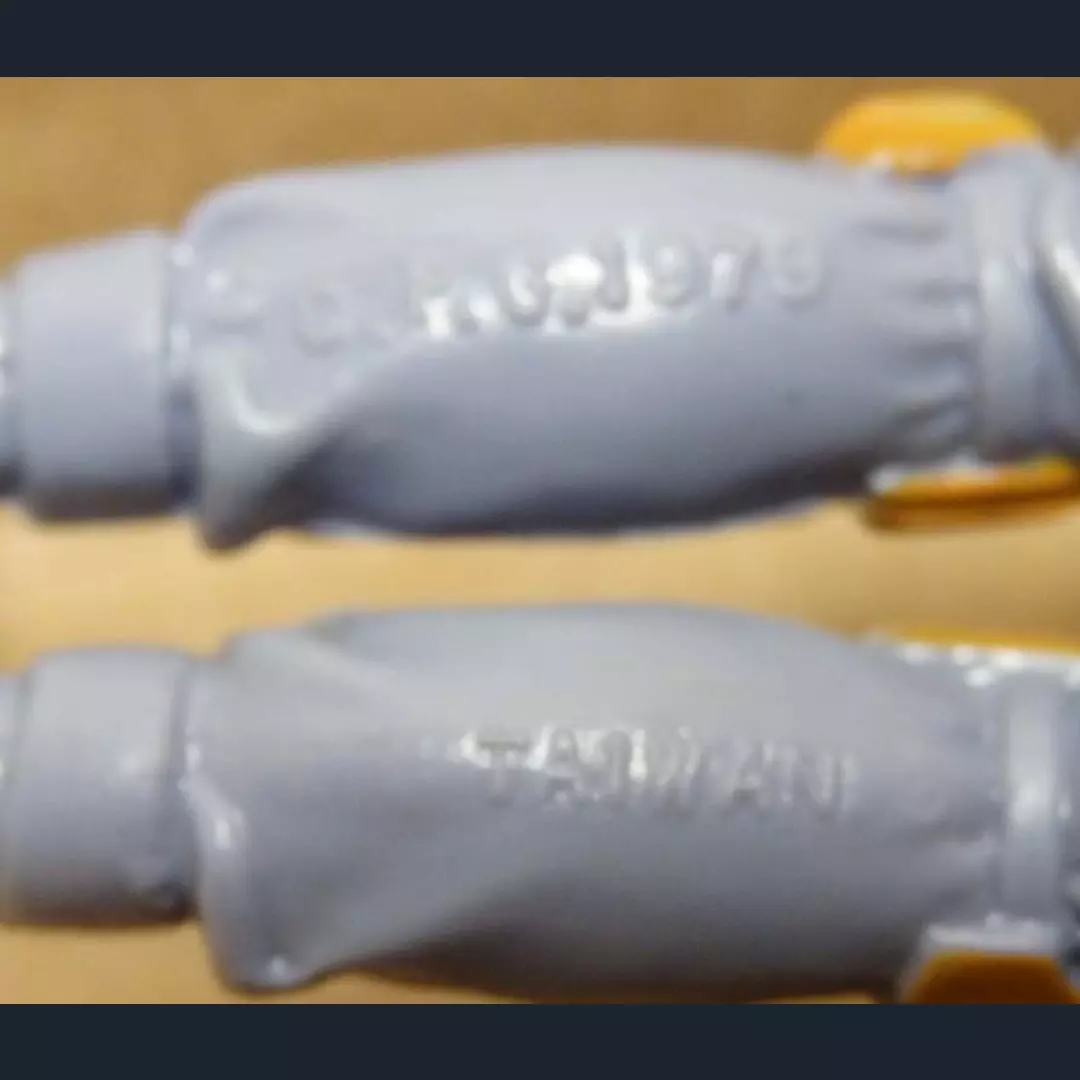
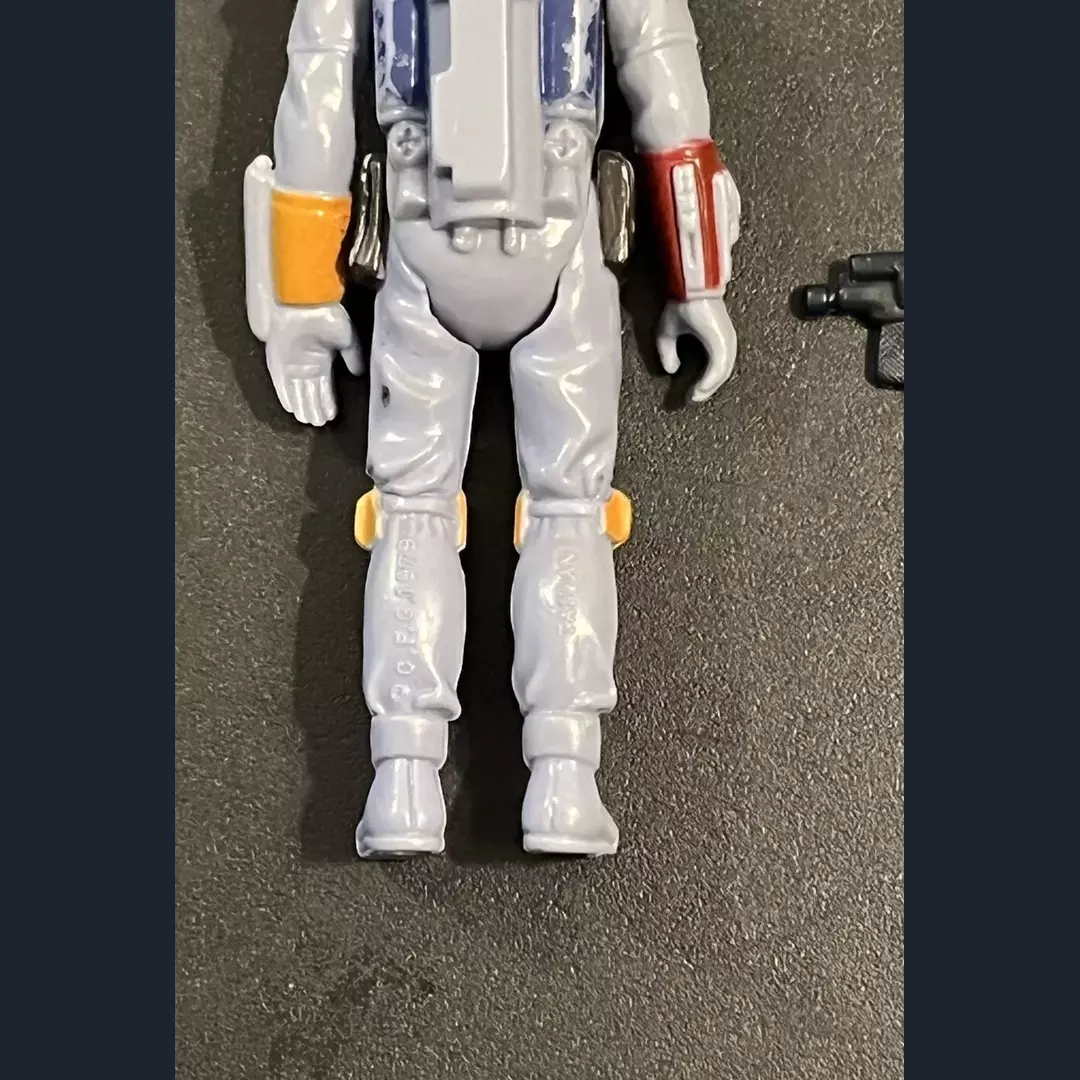
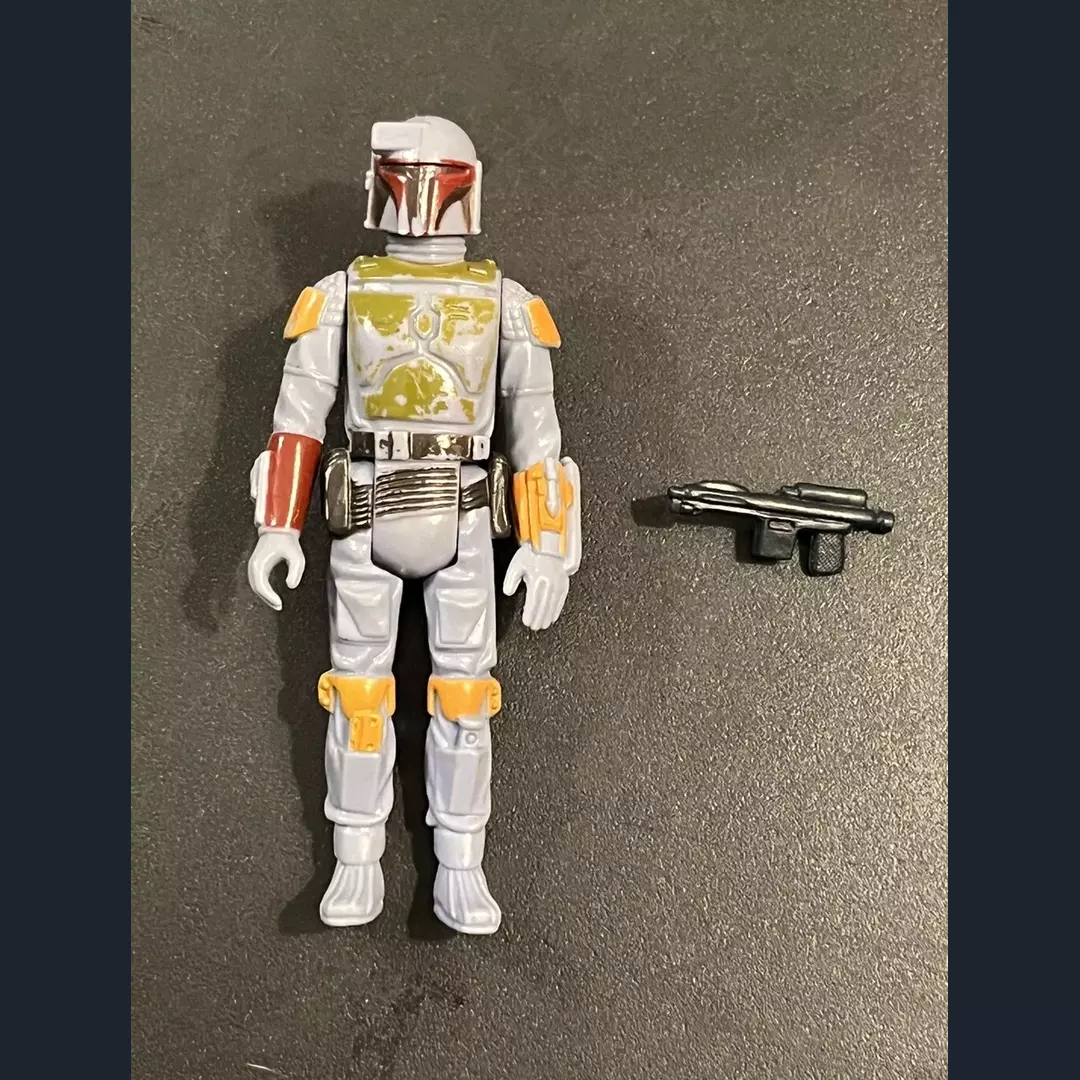
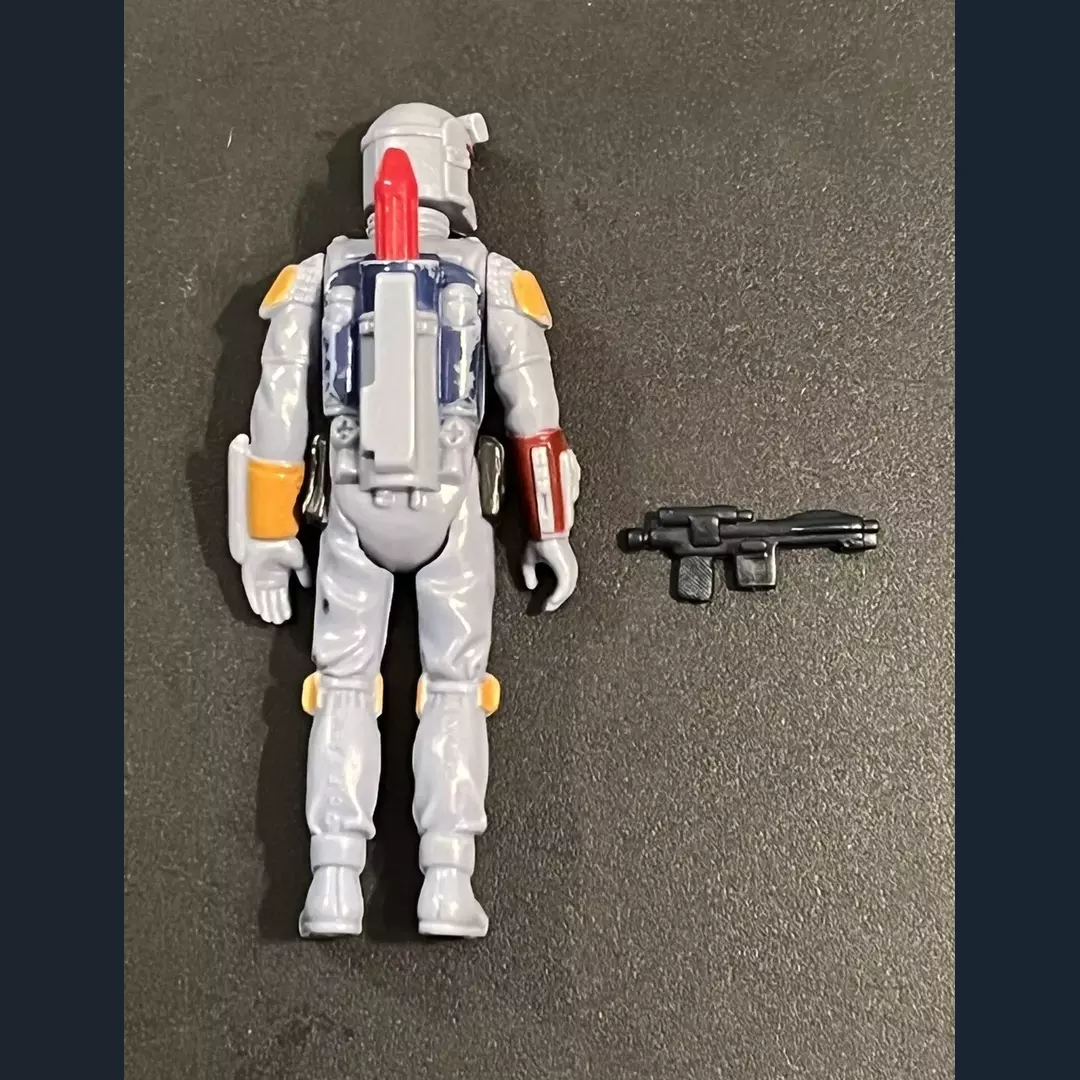
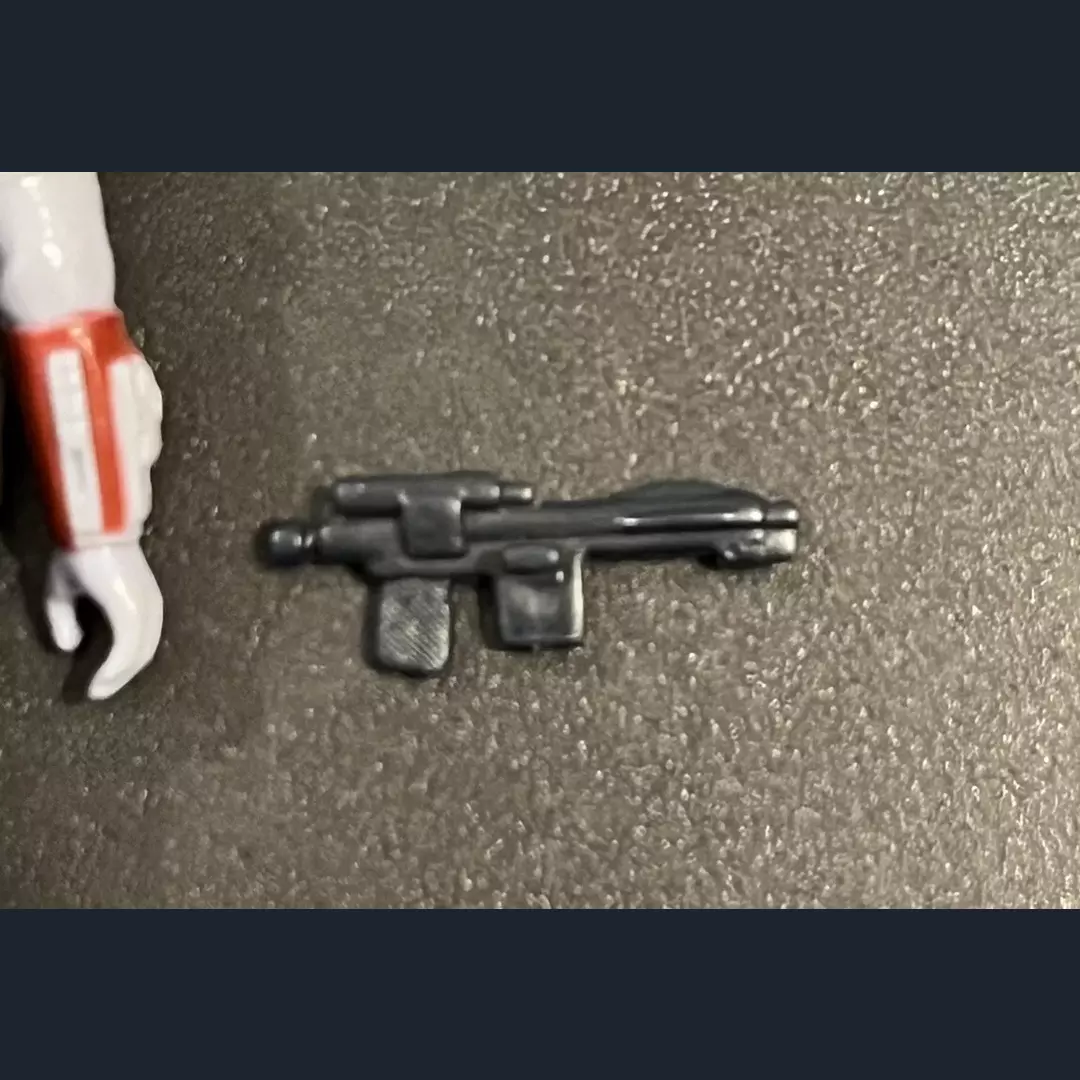
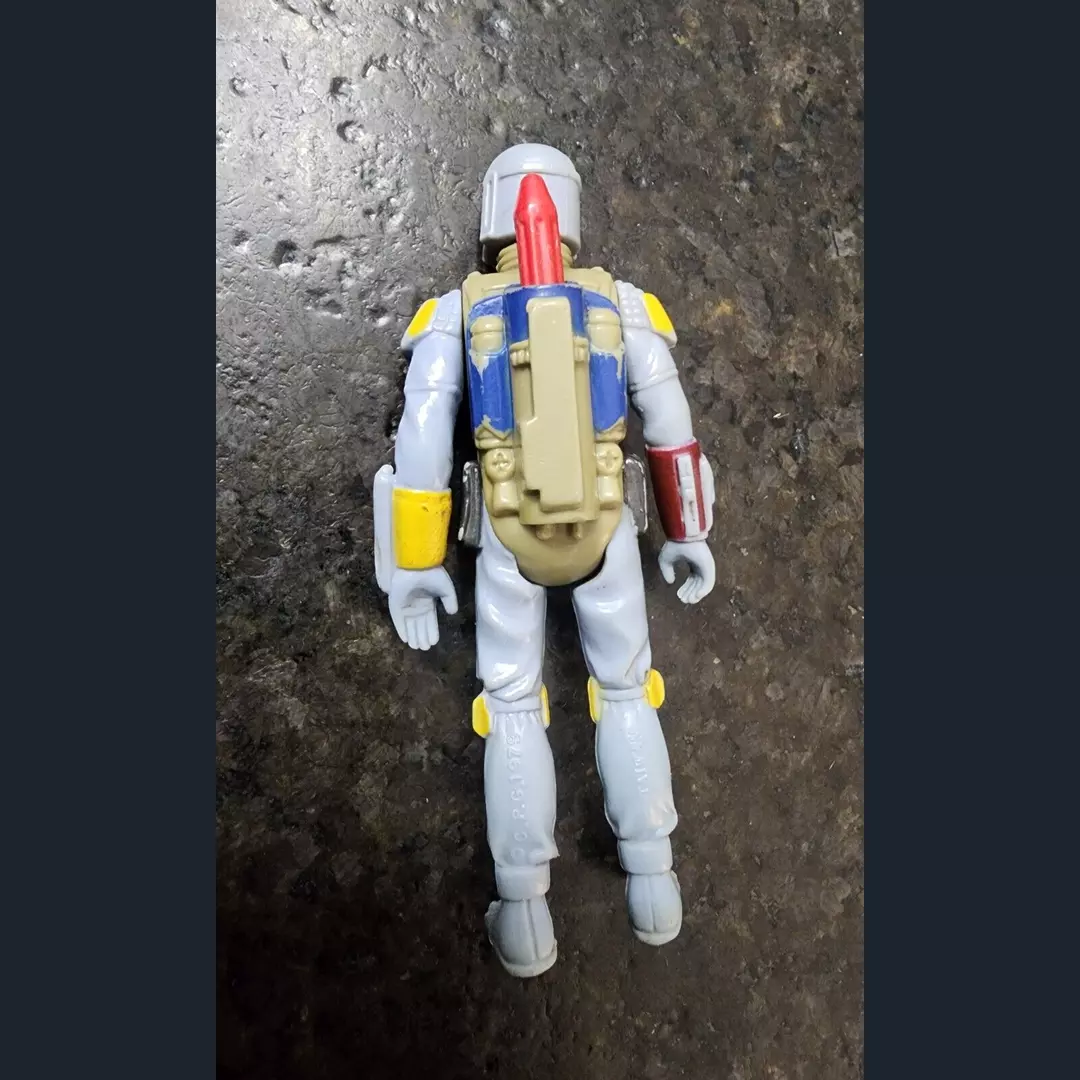
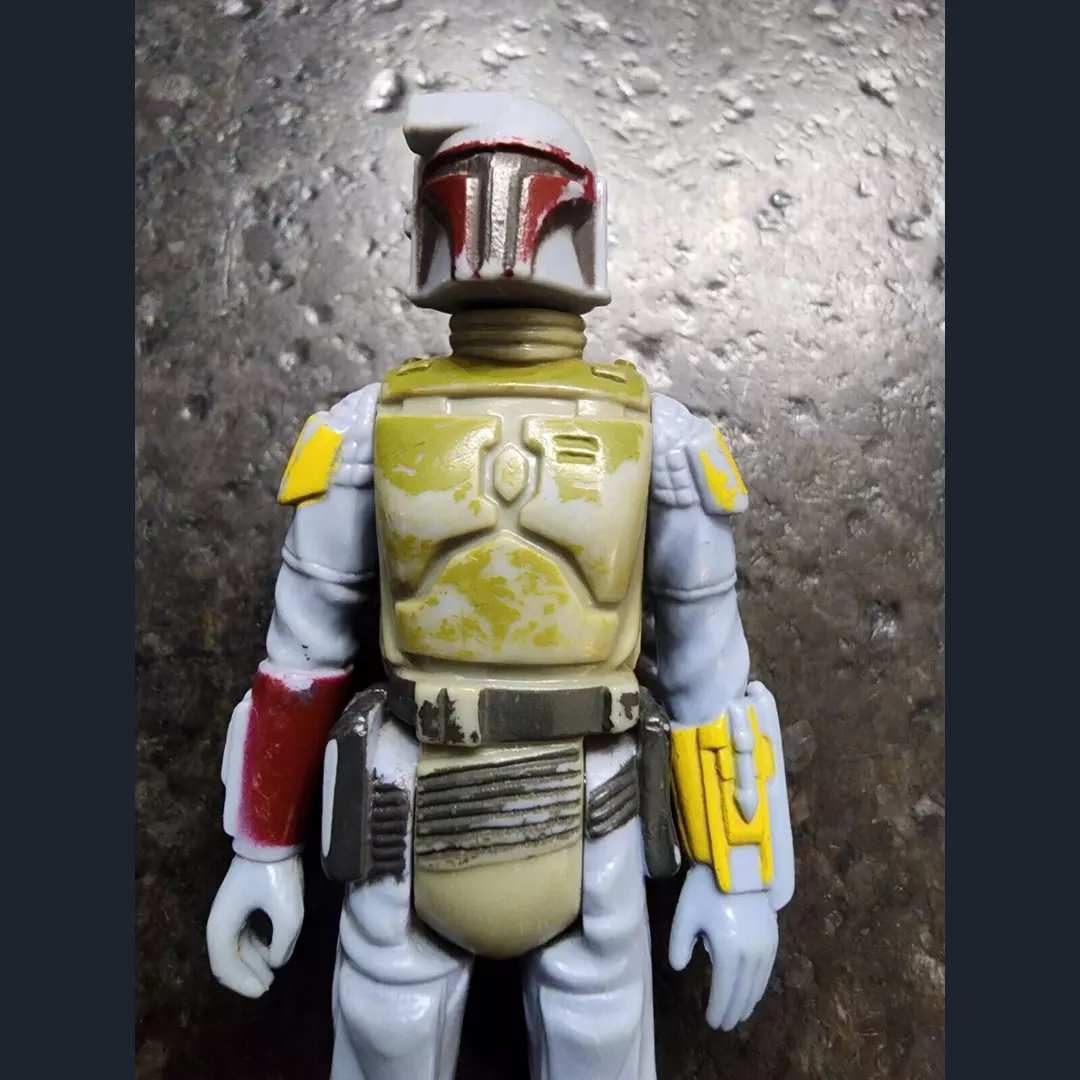
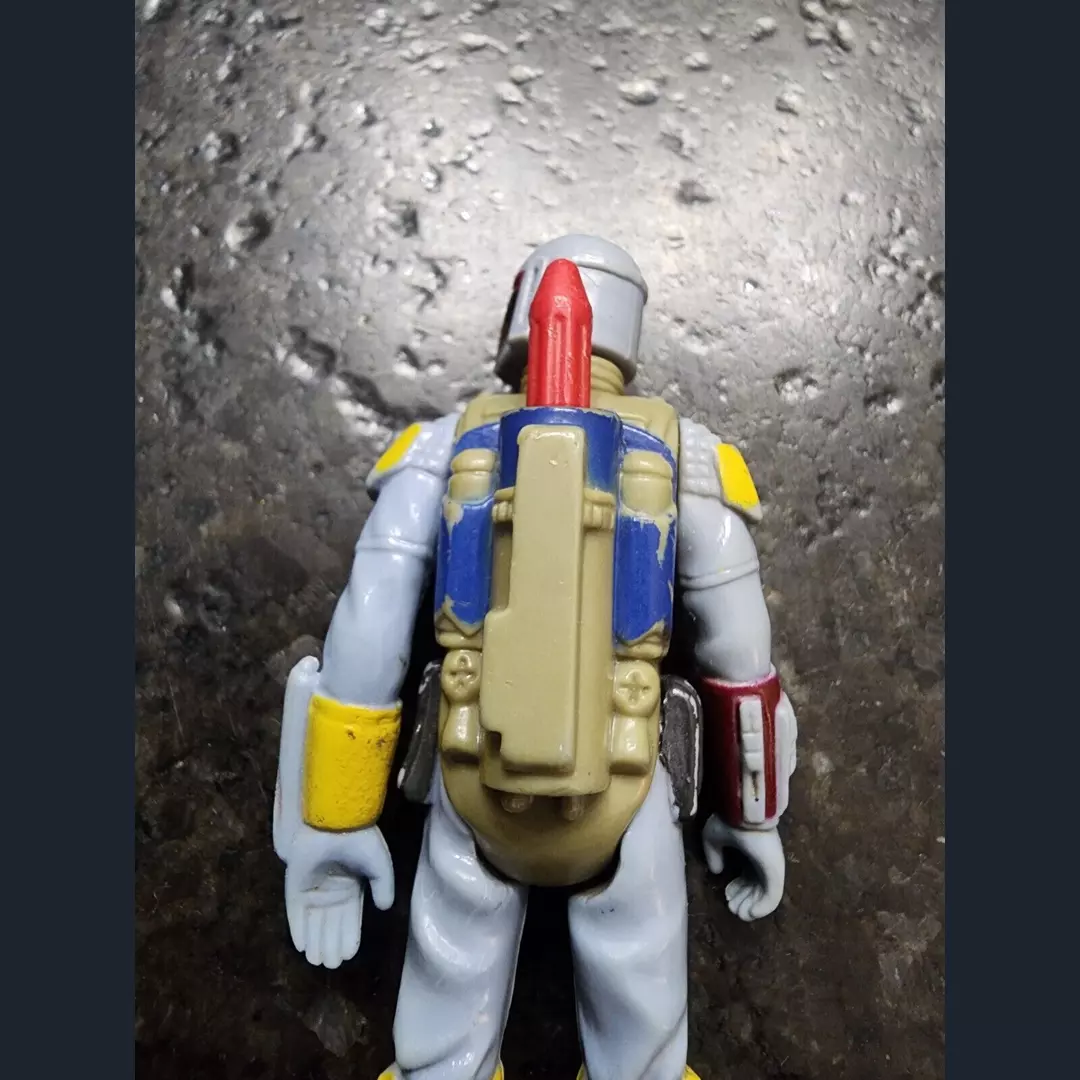
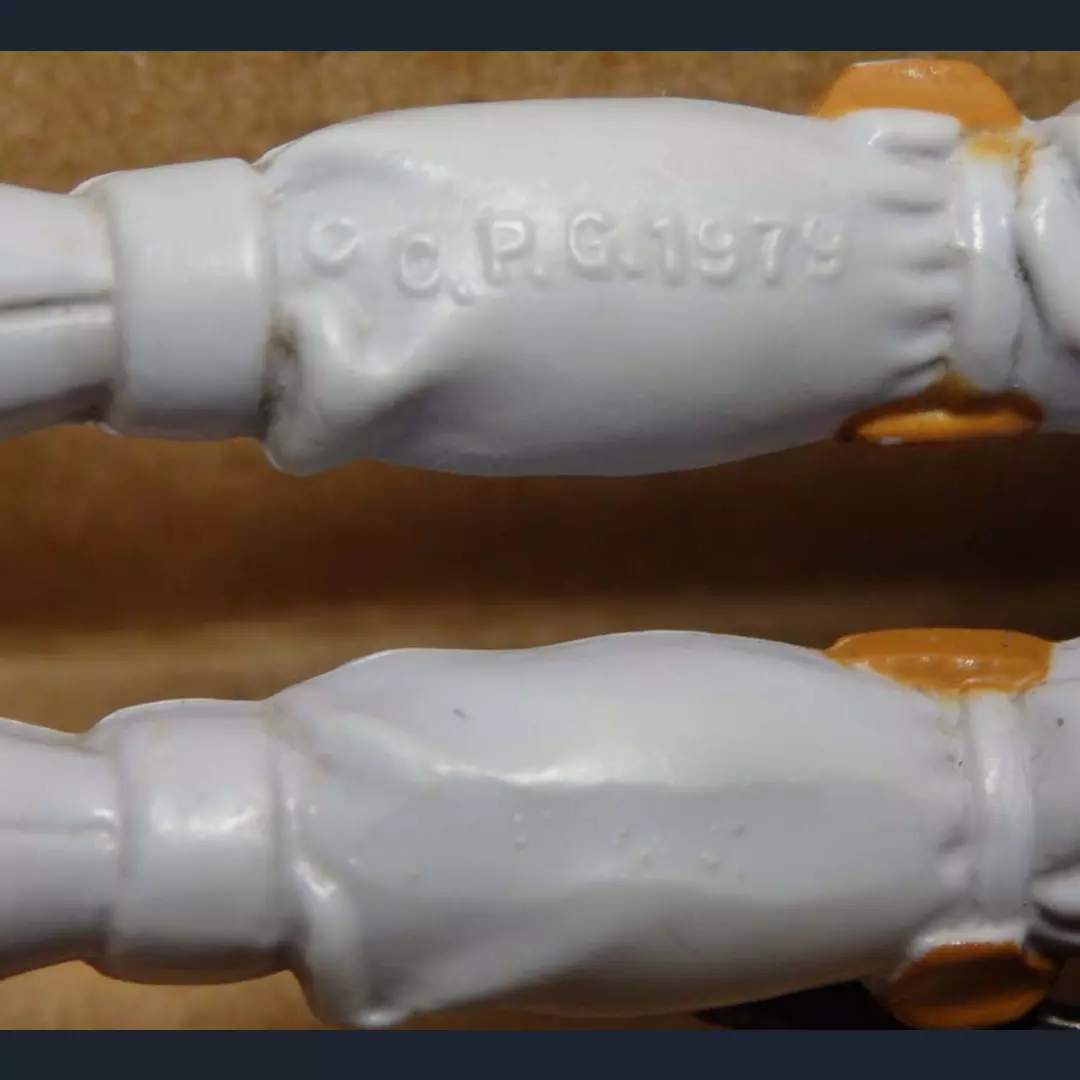
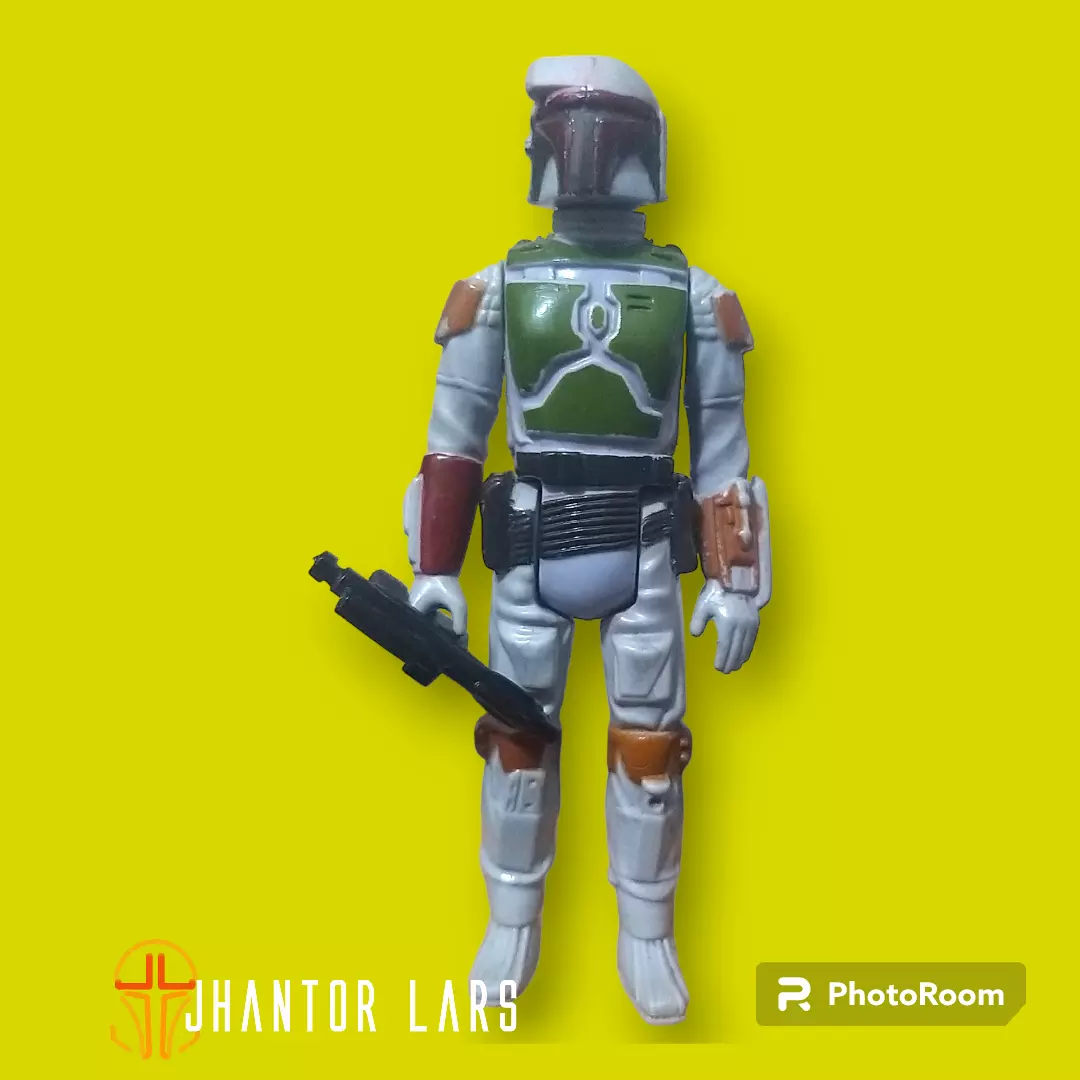
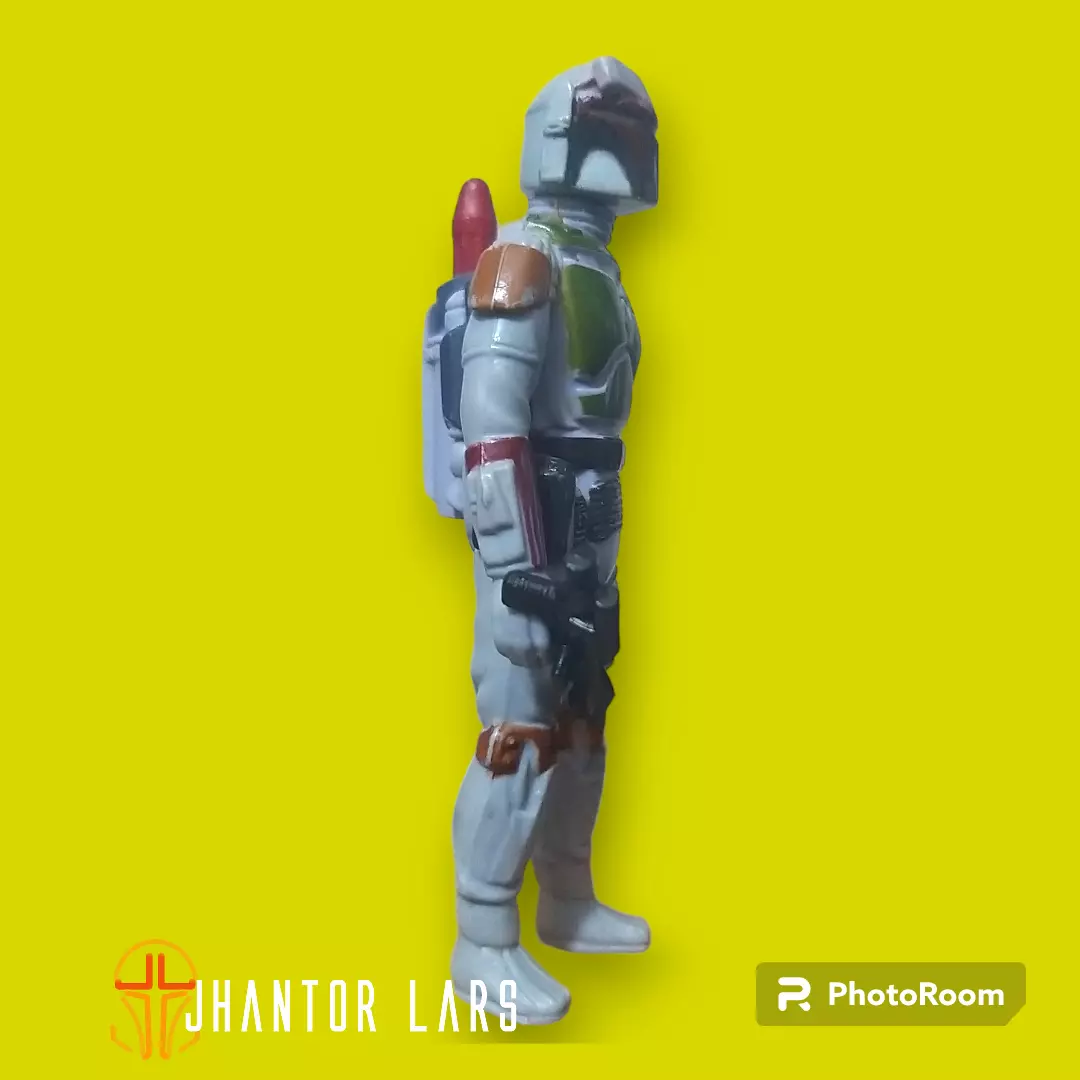
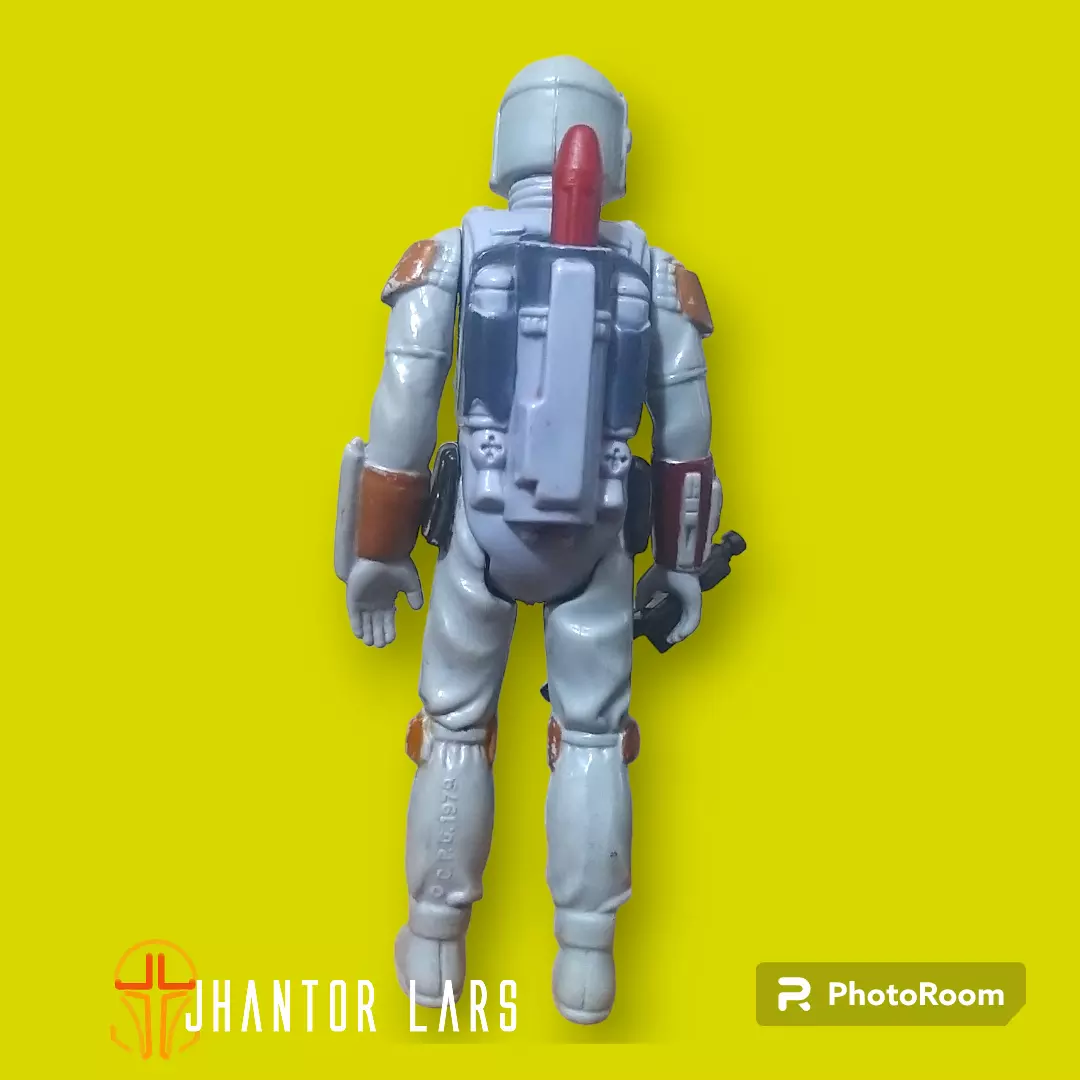
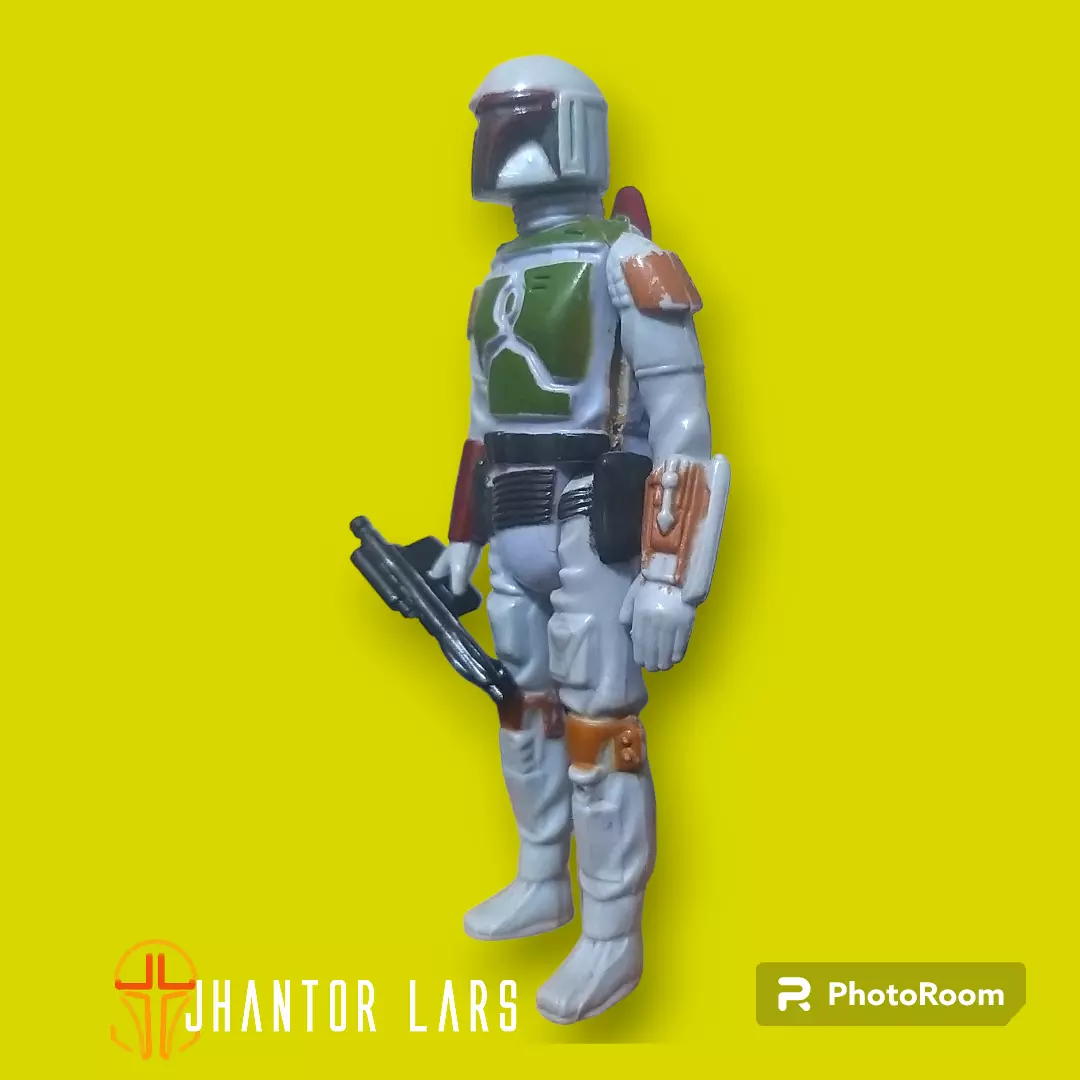
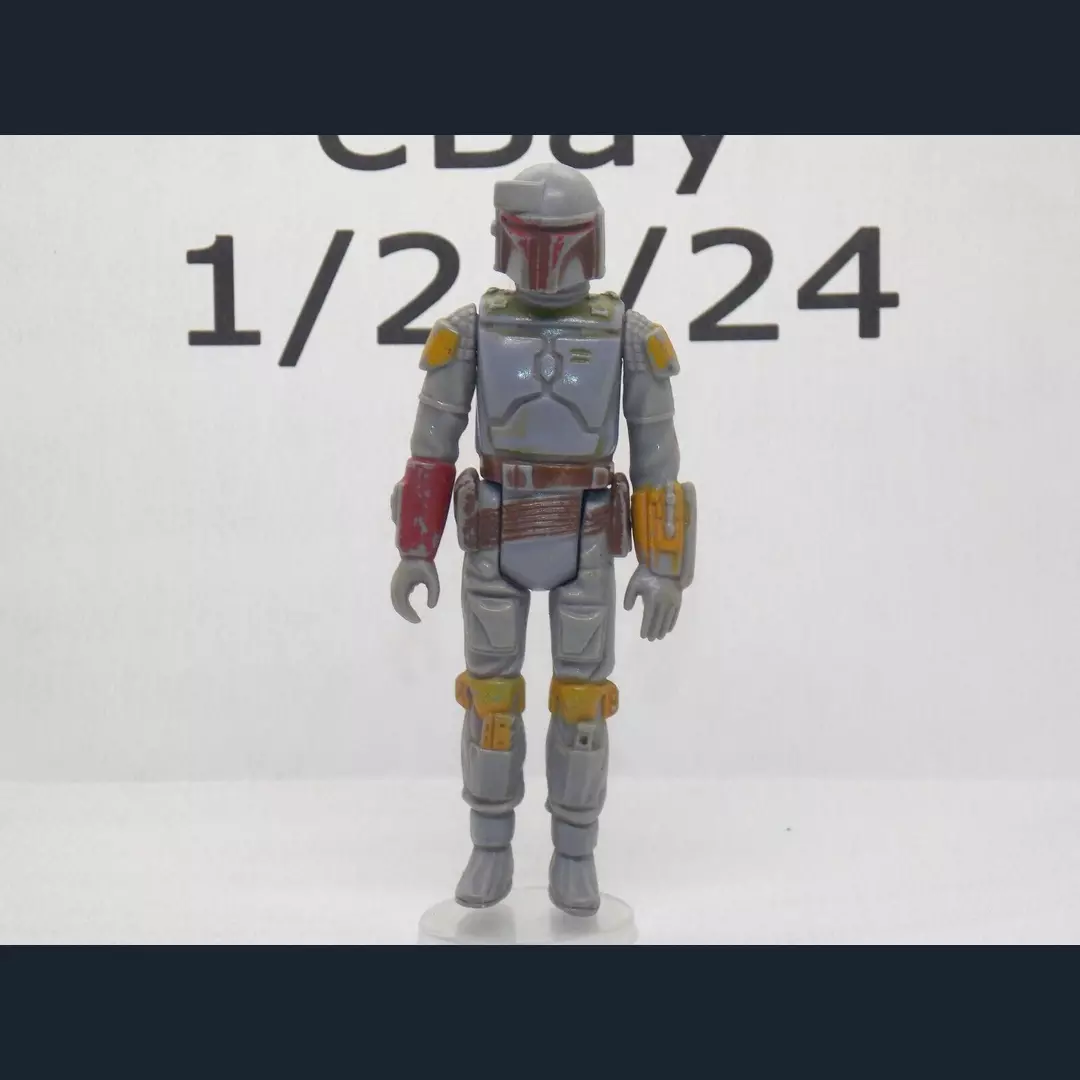
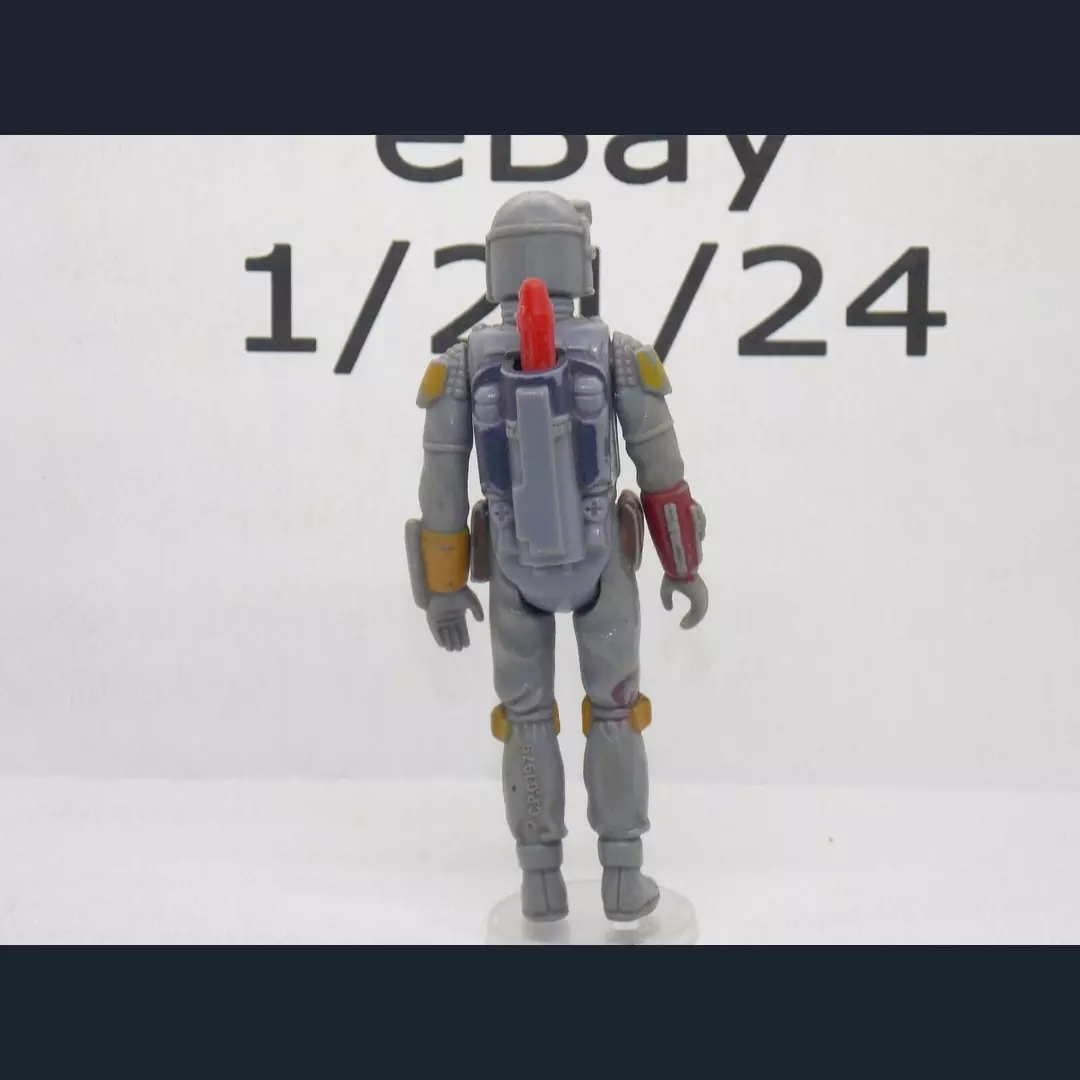
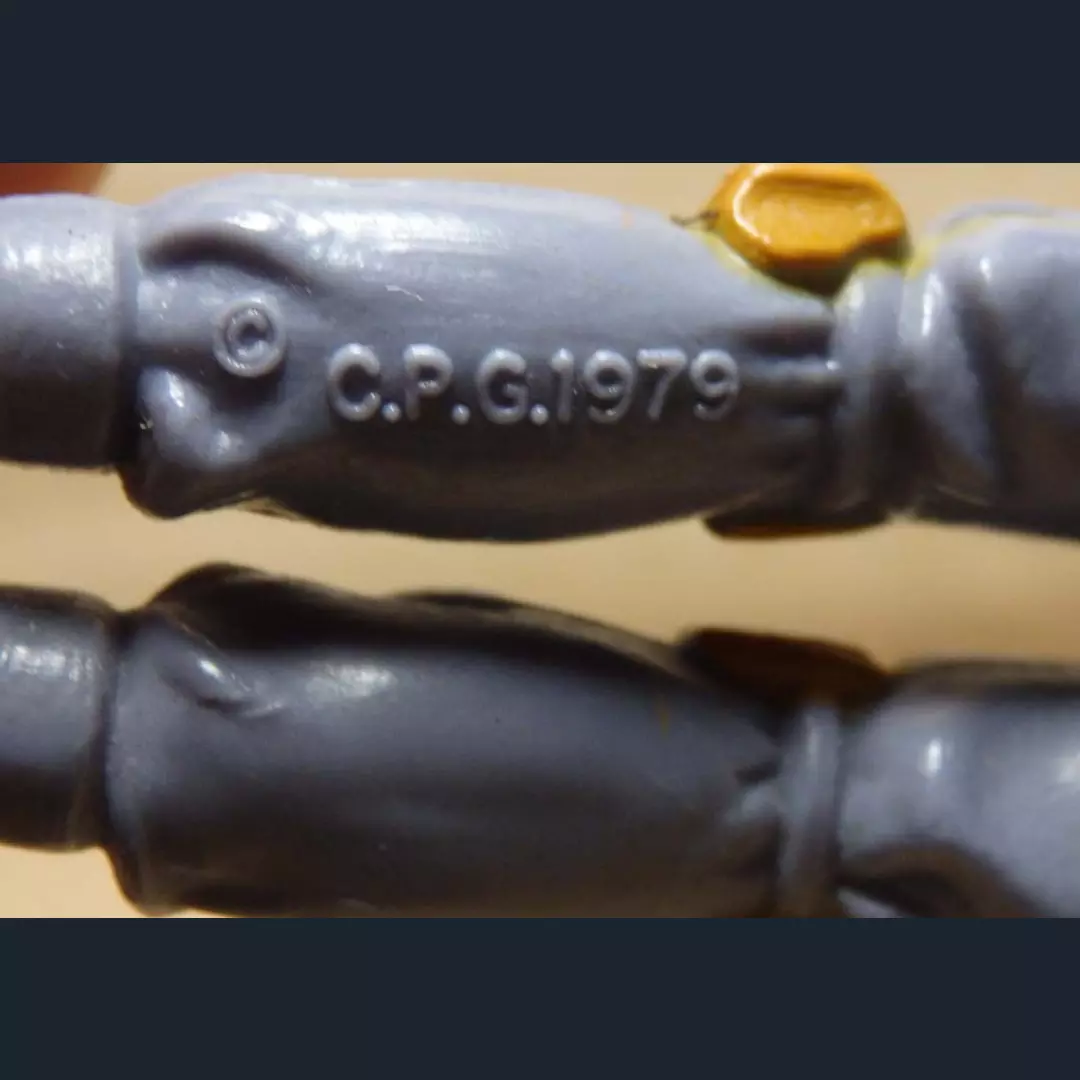
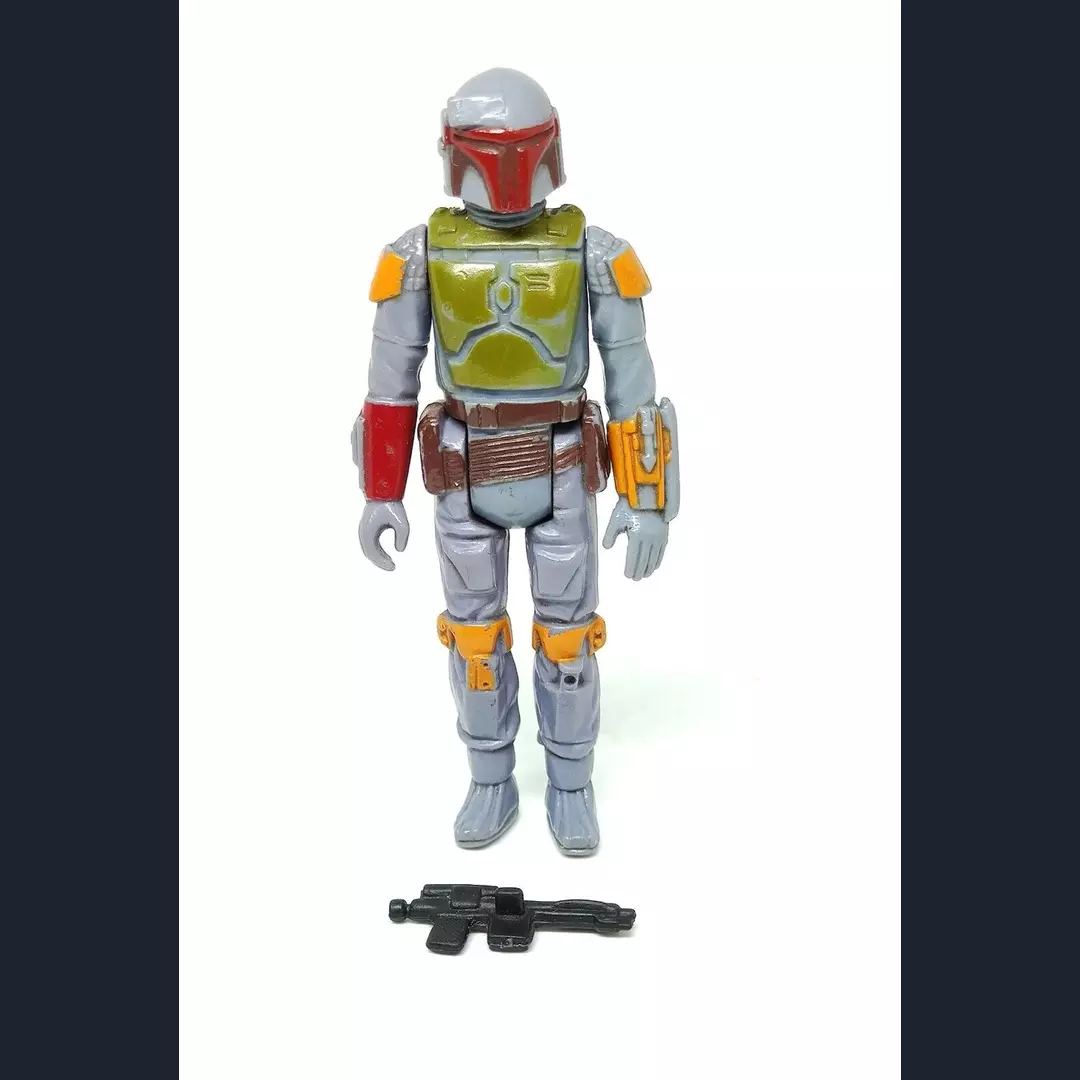
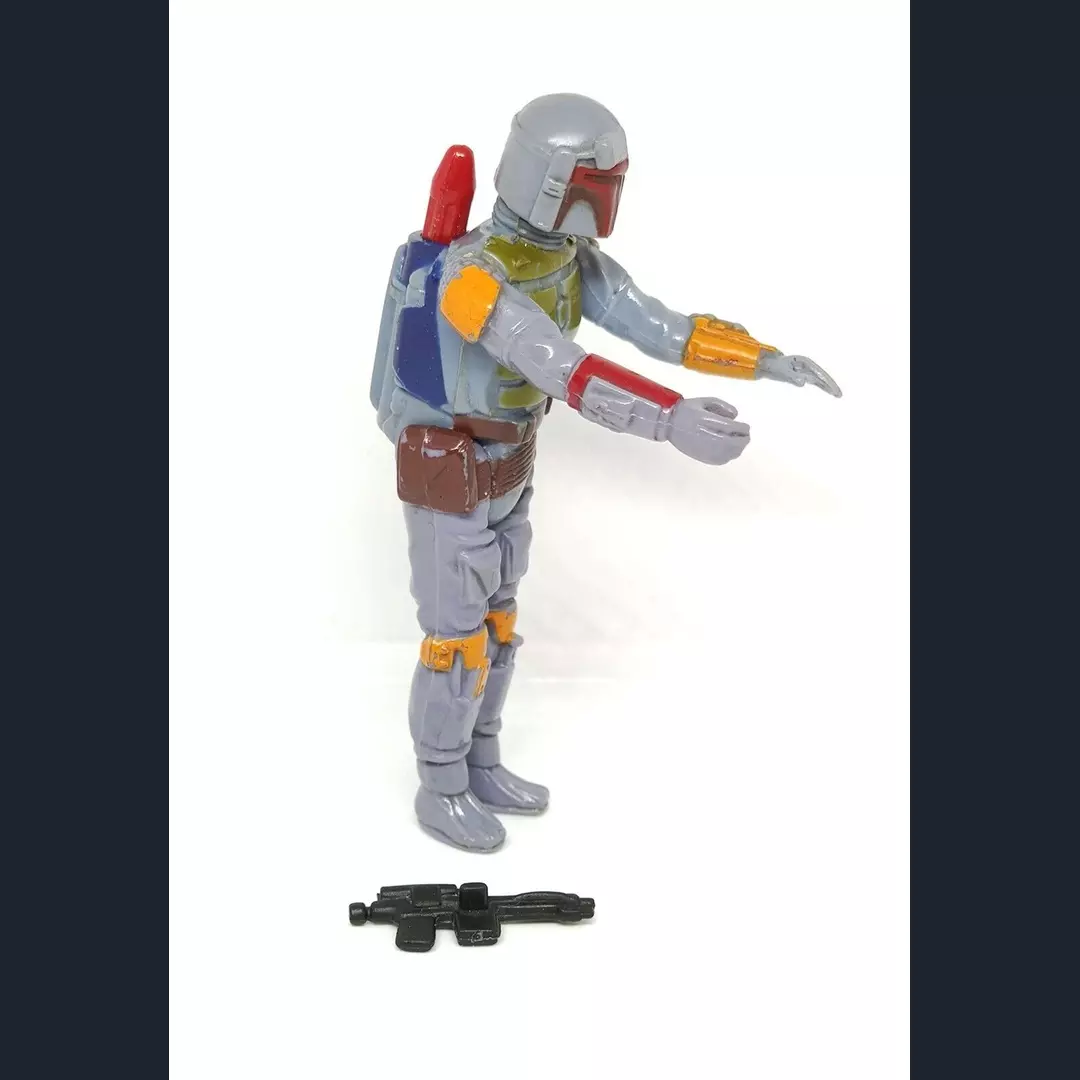
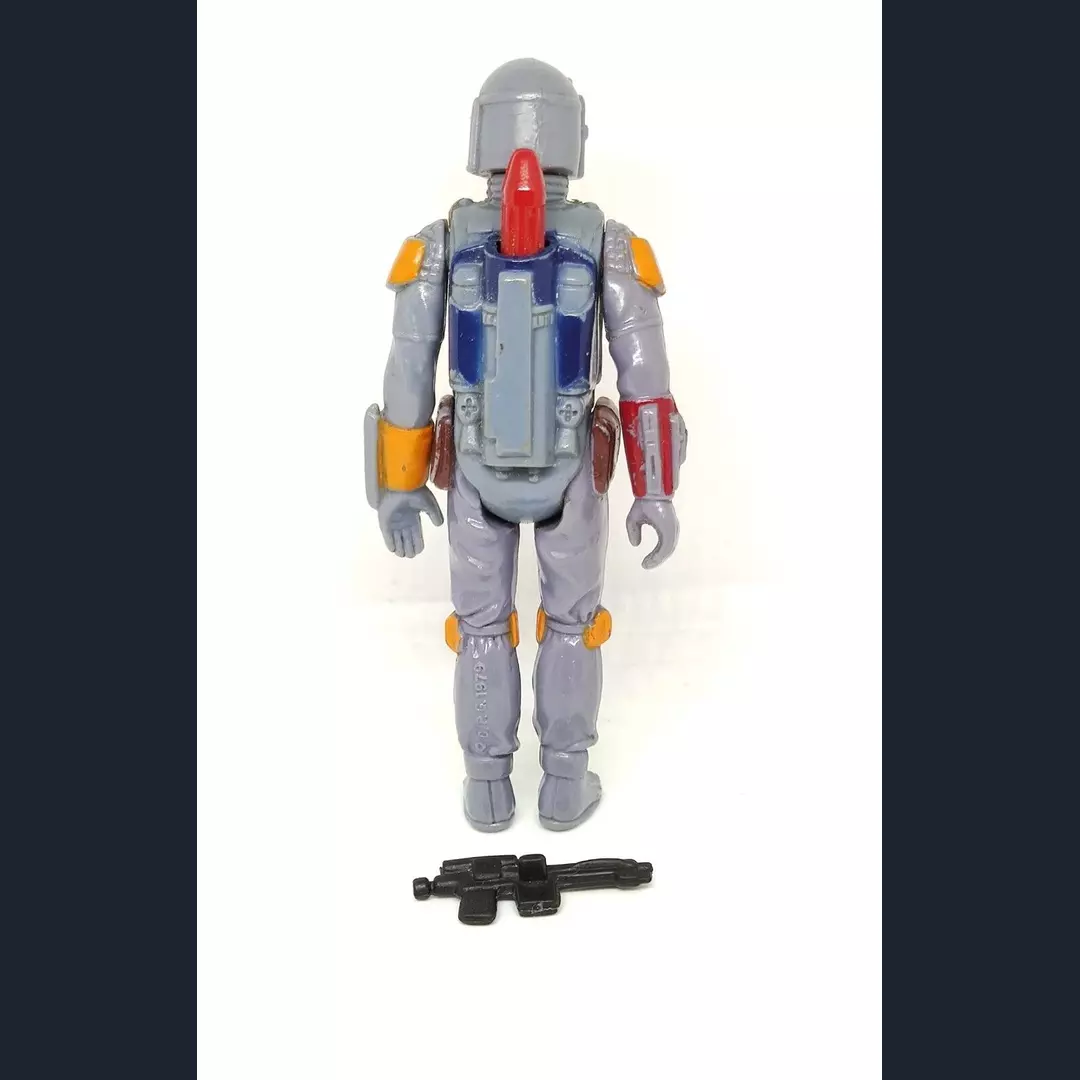
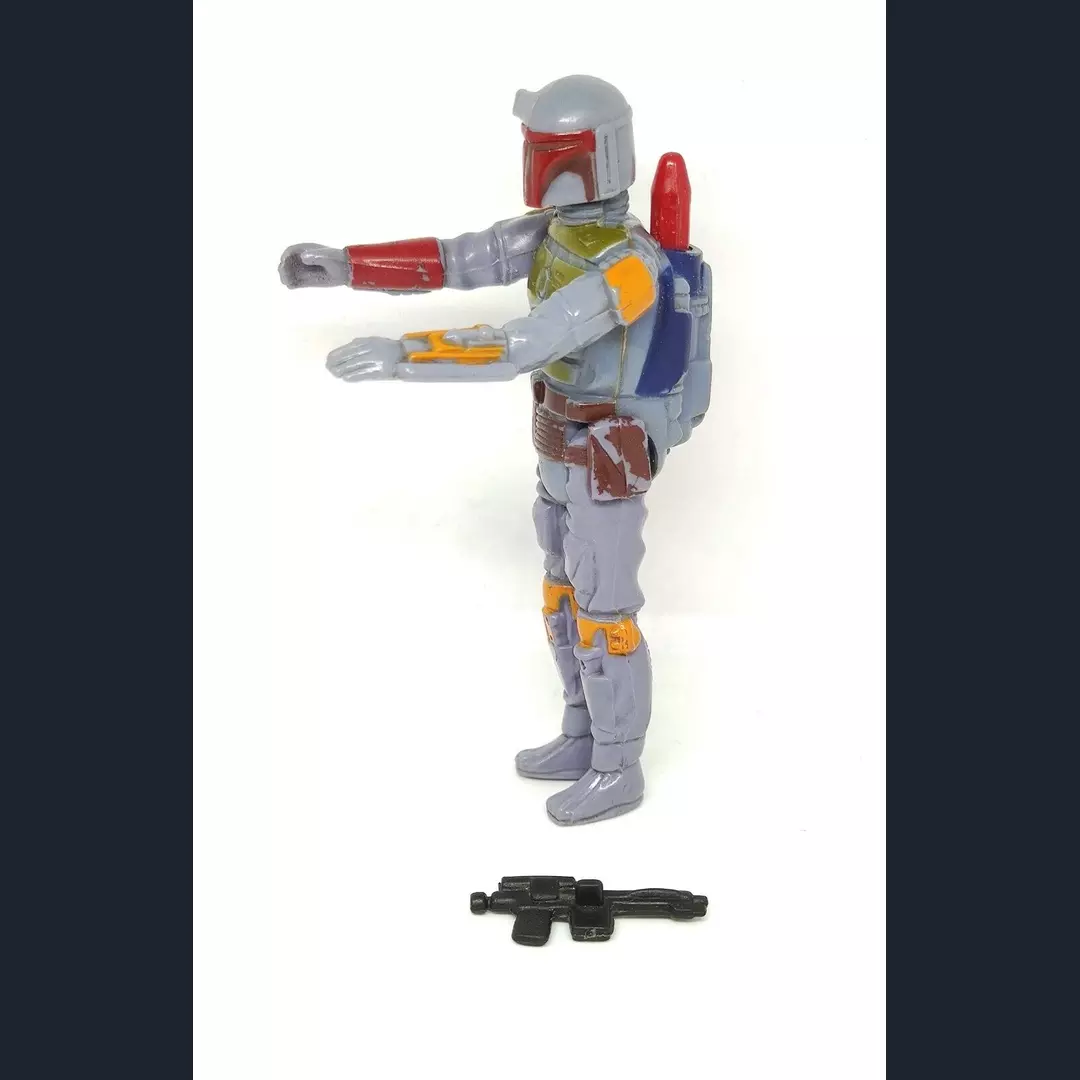
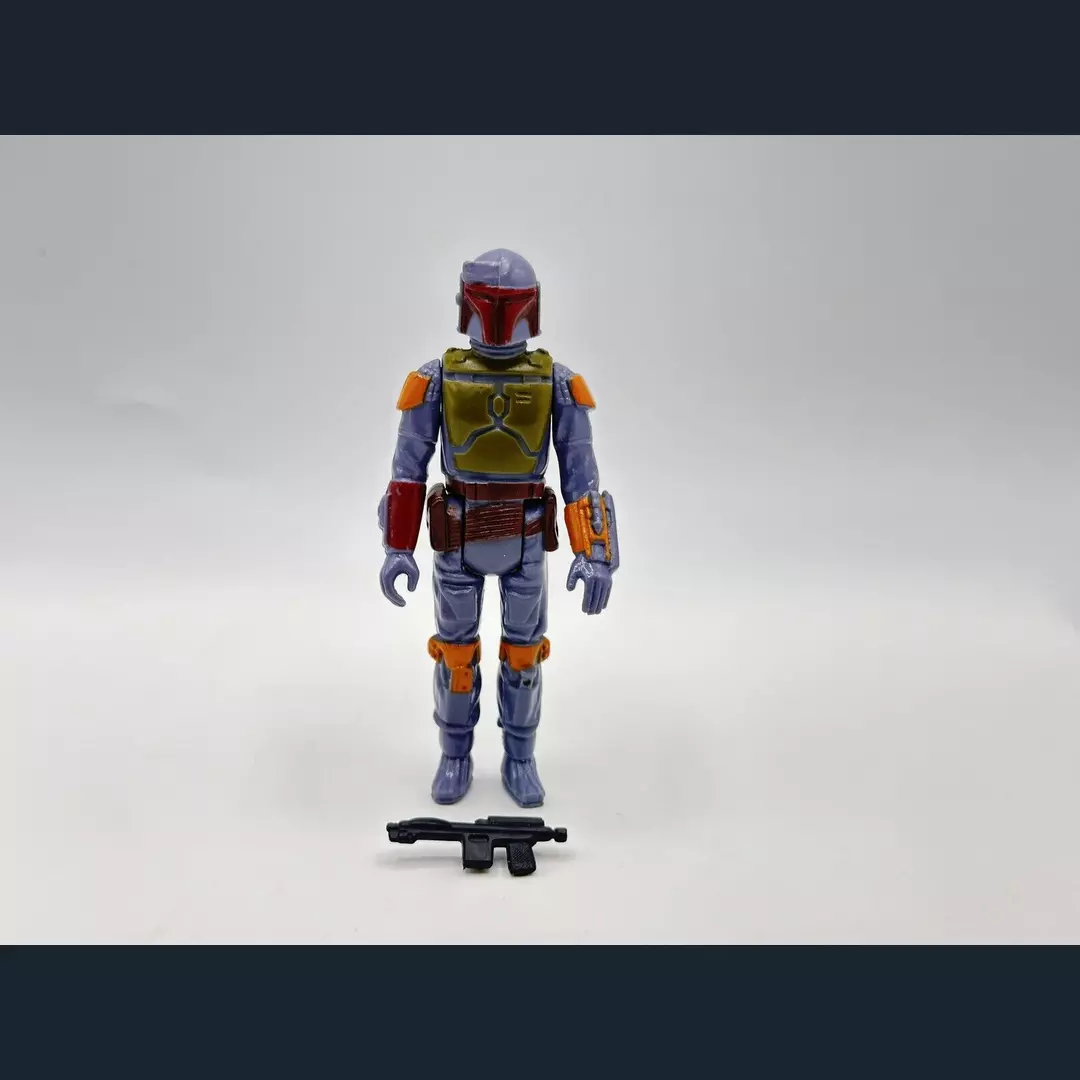
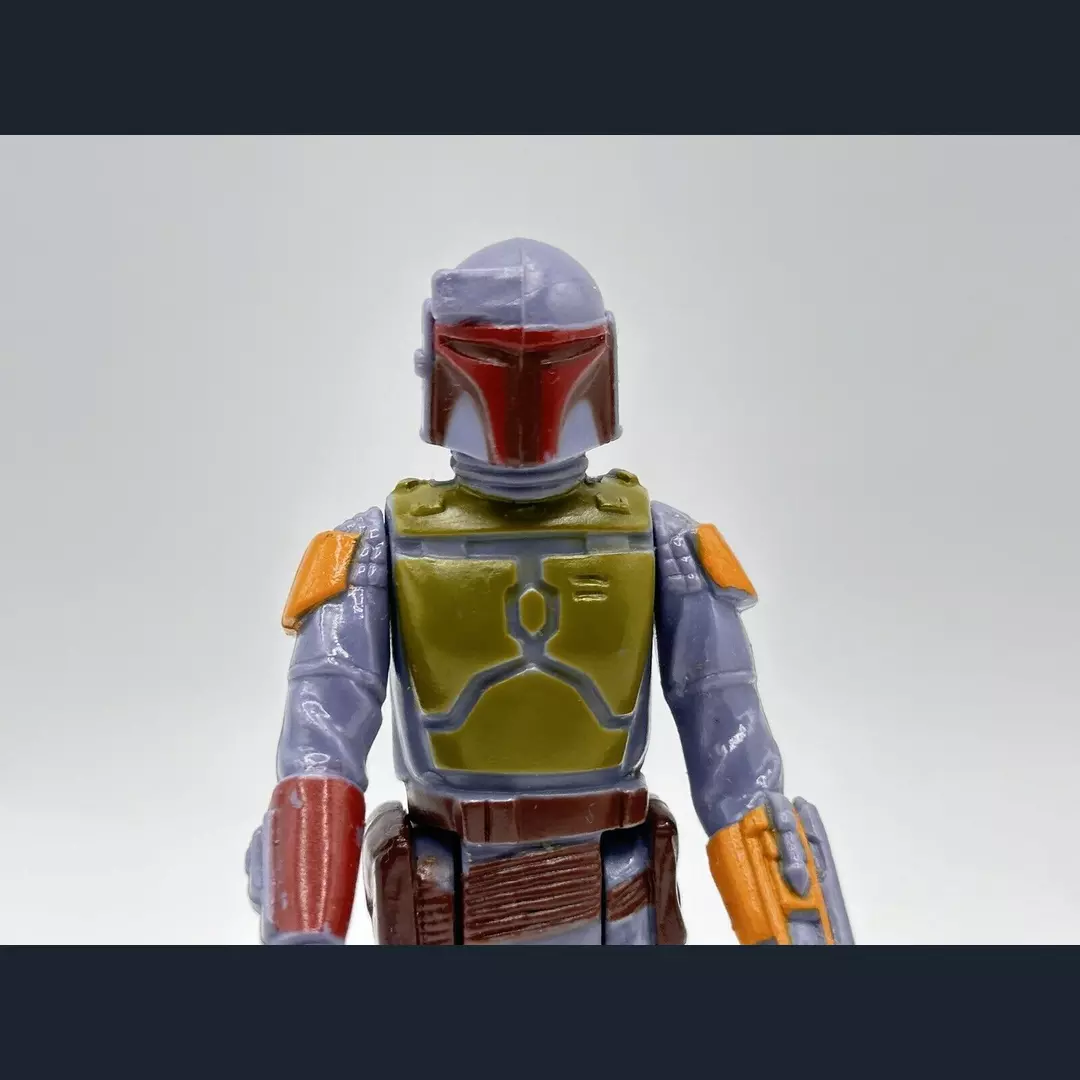
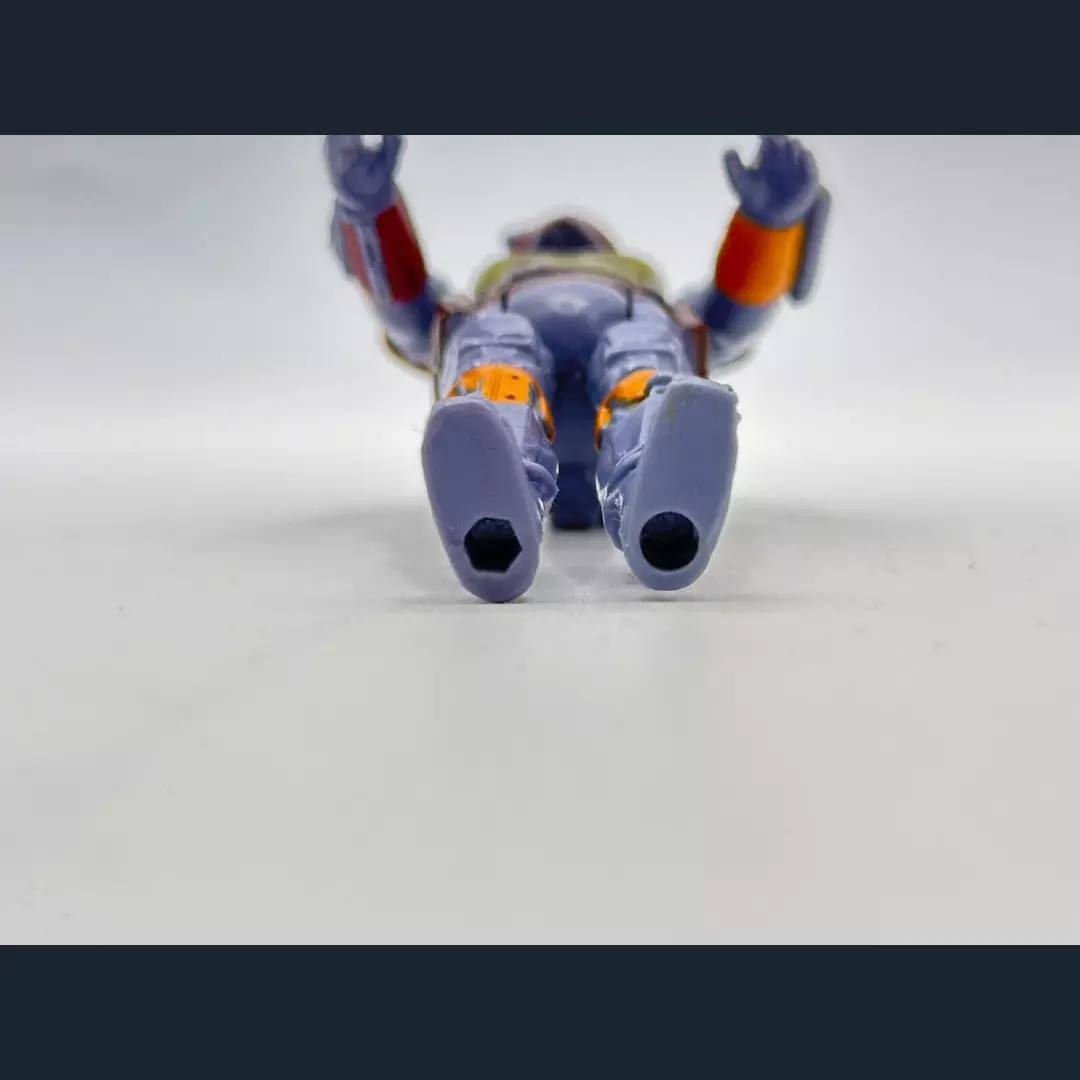
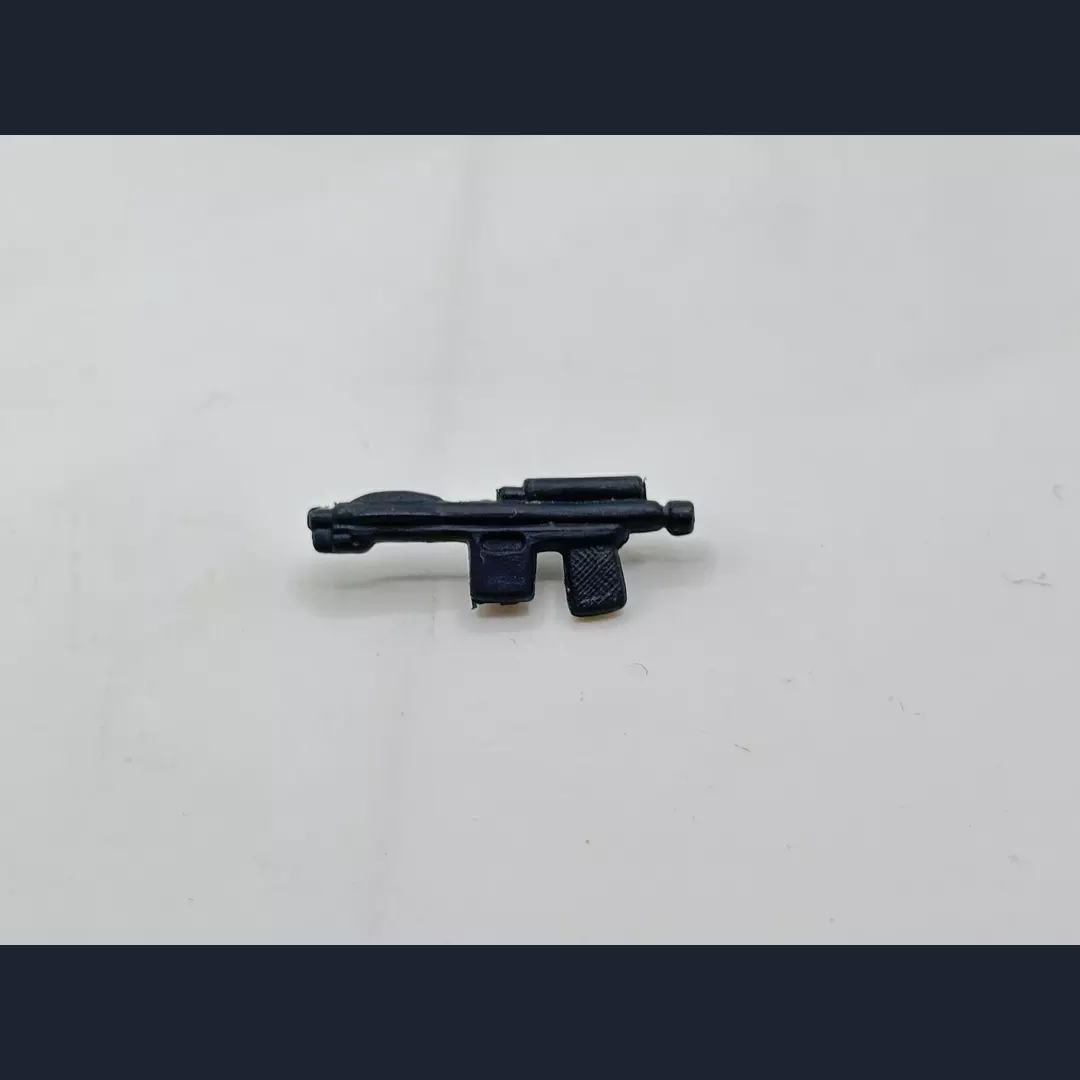
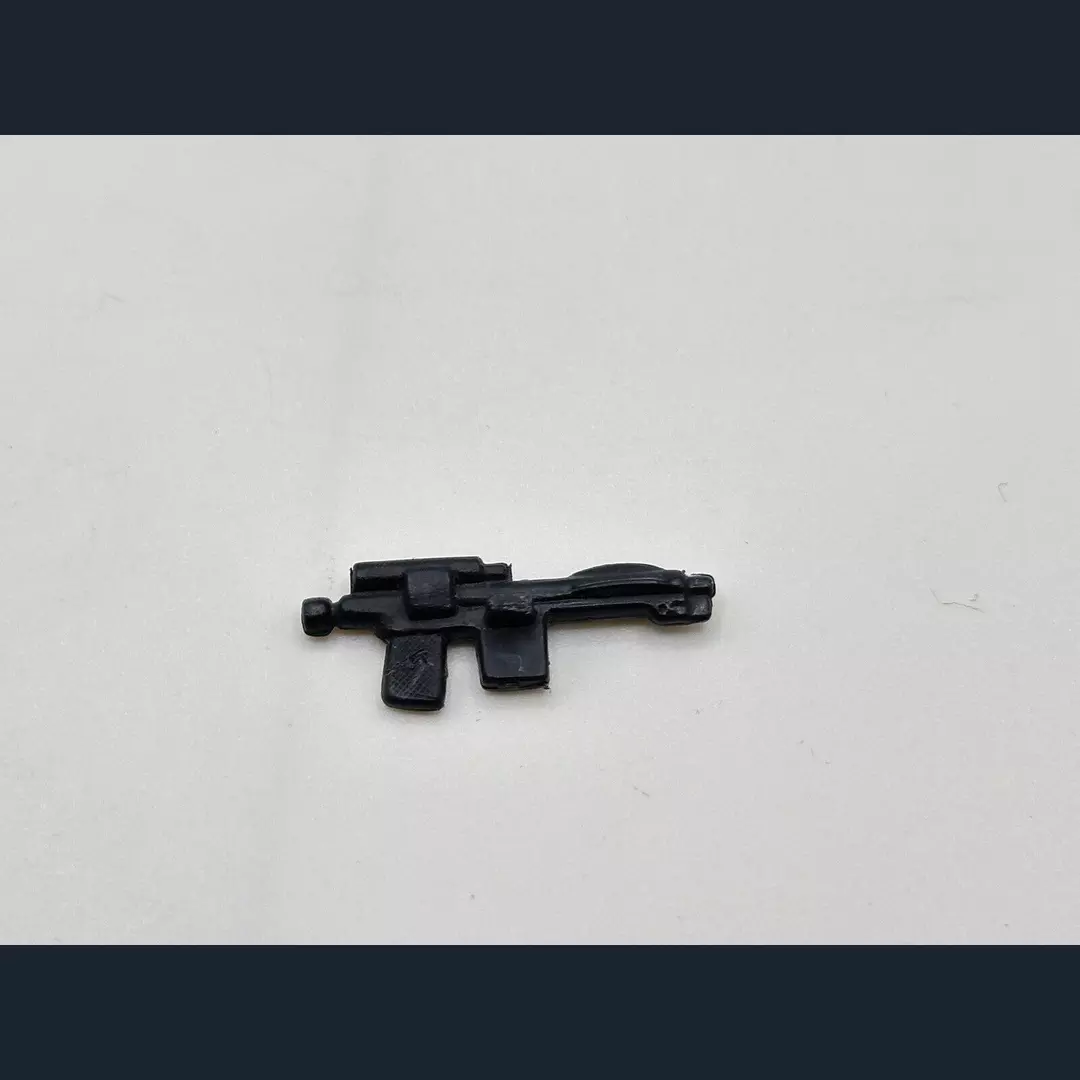
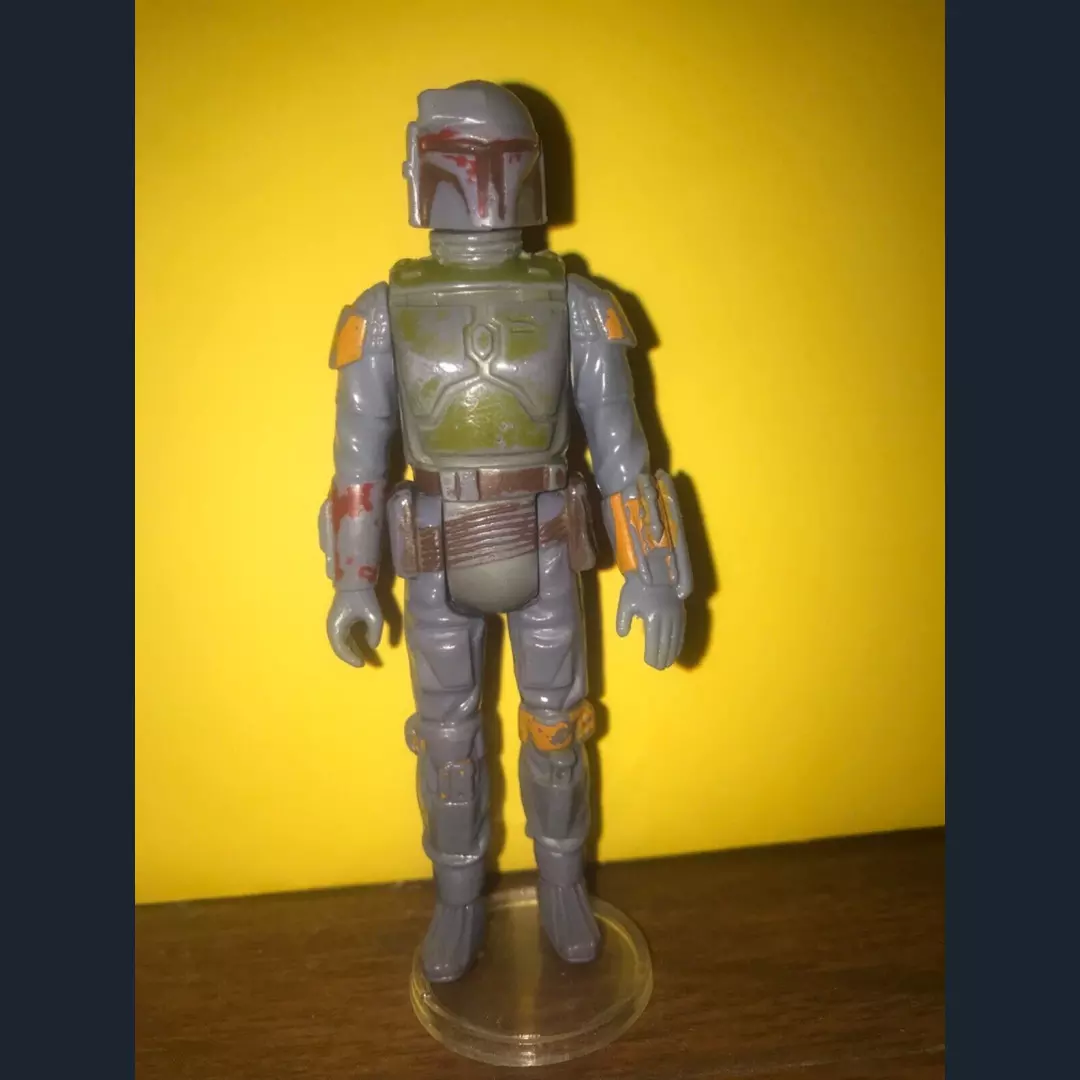
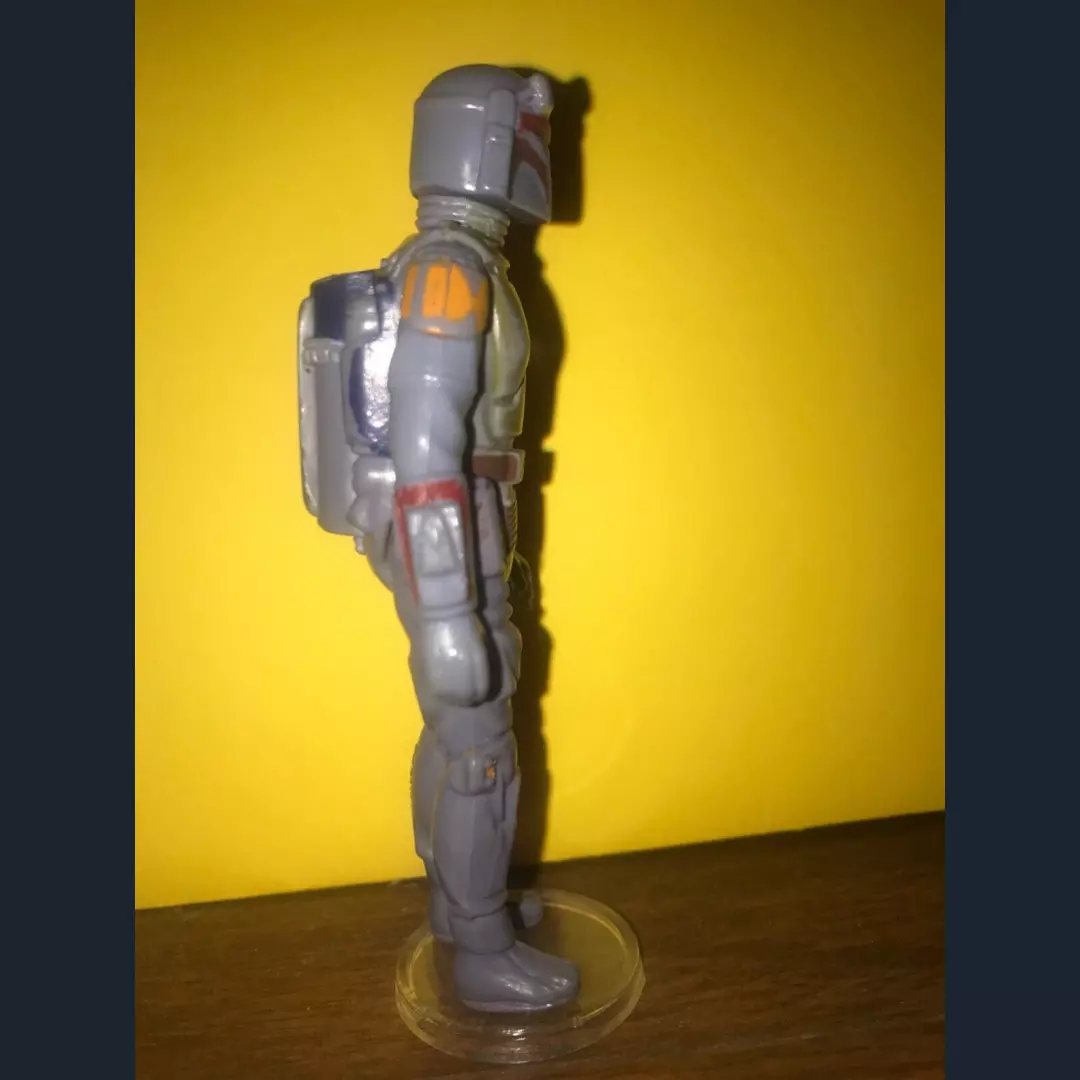
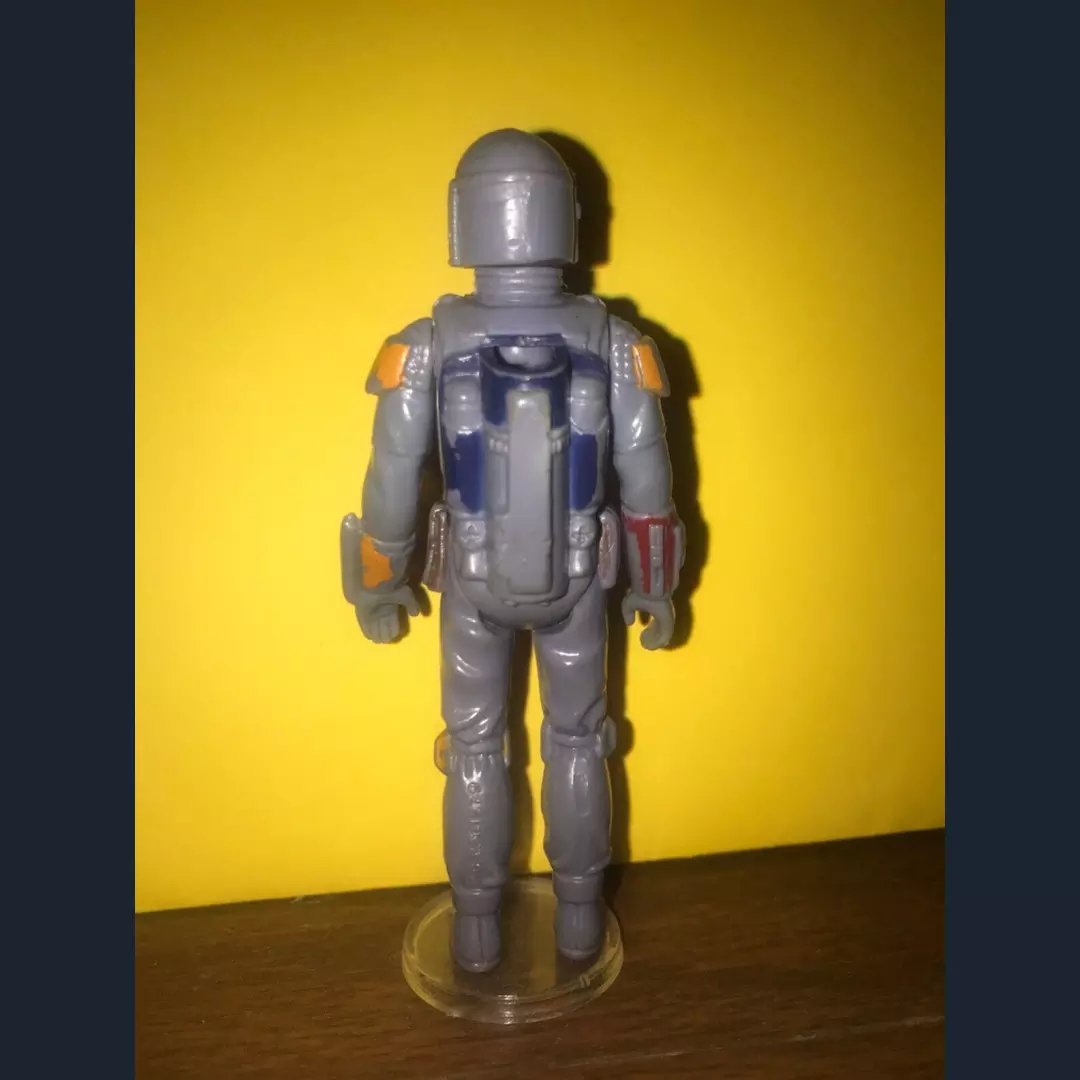
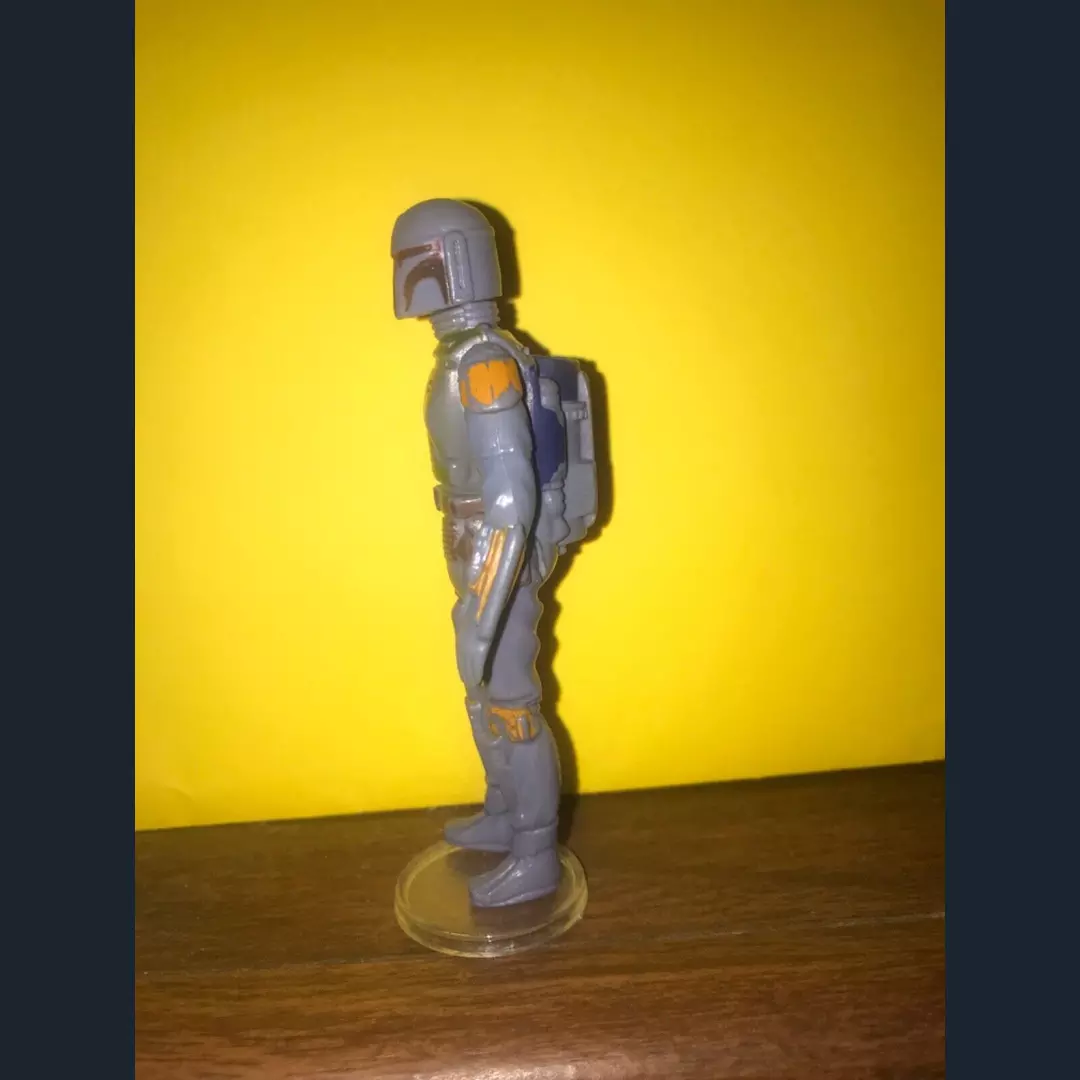
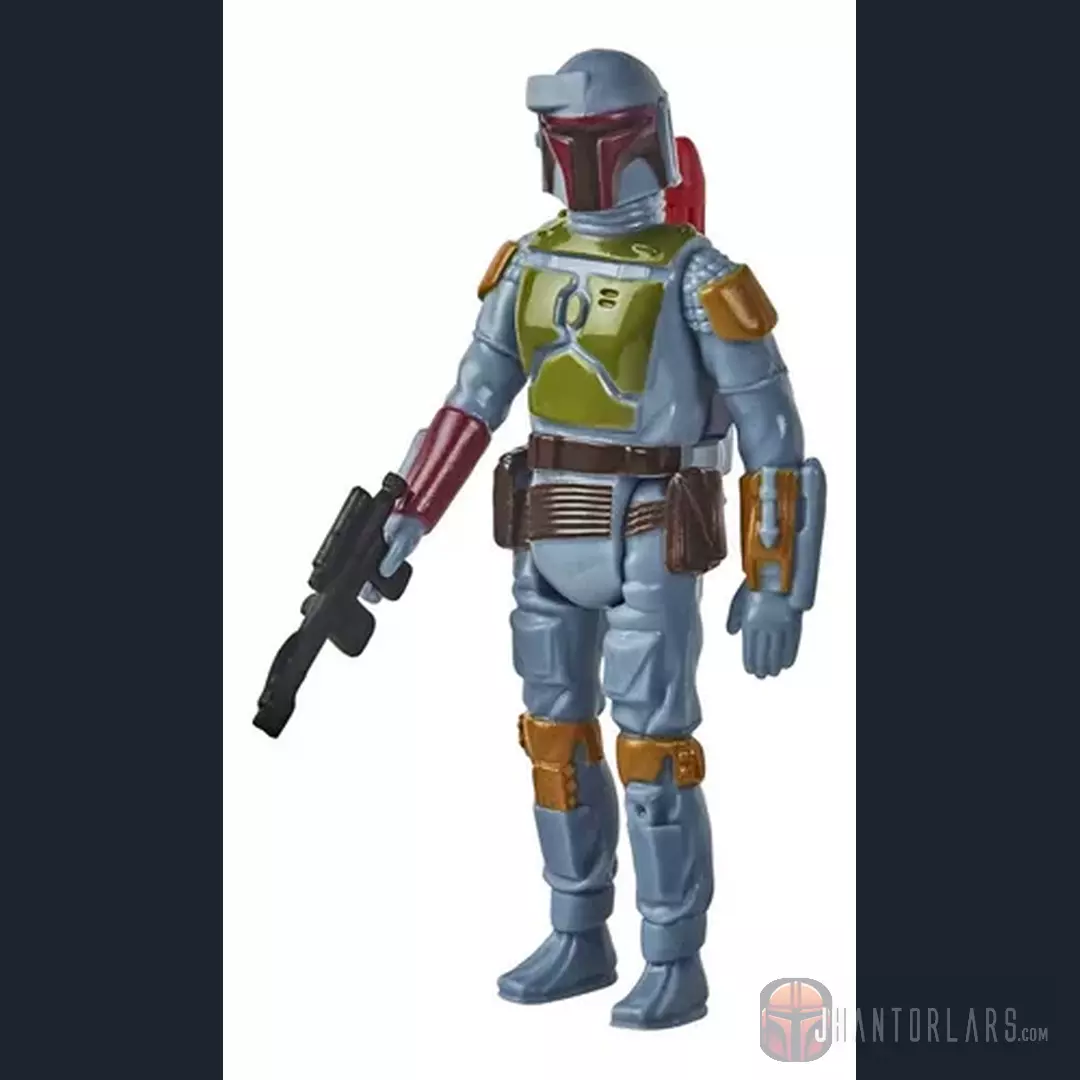
Sobre las variantes: lo que cambia, lo que se repite y lo que nadie puede explicar del todo
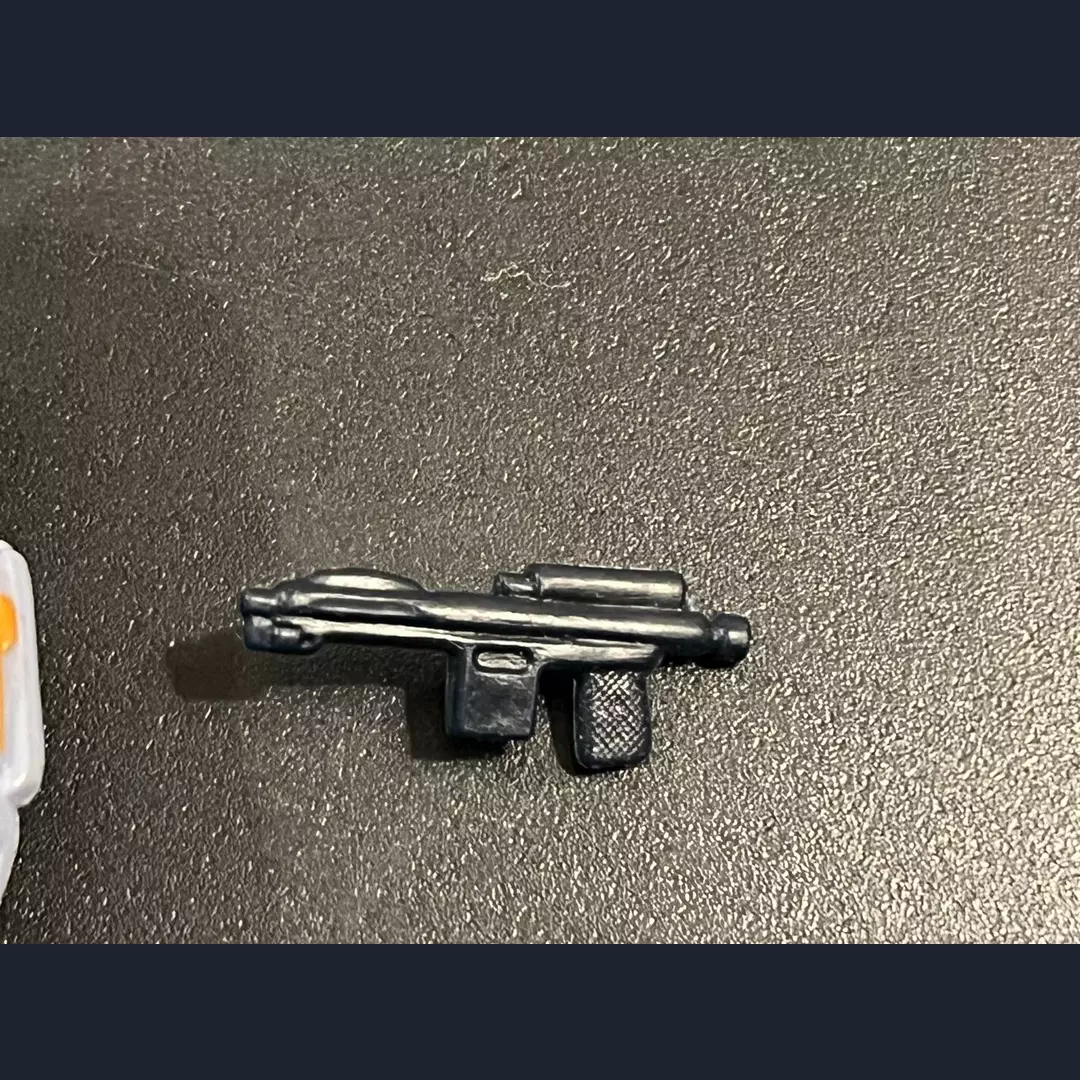
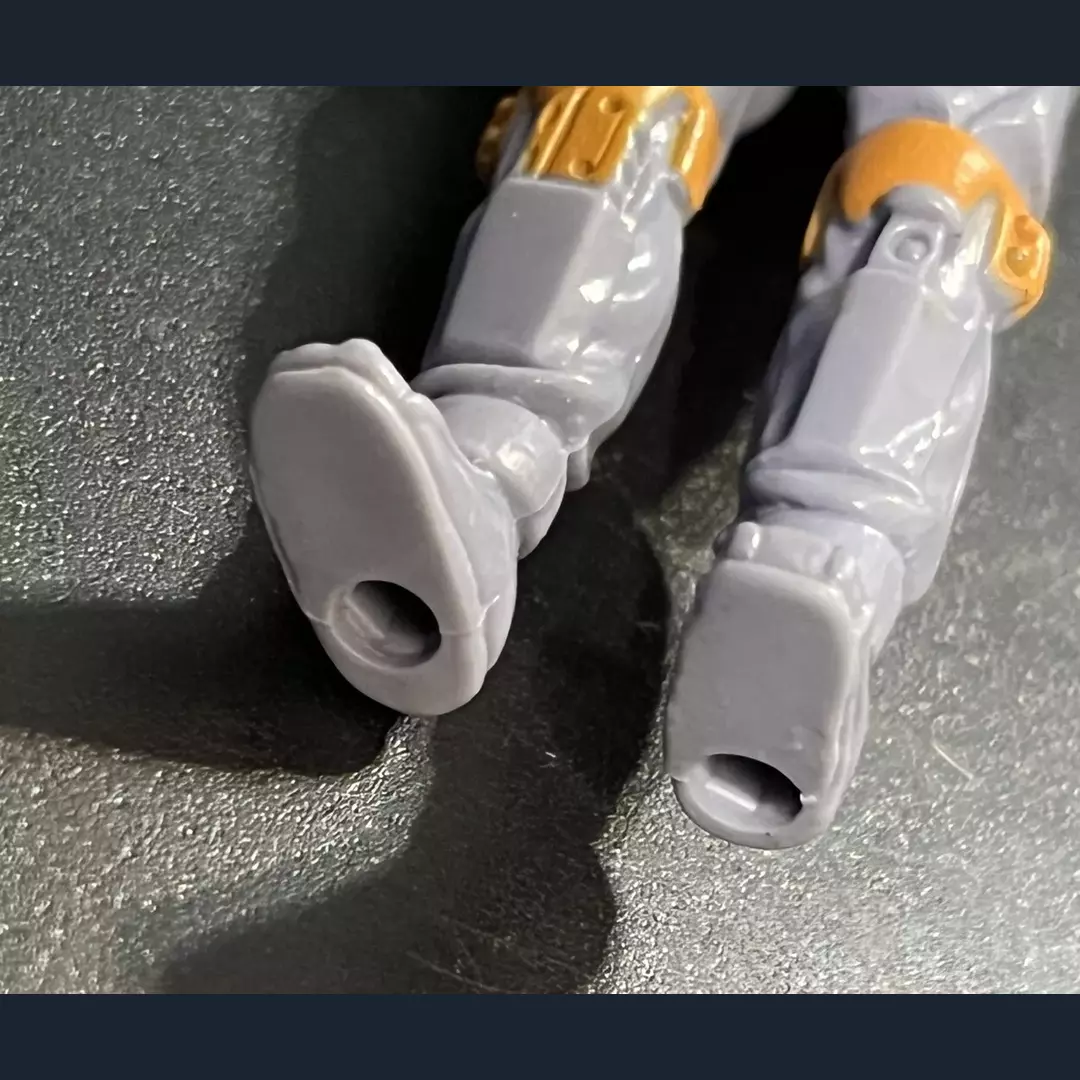
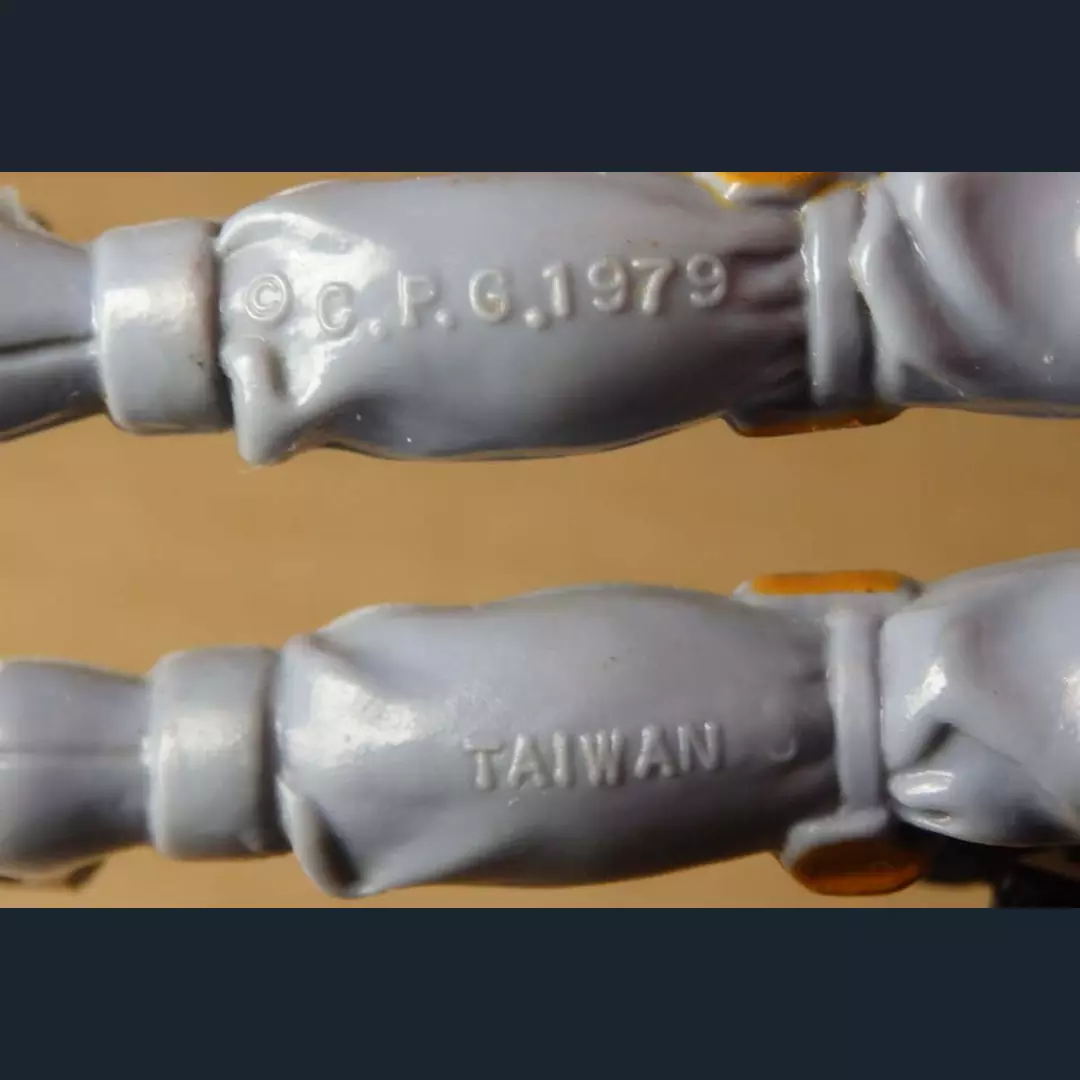
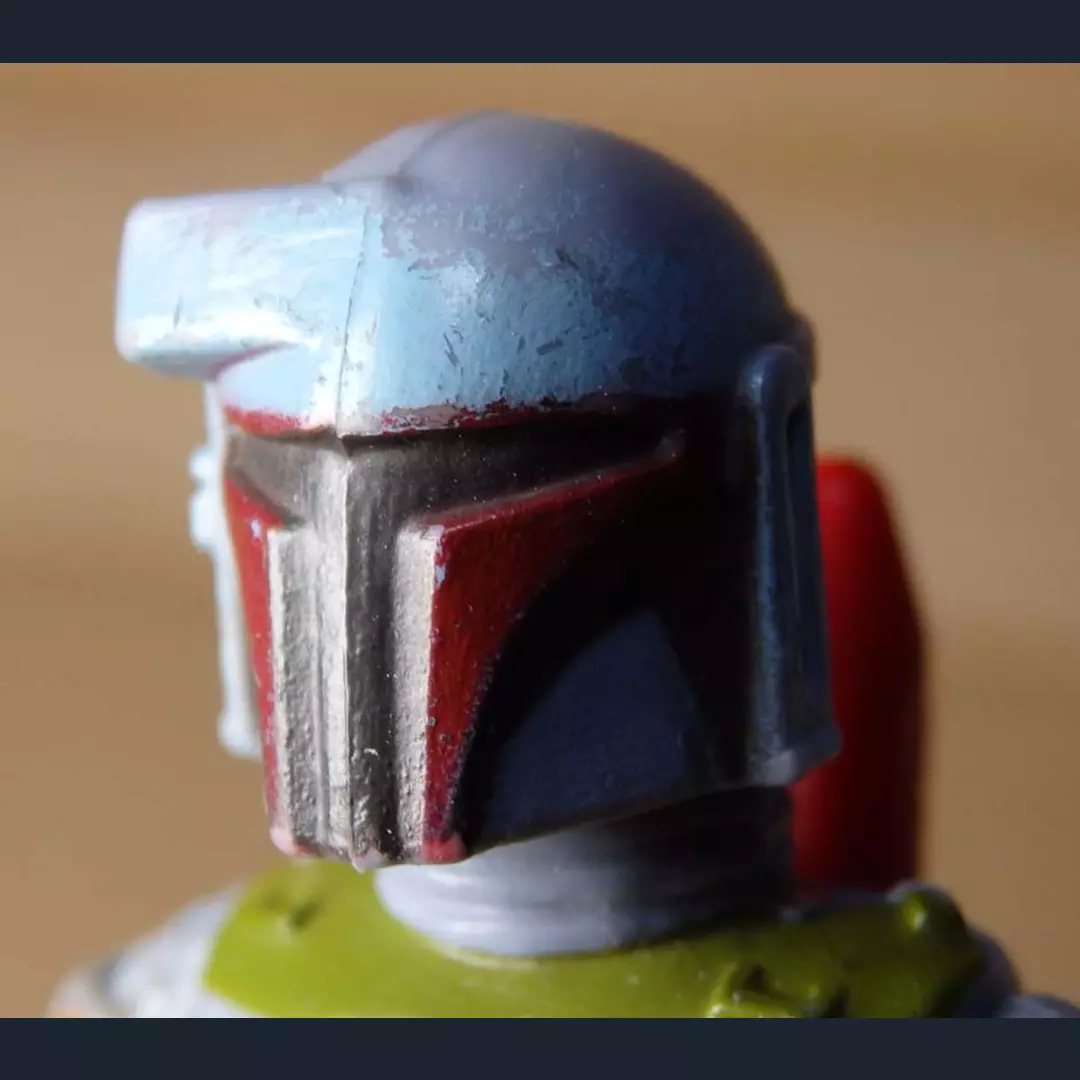
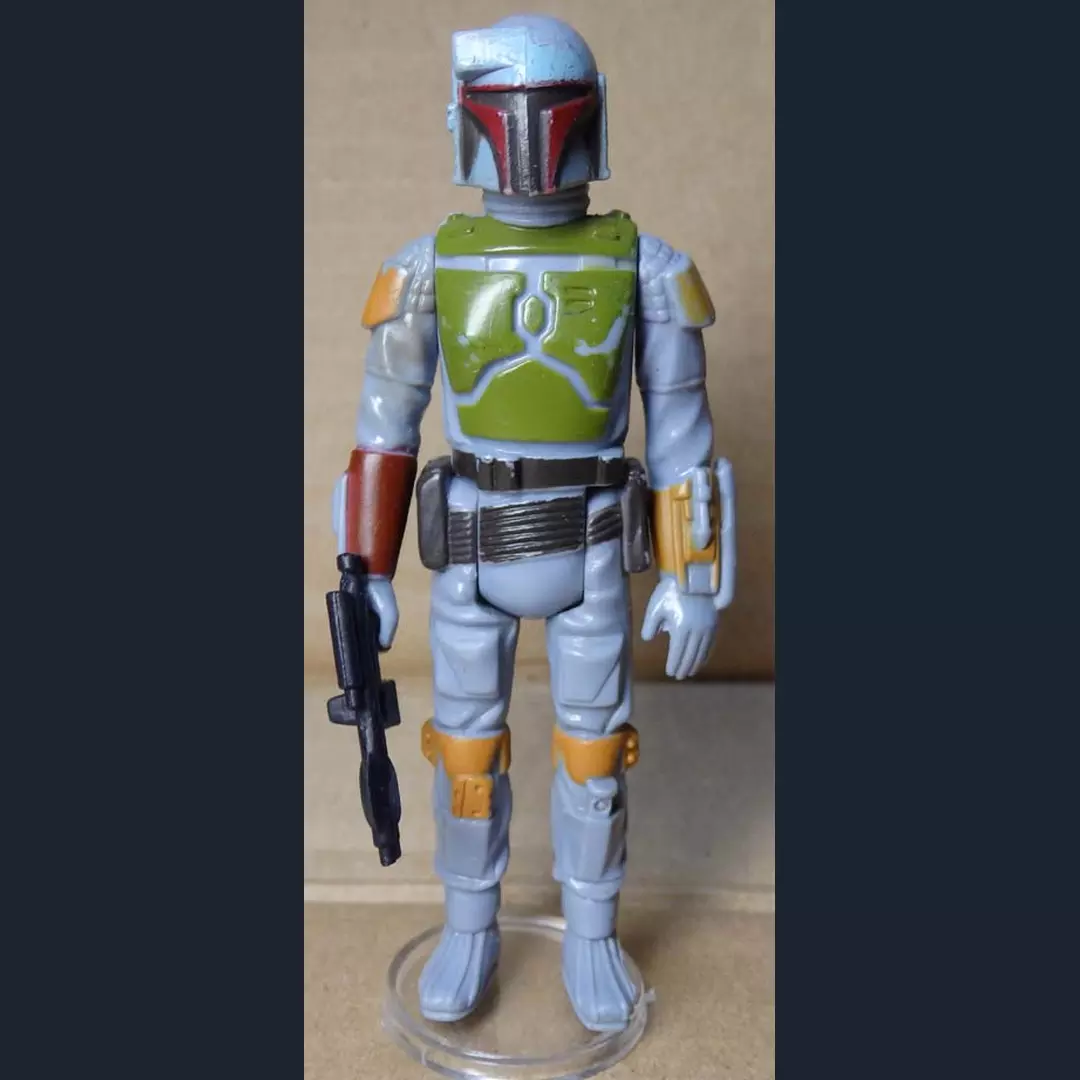
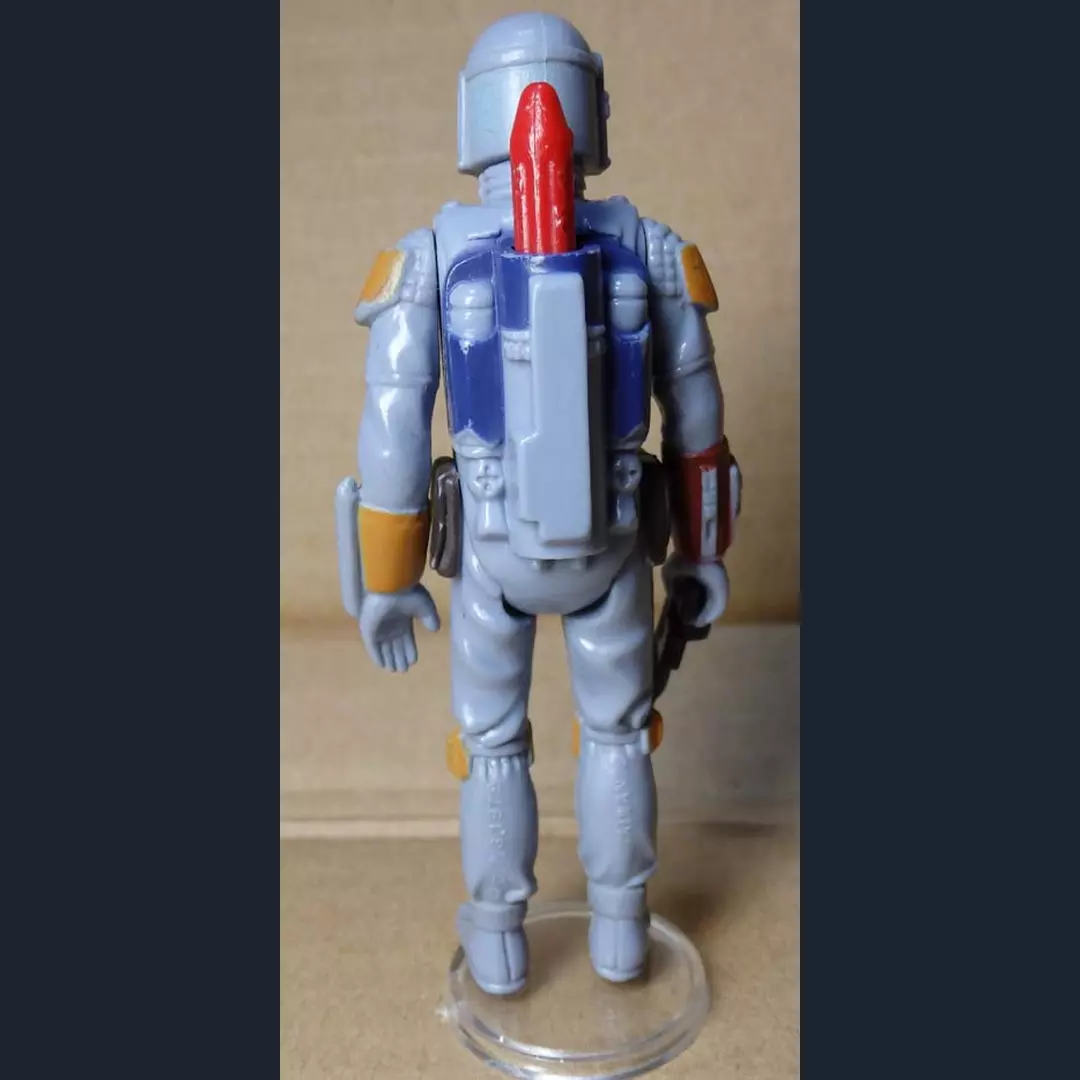
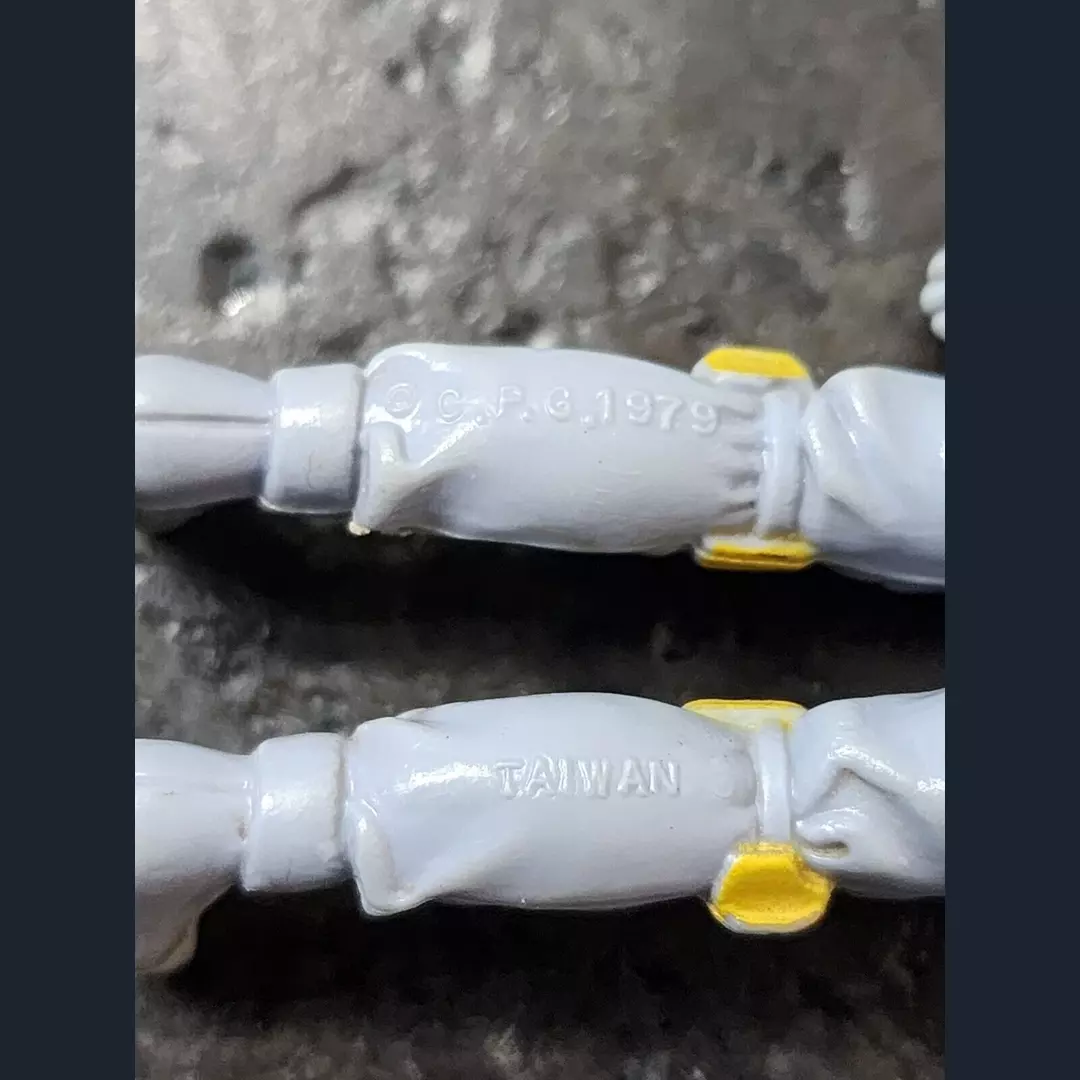
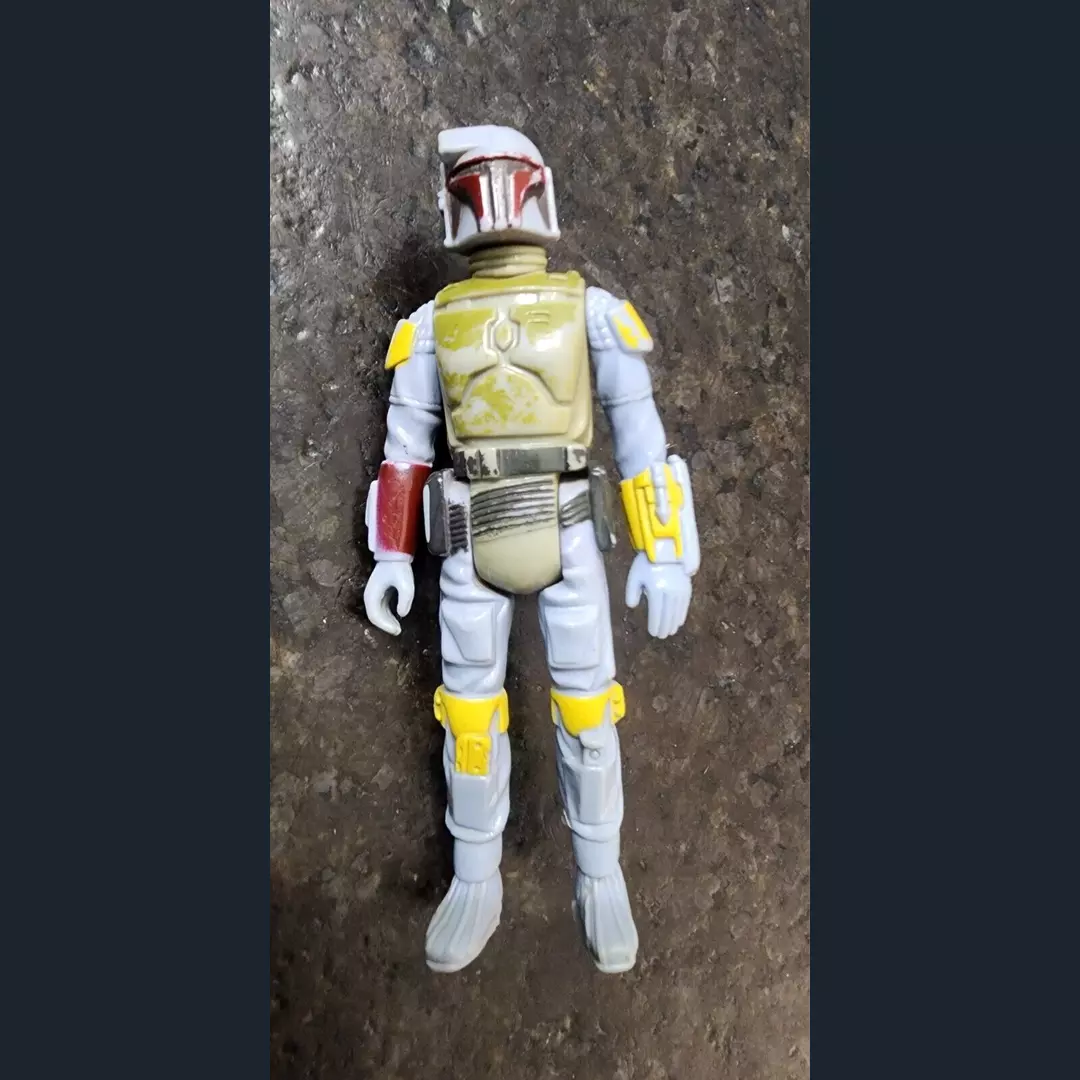
En esta sección se revisan algunas variantes (o variaciones, como también se les llama) que he identificado en esta figura a lo largo de la colección vintage de Star Wars. ¿Y qué se puede definir como una variante? Básicamente, es cuando una figura tiene algo distinto: desde la identificación de origen (COO), pasando por el color de una de sus partes, el molde, el tipo de tela, o algún cambio en el accesorio, todo desde su fabricación y origen. Con esto, queda claro que no todo cambio cuenta como una variante oficial.
Las oficiales son aquellas que tienen respaldo en cambios concretos y repetibles: nuevos moldes (como los cambios de cabeza de Han Solo), sellos de fábrica distintos (diferentes COO), materiales que se usaron en ciertas líneas o regiones (tipos de plásticos, como los cambios por PBP), o cambios intencionales en el pintado, ya sea color (cambio de pelo de Luke) o en algún detalle (los dientes en la risa de Lando). Estas modificaciones, con intención o no, generaron grandes líneas de producción desde las fábricas de Kenner o sus asociados, y son las documentadas y aceptadas como variantes entre los coleccionistas.
Las no oficiales, son las creadas por mi para este sitio y que surgen bajo mi colección y mi criterio. Esto se puede dar especialmente en el proceso de fabricación de las figuras. Por ejemplo, como fueron pintadas a mano, esto podía generar algunas diferencias y que, por algún motivo, fueron repetibles. Podría darse de casos en que los plásticos o telas reaccionan de formas distintas con los años, y que esto pudiera estar relacionado con una línea de fabricación, generando una variante no oficial. Todo depende de la información que se tenga sobre el origen de la figura y los procesos involucrados.
En este sitio no se mencionan precios relacionados a una figura o sus variantes, ya que esto es demasiado complejo. Así también, los diferentes accesorios (ya que también tienen variantes) si corresponden o no a una determinada figura, también es complejo saberlo. Algo más se menciona sobre esto en el apartado Variantes / Variaciones dentro del catálogo. Te invito a revisar todos los juguetes registrados en el sitio, disfrutemos juntos la pasión por estos juguetes del pasado que tantas alegrías nos entregan.
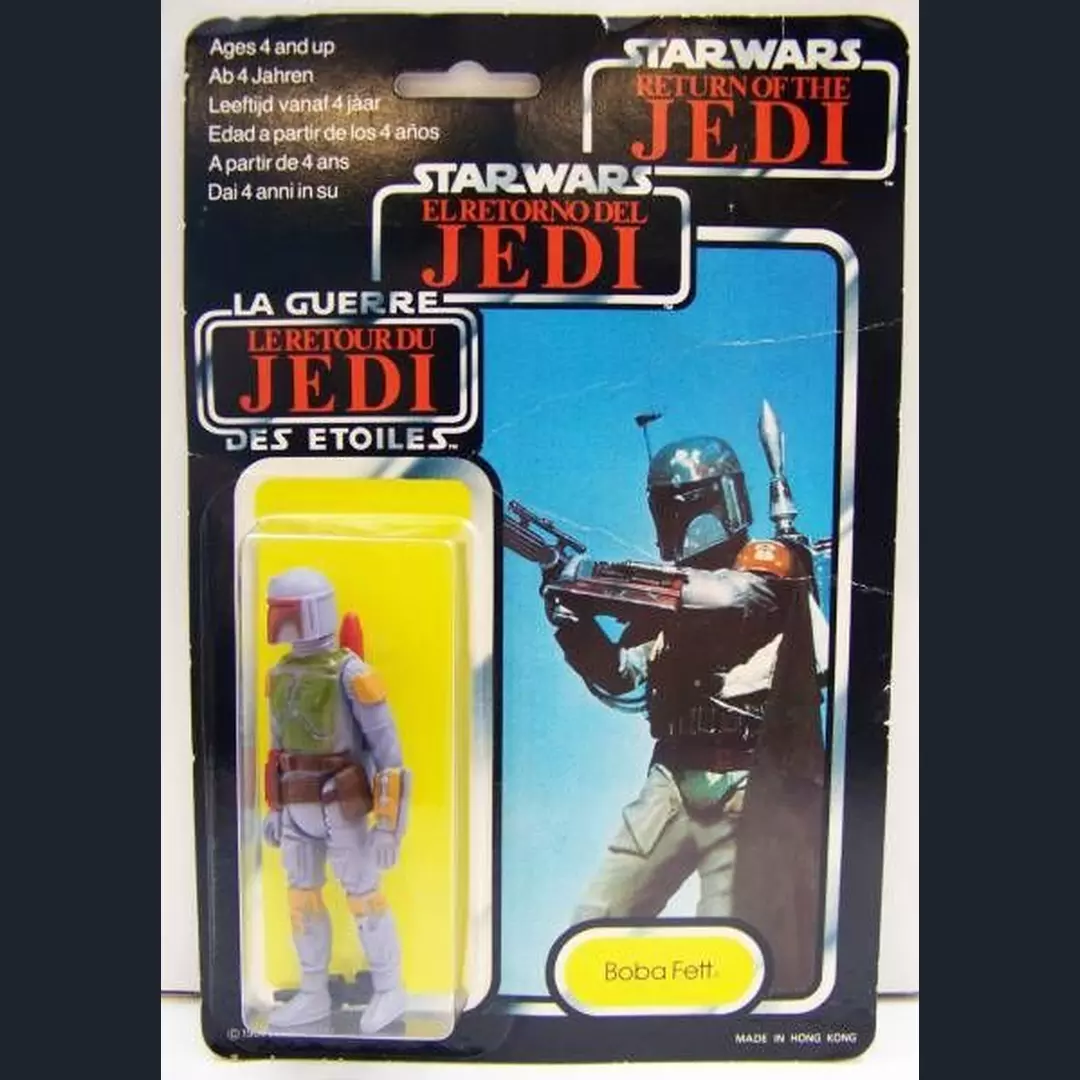
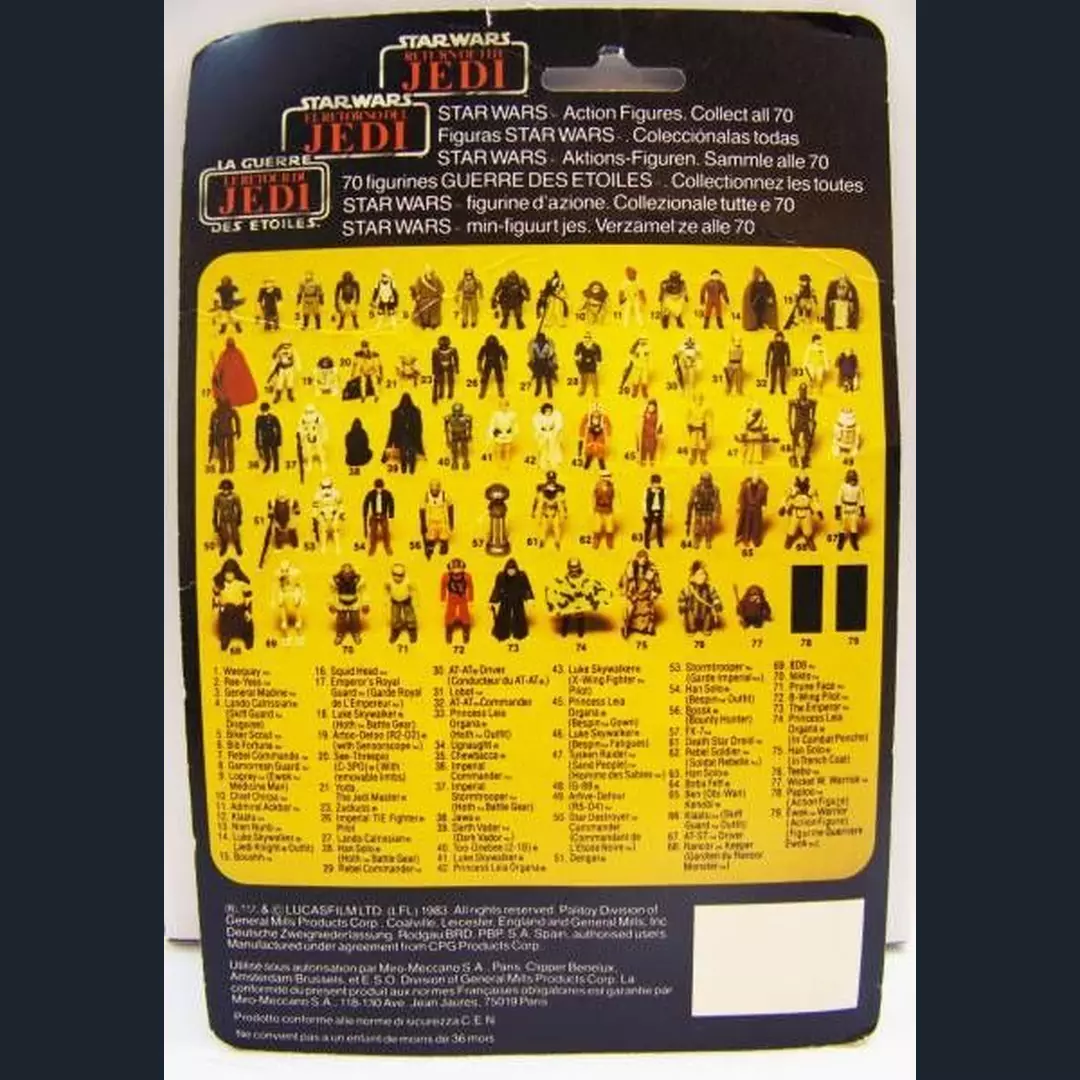
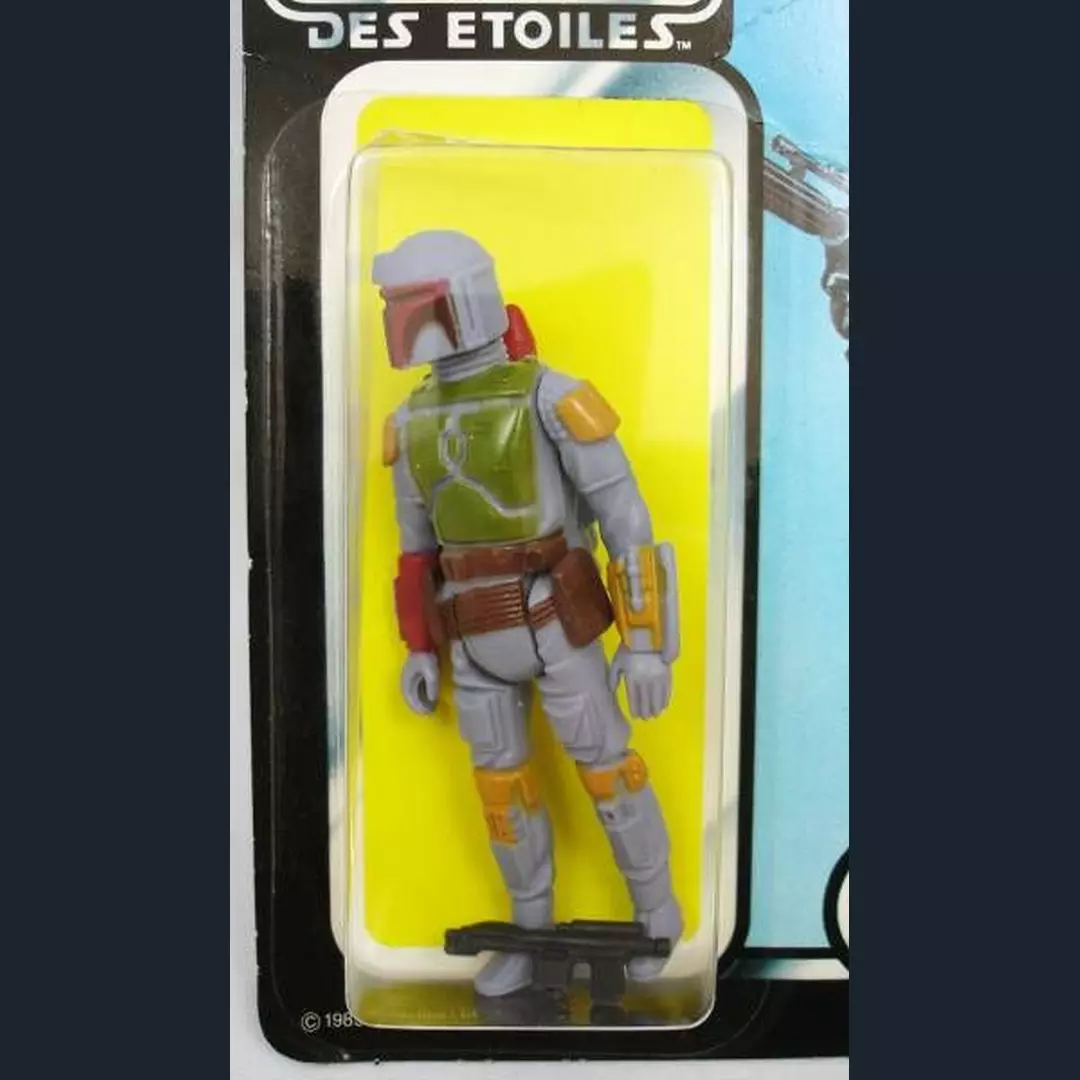
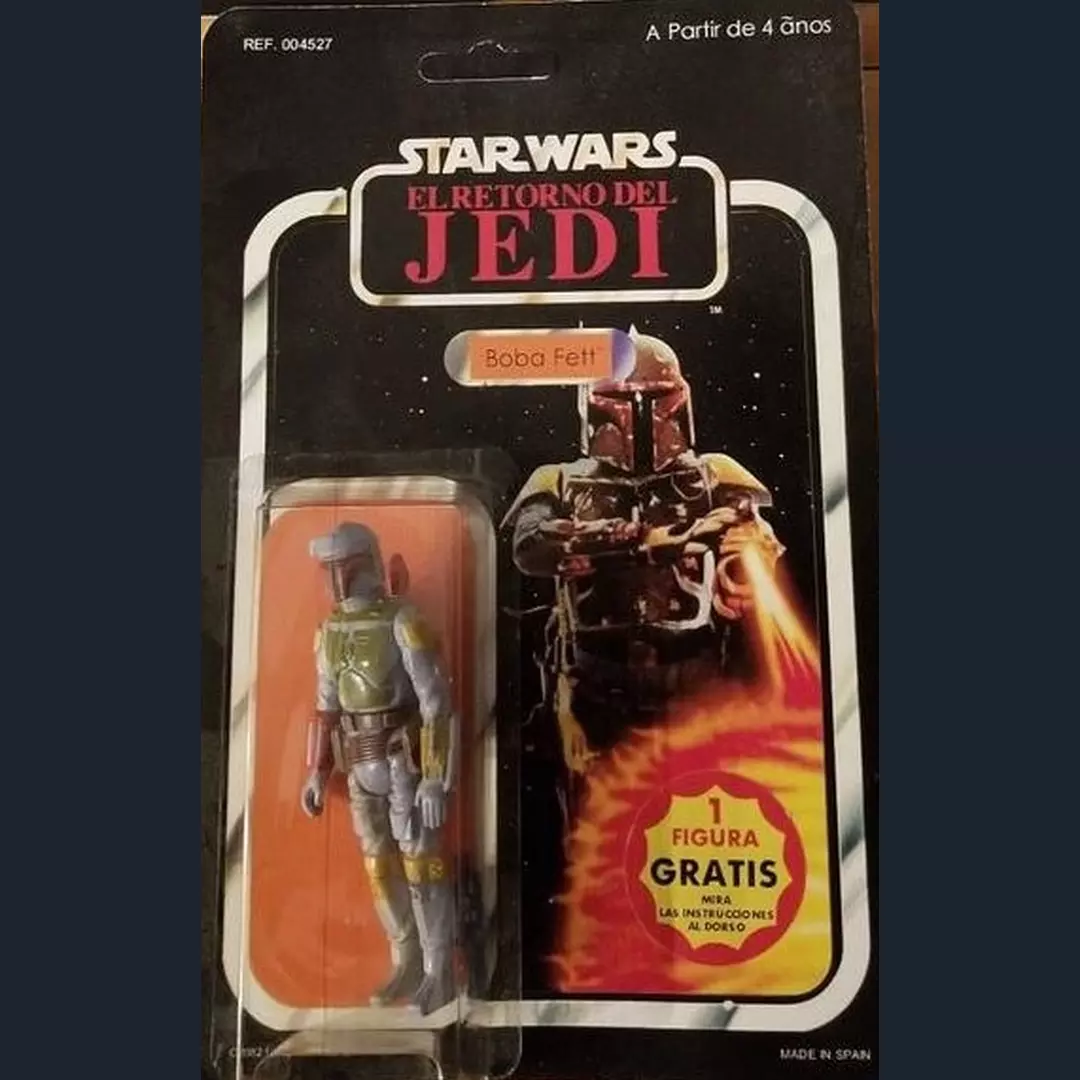
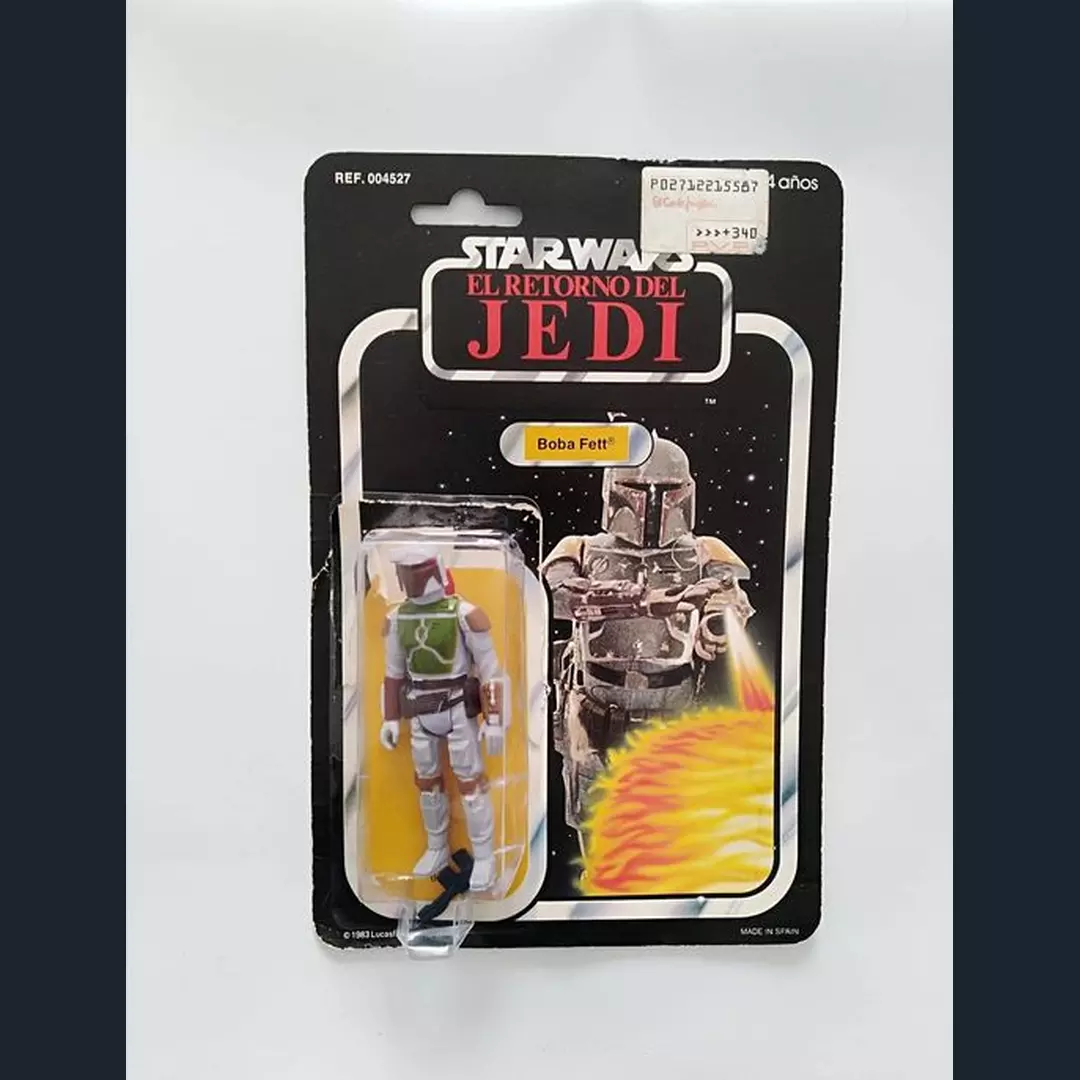
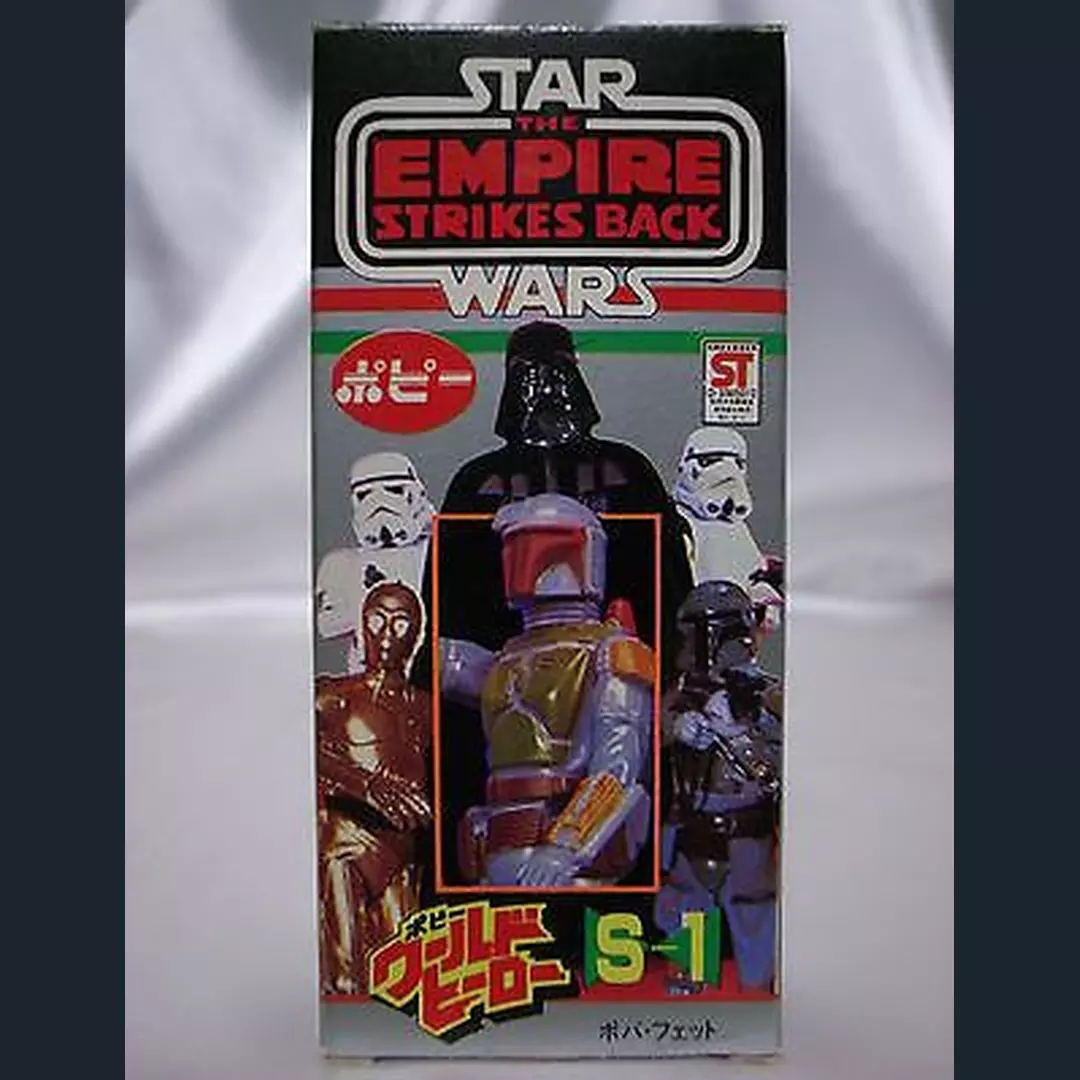
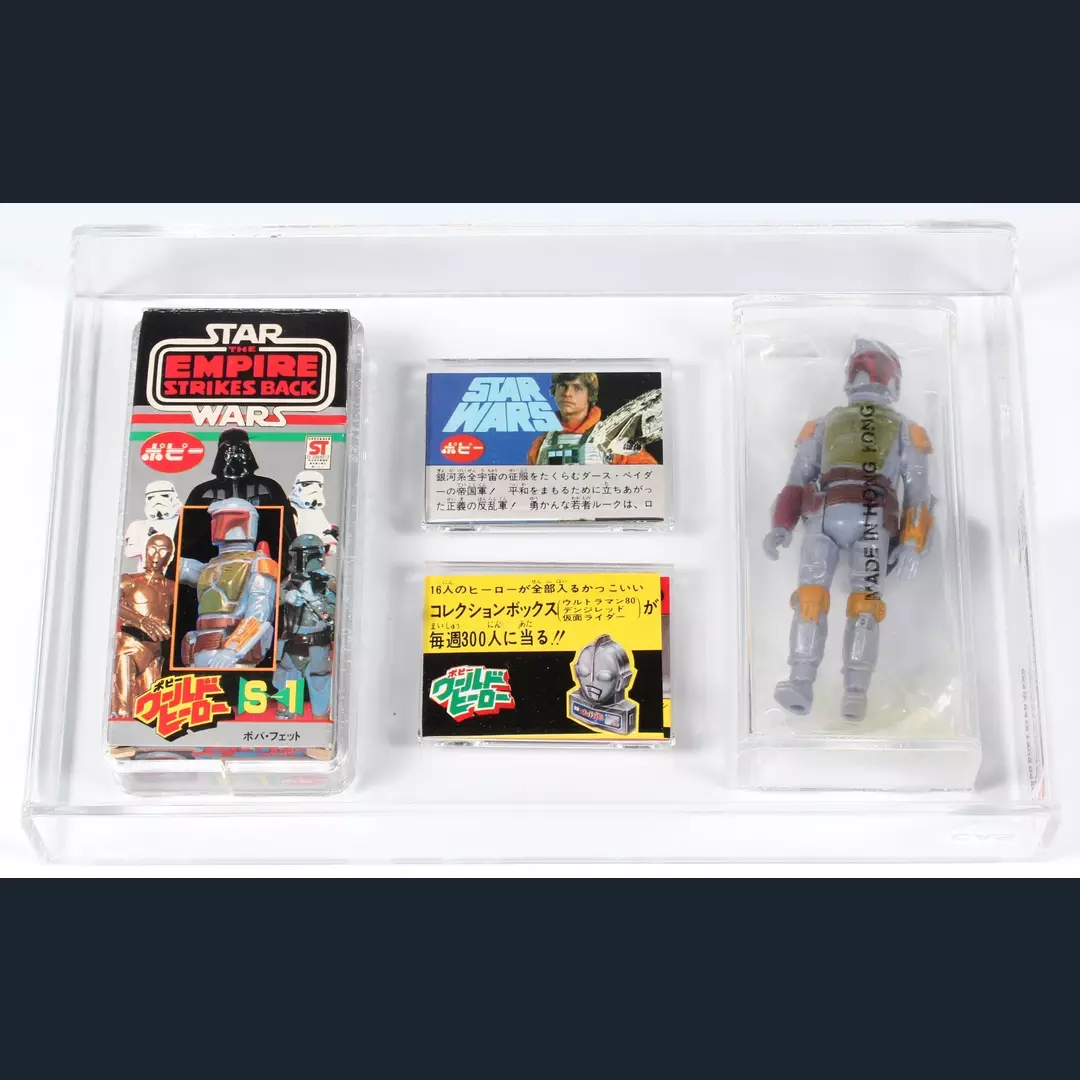
Lucas Film en el concepto y diseño del personaje
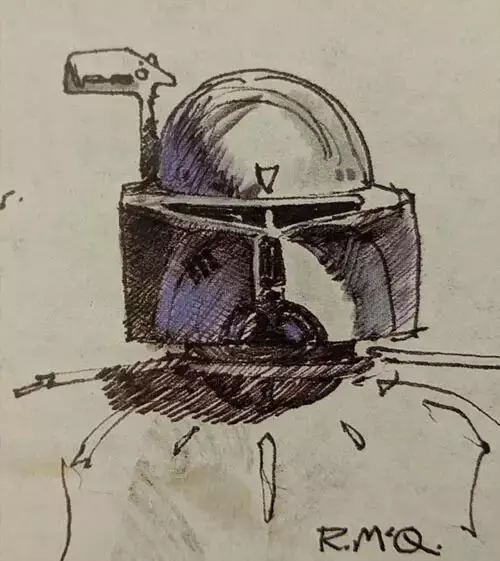
1977 – Primeros bocetos Ralph McQuarrie
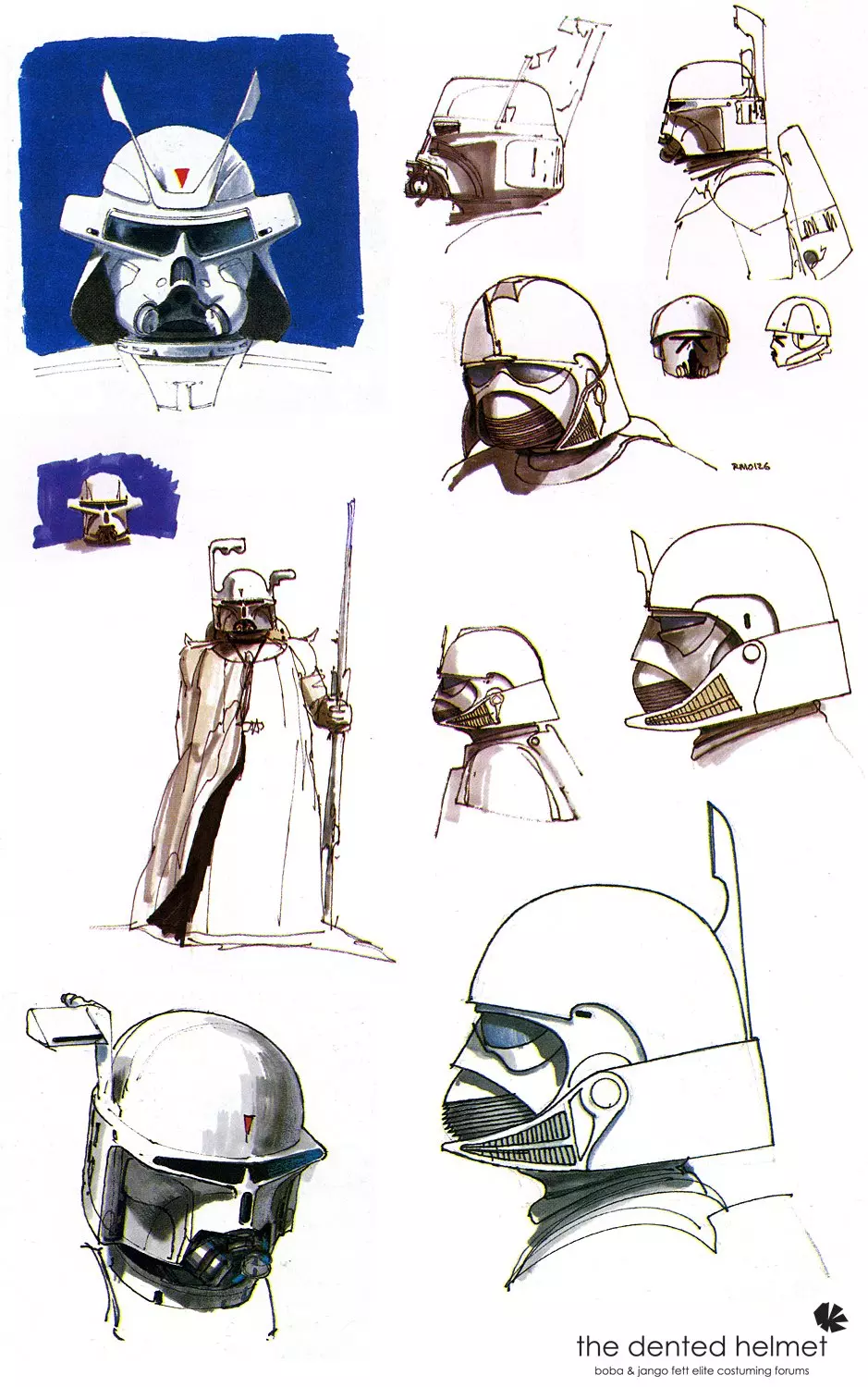
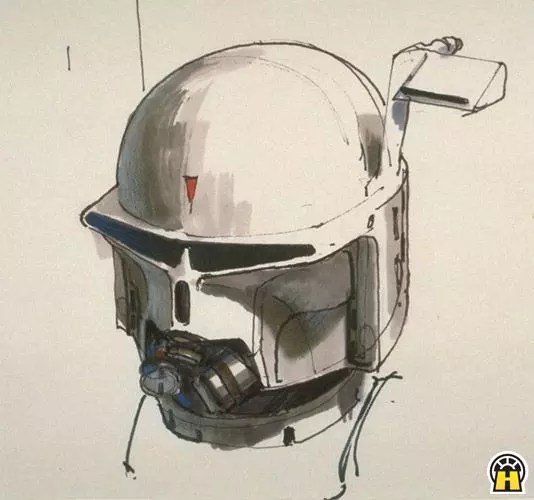
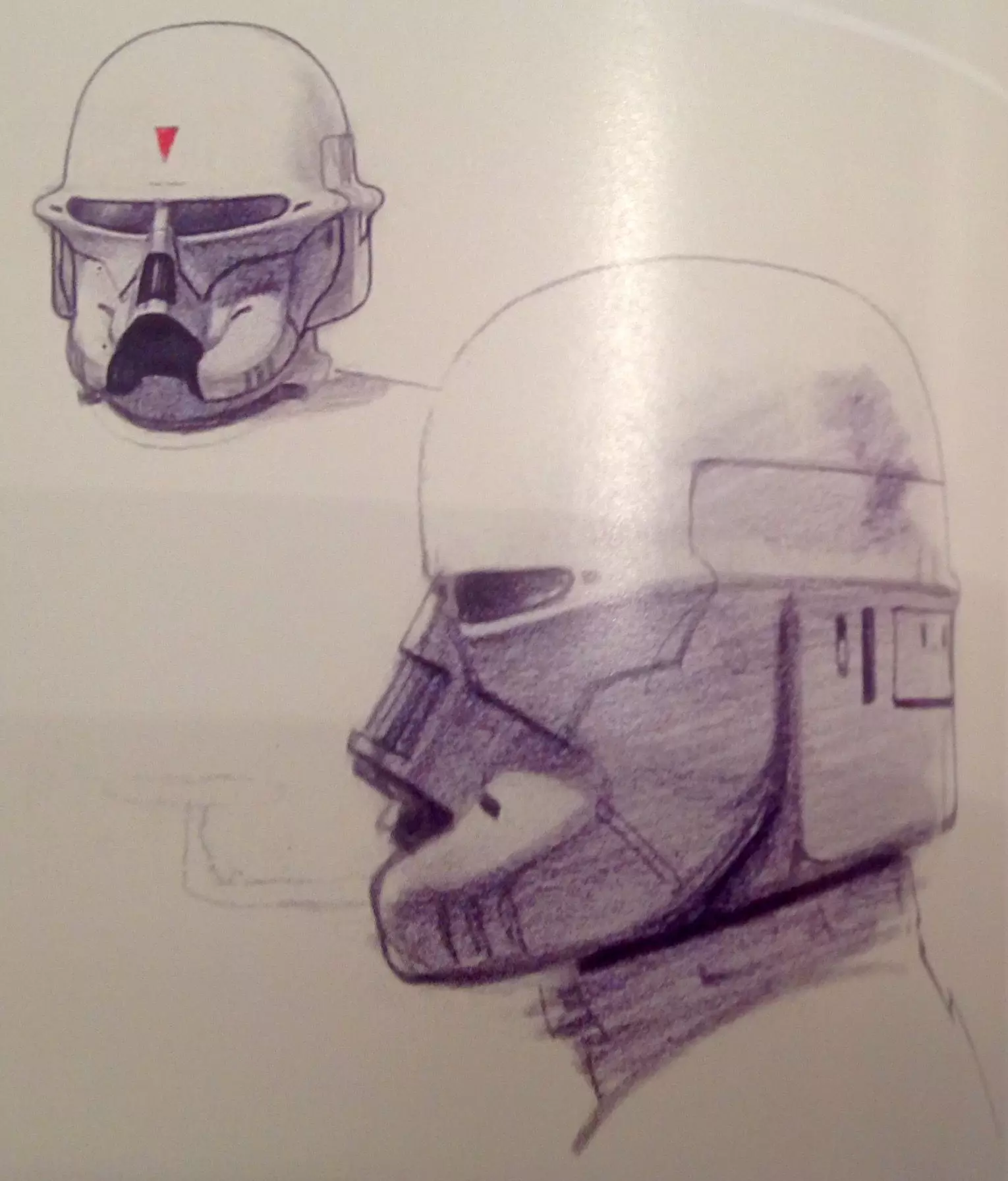
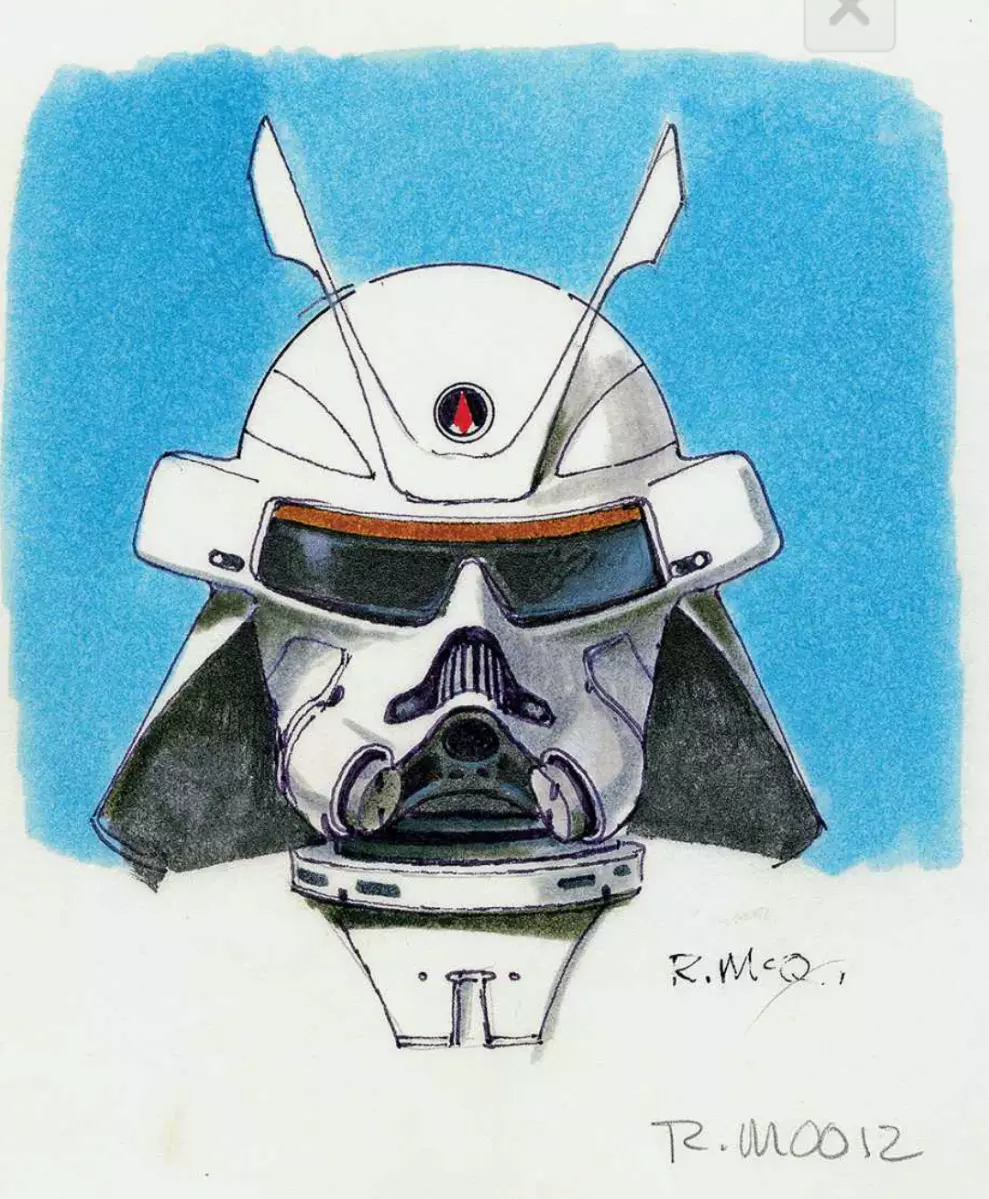
Ralph McQuarrie creó los primeros bocetos del personaje en 1977 que sería un soldado oficial de la nieve (Snowtrooper Officer).
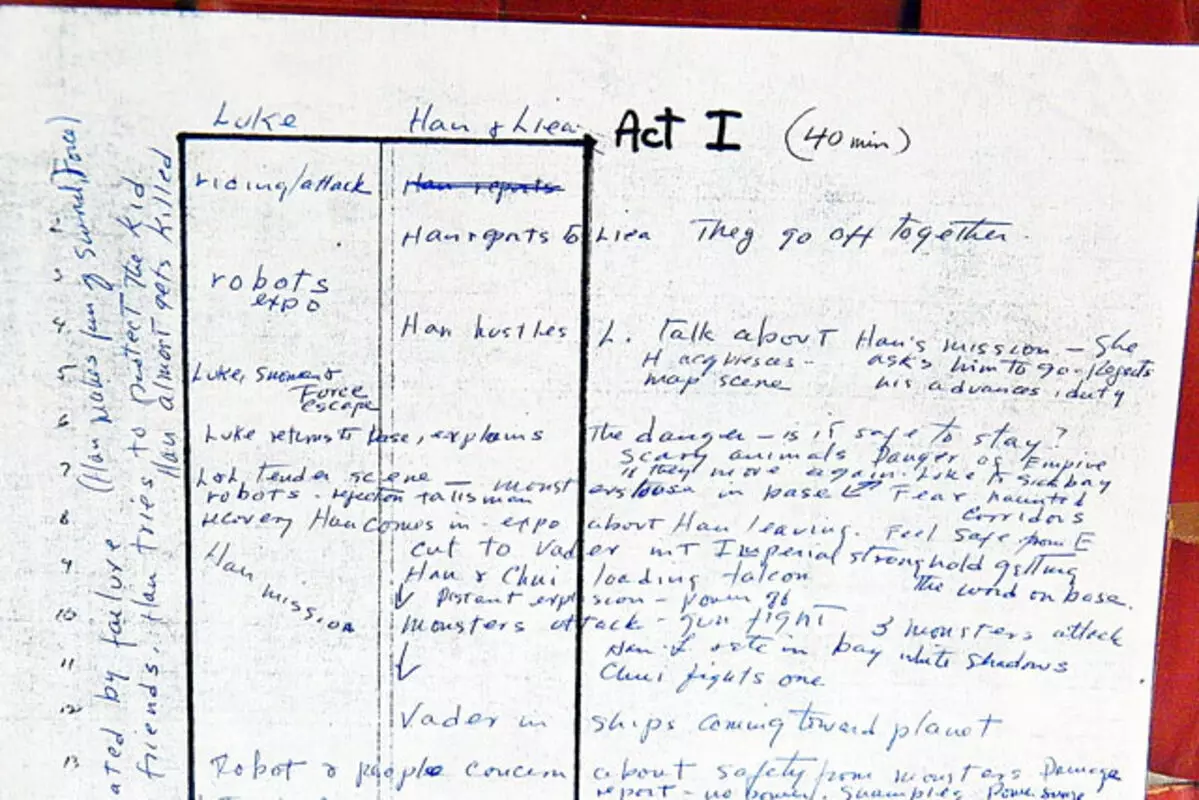
Enero 1978 – Guión Empire Strikes Back
El bibliotecario de Colecciones Especiales de la Biblioteca Dorada de la Universidad del Este de Nuevo México, Gene Bundy, dijo que el creador de Star Wars, George Lucas, proporcionó su guión de rodaje escrito a mano para El Imperio Contraataca, para acompañar el guión original escrito por Leigh Brackett. Estos se donaron, luego de la muerte de éste en marzo de 1978.
Además de escribir guiones para westerns famosos como Río Bravo, Brackett fue contratado por George Lucas para escribir el guión de El Imperio Contraataca.
Brackett murió unas seis semanas después de que se completara el primer borrador. La película se estrenó en 1980, y aunque el guión había cambiado después de varios borradores del original de Brackett, todavía se le dio crédito.
Marzo 1978 – Supertrooper
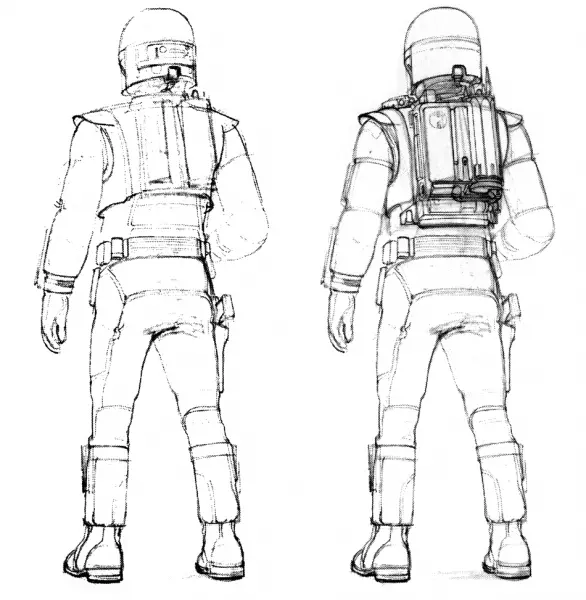
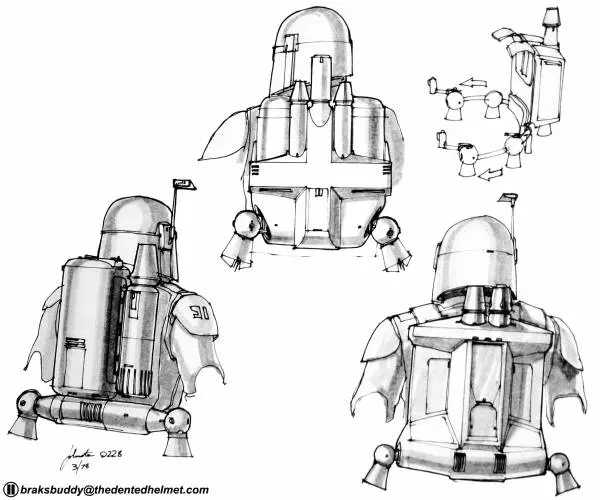
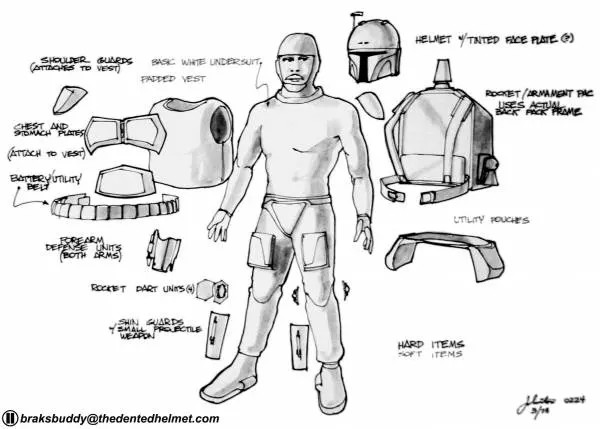
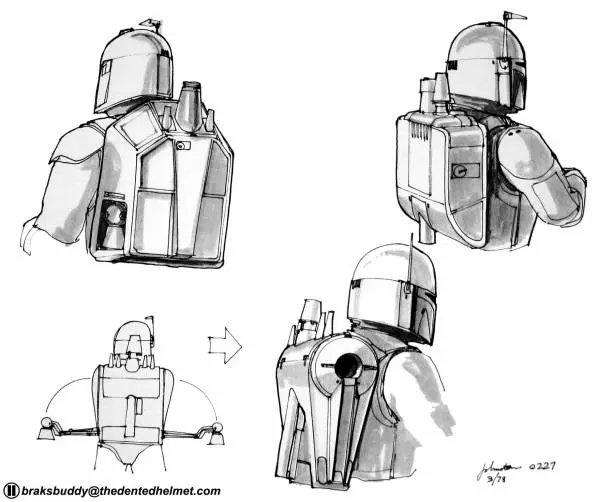
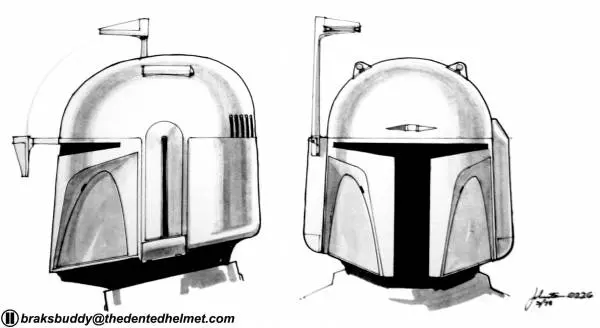
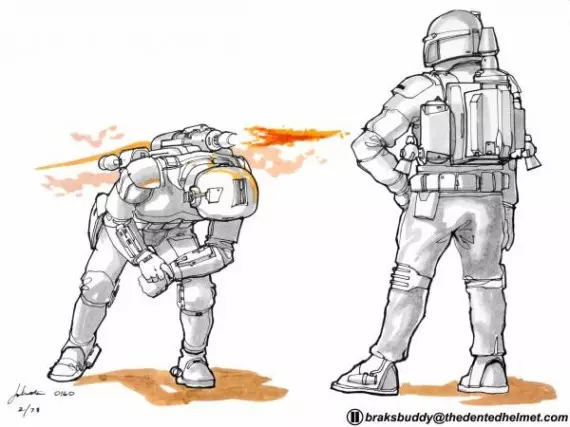
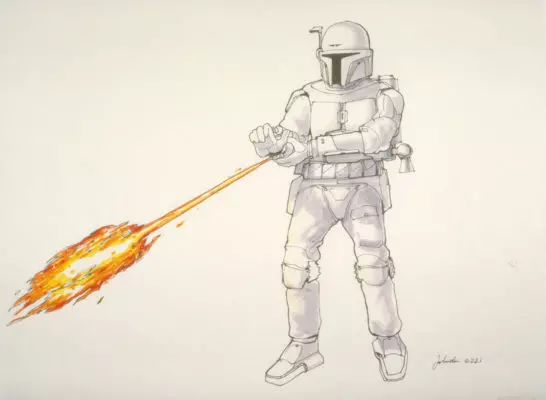
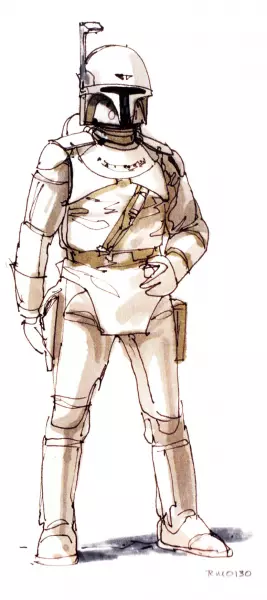
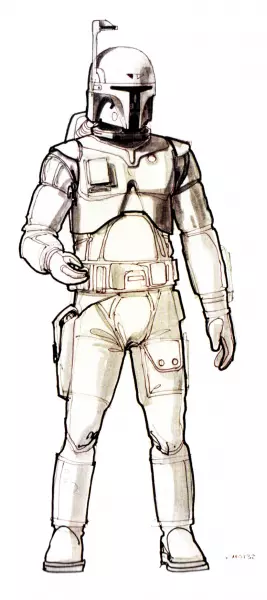
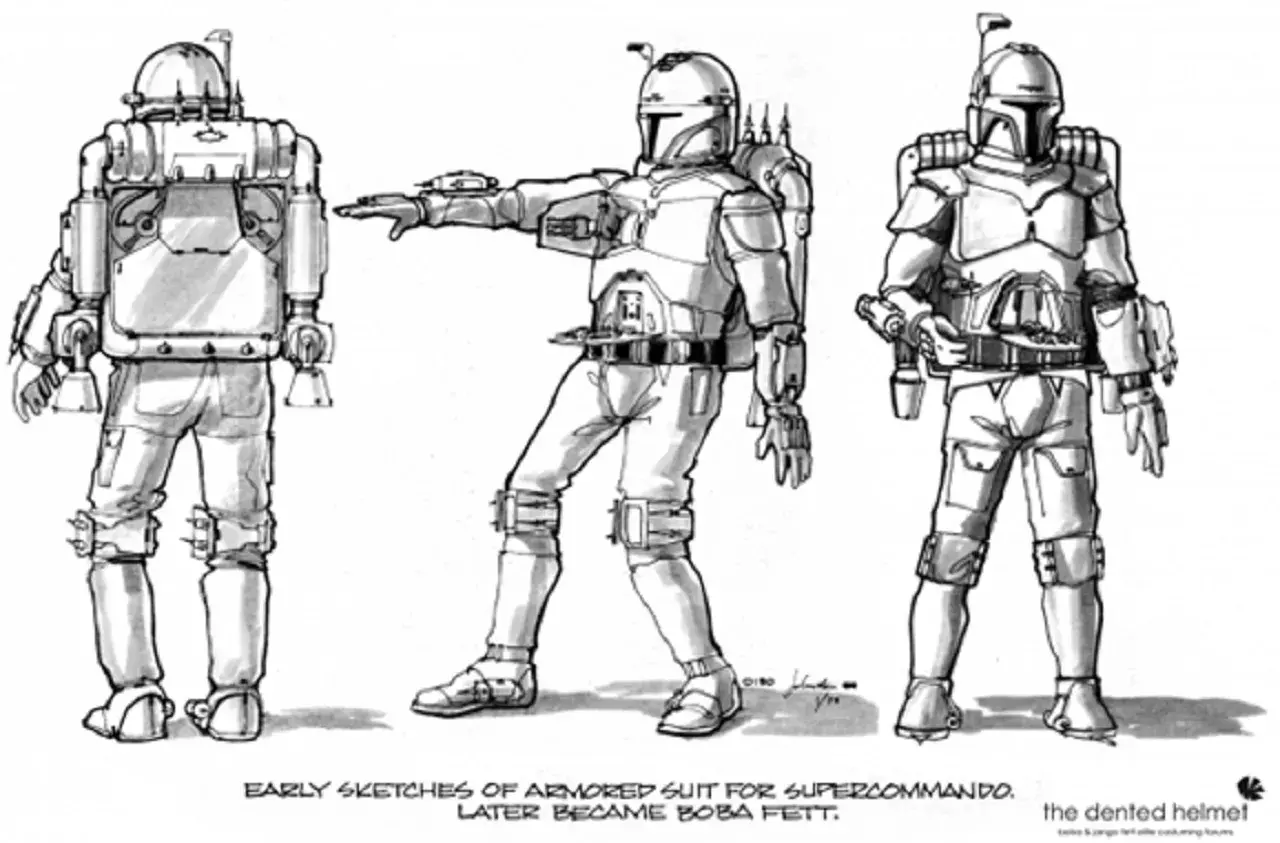
Durante la realización del primer borrador de The Empire Strikes Back, George Lucas tenía la idea de un grupo de soldados de elite llamados Supertrooper, tropas del sistema Mandalore armadas con armas integradas en sus trajes, tales como láseres de las muñecas, la mochila voladora y los dardos cohete. Este nuevo trooper formaría un pequeño ejercito de 40 mil unidades imperiales.
En el libro The Empire Strikes Back: Sketchbook de Joe Johnston y Nilo Rodis-Jamero (1980) se menciona que a pesar de que la mayoría del diseño de vestuario de la película se originó en Inglaterra, en marzo de 1978, Ralph McQuarrie y Johnston diseñaron el traje del Supertrooper en Industrial Light and Magic en California.
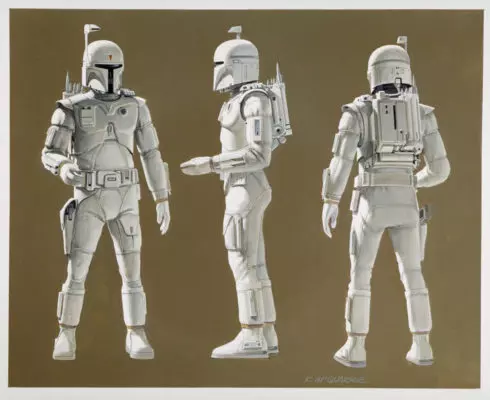
1978 – Primer traje de Supertrooper
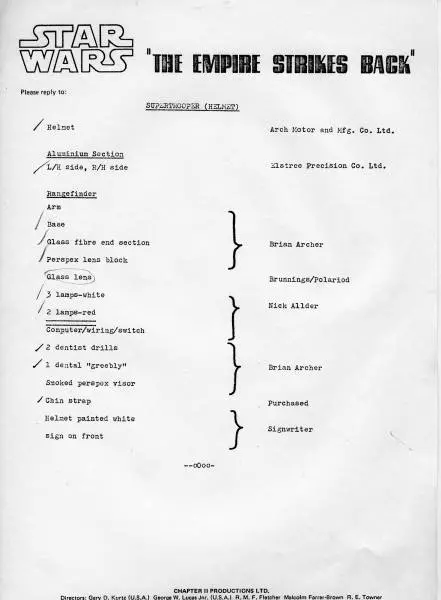
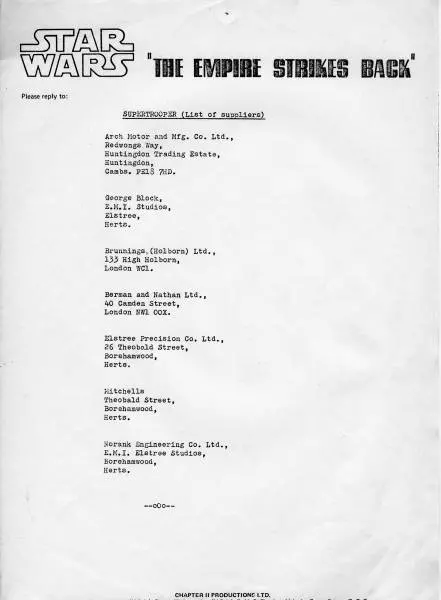
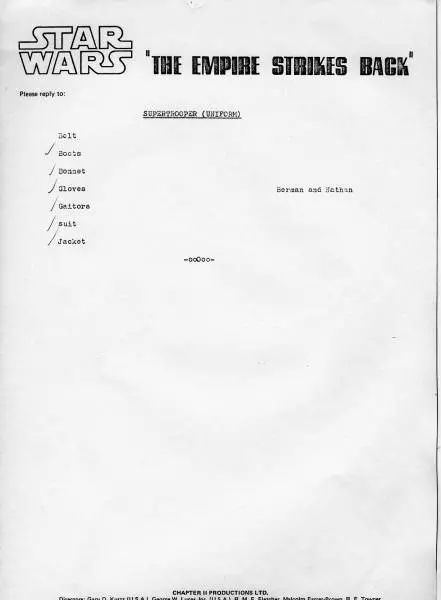
Alan Harris, quien interpretó a un soldado y un mecánico rebelde y a un stormtrooper en Star Wars – luego hizo el papel de Bossk y de un guardia en Bespin, y volvió como stormtrooper en El Regreso del Jedi. También hizo de doble de Jeremy Bullock y de Anthony Daniels en El Regreso del Jedi, en que Trevor Butterfield ocupó el rol de Bossk. El molde de Han Solo en carbonita fue hecho en base a Harris – fue quien hizo las pruebas de ajuste del traje inicial de Supertrooper. En este traje se aprecia que el casco y la armadura no tienen abolladuras ni daños. Este traje no tiene capa, cinturón de cadera y trenzas, que está en concordancia con el boceto y diseño que se ha elaborado para el Supertrooper.
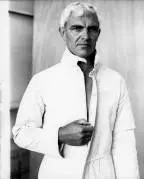
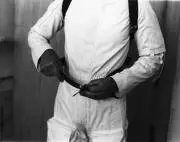
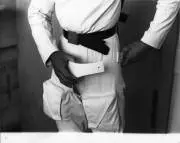
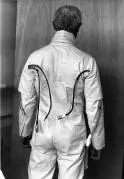
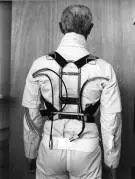
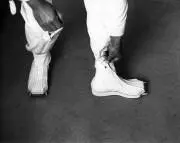
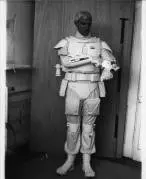
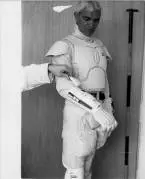
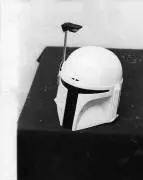
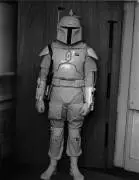
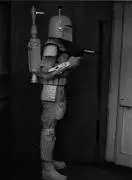
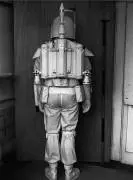
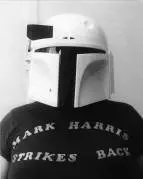
El productor Gary Kurtz se percató que el costo de producción era bastante elevado y la construcción de varios trajes simplemente no era viable. Ante esto, la idea del Supertrooper fue descartada, pero George Lucas decidió que el traje diseñado sería utilizado de igual forma para un cazarrecompensas.
En las ideas primarias asociadas a este personaje, este era un mercenario sith enviado por Darth Vader a perseguir a los héroes y tendría como nombre, Príncipe Valarium (Nombre similar, Valorum, se usó luego en las precuelas para el canciller antes de Palpatine. Dato curioso, Alan Harris hizo de doble de este personaje personificado por Terence Henry).
Finalmente, George Lucas encomendó a Johnston modificar el traje prototipo para un mercenario que siguiera esta descripción:
“Es un tipo más o menos malo, pero no está con El Imperio y tampoco está del lado de los Rebeldes. Es un agente libre y va por la galaxia arrestando gente y llevándolos ante la justicia, o ante Jabba o ante a quien sea. El es un mercenario, haría lo que sea por dinero y su traje debe reflejar esto.”
28 Junio 1978 – Primer Prototipo Boba Fett
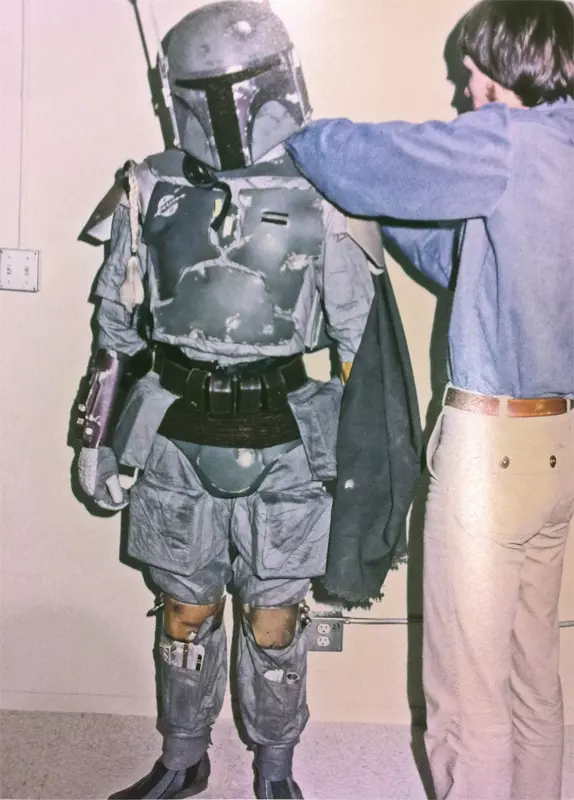
El nuevo mercenario se presentó el 28 de junio de 1978 detrás de la casa de George Lucas. En dicha oportunidad se grabó un video de prueba en blanco y negro de 20 minutos, en el cual el diseñador de sonido Ben Burtt hace de presentador y revela la versión definitiva de este nuevo trooper, describiendo las diferentes armas, funciones y características del traje. En este video, el traje de Supertrooper es usado por el asistente de editor de cine de Empire Strikes Back, Duwayne Dunham.
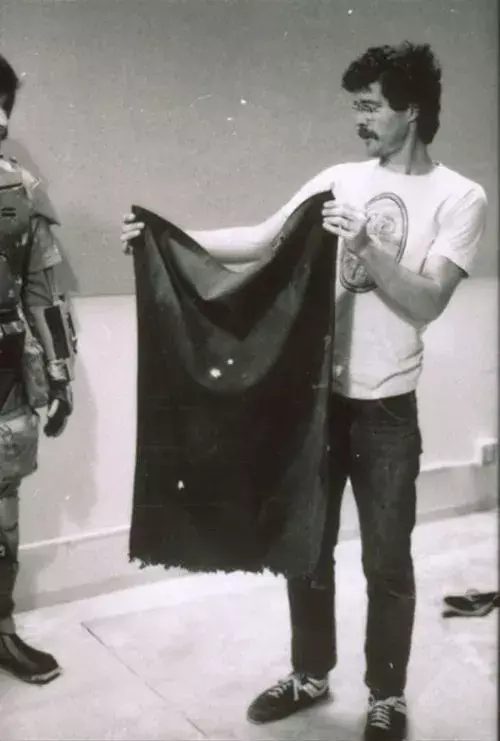
Cabe señalar que lo que se utiliza como serape (que es una especie de poncho) en este Supertrooper corresponde a una toalla de playa con la marca Star Wars que tiene la imagen de Darth Vader. Este trooper está bien armado con un Blaster Automático o Subametralladora láser, que como señaló Ben Burtt, es una réplica de una Uzi, con un tubo de flash glaflex como cañón. Esto fue reemplazado más tarde por el más infame BlasTech EE-3 basado en una pistola de bengalas Webley.
Si bien el traje ya es bastante evolucionado a lo que sería su versión definitiva, el traje prototipo era completamente blanco y Lucas no quería eso para el diseño del cazarrecompensas.
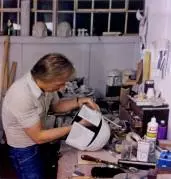
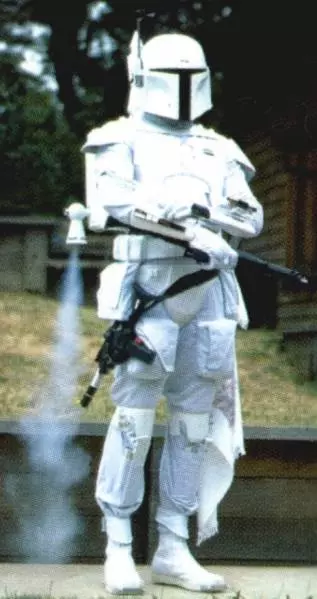
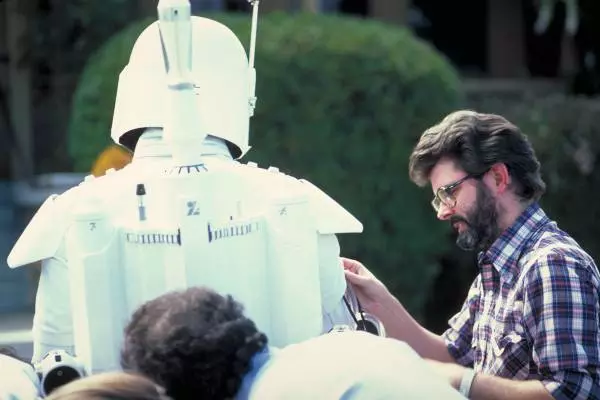
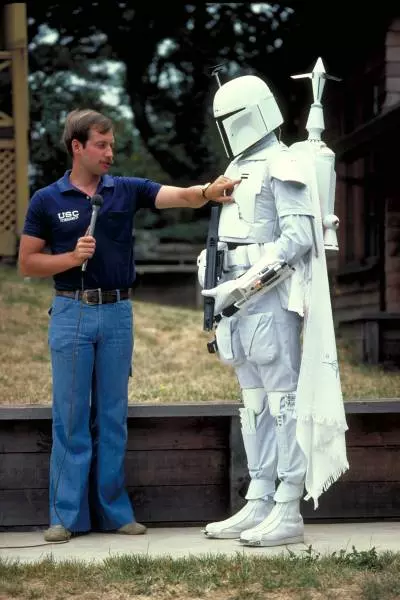
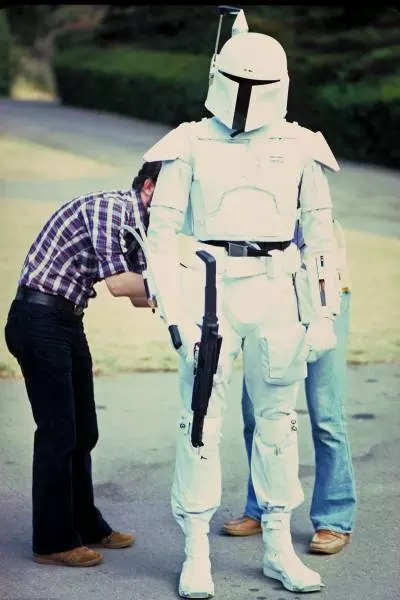
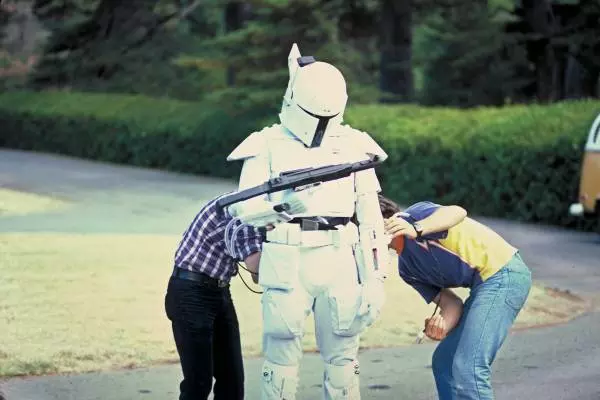
Junio 1978 – Joe Jhonston diseña un Boba Fett más familiar al que conocemos
Para este nuevo personaje su diseño considera un serape de color tierra, el que es un homenaje al Hombre sin Nombre, el icónico mercenario pistolero y de pocas palabras protagonista de los spaghetti westerns de los años 60, interpretado por Clint Eastwood (que tiene su propia trilogía). Notar que el mercenario ya tiene su nombre de Boba Fett, pero con una sola T.
George Lucas menciona al respecto,
“Cuando escribía los primeros guiones de Star Wars, quería desarrollar un personaje esencialmente malvado que fuera aterrador. Darth Vader empezó como una especie de cazarrecompensas intergaláctico y evolucionó hasta ser un caballero más grotesco, mientras me adentraba más en los caballeros y los códigos de todo eso. El personaje de Boba Fett es realmente una versión primeriza de Darth Vader. También se parece mucho al Hombre sin Nombre de los westerns de Sergio Leone.”
Jeremy Bulloch dijo en una entrevista,
“Pensé en Boba Fett como Clint Eastwood con una armadura.”
Bulloch, quien fuera el actor dentro del traje en las películas, modeló el movimiento lento y deliberado de la cabeza del misterioso cazarrecompensas espacial y su imponente presencia basándose en el personaje de Eastwood.
En dicha entrevista, Jeremy agregó que Ben Burtt, el diseñador de sonido de The Empire Strikes Back, añadió el suave tintineo de espuelas cuando Fett camina. Como pasó con otros personajes y actores en la saga, Bulloch personificó magistralmente a Boba Fett, pero no fue su voz la que conversa con Vader. Esta voz le pertenecía al actor Jason Wingreen (aunque Bulloch pasó a ser el dueño del personaje en cuanta convenció existió). George Lucas comentó que
“Jeremy aportó la combinación perfecta de misterio y amenaza a su interpretación de Boba Fett, que es exactamente lo que quería que transmitiera el personaje.”
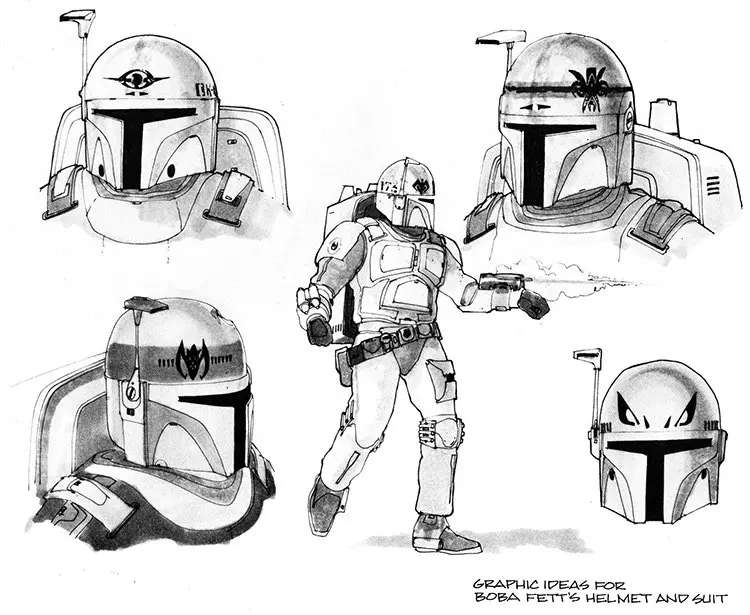
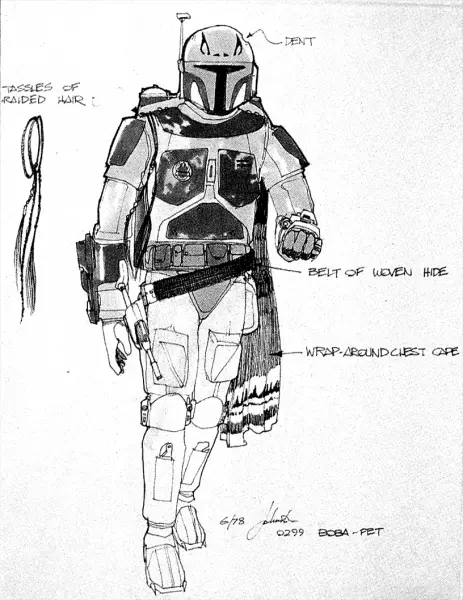
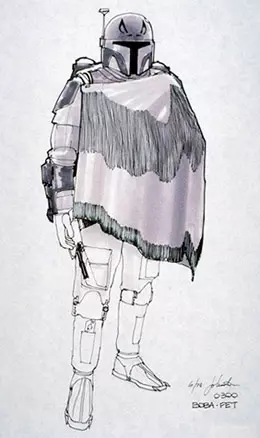
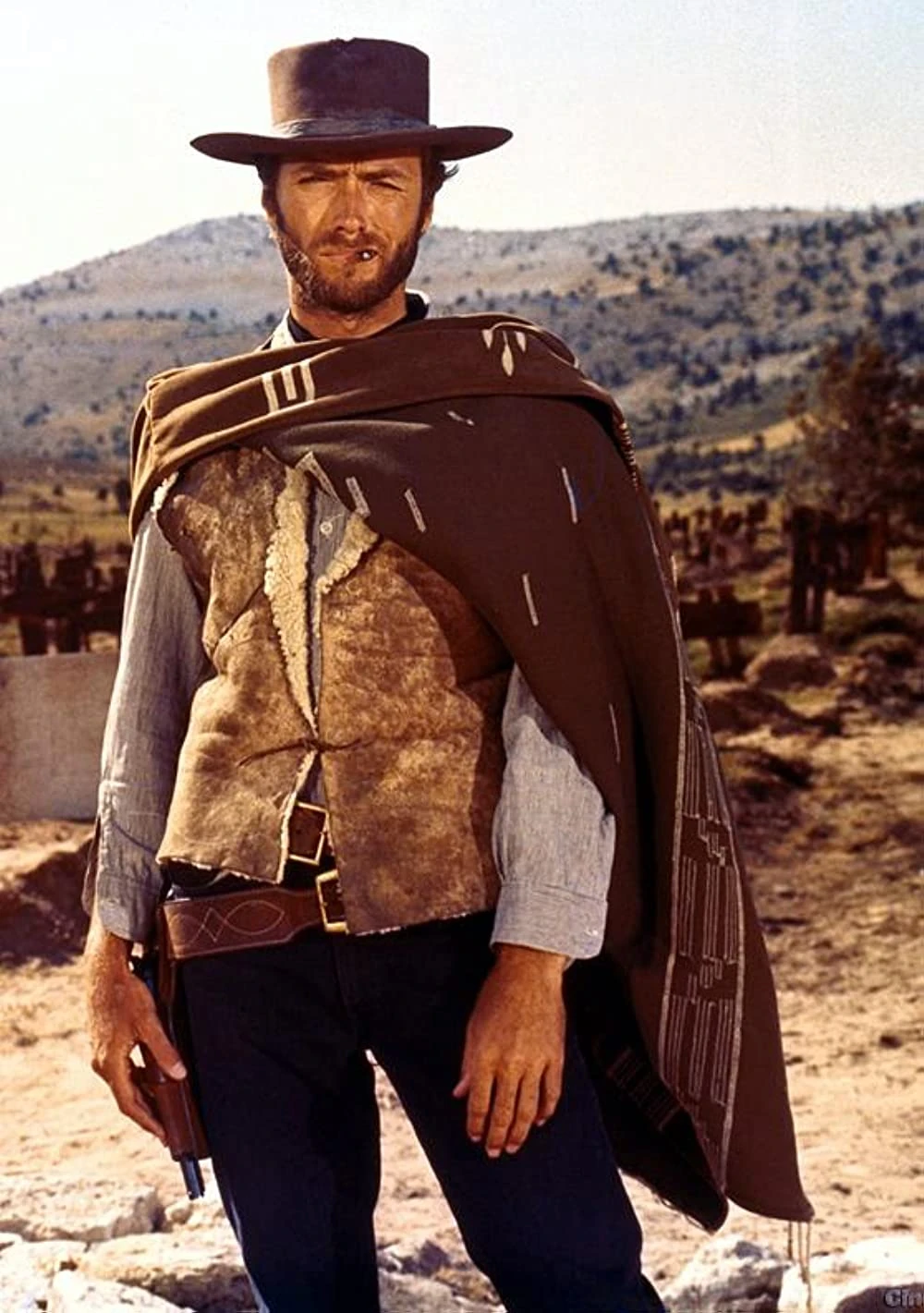
Con este nuevo diseño, se cuenta que Johnston fue a una tienda de hobbies y compró docenas de pinturas y se puso a experimentar mezclando colores y tonos hasta encontrar los colores que él consideró ideales. También se encargó de darle un look desgastado y maltrecho. Se hicieron pruebas de uso y cuando Joe estuvo satisfecho le mostró el resultado a George Lucas y este lo aprobó.
Septiembre 1978 – Guión con Boba Fett
Existe una hoja de guión escrita por George Lucas, en dónde aparece Boba en el diálogo con Vader luego de la tortura de Solo en Bespin. Esta hoja está fechada en septiembre, y aunque no tiene año asociado, debiera ser de 1978.
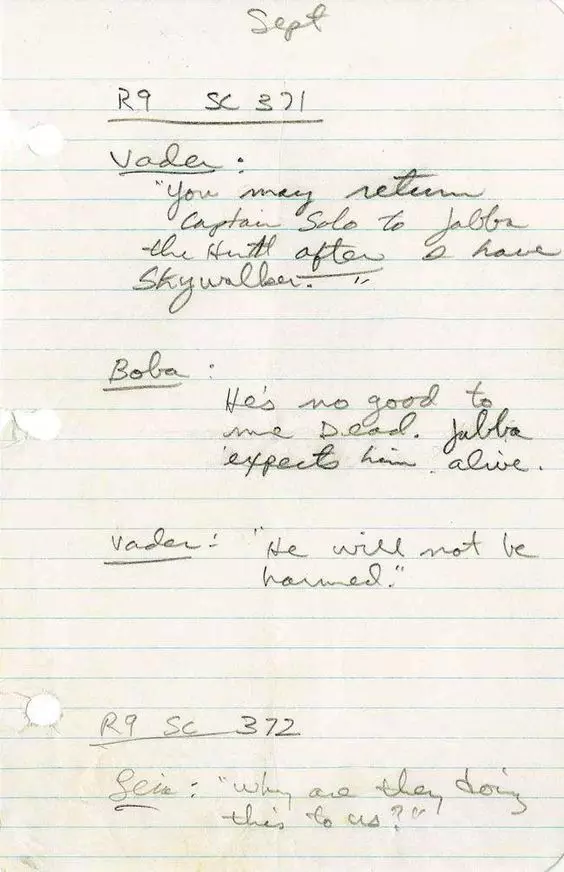
24 Septiembre 1978 – Feria en San Anselmo
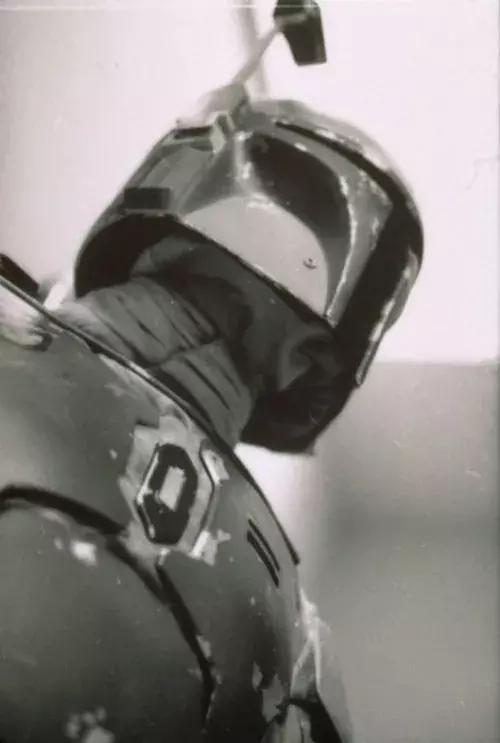
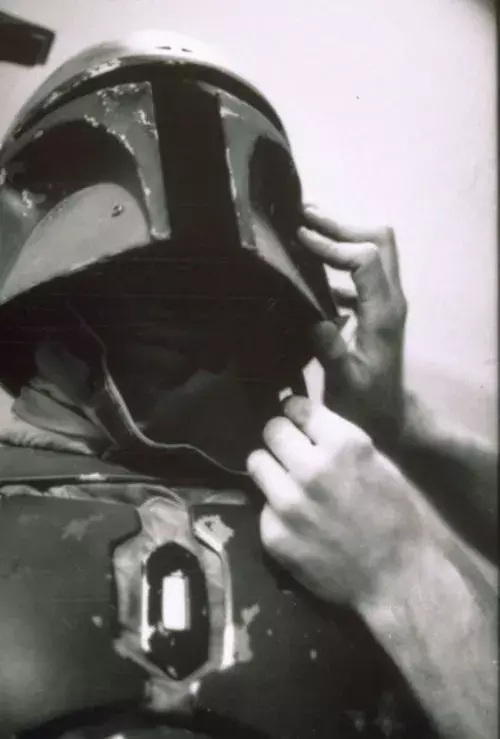
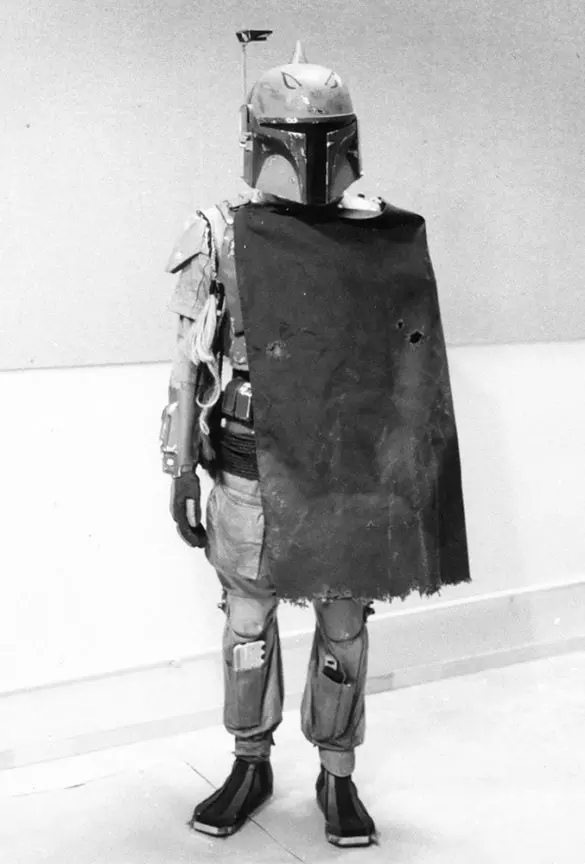
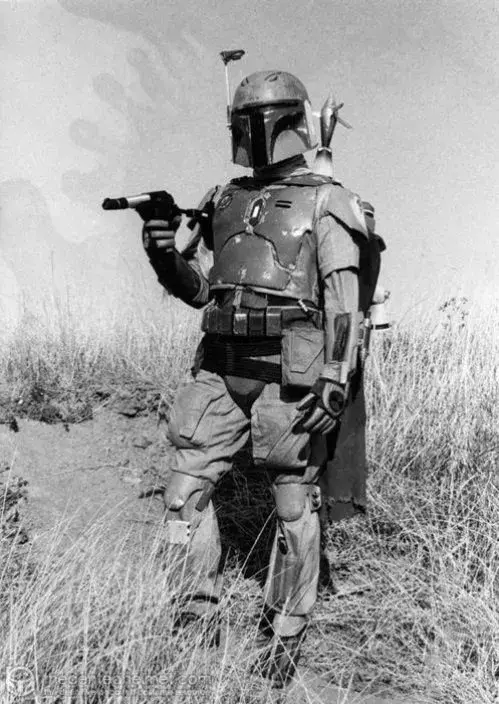
El traje fue construido en EMI-Elstree Studios en Londres, y luego enviado de vuelta a Johnston para ser pintado. El traje fue adaptado para el personaje de Boba Fett añadiendo envejecimiento, abolladuras y un trabajo de pintura colorido a uno de los trajes blanco, mientras se mantenían los láseres de las muñecas, la mochila voladora y los dardos cohete que originalmente estaban destinados a los supertroopers.
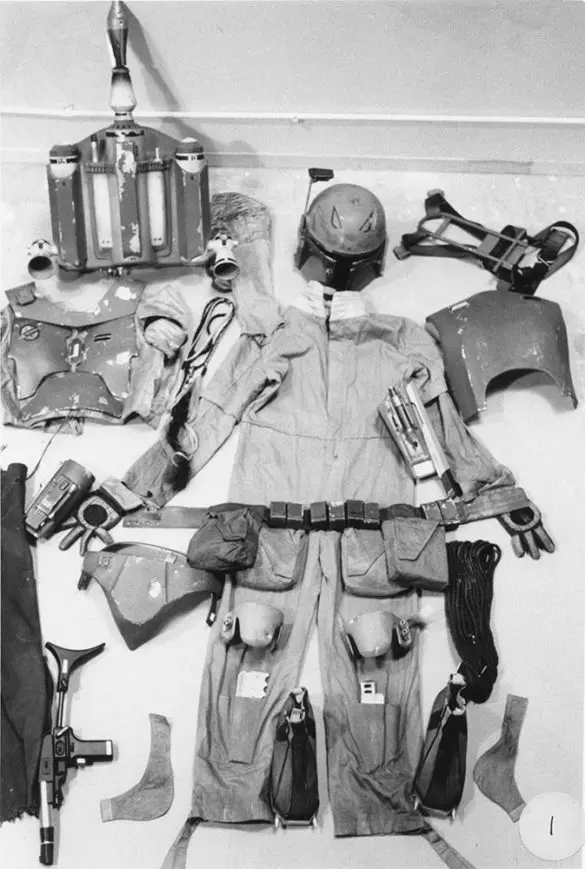
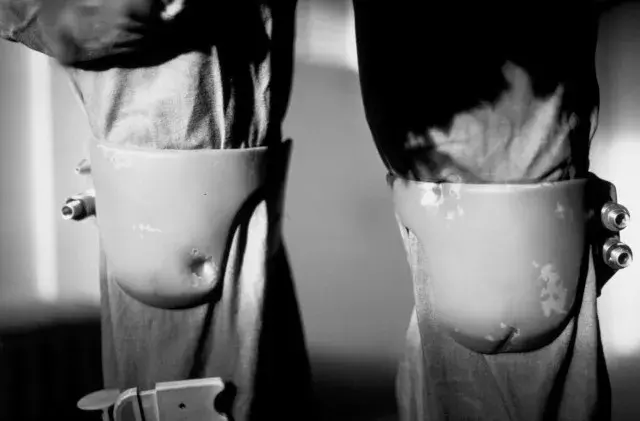
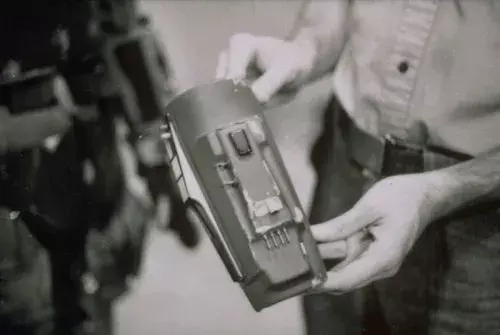
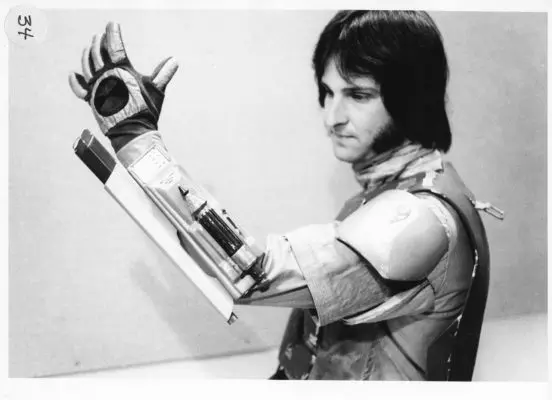
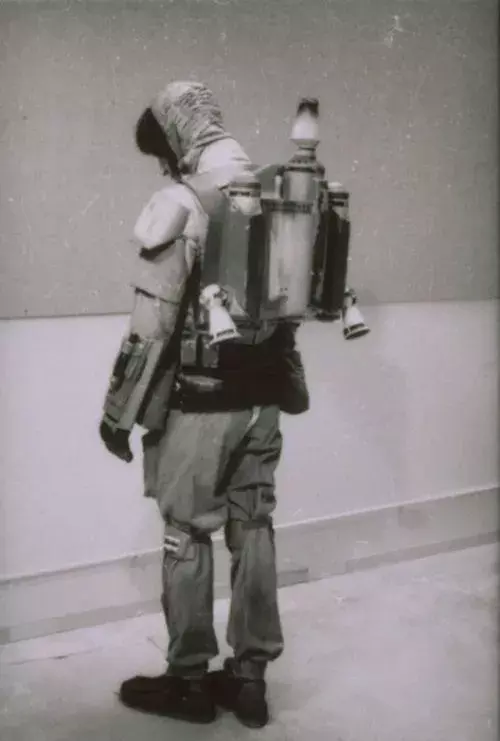
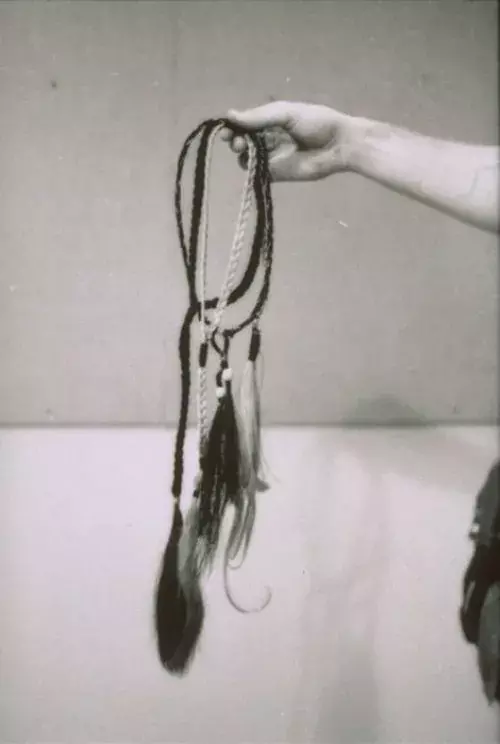
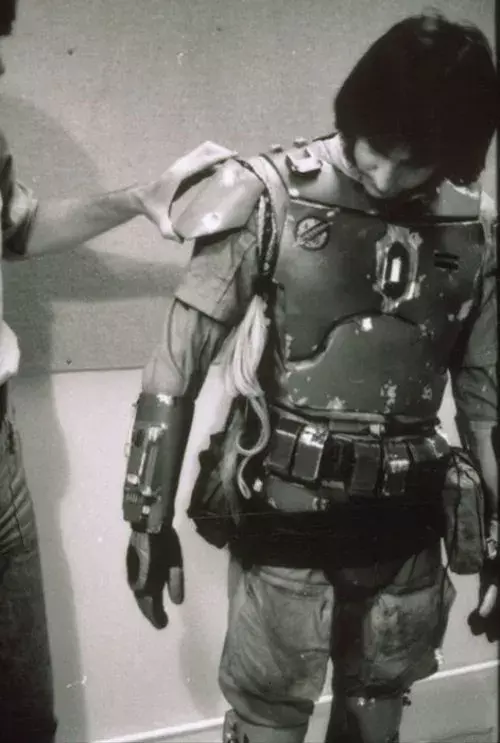
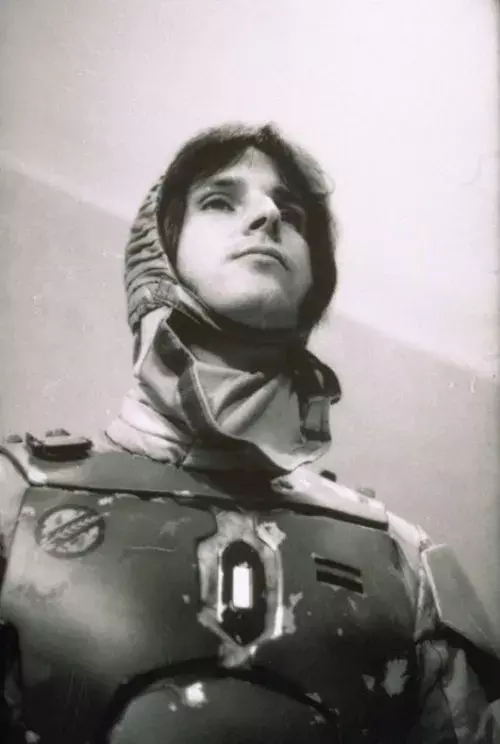
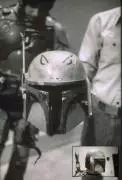
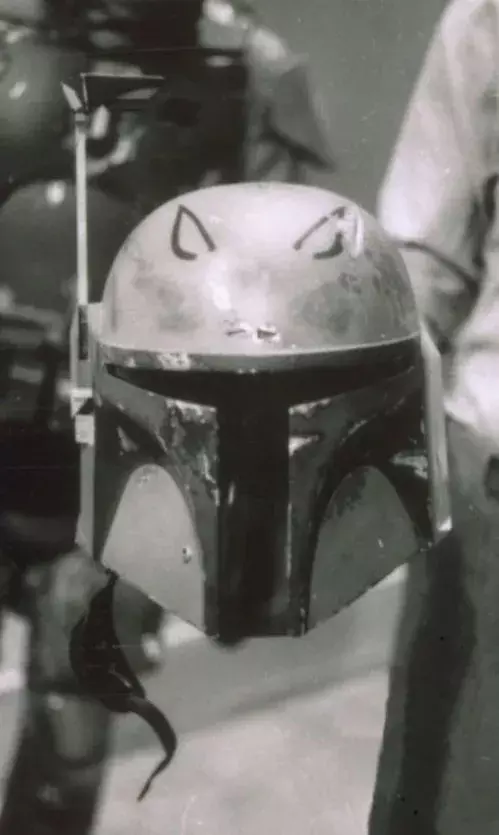
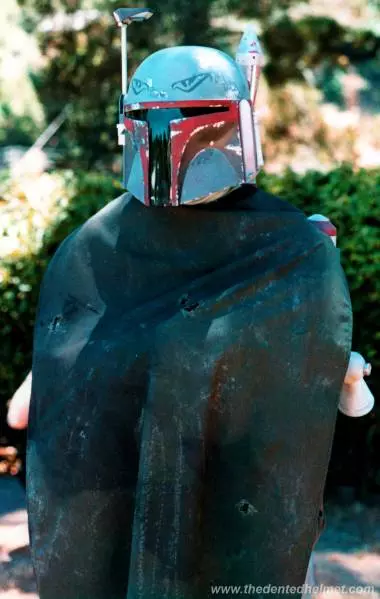
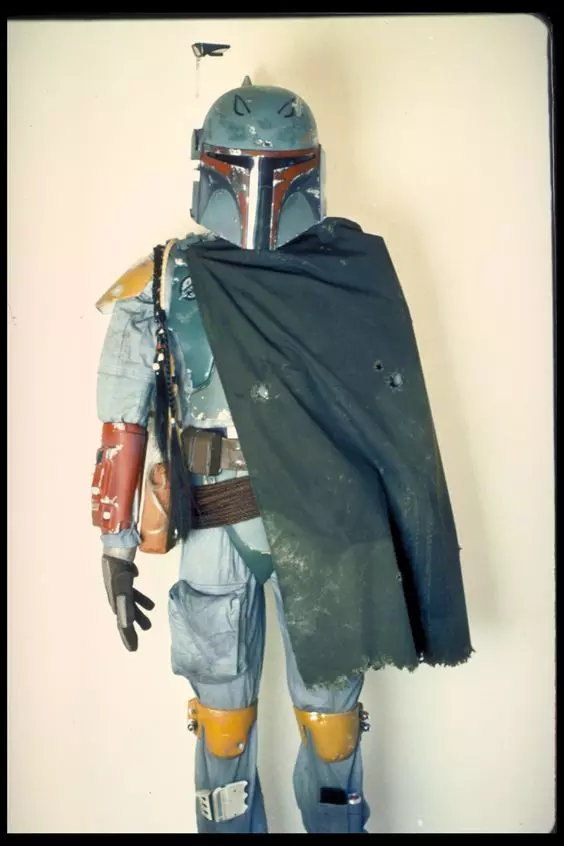
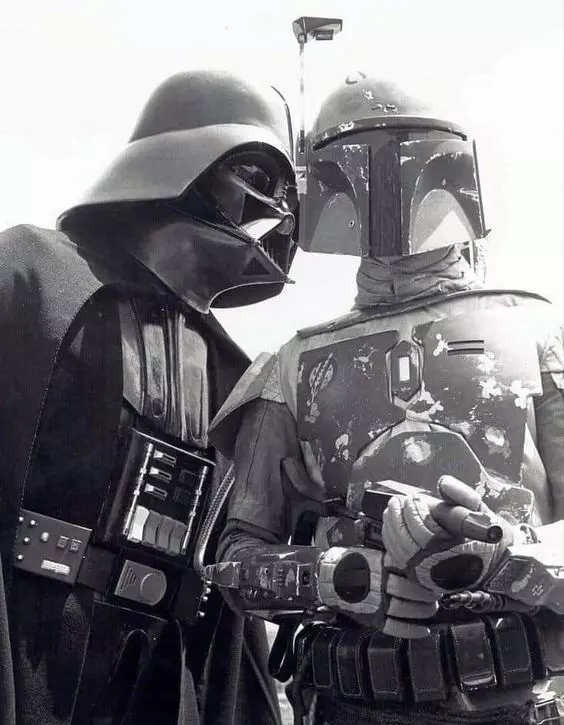
El 24 de septiembre de 1978, en la Feria del Condado de San Anselmo, Boba Fett hizo su primera aparición en público con un traje ocupado por Bruce Nicholson, quien fuese el asistente de fotografía óptica para Star Wars y luego el Supervisor de fotografía para Empire.
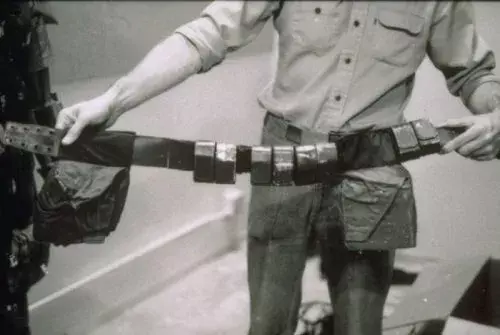
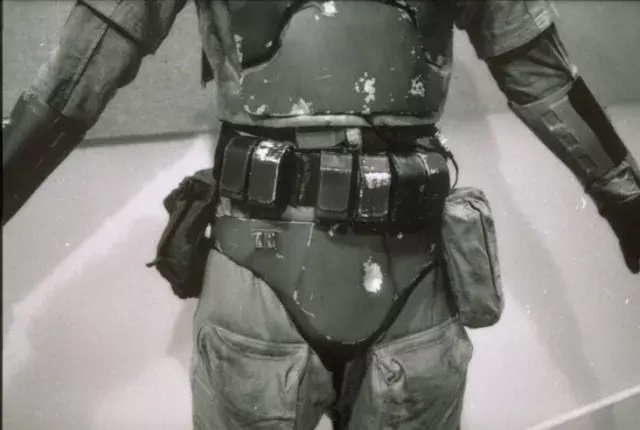
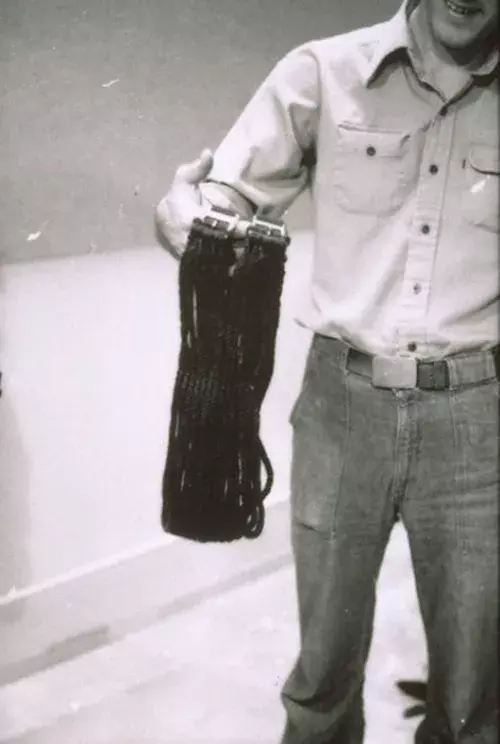
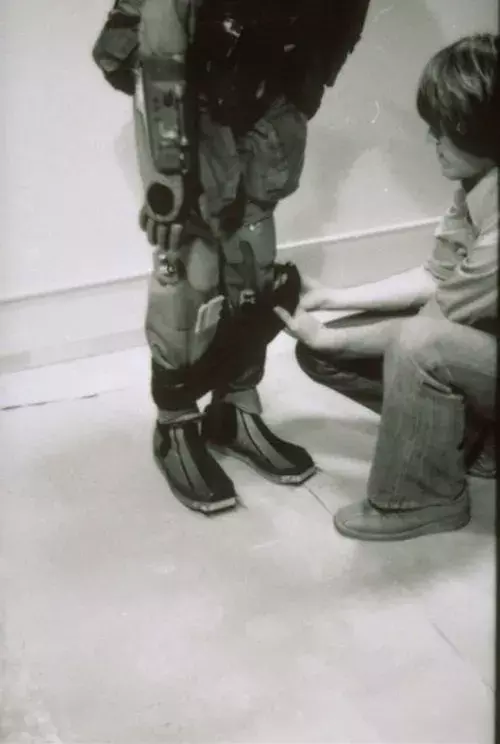
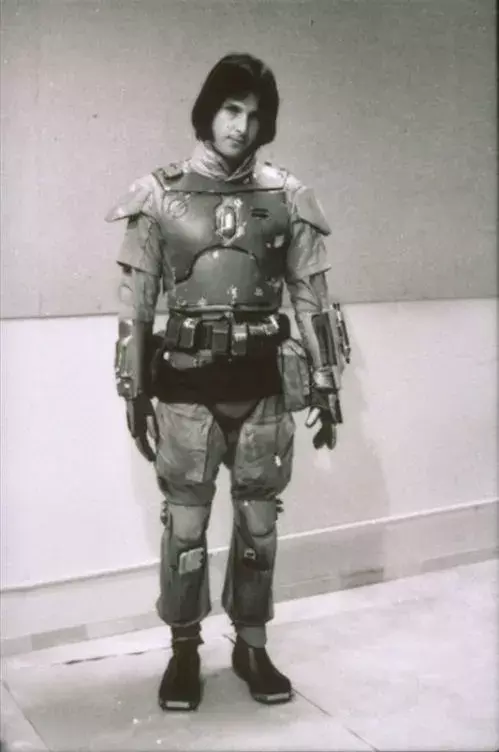
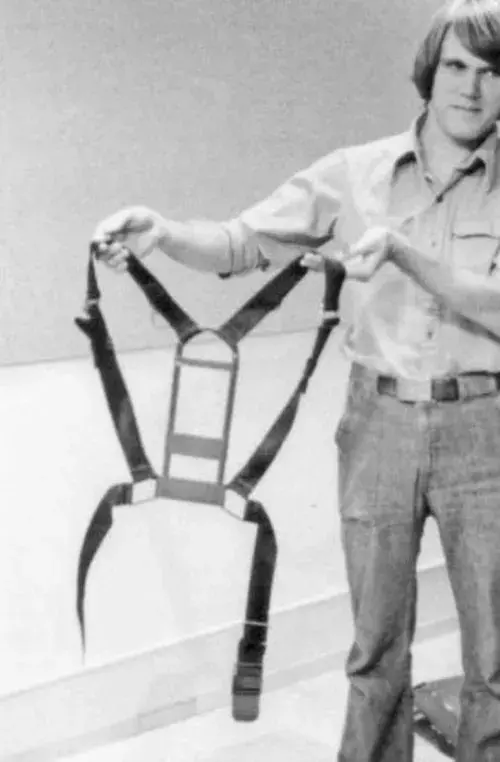
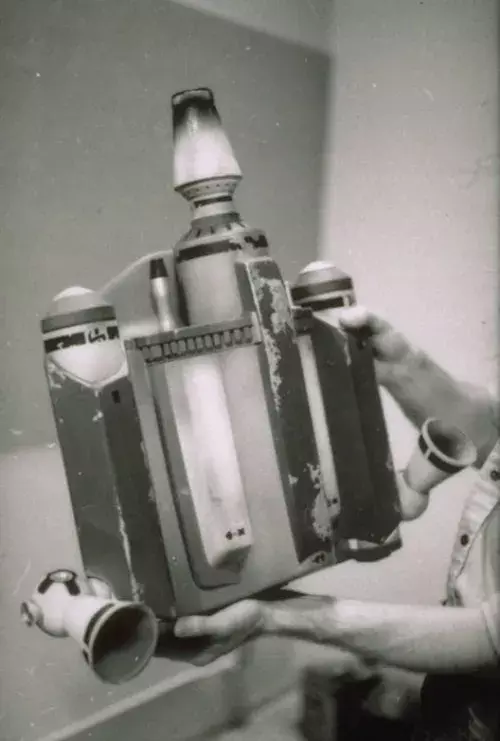
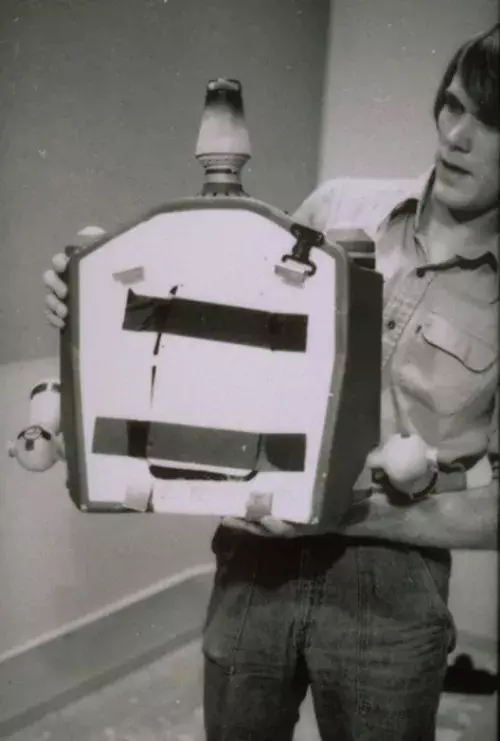
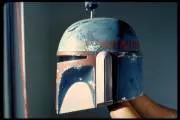
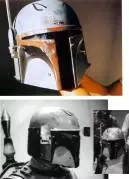
Octubre 1978 – Traje Boba Fett
El primer prototipo del traje de Boba Fett fue enviado al estudio de diseño y agencia de publicidad Daydream Productions de Sandy Dhuyvetter en Los Gatos, California, como una plantilla que ella siguió vagamente para pintar tres trajes adicionales. Se hizo un segundo y tercer prototipo para el personaje de Boba Fett.
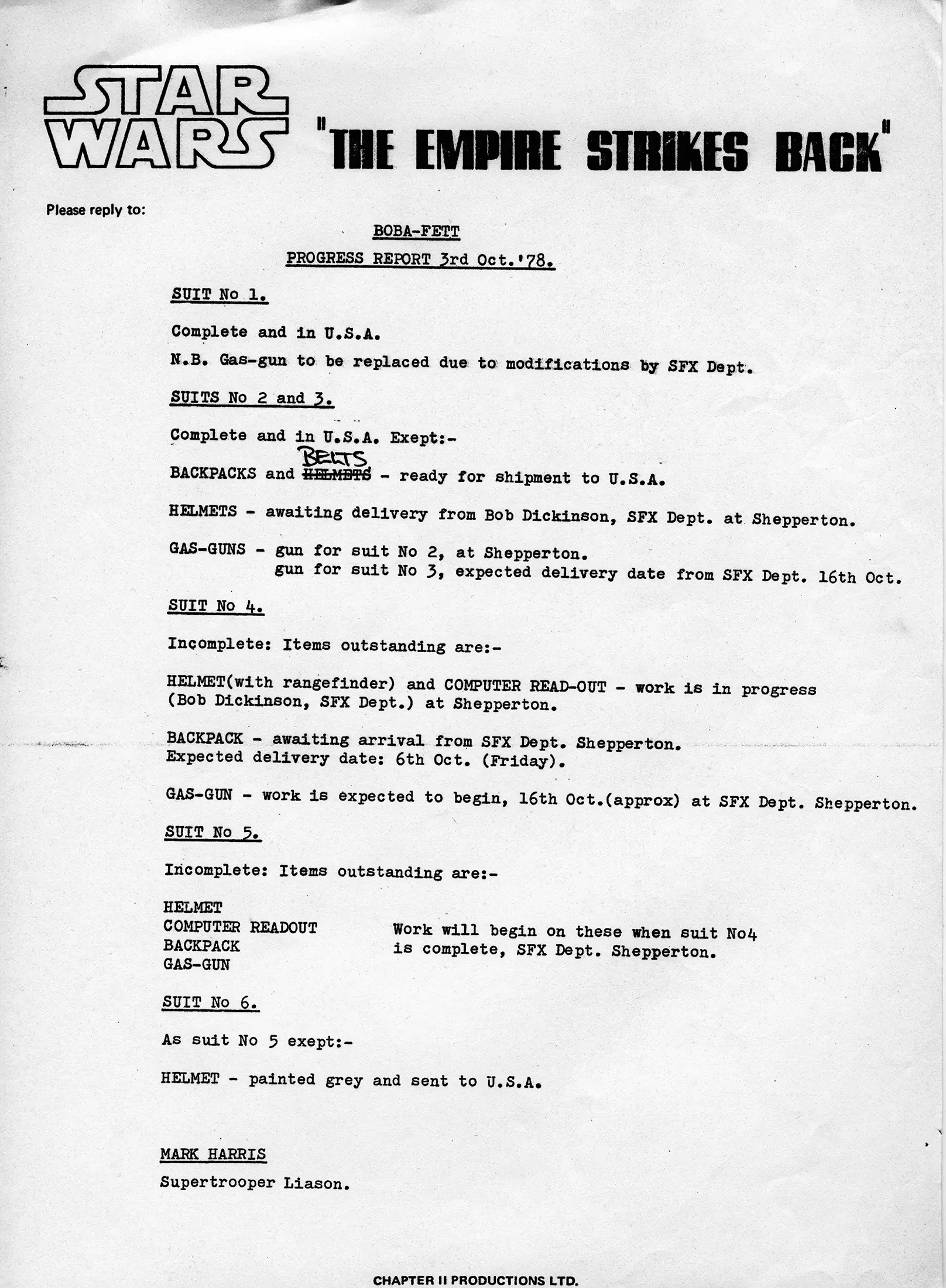
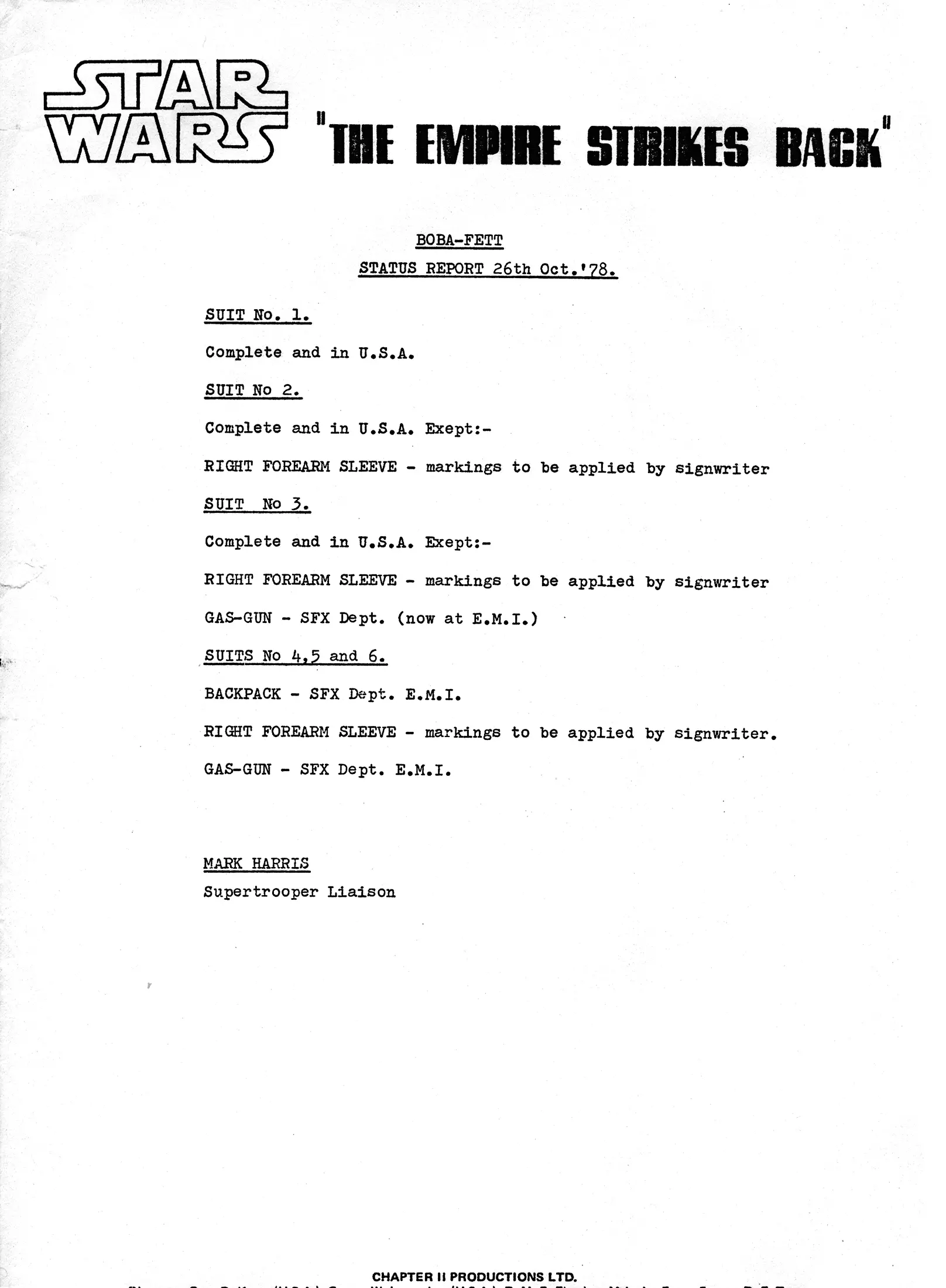
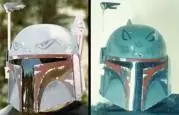
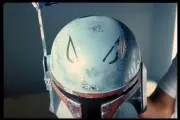
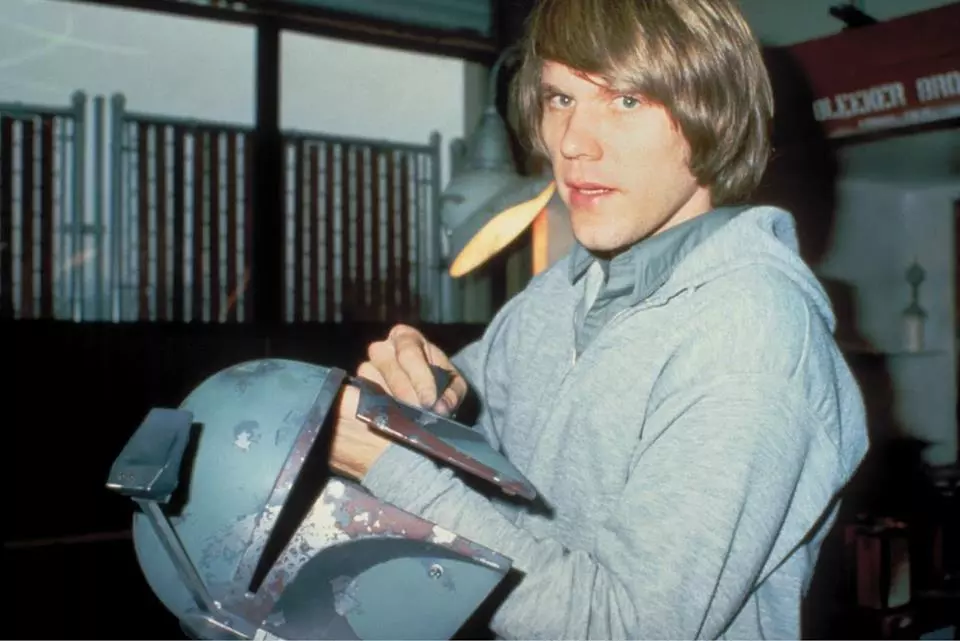
Si bien Joe Johnston es a menudo considerado el padre de Boba Fett, Sandy Dhuyvetter es considerada la madre de Fett. El primer casco prototipo de Boba Fett a menudo se denomina casco de preproducción #1, casco prepo 1 o simplemente casco PP1. También se le conoce comúnmente como el casco “Ojos” u “Orejas” debido a las marcas con forma de ojo en la parte superior del casco.
Se observa que las marcas en forma de ojo se movieron desde el frente de la cúpula del casco hasta la parte superior del casco. Todavía se pueden ver líneas tenues en el casco donde originalmente estaban las marcas.
Este casco es una verdadera pieza de transición entre el estilo original de Supertrooper y lo que eventualmente se convirtió en el icónico casco de Boba Fett. Tenga en cuenta que, a diferencia del casco de Boba Fett que tiene una muesca icónica, el casco del Primer Prototipo tiene una profunda herida aproximadamente en la misma área.
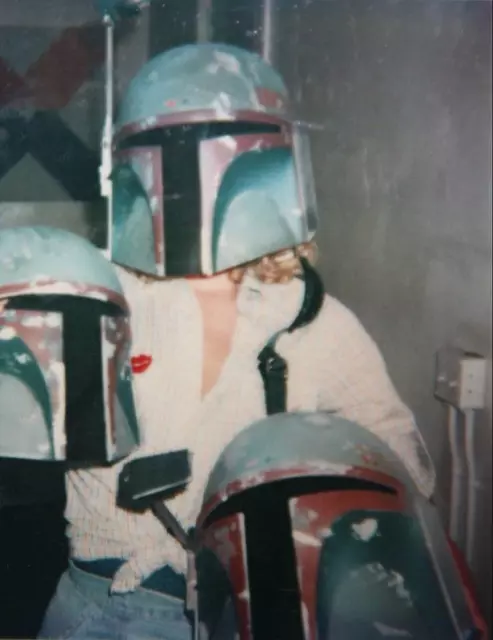
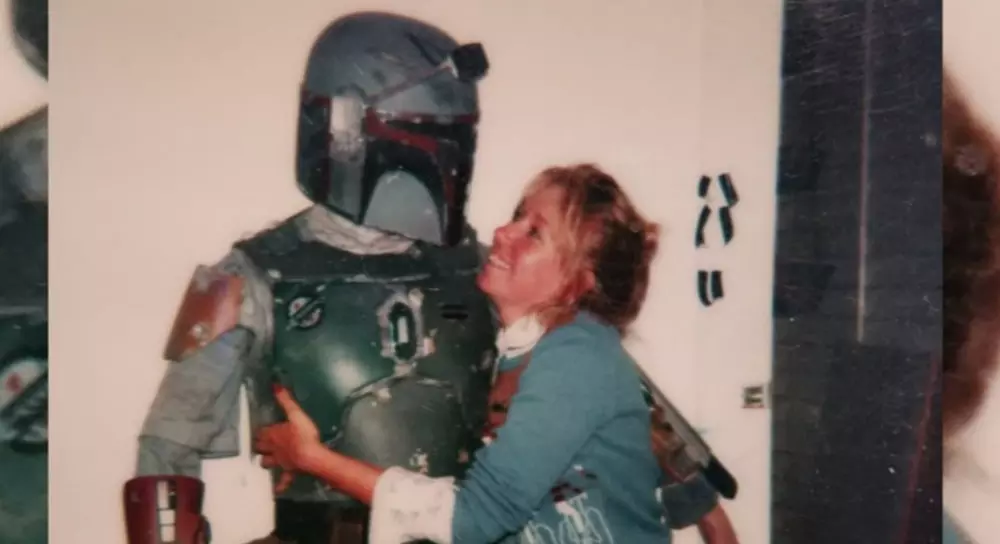
Se suponía que el Pre-pro 2 iba a ser el traje de héroe para ESB. Pero, ¿Qué pasó?
Existen dos teorías:
1. Después de que pasó por las rondas de Kenner, este traje fue perdido o regalado por una señora de Relaciones Públicas en Lucas Film en ese momento. Gary Kurtz (productor del Imperio Contraataca) identificó ese traje y/o partes de ese traje como robados.
2. En la misma línea de robo, un traje de ESB fue robado durante la producción en el Reino Unido. Se tomó un aparente informe policial y no se ha sabido nada públicamente desde entonces.
Todos los trajes y cascos fueron pintados y construidos en 1978, y existían estos diferentes colores y guantes. Creo más bien en que armaron lo que creyeron había que armar o bien George, que no dejeba nada al azar, decidió un cambio de último minuto (no es difícil de creer).
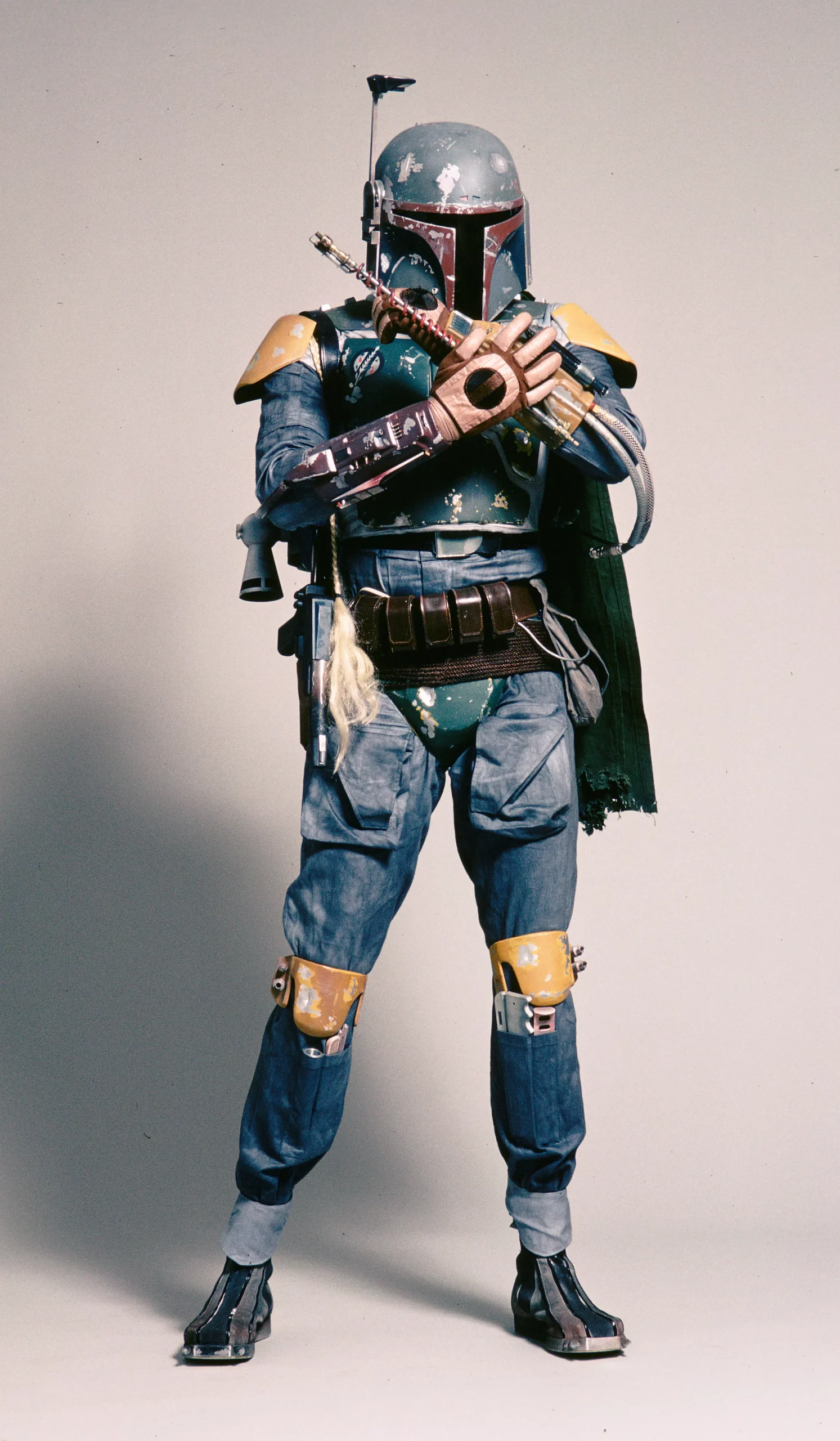
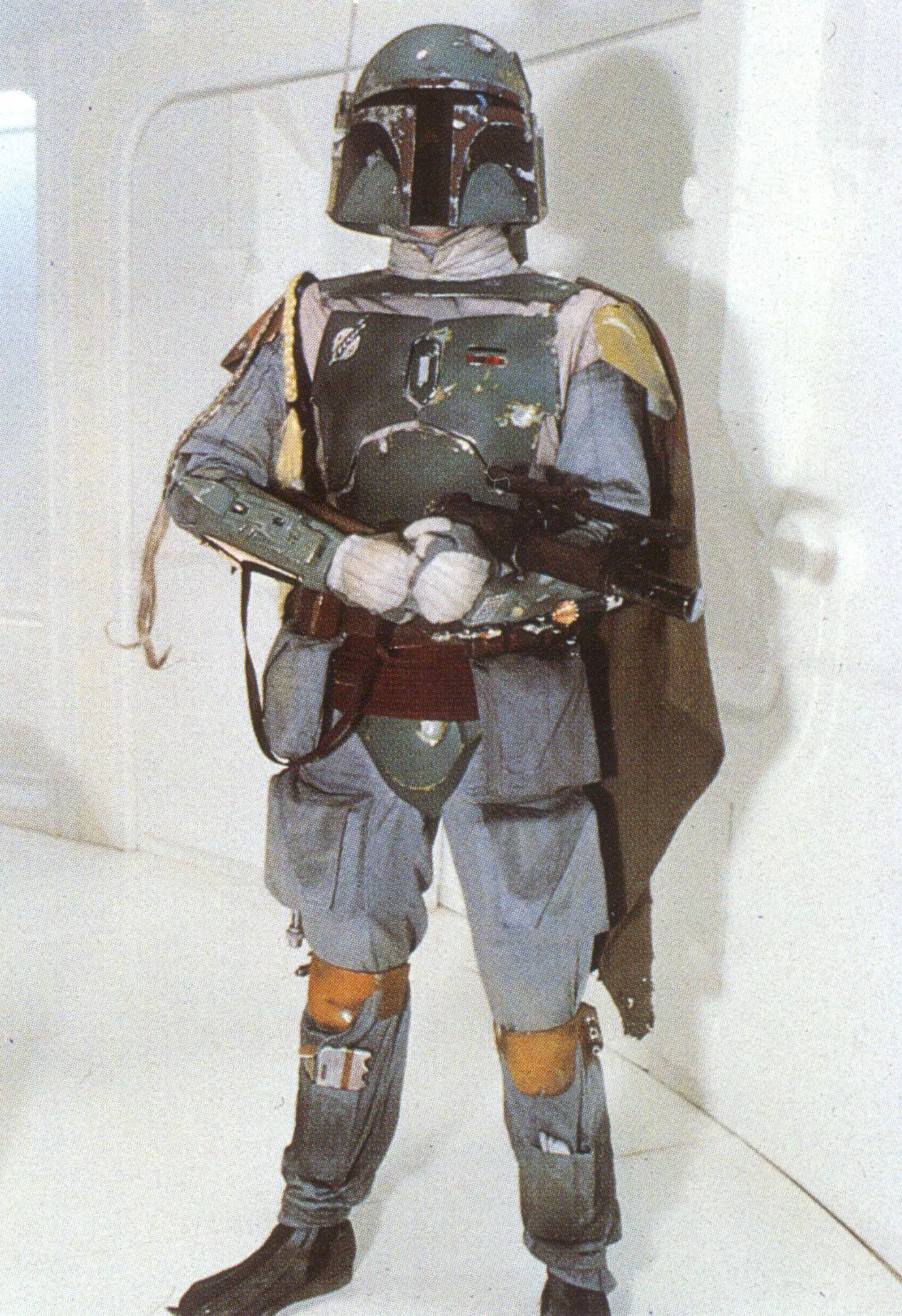
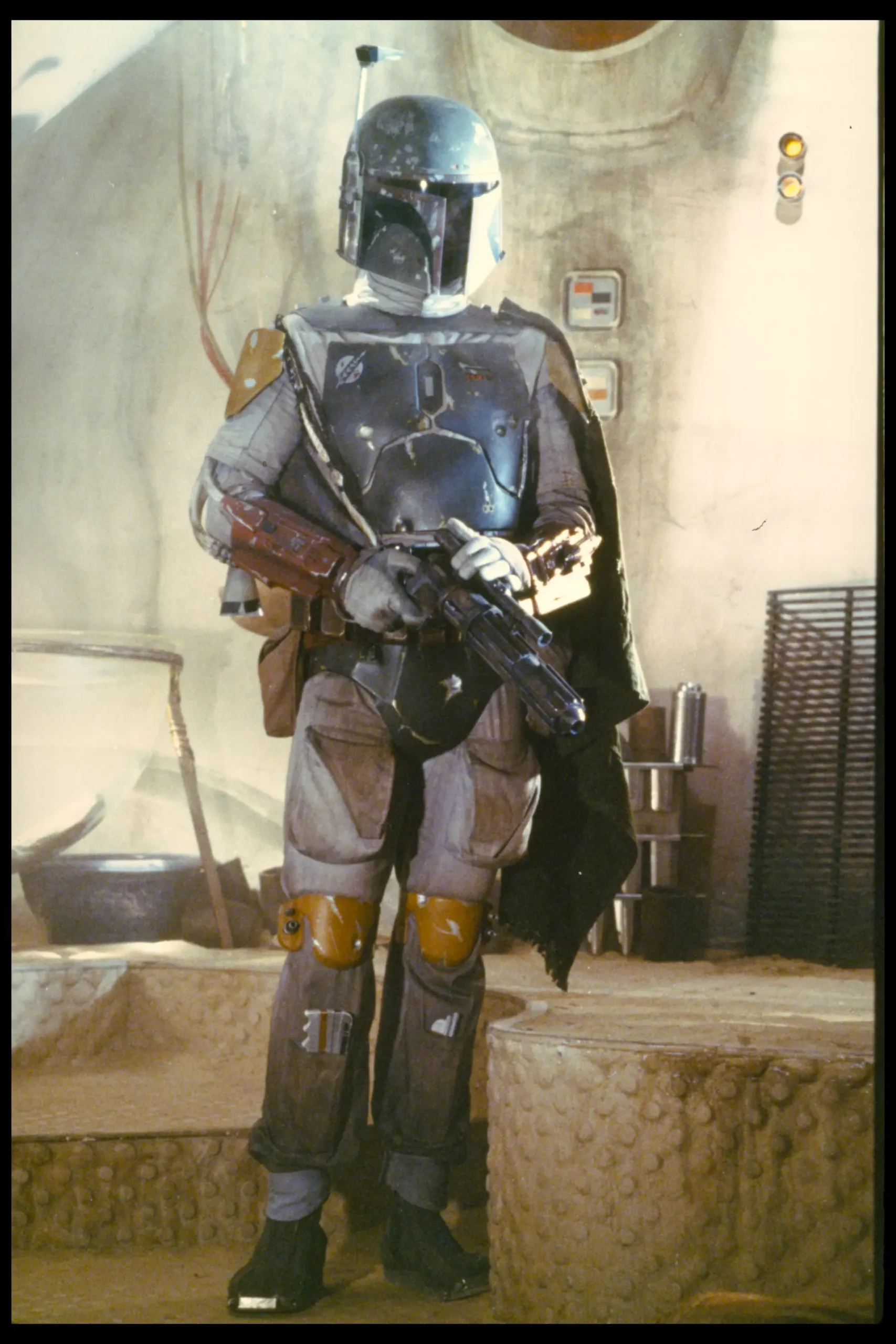
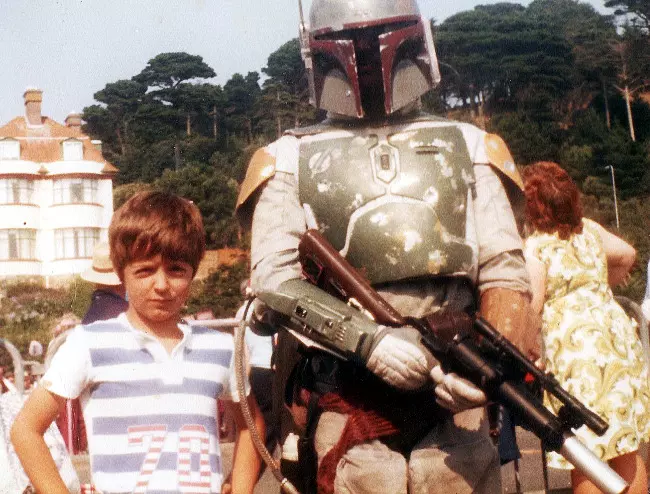
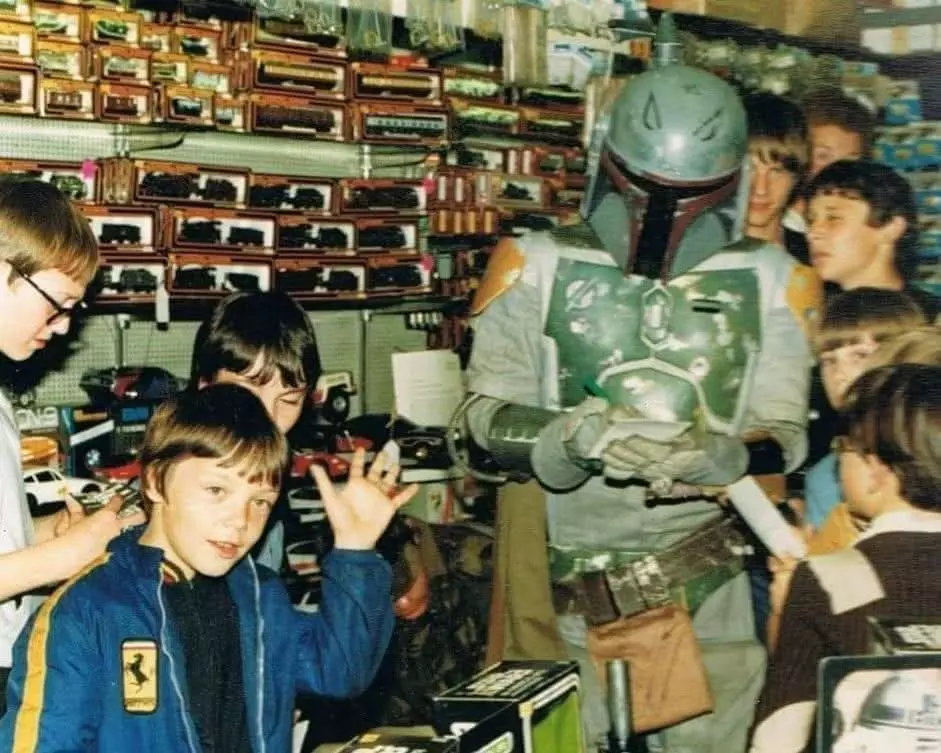
Además de los trajes creados para ser vistos en pantalla, tres de los trajes de Boba Fett que fueron terminados por Daydream Productions de Sandy Dhuyvetter se usaron principalmente para una serie de giras por los EE. UU., Canadá y el Reino Unido para promocionar El Imperio Contraataca. Estos trajes son una especie de mezcolanza de piezas con placas de armadura y cascos que se combinan aleatoriamente de otros trajes y entre sí.
Octubre – Noviembre 1978 – The Story of the Faithful Wookiee
Un año después de que Star Wars llegara por primera vez al cine y fuera todo un éxito, Fox pensó que sería buena idea hacer un especial navideño para aprovechar la popularidad que estaba empezando a emerger.
Transmitido por primera y única vez, el 17 de noviembre de 1978 (una semana antes del Día de Acción de Gracias), de forma simultánea en los canales CBS (un canal de la televisión estadounidense) y CTV (un canal canadiense), se transmitió el Star Wars: Holiday Special.
Gary Kurtz ha mencionado al respecto:
“Tuvimos media docena de reuniones con la compañía de televisión que lo estaba haciendo. Al final, debido al trabajo en la promoción de Star Wars y en la próxima película, nos dimos cuenta de que no teníamos tiempo. Así que se lo dejamos a ellos y tuvimos reuniones ocasionales con ellos, les dimos acceso a los accesorios y a los actores, y eso fue todo.”
George Lucas no aparece en los créditos de este especial, sin embargo la idea de que la narrativa esté entorno a la familia de Chewbacca fue una idea de él.
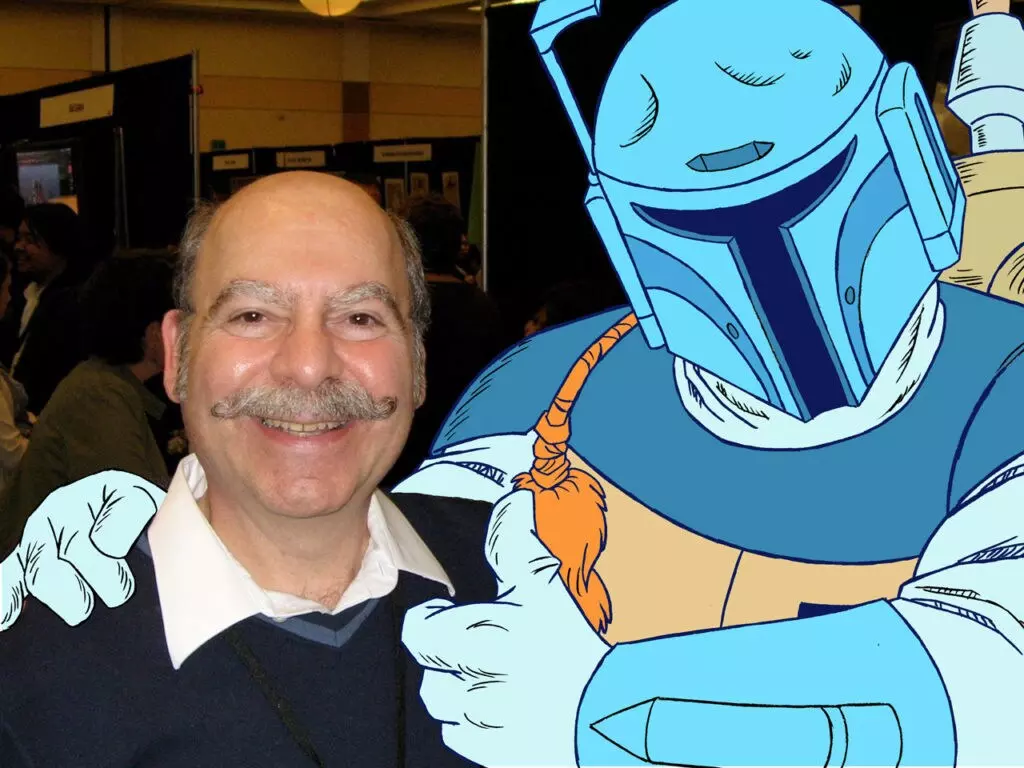
Este programa televisivo presenta por primera vez, a una audiencia masiva, al personaje de Boba Fett,, en un corto animado de nombre The Story of the Faithful Wookiee. Acá, Boba Fett tiene una nueva arma y colores diferentes a los diseños de Jhonston. El esquema de color simplificado para la caricatura se repitió más tarde para la aparición de Fett en la serie Droids. Este corto animado fue escrito por Lucas y la produjo Nelvana Ltd en Toronto Canadá (la misma de Droids y Ewoks).
Esta adaptación del personaje estuvo a cargo de Frank Nissen y luego animado por John Celestri, quien es el que le da vida. Menciona en una entrevista hecha por el Fan Club de Boba Fett:
“Fue George Lucas quien pidió específicamente a Nelvana que diseñara el aspecto de la caricatura al estilo del artista francés Jean “Moebius” Geraud, cuyo trabajo se pudo ver en la revista “Heavy Metal”. Esa dirección y una película casera en blanco y negro que mostraba a una persona con el prototipo de traje de Boba Fett eran básicamente todas las pistas con las que Nelvana tenía que trabajar. Entonces, todos los colores para la producción vinieron de seguir el sentido del color de Moebius… en el caso de Boba, el azul era el color base. Todos los modelos de color y diseños básicos tuvieron que ser aprobados por Lucas antes de que la producción de la caricatura continuara.”
Boba Fett y Kenner
24 Septiembre 1978 – Feria de Anselmo
Jim Swearingen, diseñador de juguetes y quien tuvo un papel fundamental en la adquisición de la licencia de Star Wars por parte de Kenner, fue el responsable del diseño de lo que sería el juguete con más historia y mitos dentro del Kennerverse. Al parecer Boba Fett estaba destinado a ser un personaje rodeado por mitos y leyendas dentro de la ópera espacial como fuera de ella.
En 1978, Jim Swearingen fue enviado por Kenner a reunirse con George Lucas para echar un primer vistazo a Boba Fett.
Antes octubre 1978 – Primer Prototipo
En su perfil de Facebook, Jim comenta:
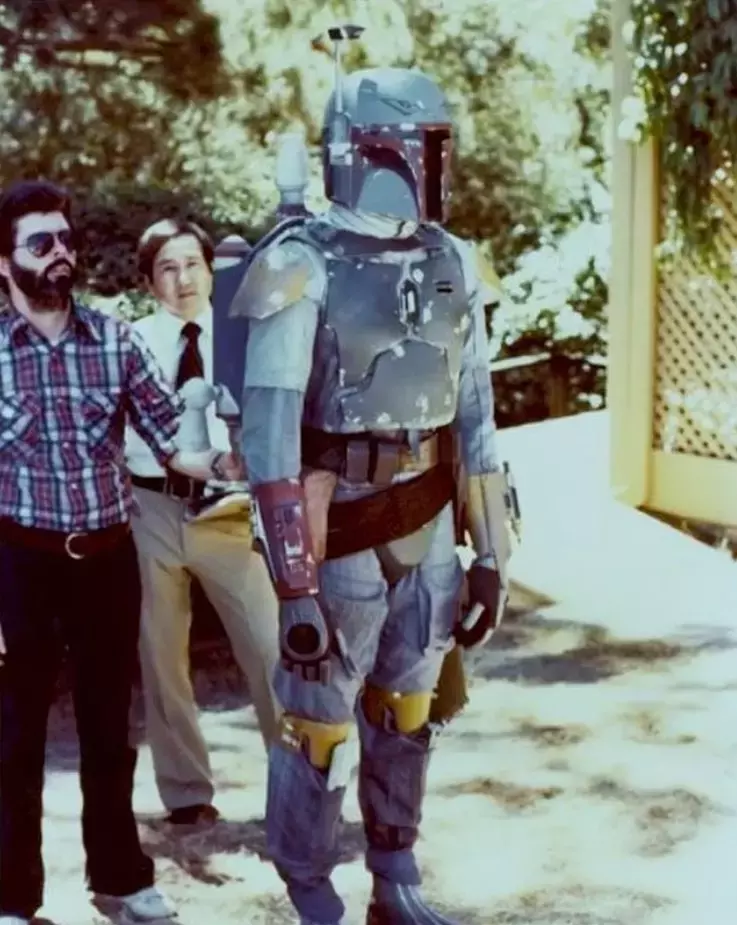
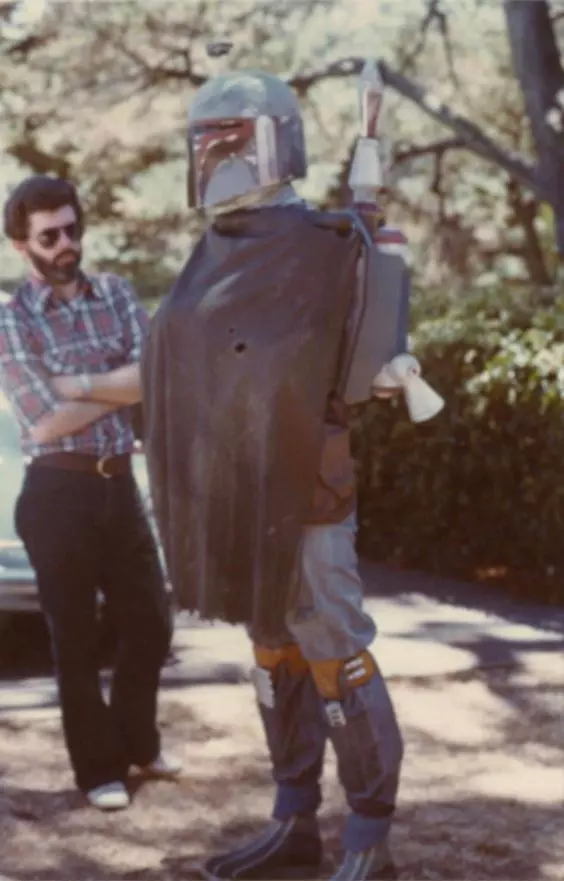
“Tomé las fotos del primer disfraz de Boba Fett en San Anselmo. George Lucas y Dave Okada también están en las fotos. Esta referencia fotográfica es lo que usé para hacer el kit-bash de la primera figura de Boba Fett de 3.75 que utilizamos para presentaciones y fotografía.”
En el sitio The Star Wars Collectors Archive es posible encontrar referencias al primer prototipo de la figura de Boba Fett. Esta versión de Boba tiene los ojos en el casco que se aprecian en las primeras versiones del personaje. También en este prototipo se observa esa especie de espada que tiene el traje ocupado por Bruce Nicholson en brazo izquierdo, y que por cierto se mantuvo en la figura final.
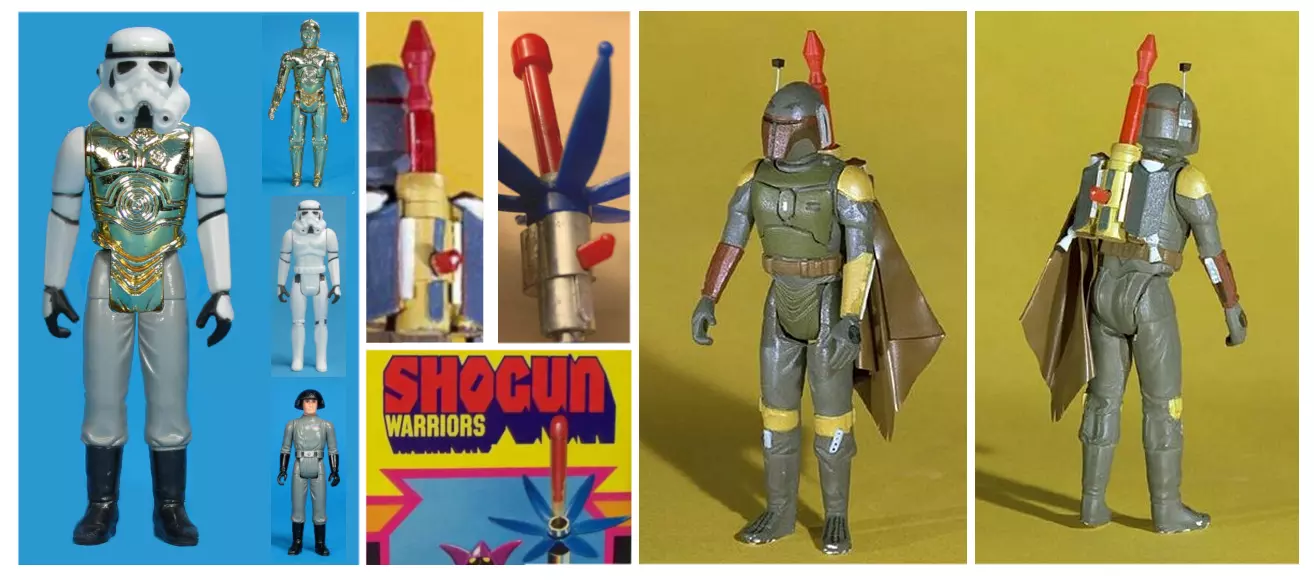
Lo que es maravilloso de este prototipo es el cómo fue construido, siendo su base un compuesto de parte de otras figuras de las 20 existentes en ese momento, a saber, el Stormtrooper (brazos), el Death Squad Commander (piernas) y C3PO (torso).
Las piezas nuevas se habrían construido con algún tipo de masilla para que adquirieran una nueva forma. La cabeza habría sido esculpida desde cero o bien está la teoría que se hizo la cabeza de la figura de C-3PO, lo que tiene sentido ya que se ocupó su torso. La práctica del kit-bashing, en la que Kenner eran especialistas, servía mucho para estos casos e incluso para generar nuevas figuras definitivas (como vimos en el caso de la línea de Robin Hood).
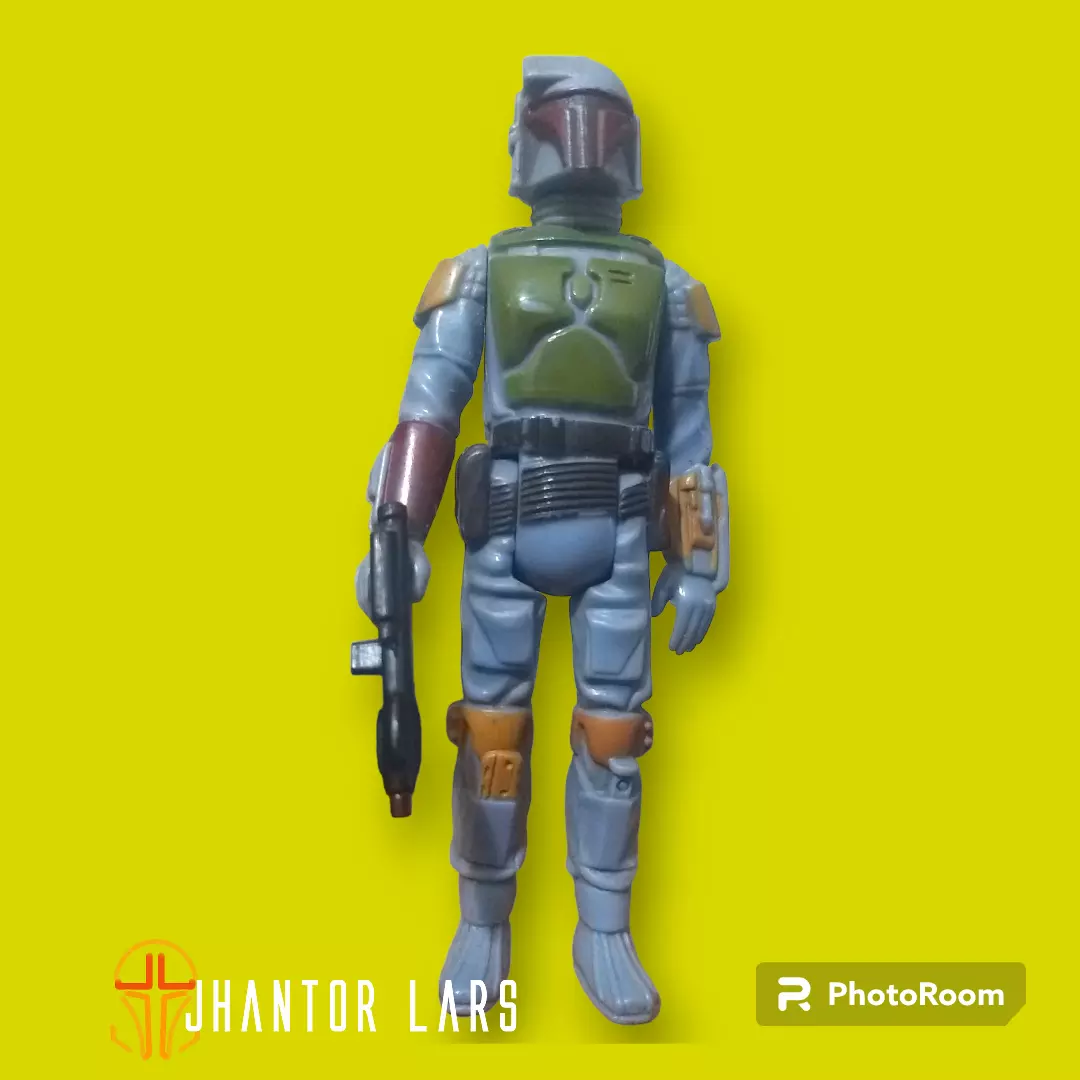
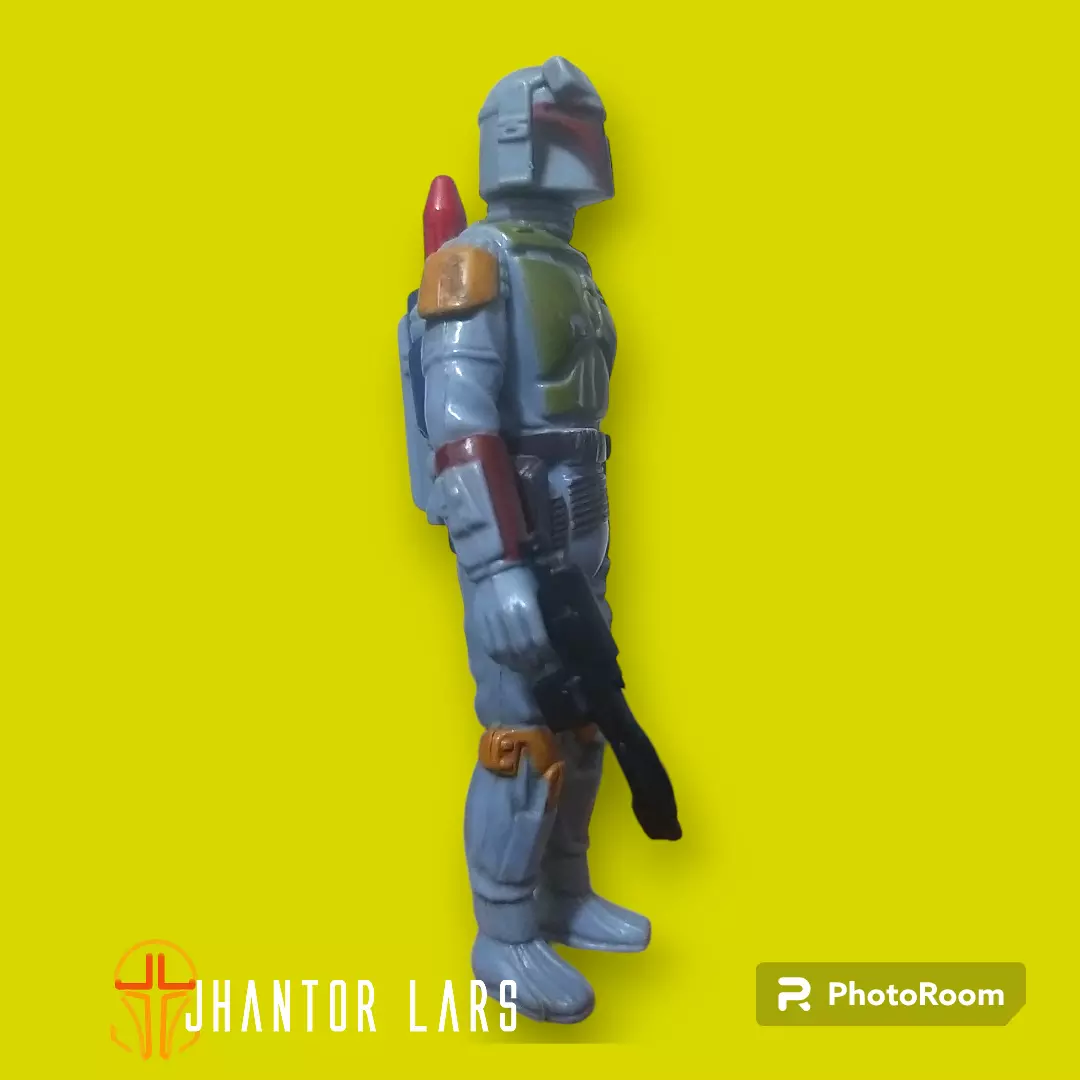
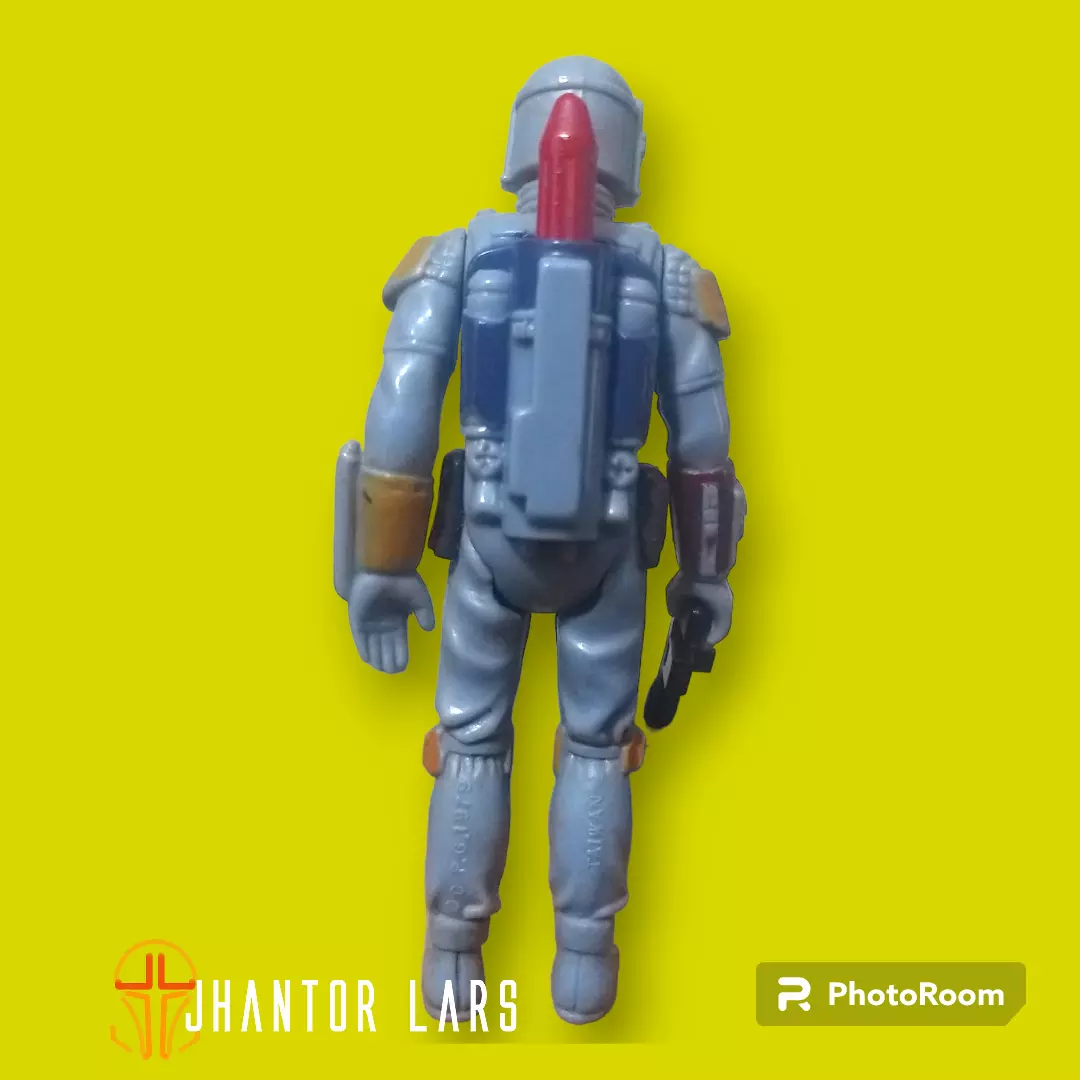
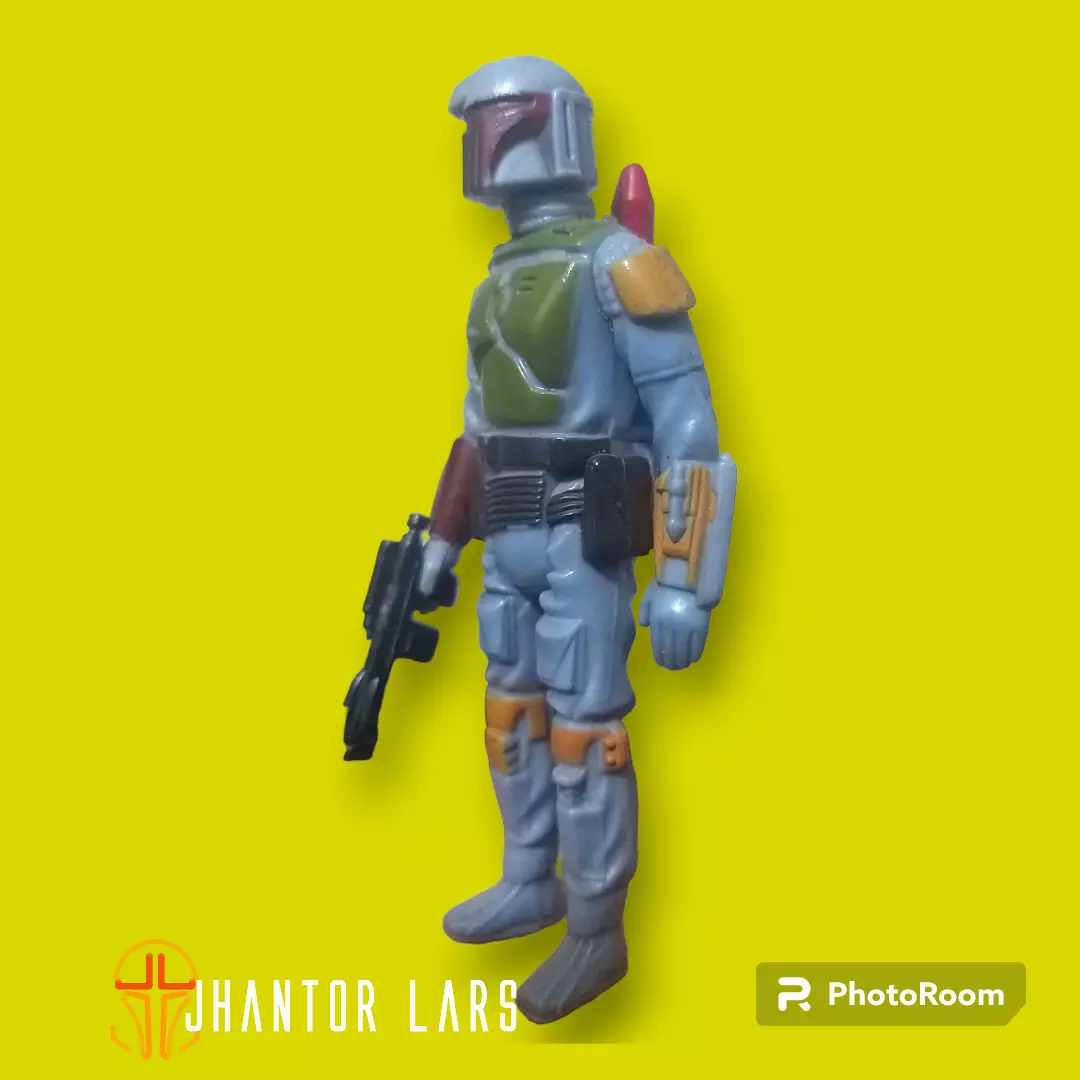
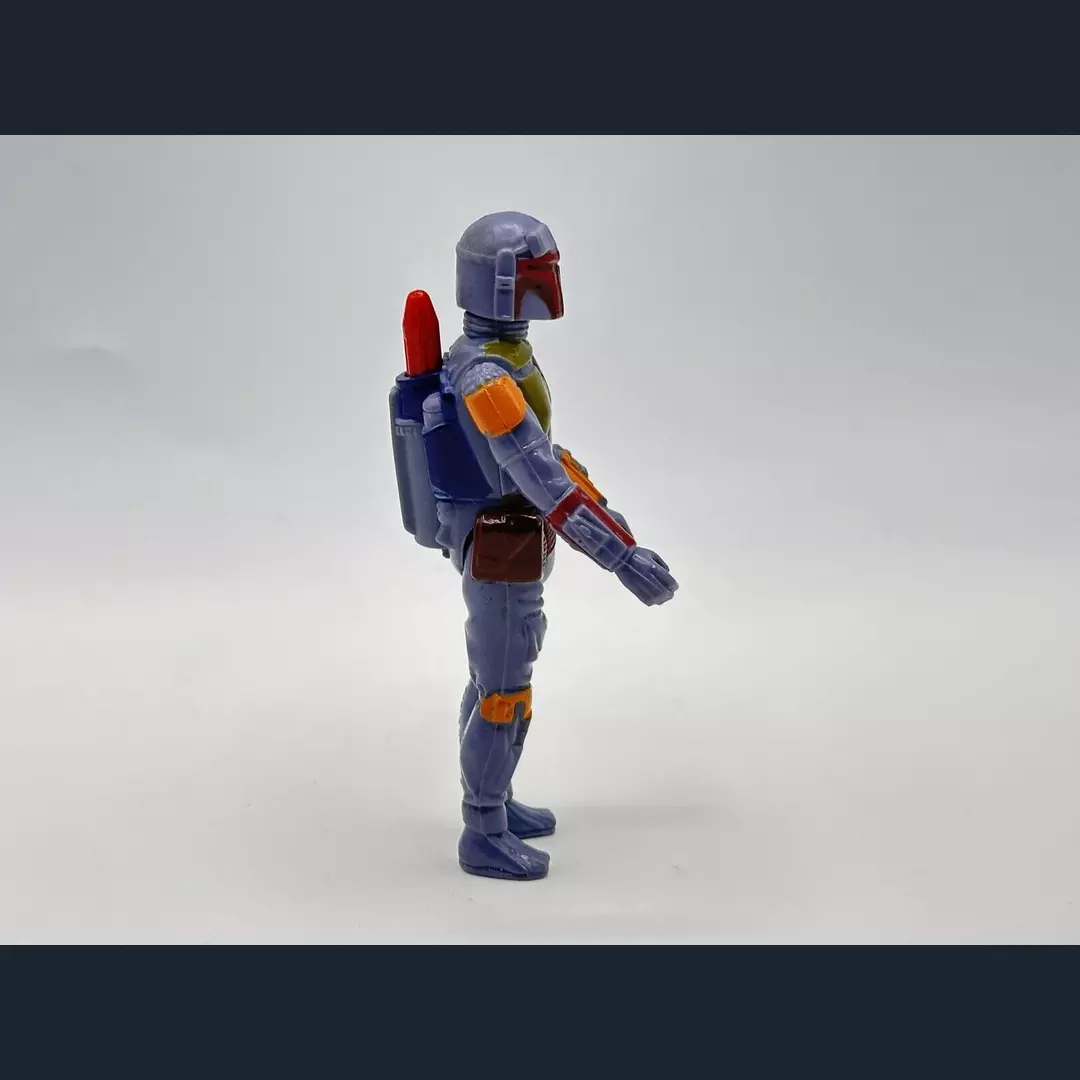
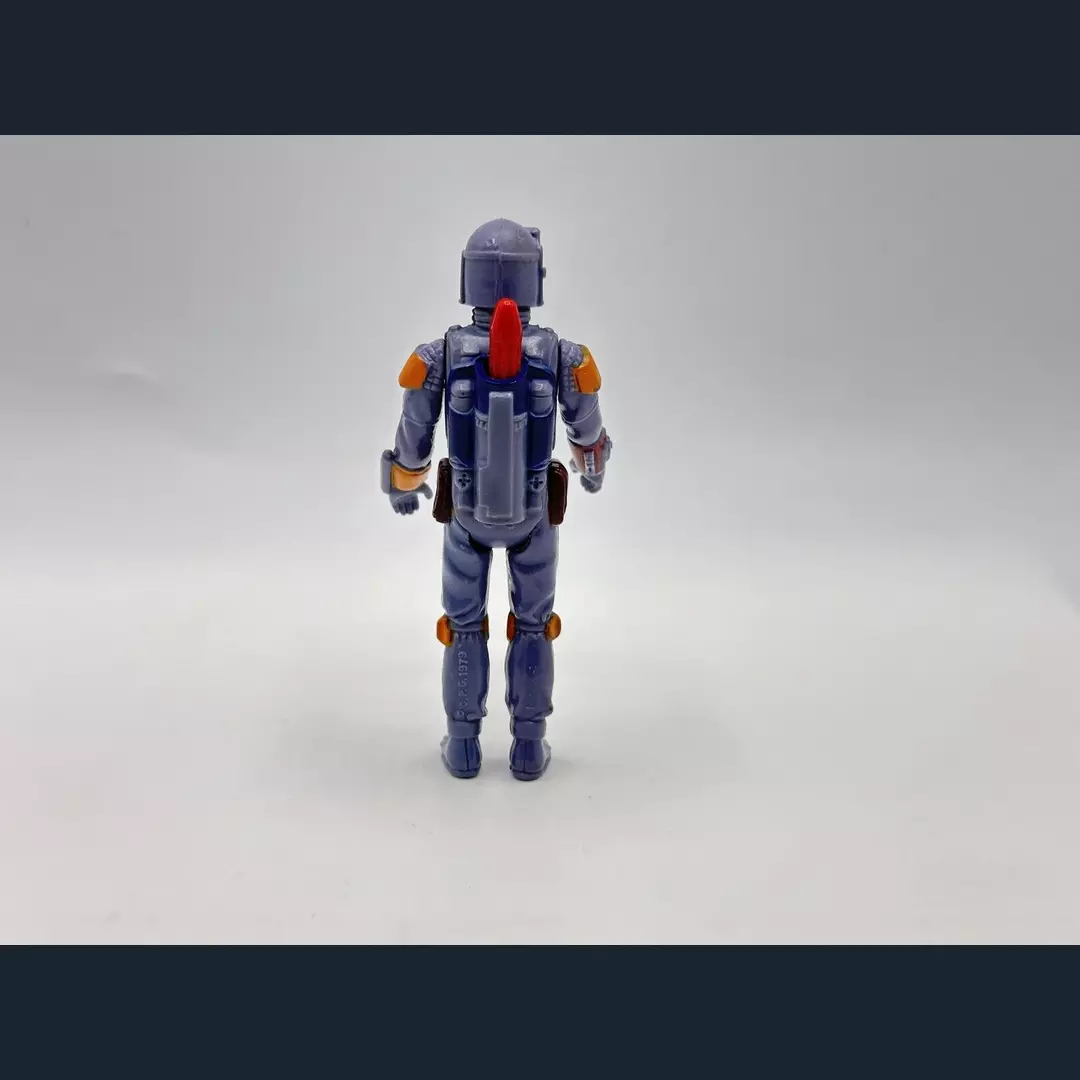
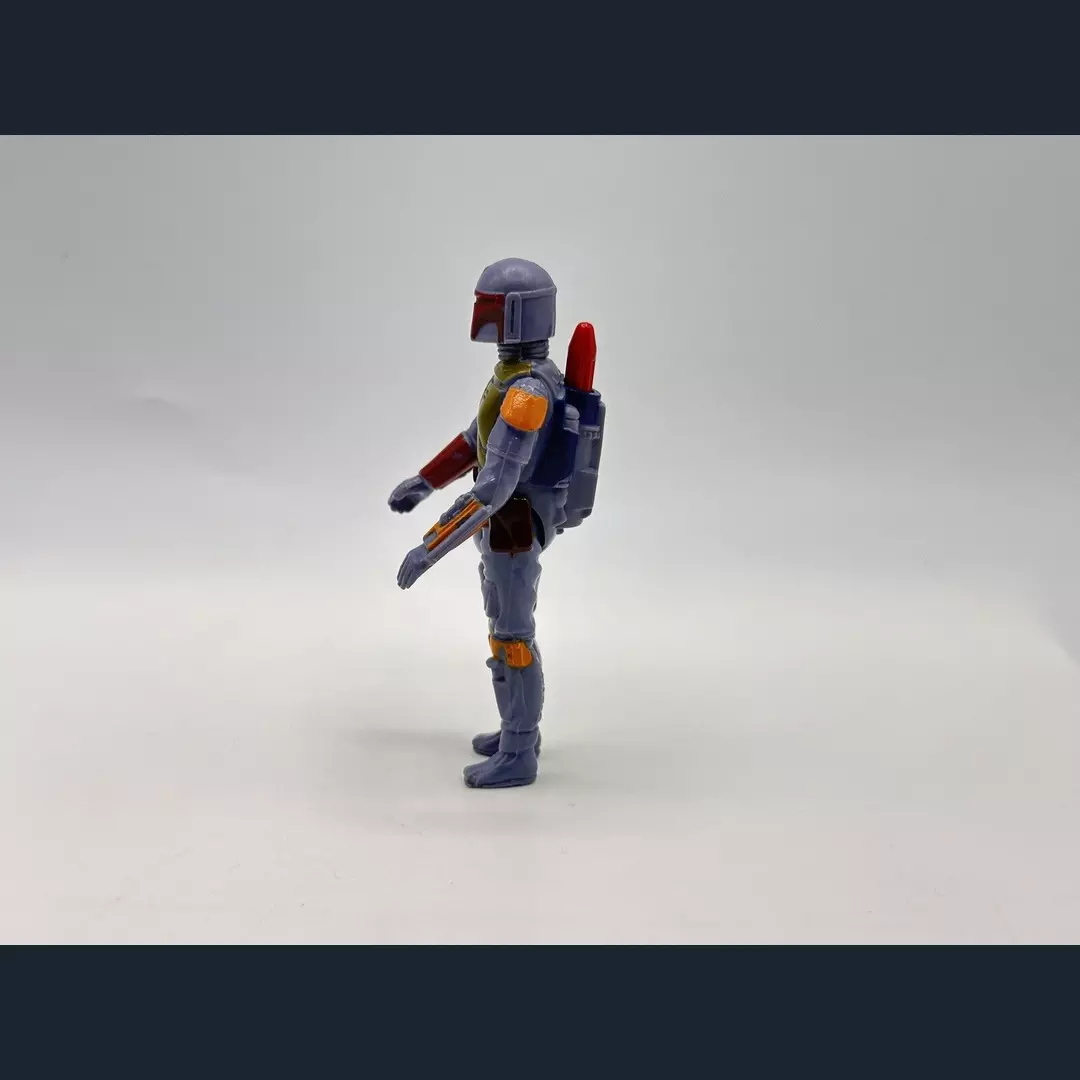
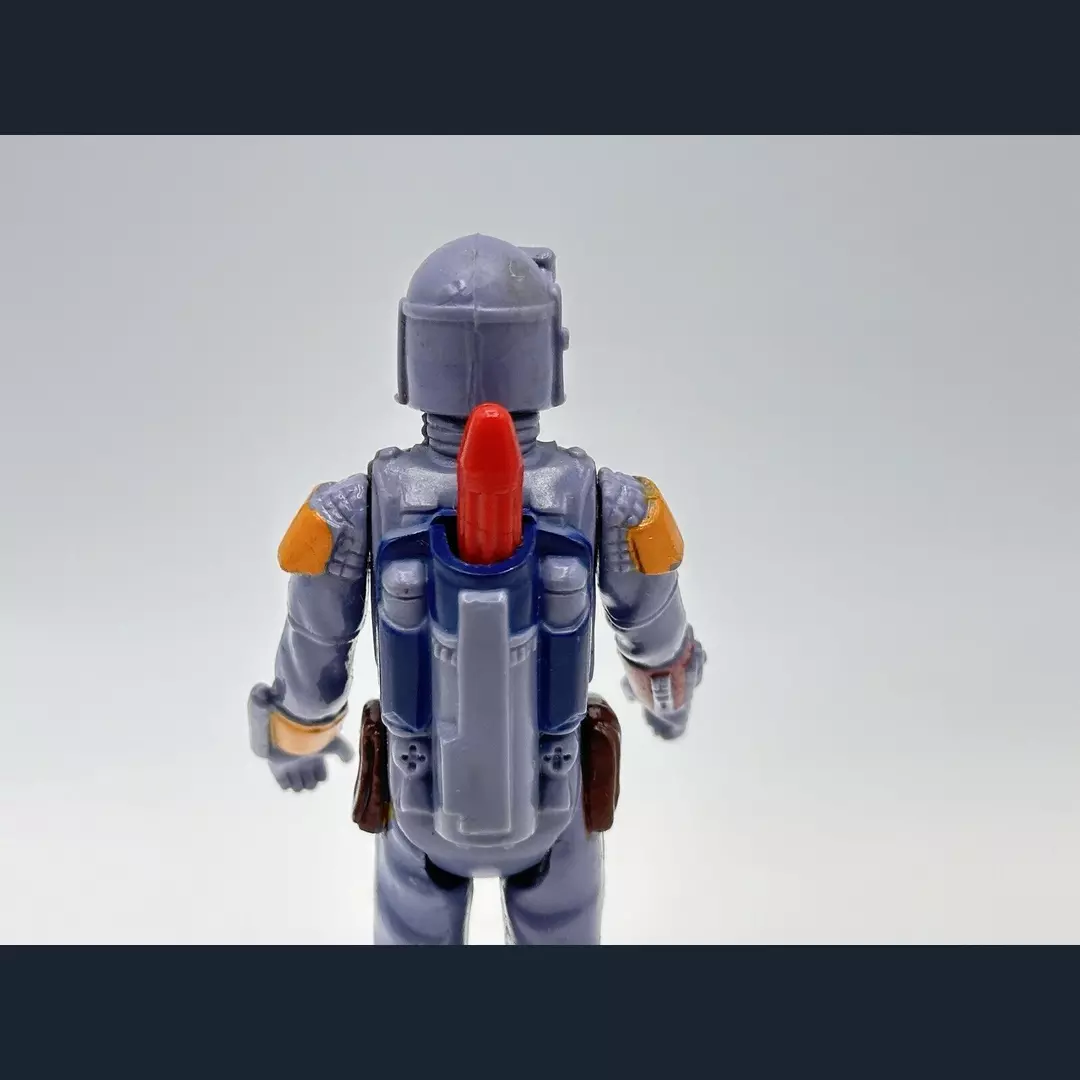
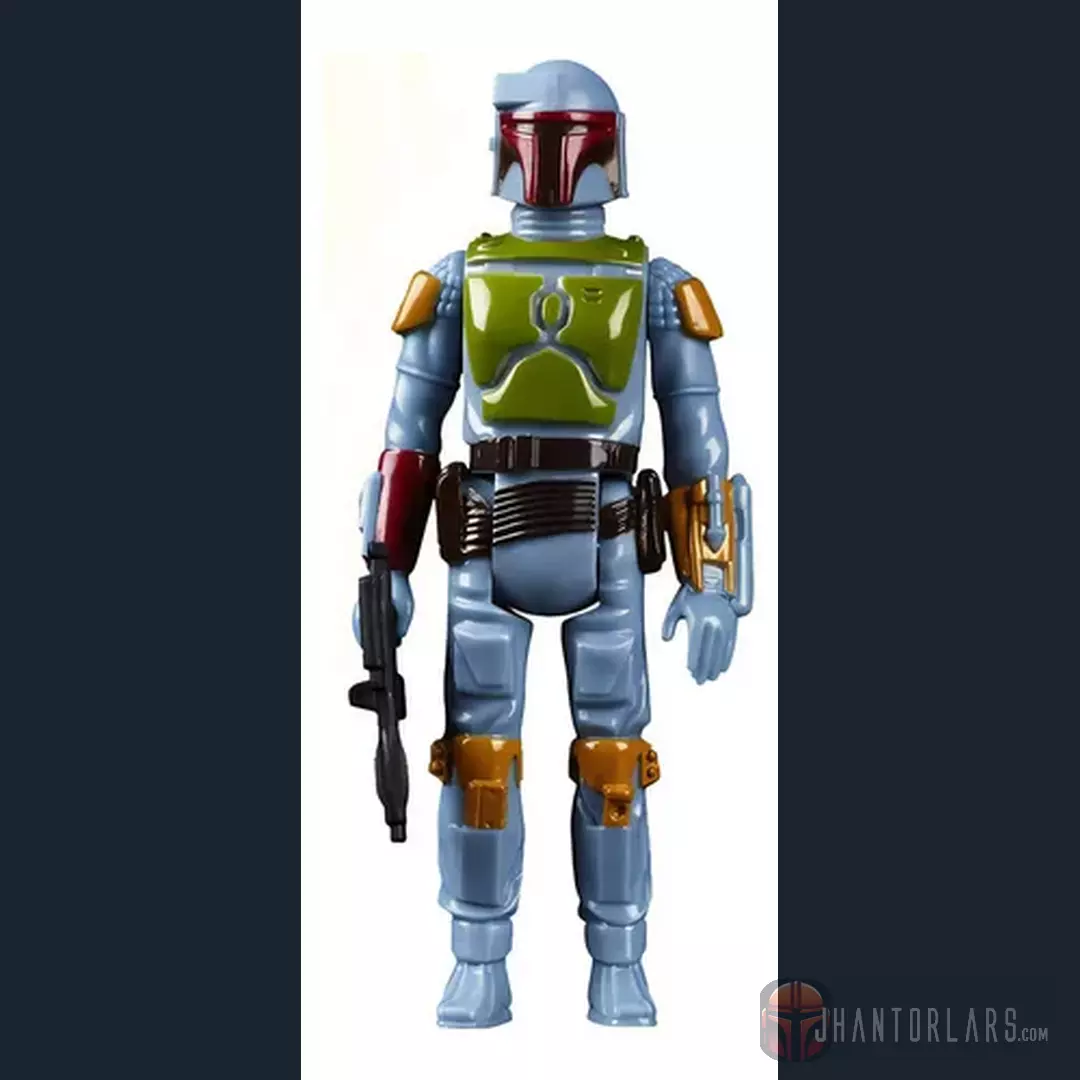
Algunos aspectos interesantes de este prototipo son los ya nombrados ojos dibujados en el casco, una capa de vinilo, el jetpack y los guantes que en su dorso tiene una “X” con un círculo negro. El jetpack es más grueso y tiene los propulsores móviles. En general, los colores del mameluco y de la armadura no fueron muy acertados al traje expuesto en la vida real. El misil ha sido retallado según la necesidad de este personaje y el telémetro tiene una varilla de metal. Las botas tienen las líneas del detalle del traje en los pies. En términos generales, la figura es bastante buena y bien aproximada al traje real, sin embargo parece ser compleja de reproducir en grandes cantidades y por tanto una figura más cara de producir que otras de la serie. Por este motivo puede ser que se haya tenido que presentar una segunda versión del prototipo.
El lanzamiento de misil fue tomado desde el personaje Raider de los Shogun Warriors, un juguete de Mattel de 1977, famosos en la época por una línea que duró cuatro años desde 1976, en que la gran juguetera produjo una línea “japonesa” para el mercado estadounidense masivo, que antes estaban establecidos por la importación directa a pedido de juguetes Popy en diferentes tiendas menores.
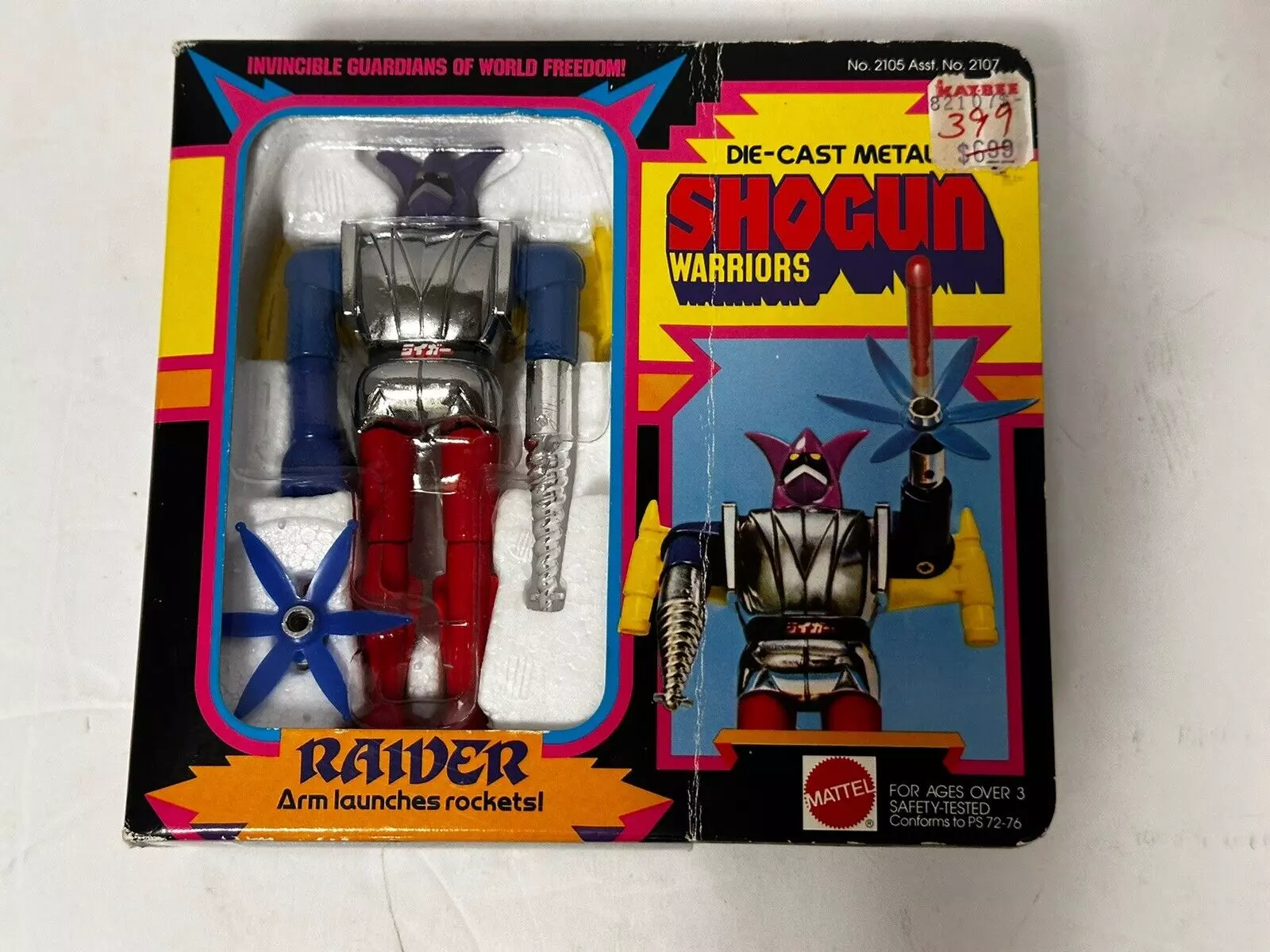
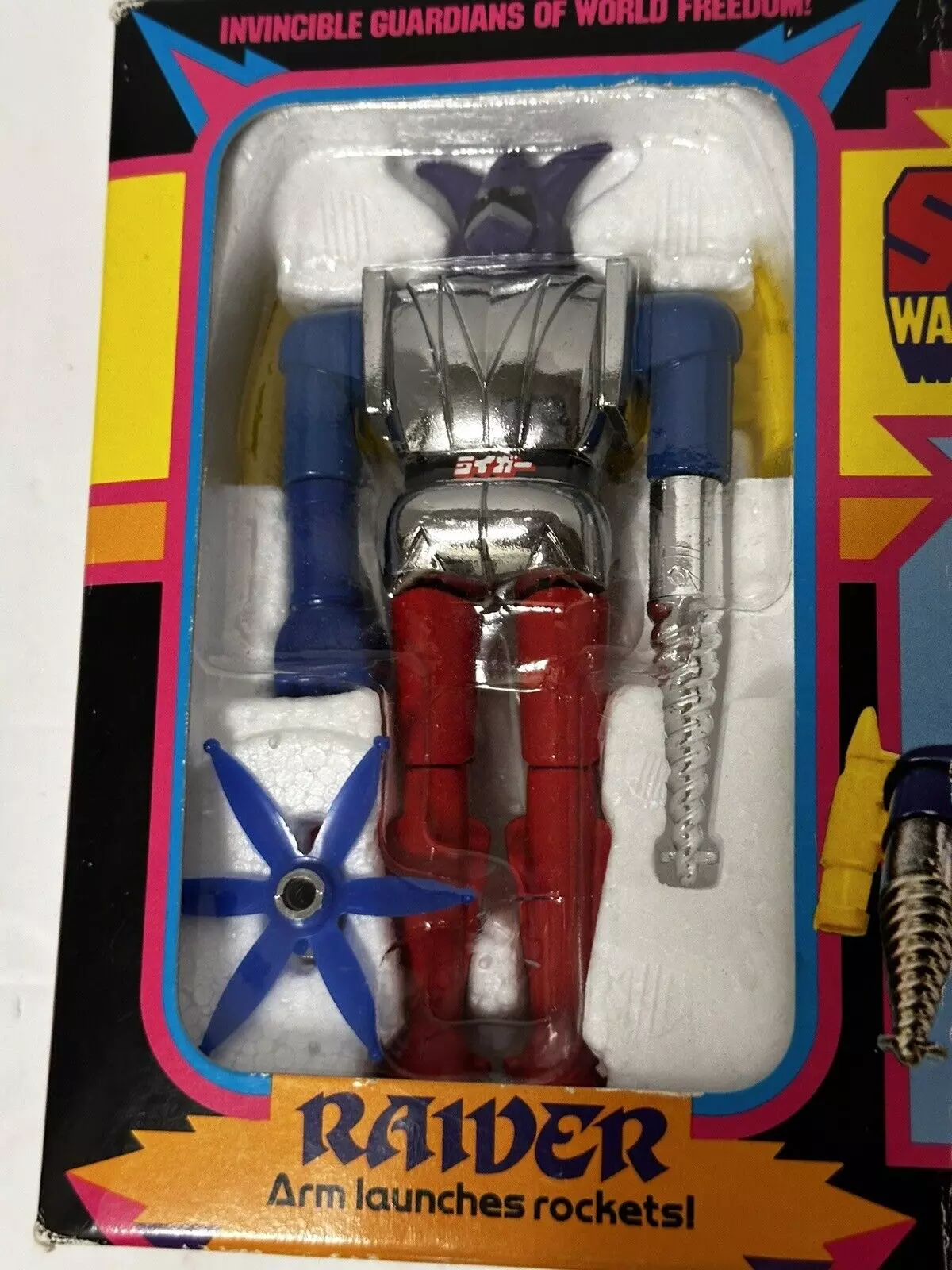
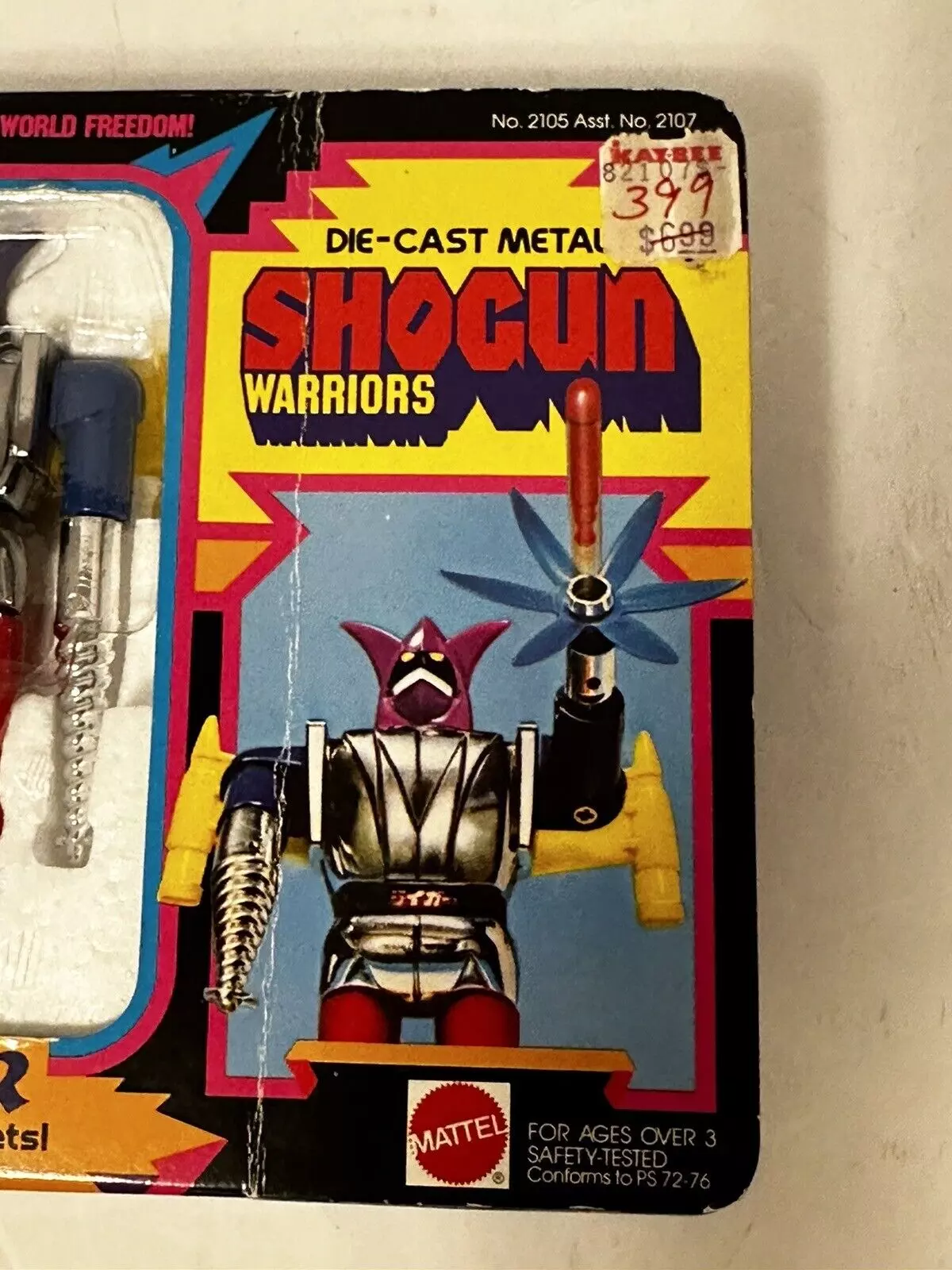
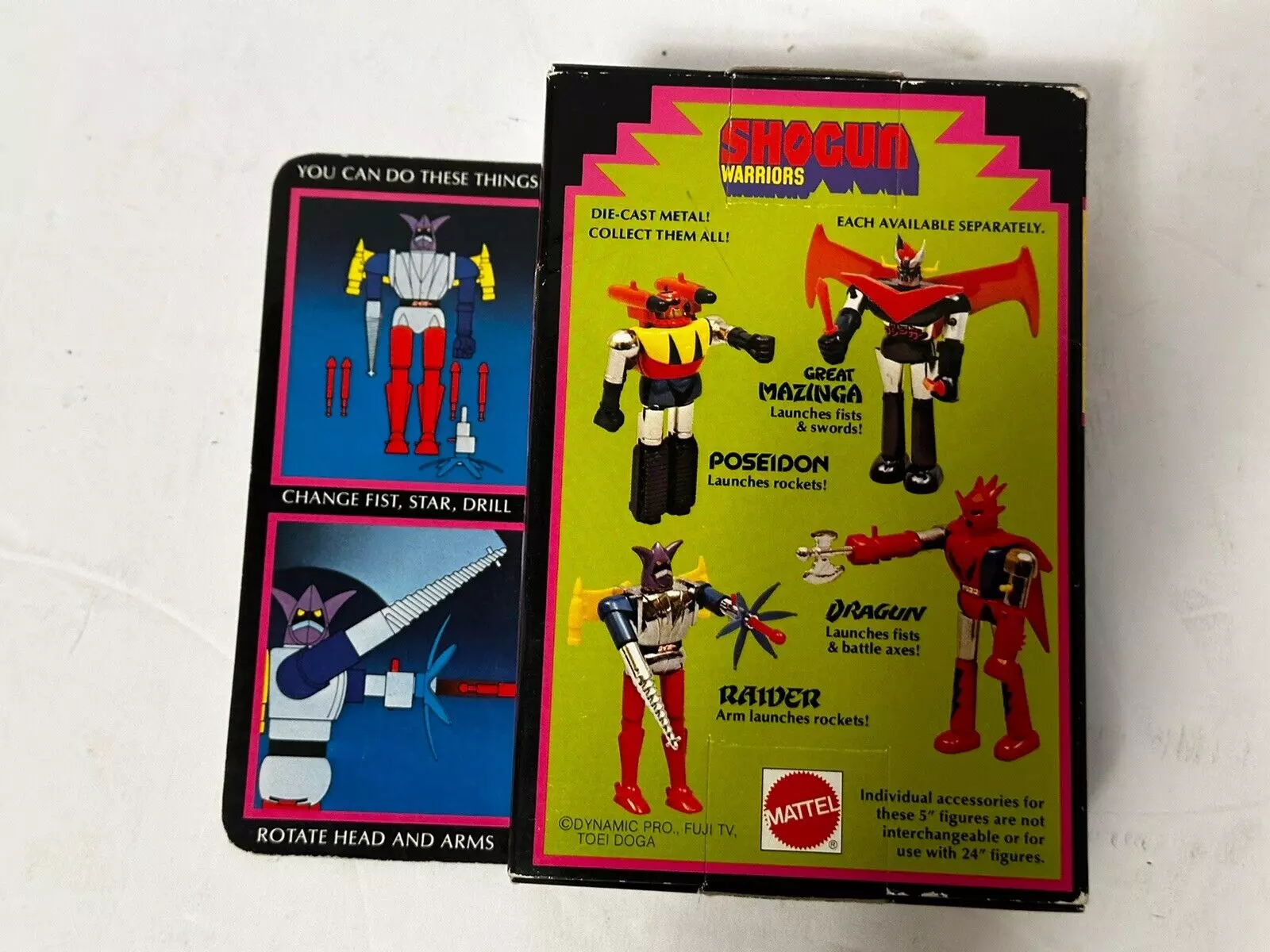
Esta línea le hizo el peso a la línea Gi Joe de Hasbro y a Six Million Dollar Man de Kenner. Mattel se tomó algunas licencias y le cambió el nombre al personaje original, Getter Liger rebautizándolo como Raider.
Antes octubre 1978 – Segundo Prototipo
Este segundo prototipo no tiene grandes cambios respecto al anterior. El cambio más notable es la eliminación de la capa. Si la figura se ve de frente no existen cambios relevantes. En el casco aún se mantienen los ojos, detalle que se tiene en las primeras versiones del traje de Fett y que recordemos no se encuentra en el traje que visitó las oficinas de Kenner.
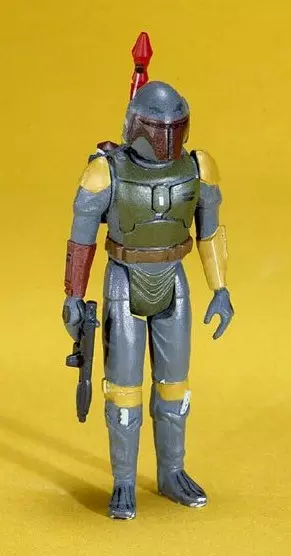
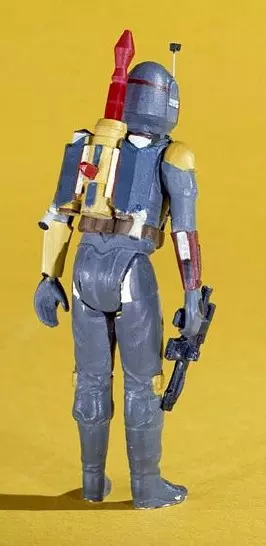
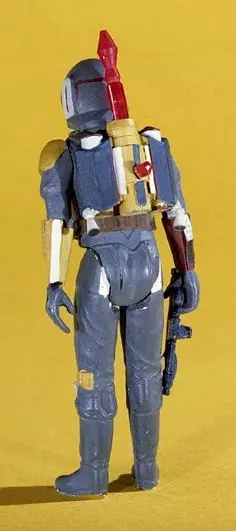
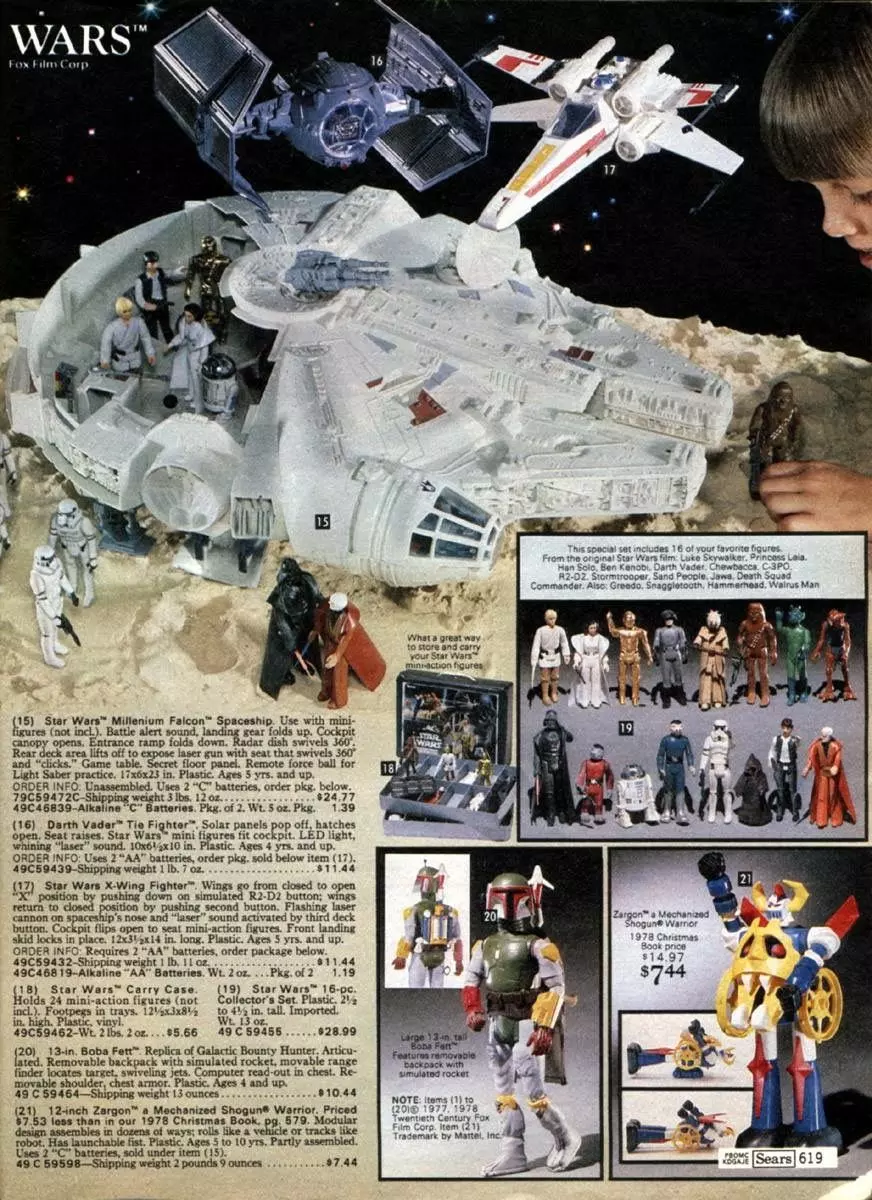
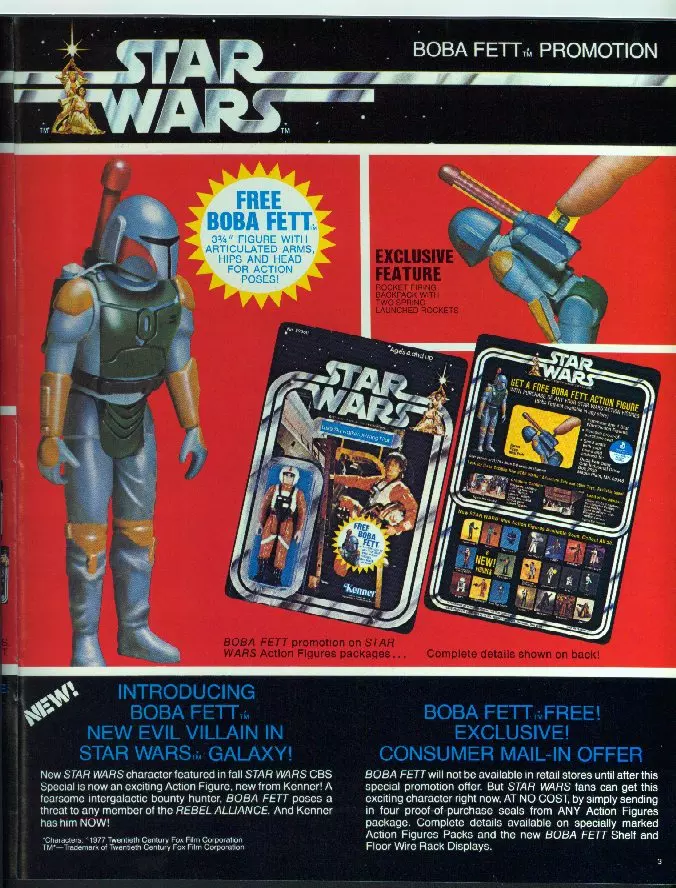
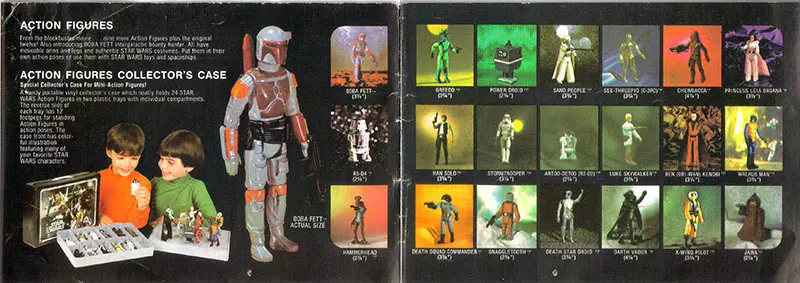
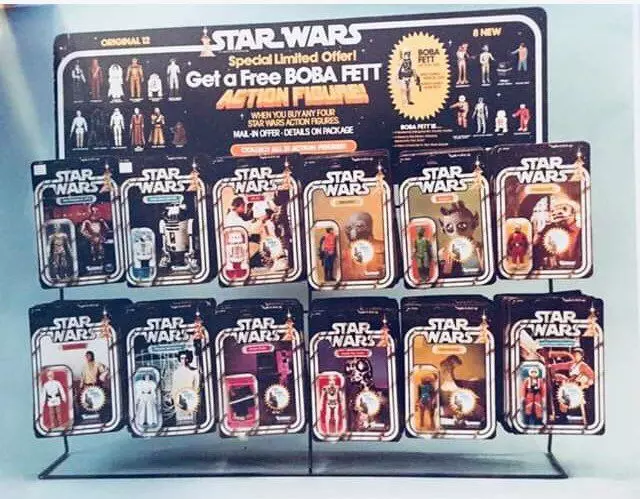
En la primera versión del Star Wars (Vinyl) Mini-Figures Collector’s Case se utilizó una fotografía de este segundo prototipo en el inserto, el que luego sería reemplazado por la figura definitiva. En el catálogo Kenner de distribución con los juguetes del año 1979, para la promoción del case, no aparece la figura de Boba Fett en ninguna versión. Sin embargo, aparece la promoción de la figura de Boba Fett pero en su tercera versión de prototipo.
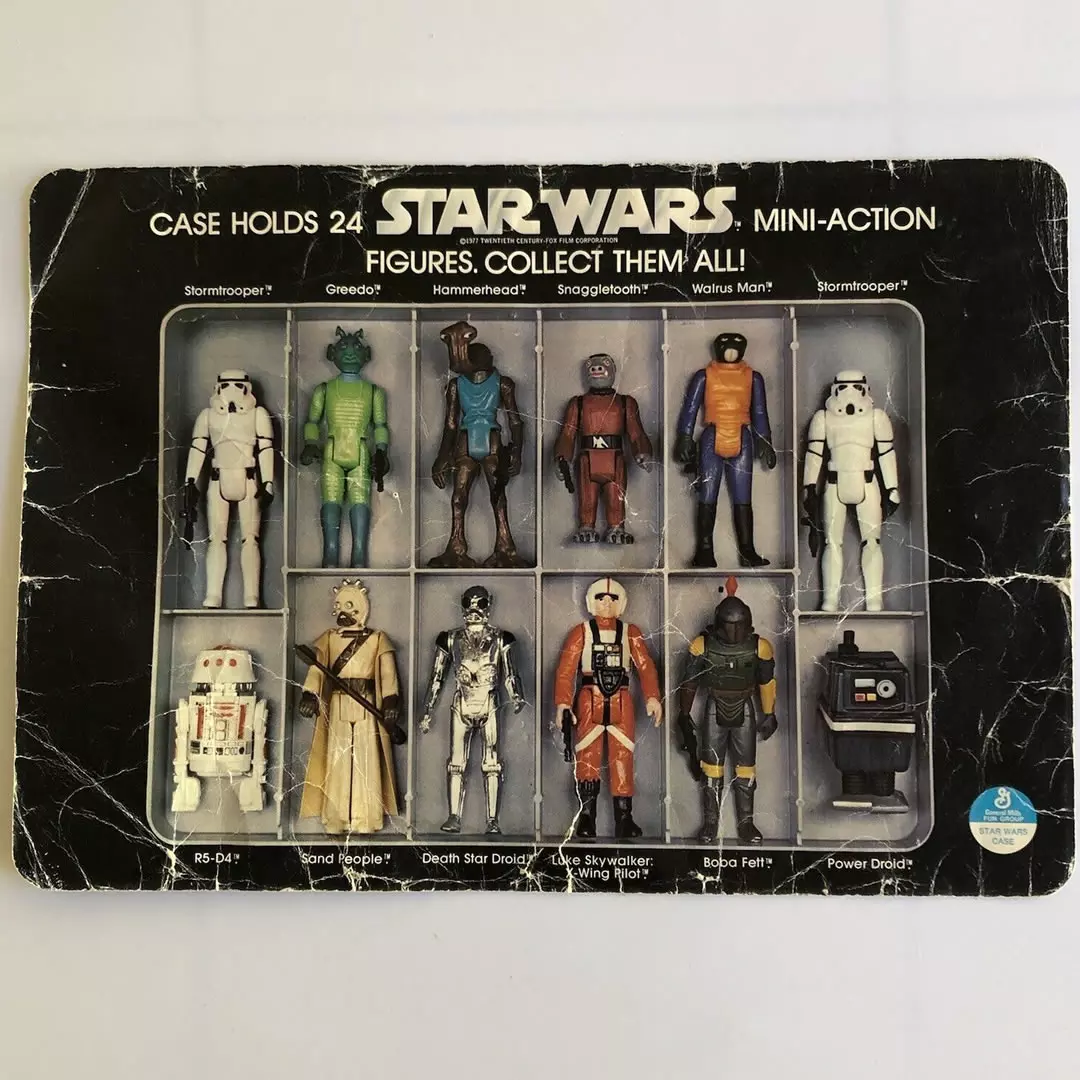
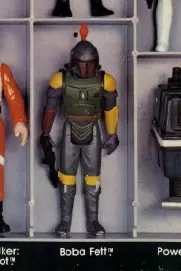
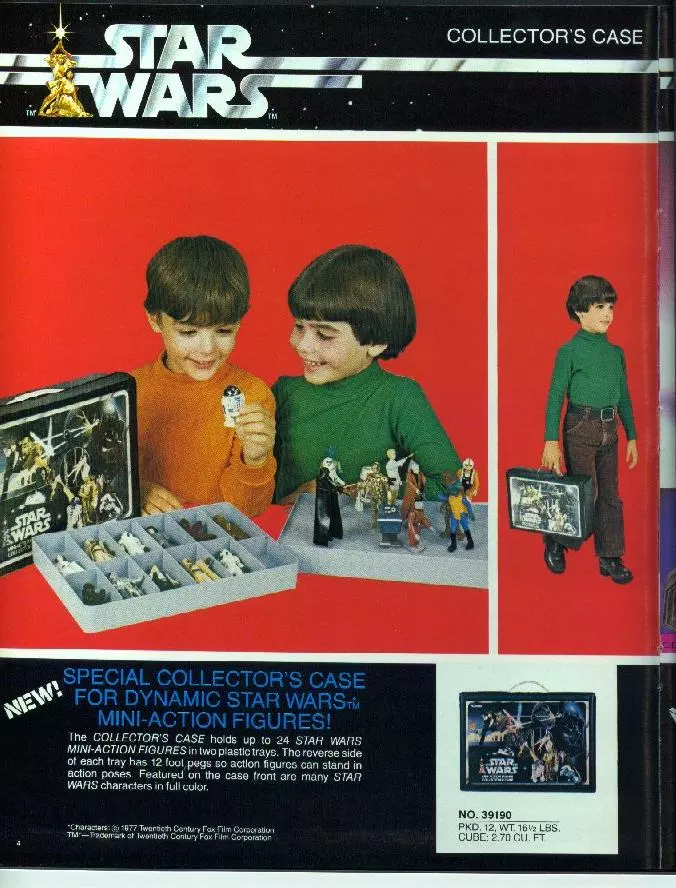
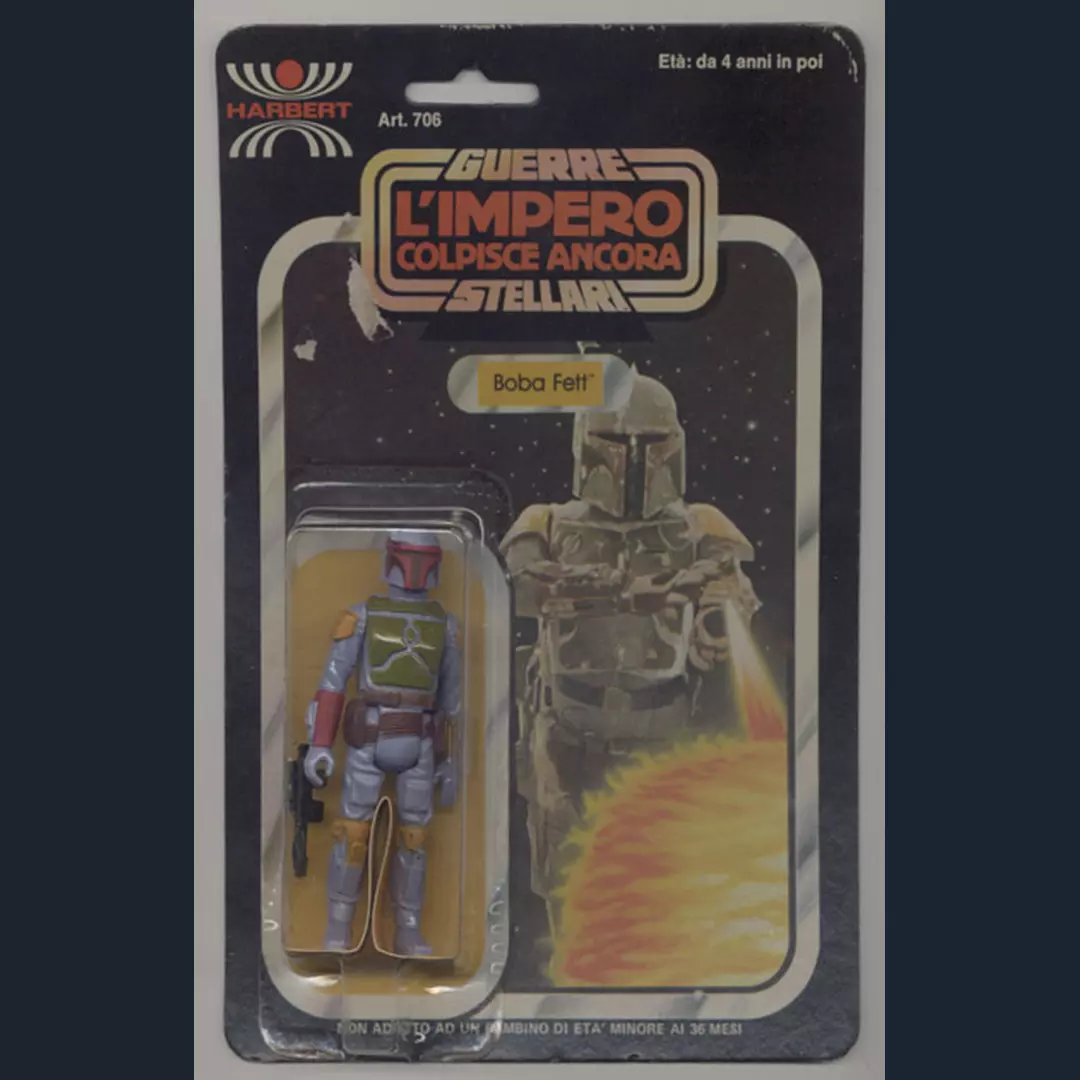
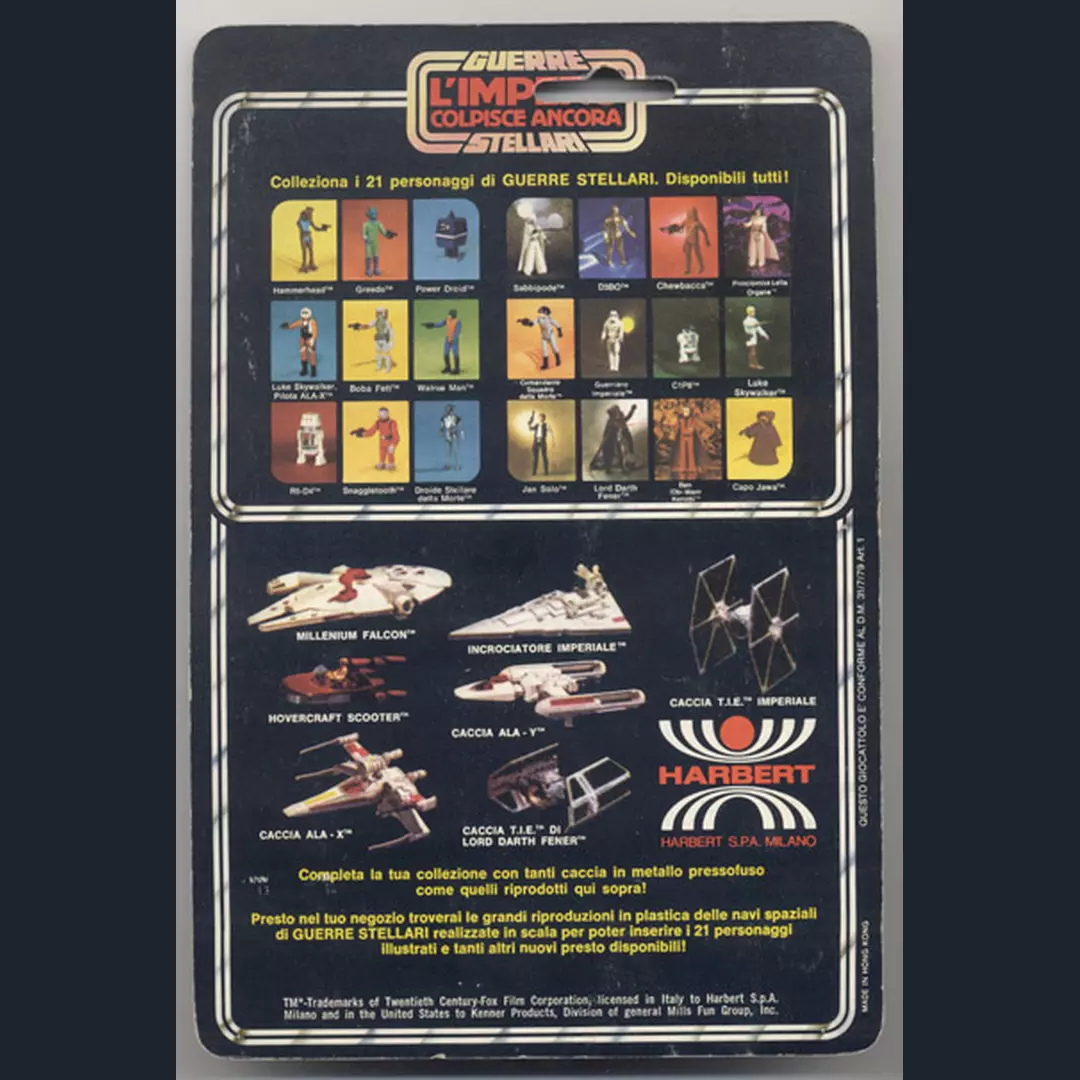
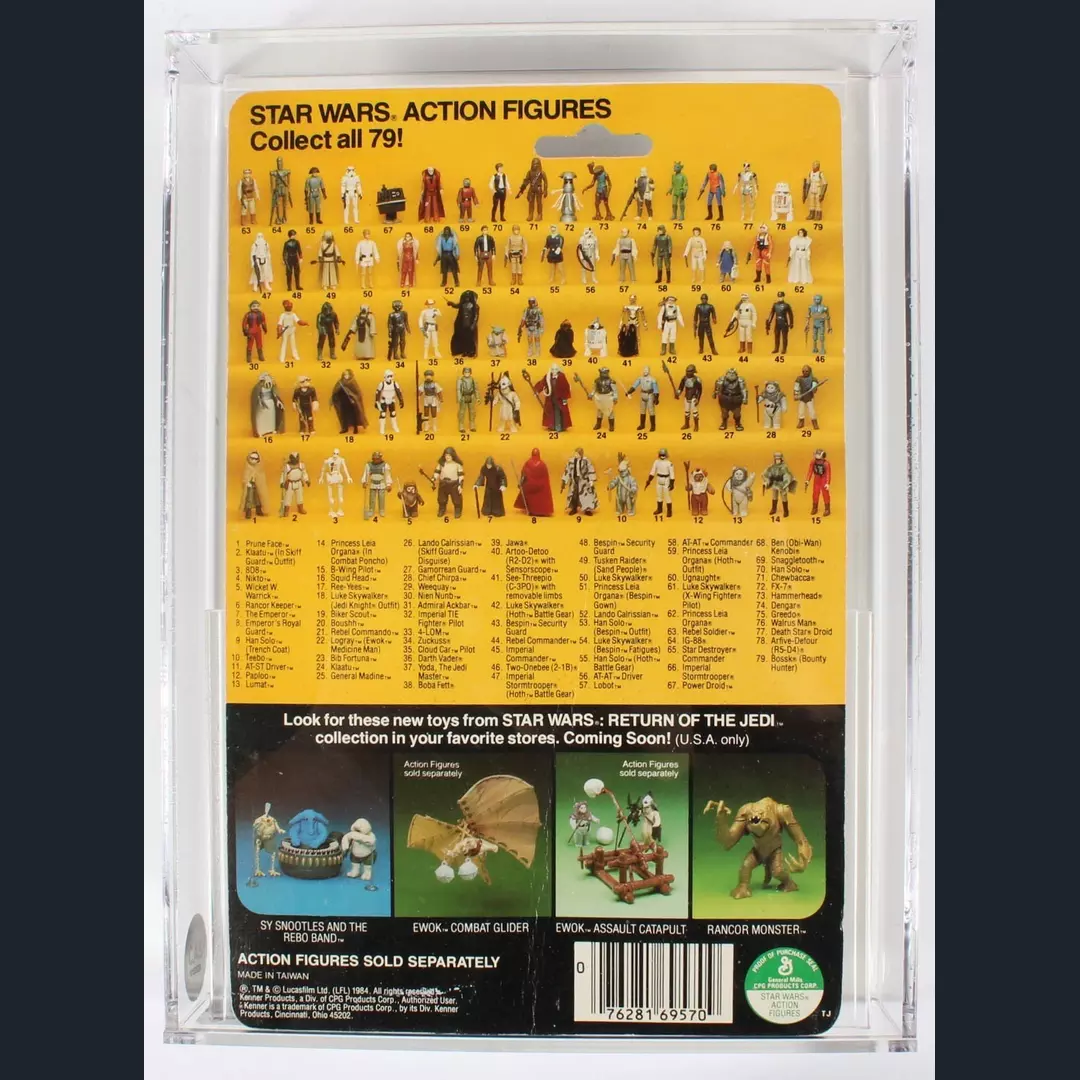
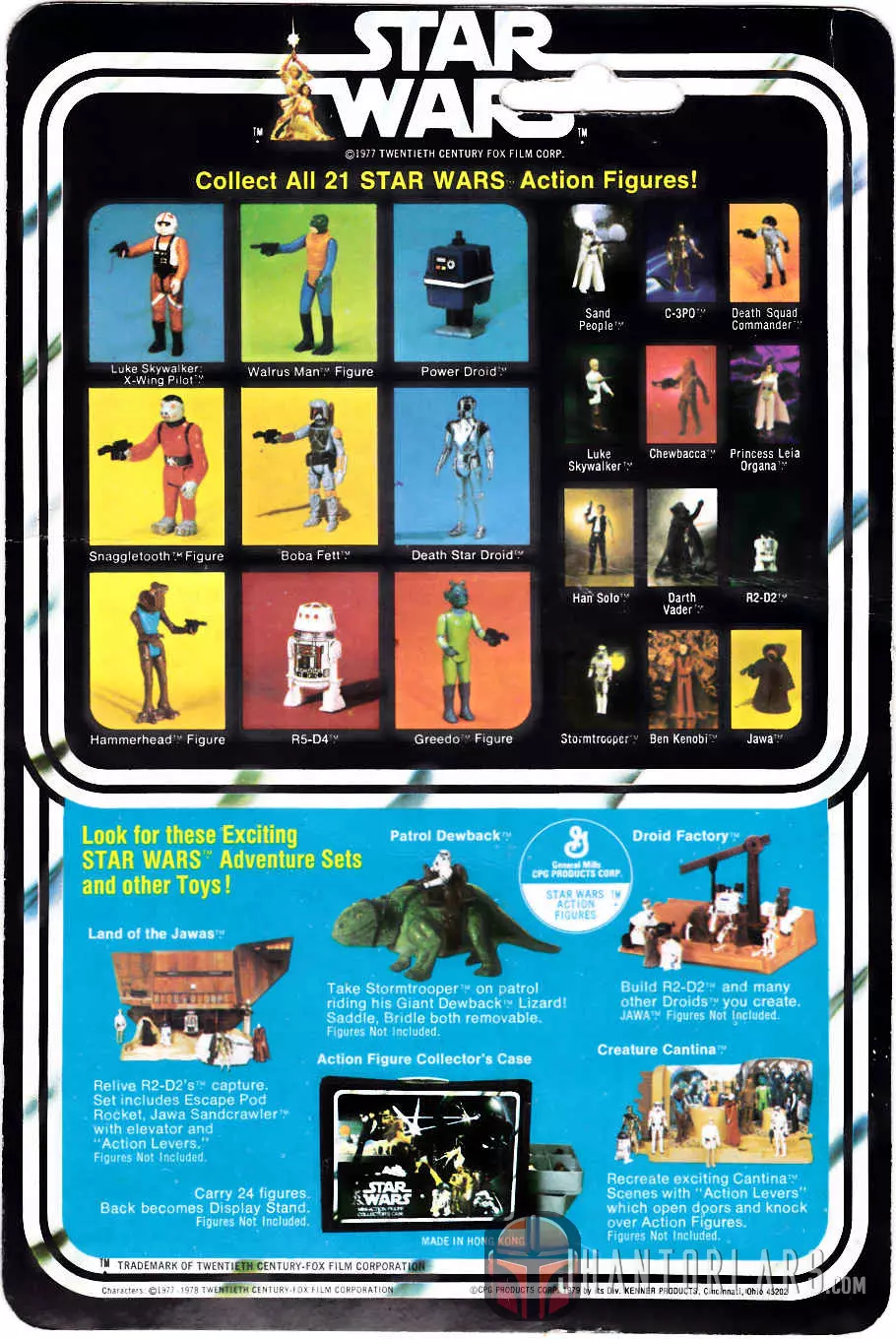
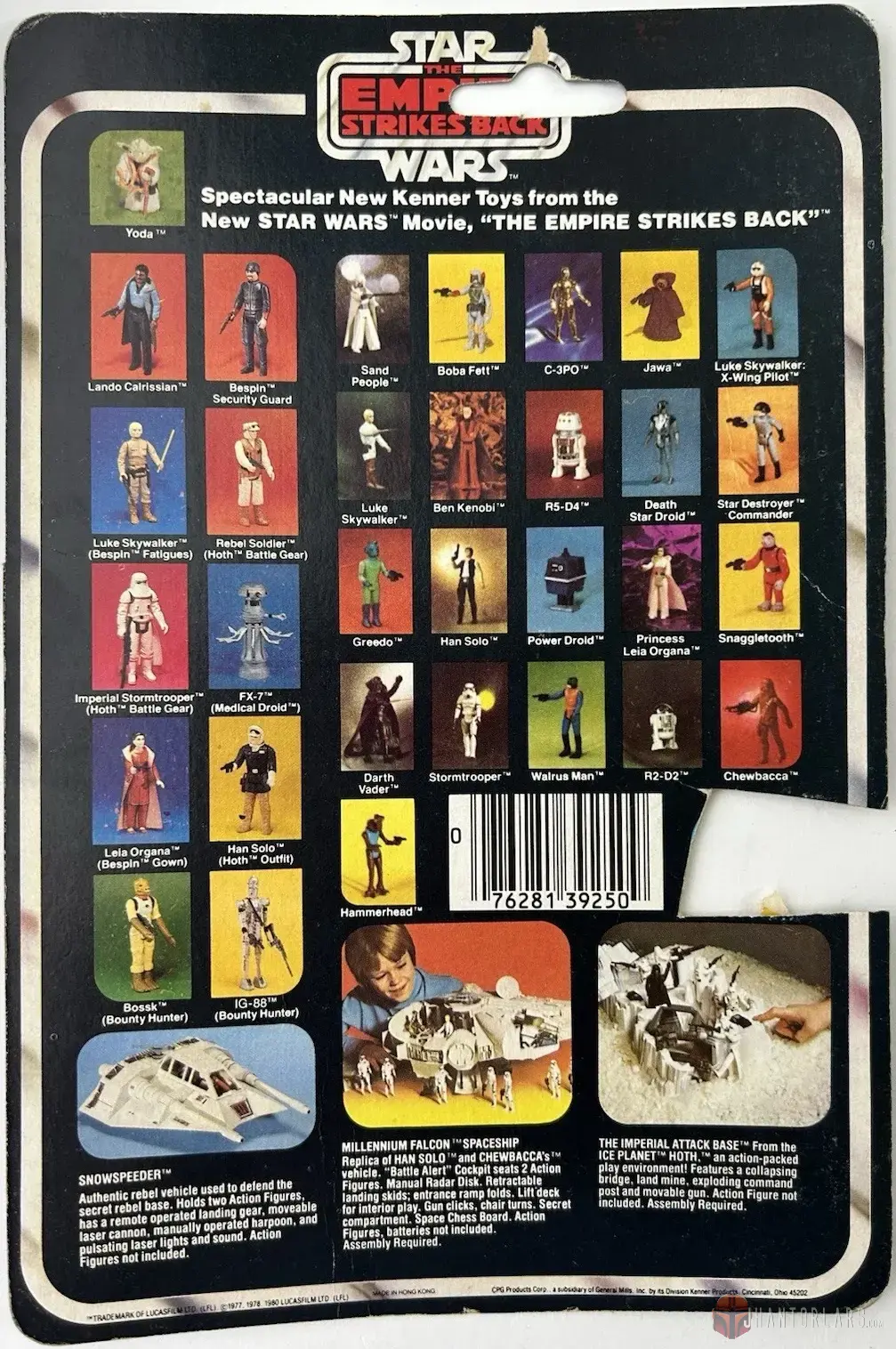
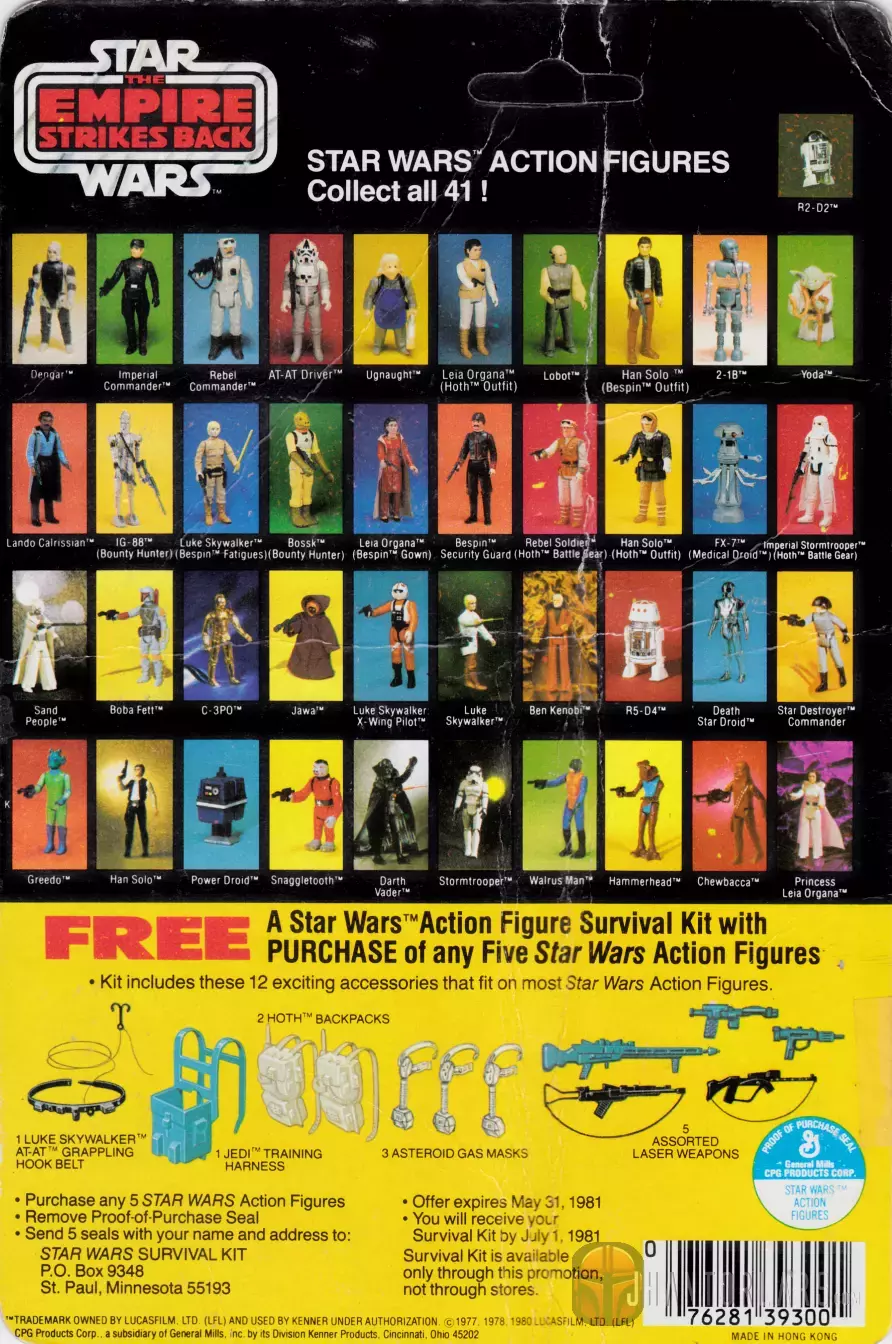
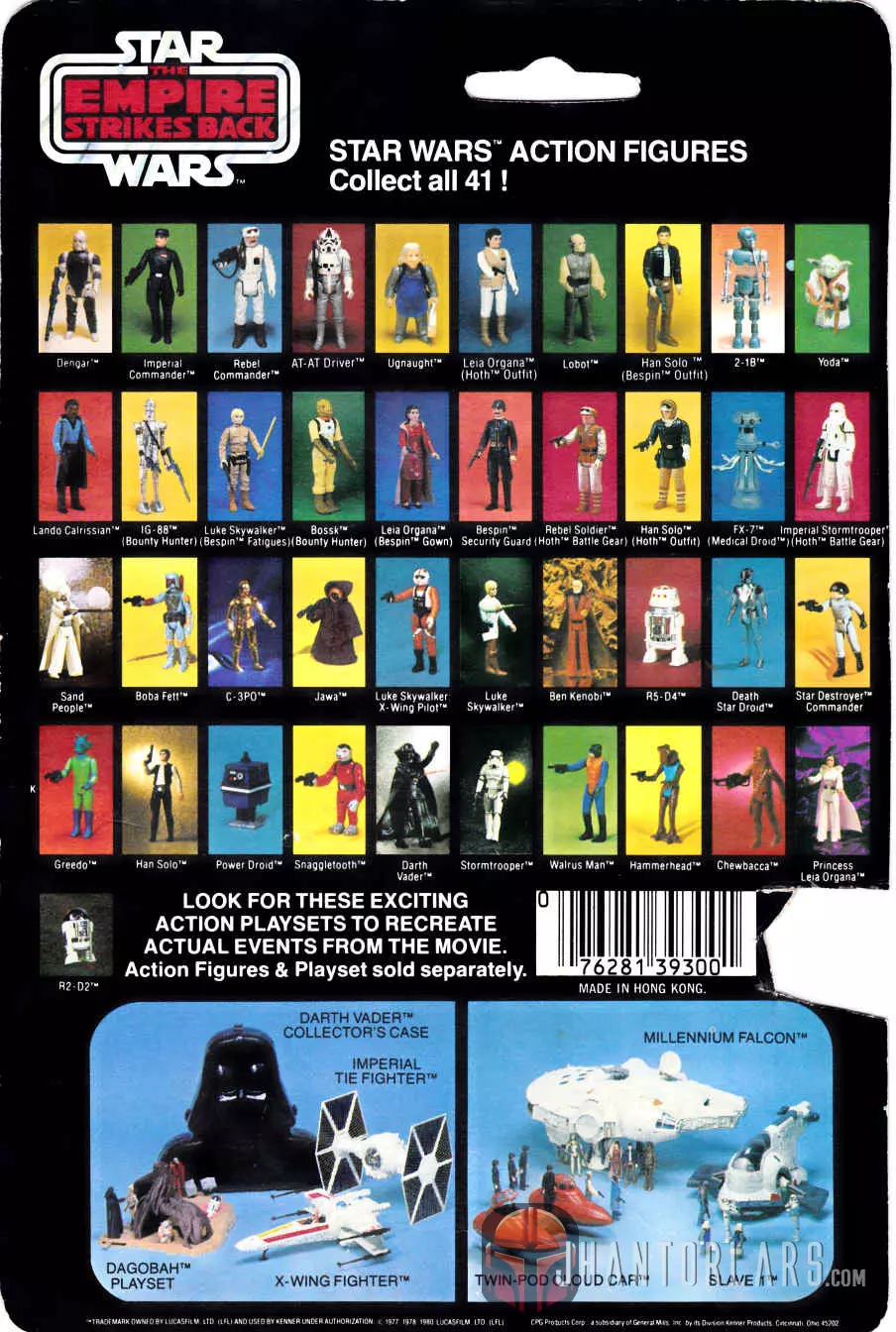
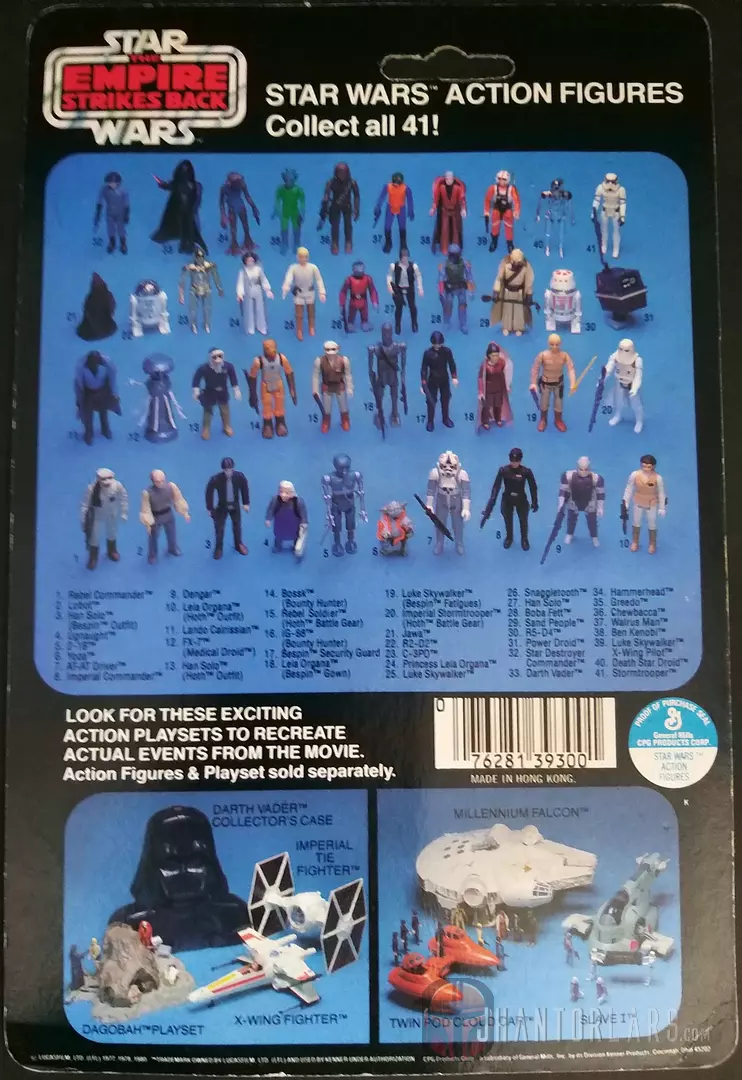
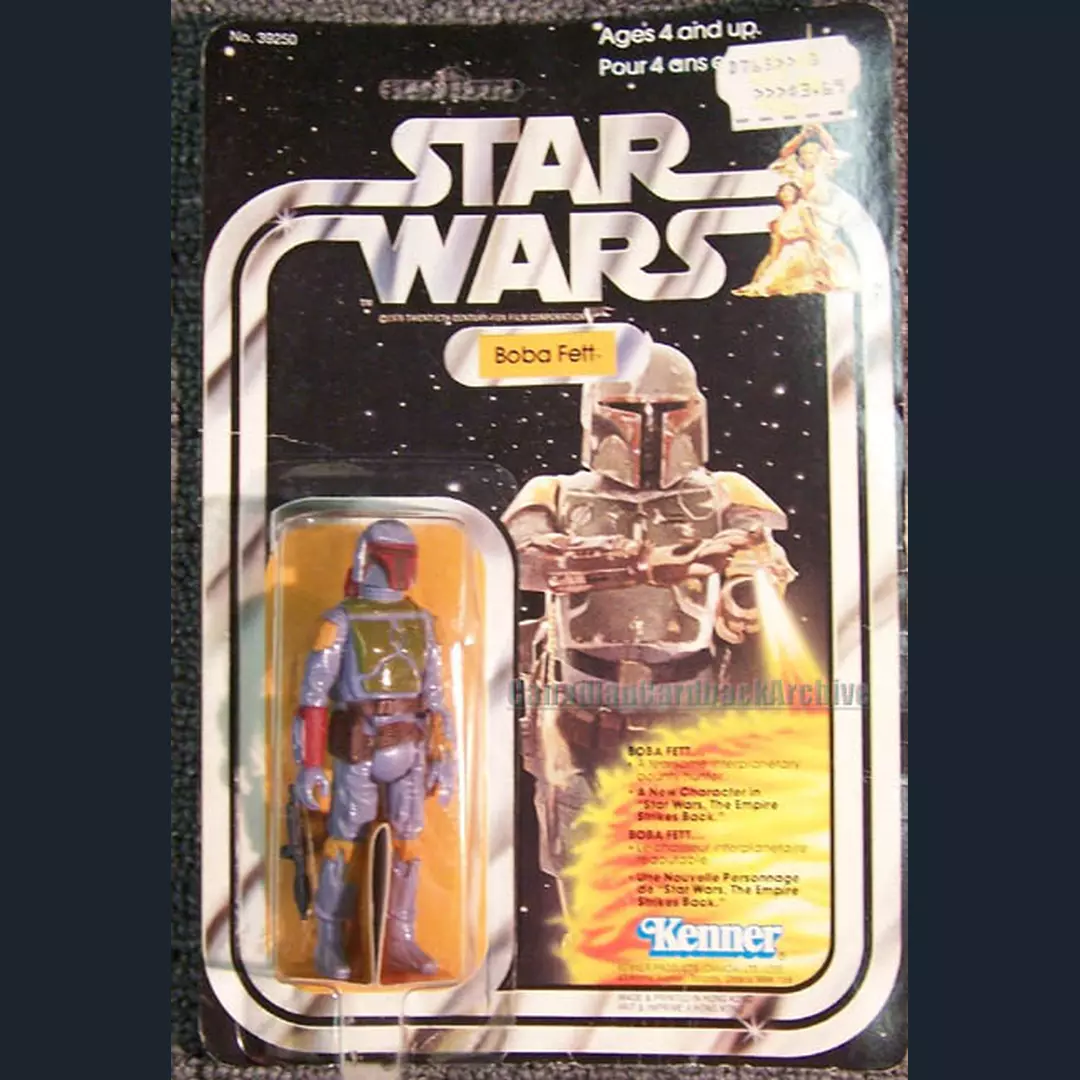
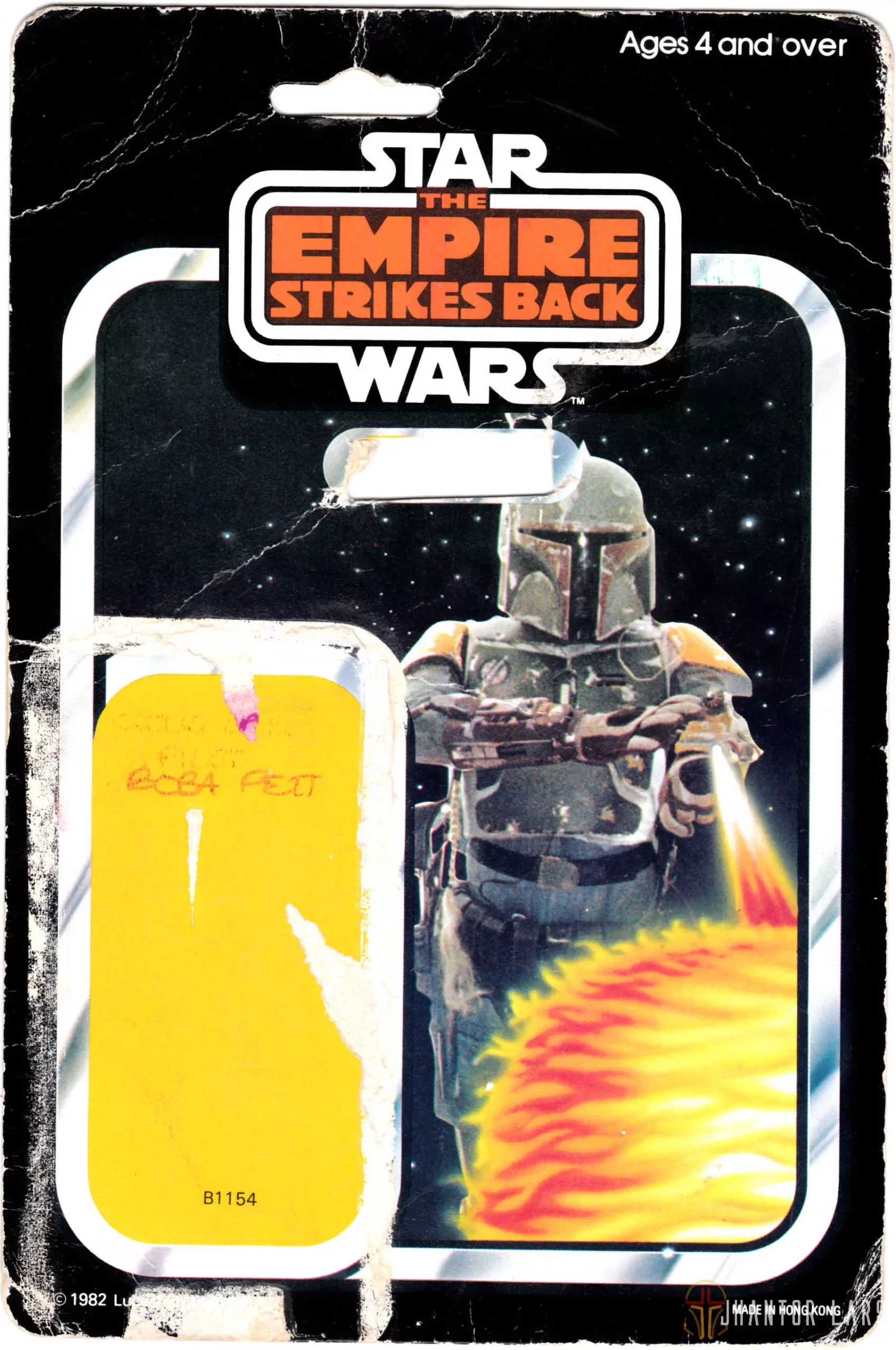
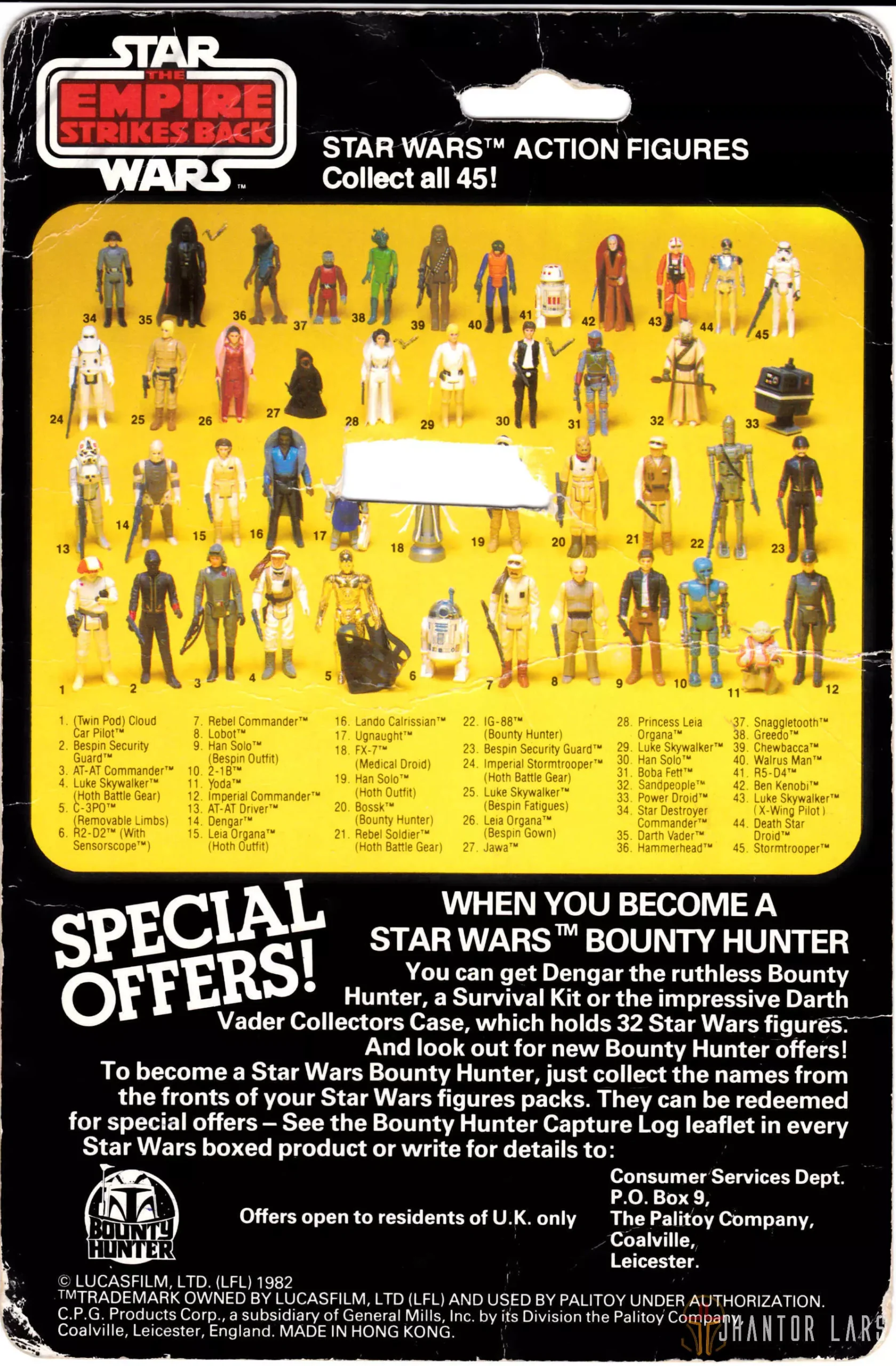
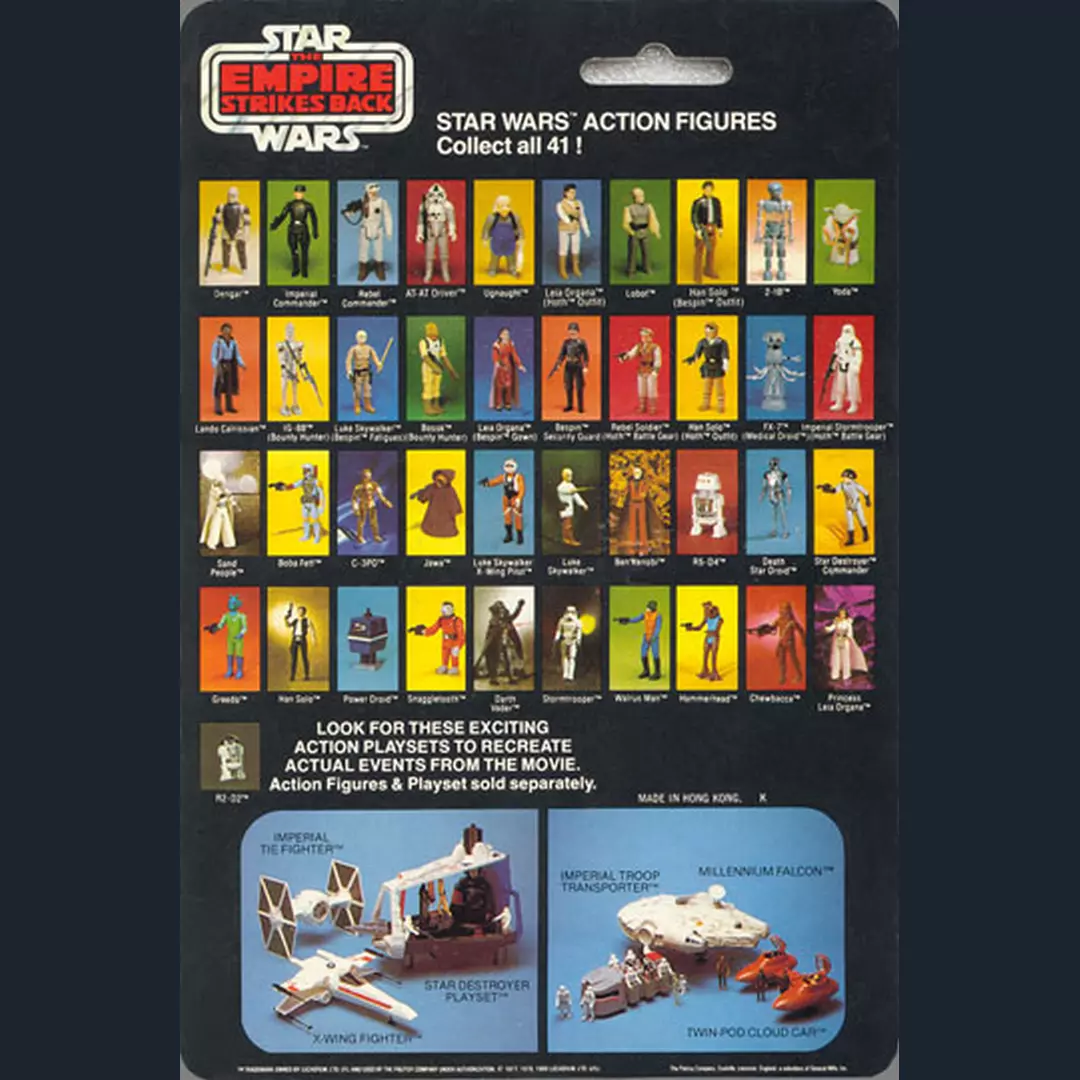
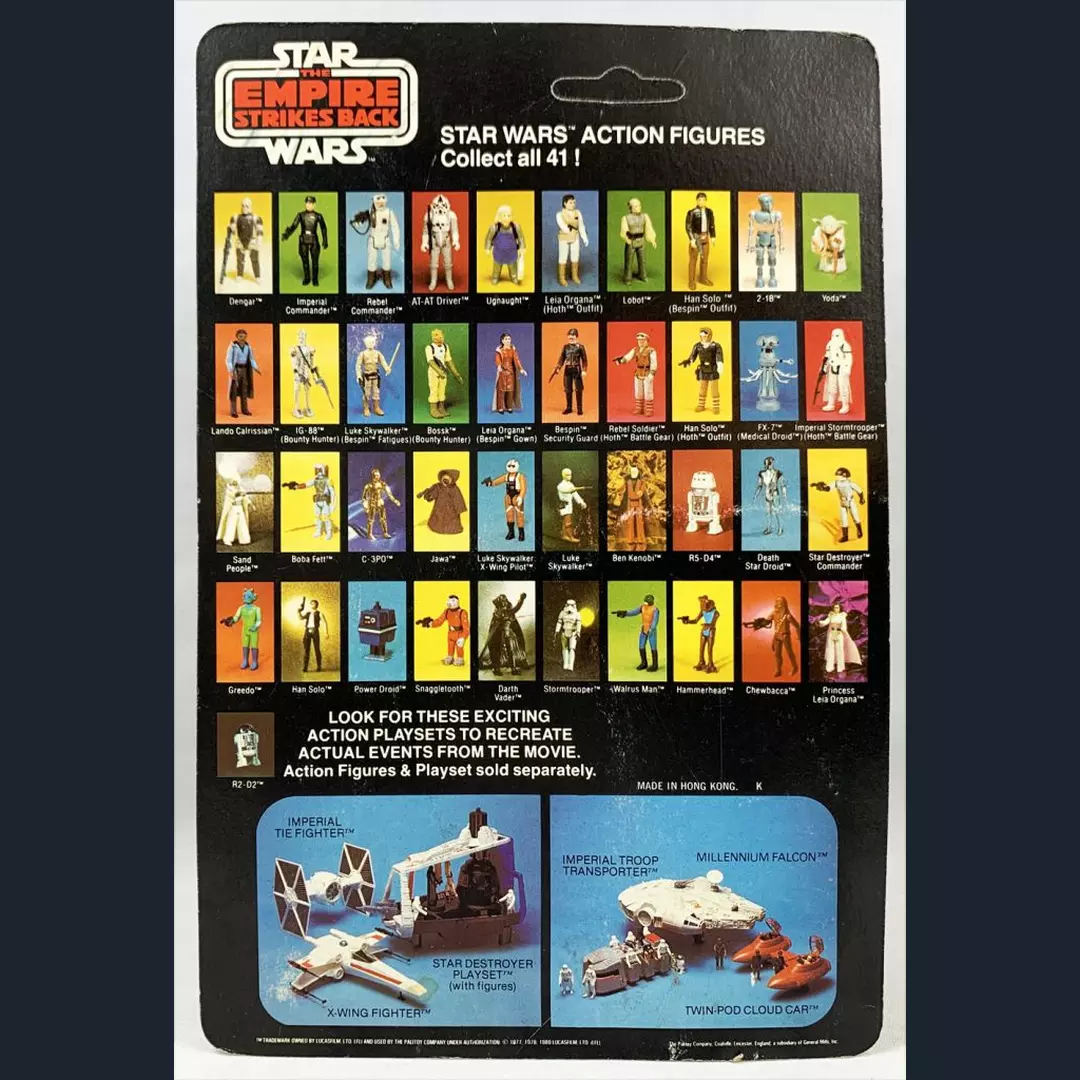
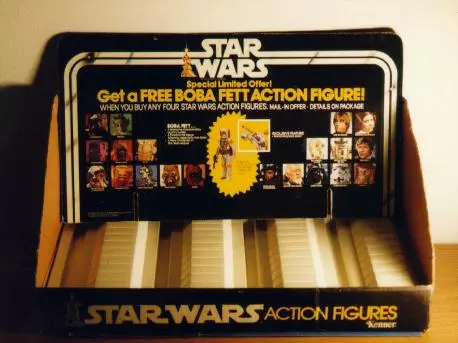
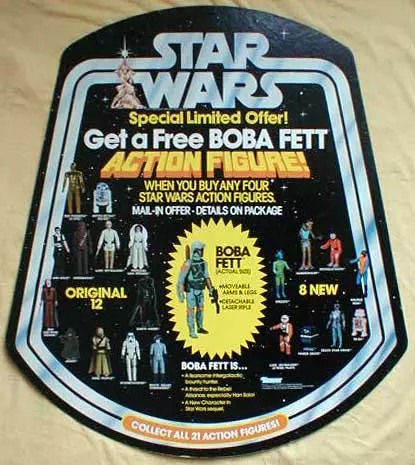
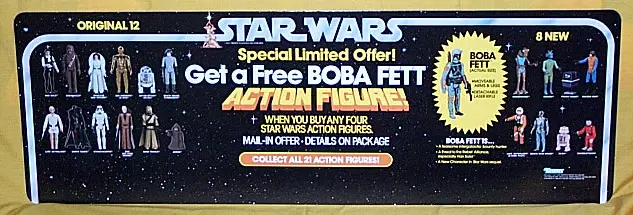
Para el cartón 21 de la colección Star Wars, Boba Fett ya era una figura lanzada al mercado, por lo que se incluye la fotografía de la figura definitiva. Entonces ocurre un hecho curioso que para el cartón de promoción “Collect All 32 Action Figures” de 1980 se haya utilizado una fotografía del segundo prototipo, siendo que ya se estaba usando la figura definitiva en los cartones de venta de los juguetes. Por otro lado, en este cartón promocional aparecen otras curiosidades como el sable de doble telescópica para Luke, Vader y Ben, además de Han Solo cabeza pequeña, todas figuras que estaban fuera de producción desde hacía mucho tiempo en el momento de la fabricación de este ítem. Así también, Jawa tiene unas correas sobre su capa de tela. En el cartón 12/32 de la colección Star Wars aparece la figura de Boba Fett definitiva.
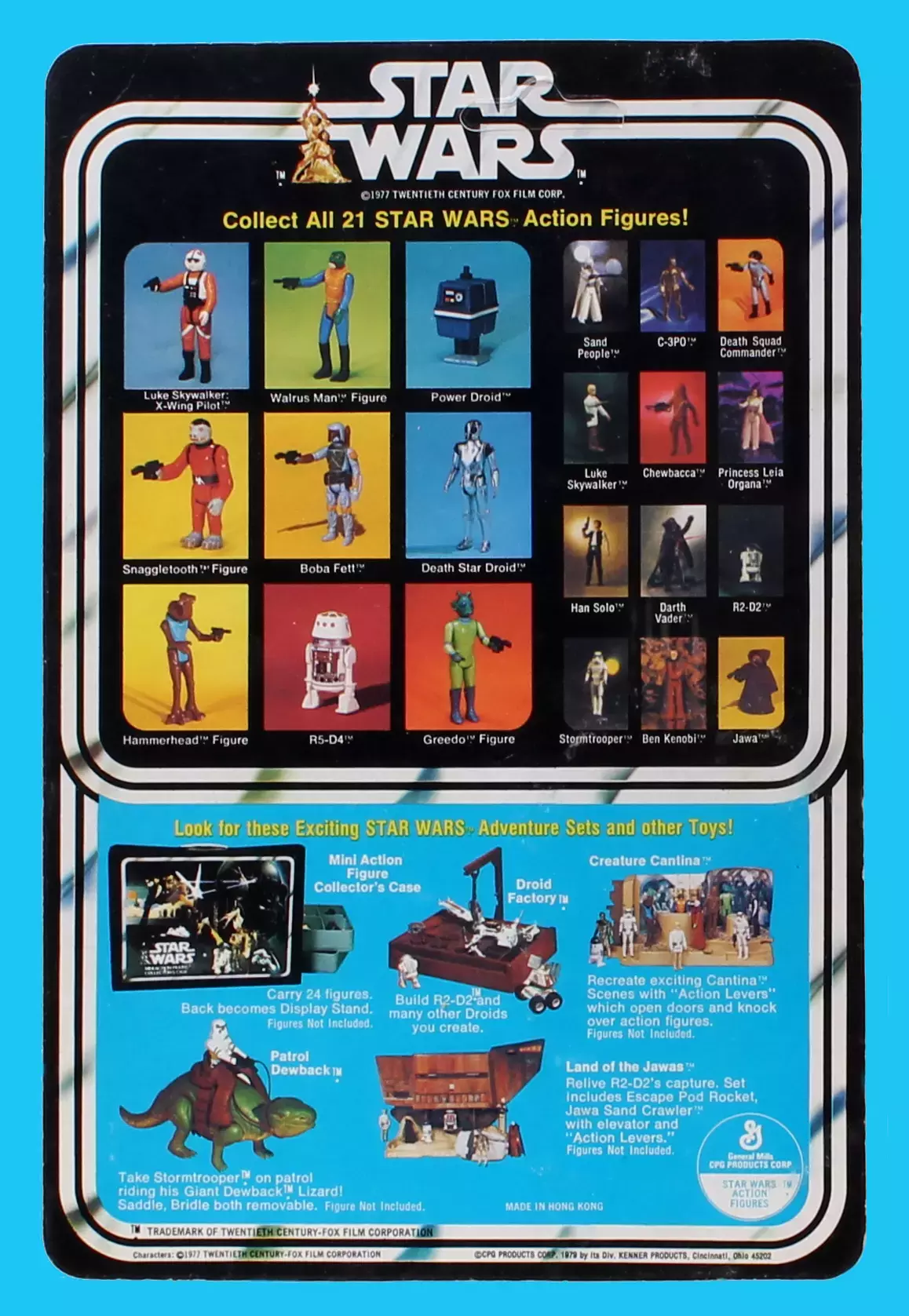
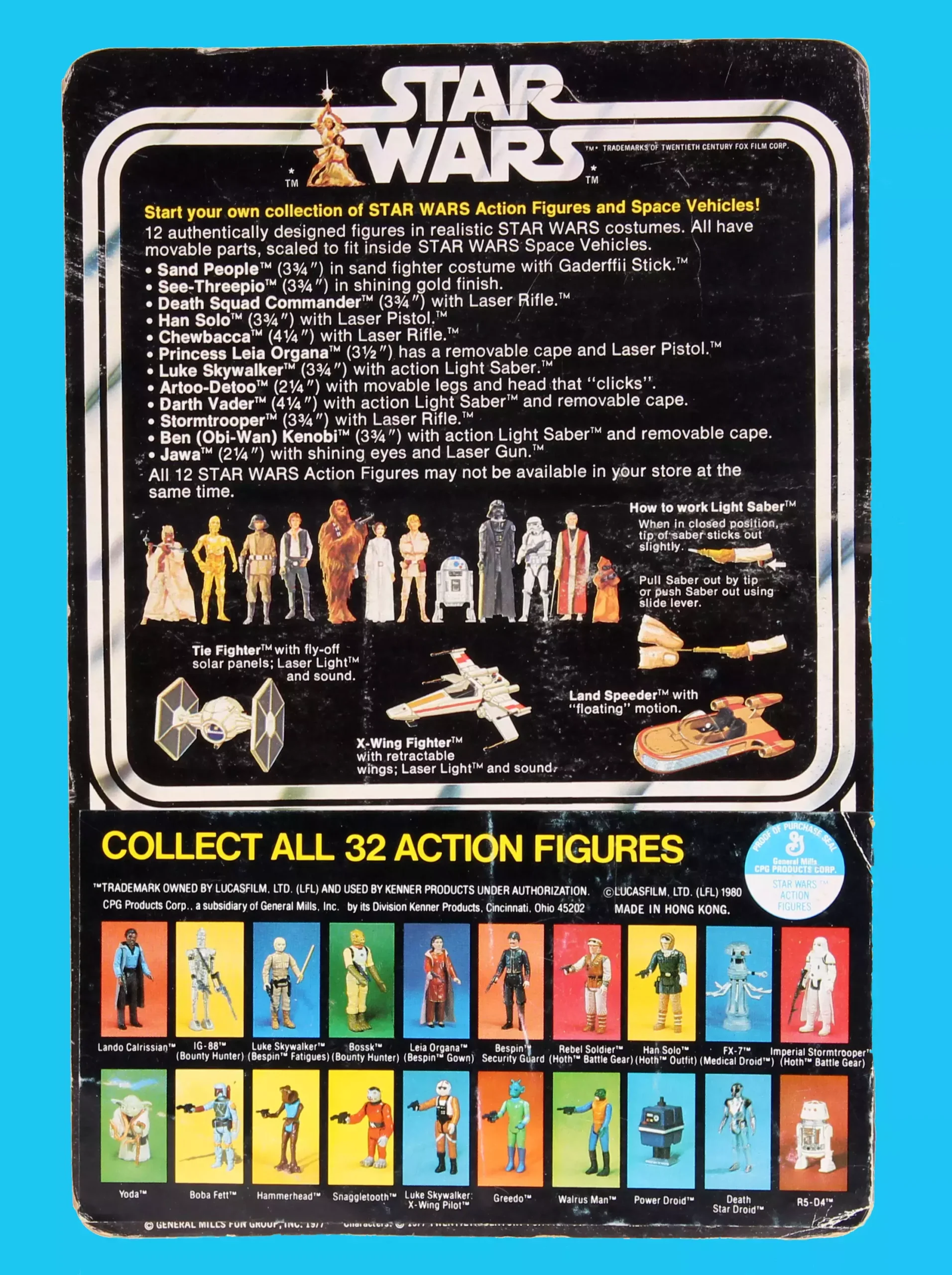
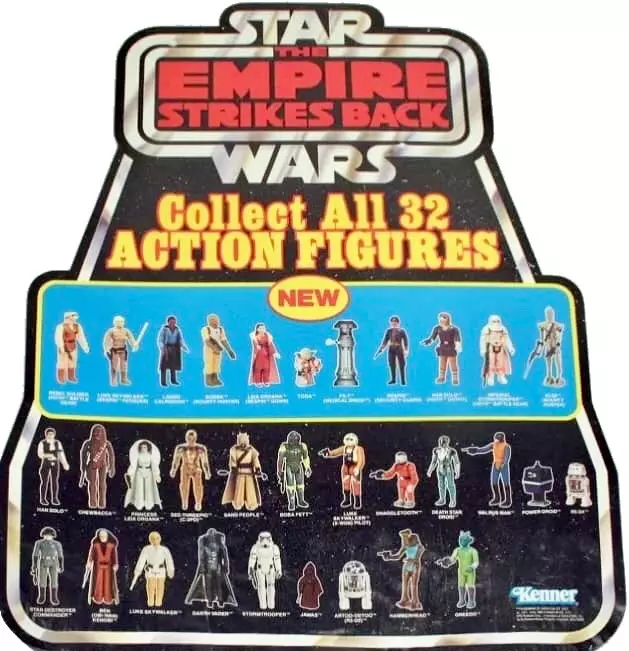
1 Octubre 1978 – Visita Kenner con el traje segundo prototipo
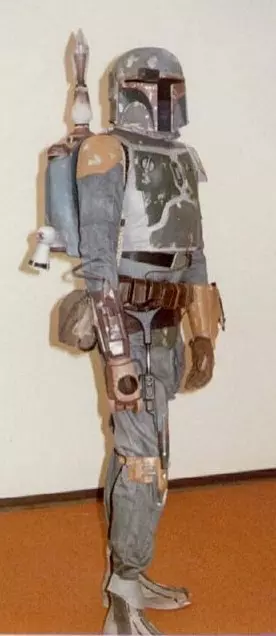
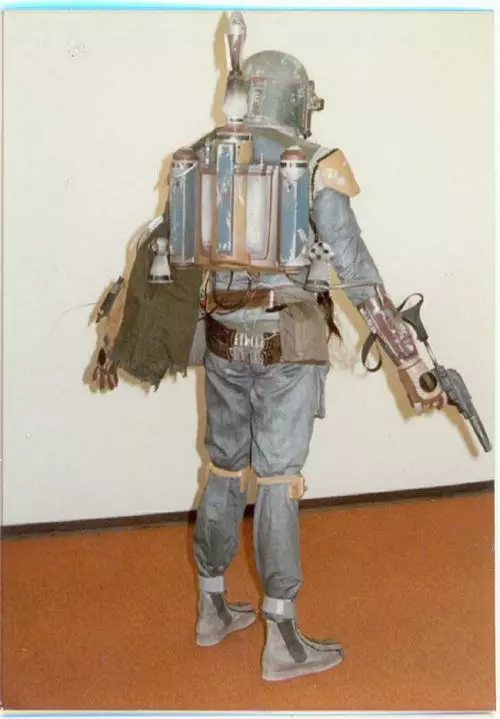
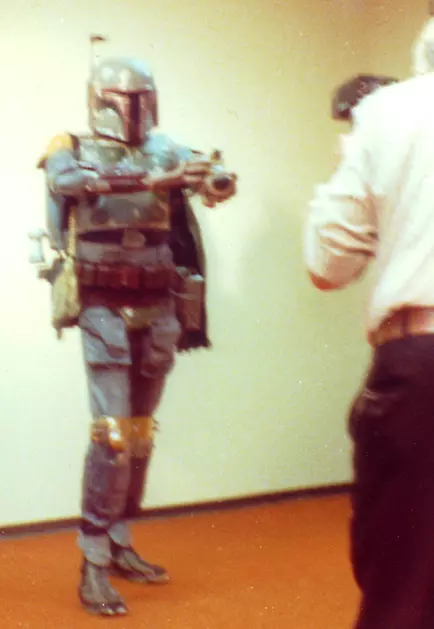
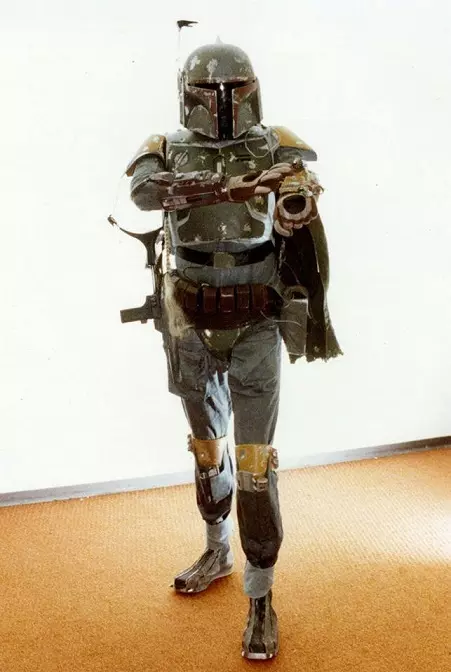
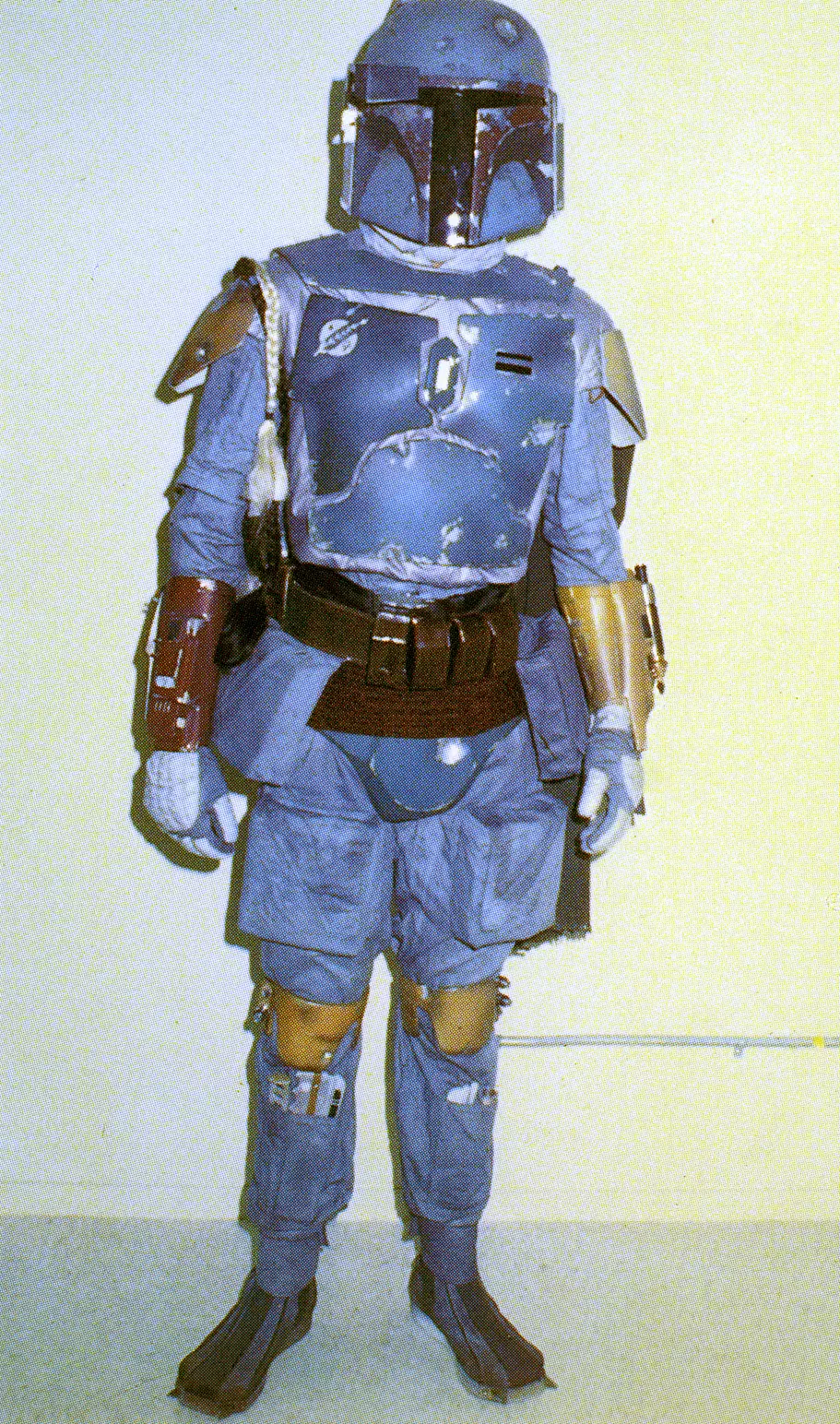
Lucasfilm trabajó en estrecha colaboración con Kenner para inmortalizar al nuevo villano del universo de Star Wars como una figura de acción. Presumiblemente en octubre de 1978, el traje ya en una versión avanzada, en conjunto con un actor, viajaron desde California a las oficinas de Kenner en Cincinnati, Ohio, para que pudieran ser fotografiados, medidos y utilizados como referencia en la creación de la figura de acción de Boba Fett.
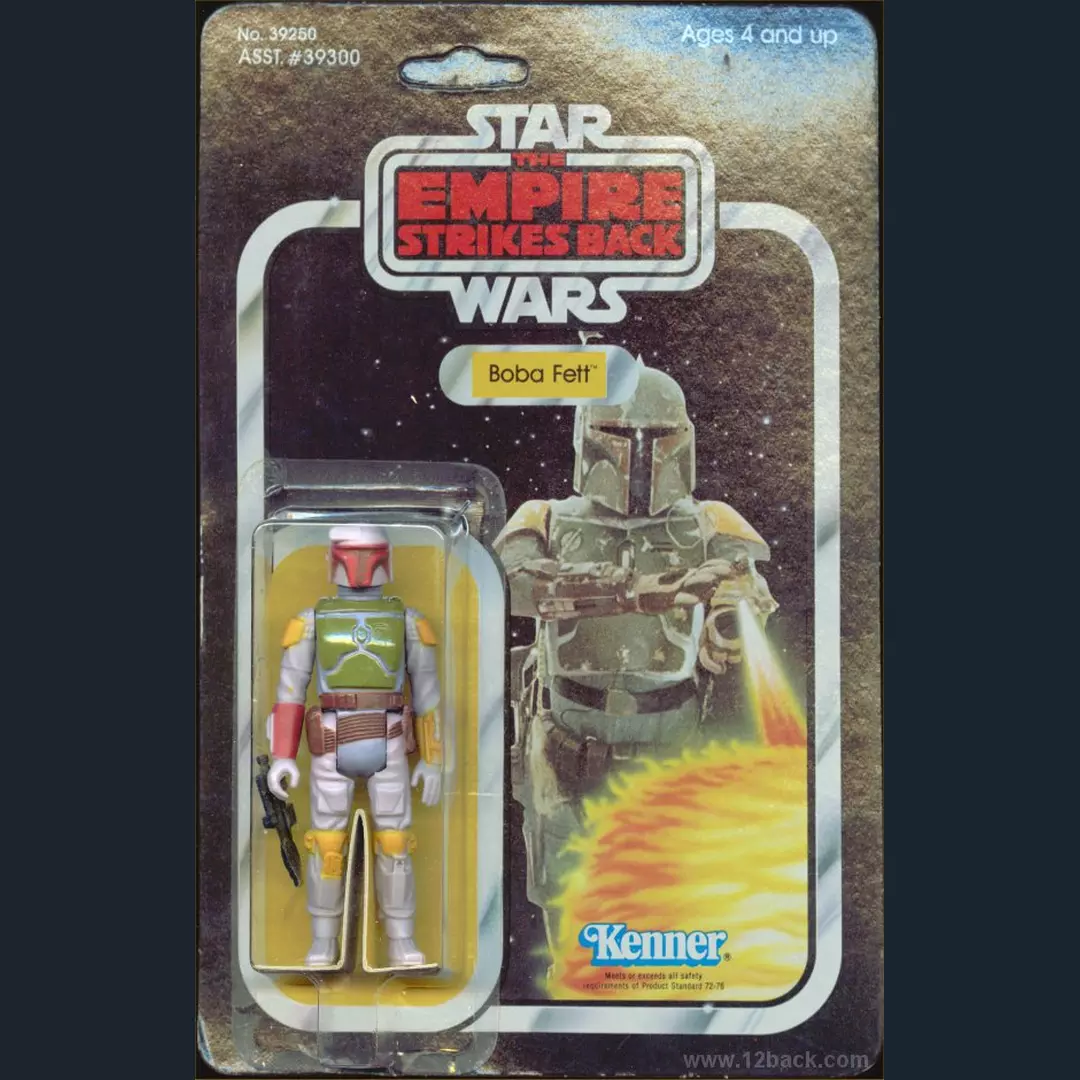
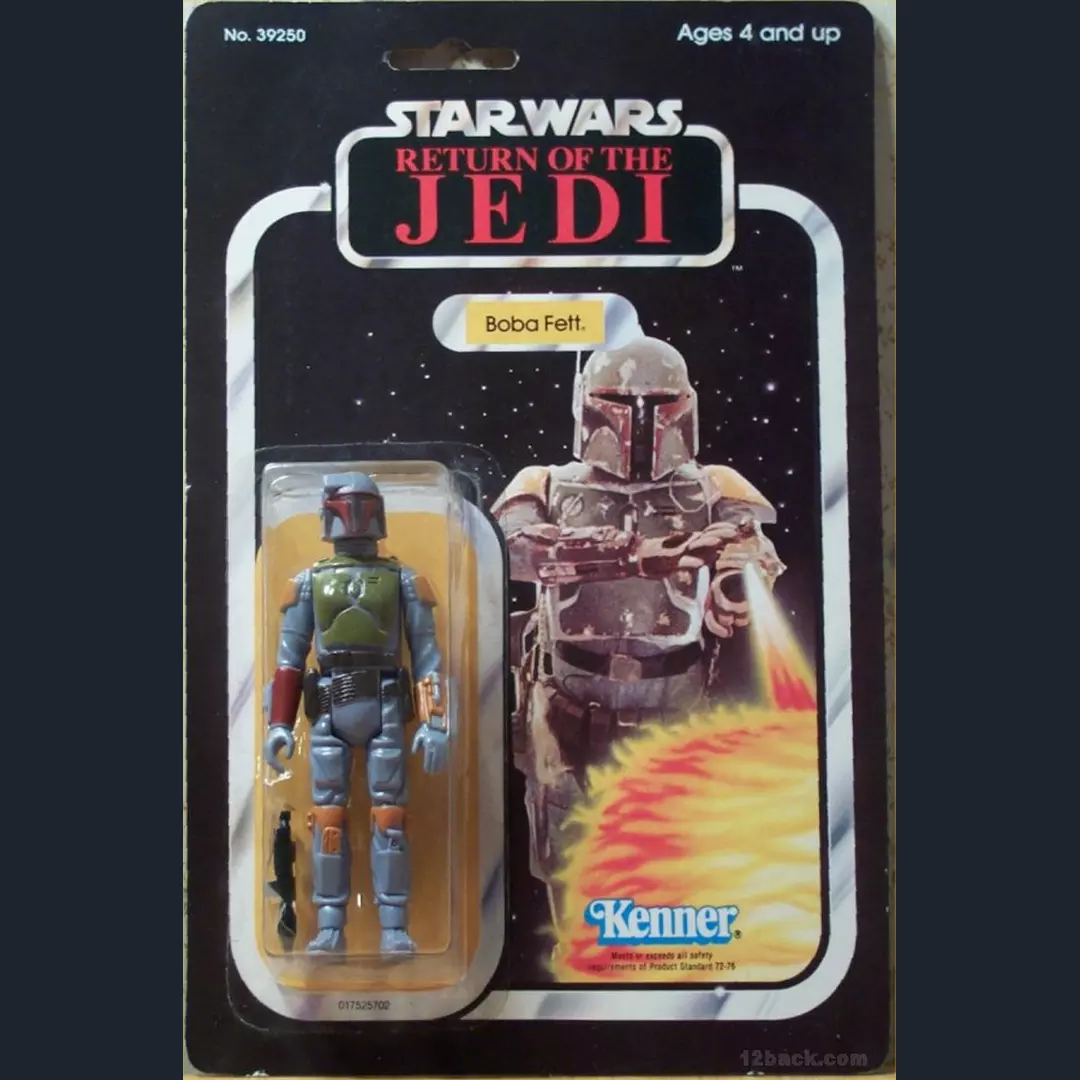
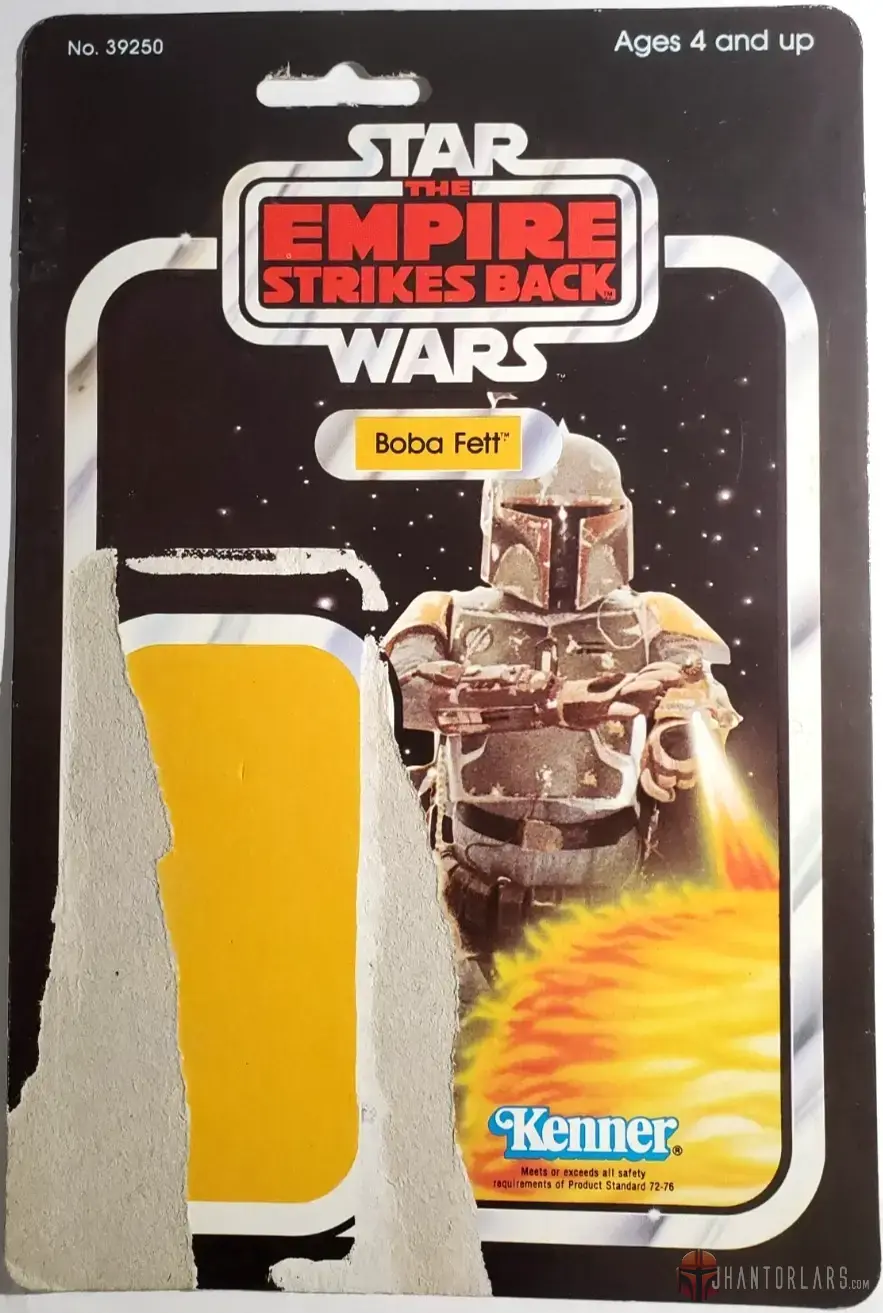
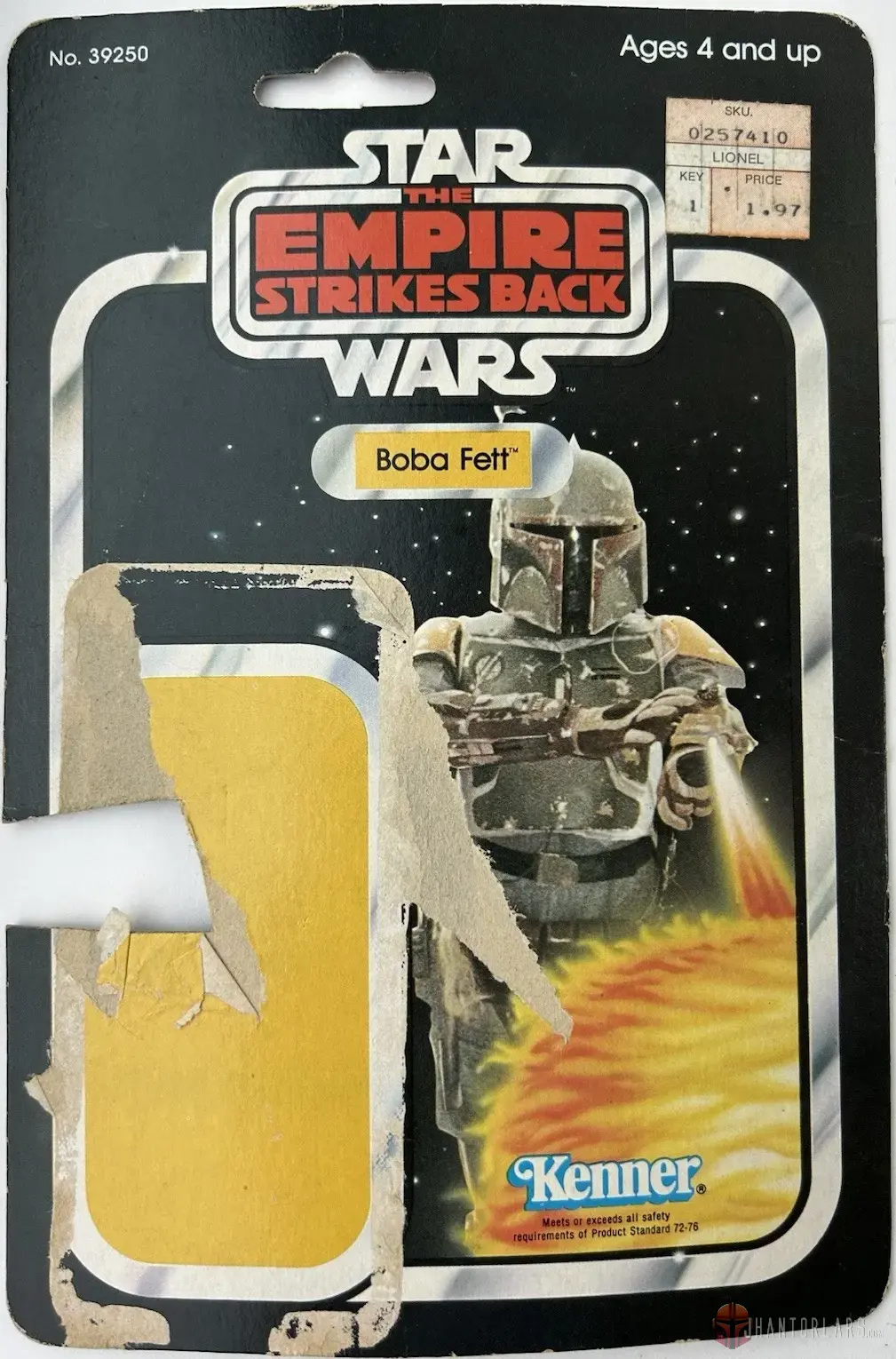
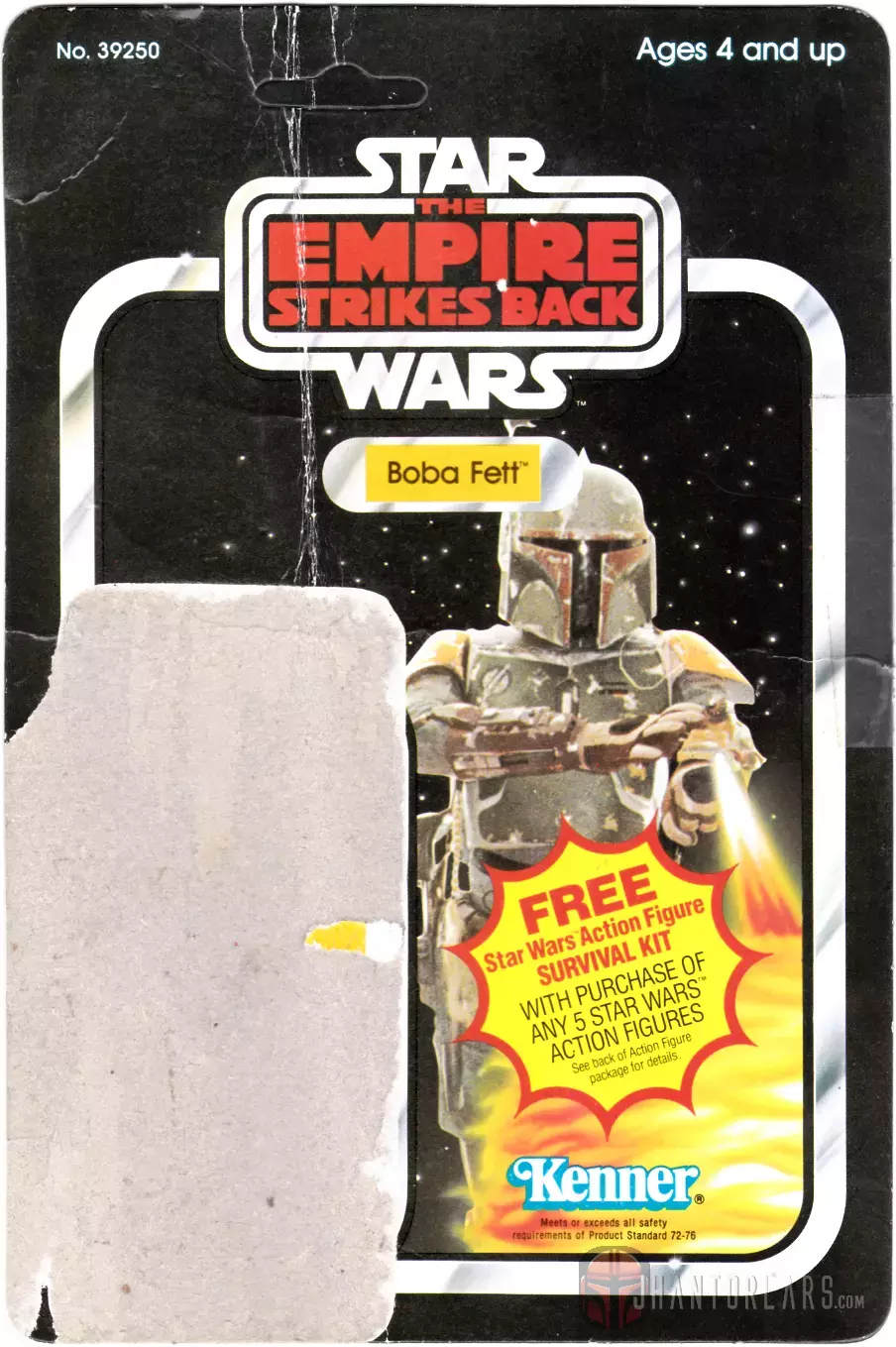
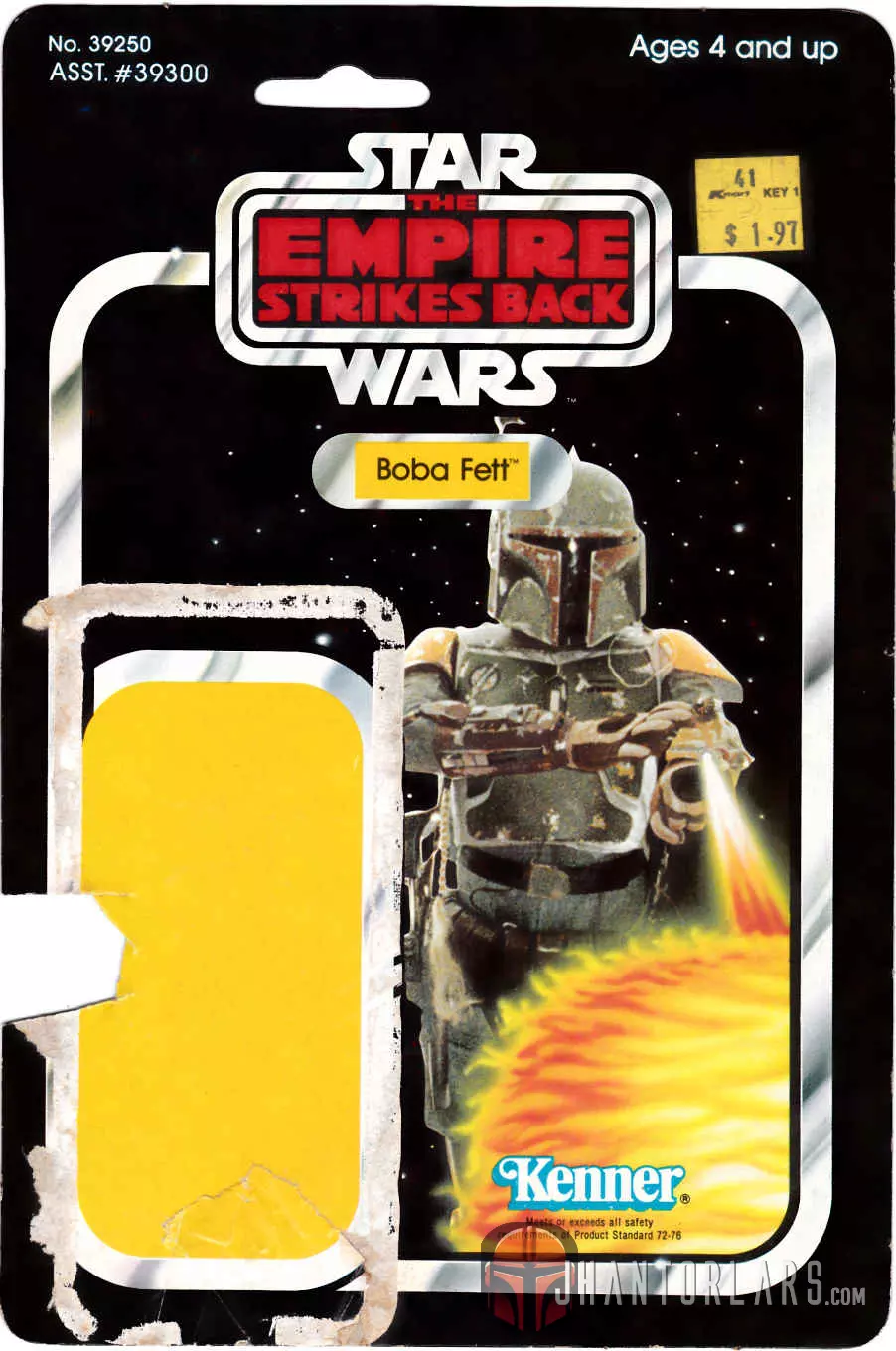
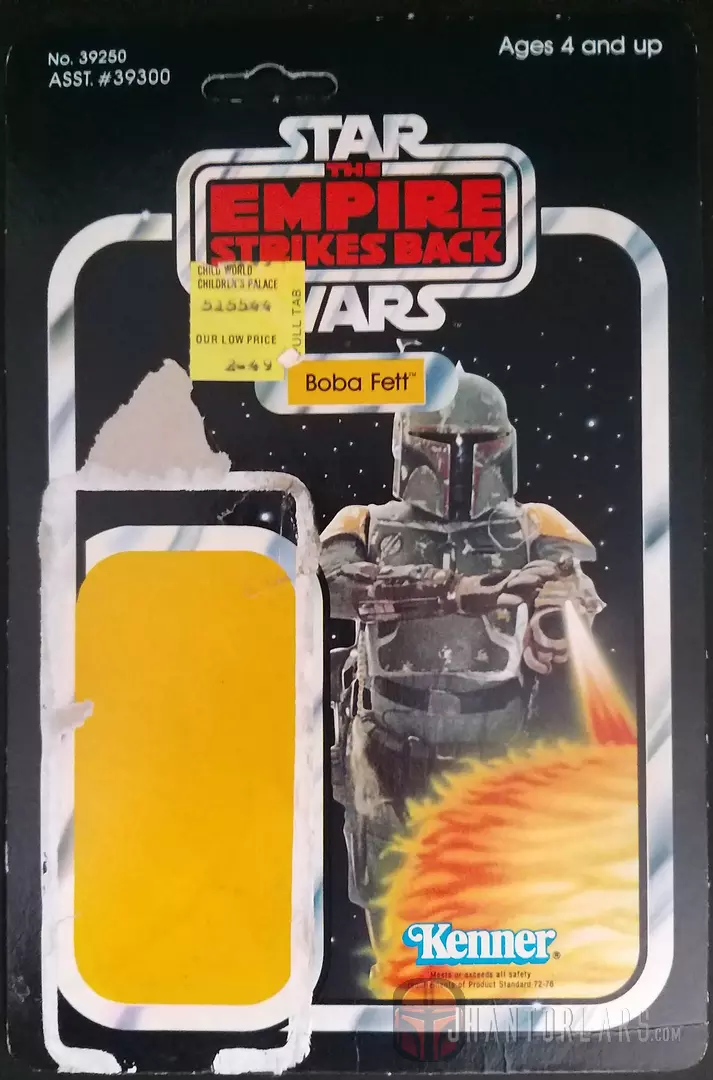
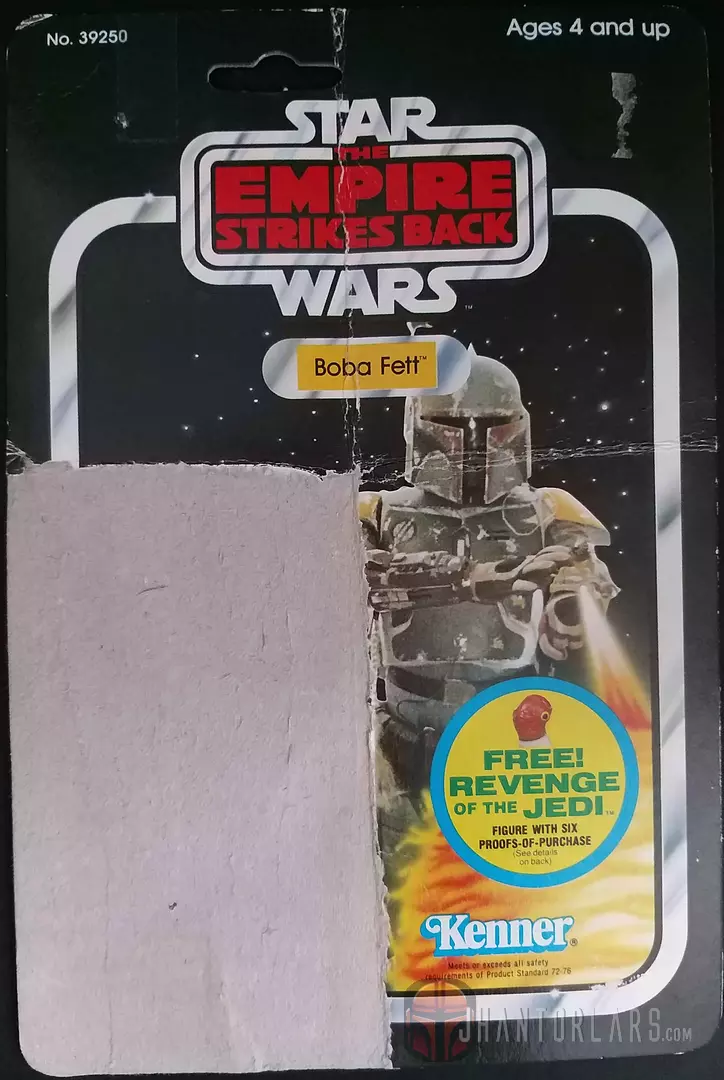
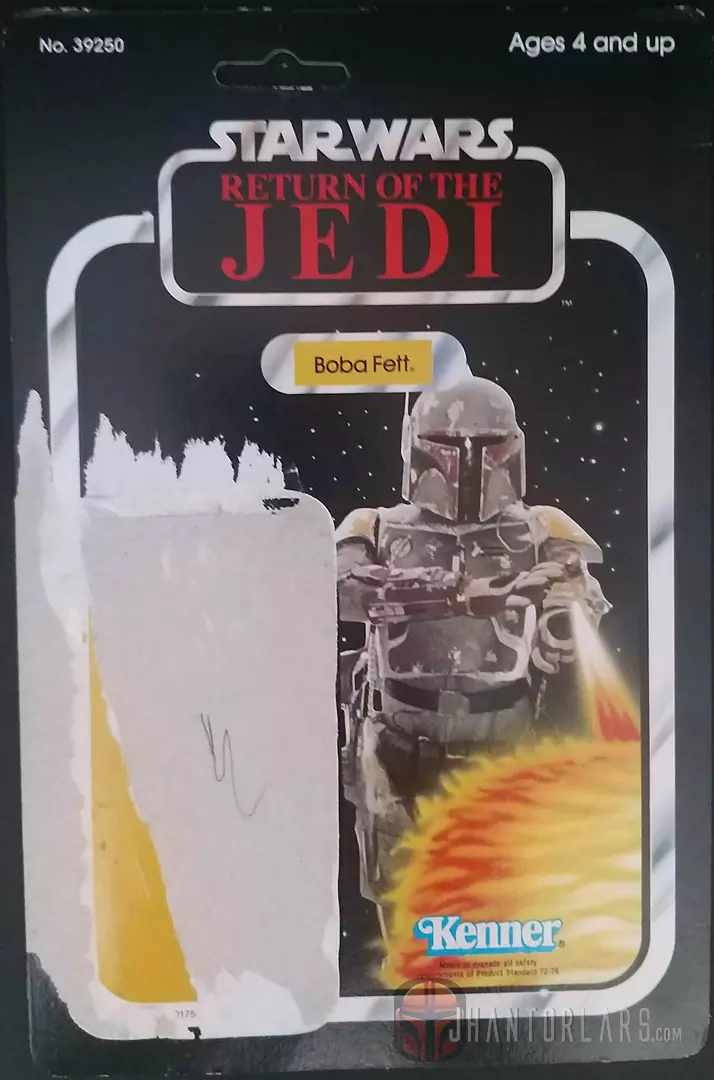
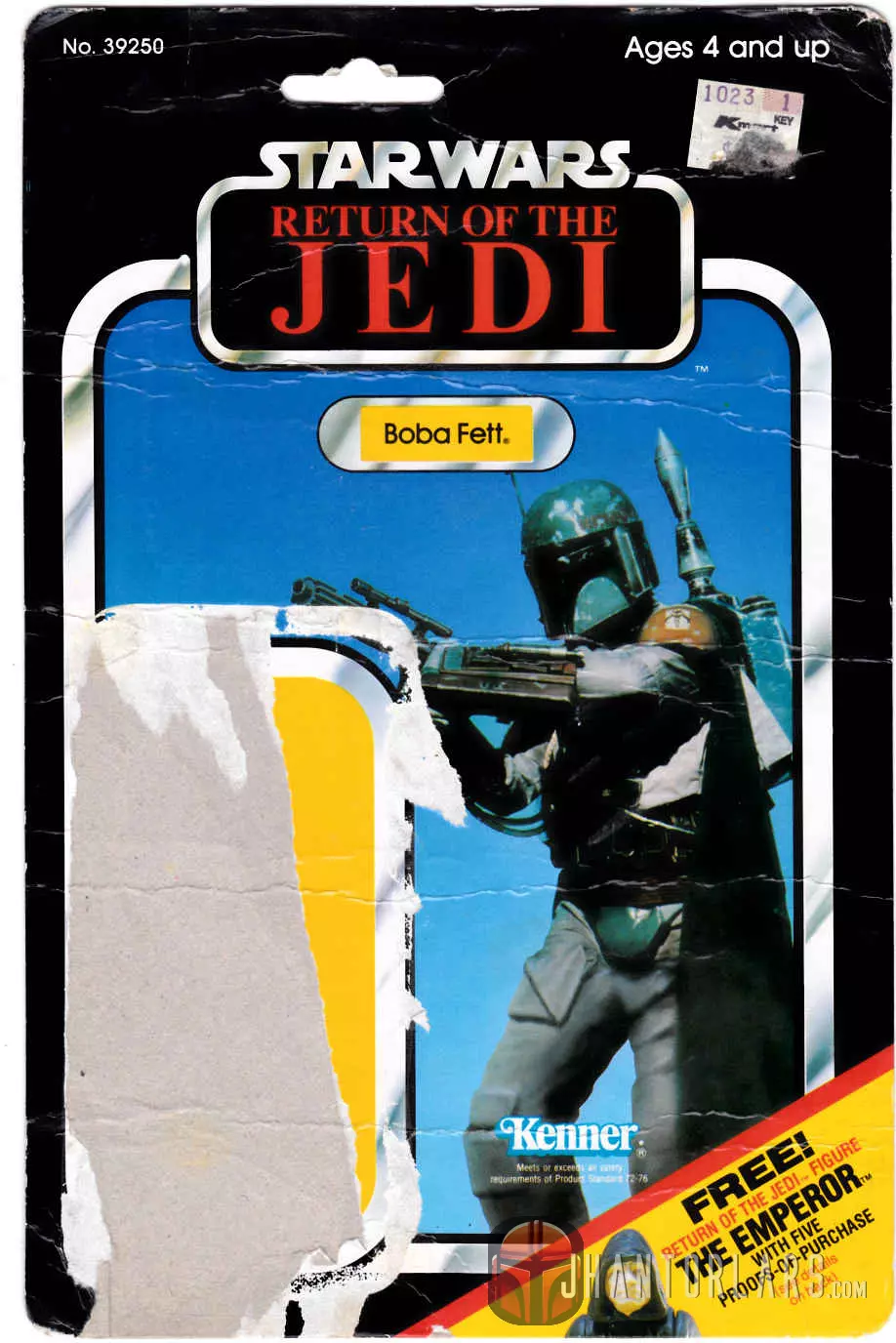
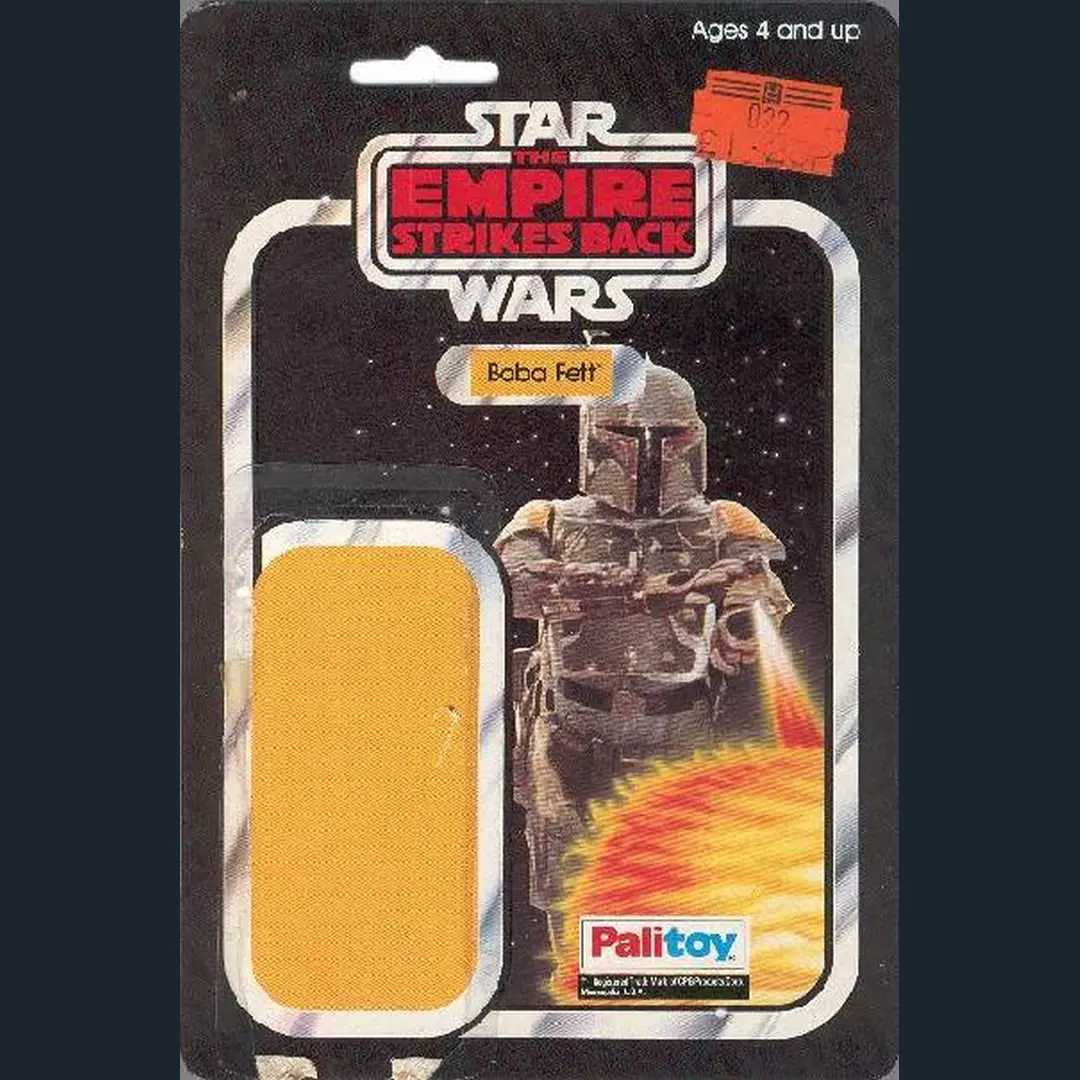
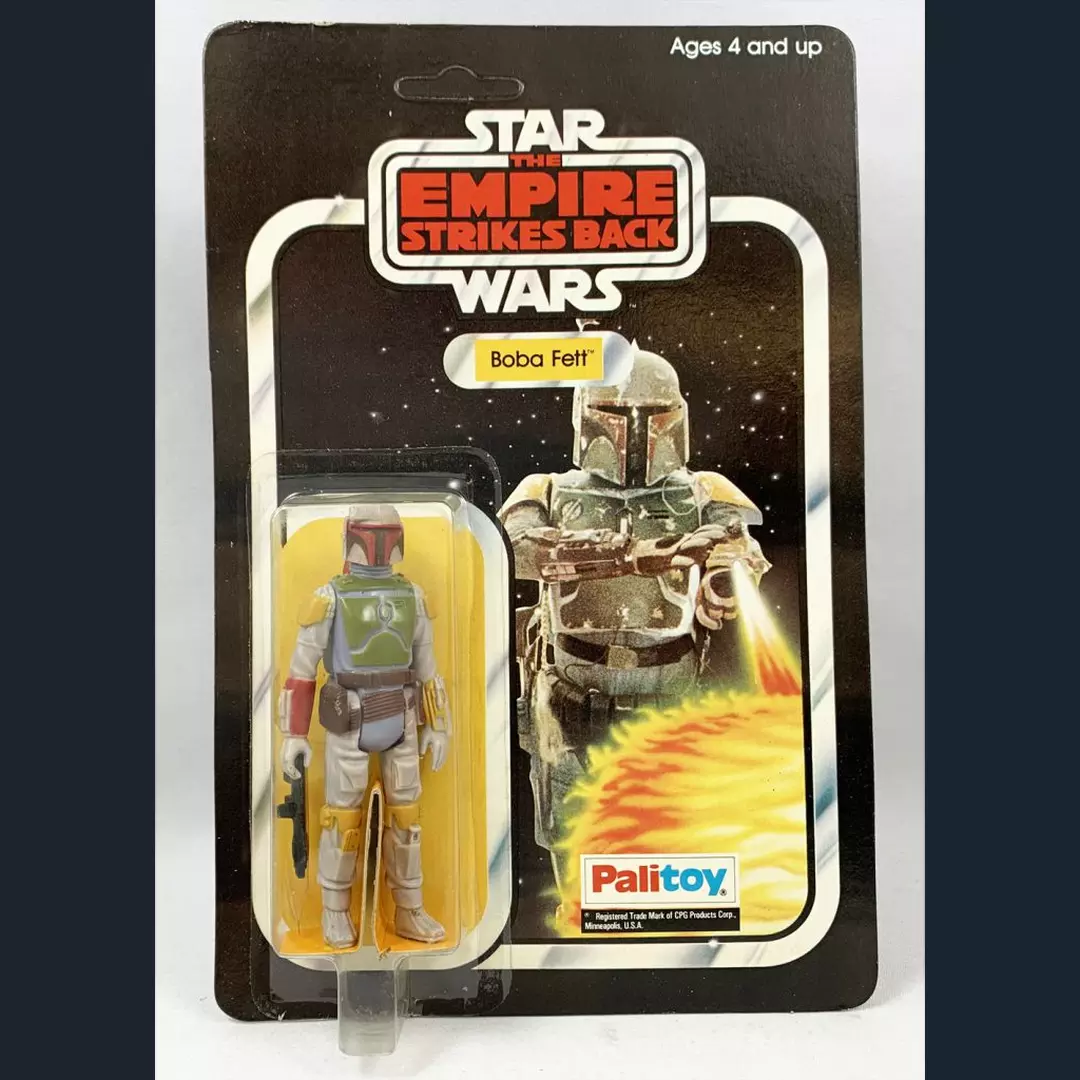
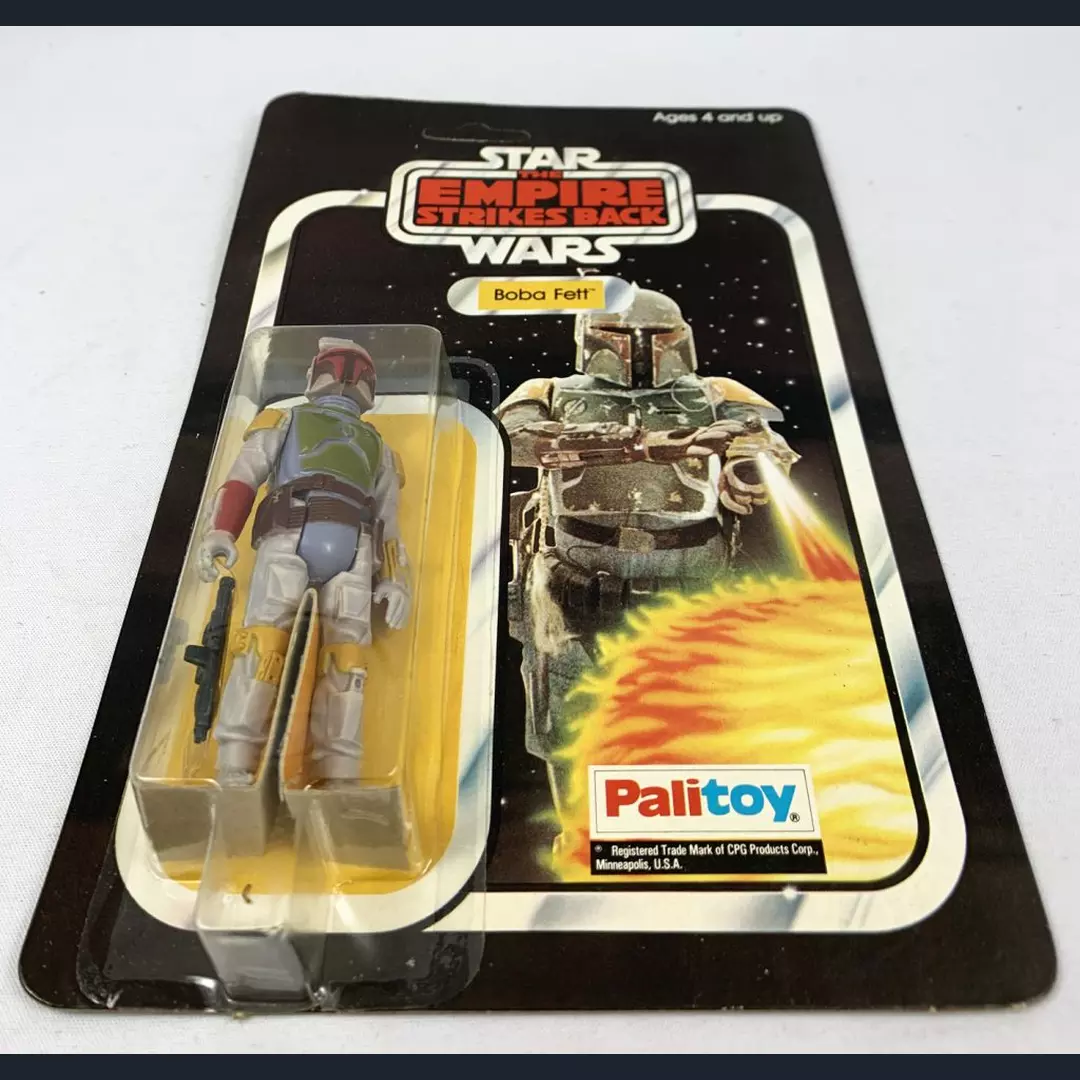
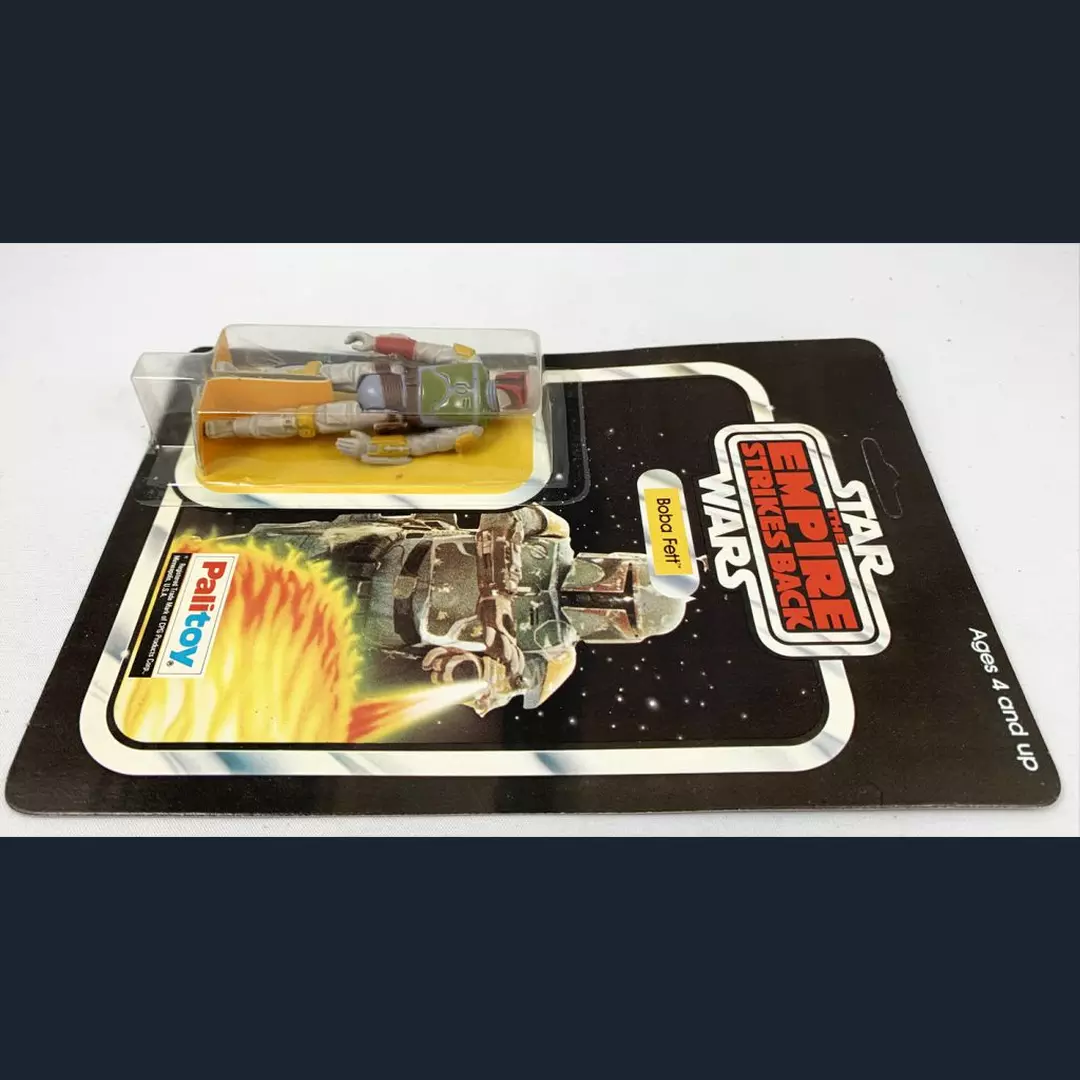
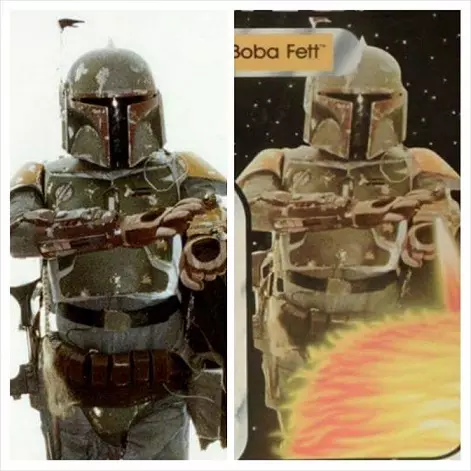
Esta visita, y en particular las fotografías, eran de ayuda para que Kenner avanzara con mayor exactitud en la producción de una figura que saliera a la venta del personaje de Boba Fett. Las imágenes muestran el traje general desde algunas vistas, pero la más interesante es la que muestra a Boba Fett disparando su lanzallamas montado en la muñeca. Una de las fotografías de esa pose en particular (desde el punto de vista del fotógrafo de la imagen) fue utilizada por un artista para crear la obra de arte que se vio por primera vez en la muestra de la Feria del Juguete y, finalmente, en todos los cartones asociados a la figura de acción de Boba Fett vendida por todos los partners para las colecciones Star Wars y The Empire Strikes Back. Para Return of the Jedi se utilizó una fotografía de la escena sobre el Tatooine Skiff de la película.
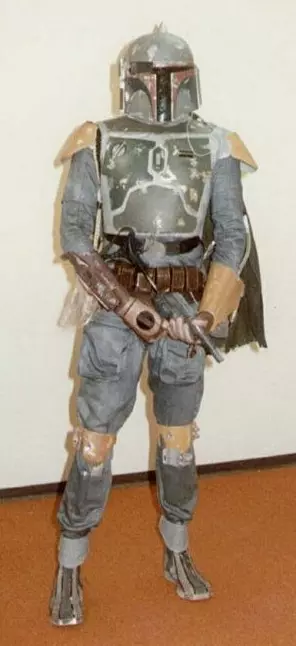
Finales 1978 – Tercer Prototipo
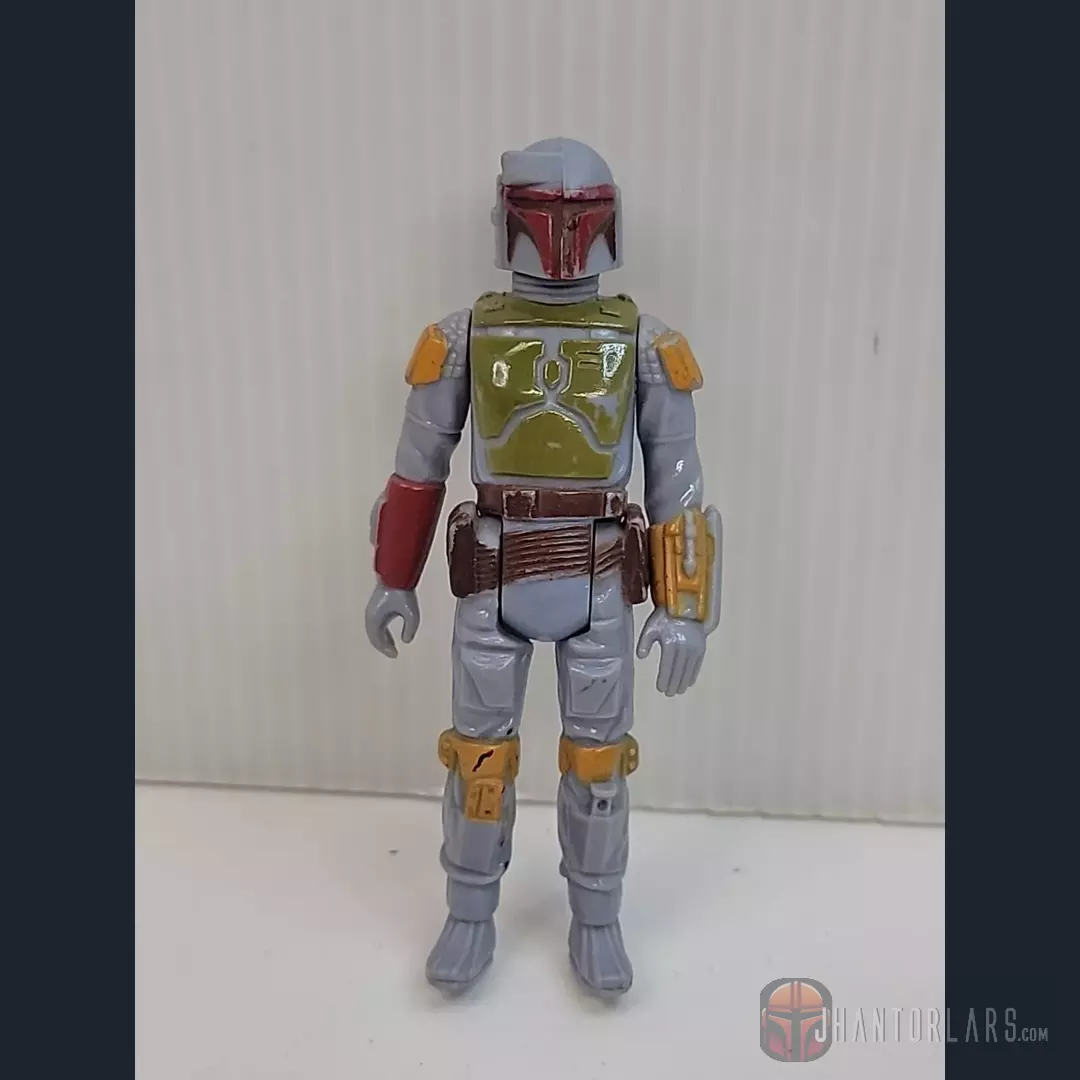
Este prototipo es bastante diferente de sus predecesores, y fue utilizado en varias promociones asociadas al personaje de Boba Fett. Es curioso que el uso de colores de este prototipo dista de la versión final, en que esta tiene más relación con las versiones anteriores. Esto calza con el hecho de que el prototipo que aparece finalmente en la hoja de especificaciones es una mezcla de este con colores usados anteriores. En este prototipo se utiliza directamente el misil del Shogun Warrior Raider y es aún más simple que sus versiones previas. Ya no existe el telemetro, el jetpack es más sencillo, no se tienen las X y círculos en las manos (aunque se agrega una protección como la de los Stormtrooper), no se tienen las líneas en las botas, no tiene esa especie de faja de tela, el color de las herramientas son amarillas y no blancas, y el color del mameluco es bastante más claro.
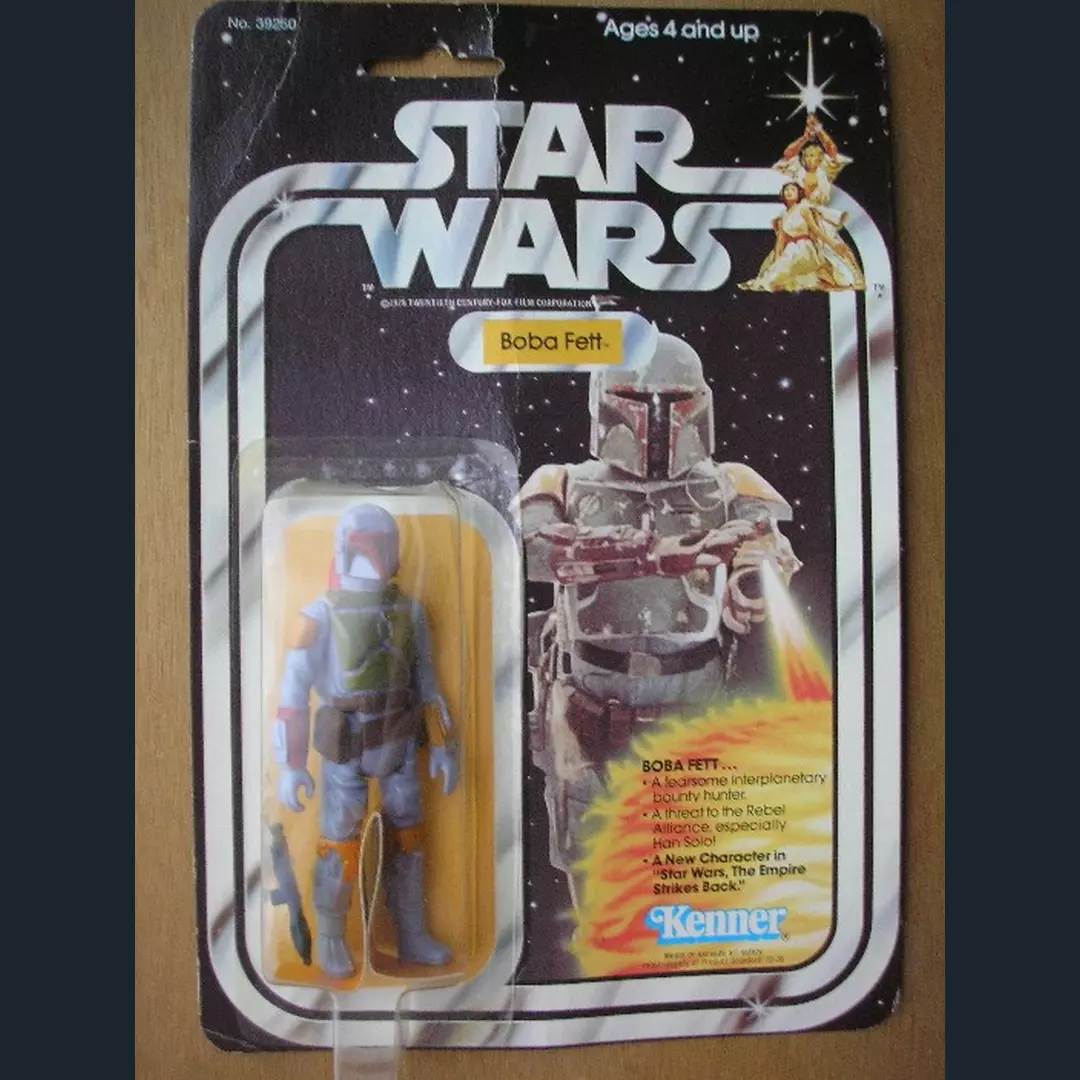
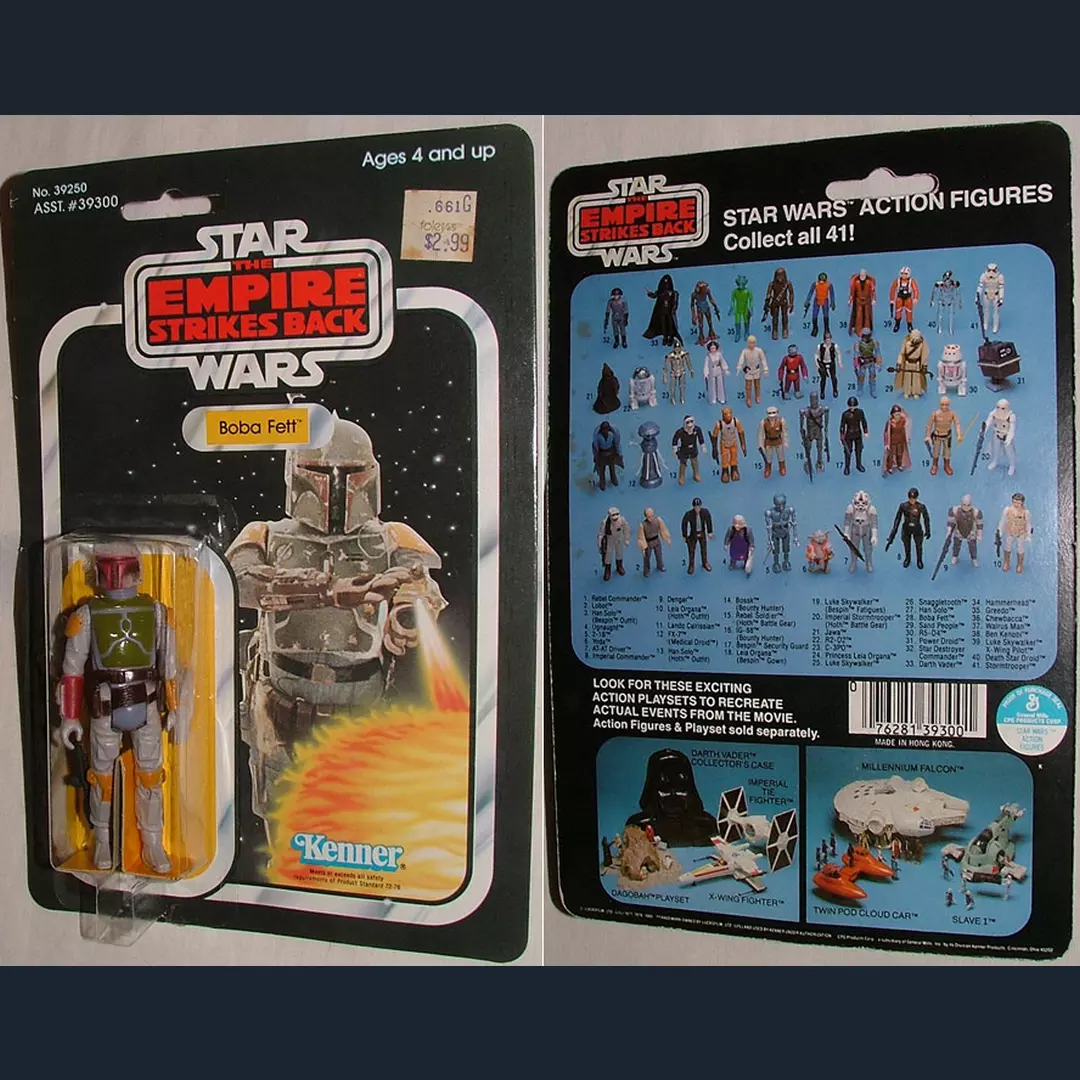
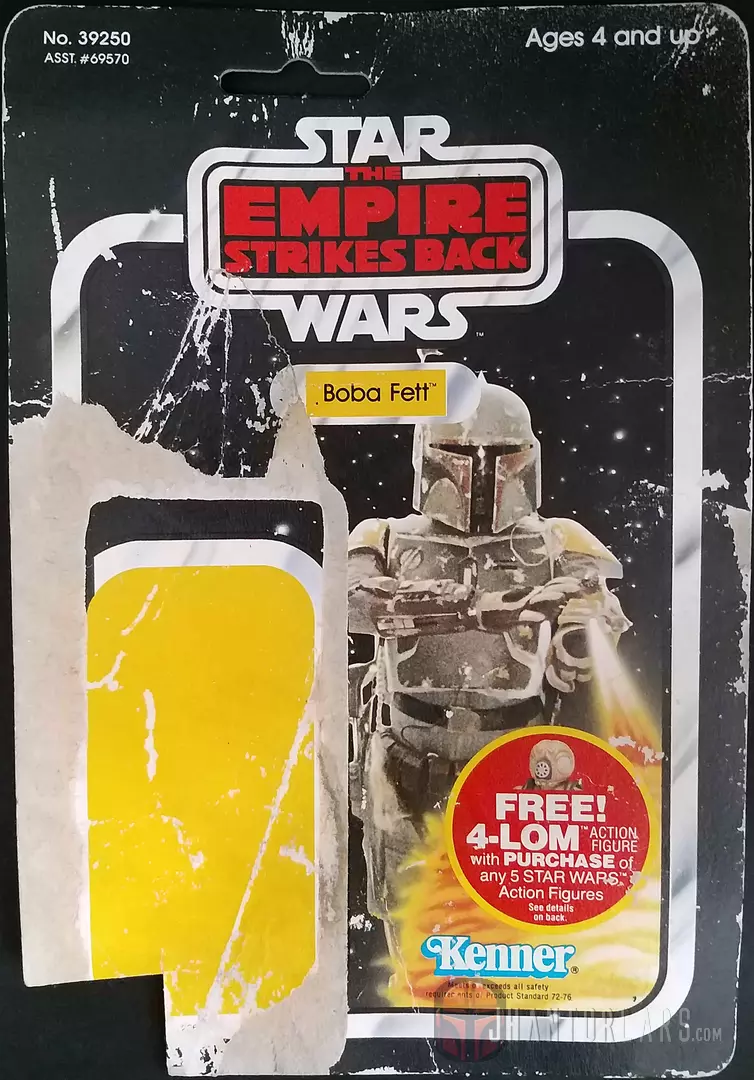
Estas fotografías en particular son las que se utilizaron en los cartones 20 cardback de la colección Star Wars, en particular desde el 20C.
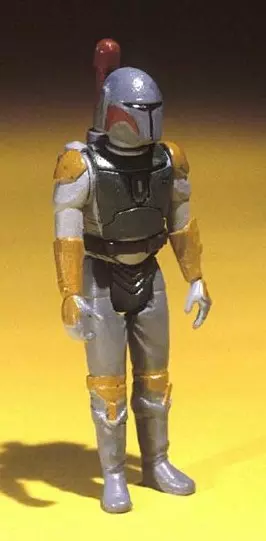
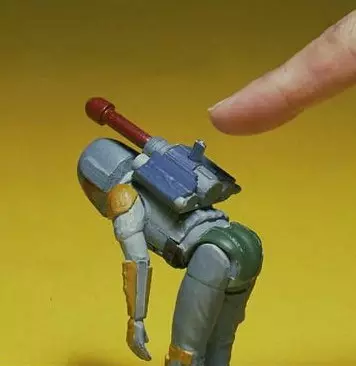
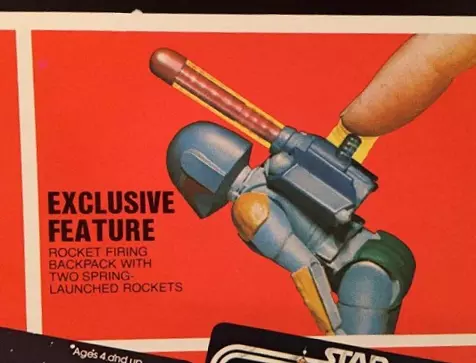
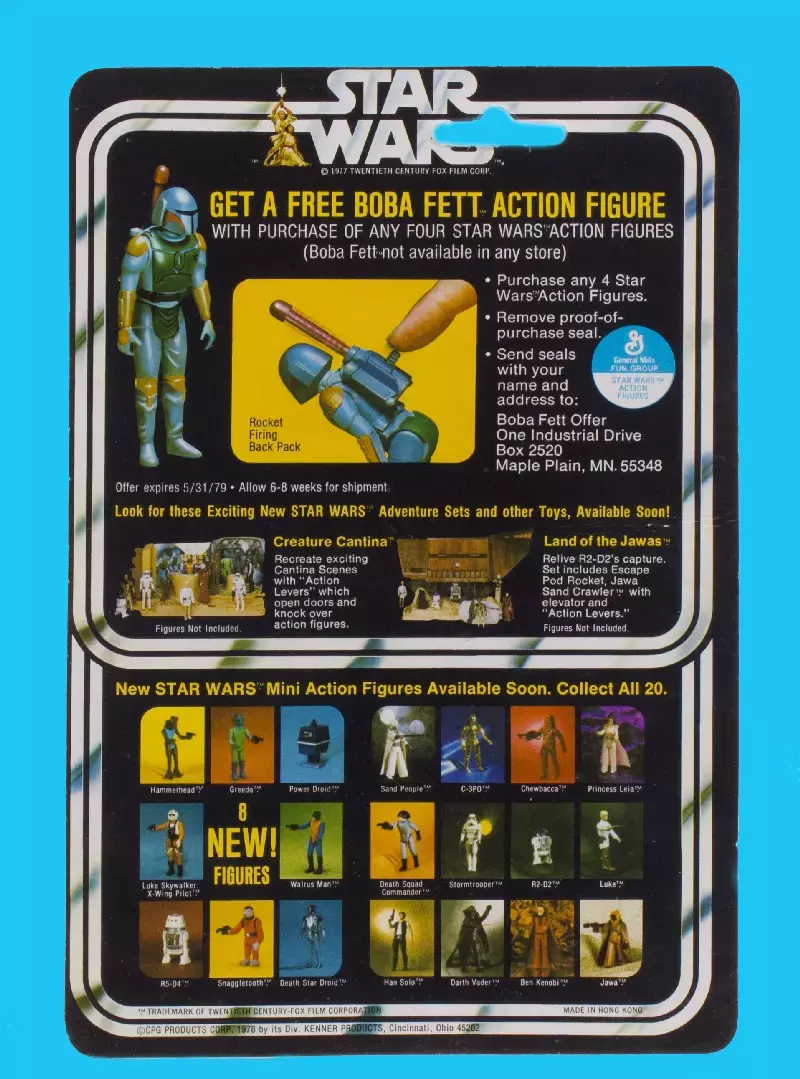
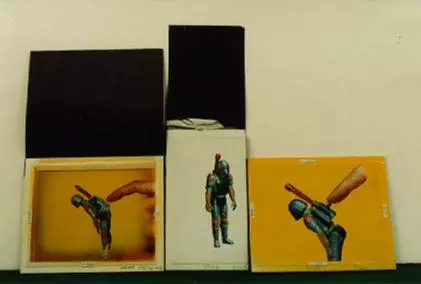
Las fotografías fueron retocadas a mano cono un aerógrafo para que parecieran pintadas a mano y así lucir como dibujos de la misma. El efecto de disparo ha sido agregado en la pintura. En este prototipo el accionador del disparo del misil es con un botón en vez del mecanismo deslizante que se conoció luego junto con la figura definitiva. Este mecanismo es el heredado del juguete de Mattel de Shogun Warrior. Hay que recordar que luego del cartón 20C la imagen de Boba Fett lanzando el misil fue retirada de diversas formas dado que ya no estaría disponible dicha jugabilidad.
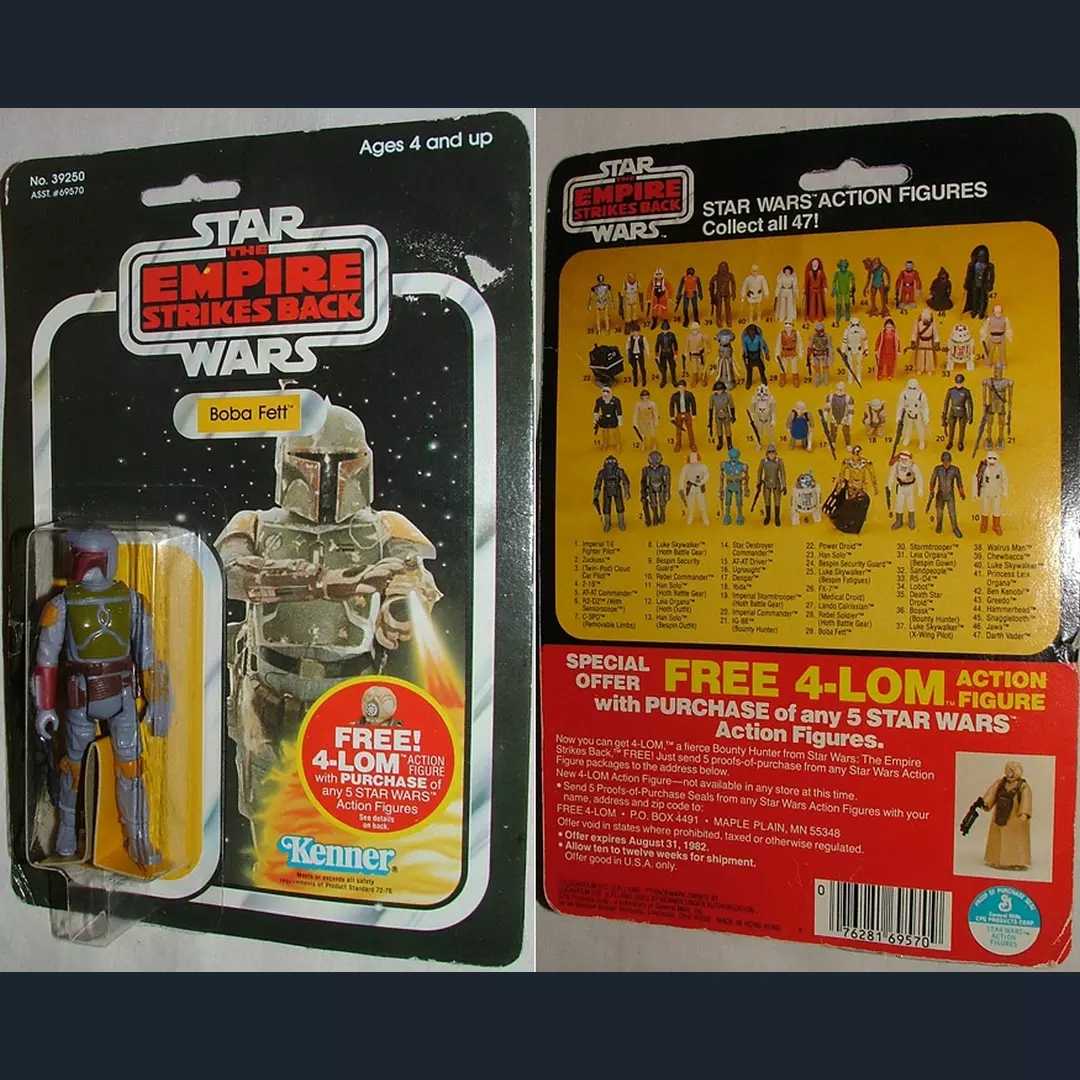
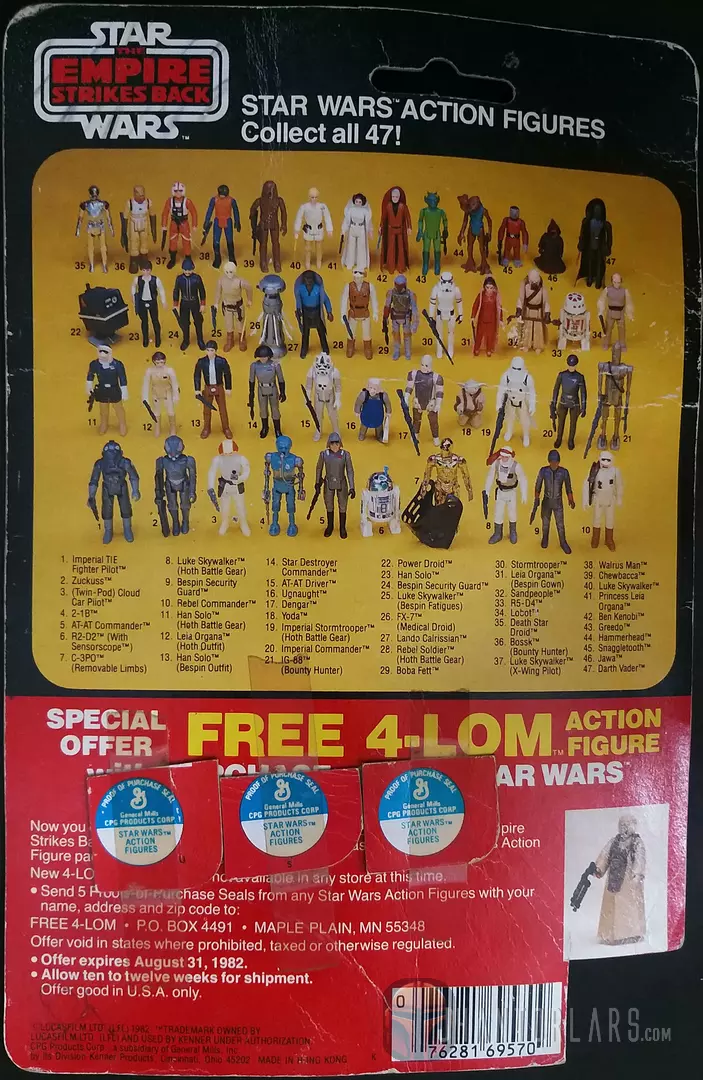
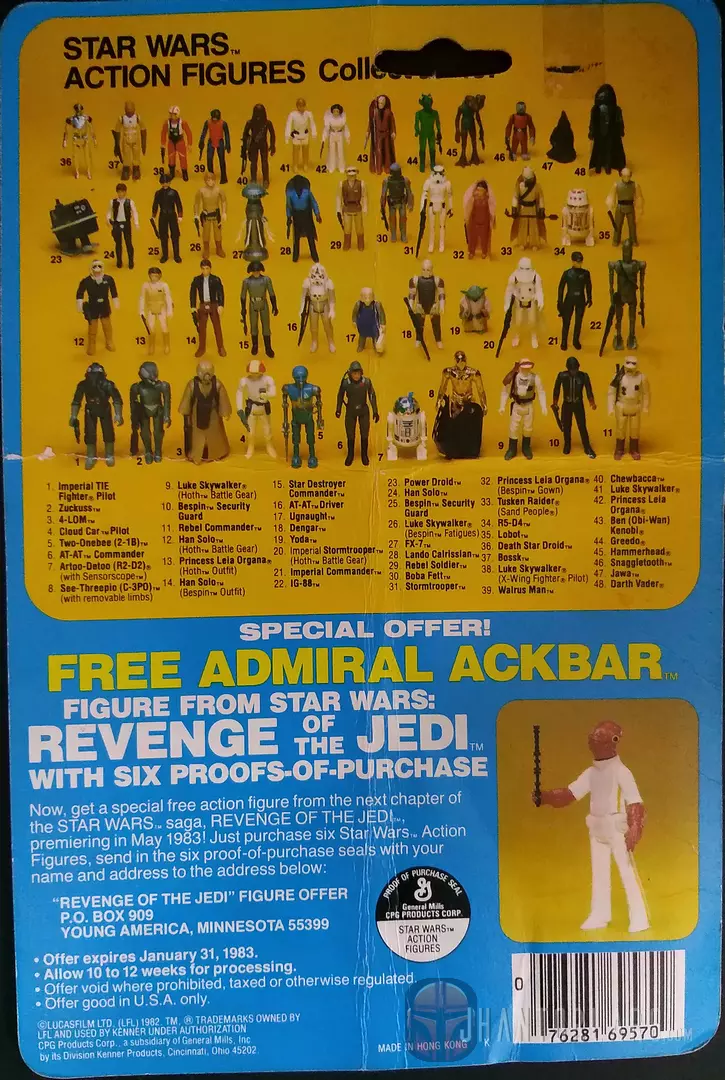
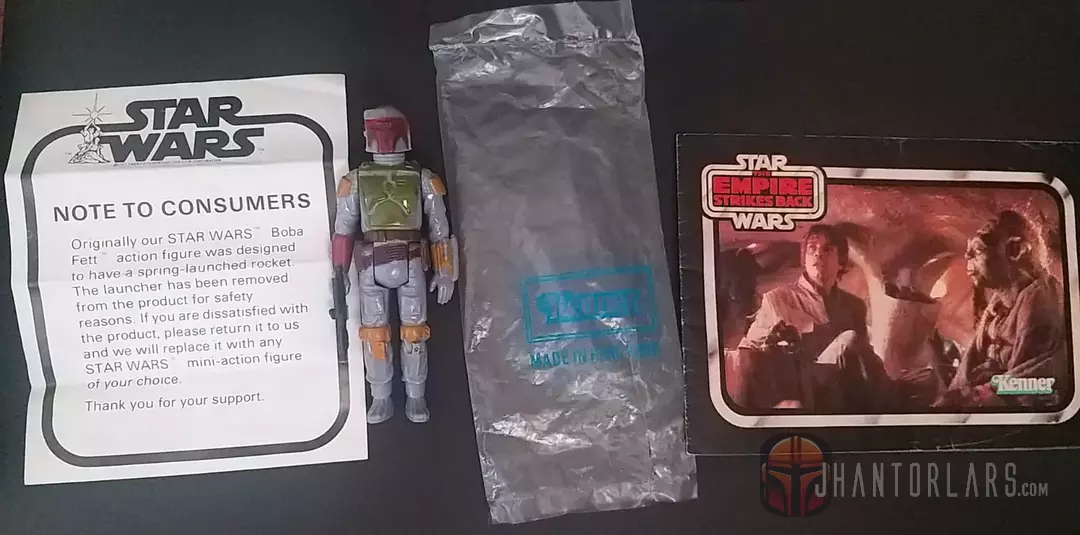
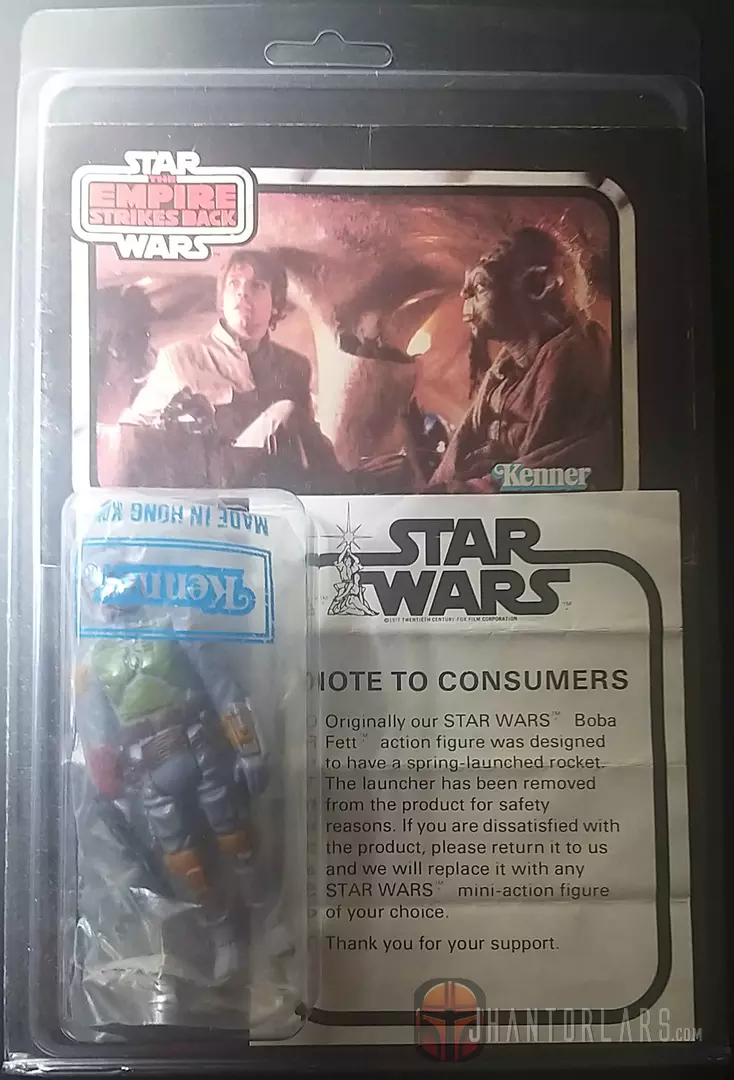
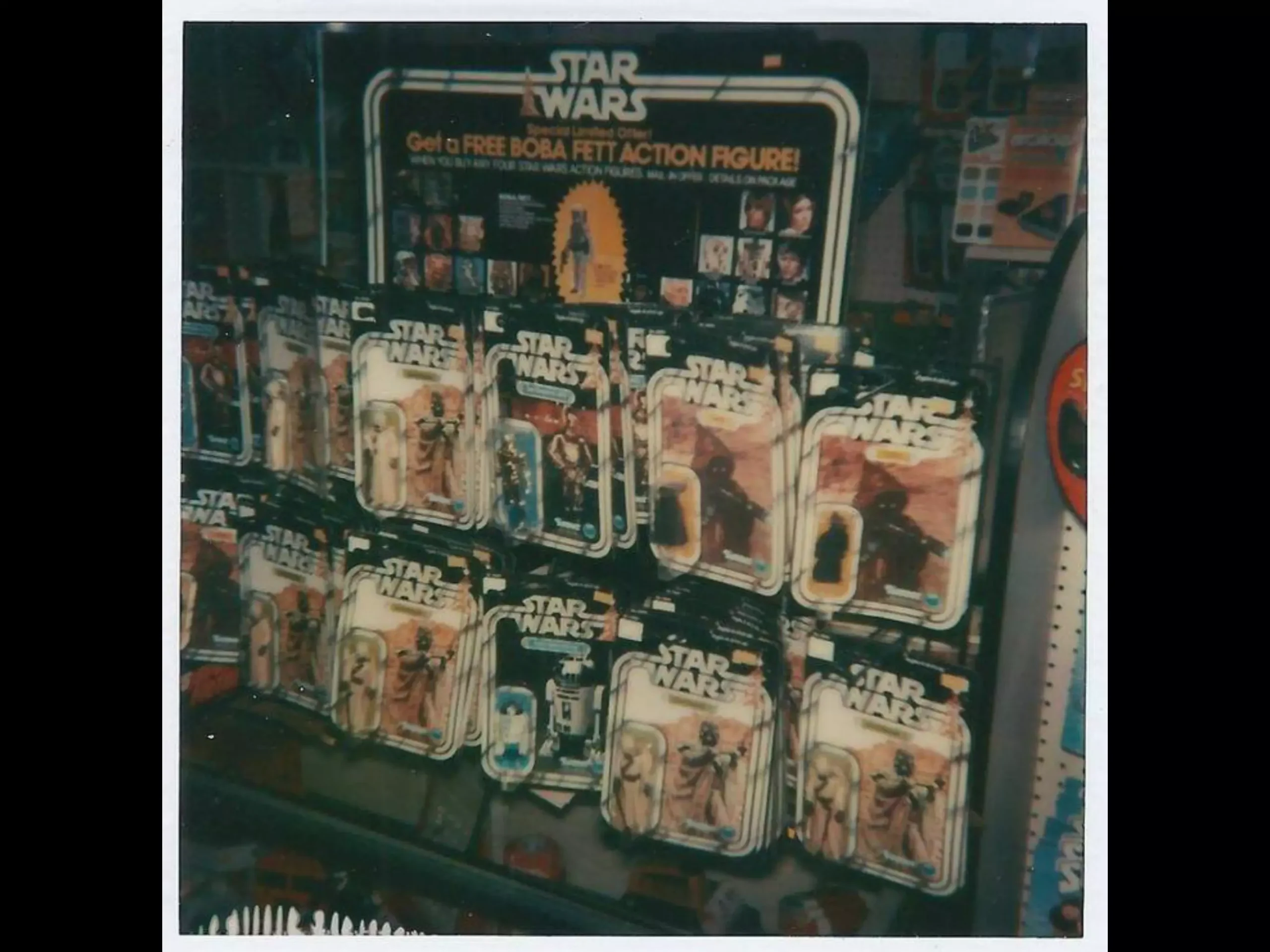
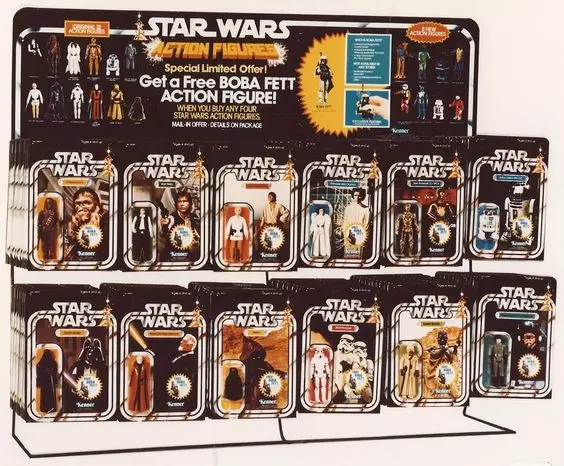
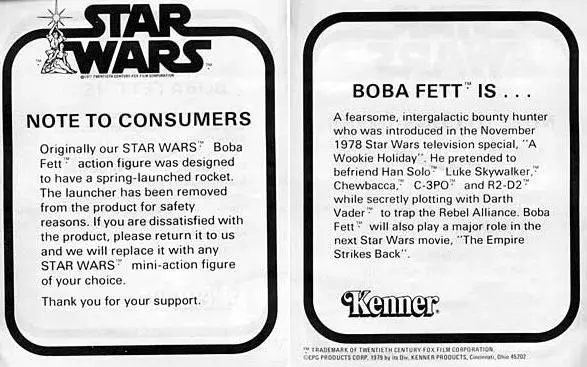
La oferta para tener esta preciada figura era enviar 4 sellos de prueba de compra (modelo exitoso que se mantuvo hasta 1985, cambiando la cantidad de sellos necesarios) más gastos de envío. Con esto, Kenner enviaría por correo el añorado juguete. Entonces, mucho niños pidieron el juguete de Boba Fett lanza misiles, pero cuando este llegó por correo a sus manos se percataron que ninguno tenía el mecanismo de disparo (en cualquiera de sus versiones). La figura traía consigo un aviso a los consumidores que explicaba la eliminación del lanza misil por ser algo peligroso. Muchos niños también se deben haber sorprendido al ver que la figura en sí era diferente a la que se mostraba en las promociones.
Volviendo al prototipo en si, este es bastante más sencillo que sus predecesores, lo que va de la mano de generar un producto más económico en fabricación y que también, tal vez, permita jugar de mejor manera.
Finales 1978 – Cuarto Prototipo
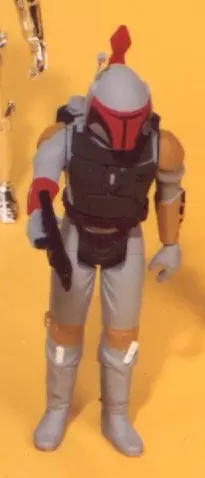
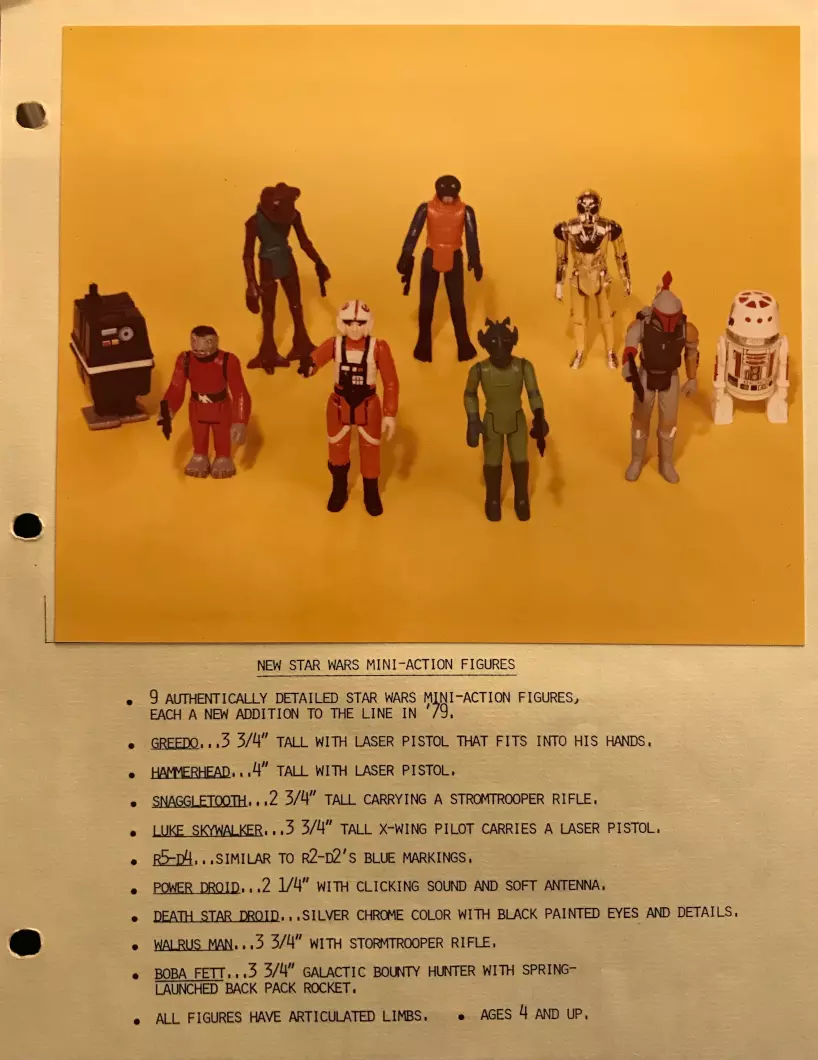
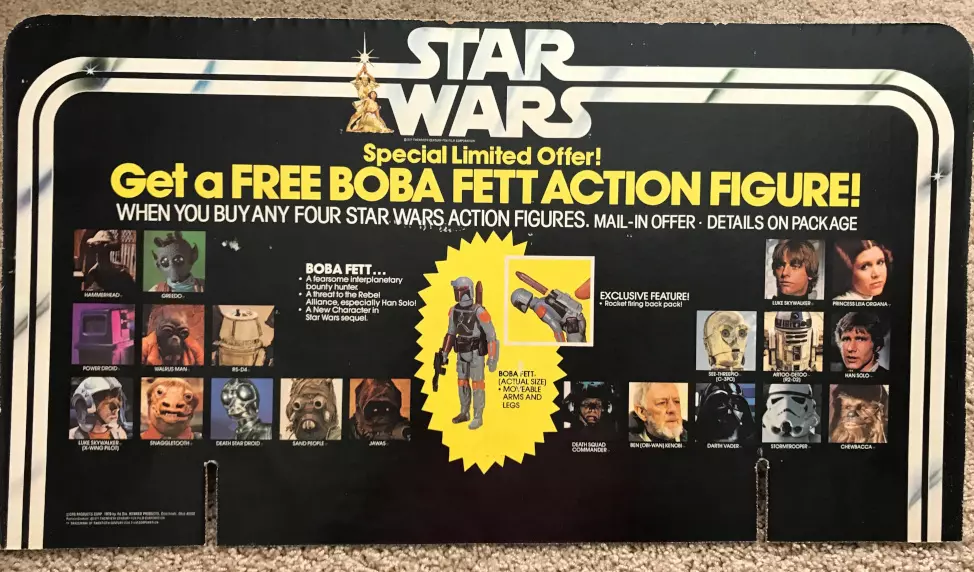
En la hoja de especificaciones de las nuevas figuras, de la cual no he logrado obtener el año exacto de su aparición (probablemente finales de 1978, que cuadra con la visita previa), se identifica una figura de prototipo de Boba Fett mencionando también su sistema de lanza misil. No es claro si le hicieron ciertos retoques para la fotografía o si este sería un nuevo prototipo del cual no he encontrado más registros. Lo que es curioso dentro de toda historia es que, en cuanto a colores, se asemeja más a la figura final lanzada en producción. Esta figura es un tanto más simple que las anteriores, no se tienen los ojos en el casco, no se tienen las X y círculos en las manos, no se tienen las líneas en las botas, no tiene esa especie de faja de tela y el color del mameluco es bastante más claro.
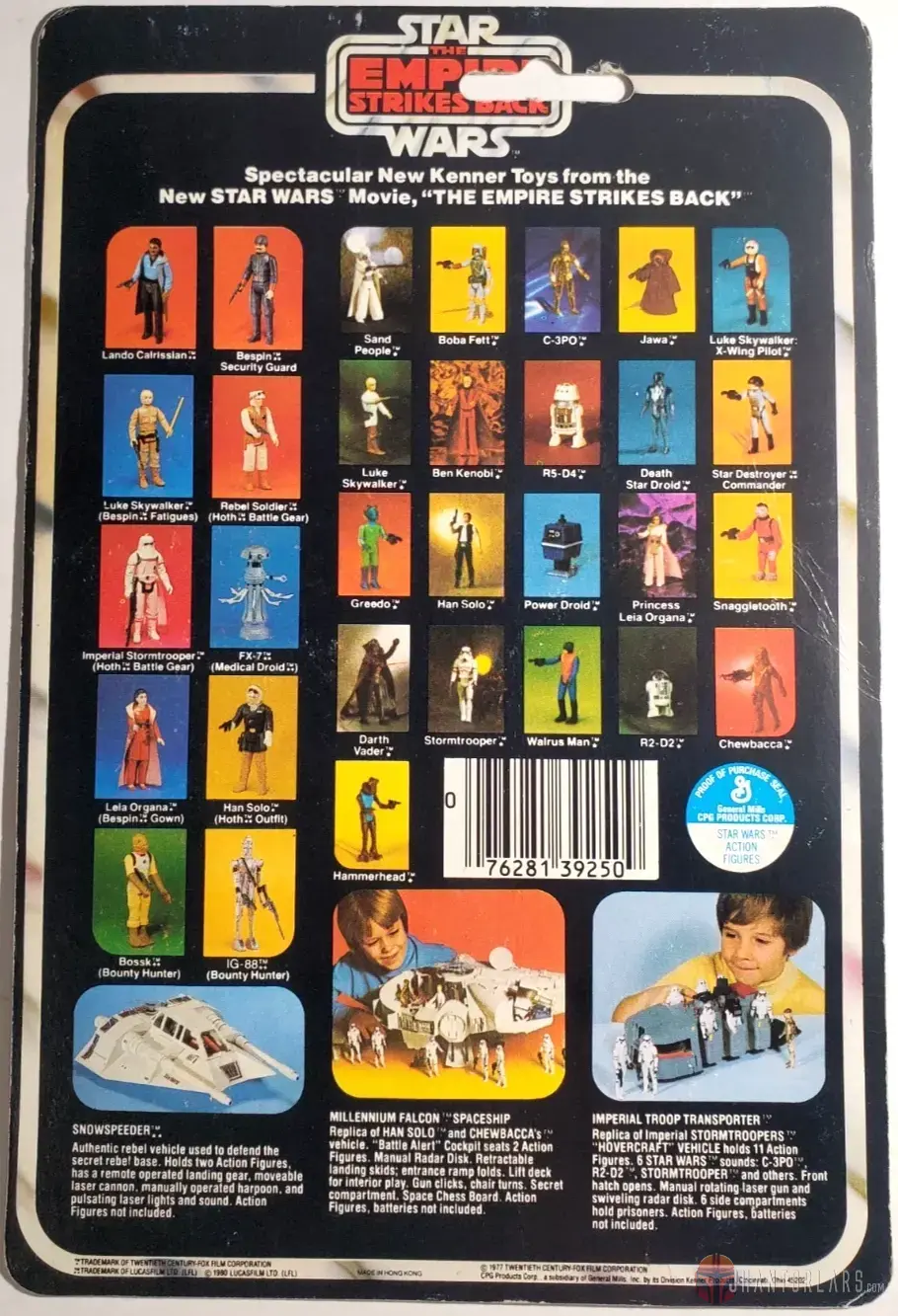
En las especificaciones aparecen también 8 nuevas figuras de acción, Greedo, Hammerhead, Red Snaggletooth, Luke Skywalker X-Wing, R5-D4, Power Droid, Death Star Droid y Walrus Man. Notar que Hammerhead aparece con un blaster siendo que finalmente se lanzó con un rifle, y para Snaggletooth fue al revés. Estas figuras son las 8 nuevas que aparecen en los cartones de 20 piezas de Kenner de la colección Star Wars, y en particular Boba Fett empezó a aparecer como promoción en su tercera versión el cartón 20C, pero con una foto del tercer prototipo.
Finales 1978 – Quinto prototipo
Según lo mencionado en Star Wars: The Archive Database, esta pieza en particular es el ejemplo más antiguo conocido de la figura de acción de Boba Fett con disparo de cohetes, tal como la figura final, que ha salido a la luz hasta la fecha. El moldeado representa la encarnación más temprana conocida de un mecanismo de disparo de cohetes diseñado, y la forma general de la figura es la versión que finalmente llegó al mercado. Esta figura exhibe todas las cualidades de la figura final y su distintiva mochila con disparo de cohetes. Aunque el mecanismo fue retirado antes de su lanzamiento al público, esta figura ofrece una buena visión de un fragmento de la historia de Kenner.
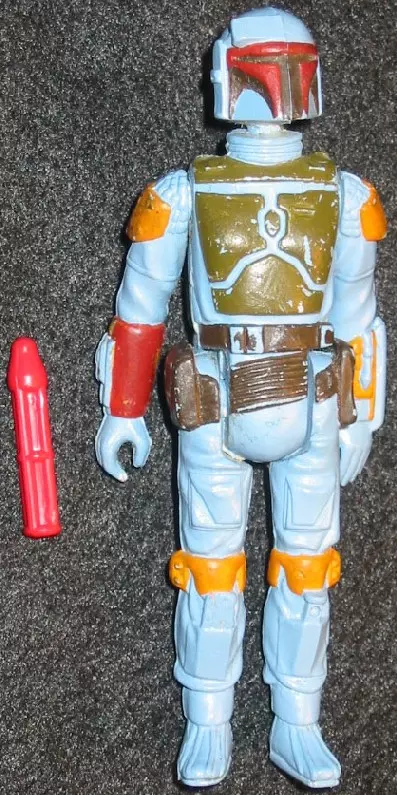
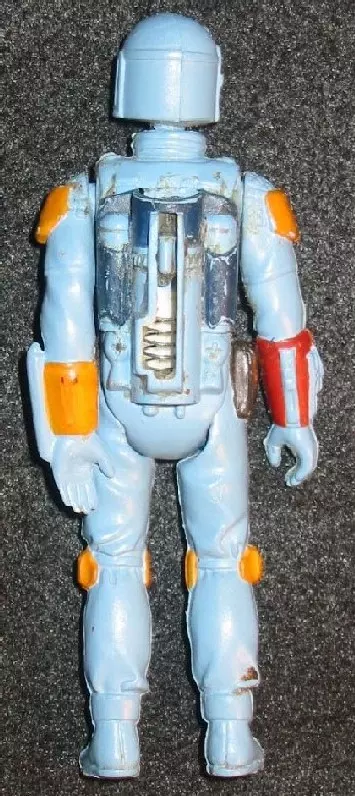
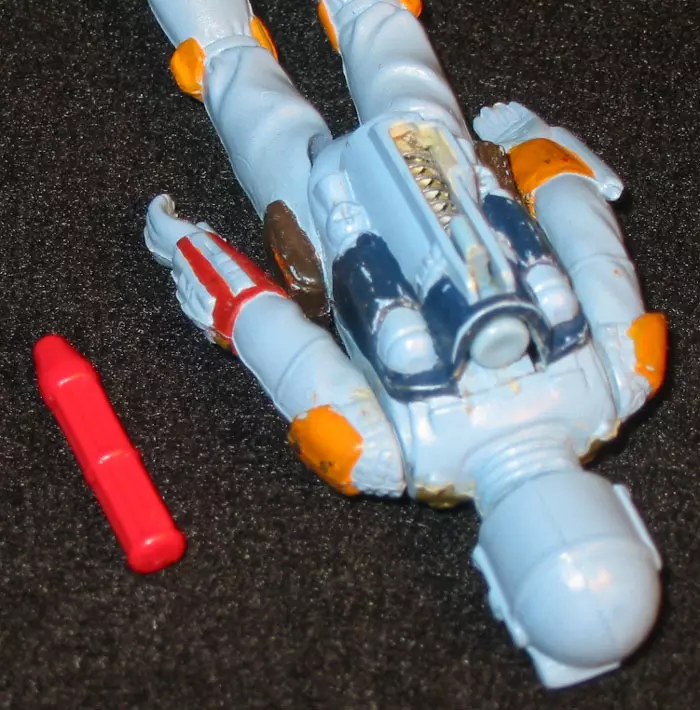
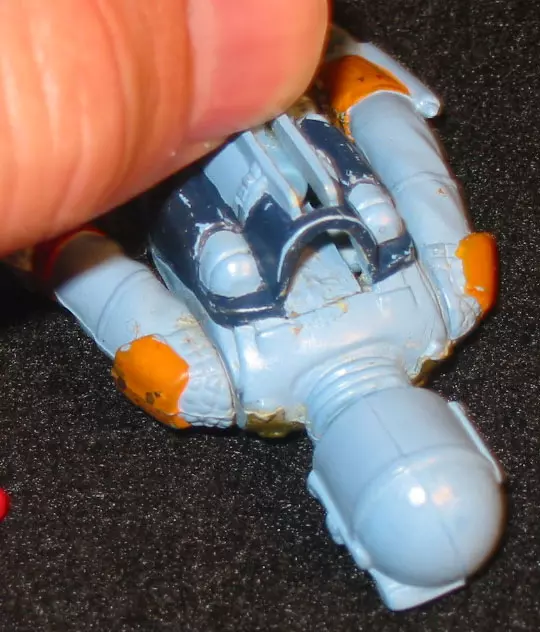
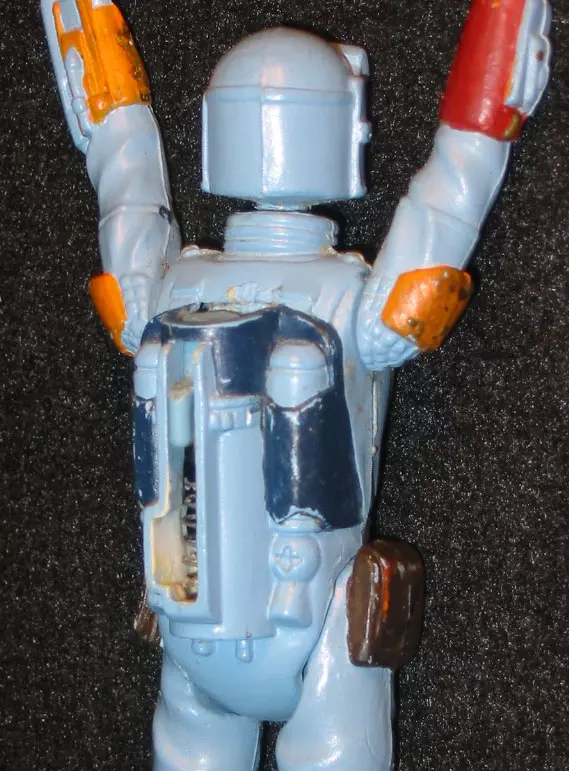
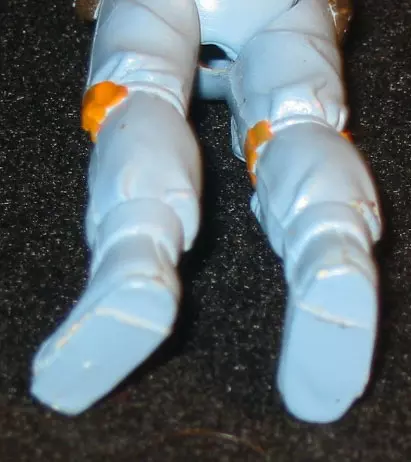
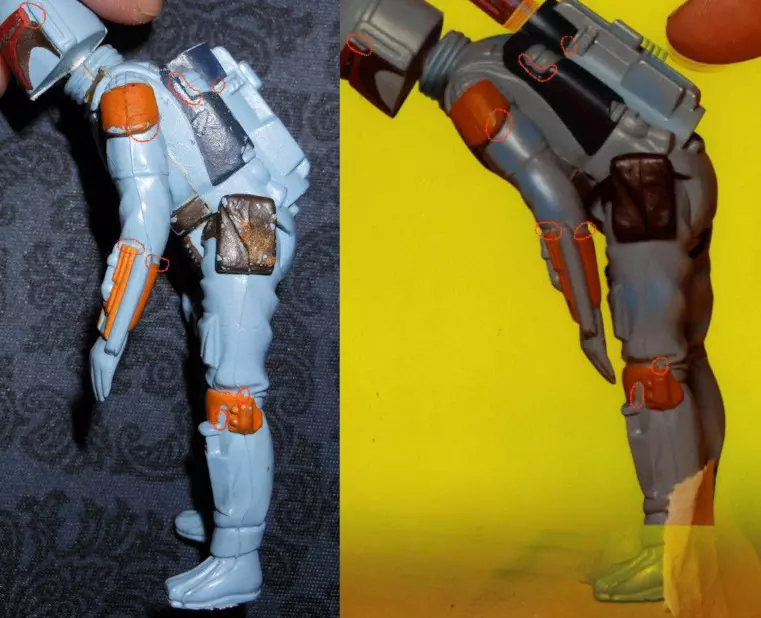
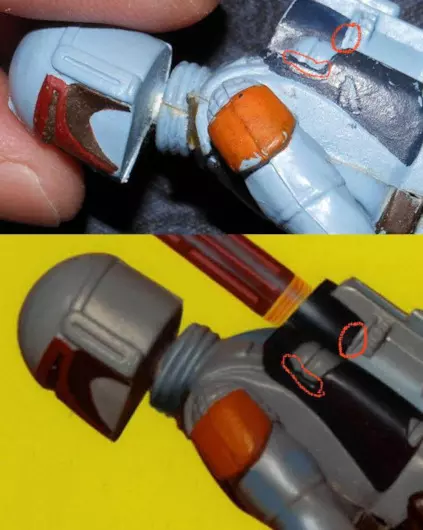
El deslizador en esta figura está hecho de plástico azul en lugar de rojo, que es más común en las versiones L y J. El deslizador azul ha sido conocido por los coleccionistas desde su aparición en el encabezado de la caja de 20 figuras creado para la línea de Star Wars. Además, las imágenes a continuación muestran que esta figura fue realmente utilizada por Kenner como la muestra fotográfica o modelo fotográfico para varios propósitos. Al ver el estudio que presenta Star Wars: The Archive Database, con el detalle de la pintura a mano y las imperfecciones, se puede ver claramente que es la figura utilizada en la obra fotográfica en varias promociones de 20 figuras, así como en el folleto de 1979, en que también aparece volteada. Si se mira bien la fotografía el localizador de rango aparece del otro lado. Kenner pudo usar sin problema este prototipo de disparo de cohetes como un sustituto de la figura normal, ya que el diseño era idéntico en todos los demás aspectos.
Finales 1978 – Sexto Prototipo
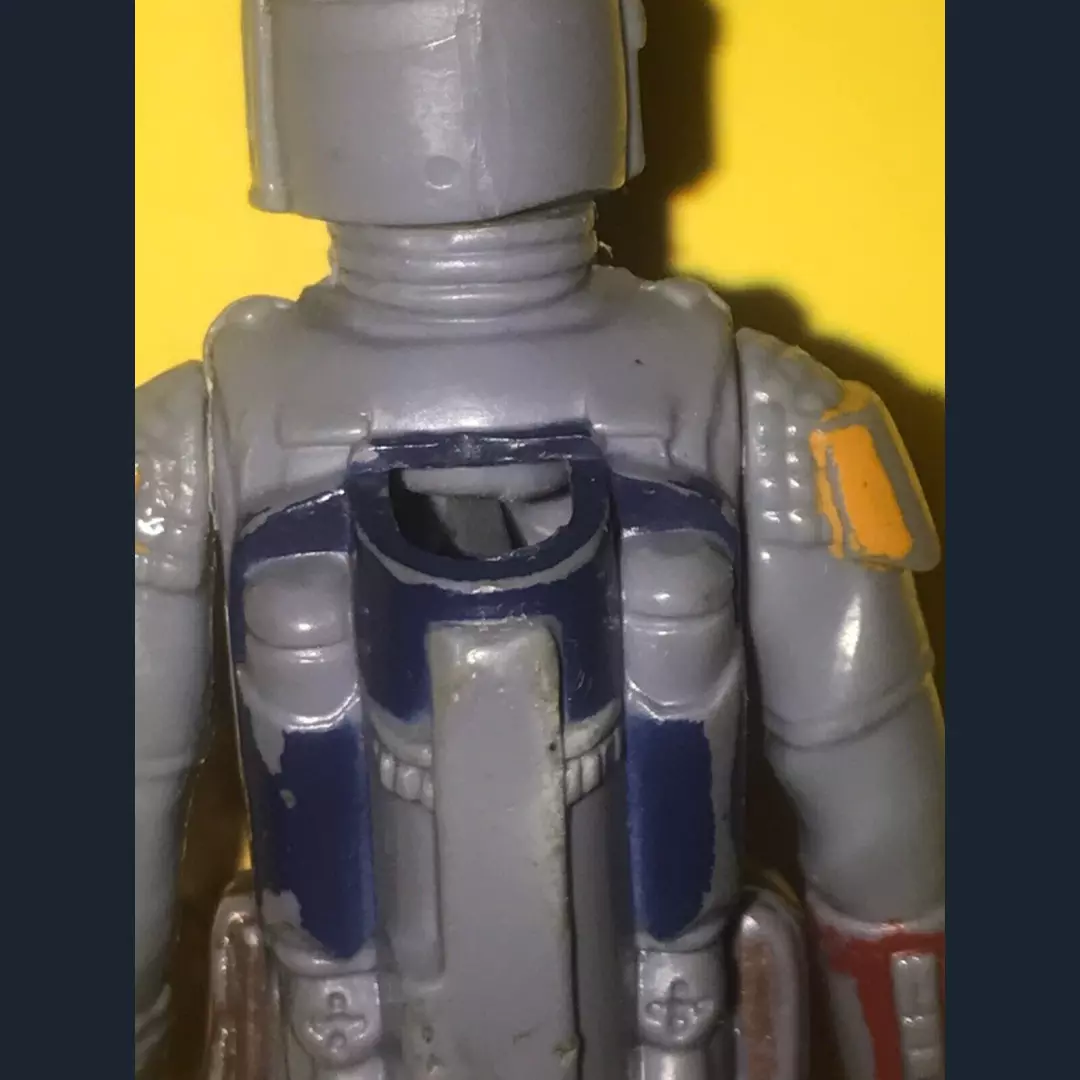
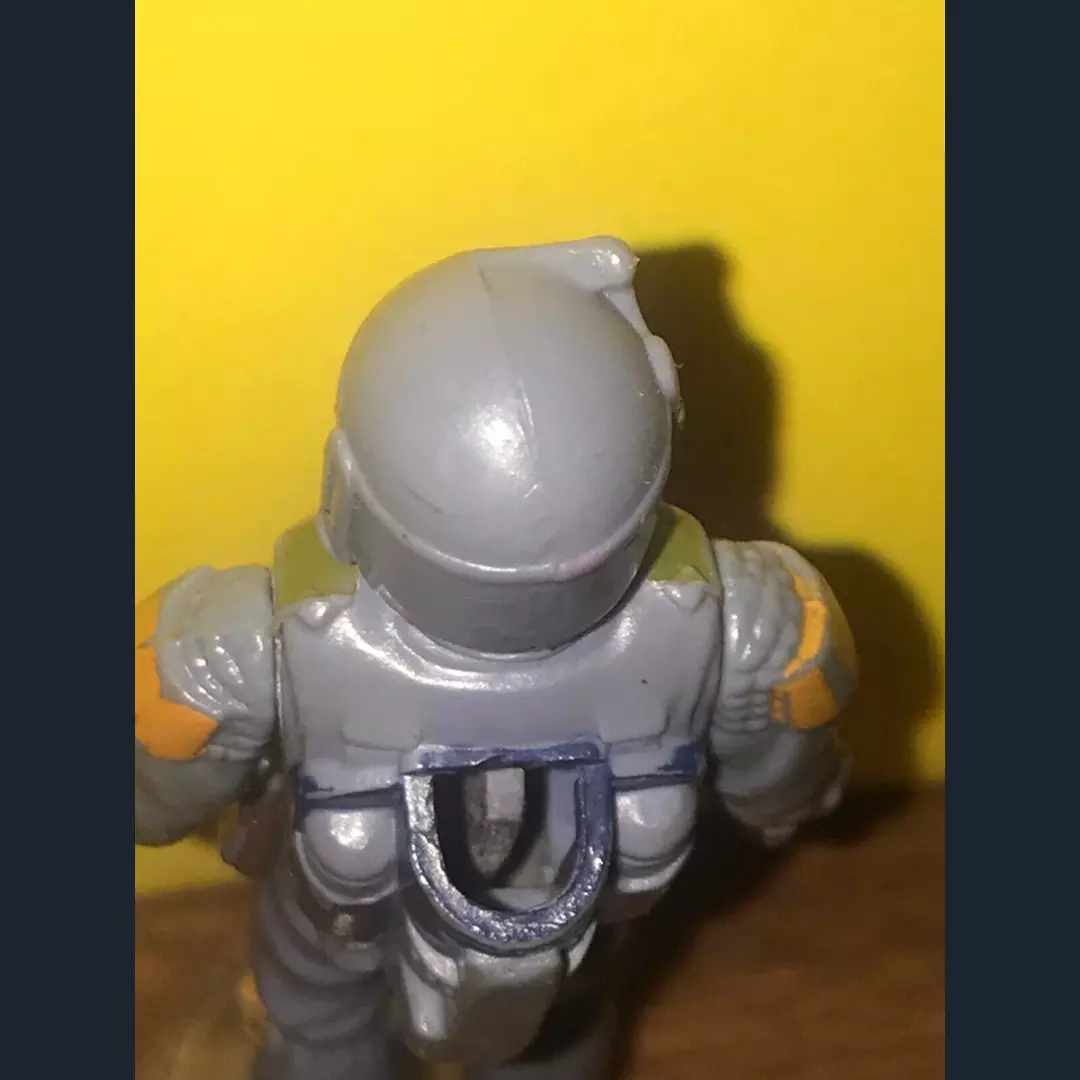
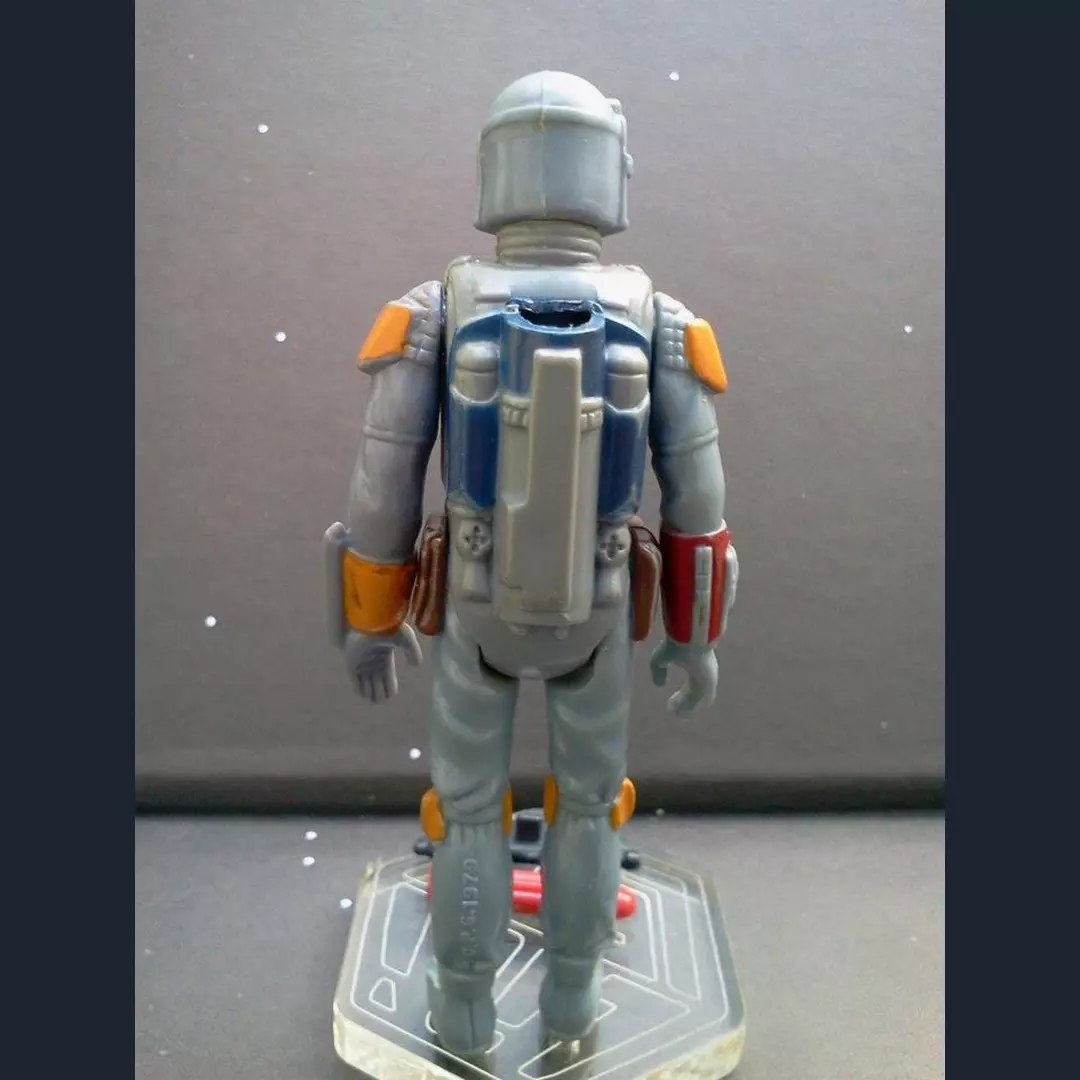
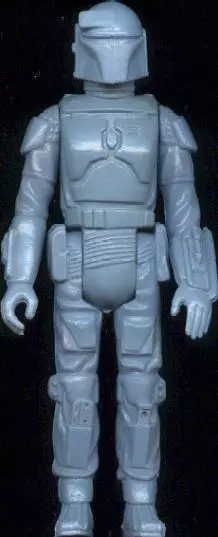
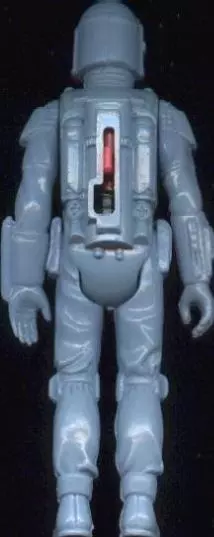
Este prototipo se conoce como la variedad “L-Slot” en la que la ranura en su parte posterior tiene la forma de una L al revés. Se observa que el color azulado del plástico utilizado en esta figura es distinto al de la figura de producción de Boba Fett, que es un poco más gris. Este prototipo no tiene fecha de estampado. Se puede ver que sólo hay unas pocas bobinas en el resorte, lo que da como resultado un misil que no dispararía muy lejos.
Aunque esta es la versión más frecuente de este prototipo, se realizó otra etapa de prototipado para crear una figura que no se disparara accidentalmente. Esta versión es la que tiene forma de J, y hacía que el mecanismo fuera más seguro, pero parte de la mochila podía romperse, causando un fragmento de plástico que presentaba un peligro “agudo”. Fue este afilado lo que finalmente condenó la función de disparo.
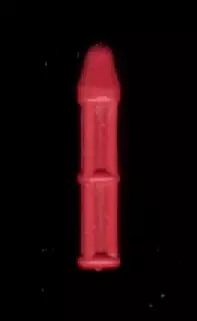
El cohete que acompaña a este estilo de figura tiene 4 costillas que corren a lo largo, pero el diseño se cambió a 8 costillas cuando la figura se cambió a la versión con ranura en J. El diseño del misil de 8 costillas se llevó a cabo en la figura de acción de producción.
Finales 1978 – Séptimo Prototipo
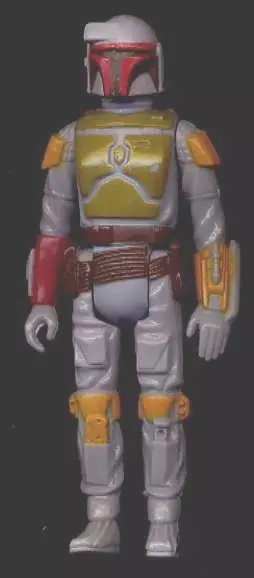
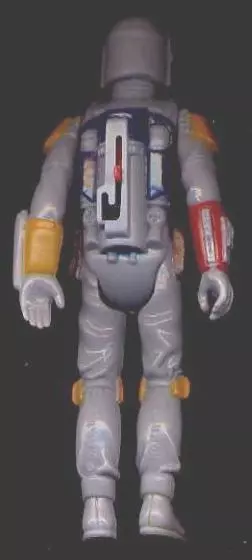
Como ya se mencionó, este prototipo corresponde a la versión con ranura en J (J-Slot). La primera vez que se supo de esta versión fue por un ex técnico de pruebas de Kenner que publicó en la edición número 20 correspondiente a noviembre de 1994 en la revista “Action Figure Digest”. Allí describió lo que representaba esta iteración de diseño final y por qué finalmente no cumplió con los requisitos de prueba de Kenner. El mecanismo fue aplastado por el departamento legal de Kenner en el último minuto debido a los problemas que presentó.
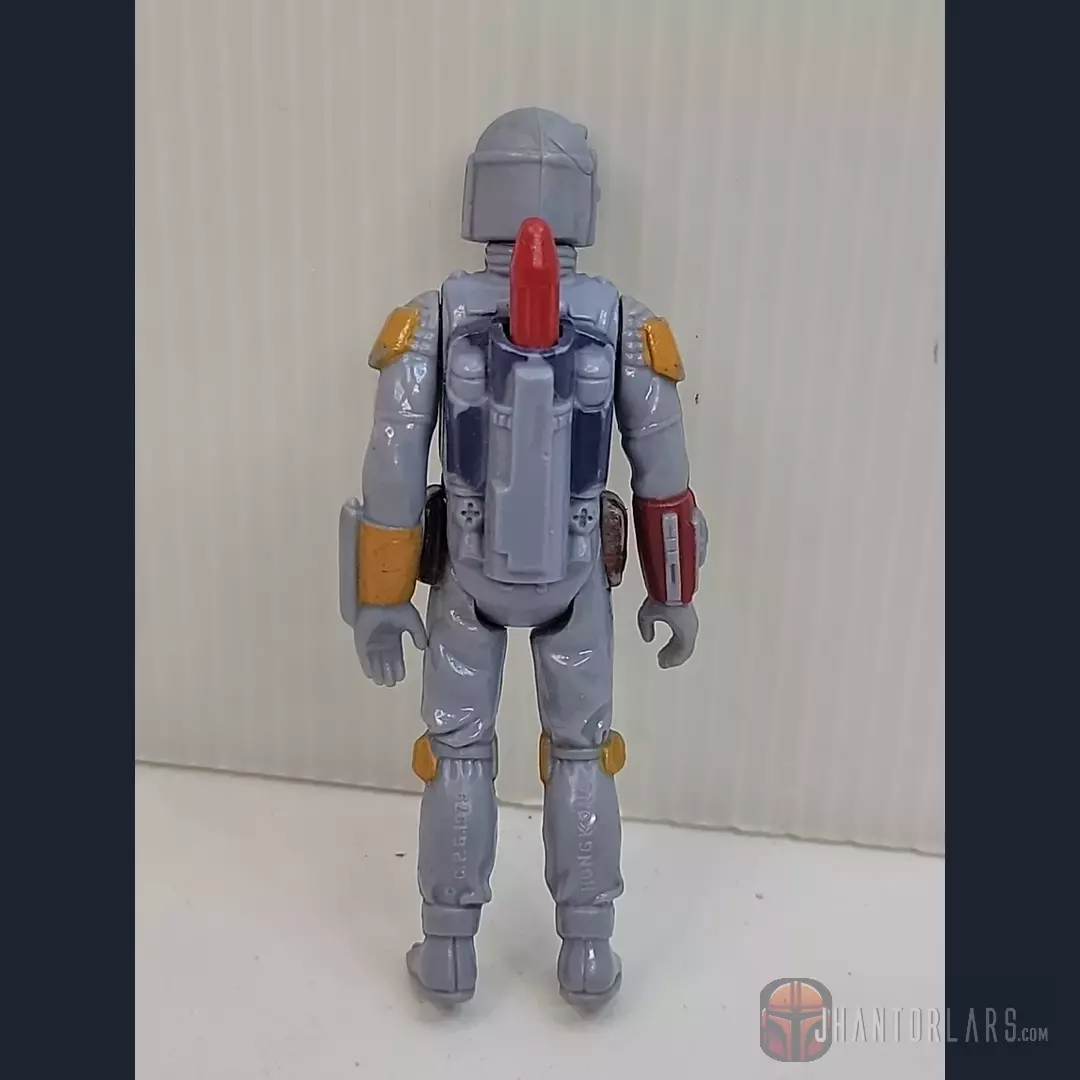
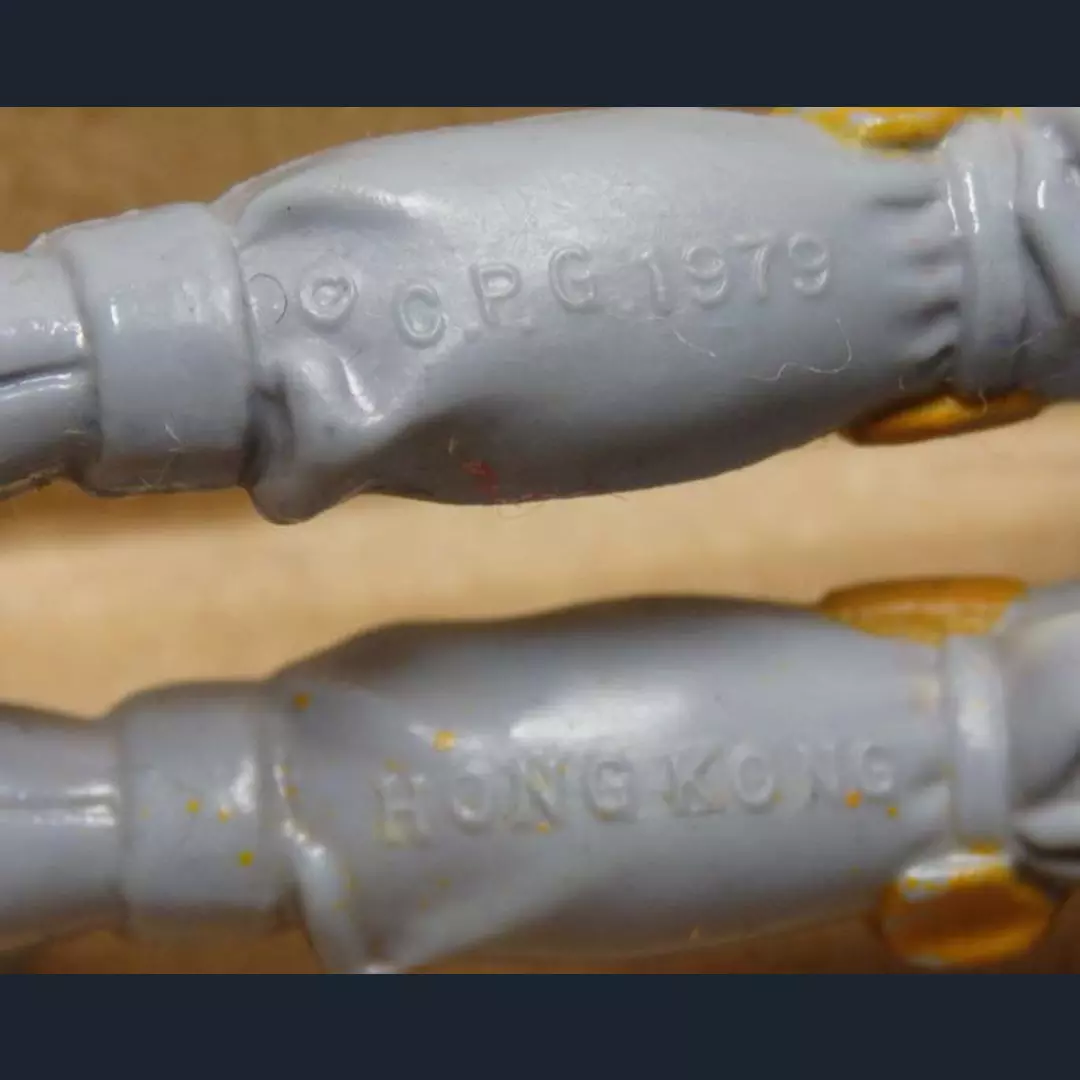
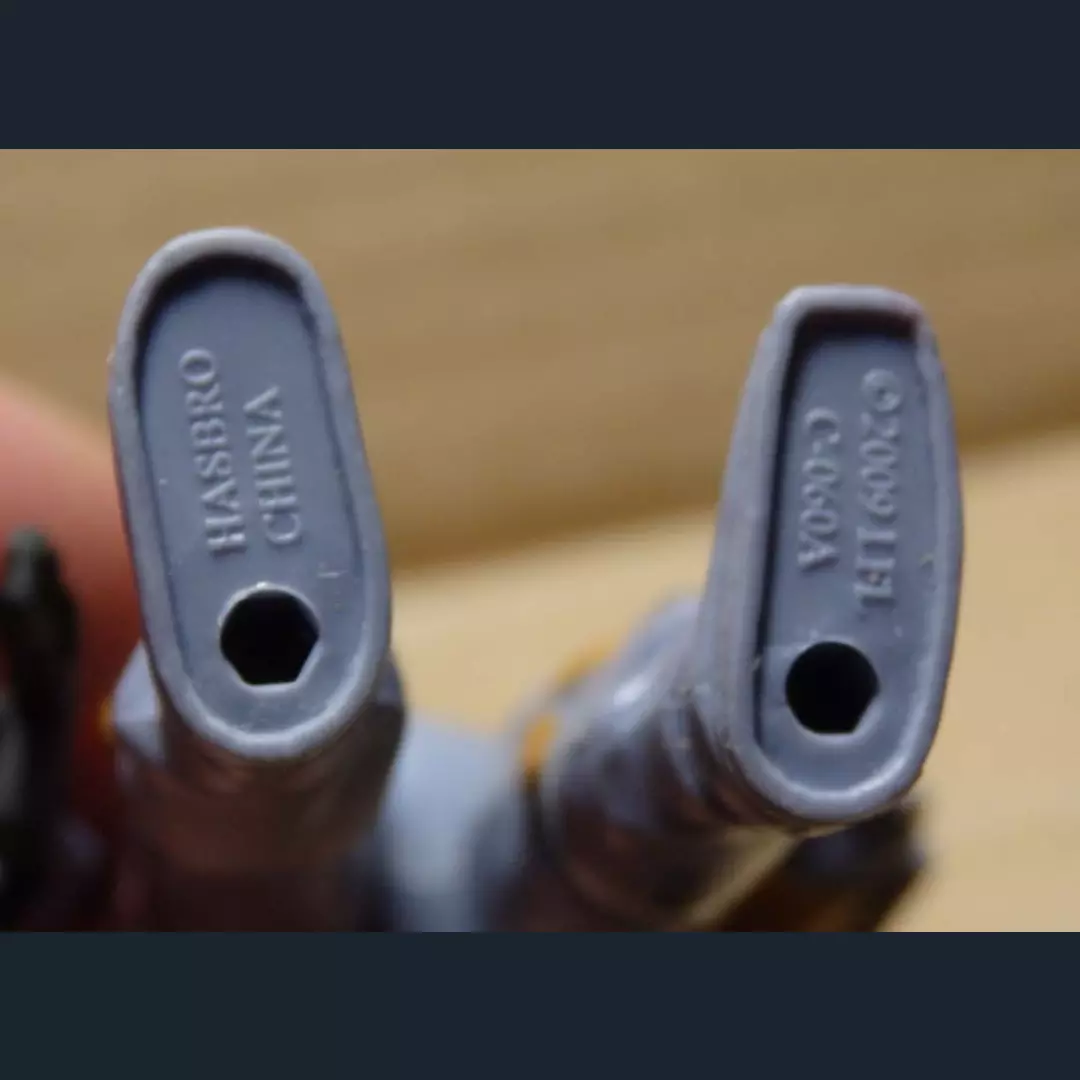
Antes de este tiempo, la única versión del escurridizo prototipo conocida por los coleccionistas era la versión del 5too Prototipo de L-Slot. A diferencia de esta versión, este último, tiene calidad de producción, está pintado de fábrica y tiene la información de derechos de autor estampada en las patas. Otro ejemplo de este tipo de figura se encontró en un prototipo del Mail-Away asociado.
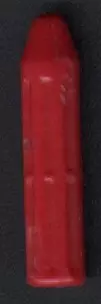
El cohete de 8 costillas que acompaña a este estilo de figura es casi idéntico al que posteriormente se soldó sónicamente a las figuras de acción de producción. El misil fue modificado para la producción con la adición de una pequeña aleta a lo largo del borde inferior que le permitió bloquearse mecánicamente en la mochila durante la fabricación.
A diferencia de la versión anterior, el mecanismo de disparo de esta figura tenía una ranura en forma de “J” para que el lanzador pudiera bloquearse en su lugar. Esto fue diseñado para evitar que los niños dispararan accidentalmente el cohete porque requería que tiraran y sostuvieran el mecanismo antes de disparar. Sin embargo, el cambio de ranura en sí mismo se convirtió en un problema porque el pequeño vástago en el centro podría romperse y crear un peligro “afilado”. Un pequeño trozo de plástico afilado como ese podría entrar fácilmente en un ojo o arañar la piel. La siguiente imagen es un ejemplo de un espécimen de prueba en el que el tallo casi se rompió durante la prueba de esfuerzo y, de hecho, muchos de las copias prototipos que quedan hoy en día son productos de esa prueba con tallos estresados o rotos.
Finales 1978 – Prototipo Mail-Away
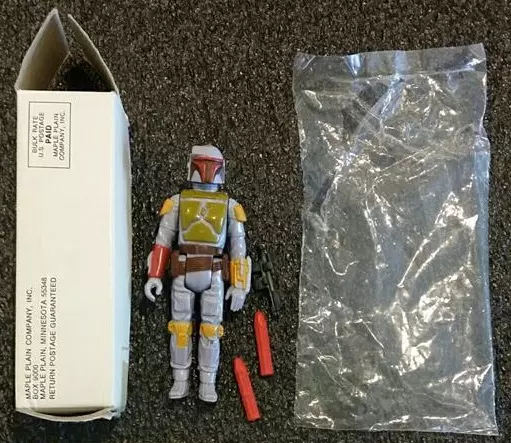
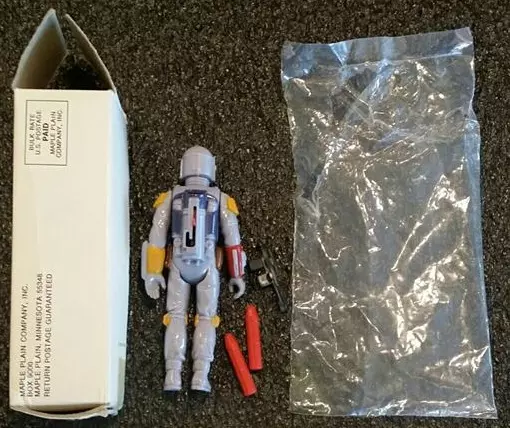
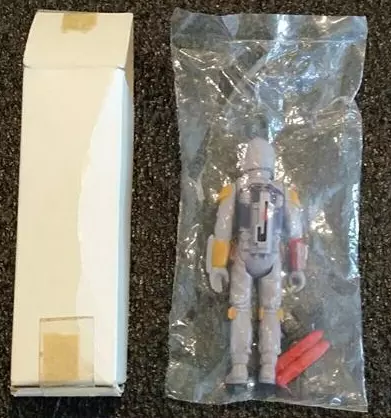
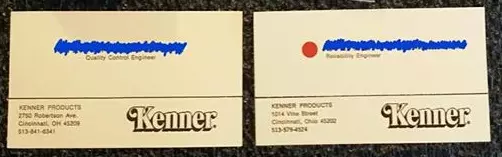
La figura asociada al prototipo de Mail-Away estuvo en posesión de un antiguo ingeniero de Kenner Quality desde que salió de la fábrica en 1978. El envío iba a tener 2 misiles y un blaster. Este ingeniero trabajó en los cargos de Ingeniero de Control de Calidad e Ingeniero de Confiabilidad.
Diciembre 1978 – Fin del Rocket Fett
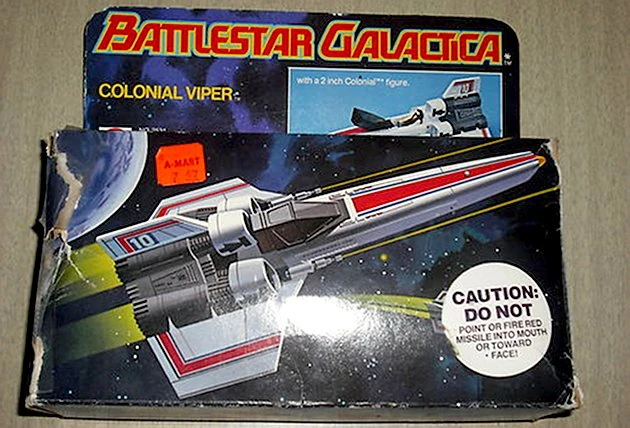
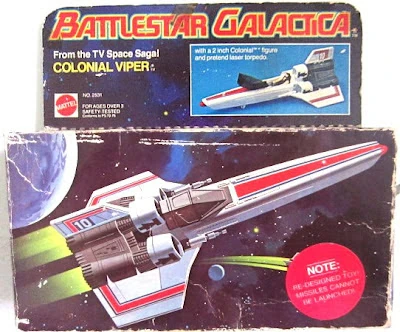
Un juguete Mattel de la serie de figuras de Battlestar Galáctica, uno de los vehículos, el Colonial Viper, tenía un mecanismo de disparo de misiles en su parte frontal. Este misil que se disparaba tuvo varios incidentes, pero sin duda el más grave fue el que ocurrió con el pequeño Robert Jeffrey quien el 31 de diciembre de 1978, en Atlanta, murió luego de haberse ahogado accidentalmente con un cohete de 1 ¼ pulgadas que se atoró en su garganta durante varios minutos, lo que le impidió que llegara oxígeno a su cerebro y lo que llevó al trágico desenlace. Los padres del niño demandaron a Mattel por 14 millones de dólares. Se reportaron heridas en al menos 10 niños más, lo que llevó a Mattel, en enero de 1979, a retirar todos los juguetes del Colonial Viper que aún estaban en venta, así como también los Cylon Rider e iniciar un proceso de devolución de las 2 millones de unidades que ya se habían vendido.
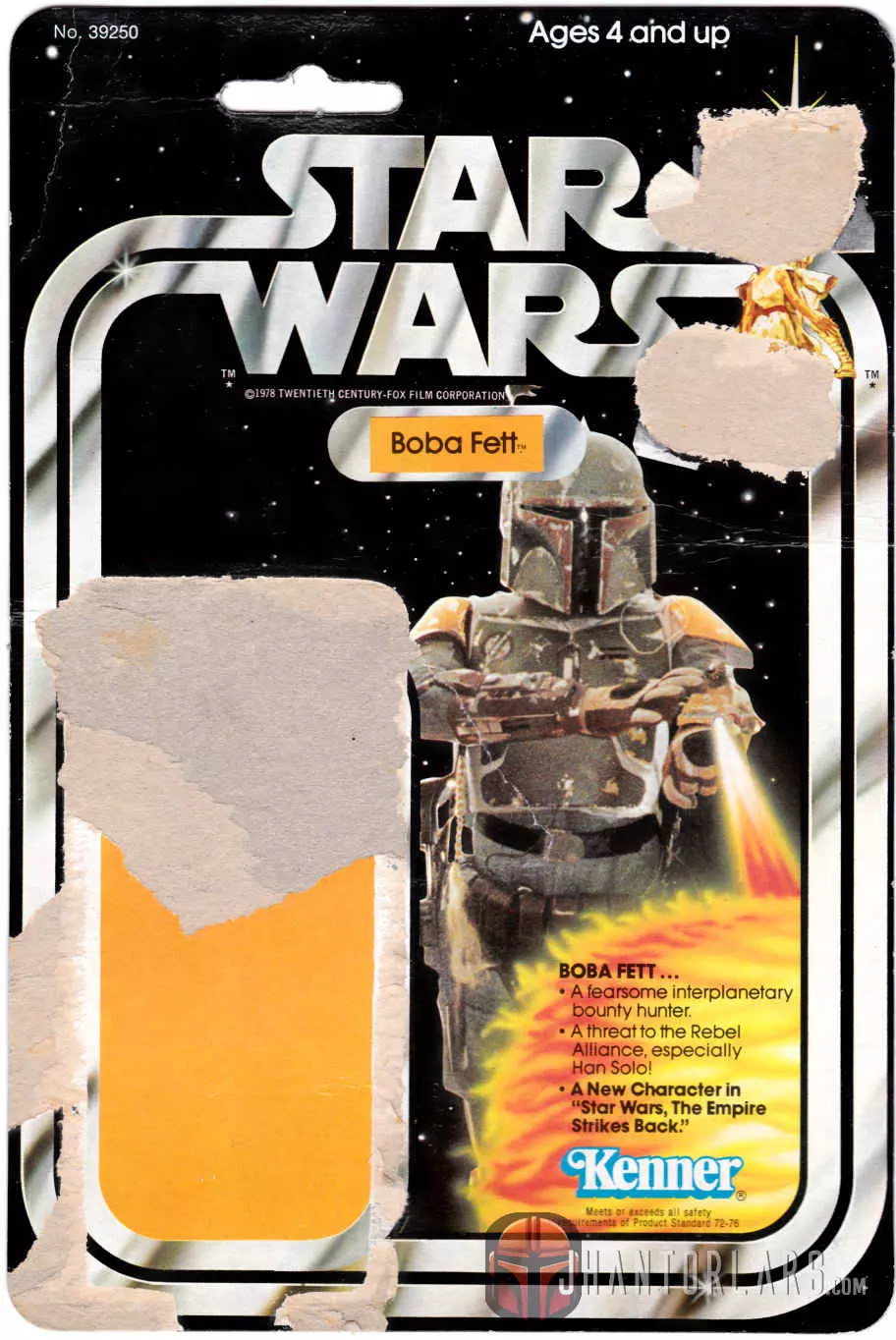
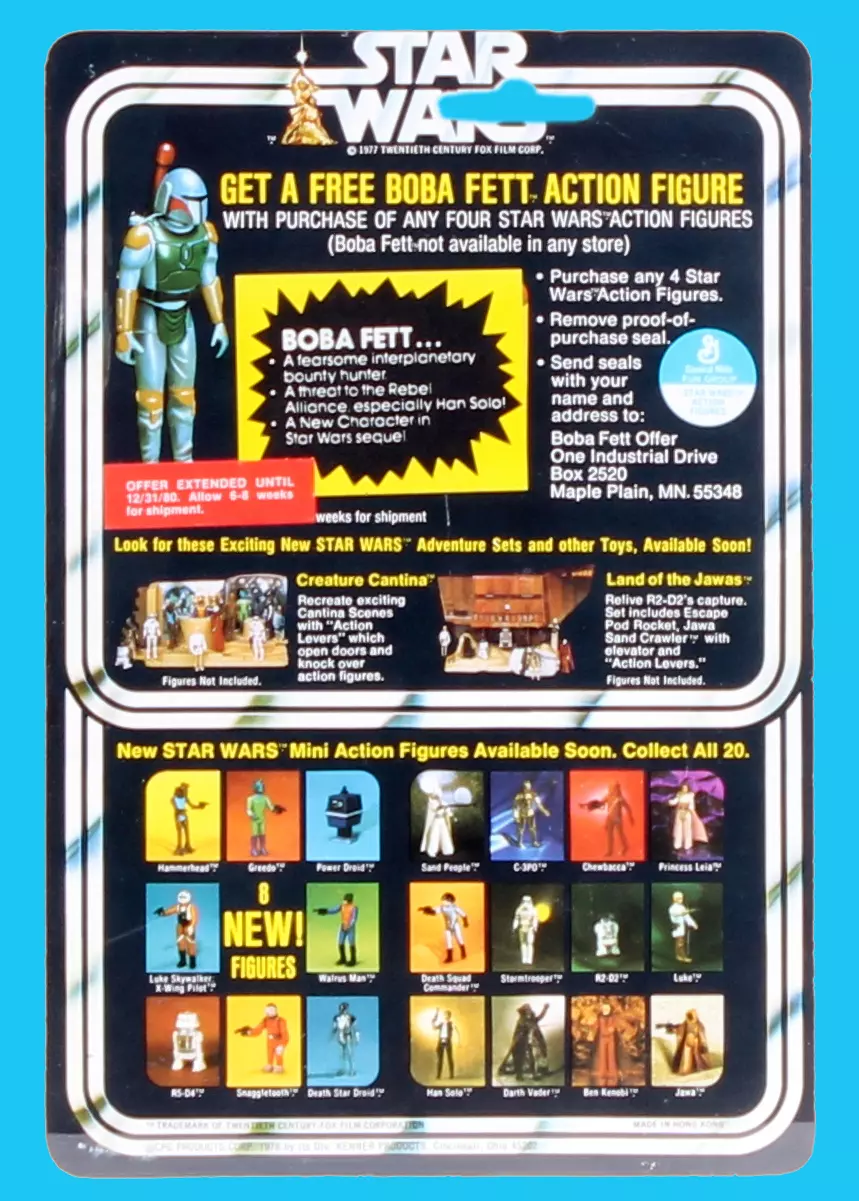
En paralelo a esta trágica historia, en Kenner se estaban llevando a cabo pruebas de la nueva figura de acción promocionada ya en los cartones 21-back de la época, y no con buenos resultados. Por este motivo, antes de saber de los problemas de Mattel y las nuevas normas legales, los jugueteros decidieron eliminar el mecanismo de disparo desde la mochila de Boba Fett, y dejar fijo el proyectil a la espalda del personaje. Con esto, cambiaron su promoción, tapando en los cartones 20D y 20F la parte donde se detallaba dicha funcionalidad.
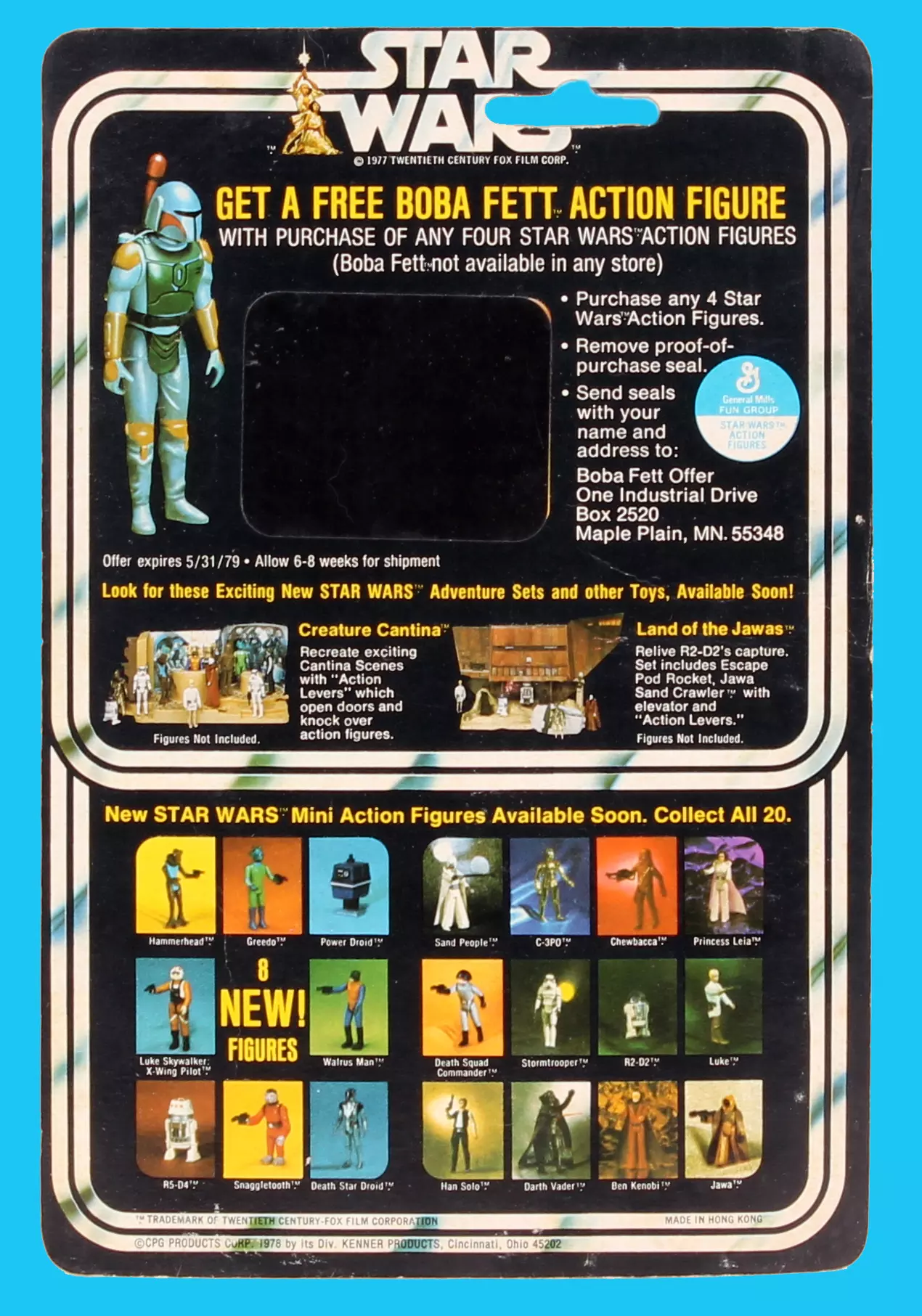
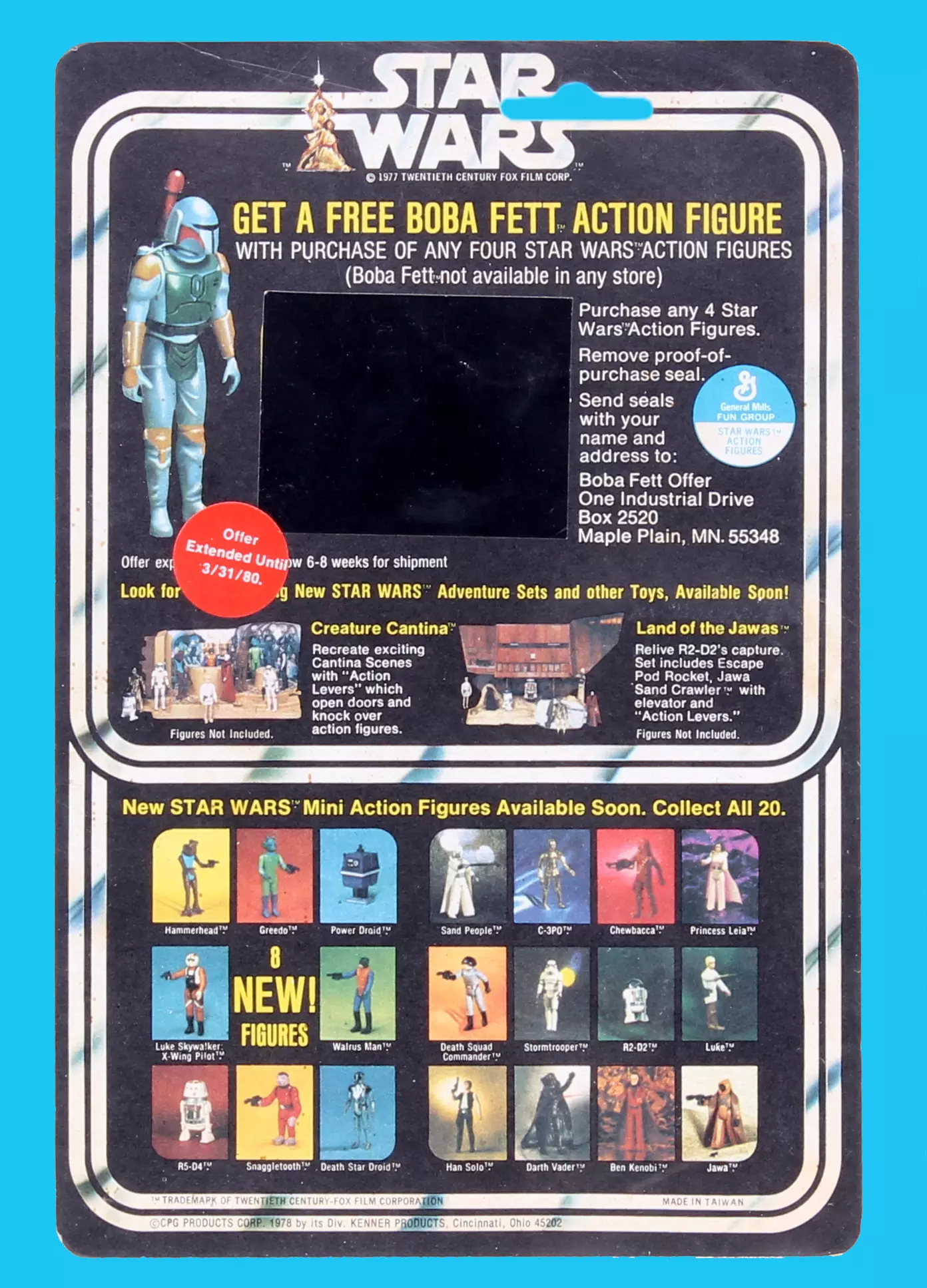
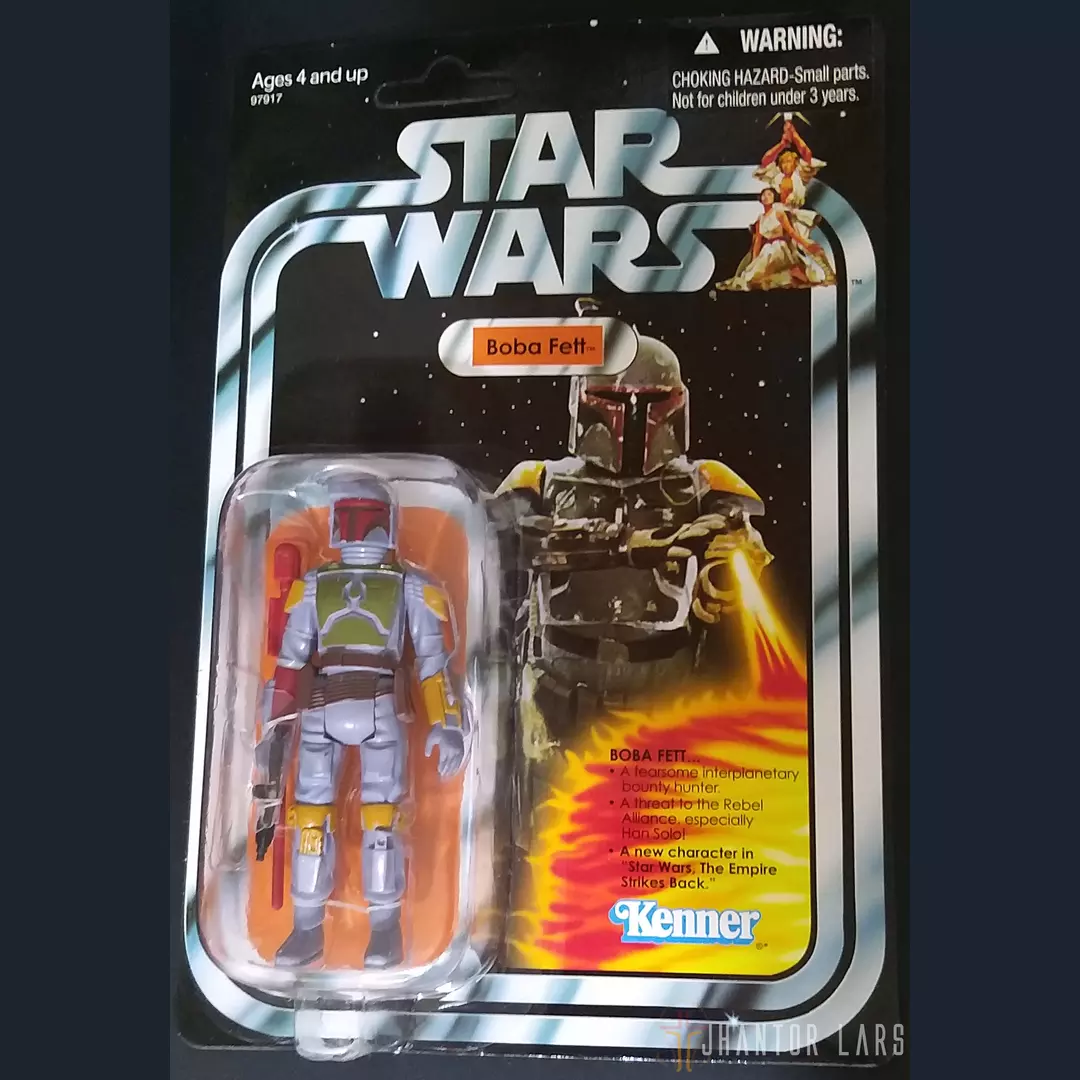
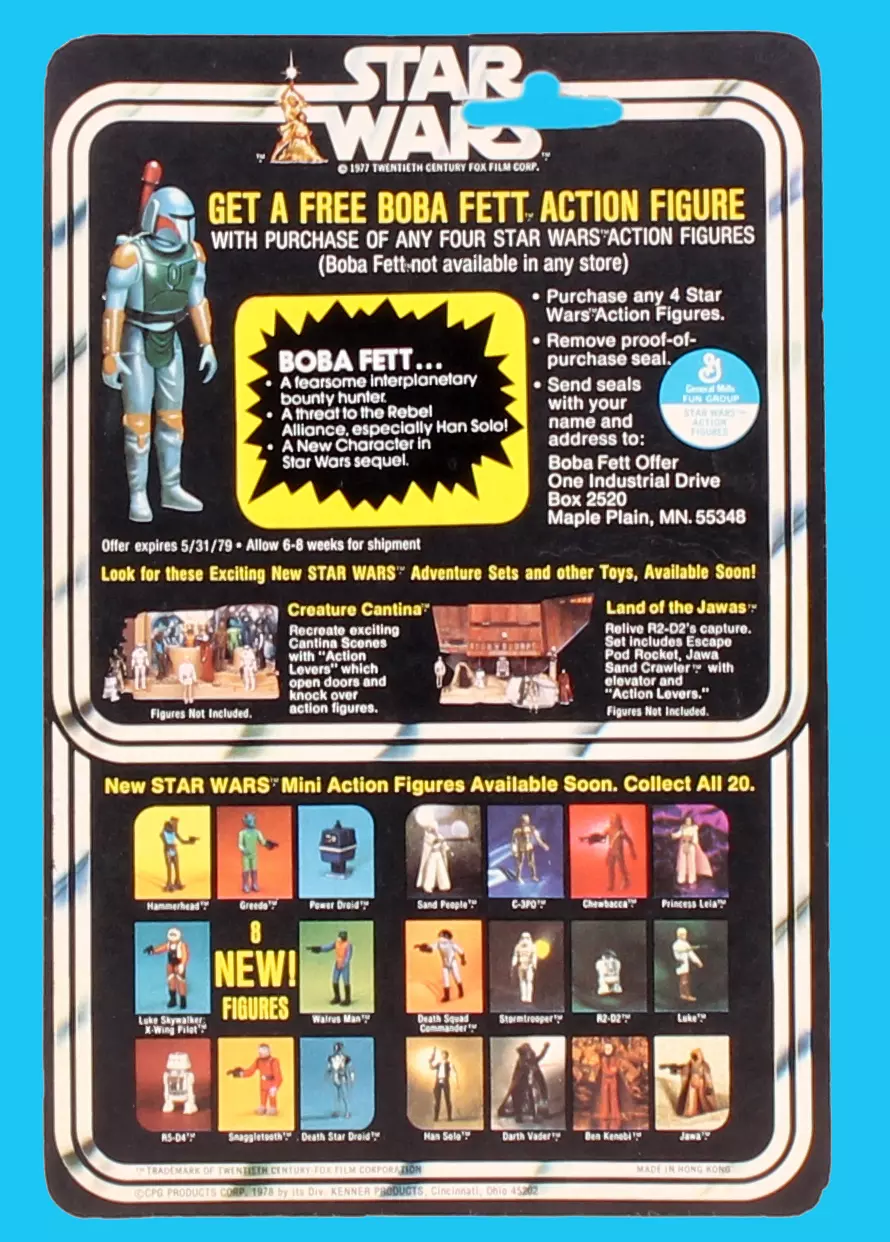
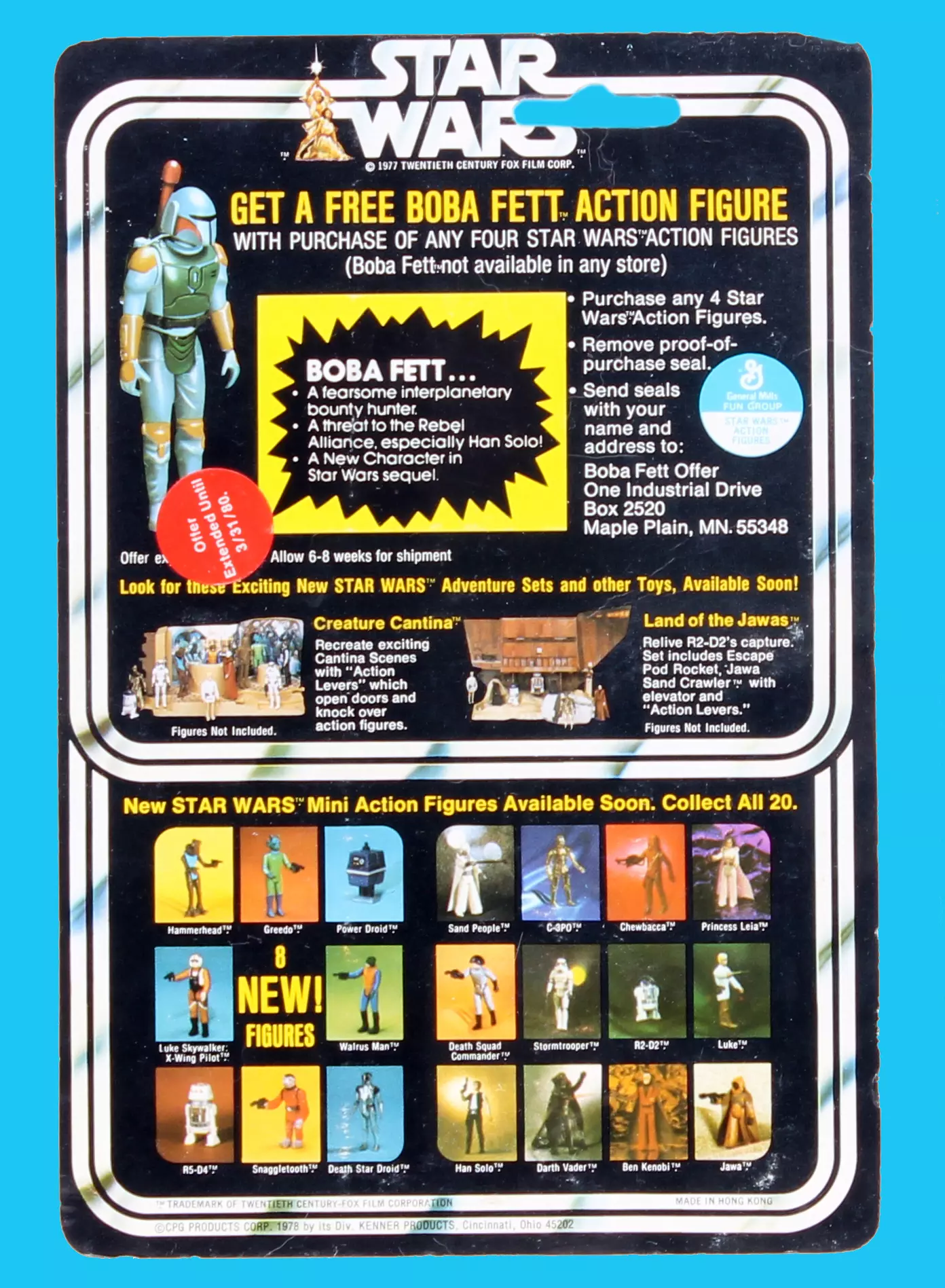
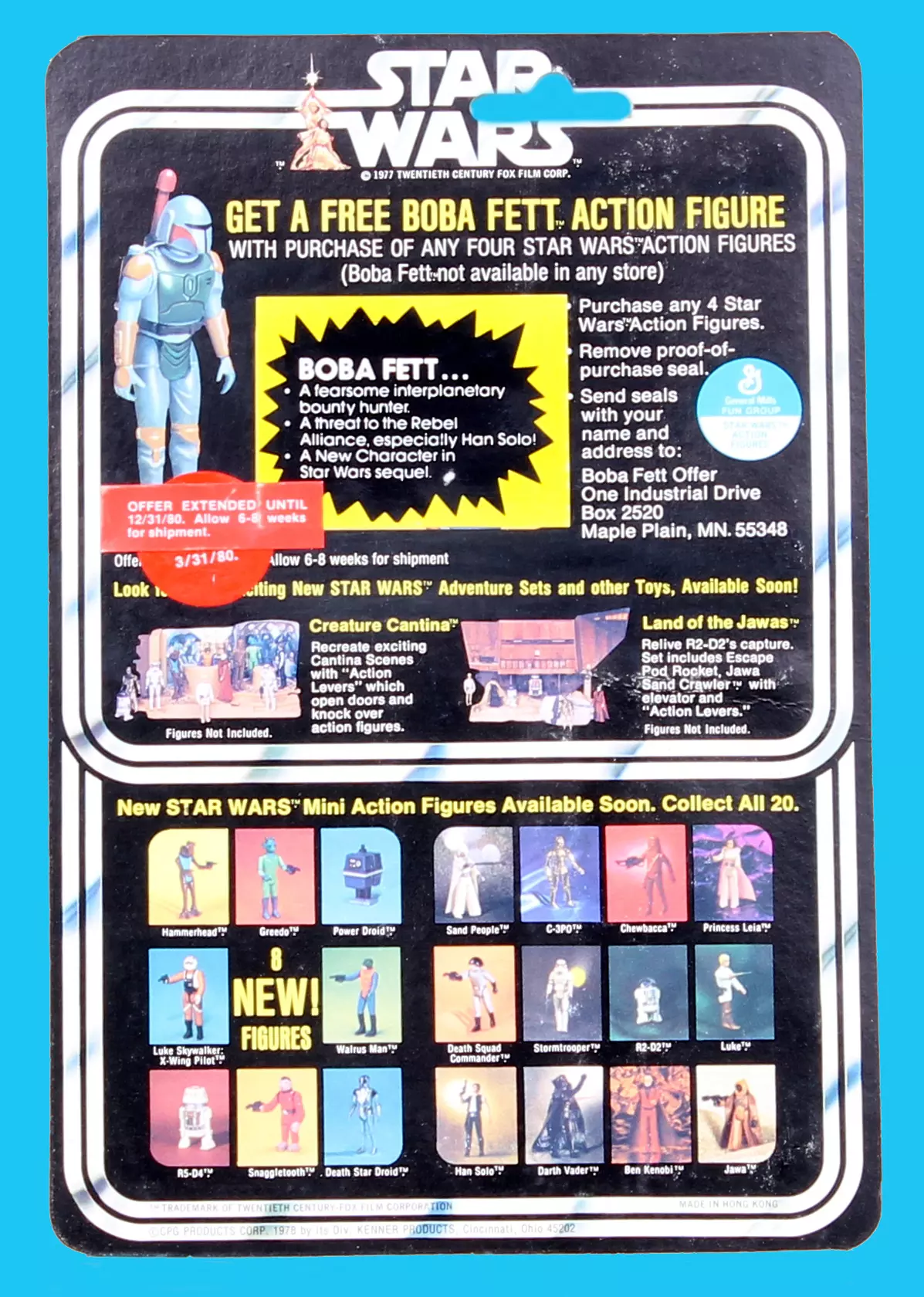
Luego, en los cartones 20E, 20G, 20H, 20I y 20J, en la parte donde antes se promocionaba el lanzamiento del proyectil se agregó una presentación del personaje donde se decía:
- A fearsome interplanetary bounty hunter
- A threat to the Rebel Alliance, especially Han Solo!
- A New Character in Star Wars sequel
Enero 1979 – Feria del Juguete New York
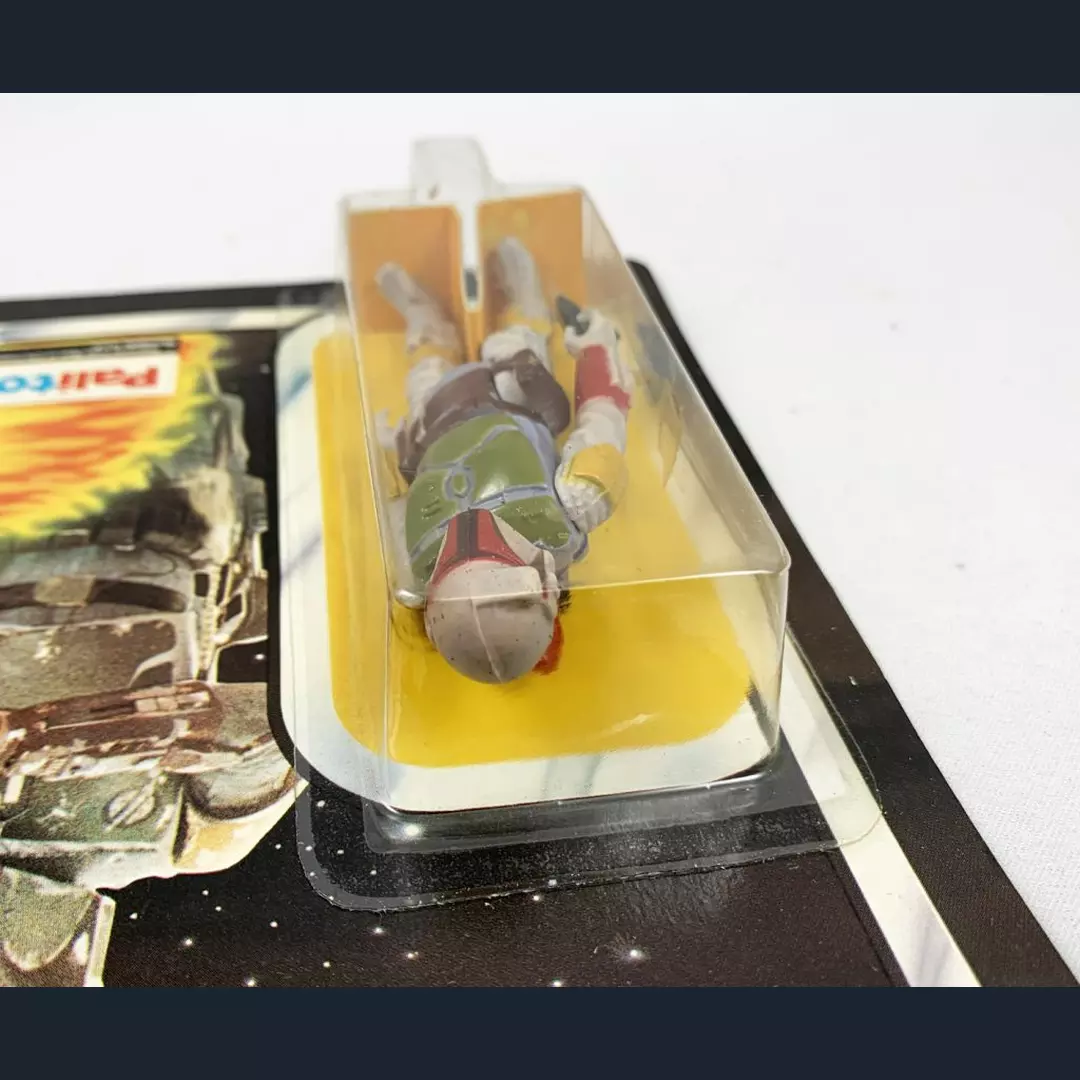
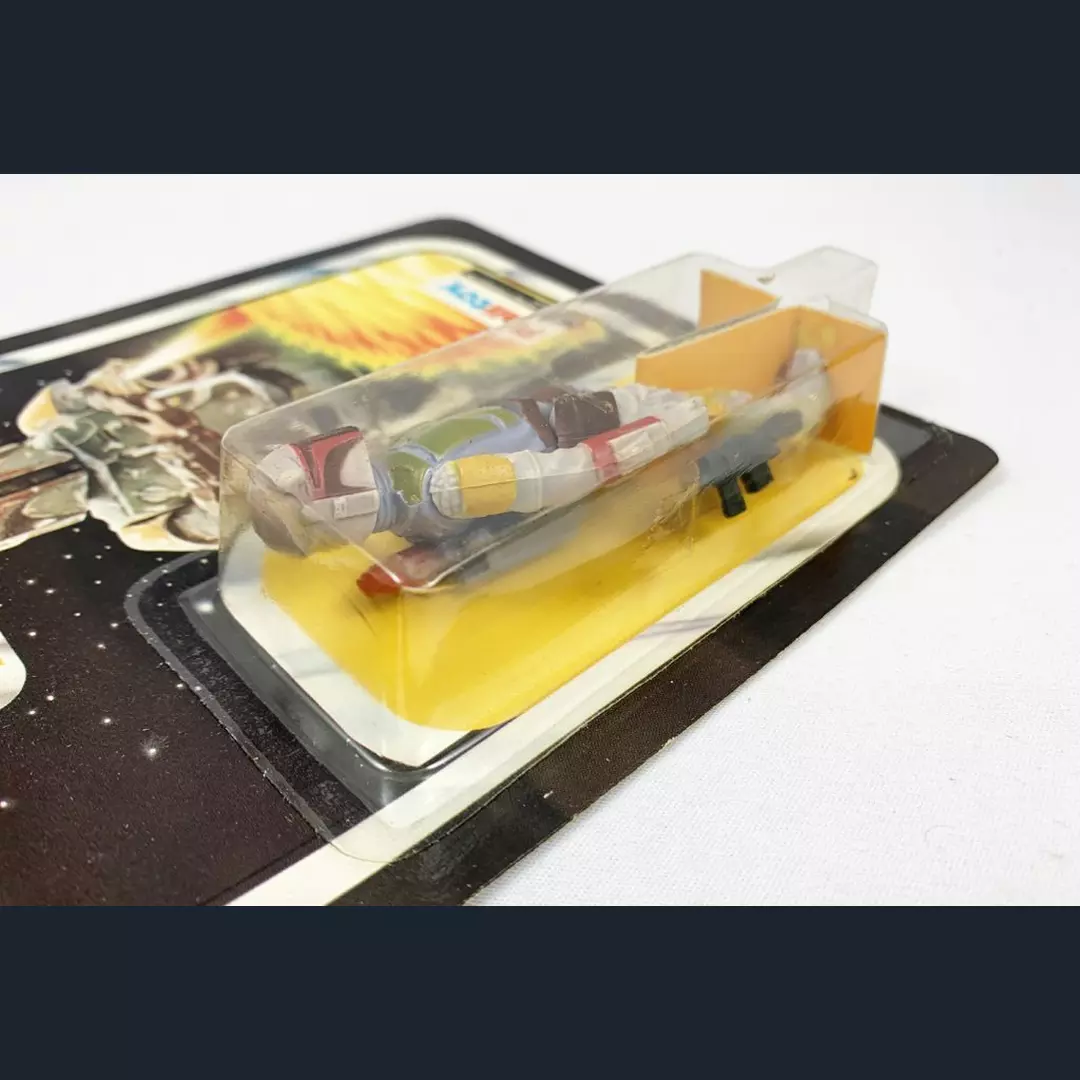
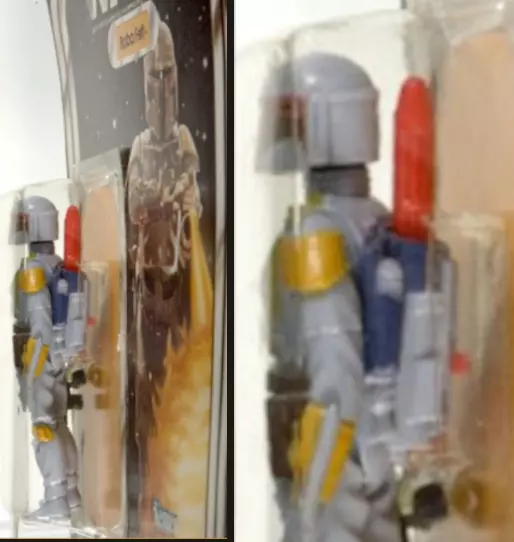
El prototipo expuesto en la fotografía es la que se presentó en la Feria del Juguete de 1979 dentro de un cartón, siendo probablemente la única vez que la figura se mostró al público, aunque, en ese momento, la mochila de disparo ya no era una característica de venta y estaba relativamente oculta en el empaque. Las personas que pasaban por la sala de exposición no se habrían dado cuenta de que la figura de la tarjeta tenía intacto el escurridizo mecanismo de disparo si tan solo hubieran podido mirarla desde un lado.
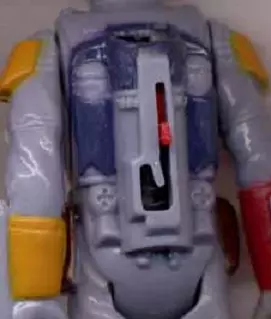
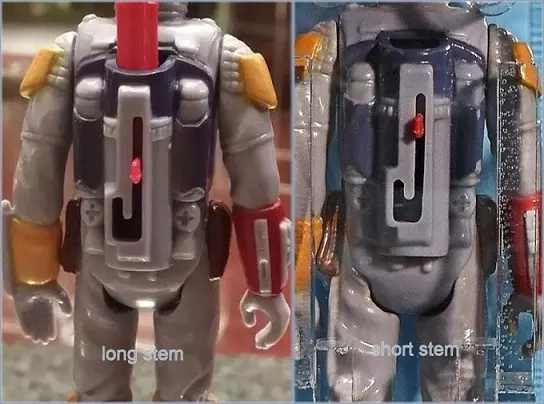
Una observación interesante que salió a la luz sobre este prototipo fue el hecho de que se pueden encontrar 2 tallos de diferentes longitudes en el diseño de la ranura en J . Debido a la apariencia de las otras características moldeadas en las mochilas, podemos ver que se utilizaron al menos 2 moldes diferentes para crear estos prototipos.
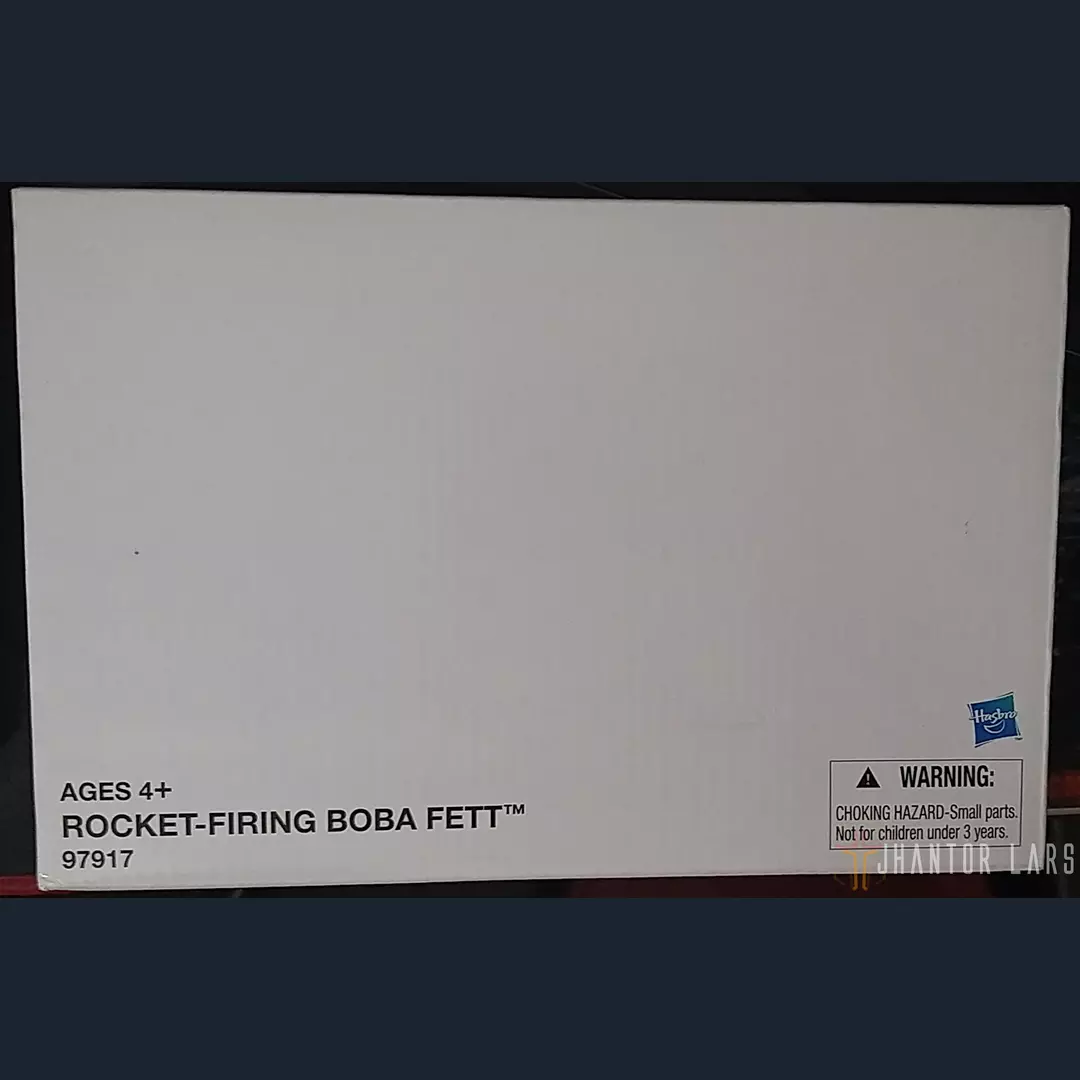
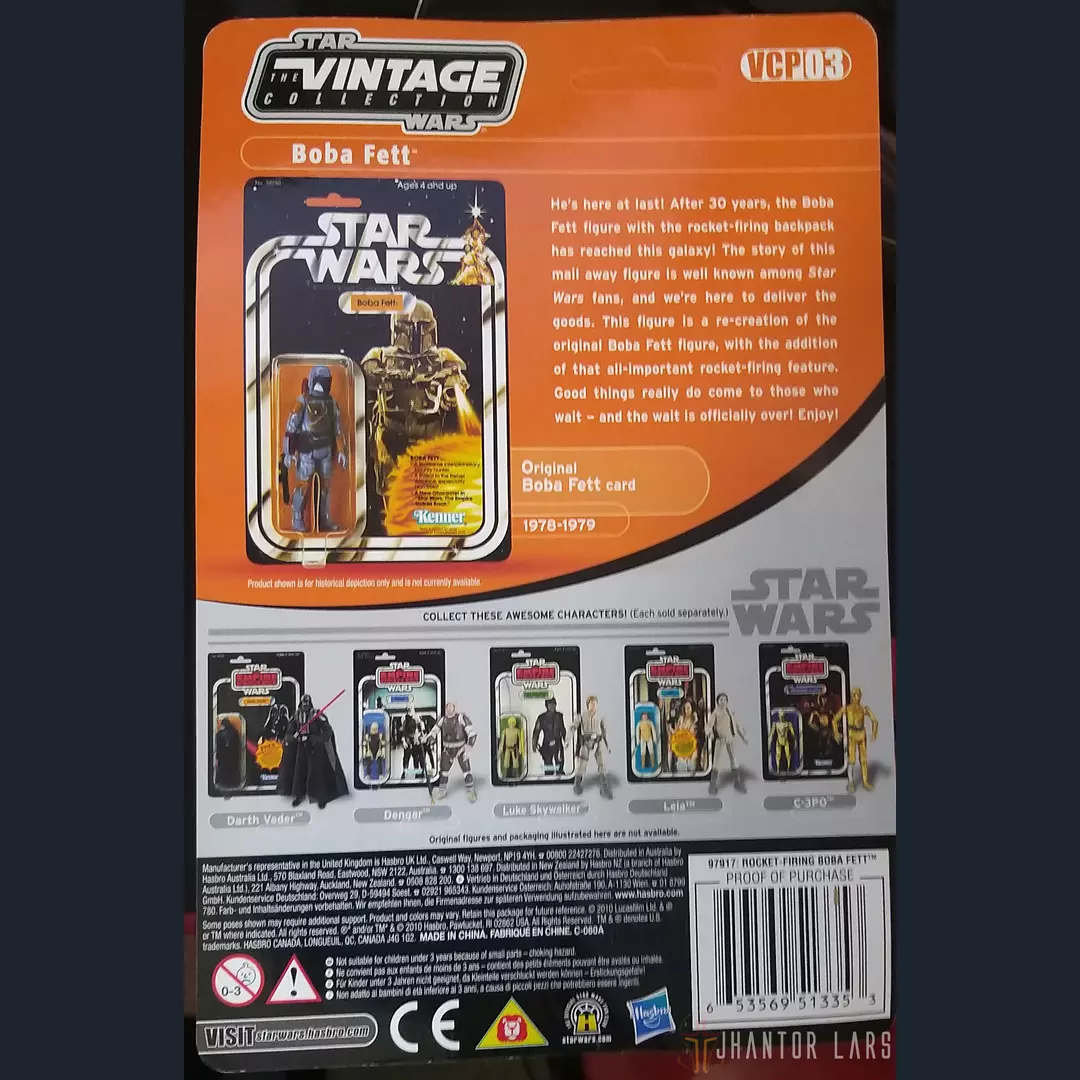
Nunca se comercializó ni se produjo ninguna figura del Rocket Firing Boba Fett, mucho menos en cartón / blister, por lo que todos los ejemplares vienen en estado “loose”, sueltos, y son prototipos, no versiones productivas o finales. Sin embargo, se conoce el cartón de prueba en el que iba a ser empacado, que era muy similar al que se distribuyó la figura definitiva, pero con la advertencia de “no lanzar proyectiles hacia la cara” en la parte superior derecha del cartón, además de no tener el texto en la bola de fuego. Se debe notar que el nivel de detalle del fuego en el cartón definitivo es mucho mayor.
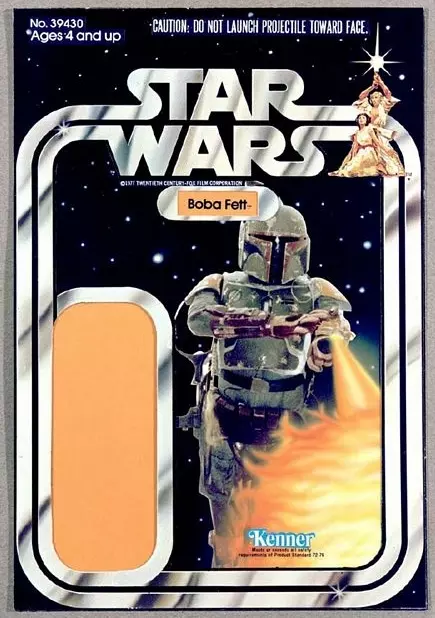
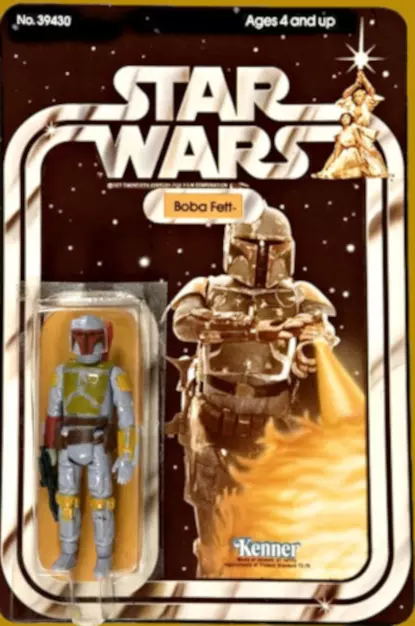
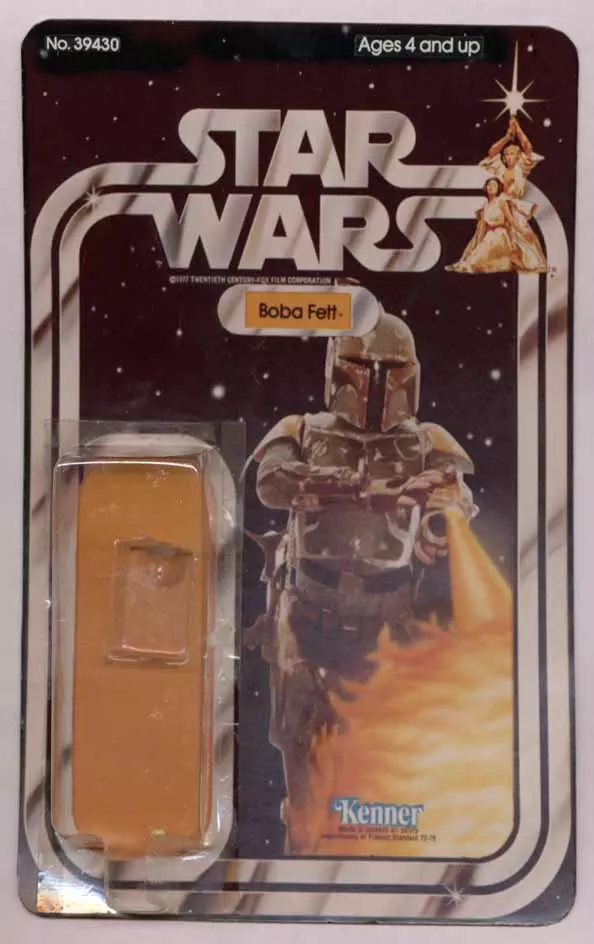
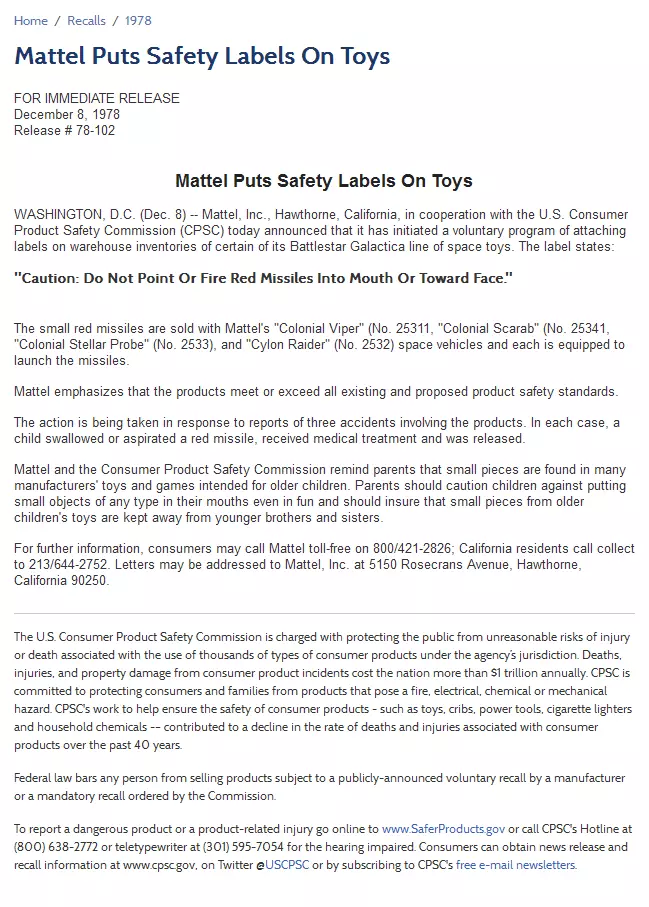
El diseño de este texto de advertencia calza con la aparición el 8 de diciembre de 1978 de parte de la Comisión de Seguridad de Productos del Consumidor, un anuncio que mencionaba que Mattel agregaría calcomanías de advertencia para los nuevos y existentes juguetes que tengan misiles lanzados por resorte. Se pensaba que con esta medida se salvaba la situación de peligro, pero luego vendría la muerte del pequeño Robert, con lo que se retiraron los juguetes de Mattel. En paralelo, Kenner ya había tomado su decisión de lanzar este juguete con lanza cohetes. Para el cartón expuesto en la Feria del Juguete de New York de 1979, ya no estaba este texto y se aprecia como si tuviera un borrado.
Después Enero 1979 – Prototipo Final (Escultura Original en Cera)
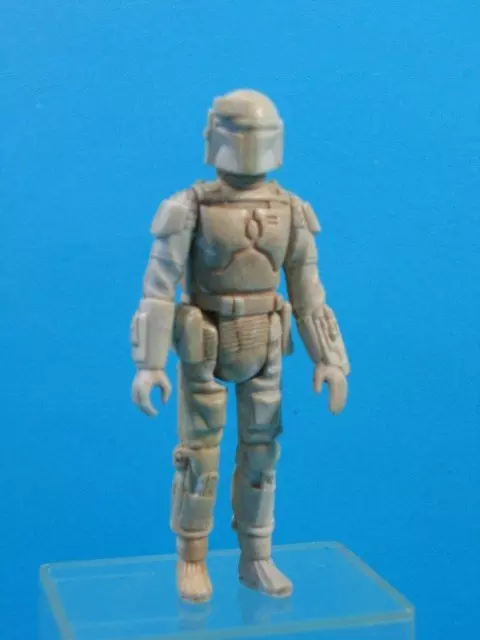
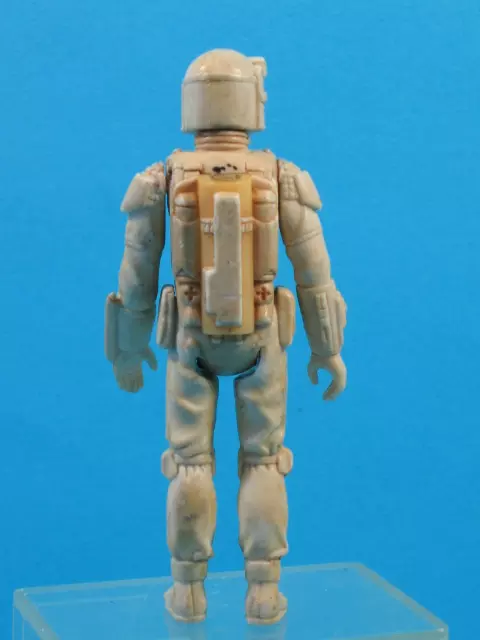
Después de la etapa conceptual final, la figura fue desarrollada para producción y esculpida en su forma definitiva. Ese diseño de la mochila pareciera ser hecho por separado, se puede ver cómo la mochila en particular se destaca de la cera blanquecina a su alrededor. Los diseños de los brazos, las piernas y la cabeza siguen a los prototipos anteriores, sin embargo hay cambios respecto a la forma pintada y esculpida, así como en otras partes para rebajar la complejidad, como que localizador se esculpa en la cabeza, o que las características pintadas de las botas, ahora serían parte del esculpido.
1979 – Versión Final
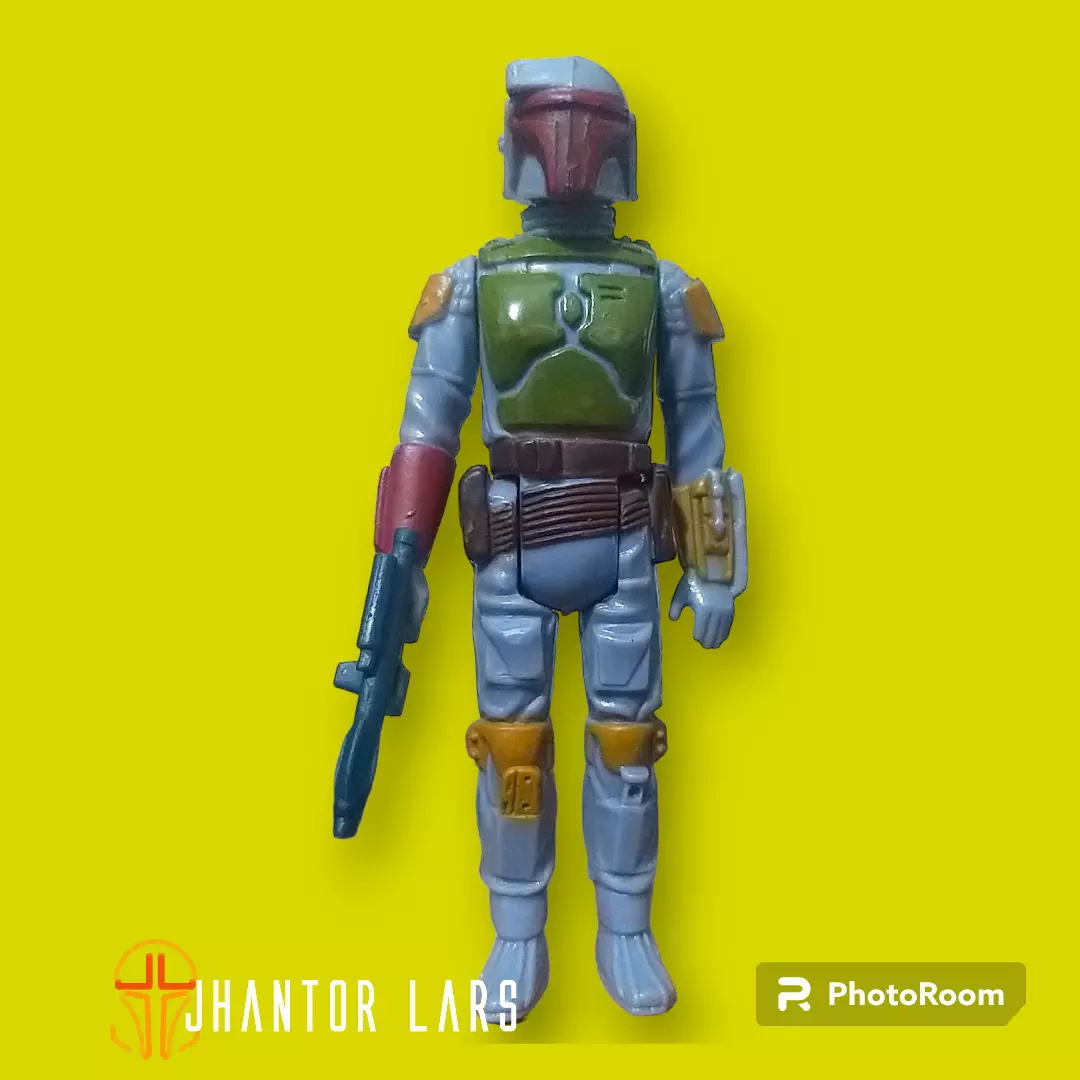
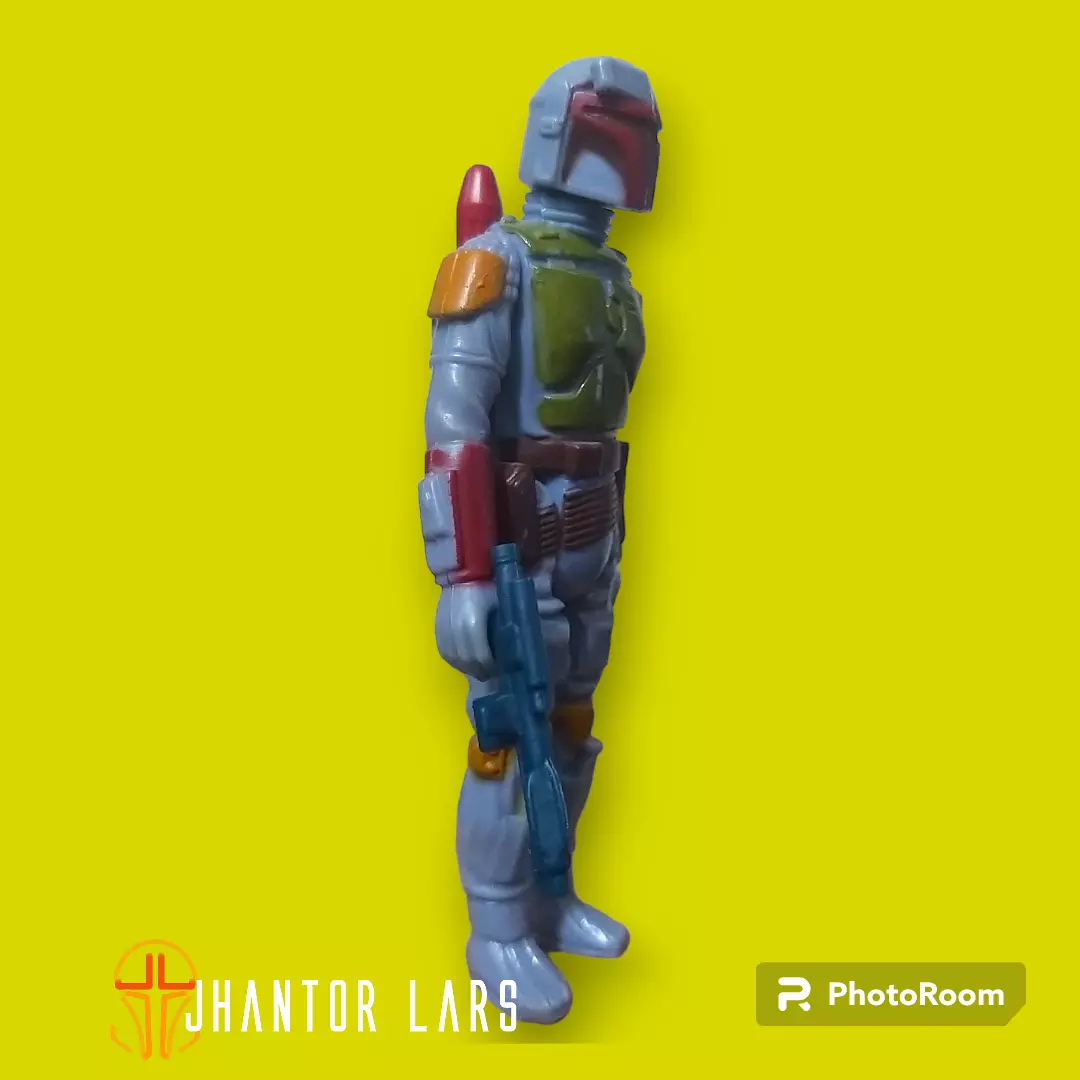
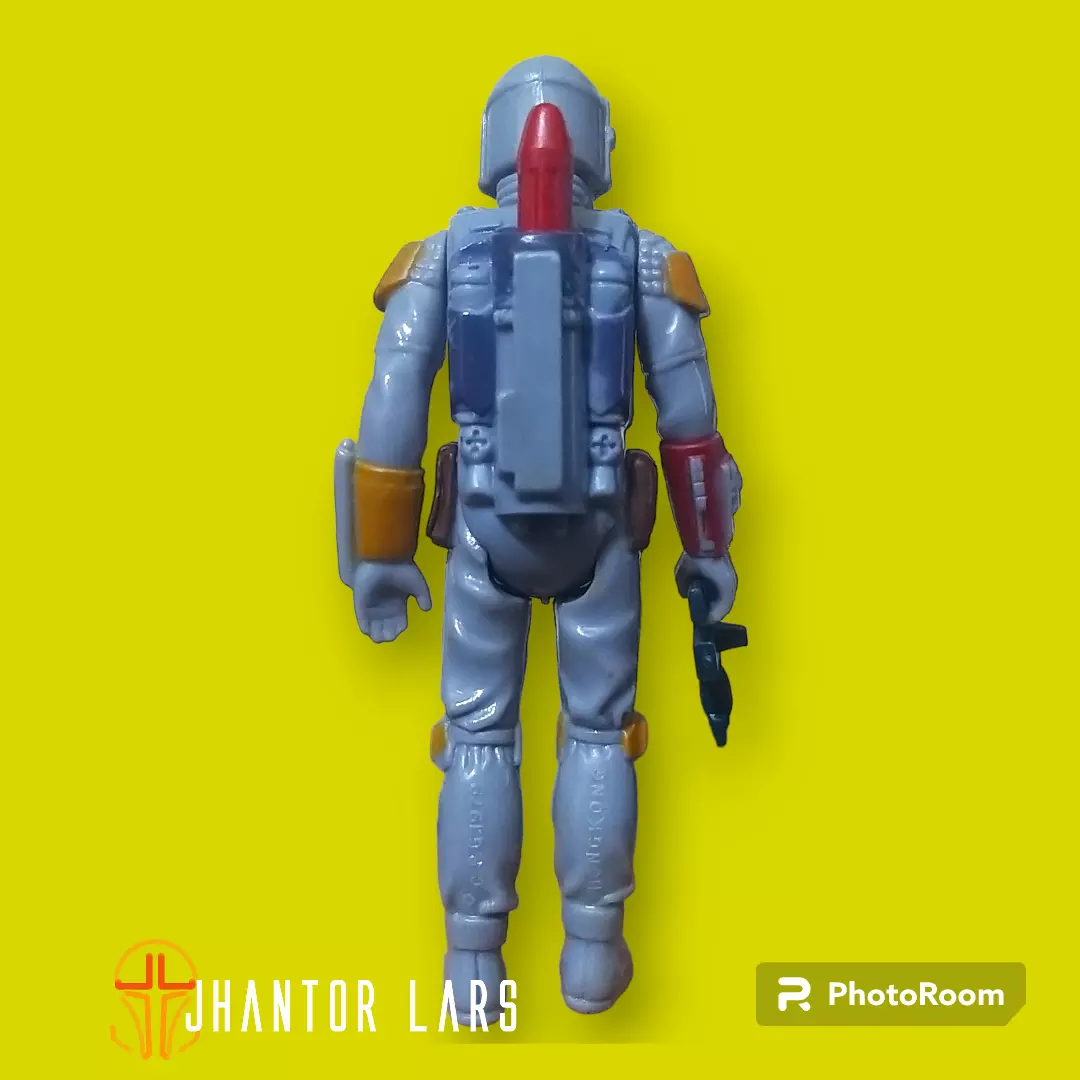
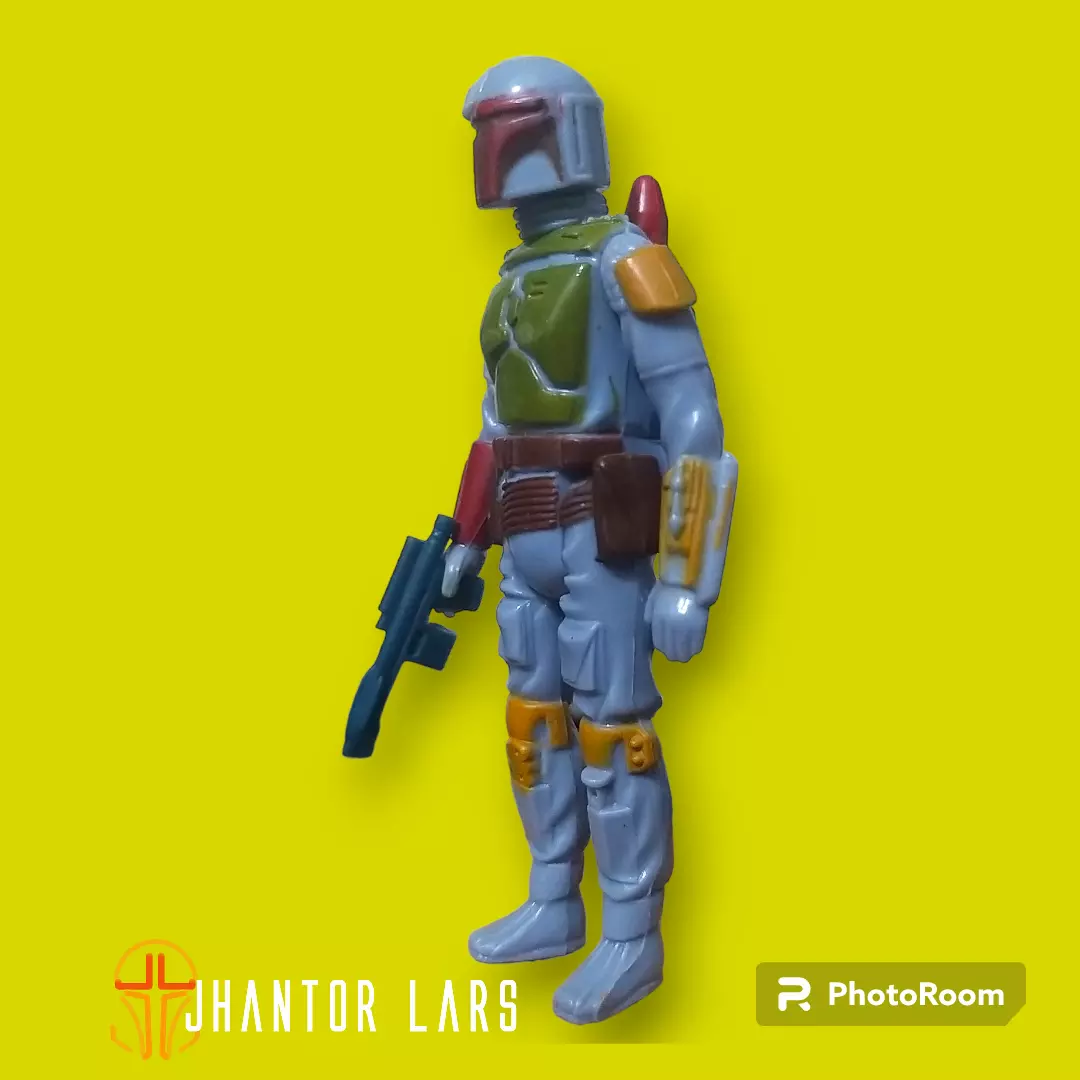
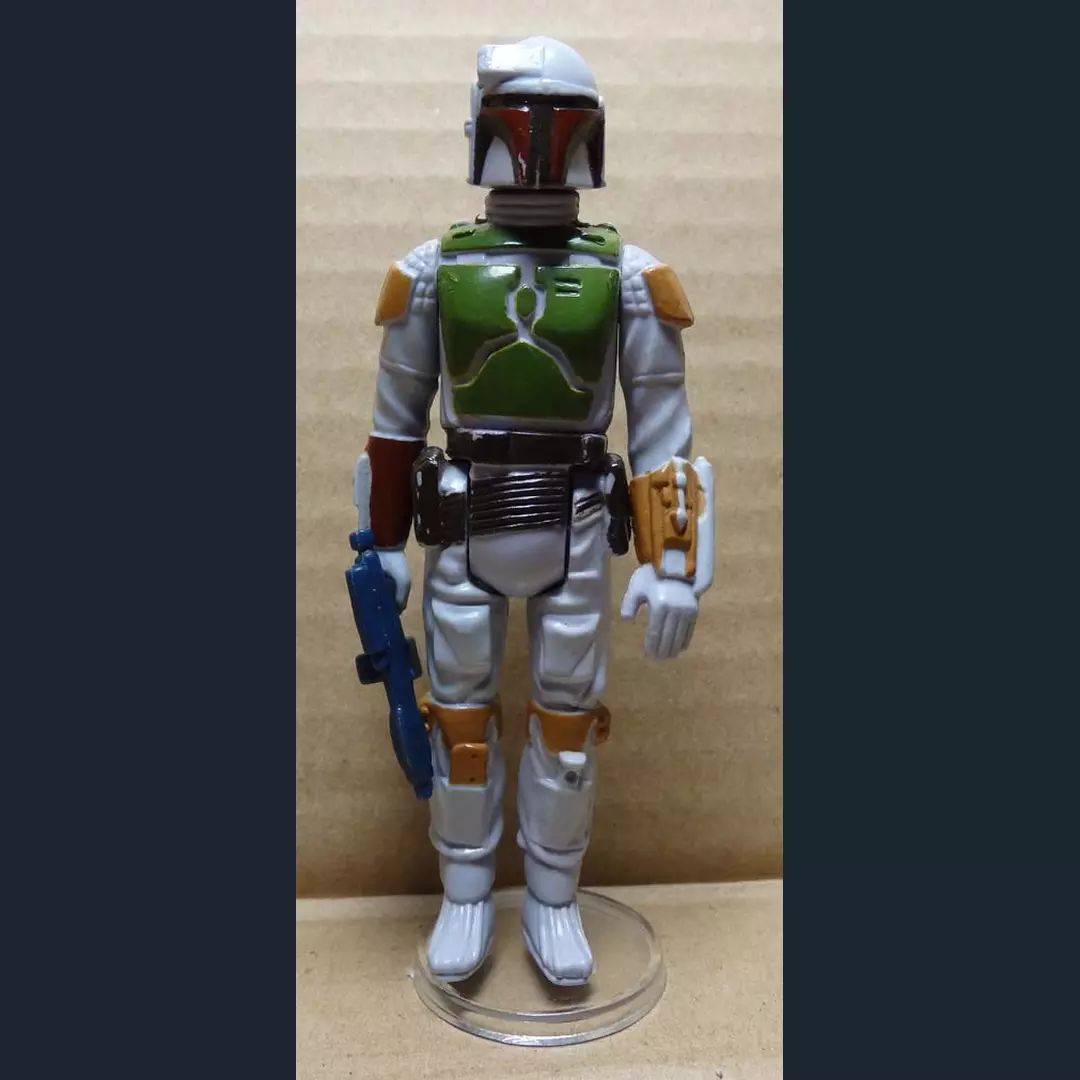
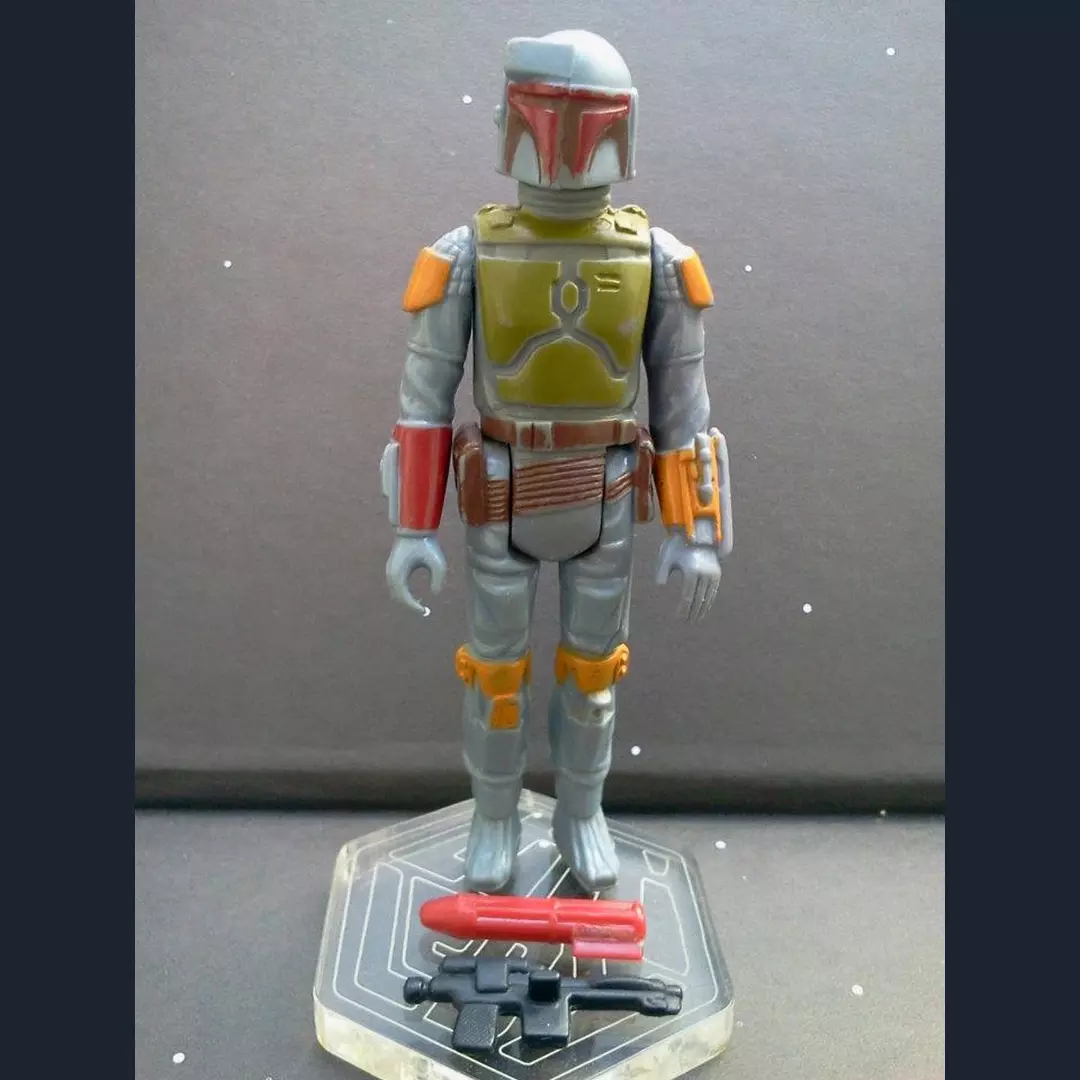
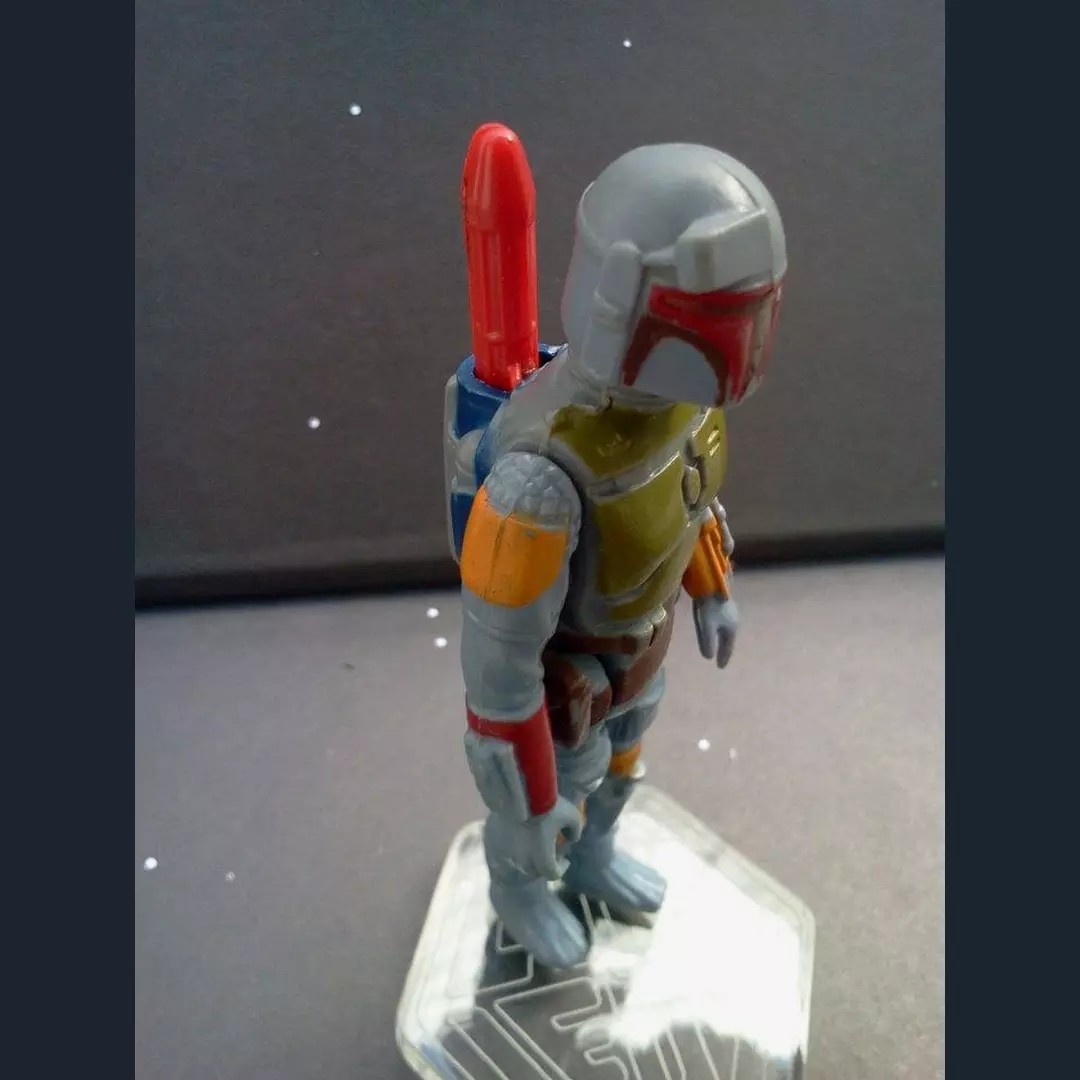
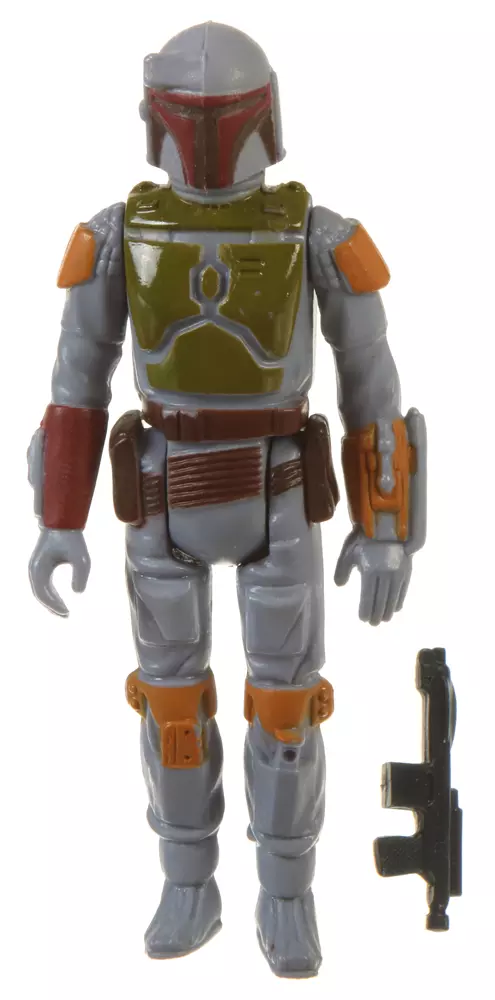
Finalmente, la fotografía tomada por Jim Swearingen en el desfile de Anselmo, sirvió de inspiración para un juguete que recorrió un largo camino para llegar a ser el que todos conocemos. Sin embargo, a pesar de la visita que tuvo el personaje con el segundo prototipo del traje a Kenner, mi apuesta es que la figura final es totalmente una copia de la versión del tercer prototipo del traje.
Enero 1979 – Lanzamiento Comercial
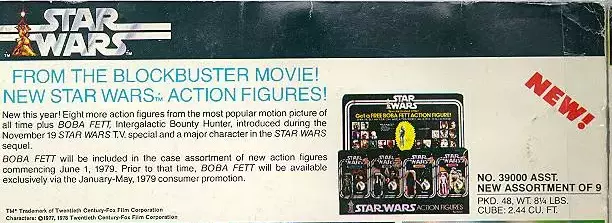
En lo expuesto en el catálogo de venta de Kenner del año 1979, se sabe que el lanzamiento de la nueva figura de Boba Fett, por medio de las pruebas de compra, partió en Enero de 1979 y con una fecha inicial de duración hasta Mayo del mismo año. En este mismo catálogo se anuncia su próxima venta como figura en cartón para el 1ero de junio de 1979.
Enero / Mayo 1979 – Comercial Kenner
En el sitio Star Wars: The Archive Database, se presenta una cinta de película de 16 mm de la promoción de la figura de acción de Boba Fett gratis, en sus 30 segundos de gloria hechos para la televisión abierta. Al comienzo de la cinta se tiene información impresa sobre el director y el número del proyecto, pero desafortunadamente falta el elemento clave de cuándo fue filmado.
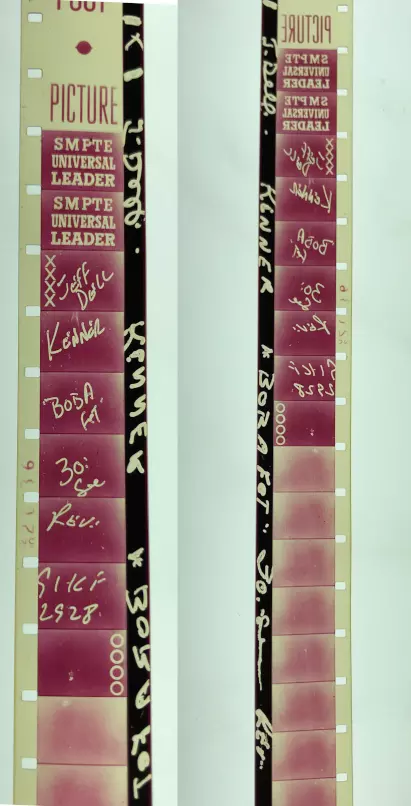
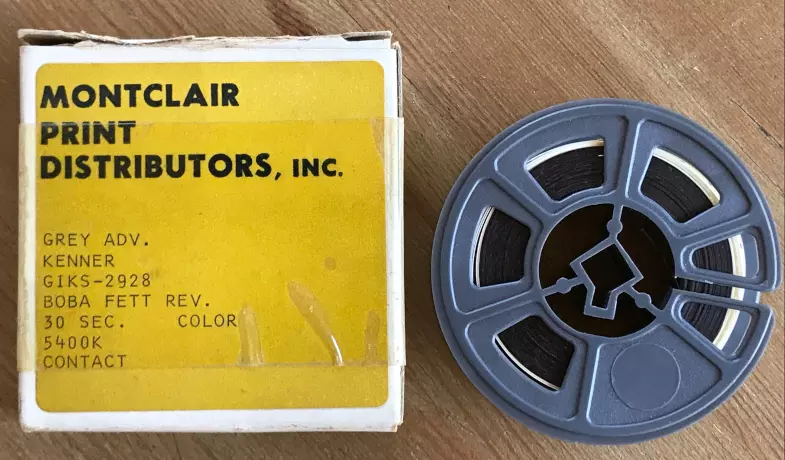
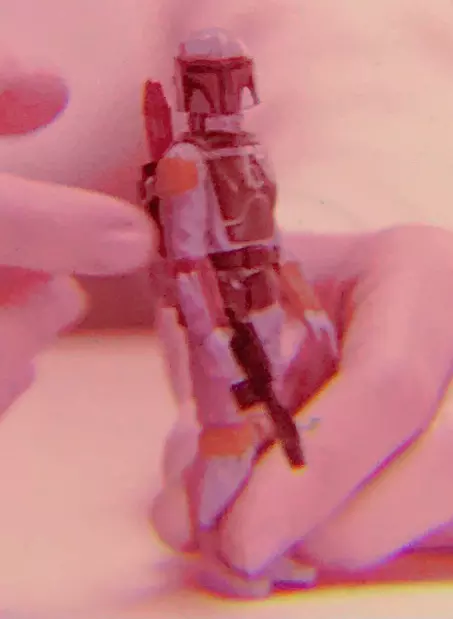
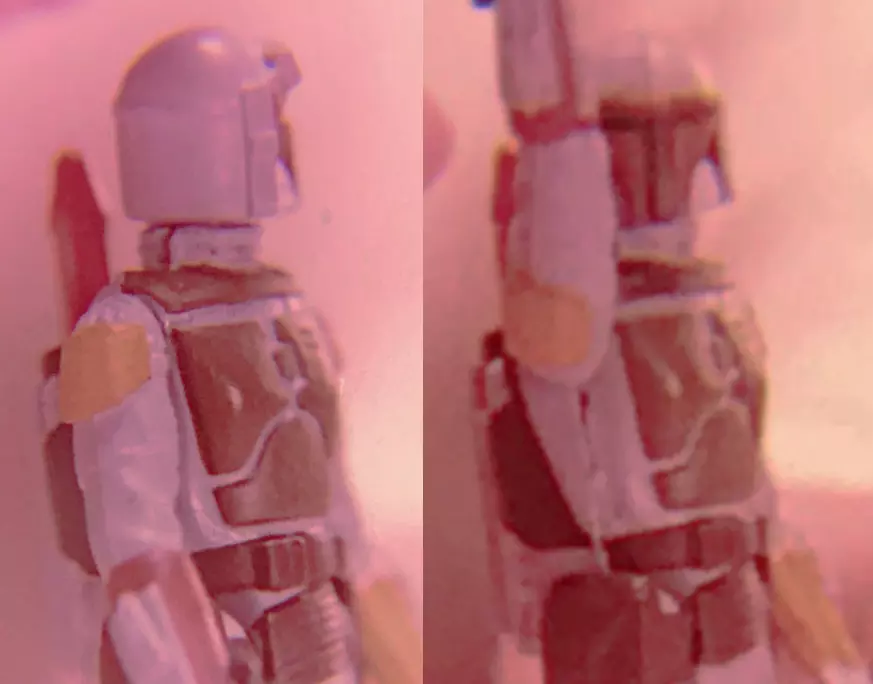
En el sitio mencionado hacen un estudio de algunos cuadros en la cinta análoga, donde llegan a la conclusión que la figura de Boba Fett utilizada es en realidad un prototipo de disparo de cohetes. Destacan que los ángulos mostrados en el comercial ocultan esta característica. Sin embargo, con la capacidad literal de verlo fotograma a fotograma bajo magnificación, se puede ver el deslizador rojo en la foto justo por encima del dedo del niño.
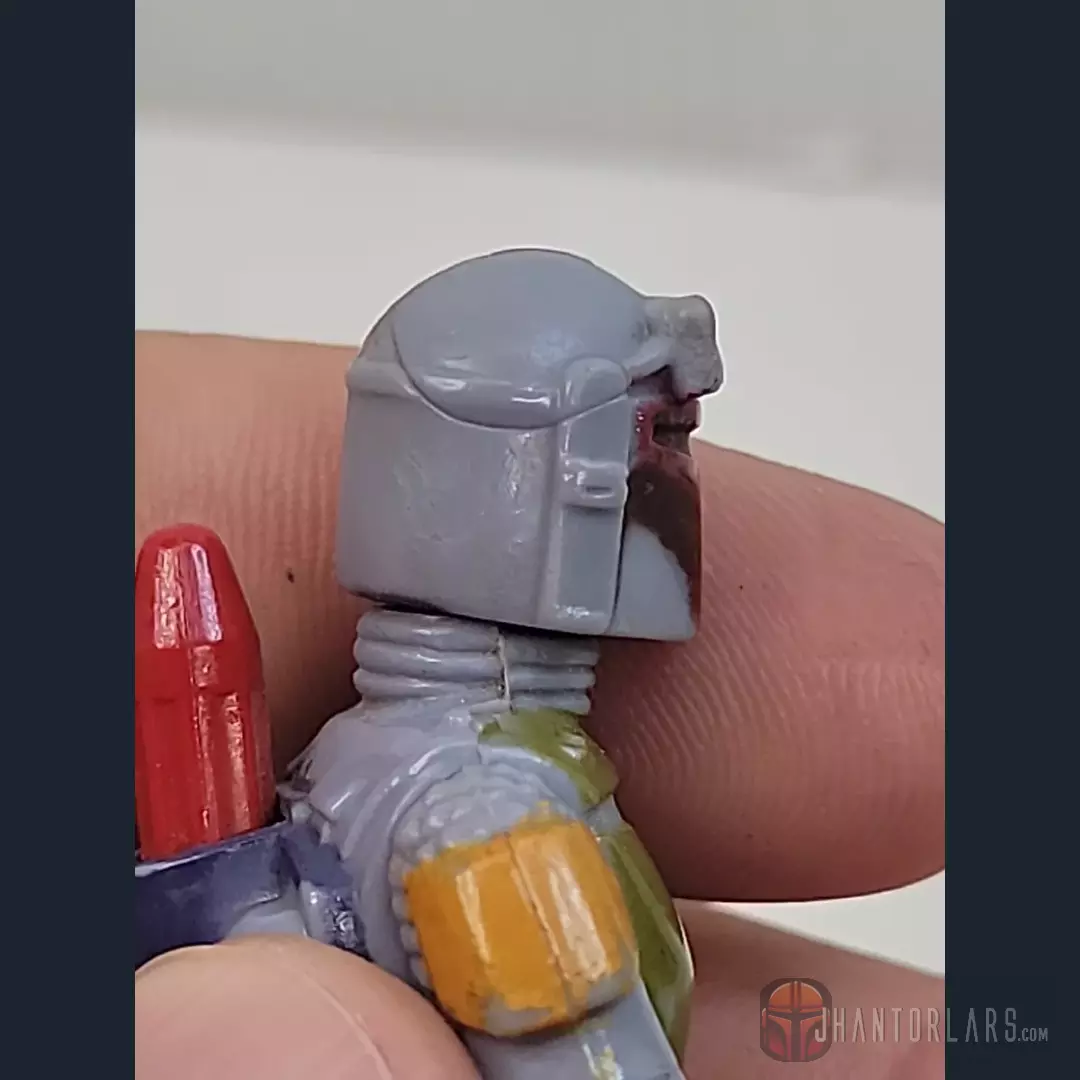
Es posible que la figura sea del mismo tipo que el prototipo protomoldeado (moldeado por inyección de plástico y trabajado a mano), esto debido a los huecos en el cuello y el torso, ya que el torso no está perfectamente moldeado y además está pegado a mano. También, la línea de separación de la cabeza es más pronunciada, como en la figura protomoldeada.
Podemos ver que el misil es una versión temprana de 4 costillas, típicamente encontrada en las versiones L-Slot. El misil sobresale más de lo normal porque el deslizador del mecanismo está en su posición no comprimida, lo cual es otra indicación de que es un prototipo de disparo de cohetes. Este cohete debe haber sido pegado o adherido de alguna manera durante la grabación del comercial.
Un dato que aparece en los escritos iniciales de la cinta es la palabra “Rev”, que significa Revisado o bien Revisión. Esto puede significar que el comercial haya sido filmado inicialmente mostrando el lanzador de cohetes en acción y se habría promocionado como una característica emocionante para esta nueva figura. Sin embargo, si esto fue así, claramente esto sufrió un trabajo de edición simple para hacer la alteración.
Finalmente, se menciona la aparición de los cartones 20 back en el comercial, donde se menciona que estos sean versiones previas a los cartones productivos, siendo los producidos en Cromalin (proceso de impresión de pruebas introducido por DuPont en los años setenta. Una prueba Cromalín se produce mediante exposiciones sucesivas en capas sobre una película, que luego se lamina sobre un papel especial)
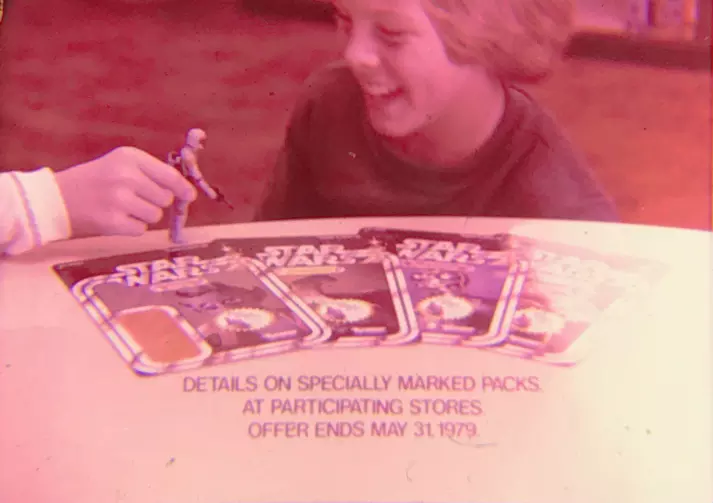
En el comercial se presenta la colección existente hasta el momento, en donde se hace mención al nuevo Snaggletooth, el rojo en cartón, así como a Hammerhead, ambas figuras lanzadas en el año 1978 bajo el cartón 20 back. Como se sabe, recién en el cartón 20C de esta línea es que las nuevas 8 figuras fueron lanzadas al mercado las que ya tenían la promoción de la nueva que vendría a sumarse, Boba Fett.
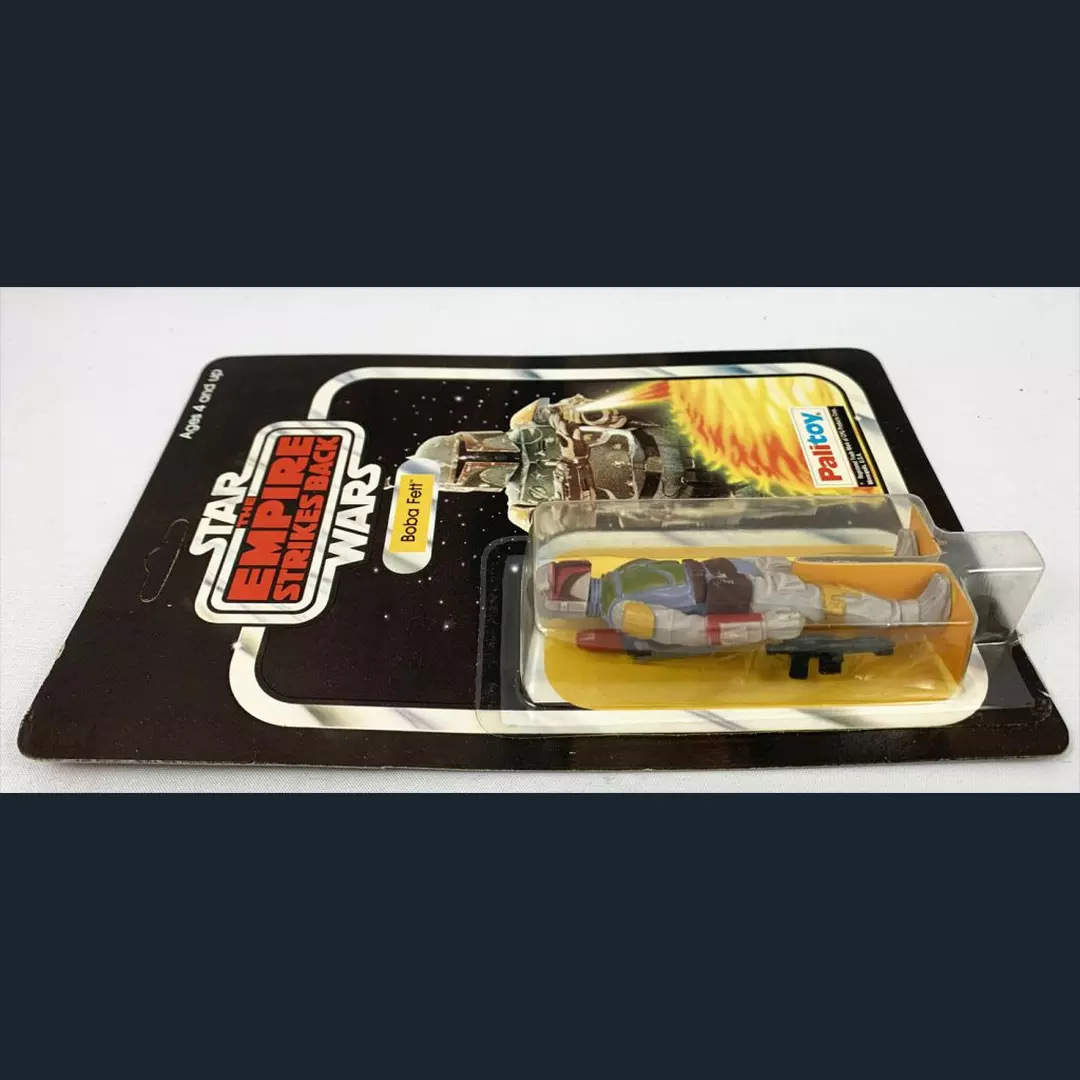
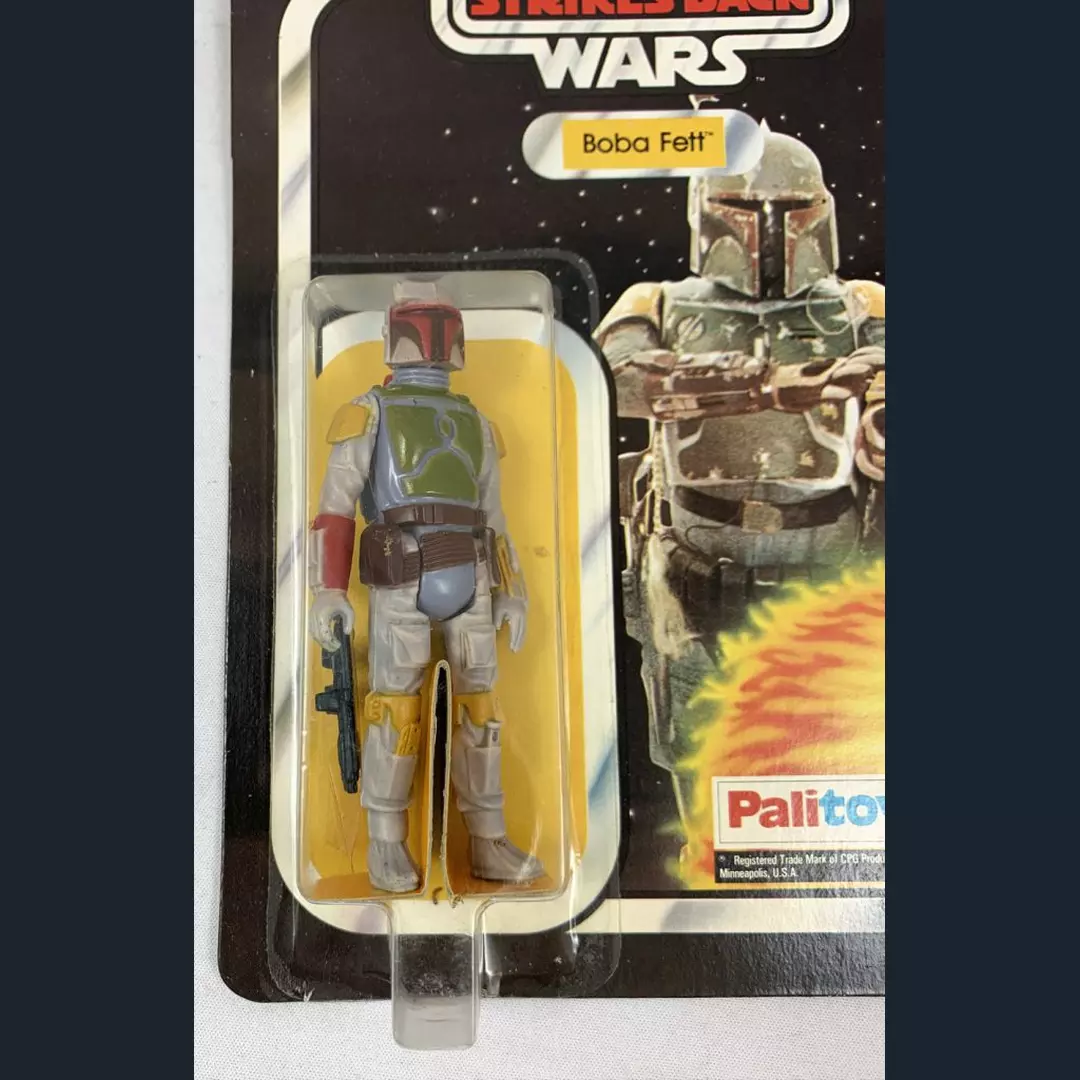
Otro comercial fue el lanzado por el socio Palitoy, responsable de la distribución de los juguetes en Reino Unido, y que provee mucho material adicional al propio de Kenner, ya que generó muchos comerciales e incluso una campaña asociada a Boba Fett que ya abordaré en otro espacio.
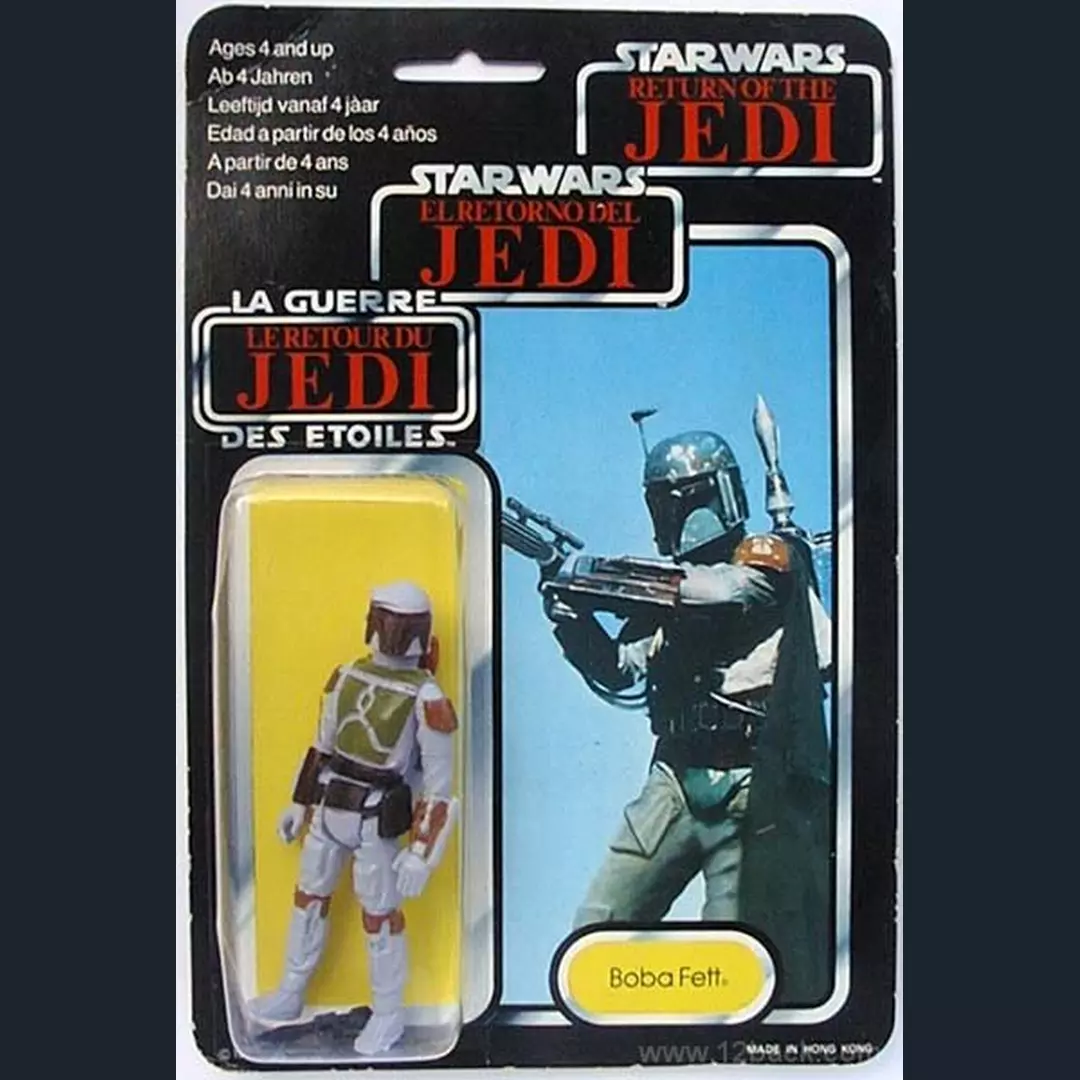
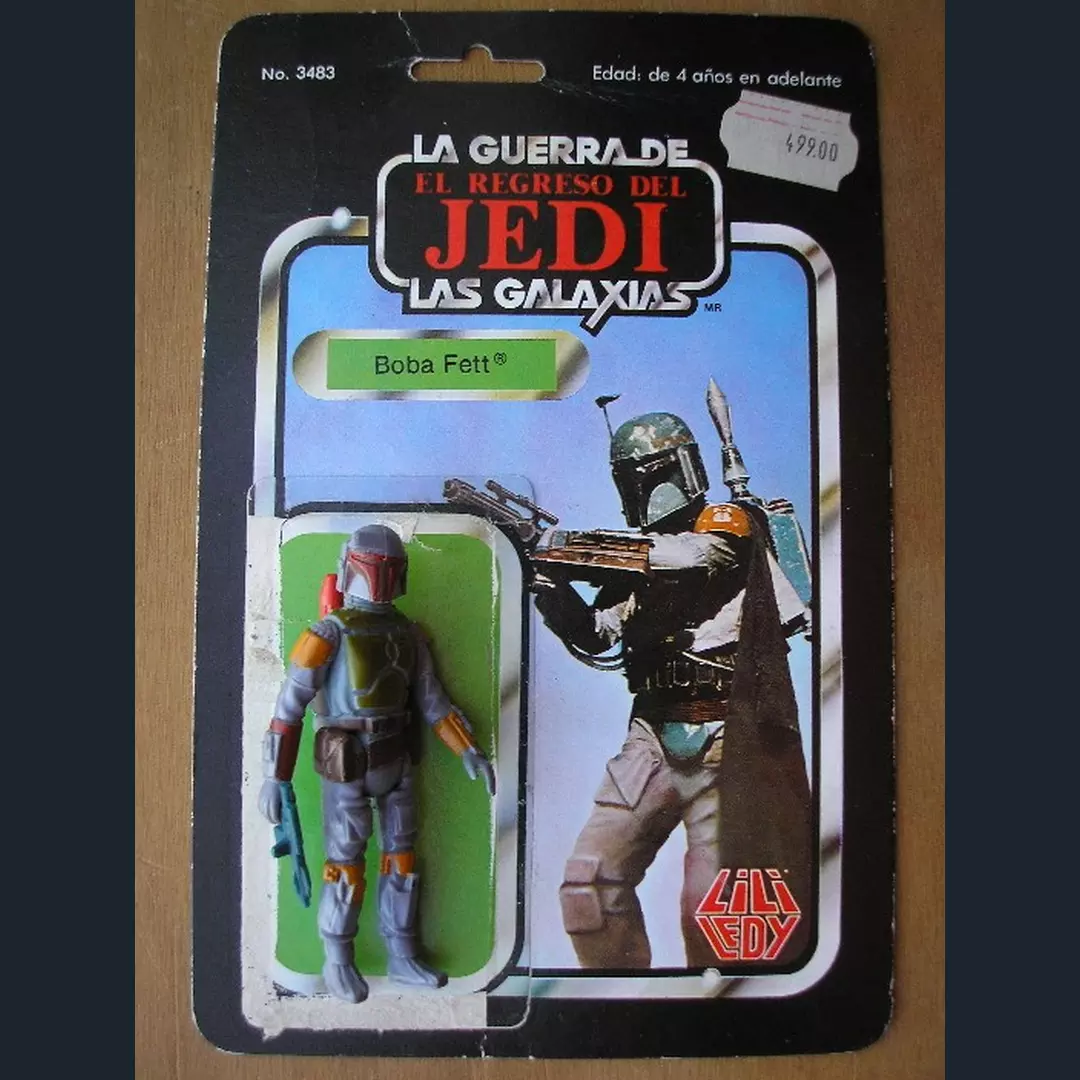
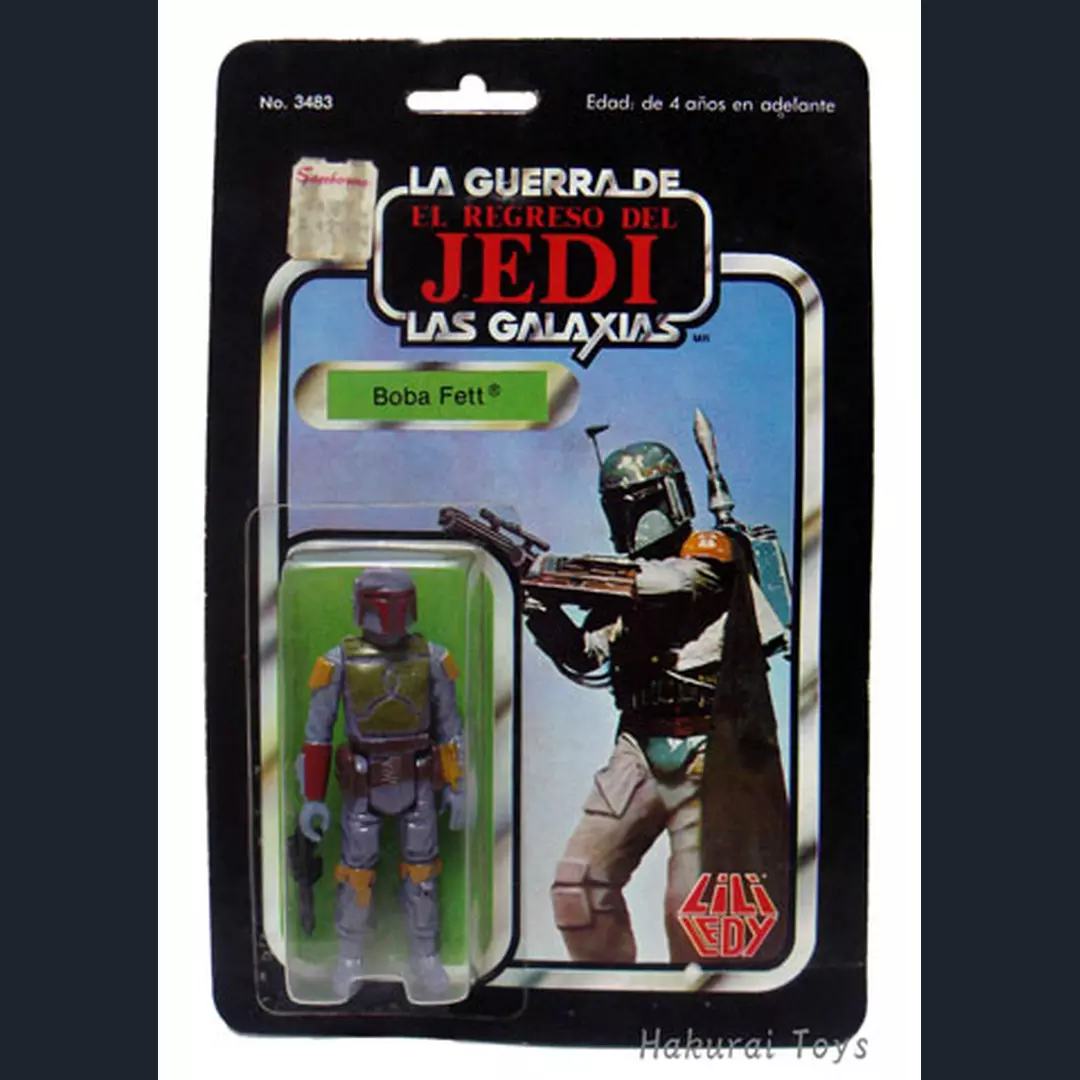
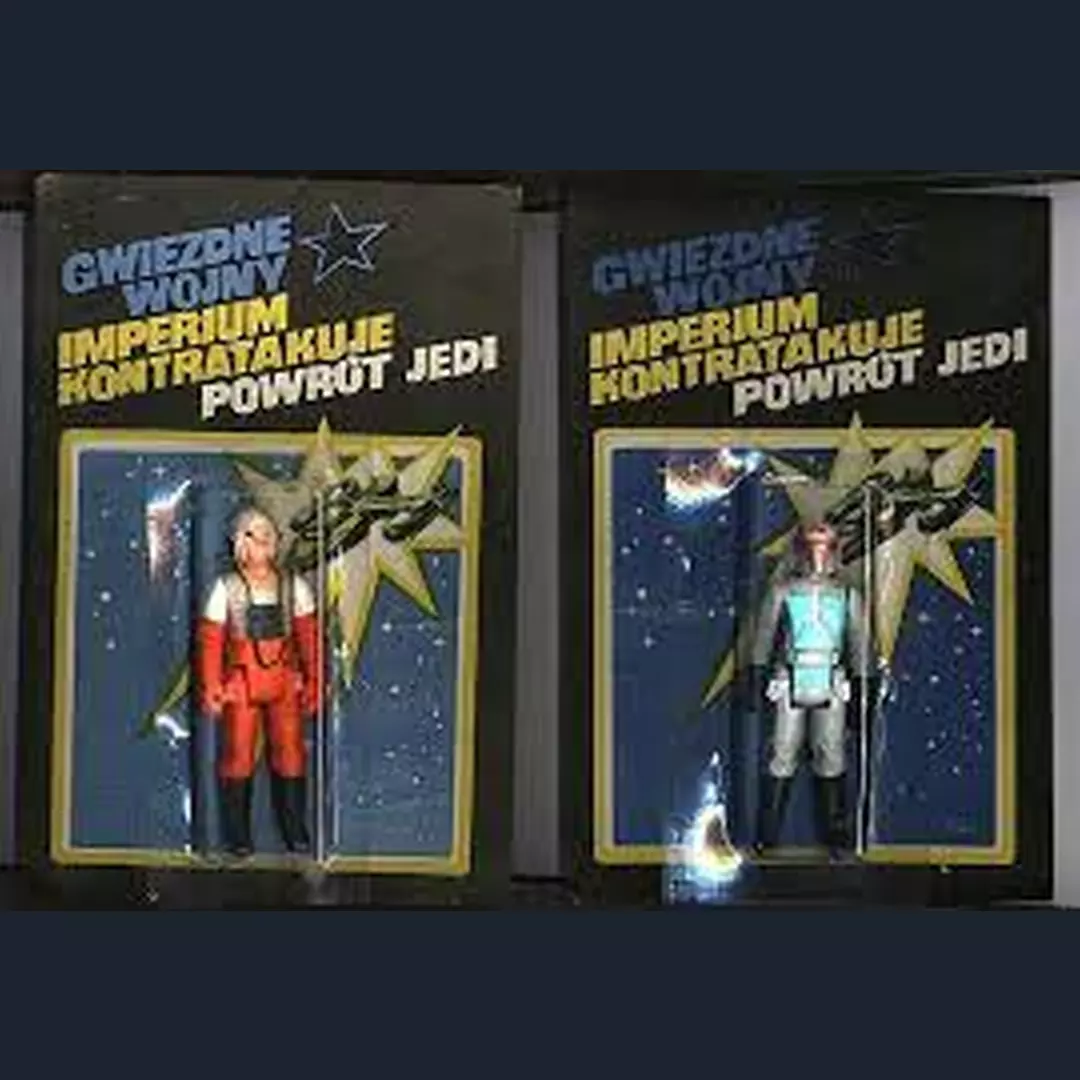
Top Toys, Juguetes Kenner en Argentina, es la empresa de juguetes que estuvo encargada de importar las líneas de jueguetes de Kenner durante el estreno de la primera y segunda películas de Star Wars. Los cartones 20C y 21B de Kenner fueron los primeros que importó TopToys en Argentina, correspondientes a la línea de la colección Star Wars.
1979 / 1980 – Promoción


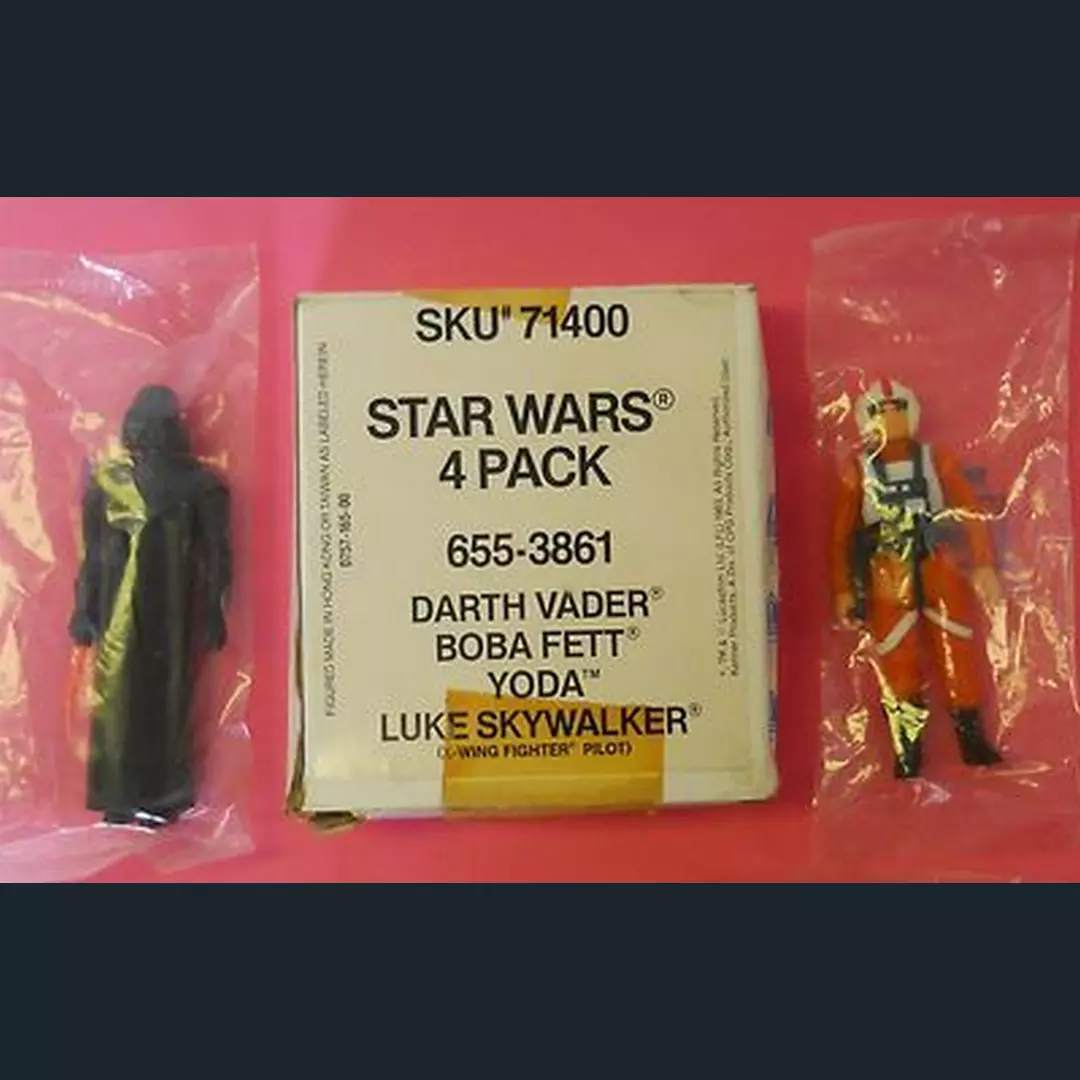
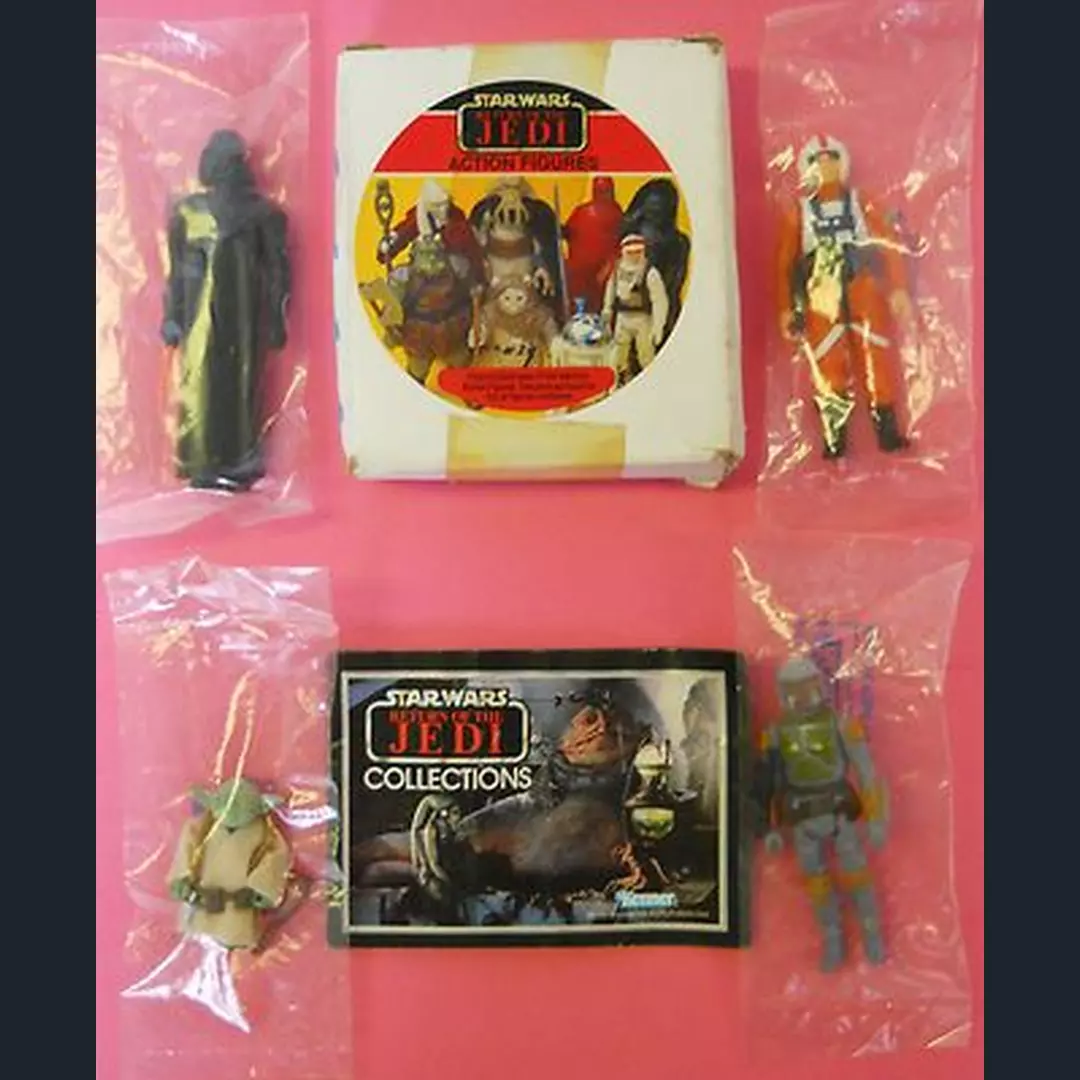
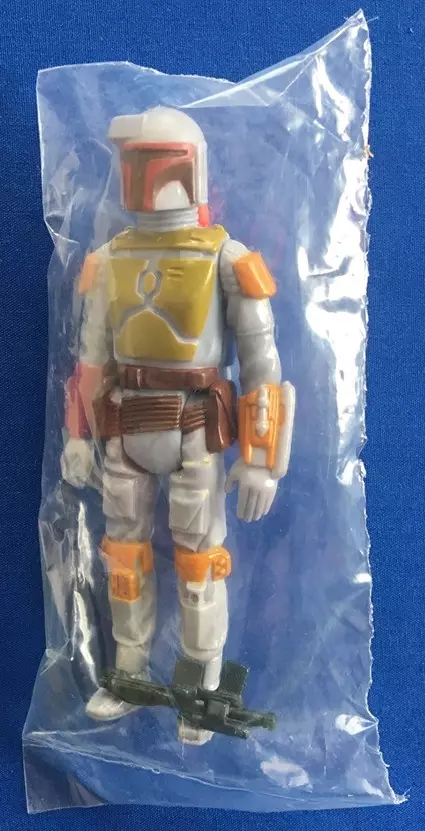
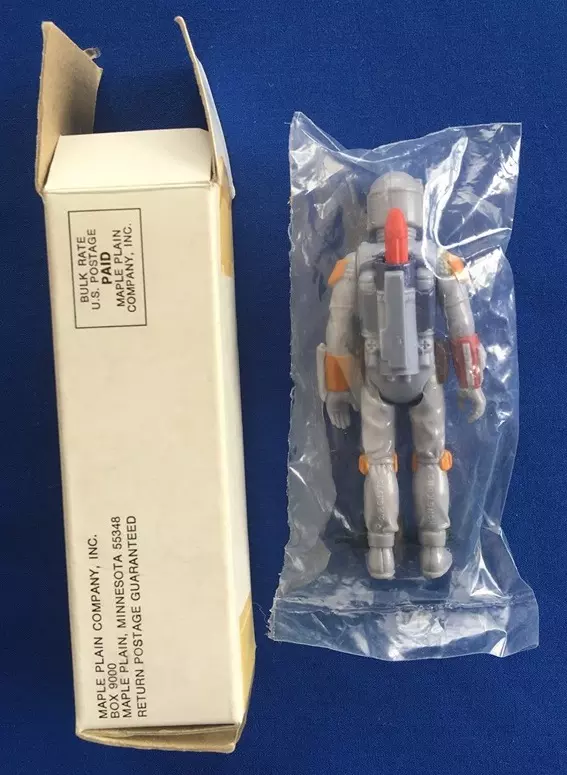
La promoción “mail-in” de Kenner implicaba enviar 4 pruebas de compra y, aproximadamente en 6-8 semanas, recibirías la figura por correo. Inicialmente, la promoción estaba programada para durar desde enero hasta mayo de 1979, la que luego se fue expandiendo. La figura en cuestión venía en una caja blanca como era costumbre en las entregas de Kenner y dentro la figura con su también clásica bolsa.
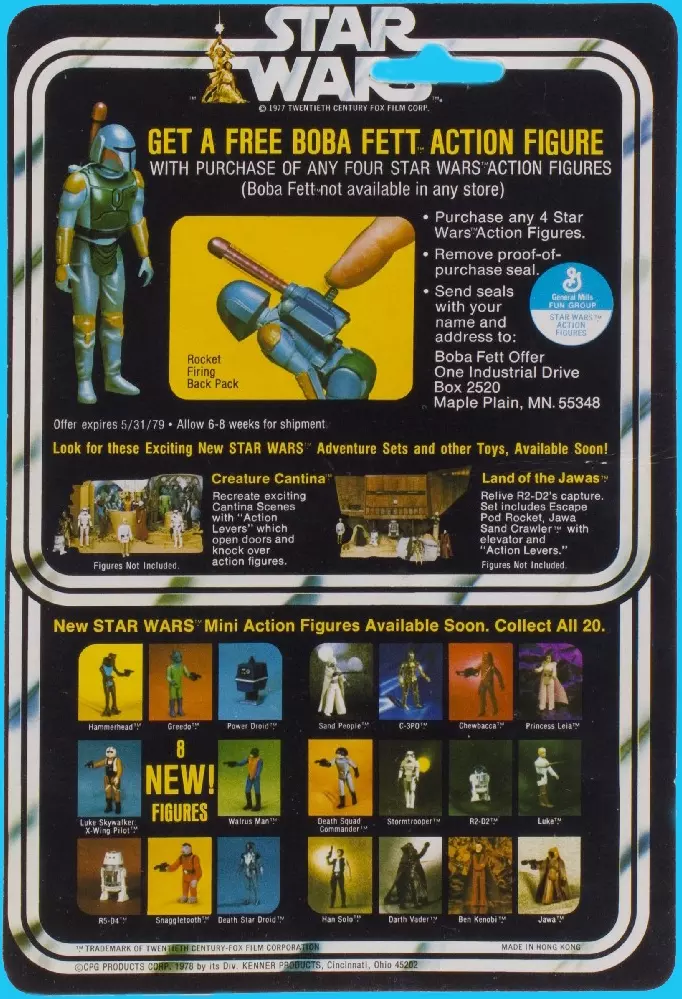
Fecha de vencimiento original de la oferta por correo de la figura de acción de Boba Fett
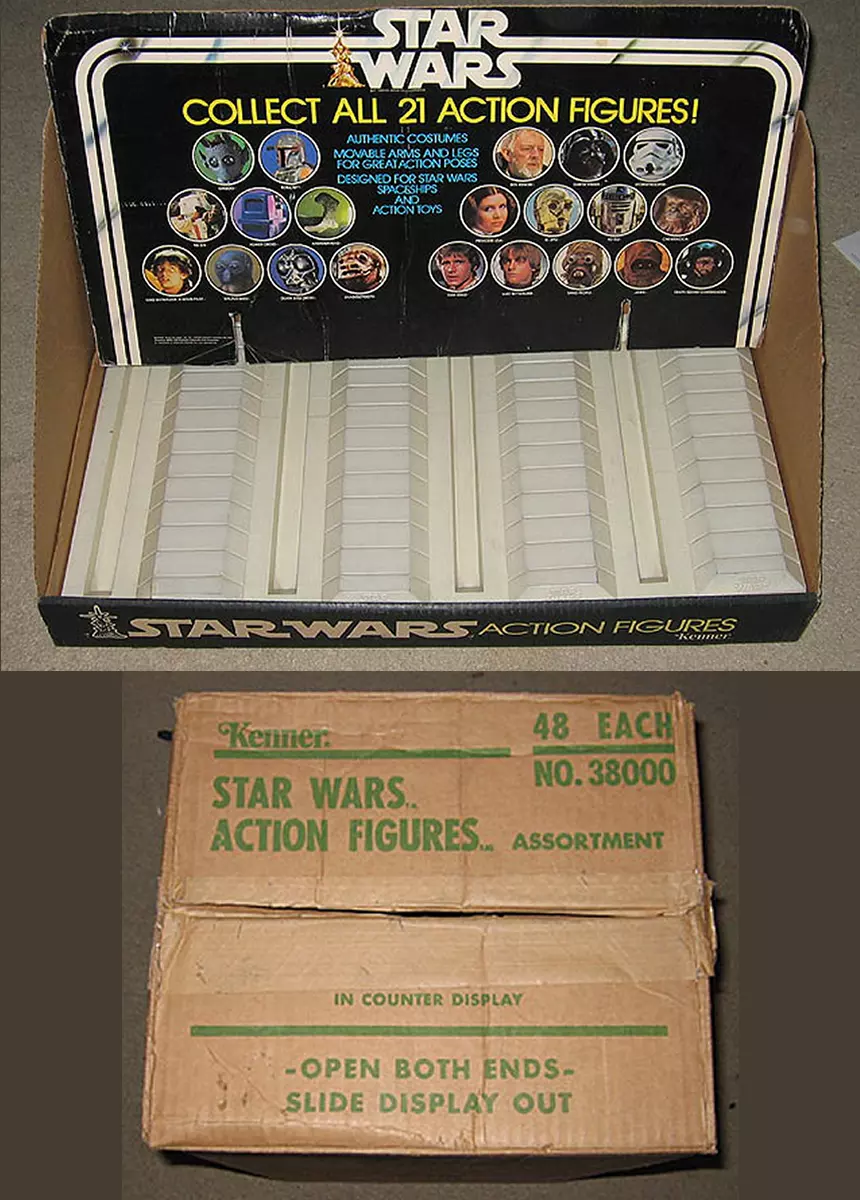
Las figuras de Boba Fett comienzan a enviarse en surtidos de cajas para la venta al por menor
Extensión de la primera fecha de vencimiento de la oferta por correo de Boba Fett con calcomanía opaca
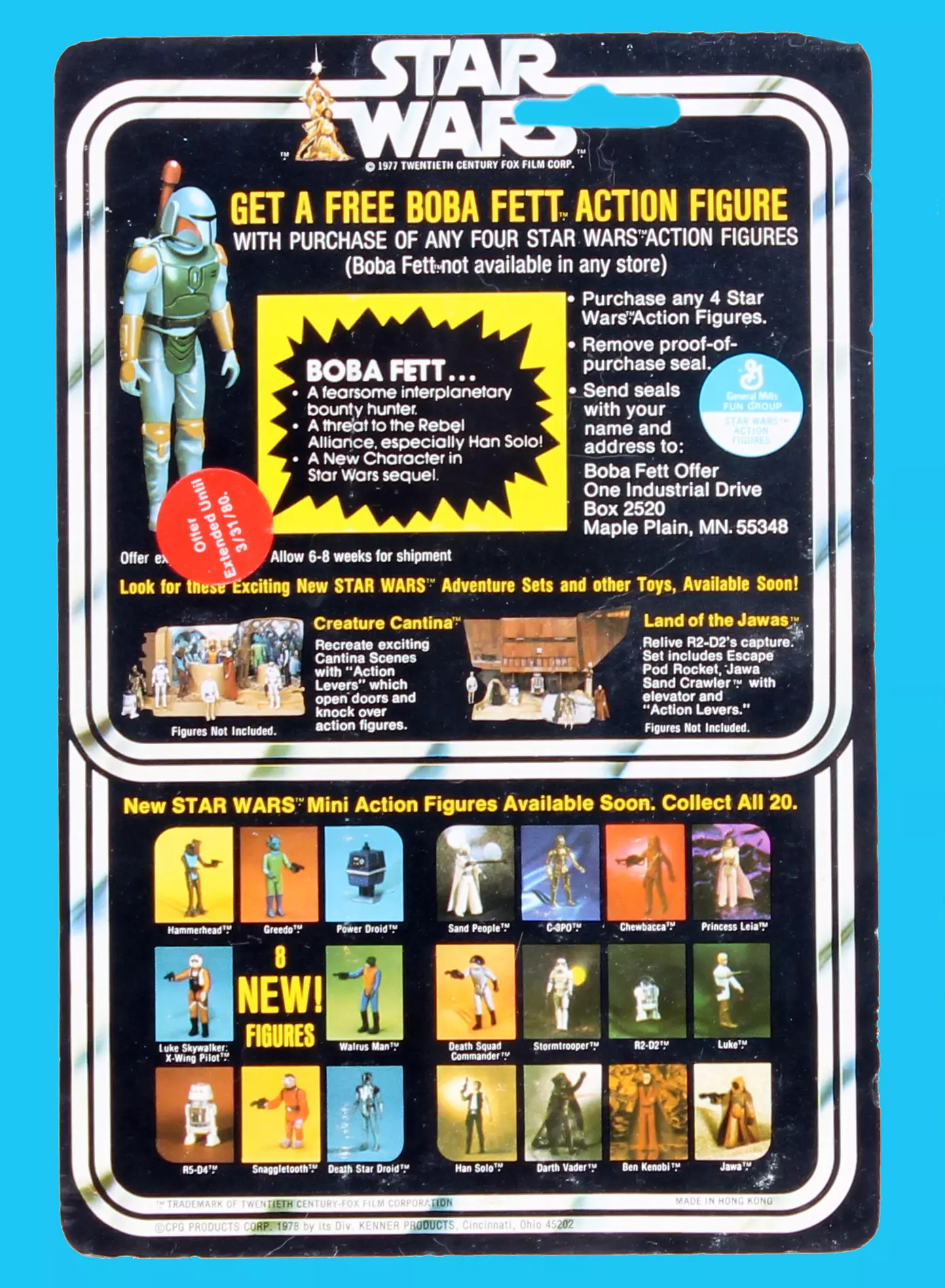
Extensión de la primera fecha de vencimiento de la oferta por correo de Boba Fett con calcomanía de estallido de estrellas
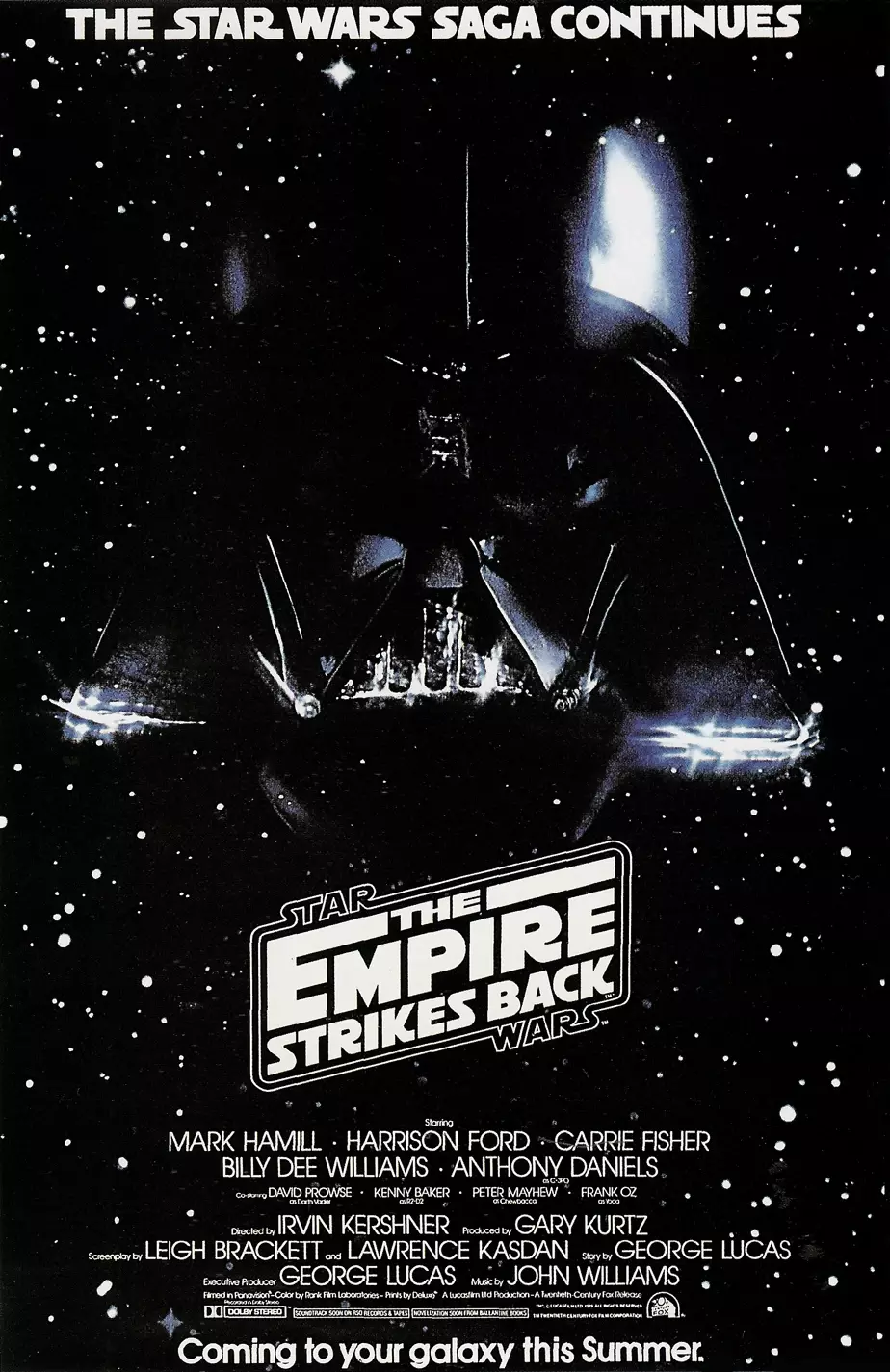
Estreno teatral de El Imperio Contraataca
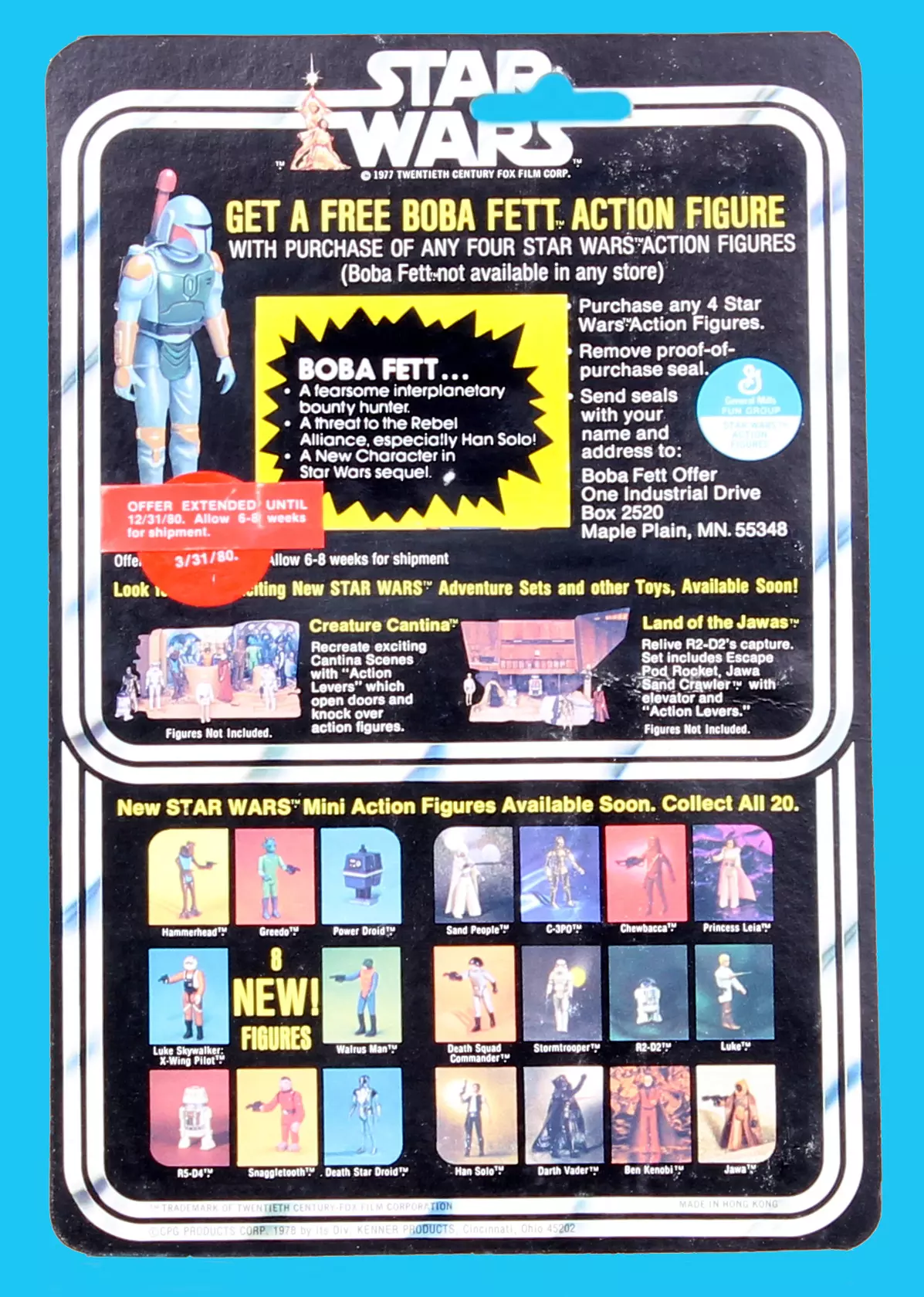
Extensión de la segunda fecha de vencimiento de la oferta por correo de Boba Fett con calcomanía de estallido de estrellas
Marzo / Noviembre 1979 – Comienza rodaje Imperio Contraataca
Recién en marzo de 1979 comenzó el rodaje de la película El Imperio Contraataca en donde hará su gran aparición este gran personaje Boba Fett. Nueve meses más tarde, en noviembre, se daría término al proceso de filmación.
Entre Mayo / Junio 979 – Mail-Away
De lo que se ve, la caja es idéntica a la muestra del piloto de Ingeniería lanzado por Kenner para la figura ya cono el misil fijo. Es importante recalcar que nunca se enviaron al público figuras de disparos de misiles, ya que estas nunca salieron a público masivo. Si alguien alguna vez asegura lo contrario es imposible. Muchos más pasos en el proceso habrían tenido que ocurrir para que las figuras se fabricaran y distribuyeran, por lo que no había forma de que ni siquiera una muestra pudiera haber sido enviada por correo a los consumidores. Es más, cuando llegaba el juguete en su cajita blanca venía una aclaración al respecto.
Los productos finales se enviaban desde la fábrica de juguetes asiáticos al centro de distribución de Kenner y luego se enviaban al centro de distribución subcontratado en Maple Plain, Minnesota, un nombre bastante familiar para la generación de niños de Star Wars que esperaron semanas para que sus colecciones de sellos de prueba de compra se convirtieran en figuras gratuitas en pequeñas cajas blancas.
Boba Fett hizo su debut televisivo en noviembre de 1978 en el especial navideño de Star Wars, pero no haría su debut en la pantalla hasta mayo de 1980 con el lanzamiento de El Imperio Contraataca. Hasta ese momento, los únicos breves destellos que el público tenía eran en gran medida esta figura de acción, pero la angustia de la infancia por la característica de acción desaparecida reverberó durante las décadas siguientes.
Julio 1979 / 1985 – Cartones
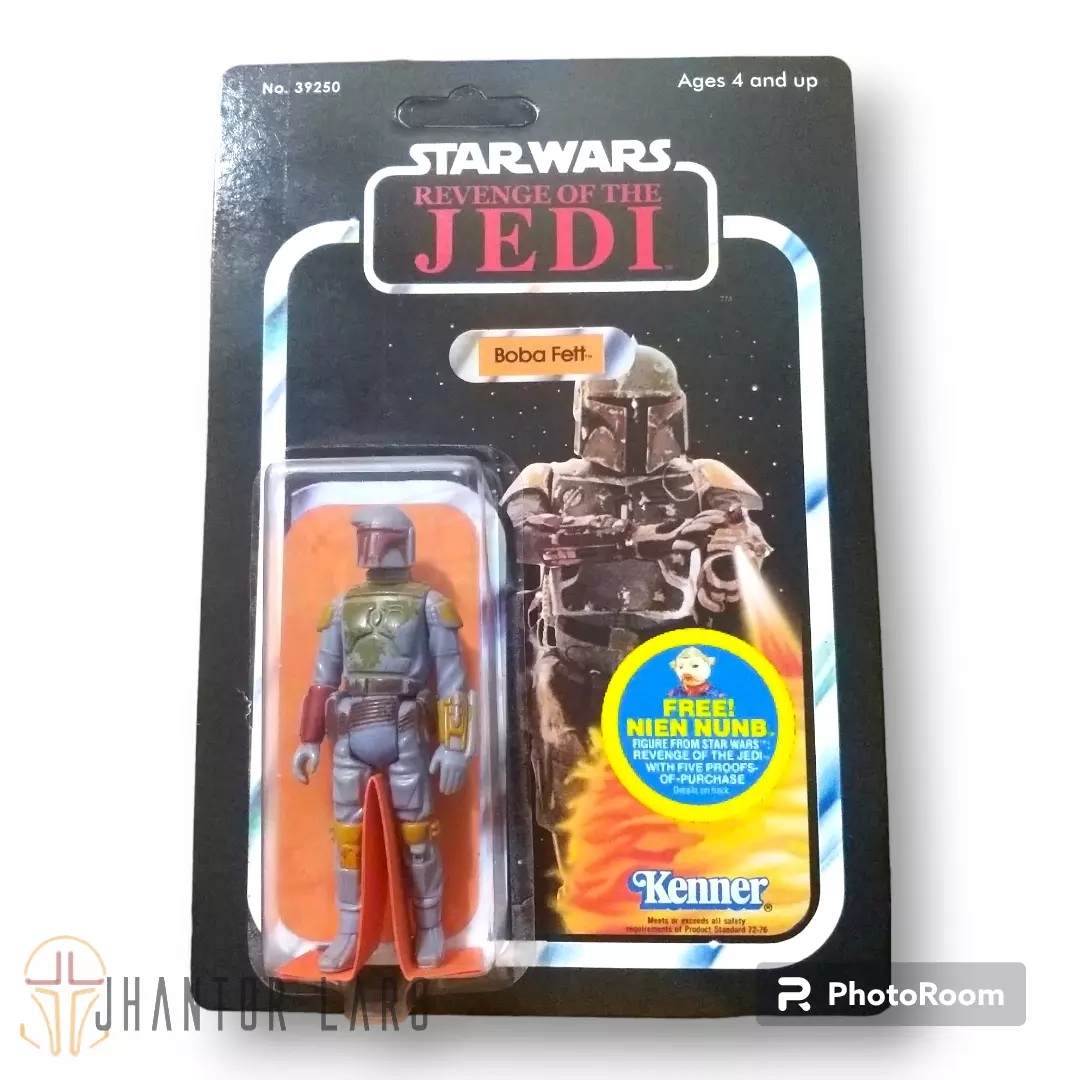
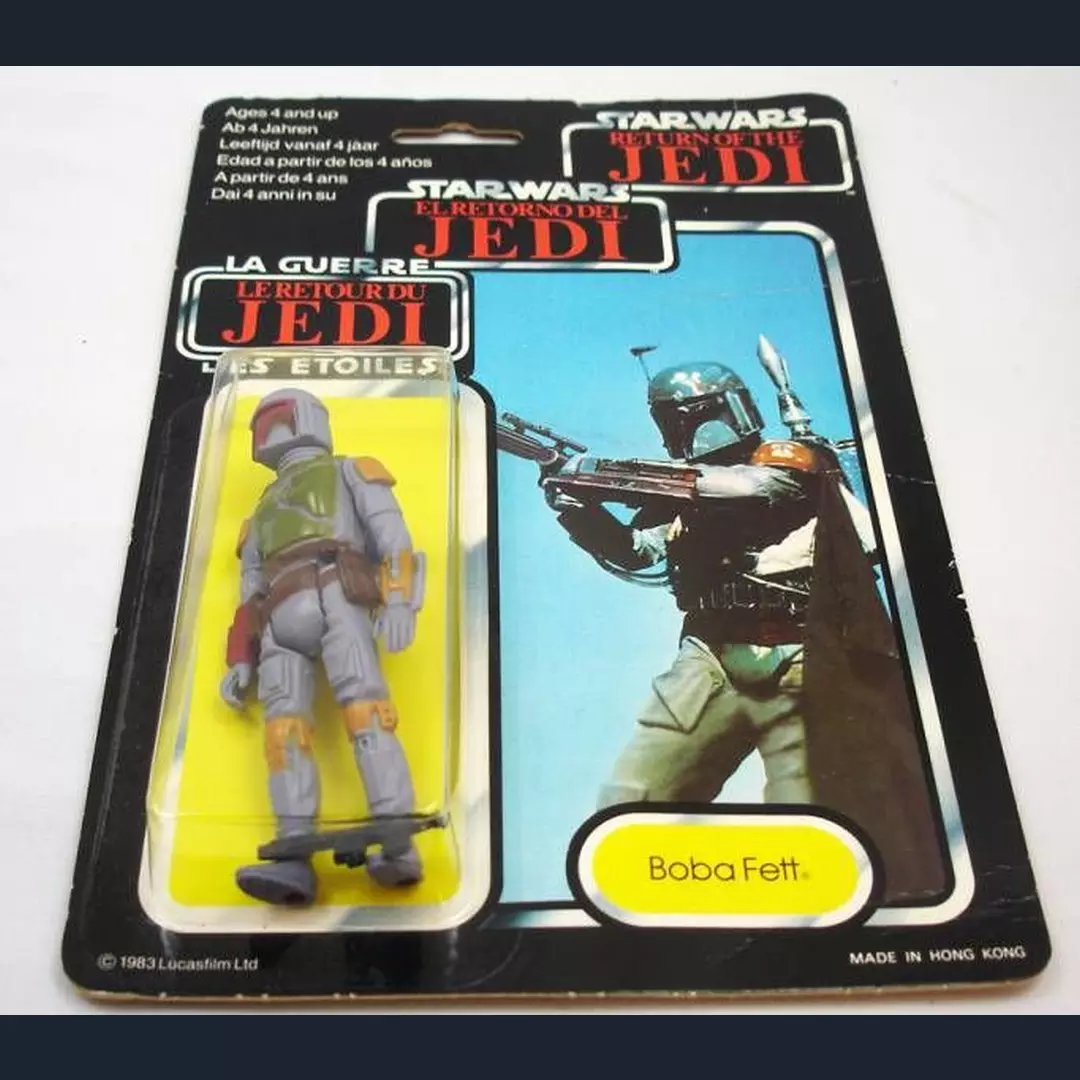
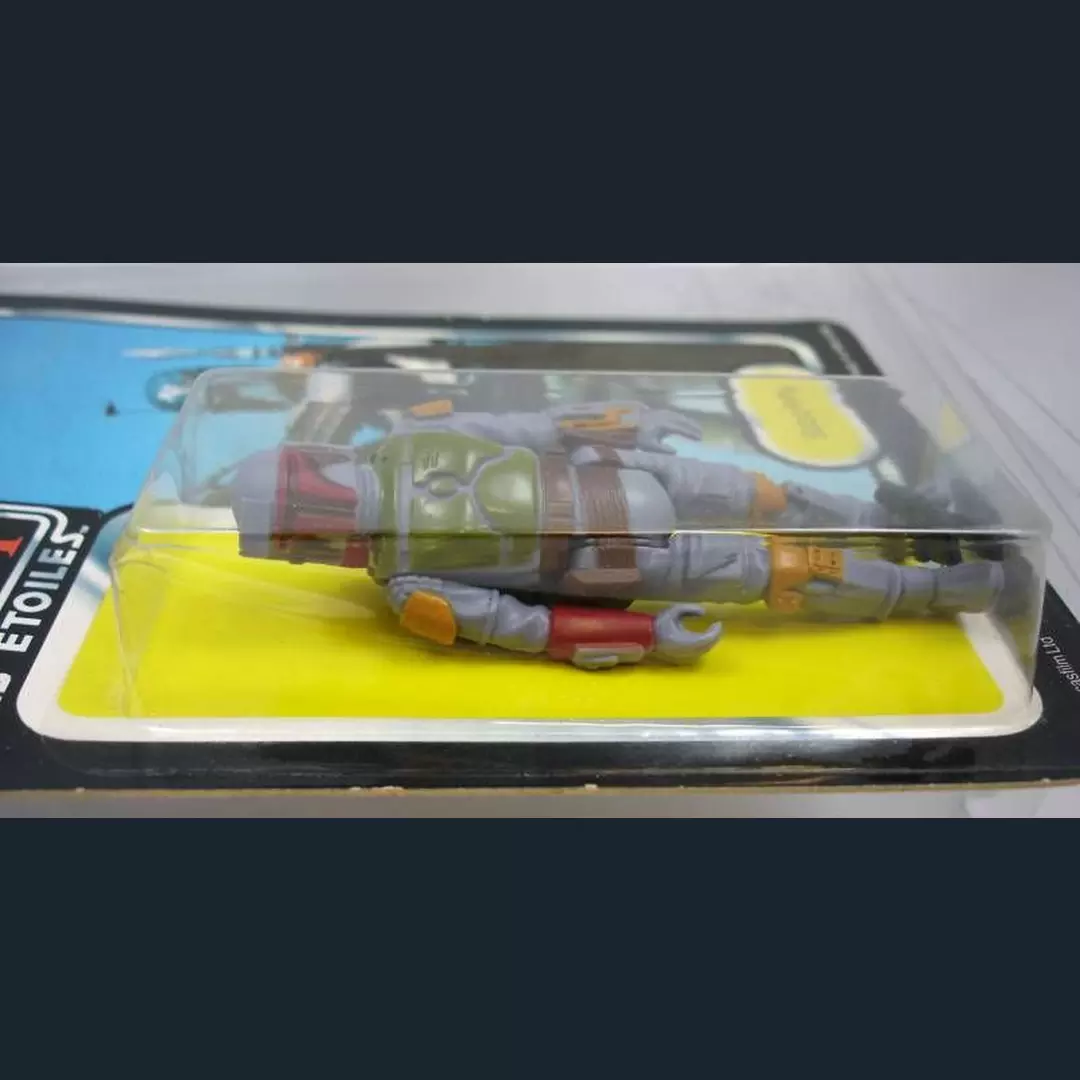
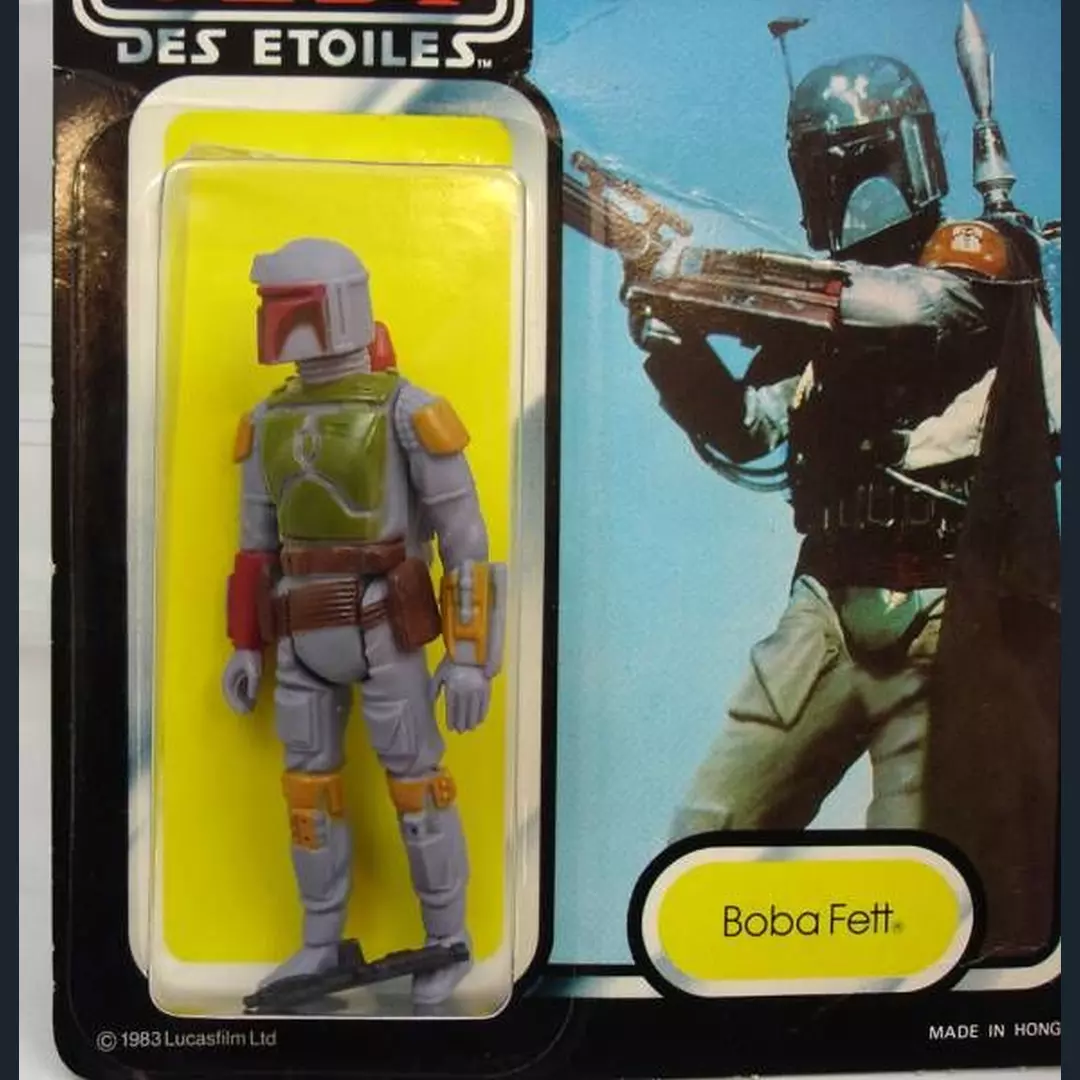
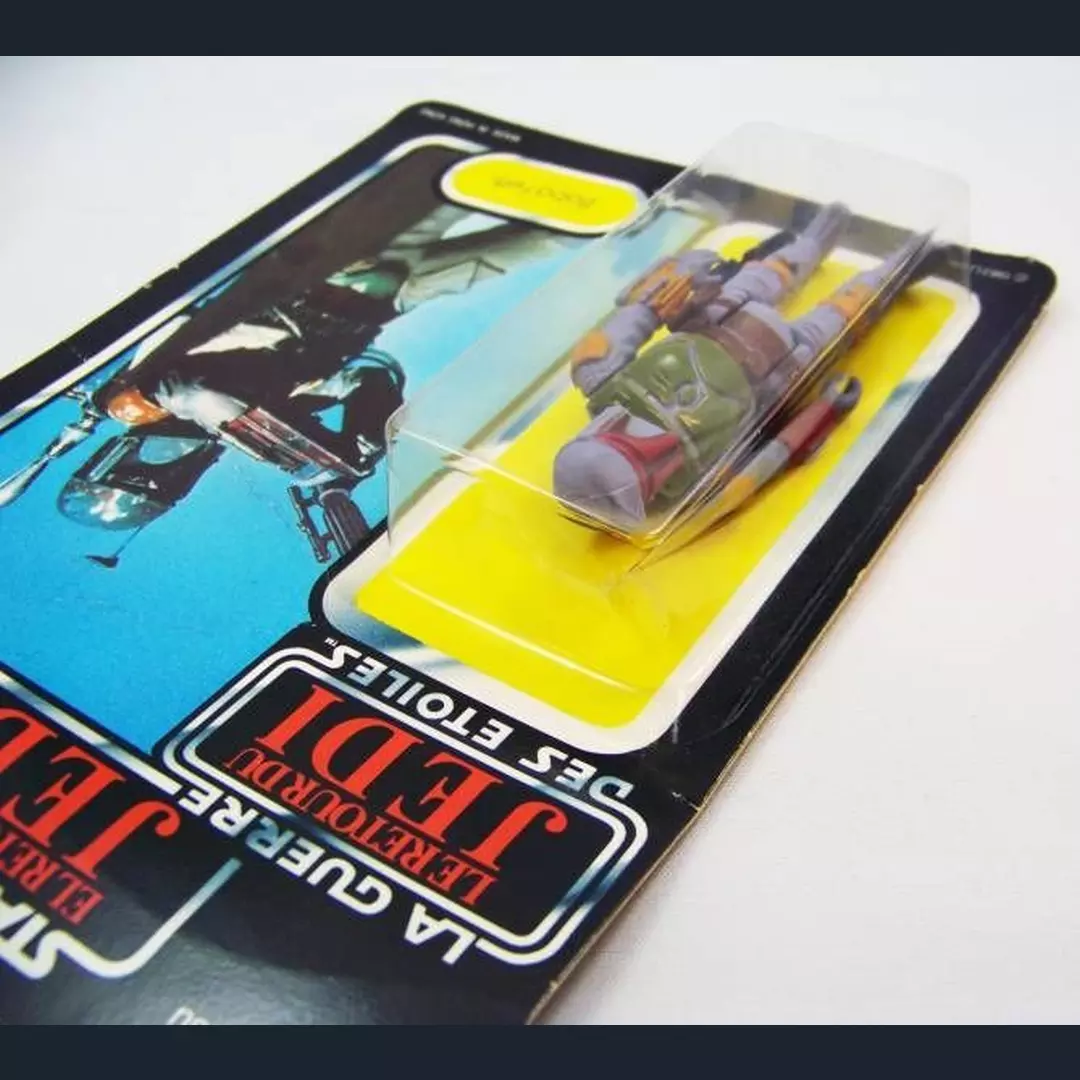
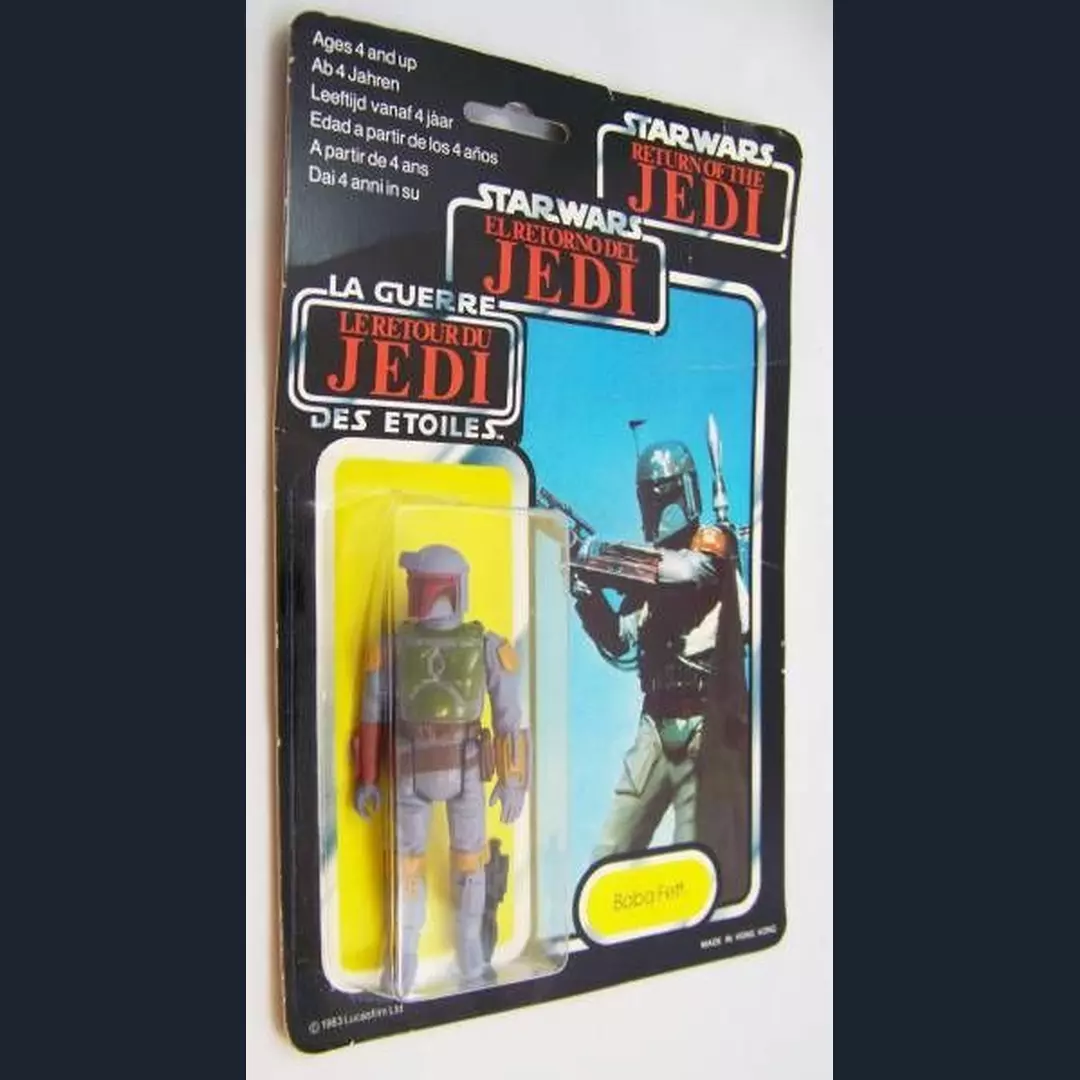
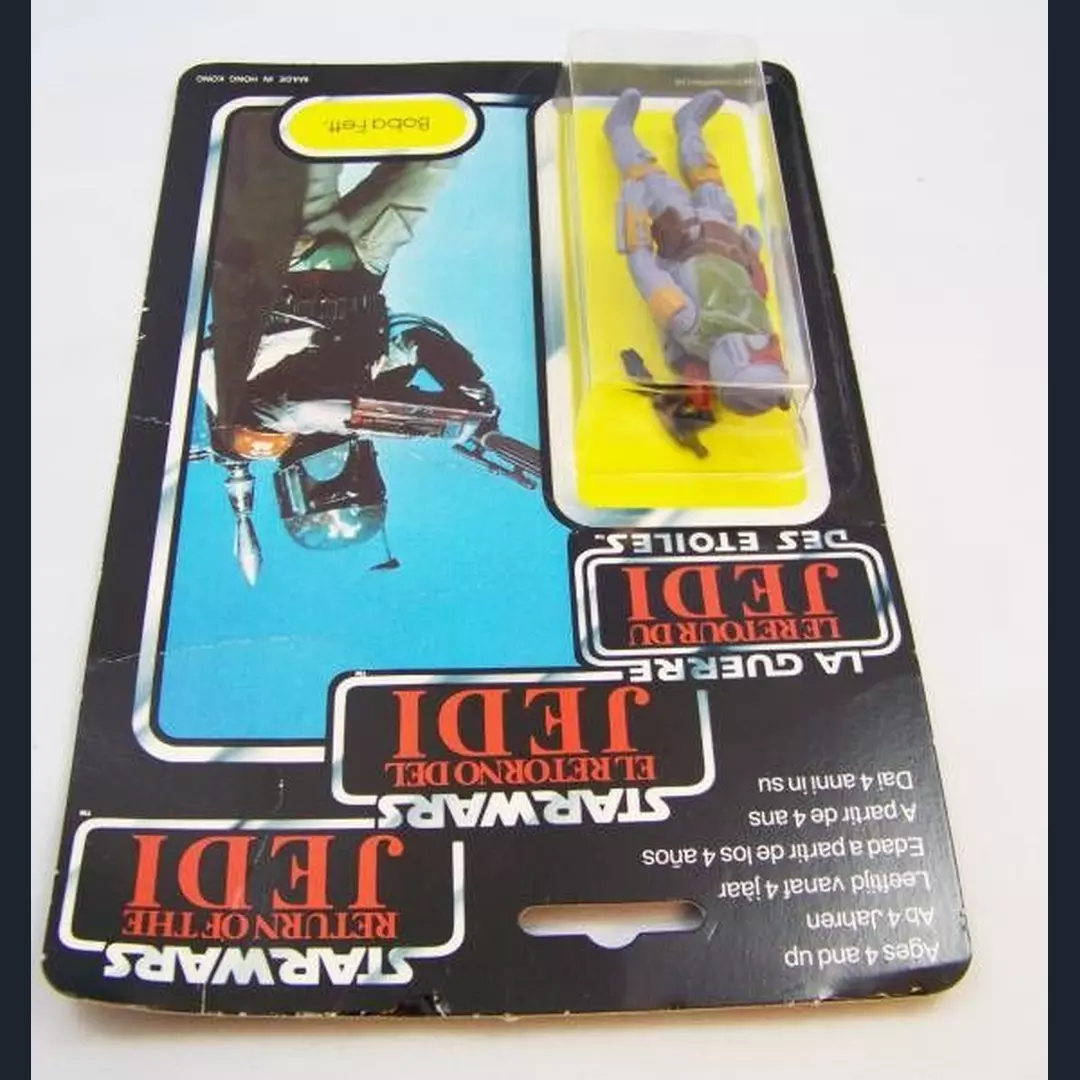
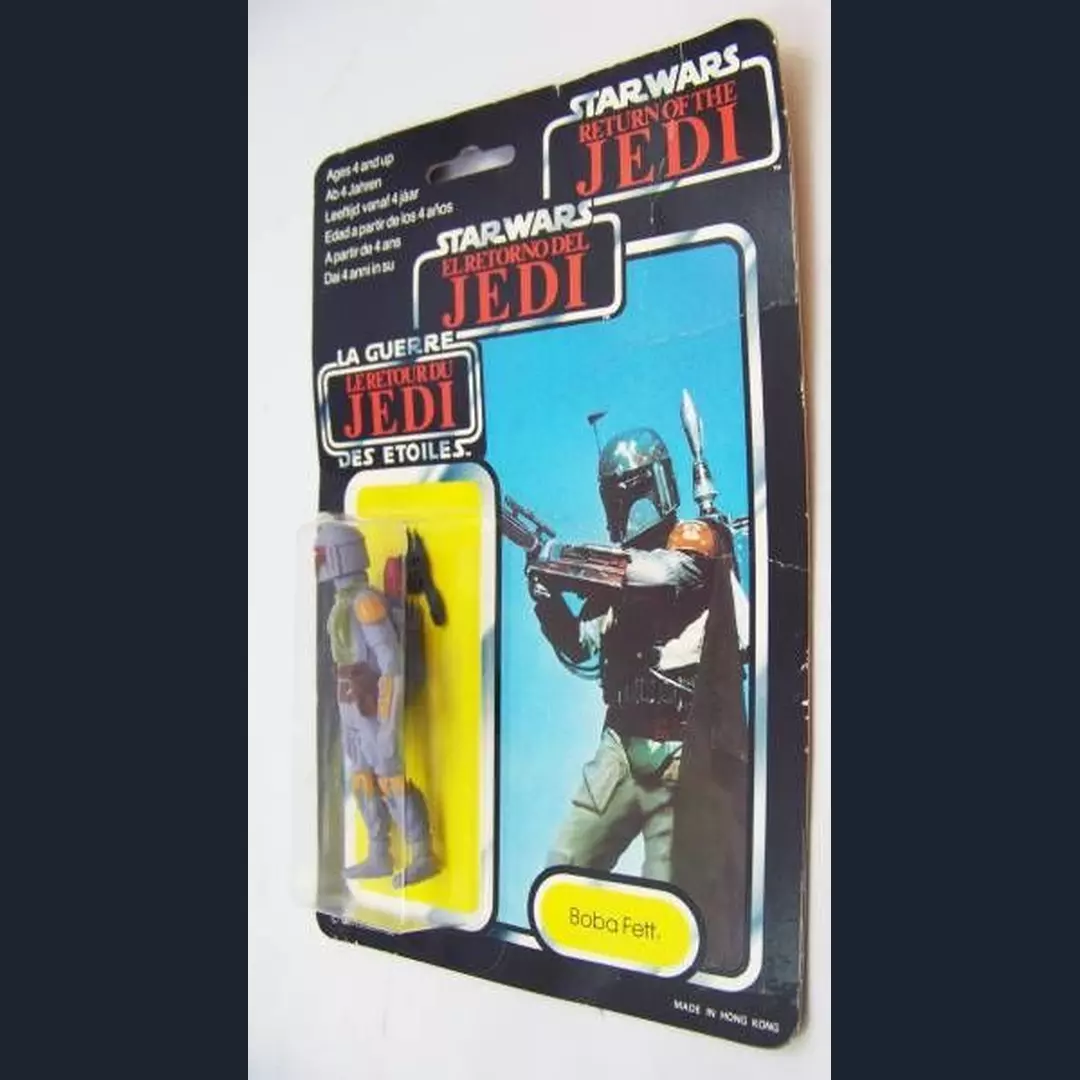
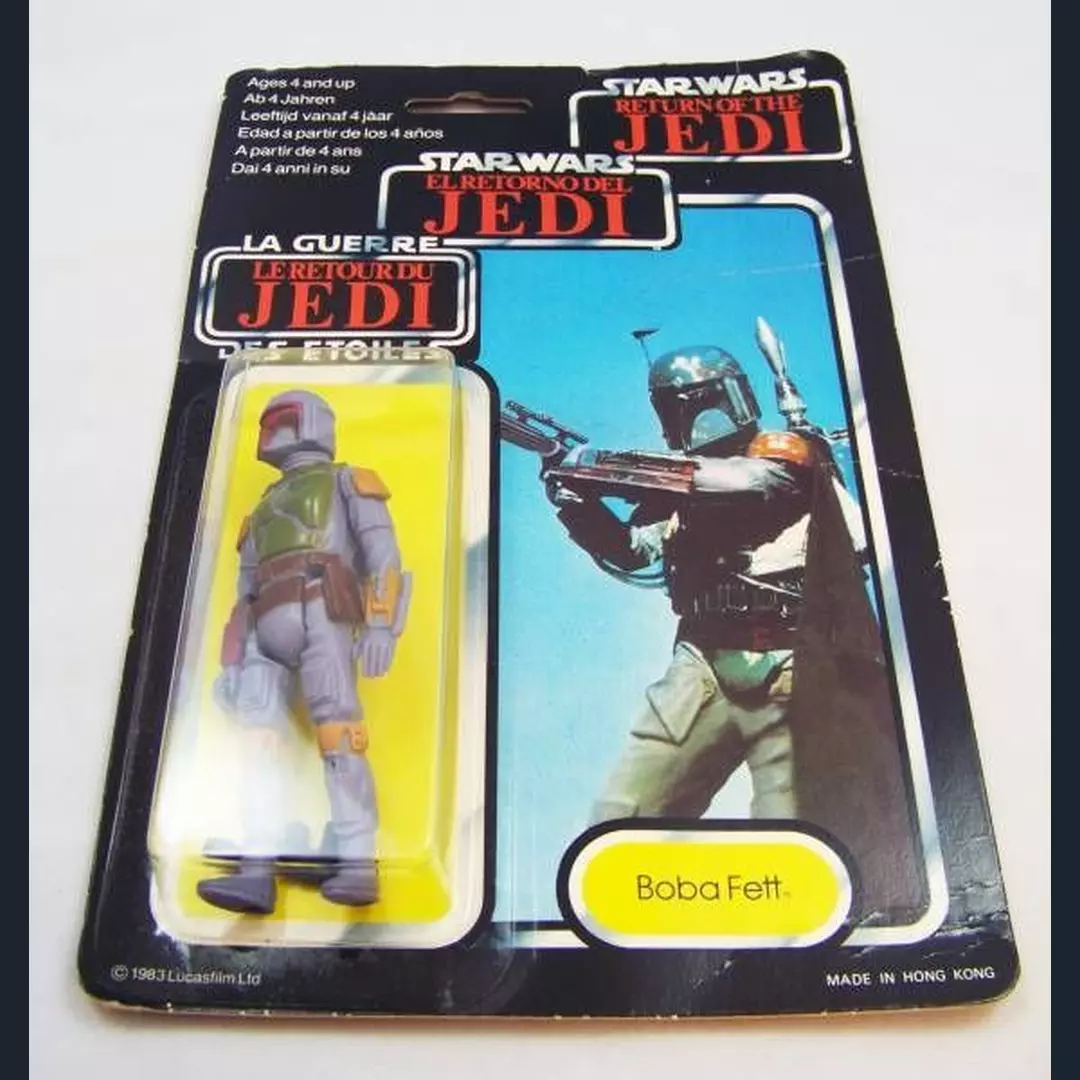
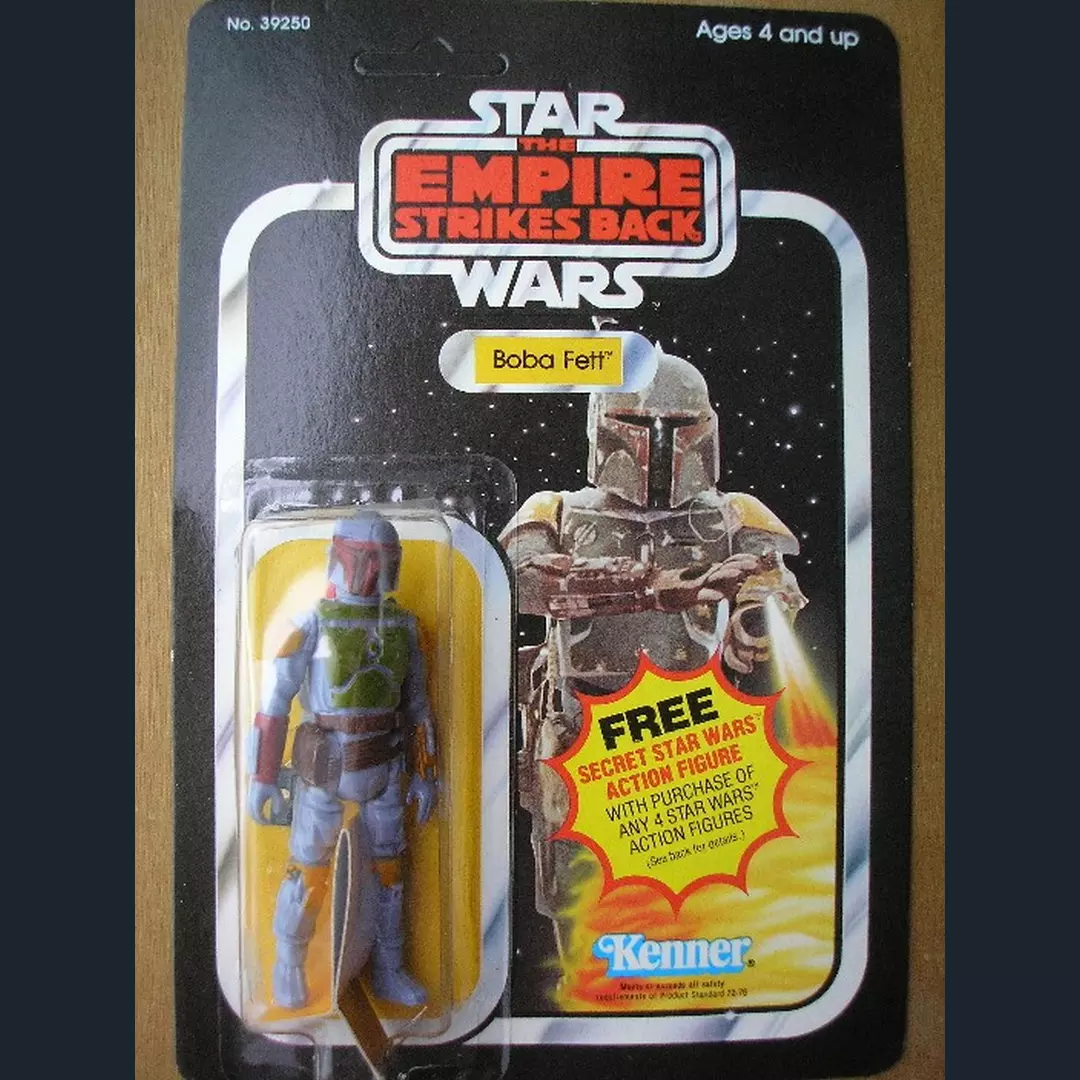
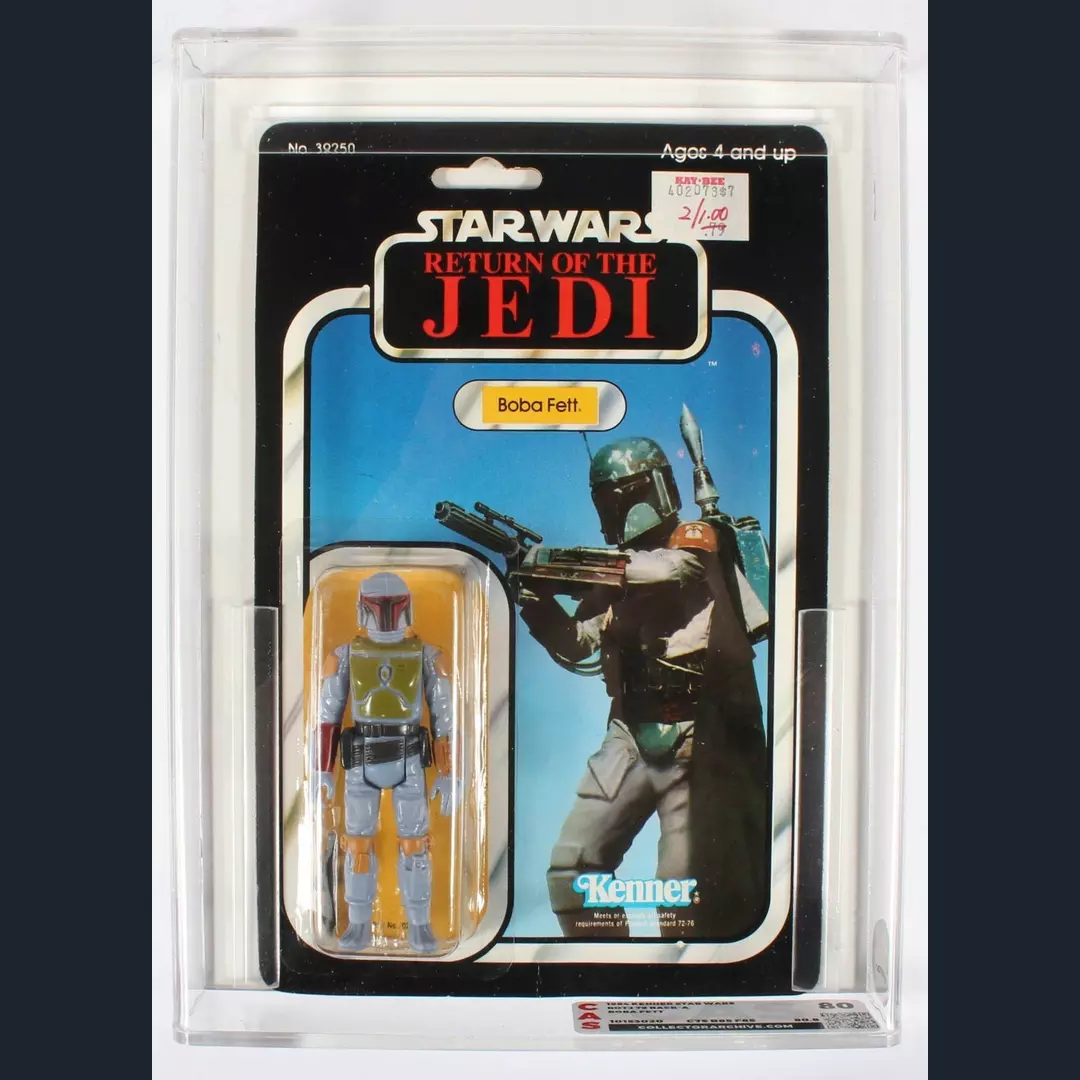
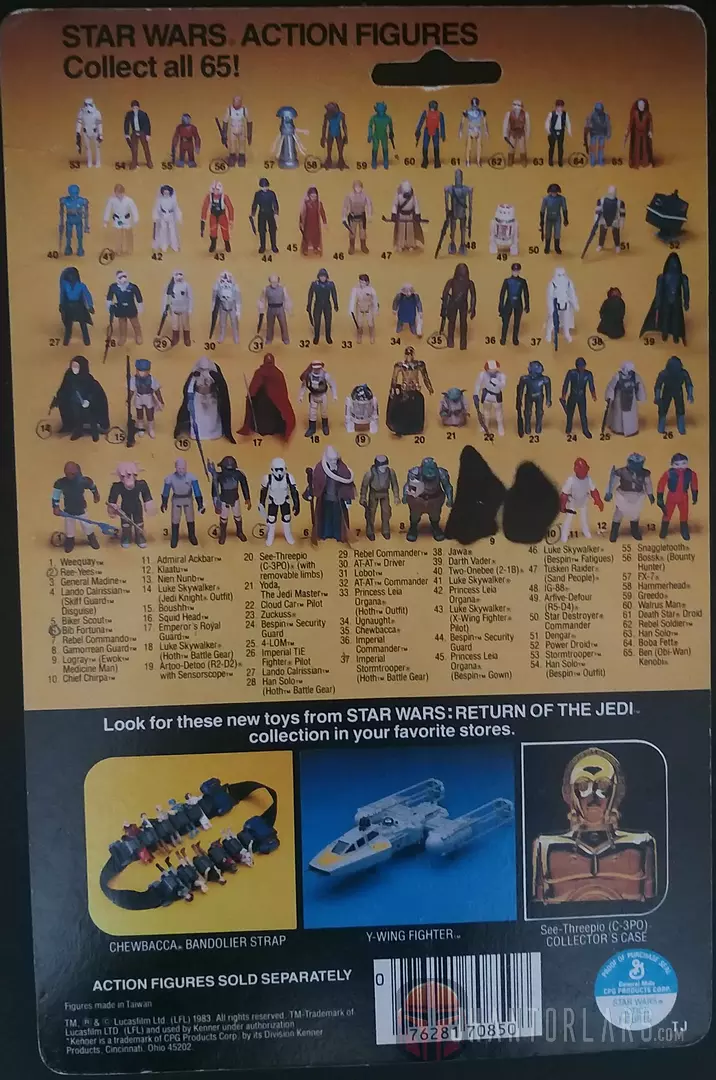
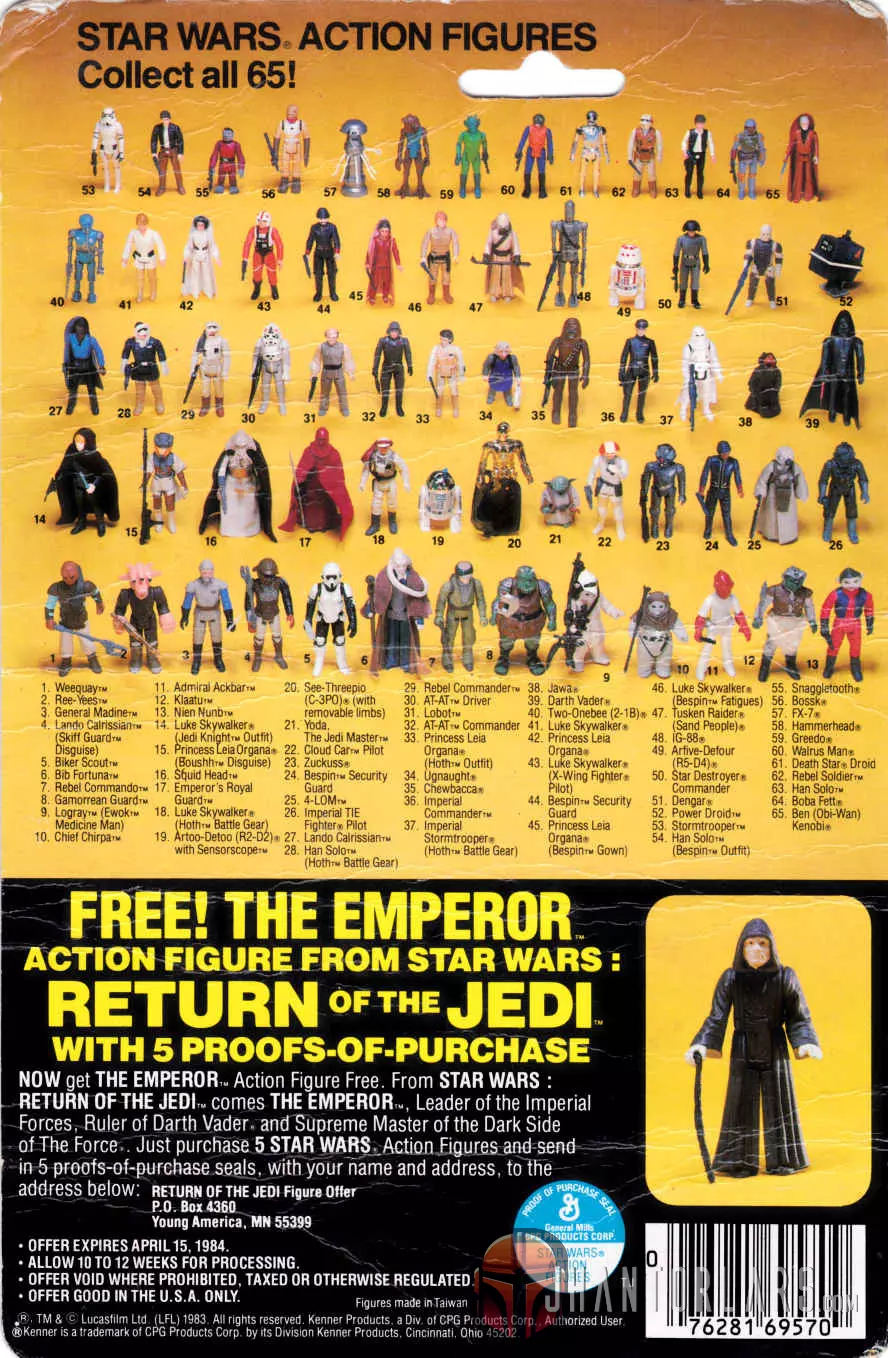
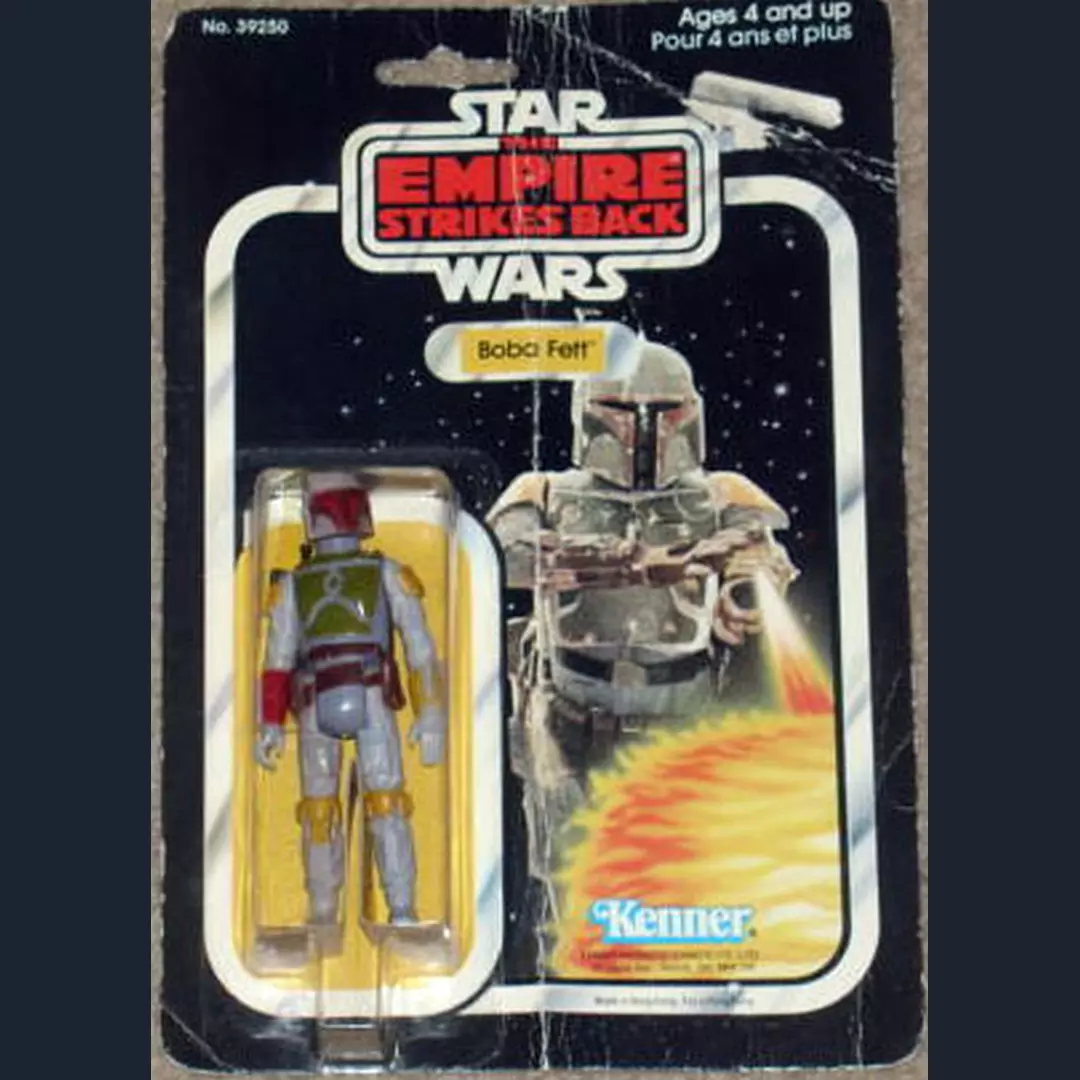
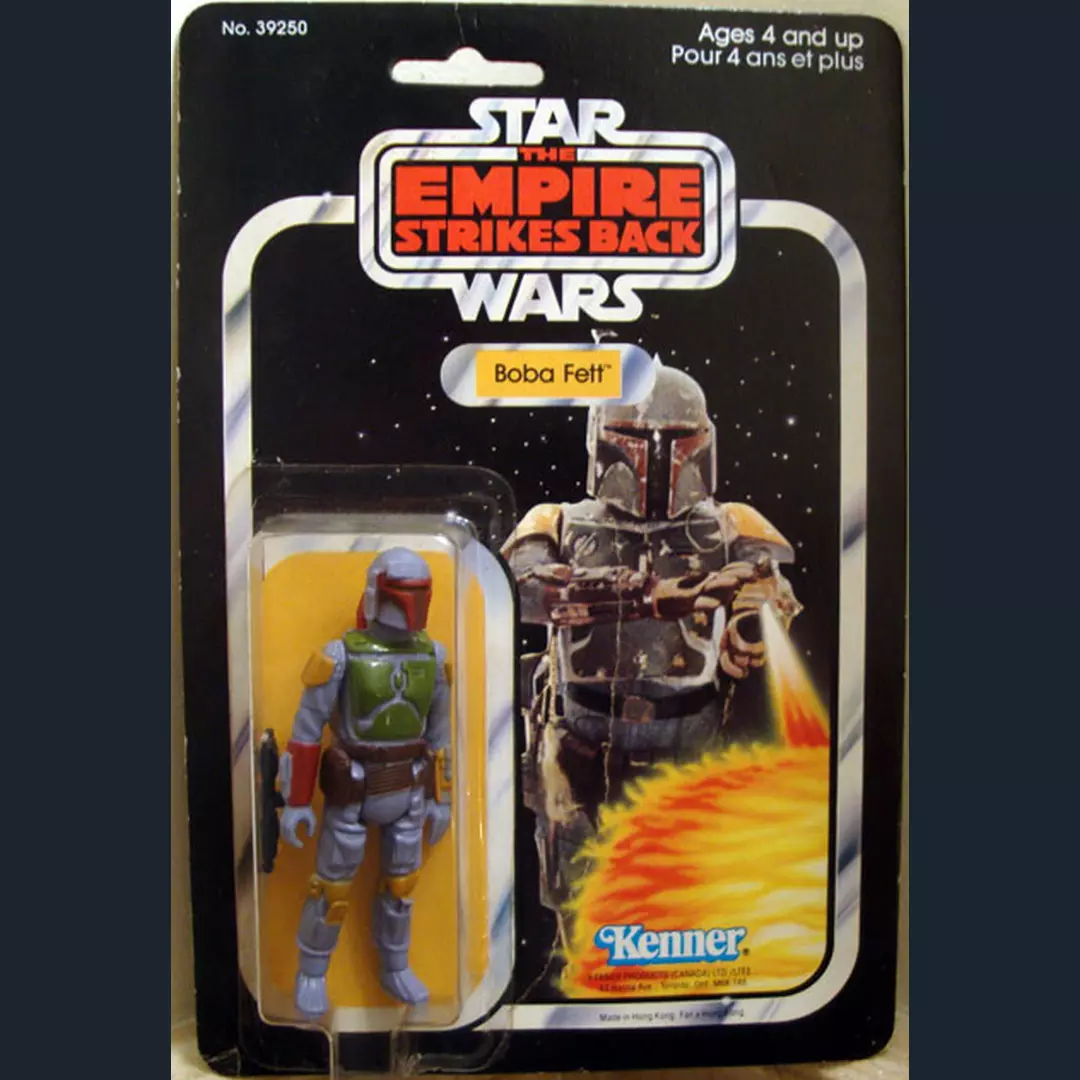
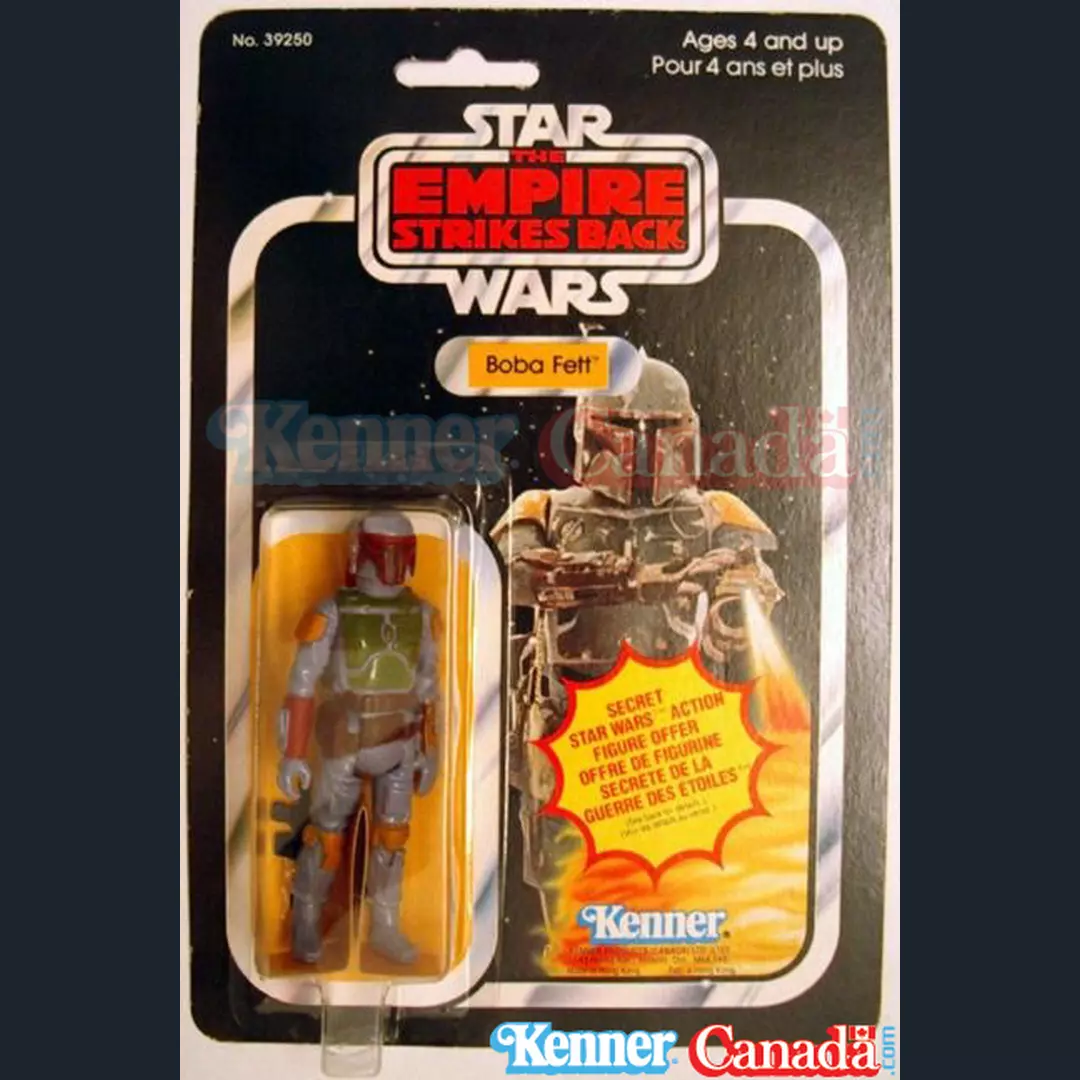
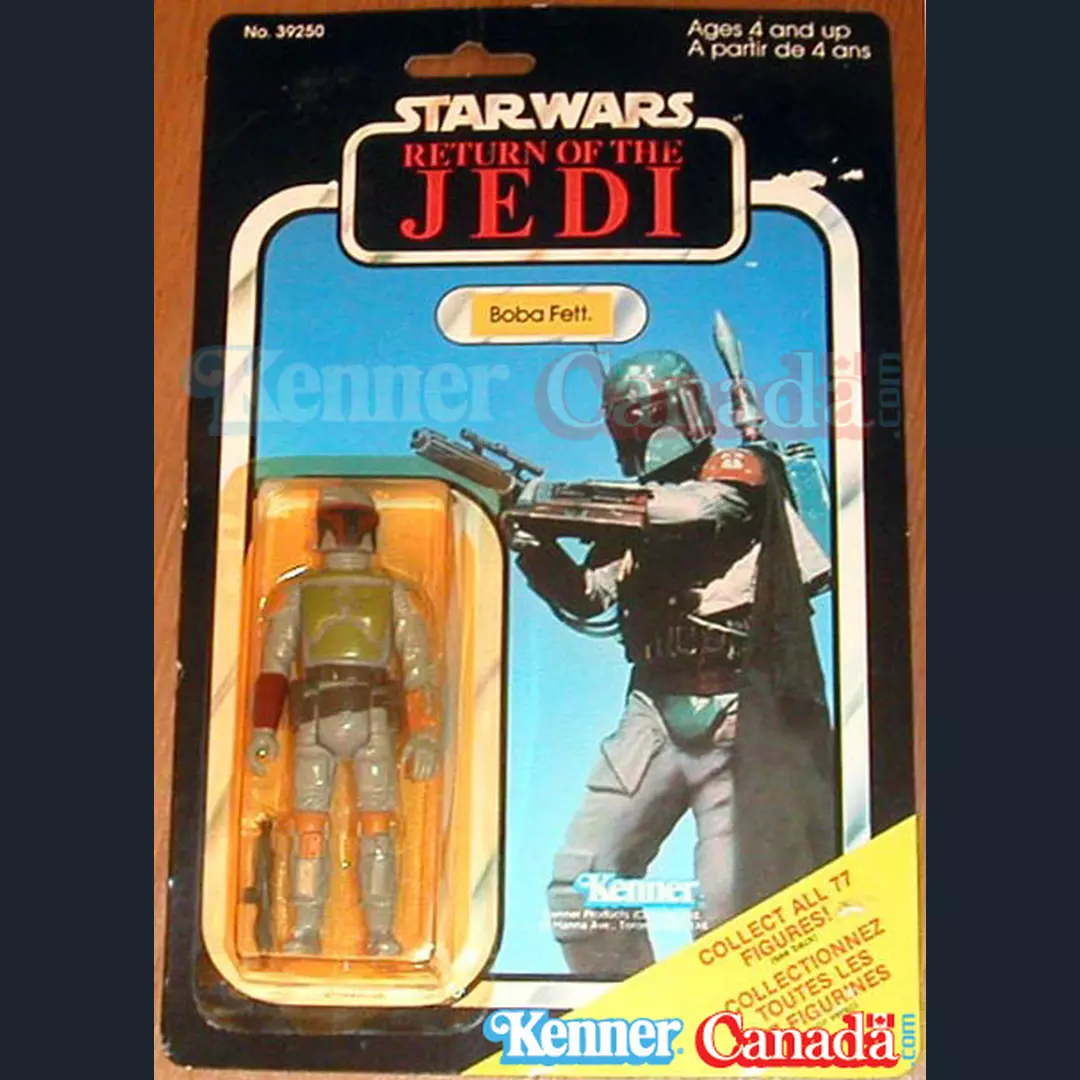
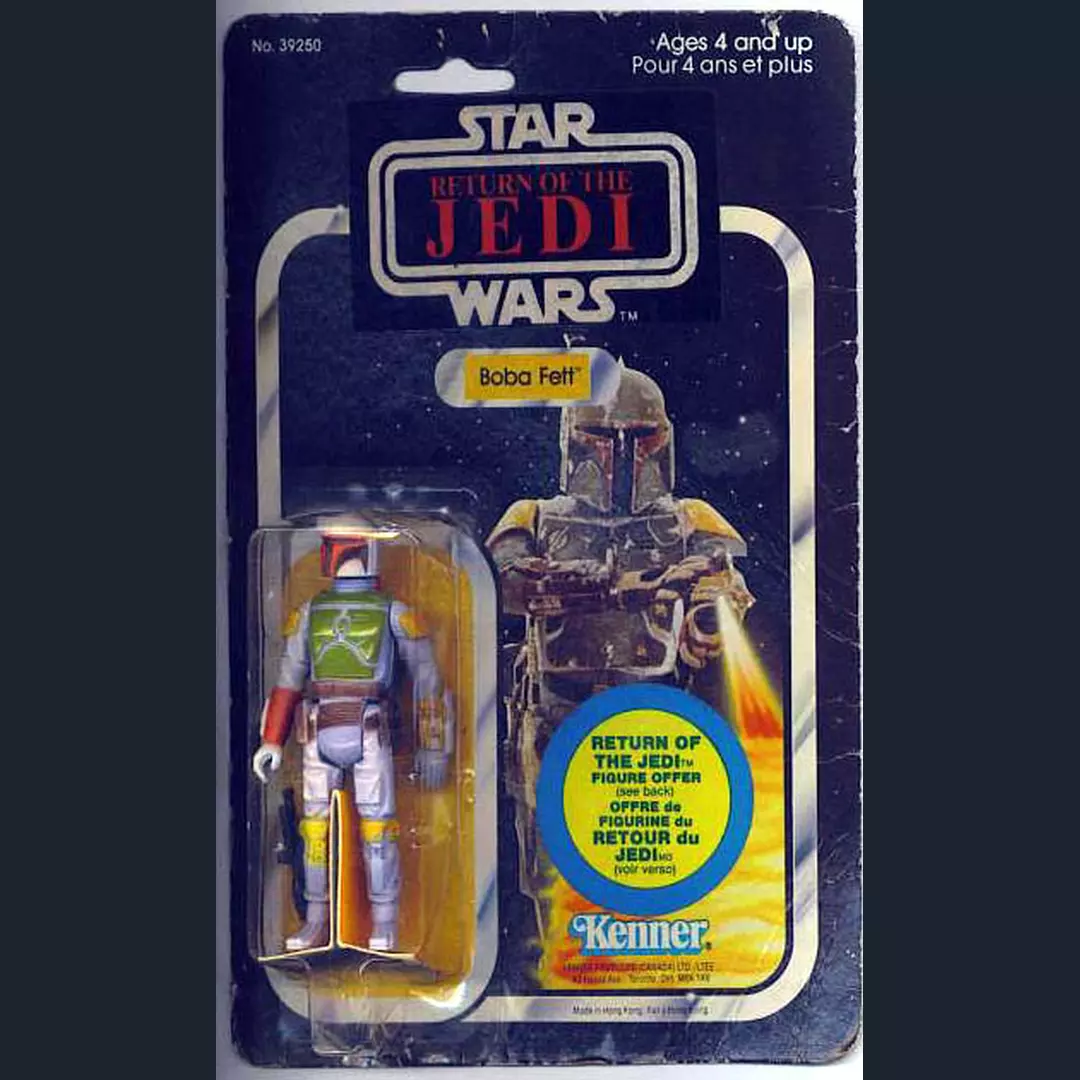
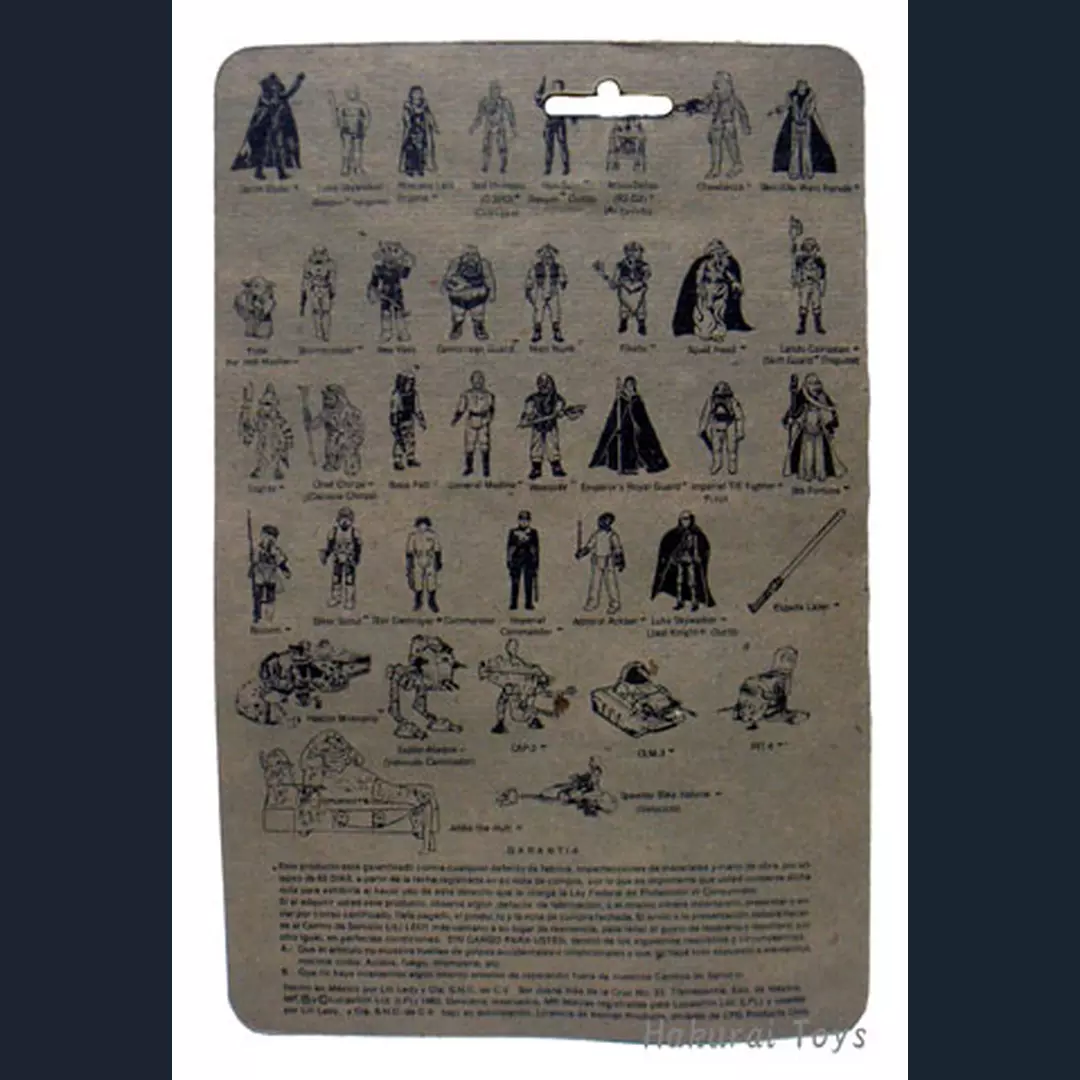
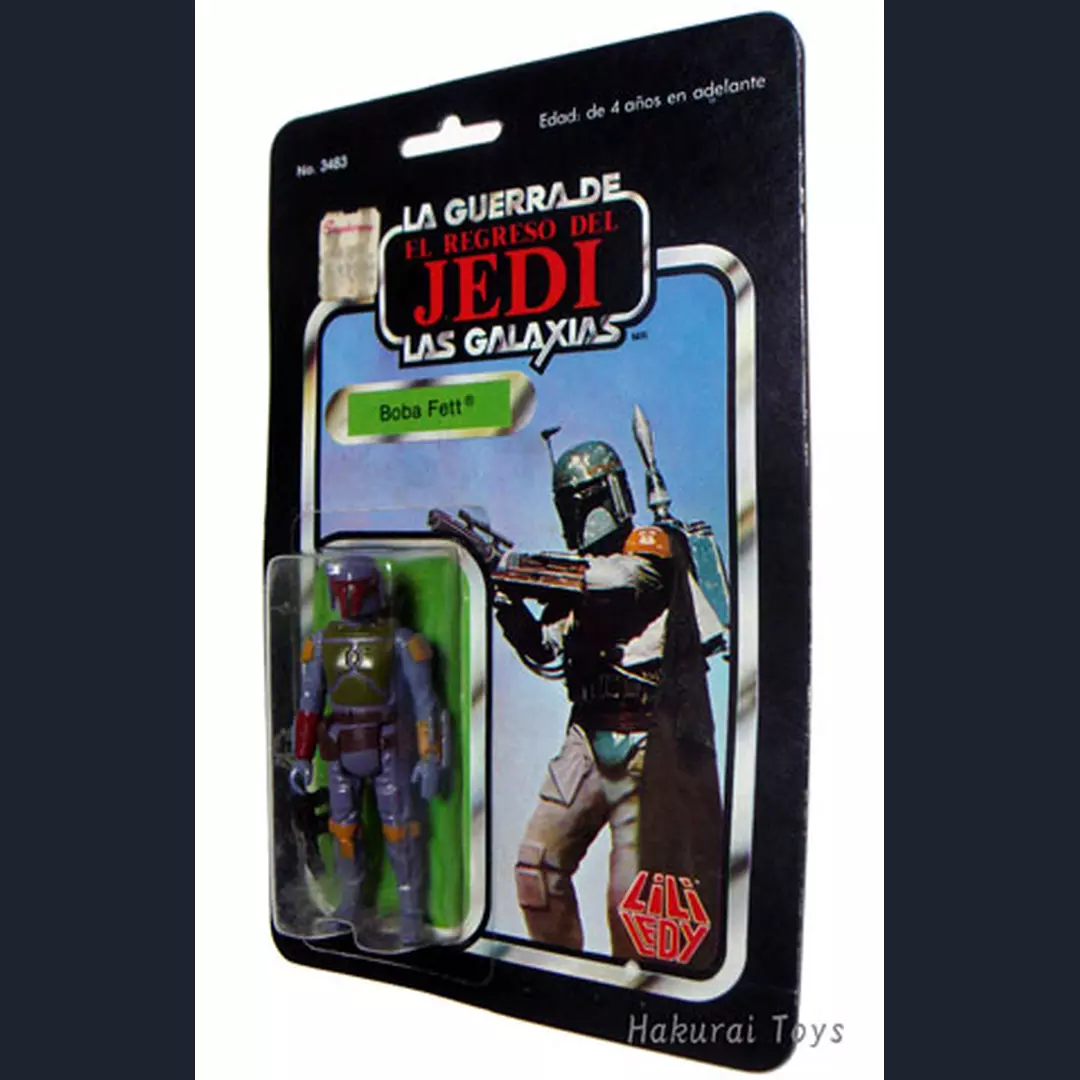
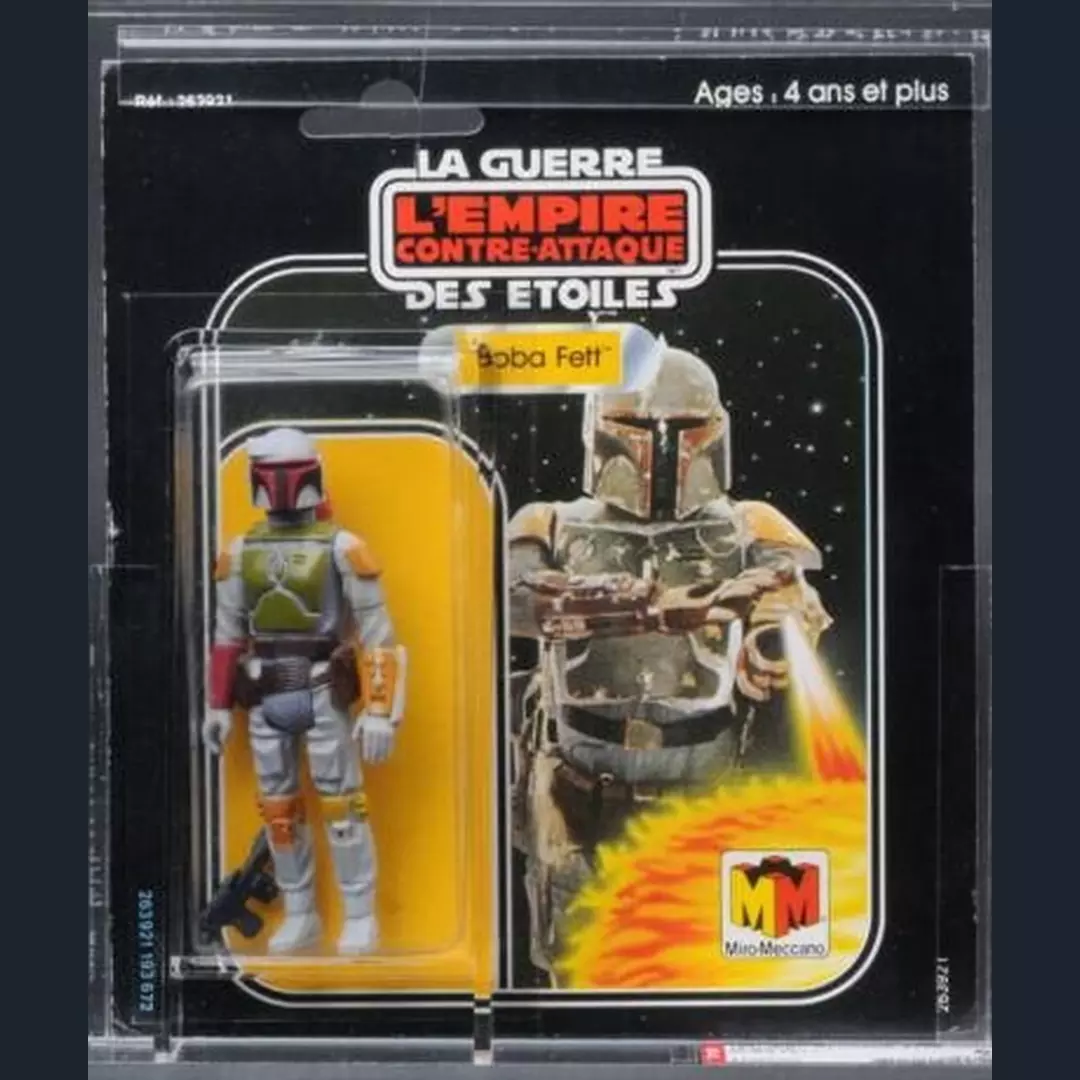
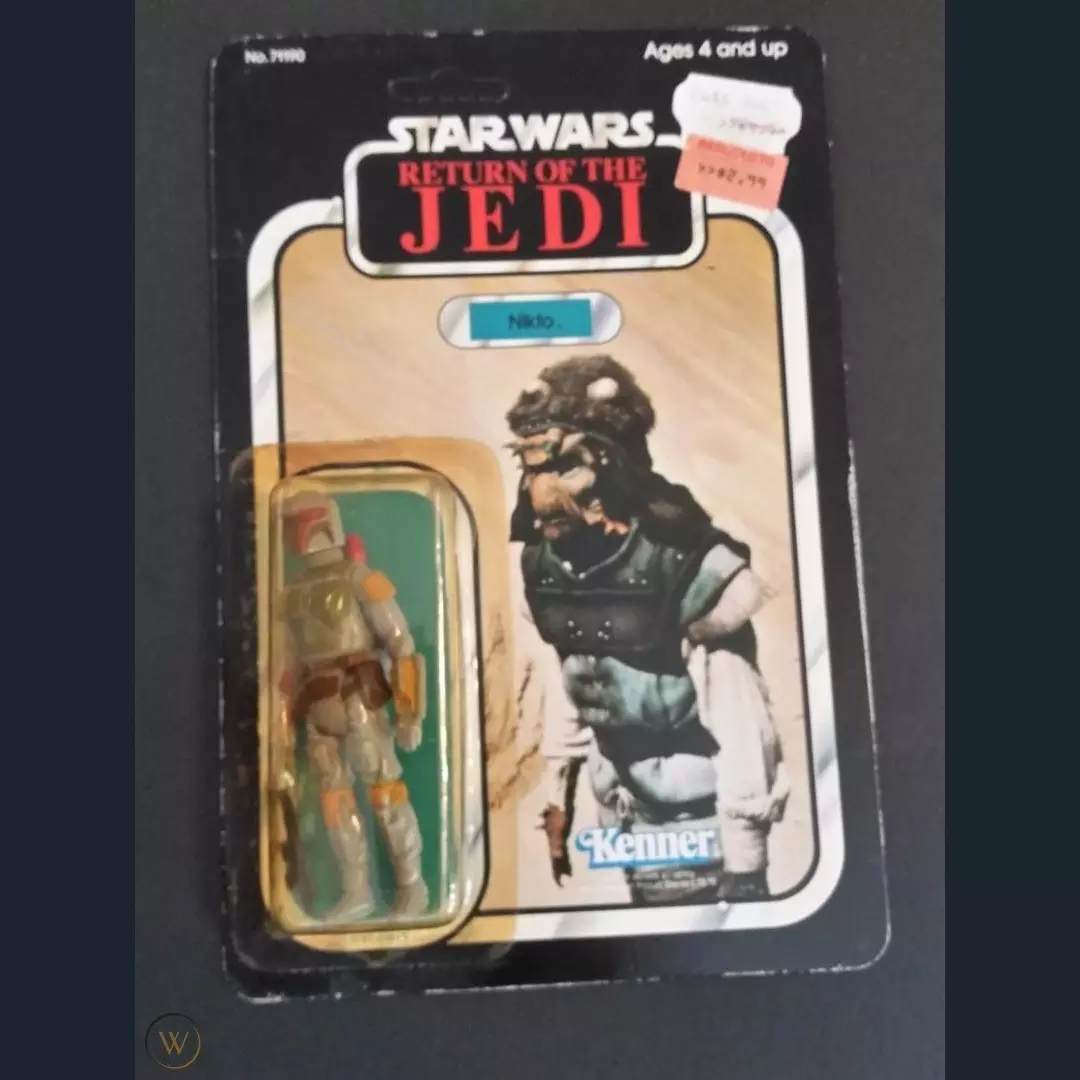
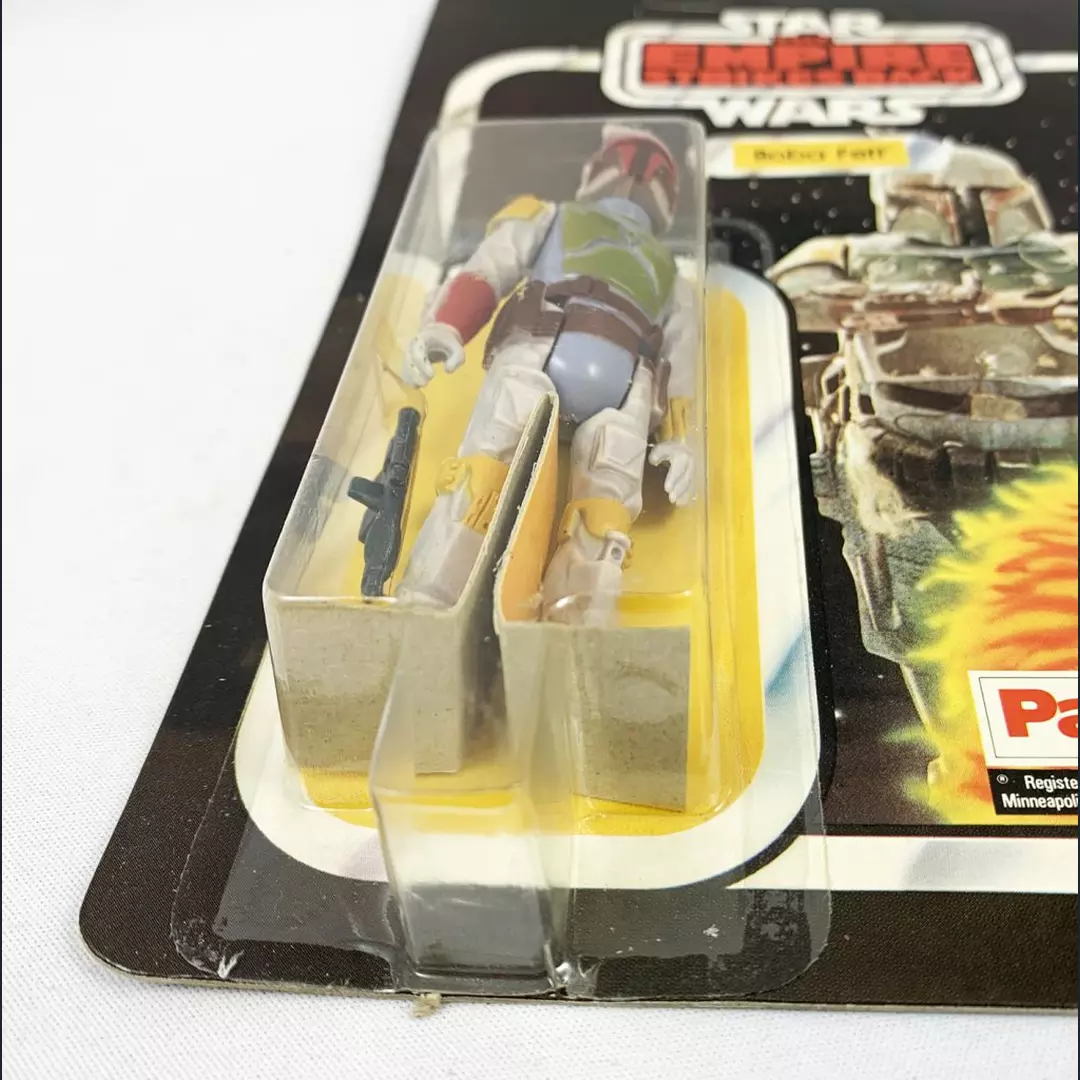
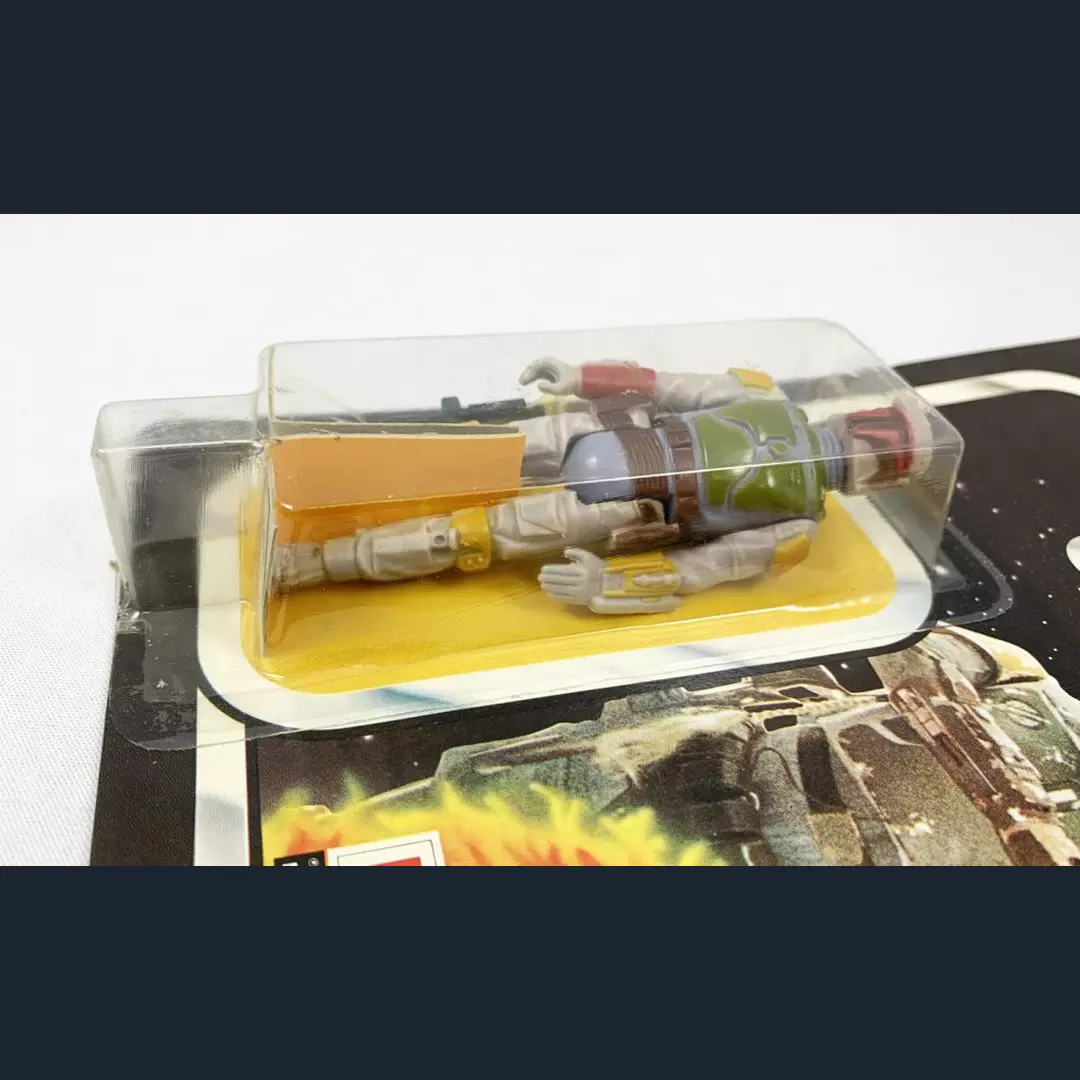
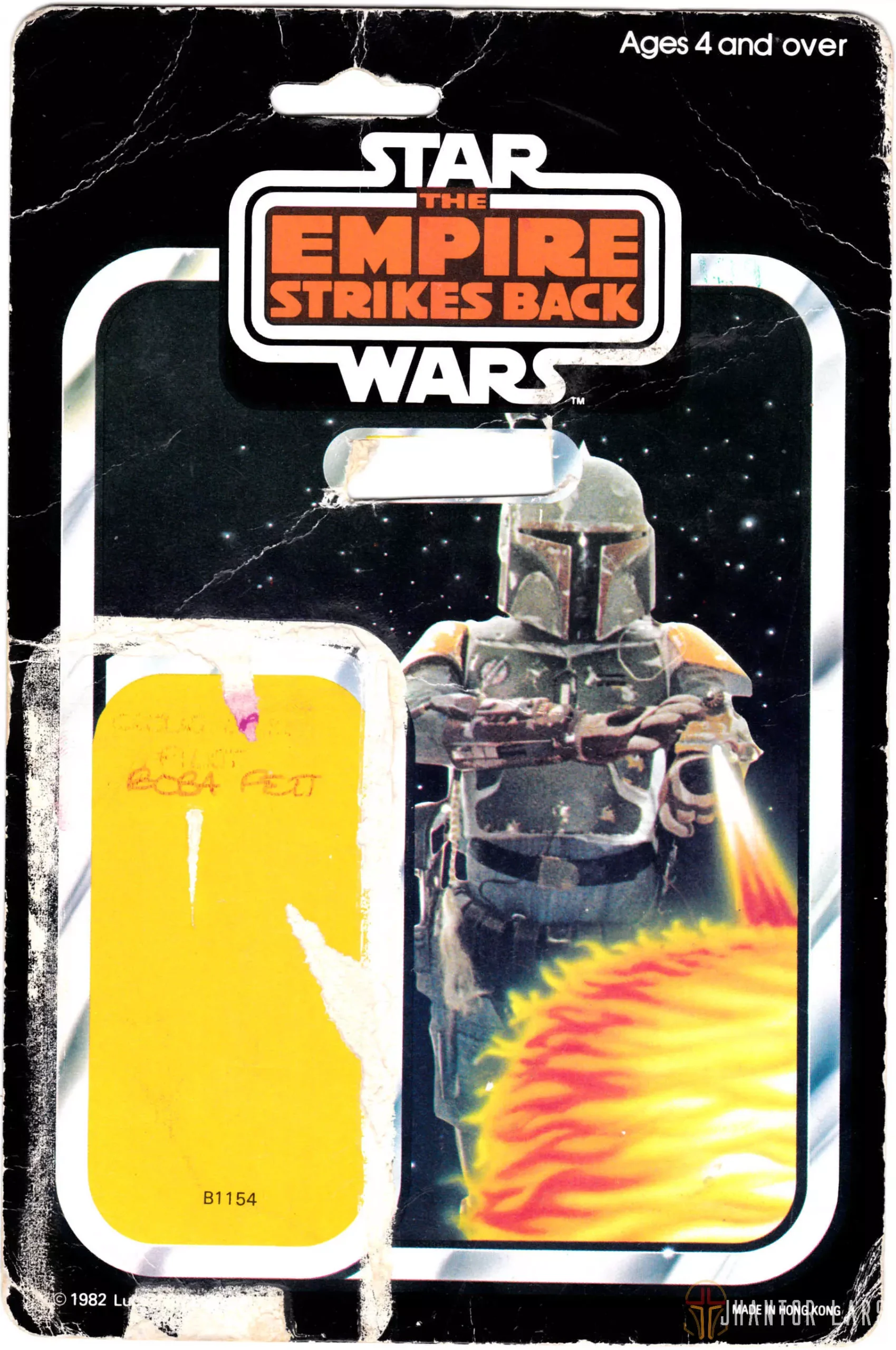
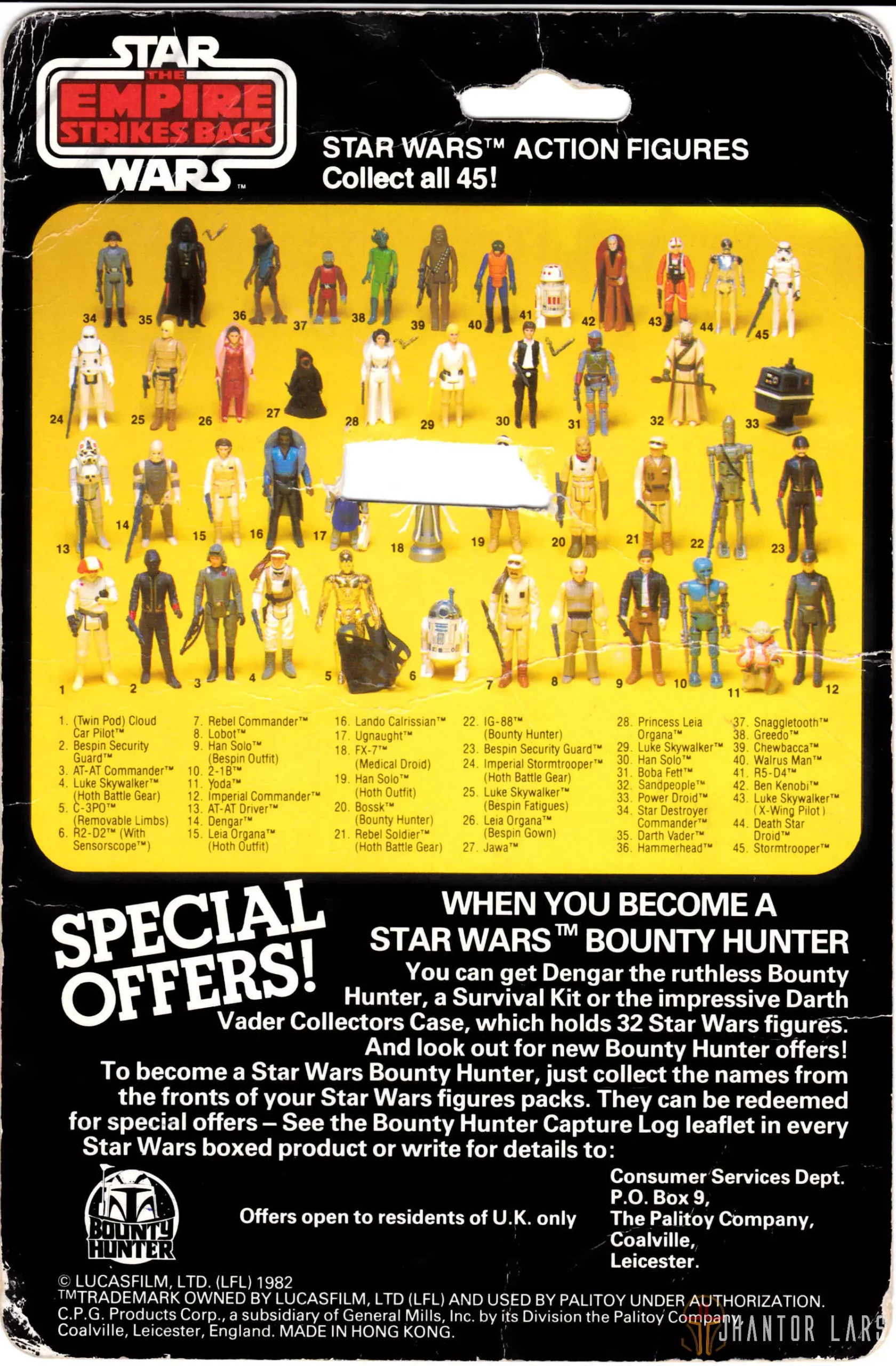
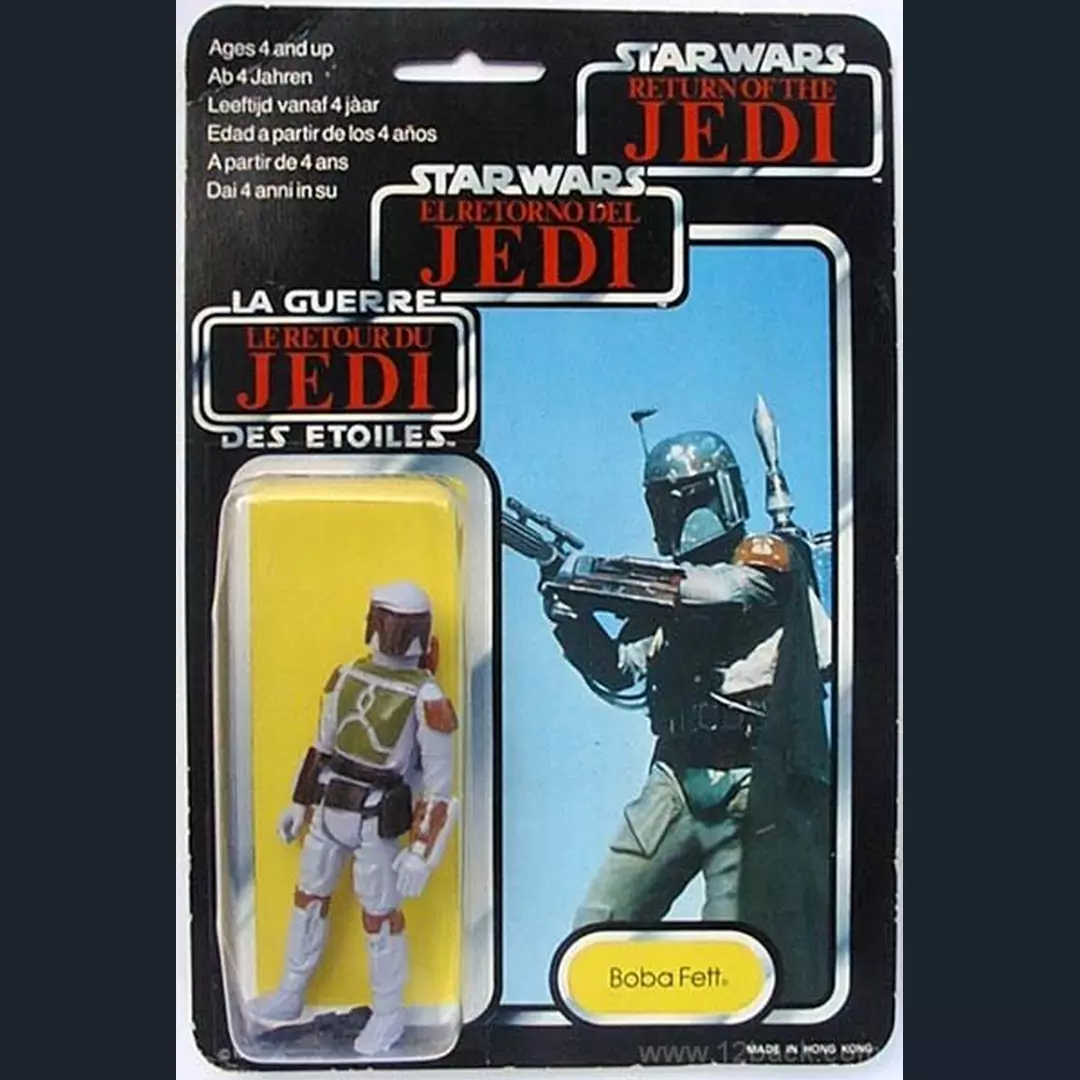
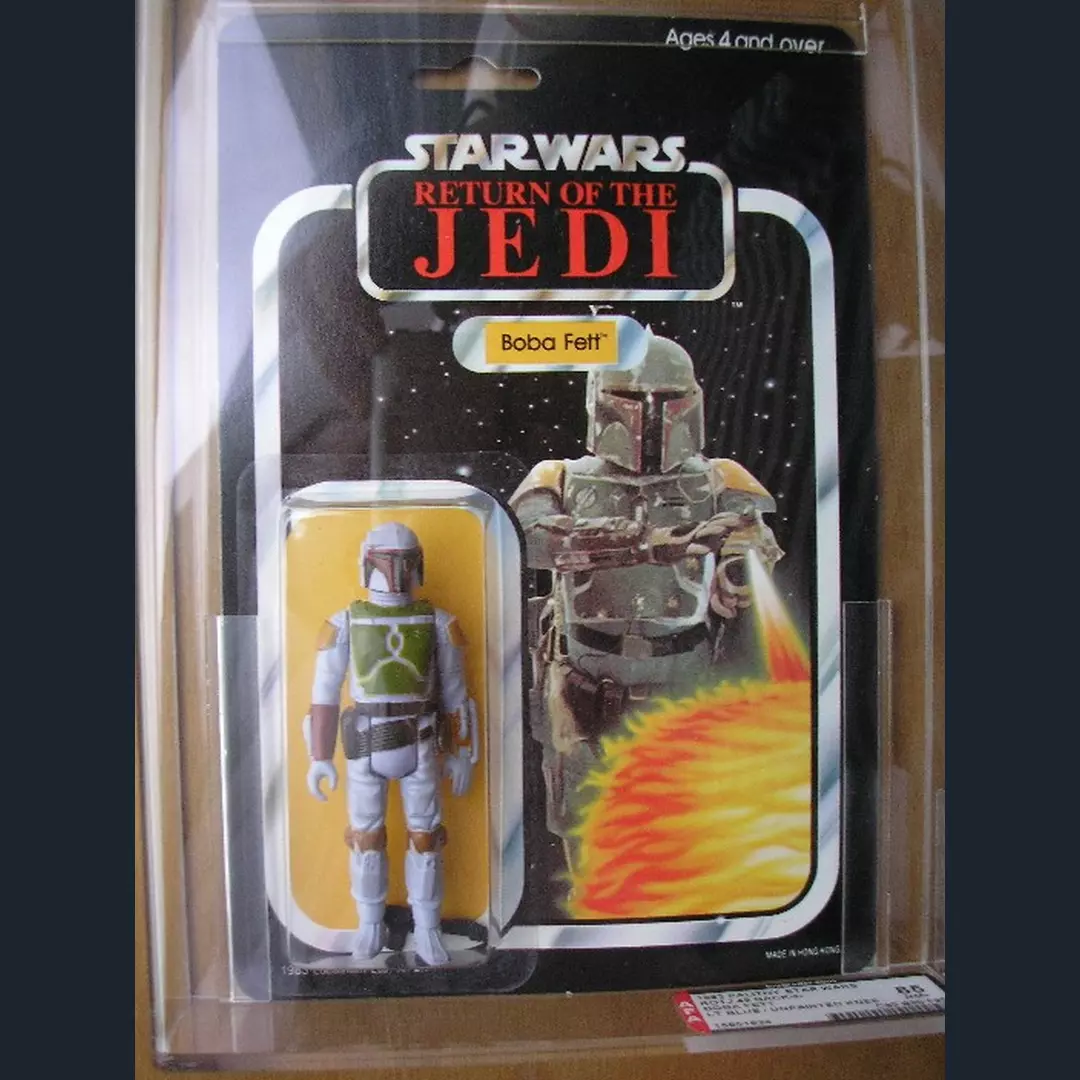
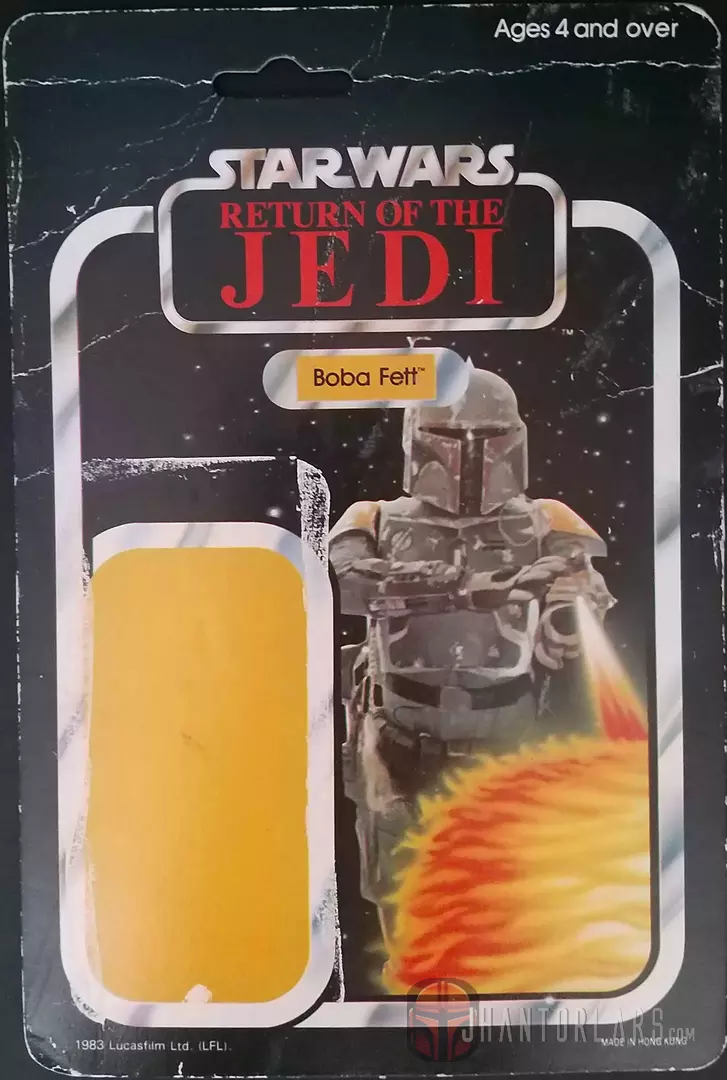
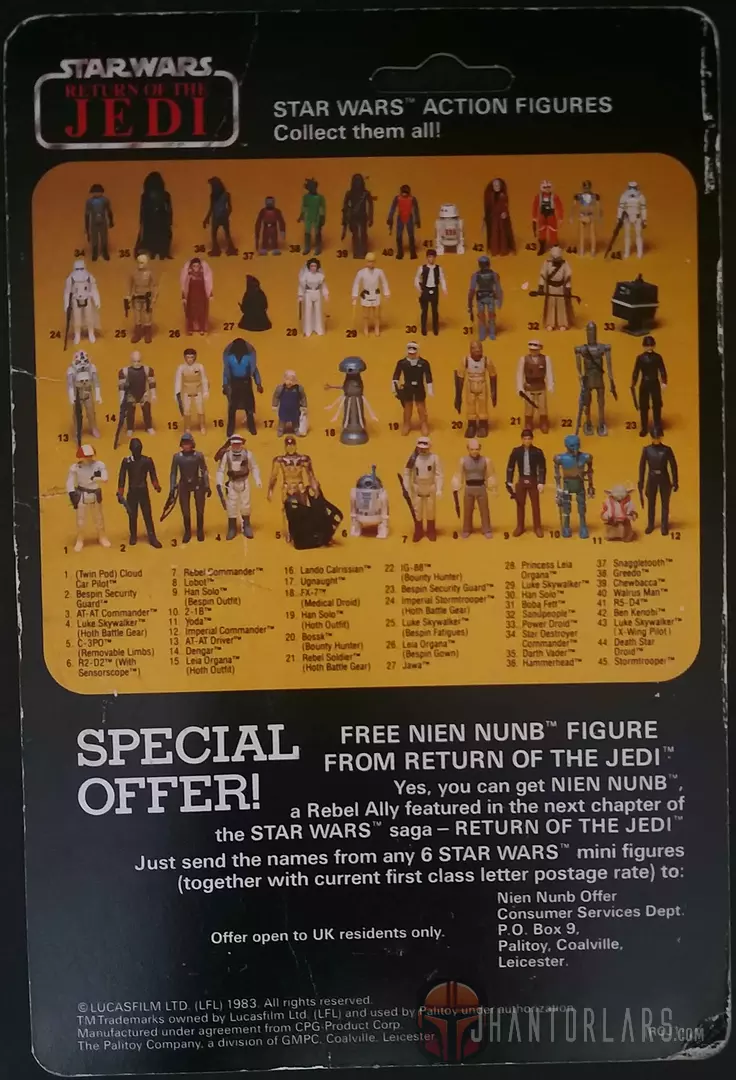
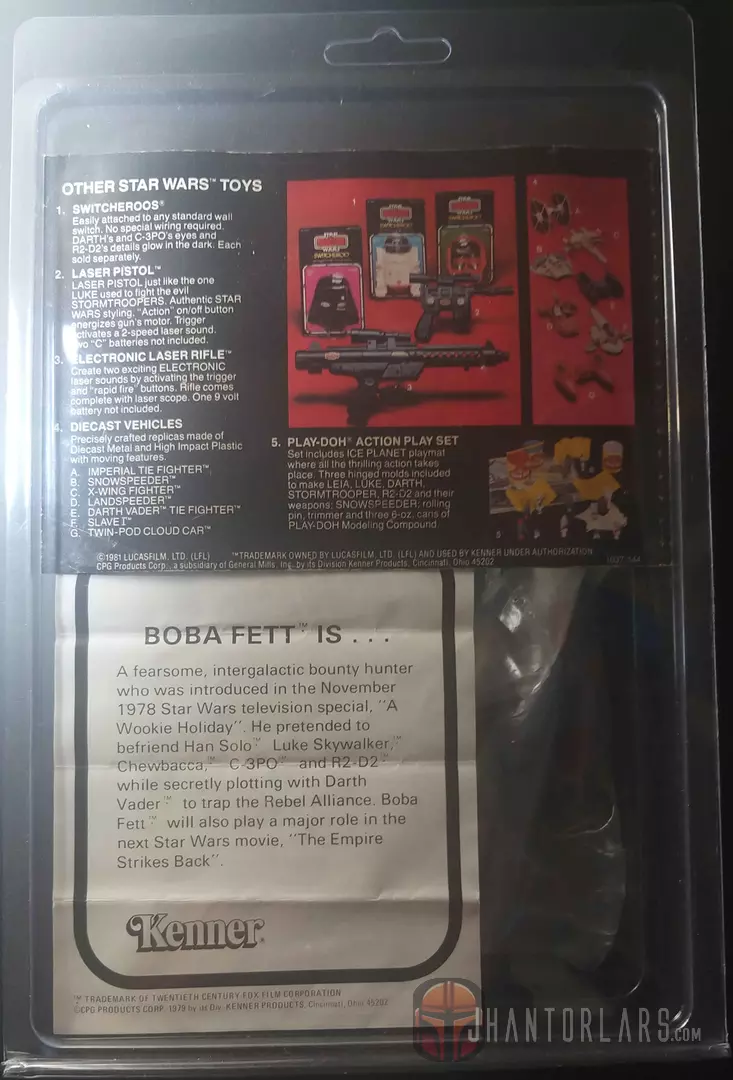
Esta fue la última de las figuras de la colección de Star Wars en ser lanzada, pero como se menciona en el cartón 21 back, Boba Fett es un personaje de la película The Empire Strikes Back. Aunque la versión de la figura en la colección The Empire Strikes Back tiene la misma foto, el texto de la bola de fuego ya no existe por razones obvias. Para la colección final de Return of the Jedi, desde el cartón 65 back la fotografía utilizada para el personaje fue cambiada por una captura de la película.
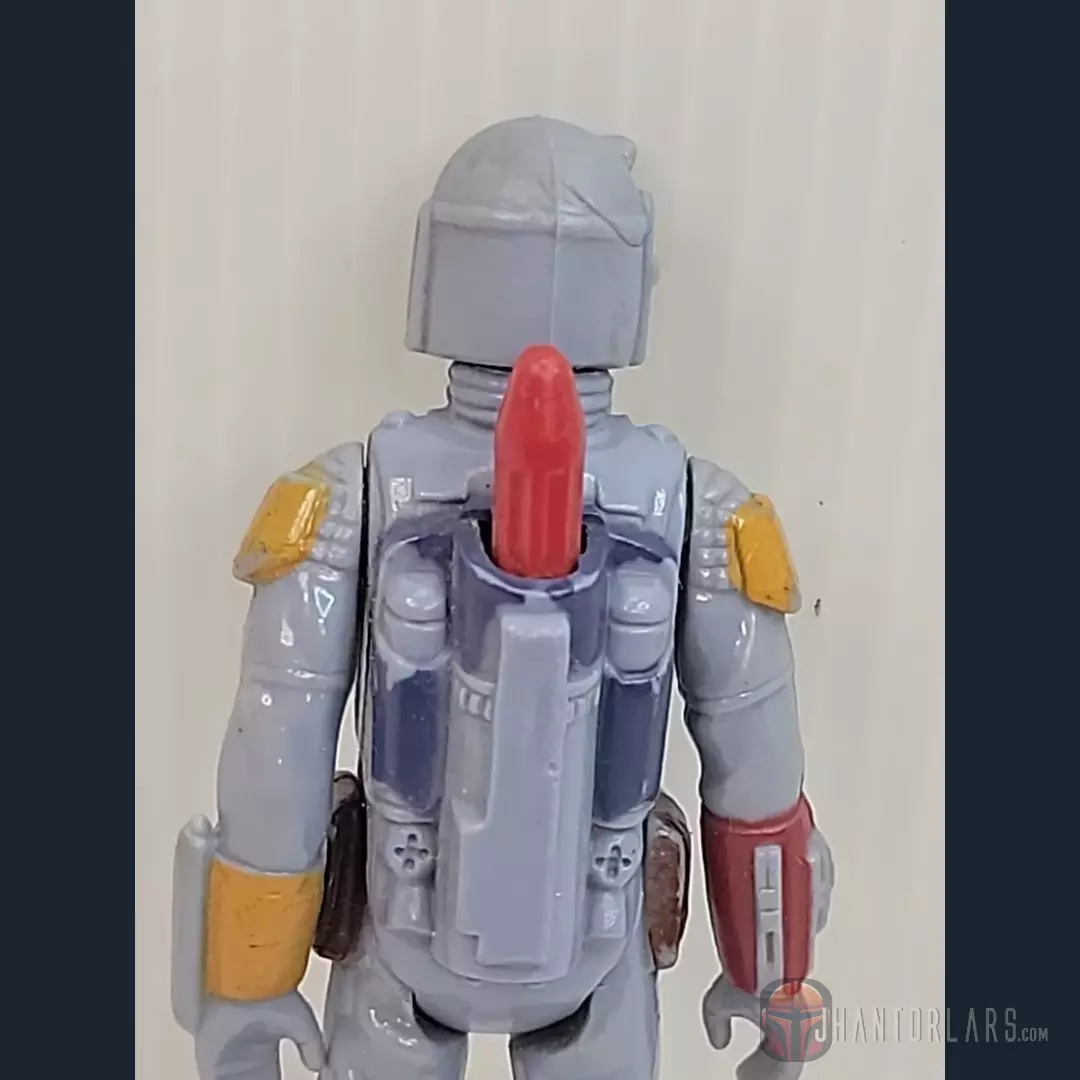
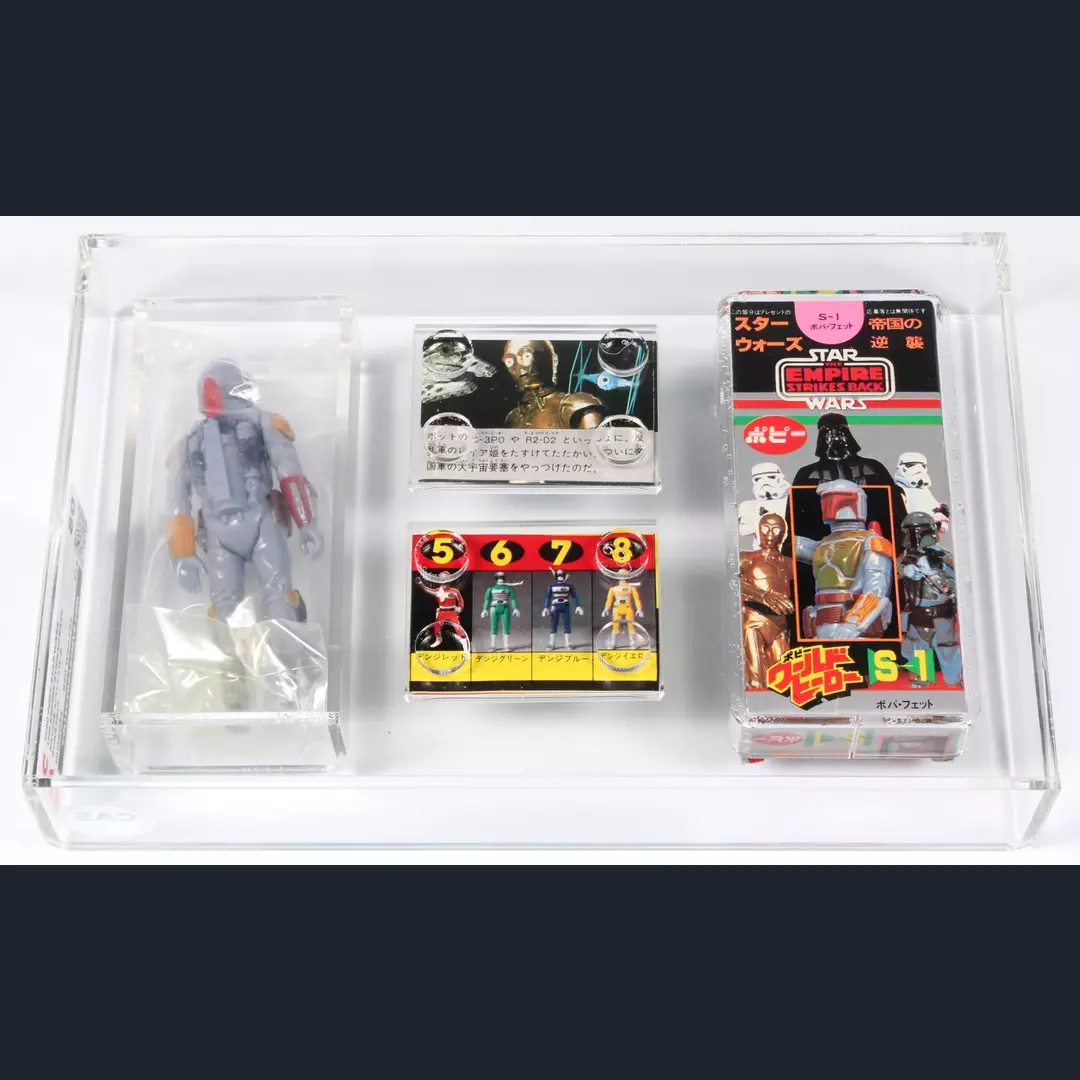
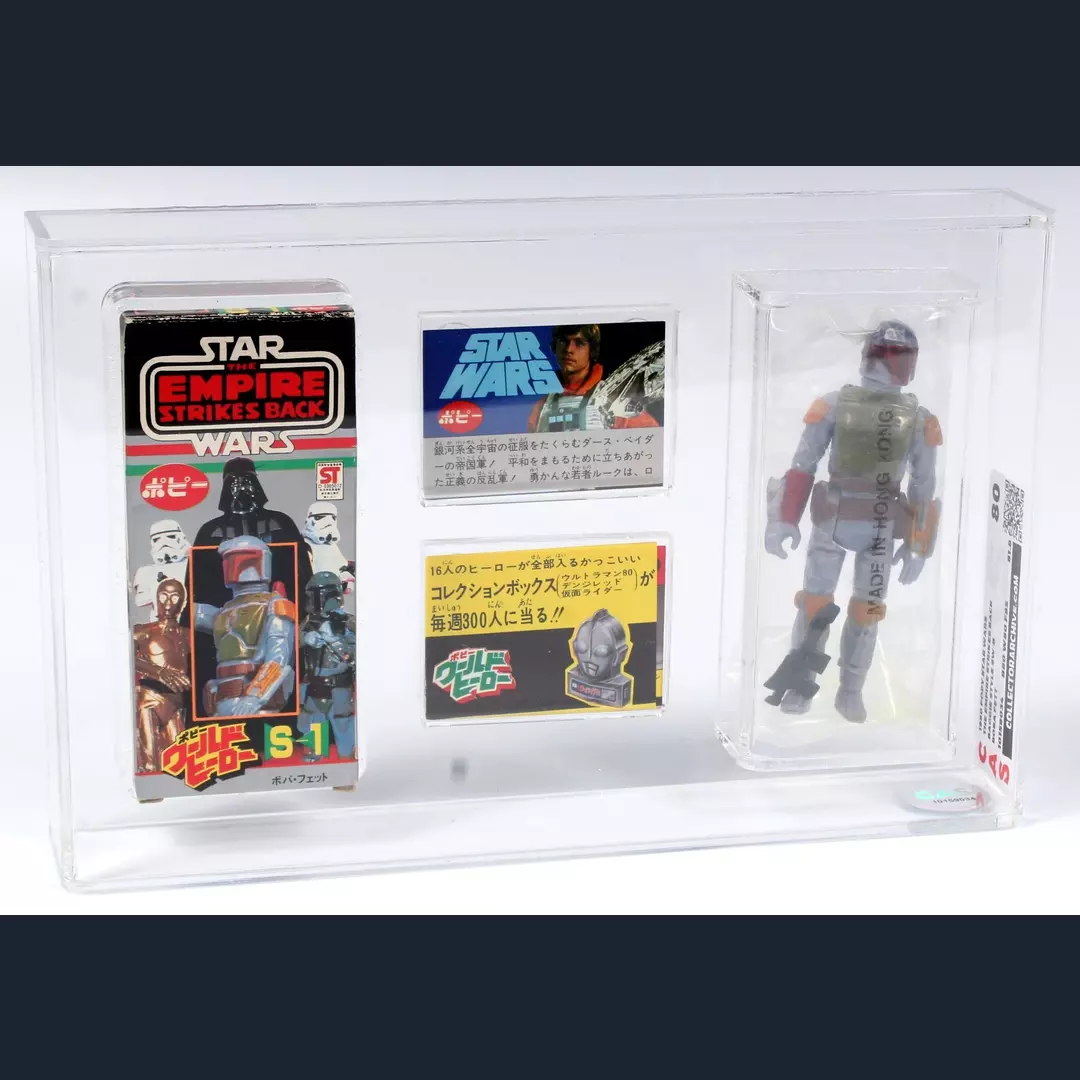
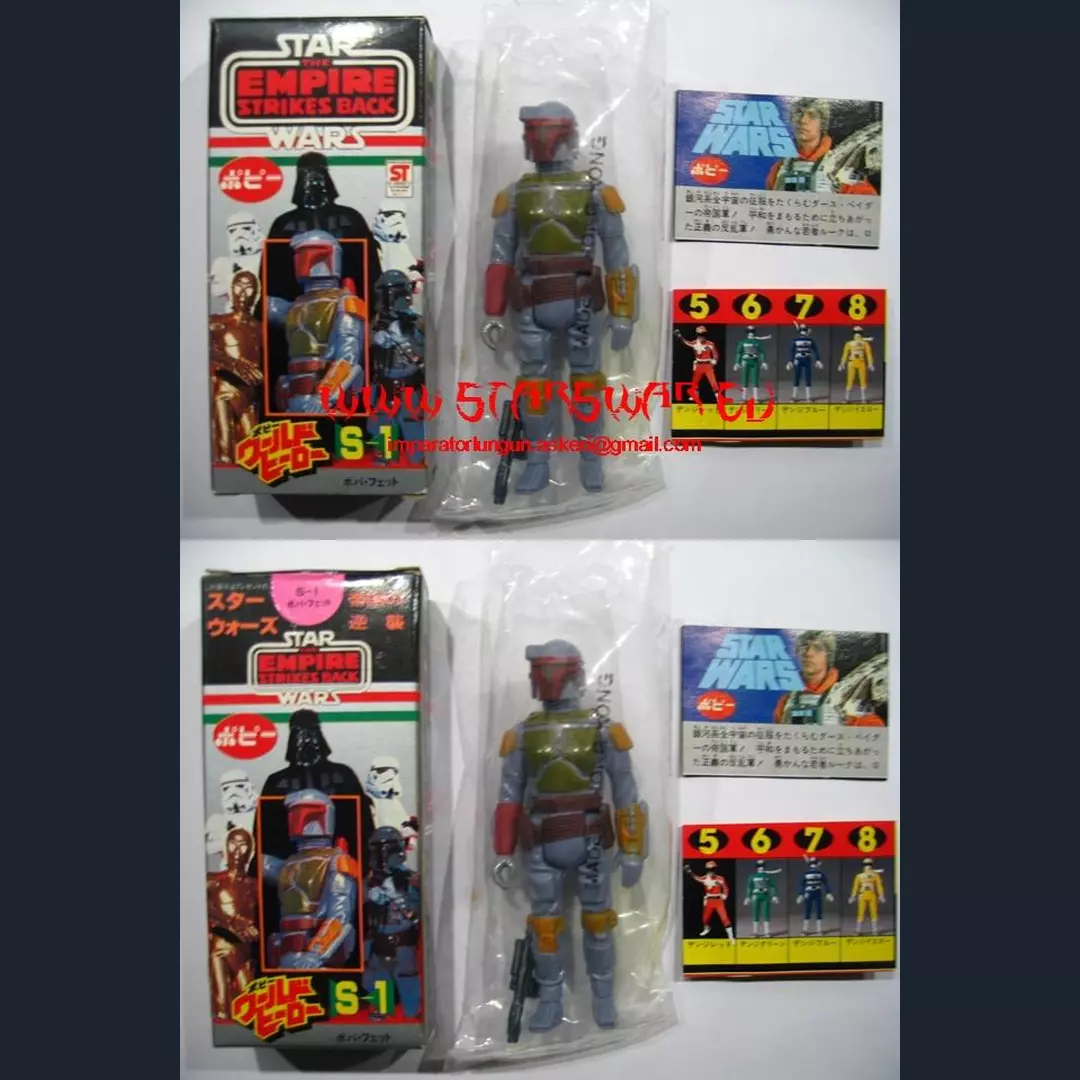
La promoción “mail-in” de Kenner implicaba enviar 4 pruebas de compra y, aproximadamente en 6-8 semanas, recibirías la figura por correo. La promoción estaba programada para durar desde enero hasta mayo de 1979. La figura en cuestión venía en una caja como era costumbre en las entregas de Kenner y dentro de una figura Kenner (fotografías gracias a The Archive Database). Además, se incluía un pequeño folleto. Sin embargo, cuando llegaron las primeras figuras de Boba Fett, la gente quedó muy decepcionada: la figura no disparaba el cohete que tanto se había promocionado. Estaba adherido permanentemente a la mochila, sin posibilidad de ser removido.
13 Agosto 1979 – Patente Comercial
Presentada el 13 de agosto de 1979, esta patente de figura de acción nos da gloriosos dibujos técnicos de la figura de acción de Kenner Boba Fett. El diseño del juguete aparece patentado a nombre de los creadores del personaje, George W. Lucas, Ralph McQuarrie y Joe Johnston.
Curiosamente, en la patente se menciona como referencia:
FAO Schwarz, Spring-Summer, 1978, p. 13, Star War
Figures, top left figure.
Play things, Jul., 1978, p. 21, lower left, Metal-Man.
Primary Examiner-Melvin B. Feifer
Attorney, Agent, or Firm-Bruce Schwab
Lo que podría significar que esta figura aparece en el catálogo primavera-verano (marzo – septiembre) de 1978 de la tienda FAO Schwarz. Para que esto sea posible, la figura en su forma final debiera haber estado lista en marzo o antes de ese año, lo que es imposible. La referencia entonces se puede tratar a las figuras previas de la colección como referentes.
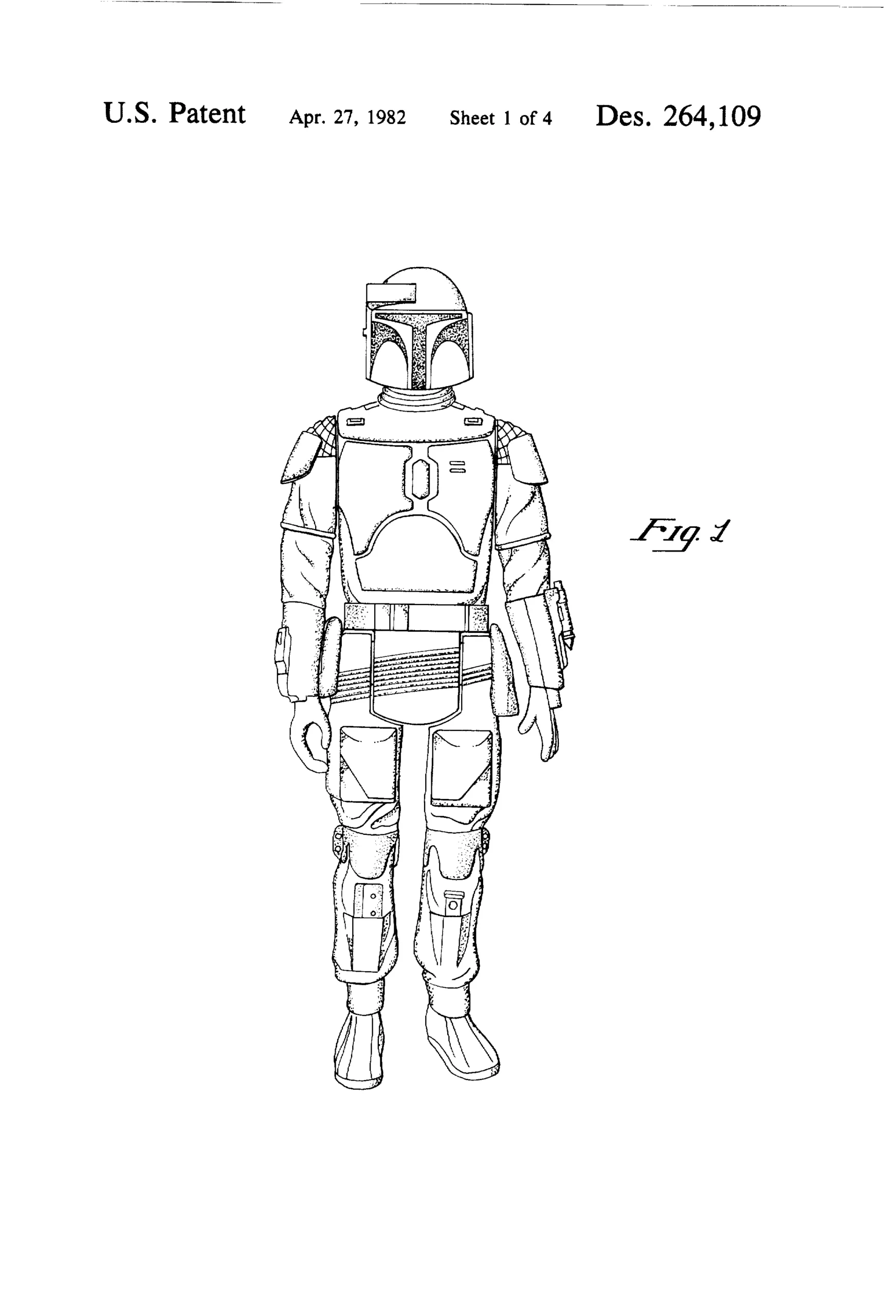
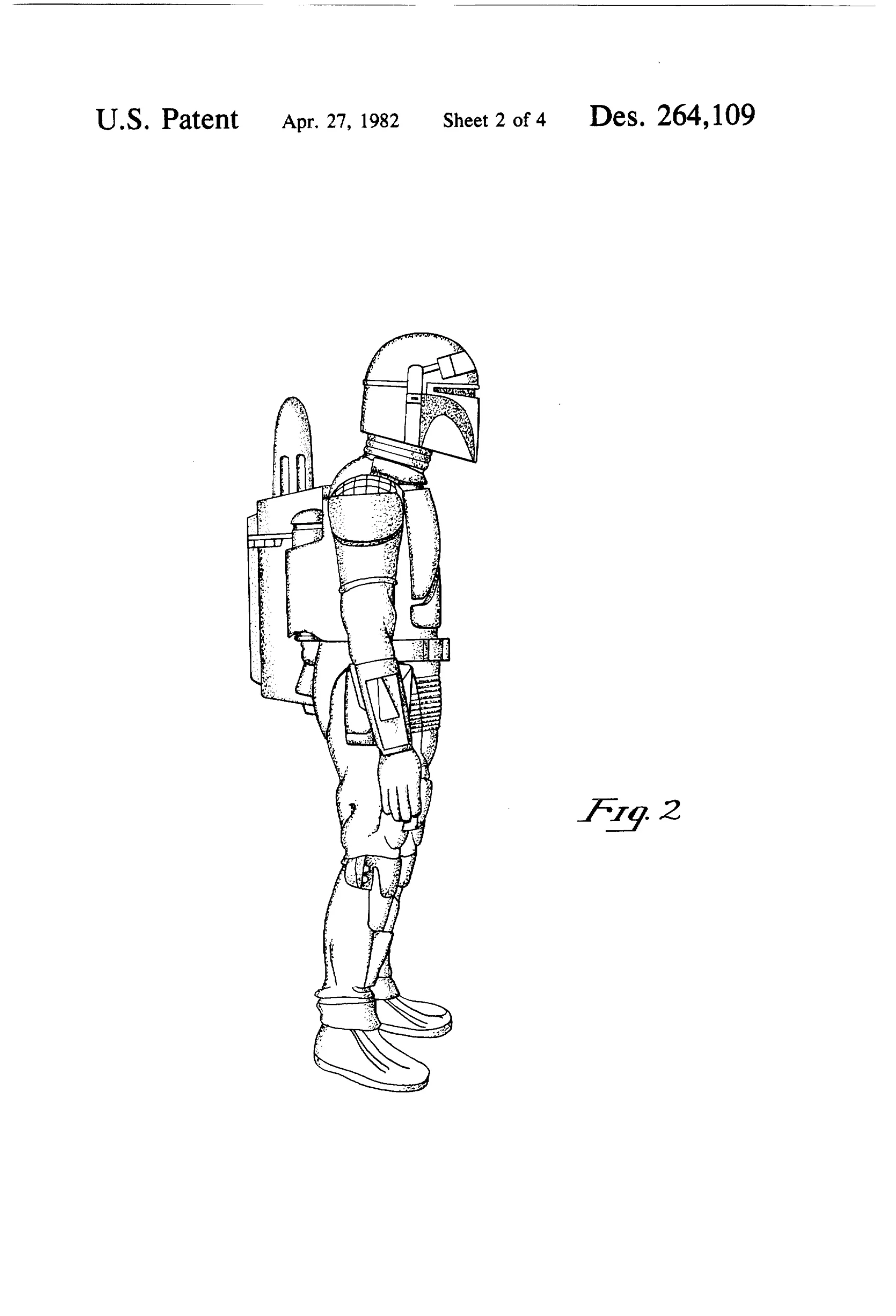
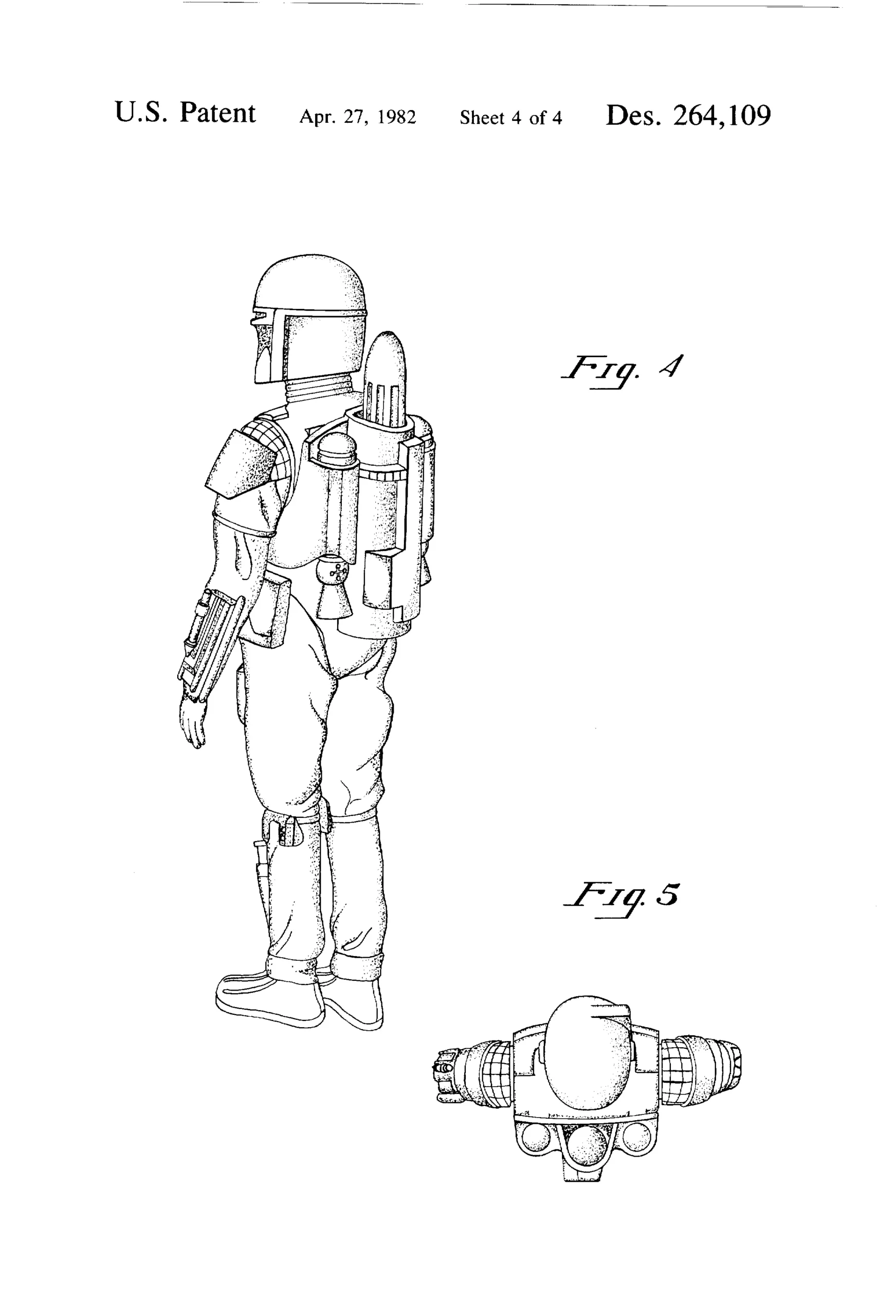
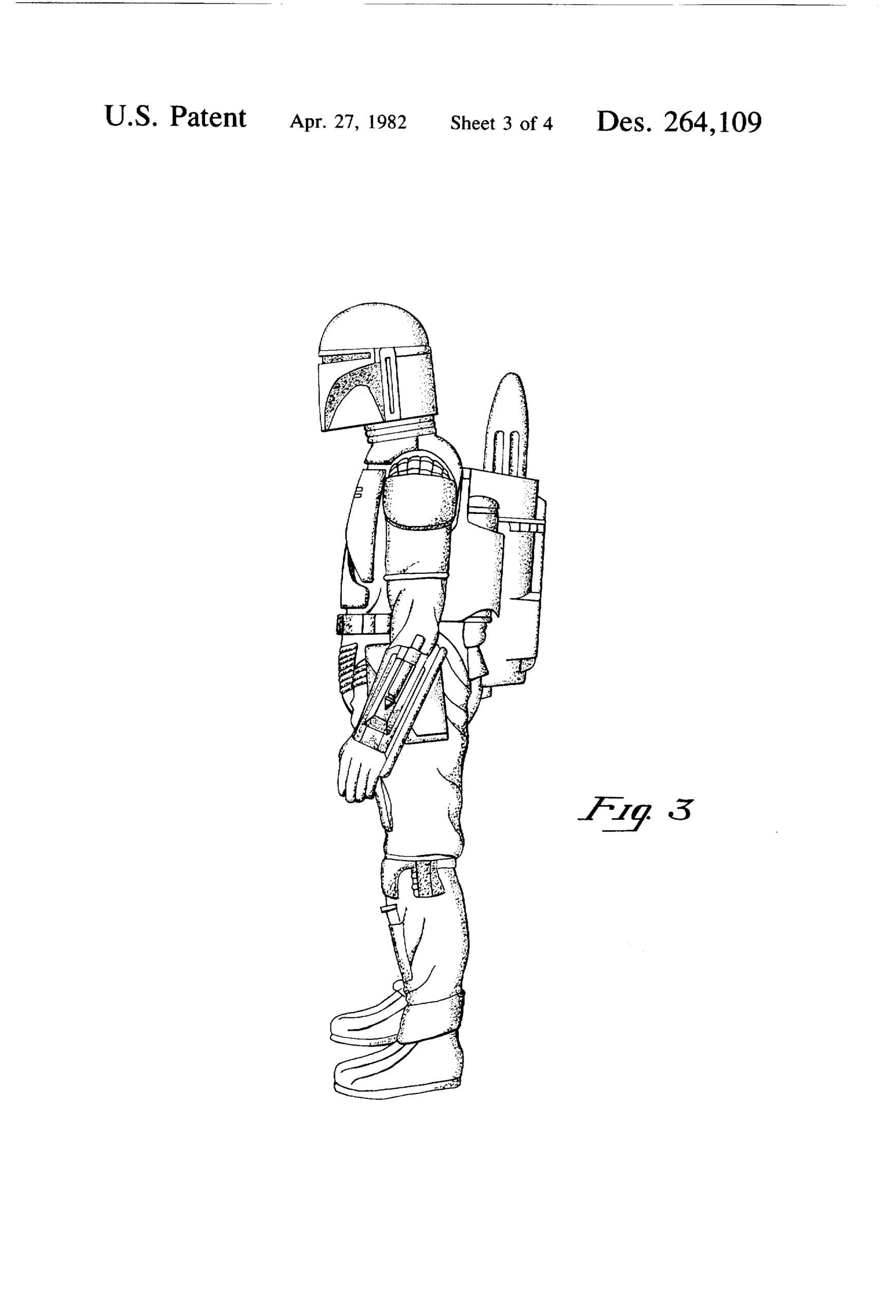
Muchas fotografías de las promociones, prototipos, cuadernos de producción y otros asociados han sido tomadas prestadas desde el sitio The Star Wars Collectors Archive
Lucasfilm in the Concept and Design of the Character
1977 – First Sketches by Ralph McQuarrie
Ralph McQuarrie created the first sketches of the character in 1977, which would be an official snow soldier (Snowtrooper Officer).
January 1978 – *The Empire Strikes Back* Script
Gene Bundy, librarian of Special Collections at the Golden Library of Eastern New Mexico University, said that Star Wars creator George Lucas provided his handwritten shooting script for The Empire Strikes Back to accompany the original script written by Leigh Brackett. These were donated after Brackett’s death in March 1978.
In addition to writing scripts for famous westerns such as Rio Bravo, Brackett was hired by George Lucas to write the script for The Empire Strikes Back.
Brackett died about six weeks after the first draft was completed. The film premiered in 1980, and although the script changed after several drafts from Brackett’s original, she was still credited.
March 1978 – Supertrooper
During the creation of the first draft of The Empire Strikes Back, George Lucas had the idea of a group of elite soldiers called Supertroopers, troops from the Mandalore system armed with weapons integrated into their suits, such as wrist lasers, a jetpack, and rocket darts. This new trooper would form a small army of 40,000 Imperial units.
In the book The Empire Strikes Back: Sketchbook by Joe Johnston and Nilo Rodis-Jamero (1980), it is mentioned that although most of the film’s costume design originated in England, in March 1978 Ralph McQuarrie and Johnston designed the Supertrooper suit at Industrial Light and Magic in California.
1978 – First Supertrooper Suit
Alan Harris, who played a soldier, a rebel mechanic, and a stormtrooper in Star Wars, later portrayed Bossk and a guard in Bespin, and returned as a stormtrooper in Return of the Jedi. He also served as a stand-in for Jeremy Bulloch and Anthony Daniels in Return of the Jedi, in which Trevor Butterfield took on the role of Bossk. The mold for Han Solo in carbonite was made based on Harris—he was the one who performed the fitting tests for the initial Supertrooper suit. In this suit, the helmet and armor show no dents or damage. This suit has no cape, hip belt, or braids, which is consistent with the sketch and design created for the Supertrooper.
Producer Gary Kurtz realized that the production cost was quite high and building several suits simply wasn’t feasible. Because of this, the Supertrooper idea was discarded, but George Lucas decided that the designed suit would still be used for a bounty hunter.
In the early ideas associated with this character, he was a Sith mercenary sent by Darth Vader to pursue the heroes and would be named Prince Valarium (a similar name, Valorum, was later used in the prequels for the chancellor before Palpatine. Fun fact: Alan Harris was the stand-in for this character portrayed by Terence Henry).
Finally, George Lucas tasked Johnston with modifying the prototype suit for a mercenary who followed this description:
“He’s a sort of bad guy, but he’s not with the Empire and he’s not on the Rebels’ side either. He’s a free agent who goes around the galaxy arresting people and bringing them to justice, or to Jabba, or to whoever. He’s a mercenary, he’d do anything for money, and his suit should reflect that.”
June 28, 1978 – First Boba Fett Prototype
The new mercenary was presented on June 28, 1978, behind George Lucas’s house. On that occasion, a 20‑minute black‑and‑white test video was recorded, in which sound designer Ben Burtt acts as presenter and reveals the final version of this new trooper, describing the different weapons, functions, and features of the suit. In this video, the Supertrooper suit is worn by The Empire Strikes Back assistant film editor Duwayne Dunham.
It should be noted that the serape (a type of poncho) used in this Supertrooper is actually a Star Wars beach towel featuring the image of Darth Vader. This trooper is well armed with an Automatic Blaster or laser submachine gun, which, as Ben Burtt pointed out, is a replica of an Uzi with a Graflex flash tube as the barrel. This was later replaced by the more infamous BlasTech EE‑3 based on a Webley flare gun.
Although the suit was already quite evolved compared to what would become its final version, the prototype suit was completely white, and Lucas did not want that for the bounty hunter’s design.
June 1978 – Joe Johnston designs a more familiar Boba Fett
For this new character, his design includes an earth‑toned serape, which is a homage to the Man with No Name, the iconic, laconic gunslinger mercenary from the 1960s spaghetti westerns played by Clint Eastwood (who has his own trilogy). Note that the mercenary already has the name Boba Fett, but with only one “t”.
George Lucas mentioned the following:
“When I was writing the early scripts for Star Wars, I wanted to develop an essentially evil character who would be terrifying. Darth Vader started out as a sort of intergalactic bounty hunter and evolved into a more grotesque knight as I got deeper into the knights and the codes and all that. The character of Boba Fett is really an early version of Darth Vader. He also resembles the Man with No Name from Sergio Leone’s westerns.”
Jeremy Bulloch said in an interview:
“I thought of Boba Fett as Clint Eastwood in armor.”
Bulloch, who was the actor inside the suit in the films, modeled the slow, deliberate head movements and imposing presence of the mysterious space bounty hunter based on Eastwood’s character.
In that interview, Jeremy added that Ben Burtt, the sound designer for The Empire Strikes Back, added the soft jingle of spurs when Fett walks. As happened with other characters and actors in the saga, Bulloch masterfully personified Boba Fett, but it was not his voice speaking with Vader. That voice belonged to actor Jason Wingreen (although Bulloch became the face of the character at every convention). George Lucas commented:
“Jeremy brought the perfect combination of mystery and menace to his portrayal of Boba Fett, which is exactly what I wanted the character to convey.”
With this new design, it is said that Johnston went to a hobby shop and bought dozens of paints and began experimenting by mixing colors and tones until he found the ones he considered ideal. He also took charge of giving the suit a worn and battered look. Wear tests were conducted, and when Joe was satisfied, he showed the result to George Lucas, who approved it.
September 1978 – Script featuring Boba Fett
There exists a script page written by George Lucas in which Boba appears in the dialogue with Vader after Solo’s torture in Bespin. This page is dated September, and although it has no year, it should be from 1978.
September 24, 1978 – San Anselmo Fair
The suit was built at EMI‑Elstree Studios in London and then sent back to Johnston to be painted. The suit was adapted for the character of Boba Fett by adding weathering, dents, and colorful paintwork to one of the white suits, while keeping the wrist lasers, jetpack, and rocket darts originally intended for the Supertroopers.
On September 24, 1978, at the San Anselmo County Fair, Boba Fett made his first public appearance wearing a suit worn by Bruce Nicholson, who was the optical photography assistant for Star Wars and later the photography supervisor for Empire.
October 1978 – Boba Fett Suit
The first prototype of the Boba Fett suit was sent to the design studio and advertising agency Daydream Productions, run by Sandy Dhuyvetter in Los Gatos, California, as a template she loosely followed to paint three additional suits. A second and third prototype were made for the character of Boba Fett.
Although Joe Johnston is often considered the father of Boba Fett, Sandy Dhuyvetter is considered the mother of Fett. The first prototype Boba Fett helmet is often referred to as the pre‑production helmet #1, pre‑pro 1 helmet, or simply PP1 helmet. It is also commonly known as the “Eyes” or “Ears” helmet due to the eye‑shaped markings on the top of the helmet.
It can be seen that the eye‑shaped markings were moved from the front of the helmet dome to the top of the helmet. Faint lines can still be seen on the helmet where the markings originally were.
This helmet is a true transitional piece between the original Supertrooper style and what eventually became the iconic Boba Fett helmet. Note that, unlike Boba Fett’s helmet which has an iconic dent, the First Prototype helmet has a deep wound in roughly the same area.
The Pre‑pro 2 was supposed to be the hero suit for ESB. But what happened?
There are two theories:
1. After it went through Kenner’s rounds, this suit was lost or given away by a Public Relations lady at Lucasfilm at the time. Gary Kurtz (producer of The Empire Strikes Back) identified that suit and/or parts of that suit as stolen.
2. Along the same lines of theft, an ESB suit was stolen during production in the United Kingdom. An apparent police report was filed and nothing has been publicly heard since.
All the suits and helmets were painted and built in 1978, and these different colors and gloves existed. I am more inclined to think that they assembled what they believed needed to be assembled, or else George, who left nothing to chance, decided on a last‑minute change (not hard to believe).
In addition to the suits created to be seen on screen, three of the Boba Fett suits finished by Sandy Dhuyvetter’s Daydream Productions were used mainly for a series of tours across the U.S., Canada, and the U.K. to promote The Empire Strikes Back. These suits are a sort of mishmash of pieces, with armor plates and helmets randomly combined from other suits and among themselves.
October – November 1978 – The Story of the Faithful Wookiee
A year after Star Wars first hit theaters and became a complete success, Fox thought it would be a good idea to make a holiday special to capitalize on the popularity that was beginning to emerge.
Aired for the first and only time on November 17, 1978 (a week before Thanksgiving), simultaneously on CBS (a U.S. television network) and CTV (a Canadian network), the Star Wars: Holiday Special was broadcast.
Gary Kurtz mentioned about it:
“We had half a dozen meetings with the television company that was doing it. In the end, due to the work on promoting Star Wars and on the next movie, we realized we didn’t have time. So we left it to them and had occasional meetings with them, gave them access to props and actors, and that was it.”
George Lucas does not appear in the credits for this special; however, the idea that the narrative would revolve around Chewbacca’s family was his.
This TV program presents, for the first time to a mass audience, the character of Boba Fett in an animated short called The Story of the Faithful Wookiee. Here, Boba Fett has a new weapon and colors different from Johnston’s designs. The simplified color scheme for the cartoon was later repeated for Fett’s appearance in the Droids series. This animated short was written by Lucas and produced by Nelvana Ltd in Toronto, Canada (the same company behind Droids and Ewoks).
This adaptation of the character was handled by Frank Nissen and then animated by John Celestri, who is the one who brings him to life. He mentions in an interview given to the Boba Fett Fan Club:
“It was George Lucas who specifically asked Nelvana to design the look of the cartoon in the style of French artist Jean ‘Moebius’ Geraud, whose work could be seen in the magazine ‘Heavy Metal’. That direction and a black‑and‑white home movie showing a person in the Boba Fett prototype suit were basically all the clues Nelvana had to work with. So all the colors for the production came from following Moebius’s sense of color… in Boba’s case, blue was the base color. All the color models and basic designs had to be approved by Lucas before cartoon production could continue.”
Boba Fett and Kenner
September 24, 1978 – Anselmo Fair
Jim Swearingen, toy designer and someone who played a key role in Kenner’s acquisition of the Star Wars license, was responsible for designing what would become the toy with the most history and myths within the Kennerverse. Apparently, Boba Fett was destined to be a character surrounded by myths and legends both within and outside the space opera.
In 1978, Jim Swearingen was sent by Kenner to meet with George Lucas to get a first look at Boba Fett.
Before October 1978 – First Prototype
On his Facebook profile, Jim comments:
“I took the photos of the first Boba Fett costume in San Anselmo. George Lucas and Dave Okada are also in the photos. This photographic reference is what I used to do the kit‑bash of the first 3.75 Boba Fett figure that we used for presentations and photography.”
On The Star Wars Collectors Archive website, it is possible to find references to the first prototype of the Boba Fett figure. This version of Boba has the eyes on the helmet that can be seen in the earliest versions of the character. Also, in this prototype you can see that sort of sword on the suit worn by Bruce Nicholson on the left arm, which, incidentally, was kept in the final figure.
What is wonderful about this prototype is how it was built, its base being a composite of parts from other figures among the 20 existing at the time, namely the Stormtrooper (arms), the Death Squad Commander (legs), and C3PO (torso).
The new pieces would have been built with some kind of putty so they could take on a new shape. The head would have been sculpted from scratch, or there is the theory that it was made from the head of the C‑3PO figure, which makes sense since its torso was used. The practice of kit‑bashing, in which Kenner were specialists, was very useful in these cases and even for generating new final figures (as we saw in the case of the Robin Hood line).
Some interesting aspects of this prototype are the already mentioned eyes drawn on the helmet, a vinyl cape, the jetpack, and the gloves which have an “X” with a black circle on the back. The jetpack is thicker and has movable thrusters. In general, the colors of the jumpsuit and armor were not very accurate to the suit displayed in real life. The missile was re‑carved according to the needs of this character and the rangefinder has a metal rod. The boots have the line details of the suit on the feet. Overall, the figure is quite good and a solid approximation of the real suit; however, it seems complex to reproduce in large quantities and therefore a more expensive figure to produce than others in the line. For this reason, a second version of the prototype may have had to be presented.
The missile‑firing feature was taken from the character Raider from the Shogun Warriors, a 1977 Mattel toy, famous at the time for a line that lasted four years from 1976, in which the big toy company produced a “Japanese” line for the U.S. mass market, which had previously been supplied by direct import of Popy toys to various smaller stores.
This line rivaled Hasbro’s G.I. Joe line and Kenner’s Six Million Dollar Man. Mattel took some liberties and changed the original character’s name, Getter Liger, renaming him Raider.
Before October 1978 – Second Prototype
This second prototype does not have major changes compared to the previous one. The most notable change is the removal of the cape. If the figure is viewed from the front, there are no significant changes. The eyes are still present on the helmet, a detail found in the earliest versions of Fett’s suit and which, let us remember, is not present on the suit that visited Kenner’s offices.
In the first version of the Star Wars (Vinyl) Mini‑Figures Collector’s Case, a photograph of this second prototype was used in the insert, which would later be replaced by the final figure. In Kenner’s 1979 product distribution catalog, for the promotion of the case, the Boba Fett figure does not appear in any version. However, the promotion of the Boba Fett figure does appear, but in its third prototype version.
For the 21‑back card of the Star Wars collection, Boba Fett was already a figure released to the market, so the photograph of the final figure is included. Then something curious happens: for the “Collect All 32 Action Figures” promotional card from 1980, a photograph of the second prototype was used, even though the final figure was already being used on the retail cardbacks. On the other hand, this promotional card features other curiosities such as the double‑telescoping lightsaber for Luke, Vader, and Ben, as well as the small‑head Han Solo, all figures that had been out of production for a long time by the time this item was manufactured. Also, Jawa has straps over his cloth cape. On the 12/32‑back card of the Star Wars collection, the final Boba Fett figure appears.
October 1, 1978 – Kenner visit with the second‑prototype suit
Lucasfilm worked closely with Kenner to immortalize the new villain of the Star Wars universe as an action figure. Presumably in October 1978, the suit, already in an advanced version, along with an actor, traveled from California to Kenner’s offices in Cincinnati, Ohio, so that it could be photographed, measured, and used as reference in creating the Boba Fett action figure.
This visit, and particularly the photographs, helped Kenner move forward more accurately in producing a figure of the Boba Fett character to be sold. The images show the overall suit from several angles, but the most interesting one is the shot of Boba Fett firing his wrist‑mounted flamethrower. One of the photographs of that particular pose (from the photographer’s point of view) was used by an artist to create the artwork first seen at Toy Fair and eventually on all the cardbacks associated with the Boba Fett action figure sold by all partners for the Star Wars and The Empire Strikes Back collections. For Return of the Jedi, a photograph from the Tatooine Skiff scene in the film was used.
Late 1978 – Third Prototype
This prototype is quite different from its predecessors and was used in several promotions associated with the Boba Fett character. It is curious that the color usage of this prototype differs from the final version, which is more closely related to the earlier versions. This fits with the fact that the prototype that finally appears on the spec sheet is a mix of this one with previously used colors. In this prototype, the missile from the Shogun Warrior Raider is used directly and it is even simpler than its previous versions. The rangefinder is no longer present, the jetpack is simpler, the X’s and circles on the hands are gone (although a Stormtrooper‑style hand guard is added), the lines on the boots are gone, that sort of cloth sash is missing, the tools are yellow instead of white, and the jumpsuit color is much lighter.
These particular photographs are the ones used on the 20‑back cardbacks of the Star Wars collection, particularly from 20C onward.
The photographs were hand‑retouched with an airbrush so they would look hand‑painted and thus resemble drawings. The firing effect was added in the painting. In this prototype, the missile‑firing trigger is a button instead of the sliding mechanism later known from the final figure. This mechanism is inherited from Mattel’s Shogun Warrior toy. It should be remembered that after the 20C card, the image of Boba Fett firing the missile was removed in various ways, since that play feature would no longer be available.
The offer to obtain this coveted figure was to send in 4 proof‑of‑purchase seals (a successful model that lasted until 1985, with the number of seals required changing over time) plus shipping costs. With this, Kenner would mail the long‑awaited toy. So many children requested the Boba Fett missile‑firing toy, but when it arrived in their hands by mail, they realized that none of them had the firing mechanism (in any of its versions). The figure came with a notice to consumers explaining the removal of the missile launcher for safety reasons. Many children must also have been surprised to see that the figure itself was different from the one shown in the promotions.
Returning to the prototype itself, it is much simpler than its predecessors, which goes hand in hand with producing a more economical product in terms of manufacturing and perhaps one that also allows for better play.
Late 1978 – Fourth Prototype
On the specification sheet for the new figures, for which I have not been able to obtain the exact year of its appearance (probably late 1978, which matches the previous visit), a prototype Boba Fett figure is identified, also mentioning its missile-firing system. It is not clear whether certain touch-ups were made for the photograph or whether this would be a new prototype for which I have not found further records. What is curious in this whole story is that, in terms of colors, it resembles more the final figure released in production. This figure is somewhat simpler than the previous ones: it does not have the eyes on the helmet, it does not have the X’s and circles on the hands, it does not have the lines on the boots, it does not have that sort of cloth sash, and the jumpsuit color is considerably lighter.
The specifications also show 8 new action figures: Greedo, Hammerhead, Red Snaggletooth, Luke Skywalker X-Wing, R5-D4, Power Droid, Death Star Droid and Walrus Man. Note that Hammerhead appears with a blaster even though he was ultimately released with a rifle, and for Snaggletooth it was the opposite. These figures are the 8 new ones that appear on the 20‑back cards of Kenner’s Star Wars collection, and in particular Boba Fett began to appear as a promotion in his third version on the 20C card, but with a photo of the third prototype.
Late 1978 – Fifth Prototype
According to what is mentioned in Star Wars: The Archive Database, this particular piece is the earliest known example of the rocket‑firing Boba Fett action figure, identical to the final figure, that has surfaced to date. The molding represents the earliest known incarnation of a designed rocket‑firing mechanism, and the overall shape of the figure is the version that ultimately reached the market. This figure exhibits all the qualities of the final figure and its distinctive rocket‑firing backpack. Although the mechanism was removed before its public release, this figure offers a good glimpse into a fragment of Kenner’s history.
The slider on this figure is made of blue plastic instead of red, which is more common in the L and J versions. The blue slider has been known to collectors since its appearance on the header card of the 20‑figure box created for the Star Wars line. Additionally, the images below show that this figure was actually used by Kenner as the photographic sample or photo model for various purposes. By examining the study presented by Star Wars: The Archive Database, with the detail of the hand‑painted work and imperfections, it is clear that this is the figure used in the photographic artwork for several 20‑figure promotions, as well as in the 1979 booklet, where it also appears flipped. If you look closely at the photograph, the rangefinder appears on the opposite side. Kenner could easily use this rocket‑firing prototype as a substitute for the normal figure, since the design was identical in all other aspects.
Late 1978 – Sixth Prototype
This prototype is known as the “L‑Slot” variety, in which the slot on its back is shaped like an inverted L. It can be seen that the bluish color of the plastic used in this figure is different from that of the production Boba Fett figure, which is slightly more gray. This prototype has no date stamp. You can see that there are only a few coils in the spring, resulting in a missile that would not fire very far.
Although this is the most common version of this prototype, another prototyping stage was carried out to create a figure that would not fire accidentally. This version is the one with the J‑shaped slot, which made the mechanism safer, but part of the backpack could break, causing a plastic fragment that posed a “sharp” hazard. It was this sharpness that ultimately condemned the firing feature.
The rocket that accompanies this style of figure has 4 ribs running along it, but the design was changed to 8 ribs when the figure was changed to the J‑slot version. The 8‑rib missile design was carried over into the production action figure.
Late 1978 – Seventh Prototype
As already mentioned, this prototype corresponds to the J‑Slot version. The first time this version became known was through a former Kenner test technician who published in issue number 20 (November 1994) of “Action Figure Digest”. There he described what this final design iteration represented and why it ultimately did not meet Kenner’s testing requirements. The mechanism was crushed by Kenner’s legal department at the last minute due to the problems it presented.
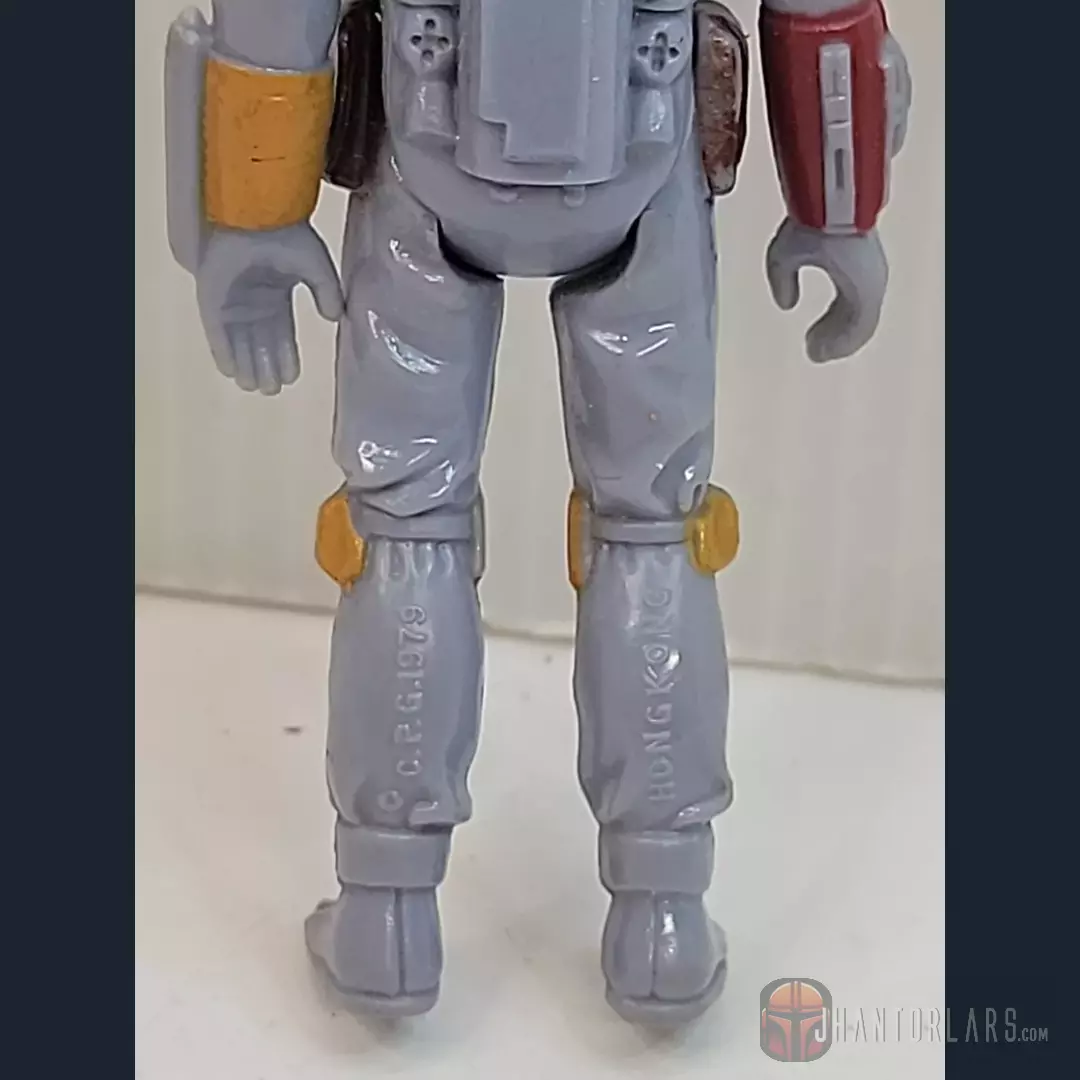
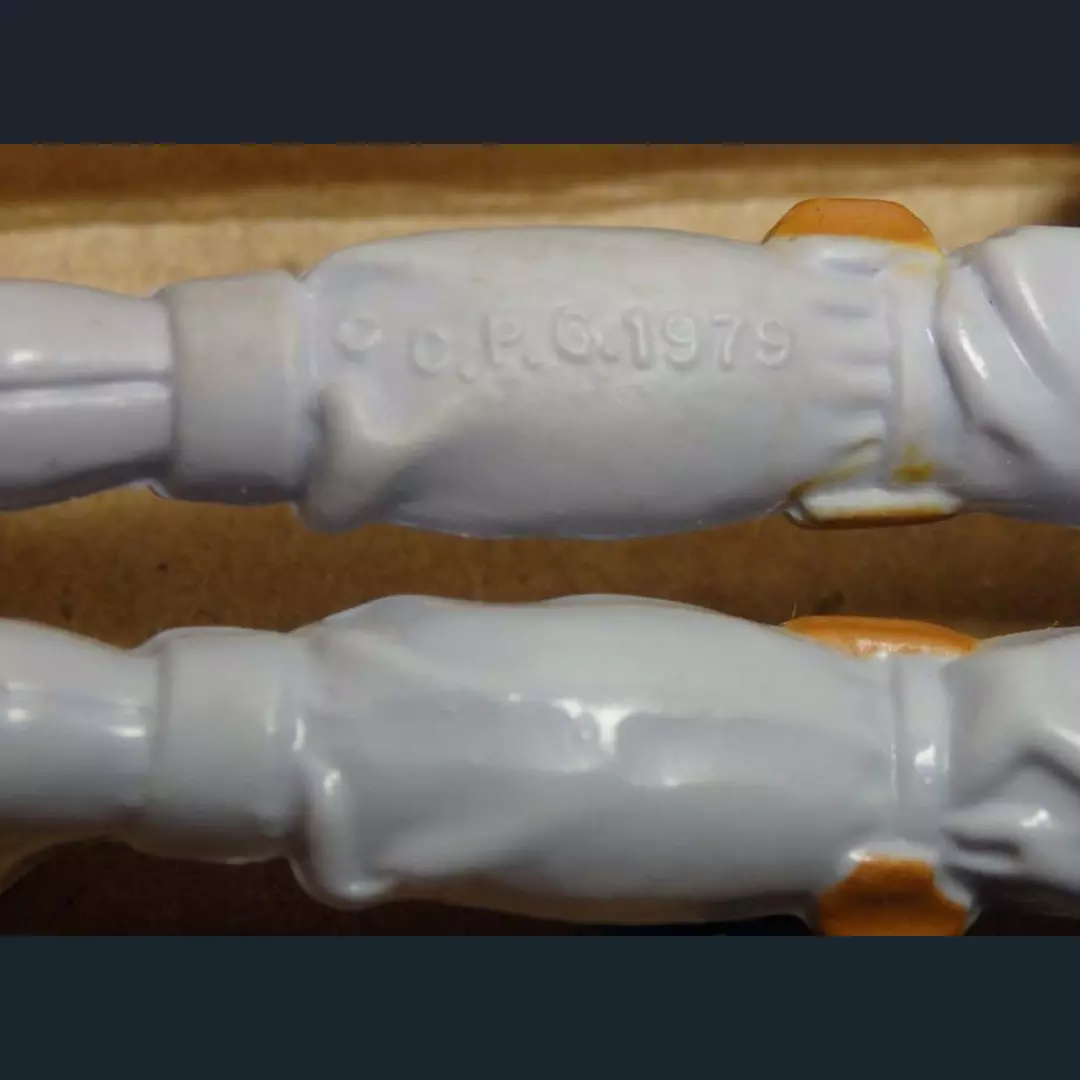
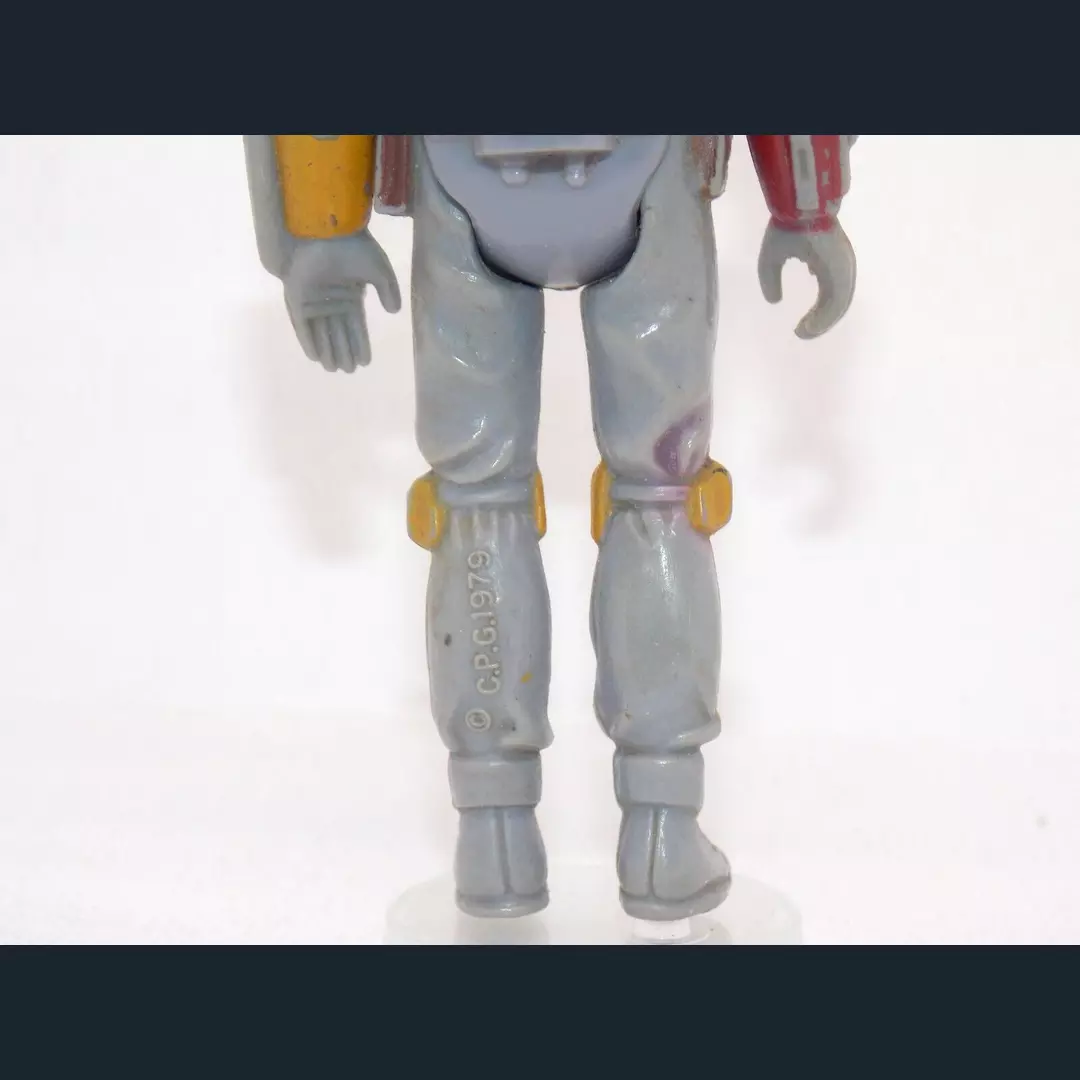
Before this time, the only version of the elusive prototype known to collectors was the 5th Prototype L‑Slot version. Unlike that version, this one has production quality, is factory‑painted, and has copyright information stamped on the legs. Another example of this type of figure was found in an associated Mail‑Away prototype.
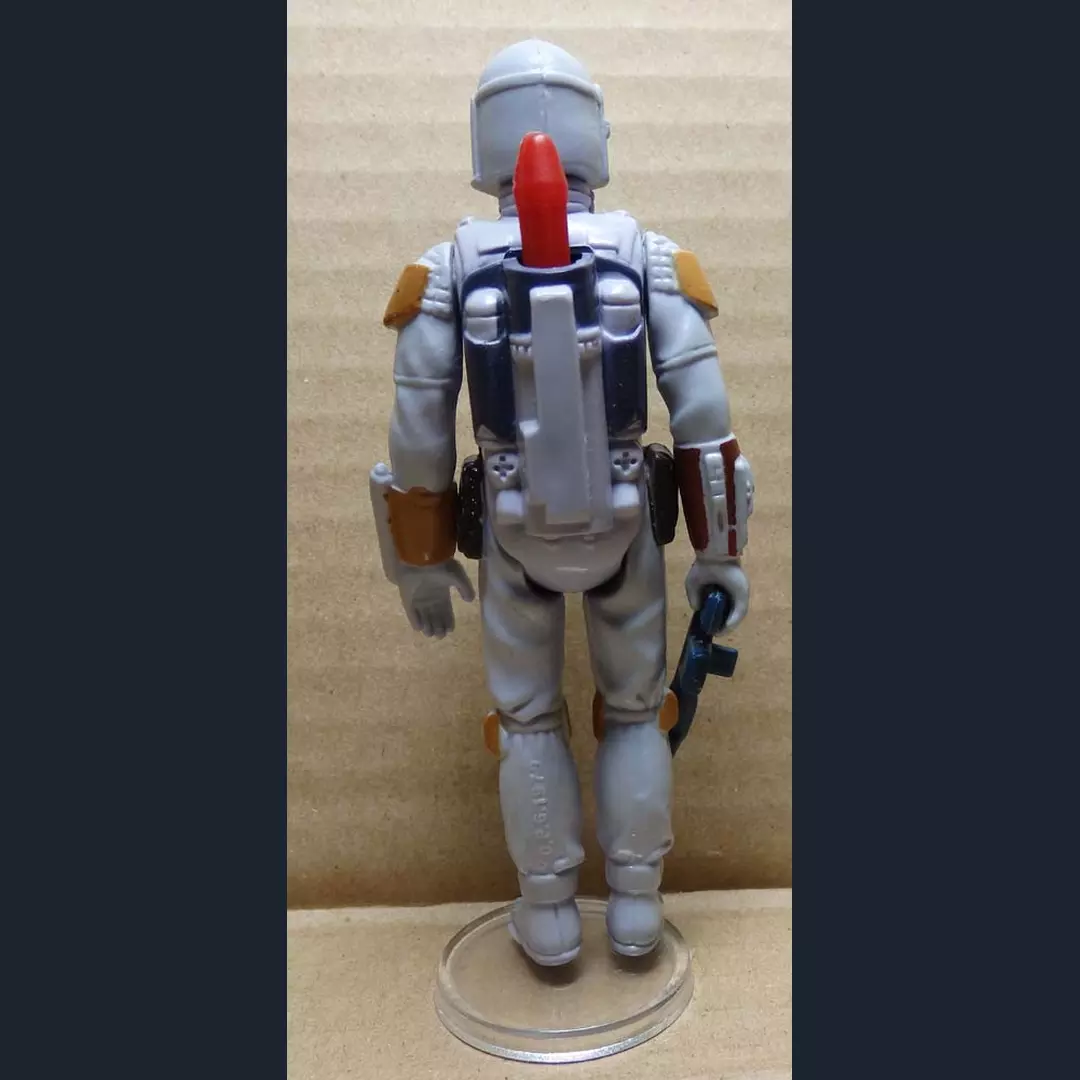
The 8‑rib rocket that accompanies this style of figure is almost identical to the one later sonically welded to the production action figures. The missile was modified for production with the addition of a small fin along the lower edge that allowed it to mechanically lock into the backpack during manufacturing.
Unlike the previous version, the firing mechanism of this figure had a J‑shaped slot so that the launcher could lock into place. This was designed to prevent children from accidentally firing the rocket because it required pulling and holding the mechanism before firing. However, the slot change itself became a problem because the small stem in the center could break and create a “sharp” hazard. A small sharp piece of plastic like that could easily enter an eye or scratch the skin. The following image is an example of a test specimen in which the stem almost broke during stress testing, and in fact many of the prototype copies that remain today are products of that test, with stressed or broken stems.
Late 1978 – Mail‑Away Prototype
The figure associated with the Mail‑Away prototype was in the possession of a former Kenner Quality engineer since it left the factory in 1978. The mailing was supposed to include 2 missiles and a blaster. This engineer worked as a Quality Control Engineer and Reliability Engineer.
December 1978 – End of Rocket Fett
A Mattel toy from the Battlestar Galactica figure line, one of the vehicles—the Colonial Viper—had a missile-firing mechanism in its front section. This spring-launched missile caused several incidents, but without a doubt the most serious was the one involving young Robert Jeffrey, who on December 31, 1978, in Atlanta, died after accidentally choking on a 1¼‑inch rocket that became lodged in his throat for several minutes, preventing oxygen from reaching his brain and leading to the tragic outcome. The child’s parents sued Mattel for 14 million dollars. Injuries were reported in at least 10 more children, which led Mattel, in January 1979, to recall all Colonial Viper toys still on sale, as well as the Cylon Rider, and to begin a return process for the 2 million units already sold.
Parallel to this tragic story, Kenner was conducting tests on the new action figure already promoted on the 21‑back cards of the time, and the results were not good. For this reason, before knowing about Mattel’s problems and the new legal regulations, the toy makers decided to eliminate the firing mechanism from Boba Fett’s backpack and leave the projectile fixed to the character’s back. With this, they changed their promotion, covering on the 20D and 20F cards the part where this feature had been detailed.
Later, on the 20E, 20G, 20H, 20I and 20J cards, in the section where the projectile-launching feature had previously been promoted, a character presentation was added stating:
- A fearsome interplanetary bounty hunter
- A threat to the Rebel Alliance, especially Han Solo!
- A New Character in Star Wars sequel
January 1979 – New York Toy Fair
The prototype shown in the photograph is the one presented at the 1979 Toy Fair inside a card, likely the only time the figure was shown to the public, although at that time the firing backpack was no longer a selling feature and was relatively hidden in the packaging. People walking through the showroom would not have realized that the carded figure still had the elusive firing mechanism intact if only they had been able to look at it from the side.
An interesting observation that came to light about this prototype was the fact that two stems of different lengths can be found in the J‑slot design. Due to the appearance of other molded features on the backpacks, we can see that at least two different molds were used to create these prototypes.
No Rocket Firing Boba Fett figure was ever marketed or produced, much less carded/blistered, so all existing examples are “loose” and are prototypes, not production or final versions. However, the test card on which it was going to be packaged is known, and it was very similar to the one used for the final figure, but with the warning “do not fire projectiles at face” in the upper right corner of the card, and without the text inside the fireball. It should be noted that the level of detail in the fire on the final card is much greater.
The design of this warning text matches the December 8, 1978 announcement from the Consumer Product Safety Commission, which stated that Mattel would add warning stickers to new and existing toys with spring‑launched missiles. It was thought that this measure would resolve the danger, but then came the death of young Robert, leading to the recall of Mattel toys. Meanwhile, Kenner had already made its decision to release the rocket‑firing toy. For the card displayed at the 1979 New York Toy Fair, this text was no longer present and appears to have been erased.
1979 – Final Version
Finally, the photograph taken by Jim Swearingen at the Anselmo fashion show served as inspiration for a toy that traveled a long road to become the one we all know. However, despite the character’s visit to Kenner with the second prototype of the suit, my bet is that the final figure is entirely a copy of the third prototype version.
January 1979 – Commercial Release
According to the 1979 Kenner sales catalog, the release of the new Boba Fett figure, based on purchase samples, began in January 1979 and was initially scheduled to last until May of the same year. This same catalog announced its upcoming sale as a cardboard cutout figure on June 1, 1979.
January / May 1979 – Kenner Commercial
On the website Star Wars: The Archive Database, there is a 16mm film reel from the promotion of the free Boba Fett action figure, featuring its 30 seconds of glory made for broadcast television. The beginning of the reel includes printed information about the director and project number, but unfortunately, the key element of when it was filmed is missing.
In the mentioned site, they conduct a study of several frames from the analog film, where they conclude that the Boba Fett figure used is actually a rocket-firing prototype. They highlight that the angles shown in the commercial hide this feature. However, with the literal ability to view it frame by frame under magnification, the red slider can be seen in the photo just above the child’s finger.
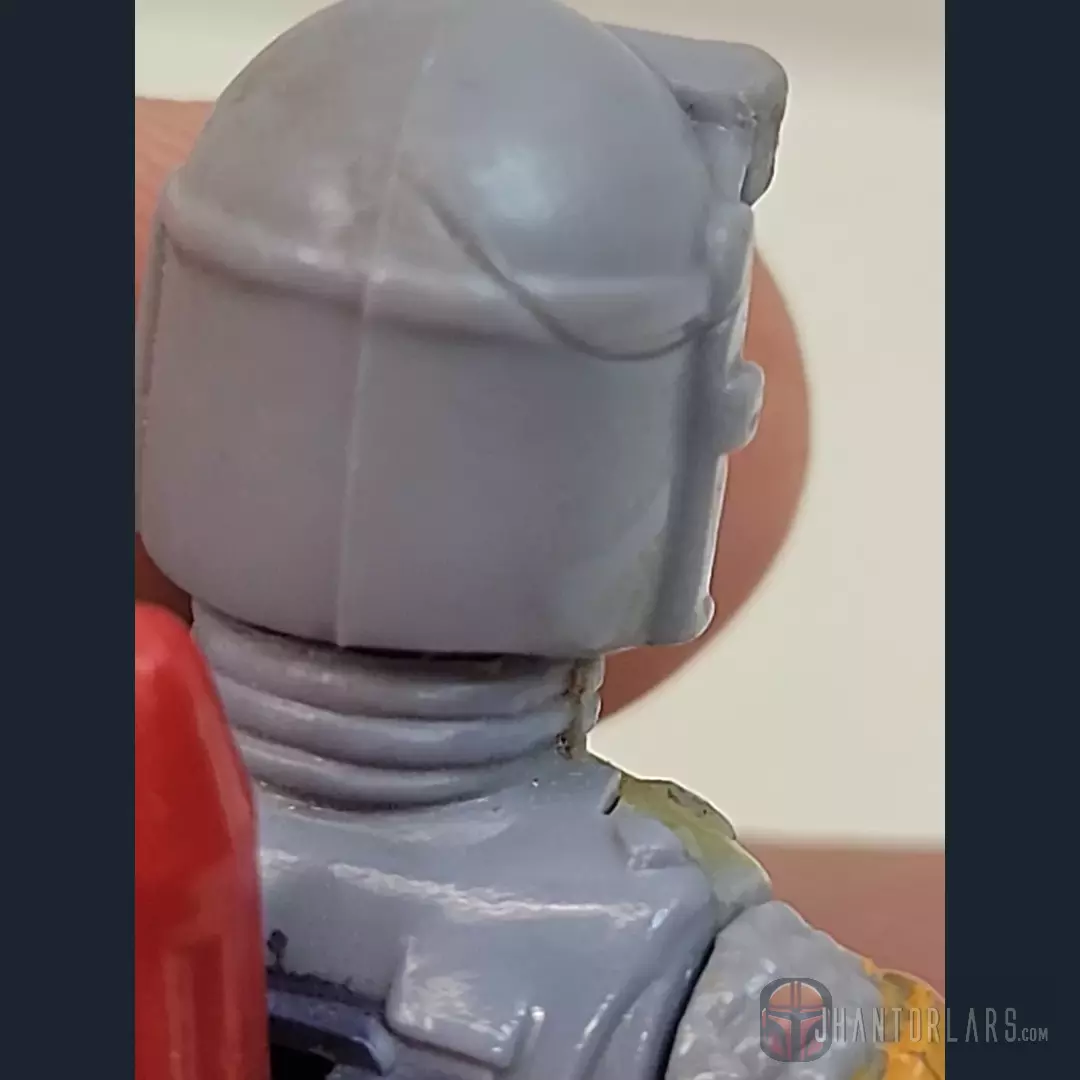
It is possible that the figure is the same type as the protomolded prototype (injection-molded plastic and hand‑worked), due to the gaps in the neck and torso, since the torso is not perfectly molded and is also hand‑glued. Additionally, the separation line on the head is more pronounced, as in the protomolded figure.
We can see that the missile is an early 4‑rib version, typically found in L‑Slot versions. The missile protrudes more than usual because the mechanism’s slider is in its uncompressed position, which is another indication that it is a rocket‑firing prototype. This rocket must have been glued or attached in some way during the filming of the commercial.
A detail that appears in the initial notes of the film reel is the word “Rev,” meaning Revised or Revision. This may indicate that the commercial was initially filmed showing the rocket launcher in action and would have been promoted as an exciting feature for this new figure. However, if this was the case, it clearly underwent simple editing to alter it.
Finally, the appearance of the 20‑back cards in the commercial is mentioned, suggesting that these are pre‑production versions of the cards, produced in Cromalin (a proof‑printing process introduced by DuPont in the 1970s. A Cromalin proof is produced through successive layer exposures on film, which is then laminated onto special paper).
The commercial presents the existing collection at the time, mentioning the new Snaggletooth—the red carded version—as well as Hammerhead, both figures released in 1978 under the 20‑back card. As is known, only on the 20C card of this line were the new 8 figures released to the market, which already included the promotion of the new character to be added: Boba Fett.
Another commercial was released by partner Palitoy, responsible for distributing the toys in the United Kingdom, and which provides much additional material beyond Kenner’s own, as they produced many commercials and even a campaign associated with Boba Fett that I will address elsewhere.
Top Toys, Kenner Toys in Argentina, is the toy company that was responsible for importing Kenner’s toy lines during the release of the first and second Star Wars films. The 20C and 21B Kenner cards were the first ones imported by TopToys in Argentina, corresponding to the Star Wars collection line.
1979 / 1980 – Promotion
The Kenner “mail‑in” promotion required sending 4 proof‑of‑purchase seals and, in approximately 6–8 weeks, you would receive the figure by mail. Initially, the promotion was scheduled to run from January to May 1979, but it was later extended. The figure in question came in a white box, as was customary for Kenner mail‑away items, and inside was the figure in its classic Kenner bag.
Fecha de vencimiento original de la oferta por correo de la figura de acción de Boba Fett
Las figuras de Boba Fett comienzan a enviarse en surtidos de cajas para la venta al por menor
Extensión de la primera fecha de vencimiento de la oferta por correo de Boba Fett con calcomanía opaca
Extensión de la primera fecha de vencimiento de la oferta por correo de Boba Fett con calcomanía de estallido de estrellas
Estreno teatral de El Imperio Contraataca
Extensión de la segunda fecha de vencimiento de la oferta por correo de Boba Fett con calcomanía de estallido de estrellas
March / November 1979 – Filming of The Empire Strikes Back Begins
Filming of The Empire Strikes Back began in March 1979, where this great character, Boba Fett, would make his major appearance. Nine months later, in November, the filming process concluded.
Between May / June 1979 – Mail‑Away
From what can be seen, the box is identical to the Engineering Pilot sample released by Kenner for the figure already with the fixed missile. It is important to emphasize that no missile‑firing figures were ever sent to the public, as these were never released to mass consumers. If anyone ever claims otherwise, it is impossible. Many more steps in the process would have had to occur for the figures to be manufactured and distributed, so there was no way that even a sample could have been mailed to consumers. Furthermore, when the toy arrived in its white box, it included a clarification about this.
The final products were shipped from the Asian toy factory to Kenner’s distribution center and then sent to the subcontracted distribution center in Maple Plain, Minnesota—a very familiar name to the generation of Star Wars kids who waited weeks for their proof‑of‑purchase collections to turn into free figures in small white boxes.
Boba Fett made his television debut in November 1978 in the Star Wars Holiday Special, but would not make his on‑screen debut until May 1980 with the release of The Empire Strikes Back. Until that moment, the only brief glimpses the public had were largely this action figure, but the childhood frustration over the missing action feature reverberated for decades afterward.
July 1979 / 1985 – Cardbacks
This was the last figure of the Star Wars collection to be released, but as mentioned on the 21‑back card, Boba Fett is a character from the film The Empire Strikes Back. Although the version of the figure in the Empire Strikes Back collection uses the same photo, the fireball text no longer exists for obvious reasons. For the final Return of the Jedi collection, starting with the 65‑back card, the photograph used for the character was changed to a movie still.
The Kenner “mail‑in” promotion required sending 4 proof‑of‑purchase seals and, in approximately 6–8 weeks, you would receive the figure by mail. The promotion was scheduled to run from January to May 1979. The figure in question came in a box, as was customary for Kenner mail‑away items, and inside was a Kenner figure (photographs courtesy of The Archive Database). A small leaflet was also included. However, when the first Boba Fett figures arrived, people were very disappointed: the figure did not fire the rocket that had been so heavily promoted. It was permanently attached to the backpack, with no possibility of removal.
August 13, 1979 – Commercial Patent
Filed on August 13, 1979, this action figure patent gives us glorious technical drawings of the Kenner Boba Fett action figure. The toy design appears patented under the names of the character’s creators: George W. Lucas, Ralph McQuarrie, and Joe Johnston.
Interestingly, the patent mentions as reference:
FAO Schwarz, Spring‑Summer, 1978, p. 13, Star War
Figures, top left figure.
Play Things, Jul., 1978, p. 21, lower left, Metal‑Man.
Primary Examiner – Melvin B. Feifer
Attorney, Agent, or Firm – Bruce Schwab
This could mean that this figure appears in the Spring–Summer (March–September) 1978 FAO Schwarz catalog. For this to be possible, the figure in its final form would have had to be ready in March or earlier that year, which is impossible. The reference, then, likely pertains to earlier figures in the collection as design precedents.
Many photographs of the promotions, prototypes, production notebooks and other related materials have been borrowed from the site The Star Wars Collectors Archive
Infografía Boba Fett Lili Ledy
Gracias al trabajo del buen amigo Lily Ledy Guerra de las Galaxias comparto esta genial infografía de esta querida y gran figura.

Primeras apariciones: San Anselmo y Holiday Special
Con esta figura se sumaban 21 figuras básicas, 6 vehículos y naves, una criatura y algunos playsets. Este personaje hizo su aparición mundial en el especial de Navidad de 1978 durante el corto animado (siendo lo mejor de dicho programa de televisión). Dos meses antes de este especial, el 24 de Septiembre del mismo año, Boba Fett hizo su primera aparición en público en un desfile de la feria de San Anselmo, Marin County, California, en Estados Unidos.
Special Edition
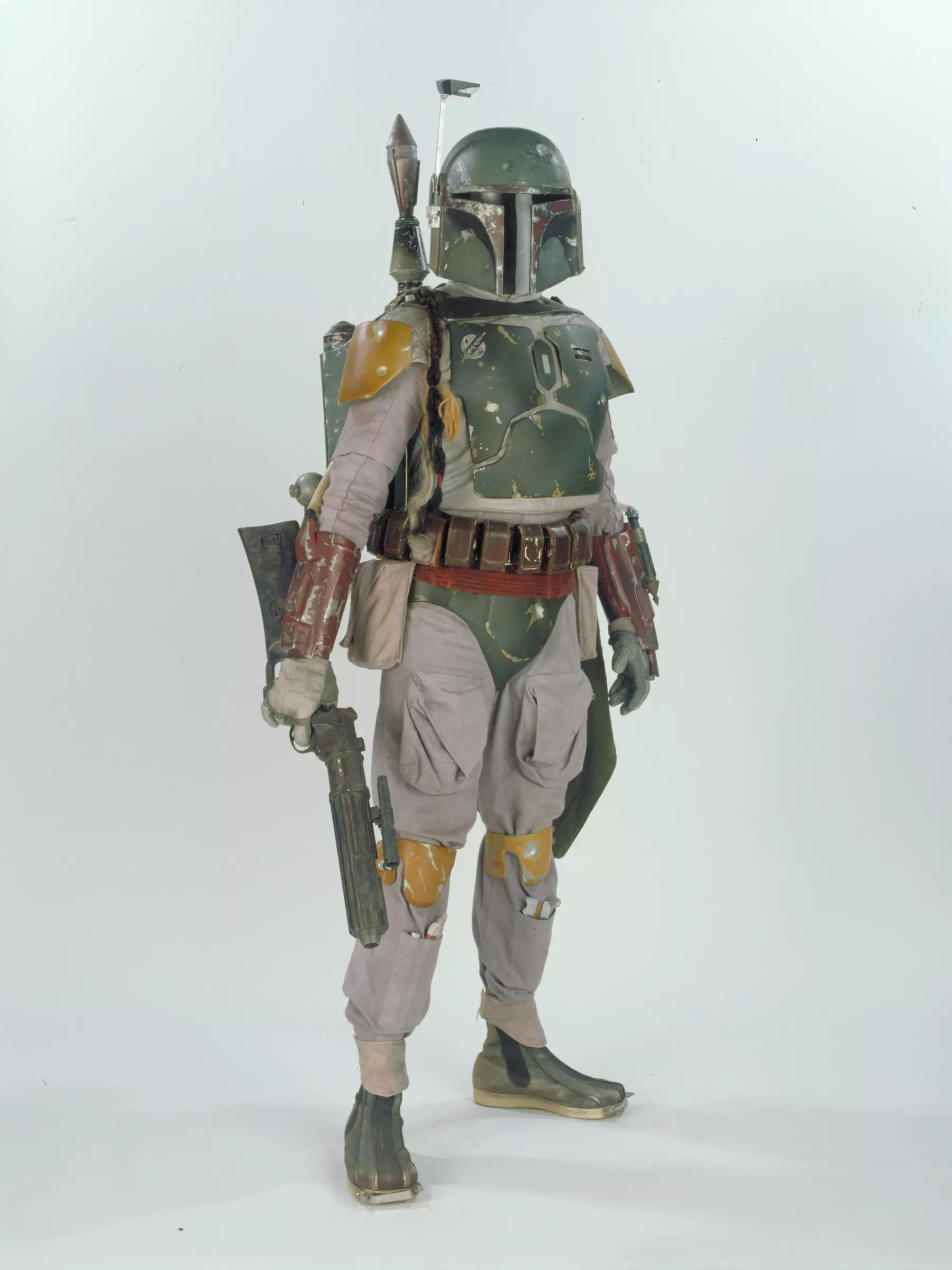
En una galaxia muy cercana no fue hasta la versión de Edición Especial en que Boba Fett aparece en A New Hope, la primera película que se estrenó de la saga, bajo sólo el nombre de Star Wars. Por esto, esta figura que salió bajo la serie Star Wars en sus orígenes fue un anticipo a The Empire Strikes Back en 1979 un año antes del lanzamiento de la nueva película de esta aventura. Kenner ofreció la primera promoción por correo con esta figura (después de los envíos por el Early Bird), en que era necesario contar con cuatro comprobantes de compra para obtener esta preciada figura de acción.
El juguete más caro de la historia
En agosto de 2024 se vendió una iteración del prototipo J-slot de Boba Fett rocket fire se vendió por 1,342 millones de dólares, lo que lo convierte en el juguete más valioso del mundo.
Se cree que aproximadamente 100 prototipos del Boba Fett que dispara cohetes siguen existiendo. De los prototipos supervivientes, aproximadamente 70 tendrían la versión inicial L-slot del mecanismo de disparo, mientras que el resto serían J-slot.
Pintado a mano como prototipo para su empaque de correo de muestra, incluido en la subasta junto con los cohetes y el rifle bláster de Boba, solo se sabe que existen tres de su tipo, y el prototipo vendido es el único correo “J-slot” conocido que se ha vendido públicamente.
2 meses antes se había vendido un J-slot por 525.000 dólares.
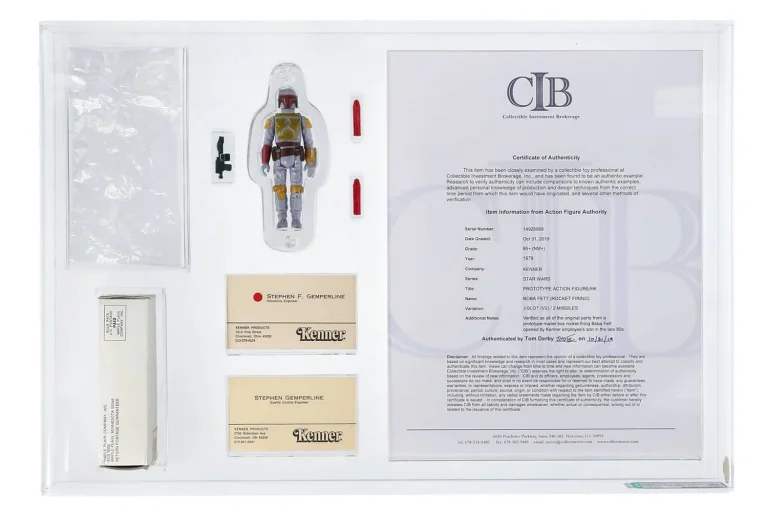
ET the ExtraTerrestrial
La figura masiva es de igual forma una buscada por los fanáticos, y además de aparecer en el universo Star Wars, aparece en la película ET, cuando Elliot se queda en casa simulando estar enfermo y le muestra Greedo, Hammerhead, Walrus Man, Snaggletooth (no me queda claro si es el azul o el rojo), Lando Calrissian Bespin Fatigues y Boba Fett a su nuevo amigo del espacio.
Ted
2:14
En 1985 como regalo de navidad, un niño recibe como obsequio un estuche de figuras de acción de Star Wars con la forma de Darth Vader completo con figuras de la época, se aprecian Princess Leia Organa, Luke Skywalker, Obi-Wan Kenobi, General Madine, Boba Fett, Chewbacca, Darth Vader, Lobot, Emperor’s Royal Guard, FX7, Han Solo Bespin, Stormtrooper, C-3PO, R2-D2, Cloud Car Pilot, Prune Face, Lando Calrissian y Yoda.
The Mandalorian
En la serie The Mandalorian retoman esta arma de Fett del corto animado del Especial de Navidad y la vinculan con la frase de Vader hacia Fett en la película Empire Strikes Back – No desintegrations -, cuando contrata a una banda de caza recompensas para la persecusión del Millenium Falcon.
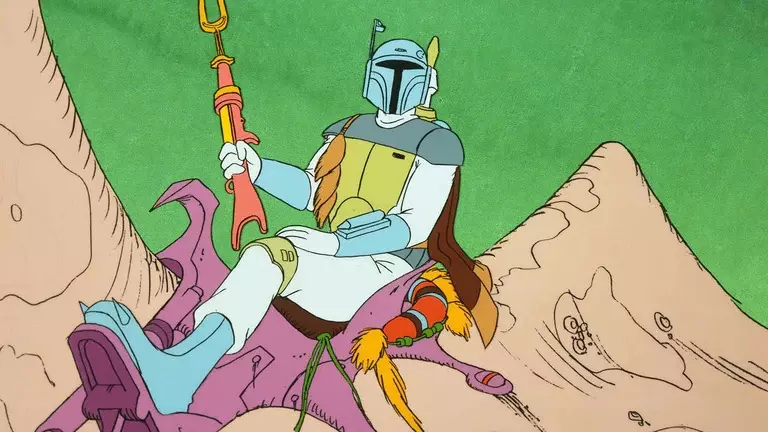
Novela
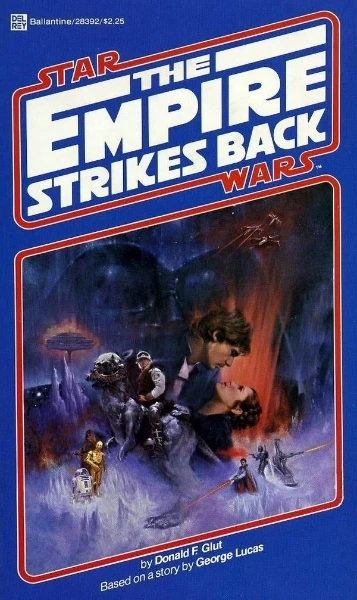
En la novela de The Empire Strikes Back, escrita por Donald F. Glut y publicada en mayo del año 1980, se menciona sobre Boba Fett:
“[..] A battered and tarnished chrome-colored droid named IG-88 was also with the group, standing next to the notorious Boba Fett. A human bounty hunter, Fett was known for his extremely ruthless methods. He was dressed in a weapon-covered, armored spacesuit, the kind worn by a group of evil warriors defeated by the Jedi Knights during the Clone Wars. A few braided scalps completed his unsavory image. The very sight of Boba Fett sent a shudder of revulsion through the admiral.”
Las Aventuras de Obi-Wan Kenobi: The Journal of the Whills
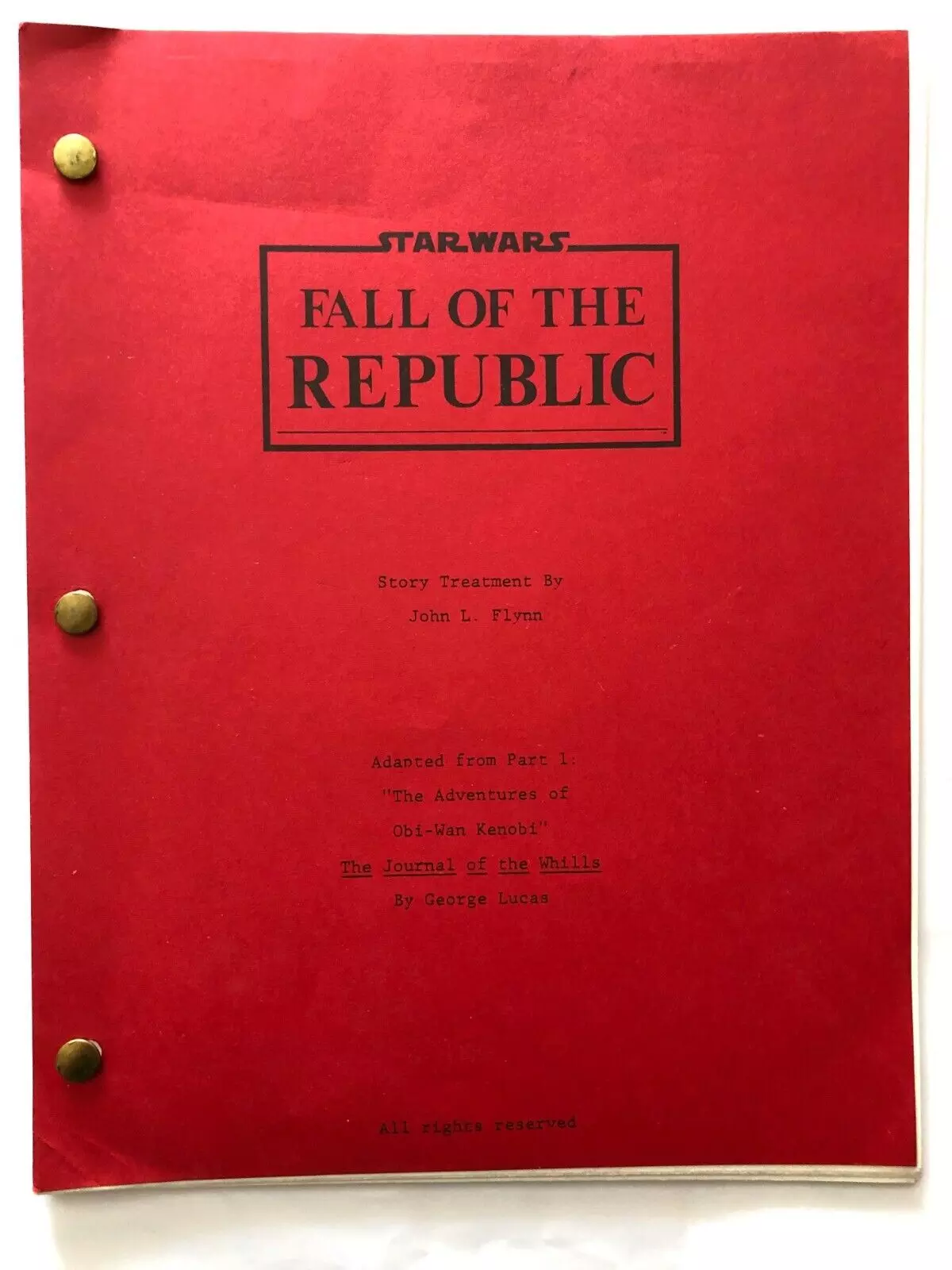
En el texto de la Caída de la República, adaptado por John L. Flynn, en el año 1983, de “Las Aventuras de Obi-Wan Kenobi” The Journal of the Whills de George Lucas, aparece un personaje Boba Fett muy similar a lo que conocemos, así como a la historia de Mandalore.
En particular, en el capítulo “Jhantor, en las Cámaras del Senado de Palpatine”, se menciona lo siguiente:
“Palpatine manda a sus guardias a traer el mercader de esclavos que capturó a su cámara del senado. Llegado él, se detiene observando atentamente de un lado a otro, el individuo examina su posición y las cadenas que lo retienen y piensa en su destino. Boba Fett, el único sobreviviente de un grupo de comandos que los Jedi derrotaron en las batallas de Mandalore durante las Guerras Clon, se regocija de la esclavitud interestelar que impone y el asesinato a sangre fría del Jedi Kane Starkiller. La sonrisa de desprecio en su cara llena de cicatrices es una prueba de la vida mercenaria que ha llevado Boba Fett.
Fett se defiende de los cargos que se le acusan aludiendo a sus acciones como “venganza virtuosa”. El malévolo presidente mira fijamente a Boba Fett por un momento, entonces le ofrece su libertad y su confiscada nave esclavizadora en intercambio por el exterminio de los Caballeros Jedi. También le promete un precio libre por cada Jedi que extermina si le trae pruebas de sus muertes, sin usar desintegradores. Fett sonríe ampliamente y le contesta que tendrá dificultad en localizarlos desde que se esparcieron por toda la galaxia. Pero Palpatine lo tranquiliza ya que le asegura, la tarea será sencilla con el arma confidencial del presidente. Boba Fett dudosamente está de acuerdo, entonces lo liberan de sus cadenas y lo escoltan fuera de la cámara. Cuando el mercader de esclavos se va, el Príncipe Valarium, acompañado por unos pocos guardias personales, le anuncia a Palpatine la llegada de Darth Vader. Palpatine cuchichea con Valarium y le aconseja que, personalmente, dirija la ejecución de Lady Arcadia. En ese momento entra Darth Vader, que junto a los guardias se ve alto y amenazante en fluidas túnicas negras y armadura, y se arrodilla ante su maestro.”
Marvel
En el cómic #68 Marvel de Star Wars, The Searh Begins, lanzado en febrero del año 1983, se cuenta una historia en que Leia se aventura en la búsqueda de Han luego de su captura por Boba Fett. Acá se mantiene este concepto de Boba Fett (y los suyos) y su participación en las Guerras Clon. Fenn Shysa (un Mandaloriano) le menciona a Leia:
“– Hace muchos años, cuando yo era parte de un grupo de supercomandos encargados de la protección definitiva de Mandalore. Era un trabajo del que estaba orgulloso. Pero cuando Palpatine hizo su movimiento para establecer un Imperio Galáctico, el gobierno de Mandalore nos envió a las Guerras Clon del lado del Emperador.
Y fue durante las sesiones informativas sobre los enemigos del Imperio, Princesa, que me familiaricé con tus atractivos rasgos.
En cualquier caso, la guerra finalmente se ganó, pero a un costo terrible. De los doscientos doce Protectores Mandalorianos que entraron en batalla, solo tres sobrevivieron.
Nuestro oficial en jefe, que se había desencantado de luchar por otros, se fue por su cuenta y terminó convirtiéndose en el cazarrecompensas más astuto de los mundos conocidos. Ese, por supuesto, fue Boba Fett. Los otros supervivientes éramos yo mismo y mi amigo de la infancia, Tobbi Dala. Tobbi y yo regresamos a Mandalore para empezar de nuevo, pero encontramos que las cosas habían cambiado durante nuestra ausencia. Nuestro mundo natal había sido invadido por esclavistas, sancionados por el Imperio, y habían convertido Mandalore en un centro de reclutamiento de esclavos necesarios para trabajar en las fábricas, granjas y minas que mantenían en funcionamiento la máquina de guerra Imperial. Fue entonces cuando Tobbi y yo nos fuimos a la clandestinidad para formar una banda de forajidos. ¡Y hemos estado luchando para devolver Mandalore a los Mandalorianos desde entonces!”
“– long years ago, when I was part of a group o’ supercommandos charged with the ultimate protection o’ Mandalore. It was a job I was proud of. But when Palpatine made his move to set up a Galactic Empire, the government o’ Mandalore sent us inta the Clone Wars on the Emperor’s side.
An’ it was durin’ briefin’ sessions on the enemies o’ the Empire, Princess, that I became acquainted with yer comely features.
At any rate, the war was finally won–but at a terrible cost. Of two hundred an’ twleve Mandalorian Protectors what went inta battle, only three survived.
Our chief officer, who’d become disenchanted with fightin’ fer other people, set off on his own an’ ended up the canniest bounty hunter in the known worlds. That, o’ course, was Boba Fett. The other survivors were meself an’ me boyhood chum, Tobbi Dala. Tobbi an’ me returned to Mandalore to start over, but we found things had changed durin’ our leave. Our homeworld had been overrun by slavers, sanctioned by the Empire, an’ they’d turned Mandalore into a conscription center fer slaves needed to work the fact’ries. farms an’ mines what kept the Imperial war machine runnin’. That’s when me an’ Tobbi went underground to form an outlaw band. An’ we’ve been fightin’ to give Mandalore back to Mandalorians ever since!”
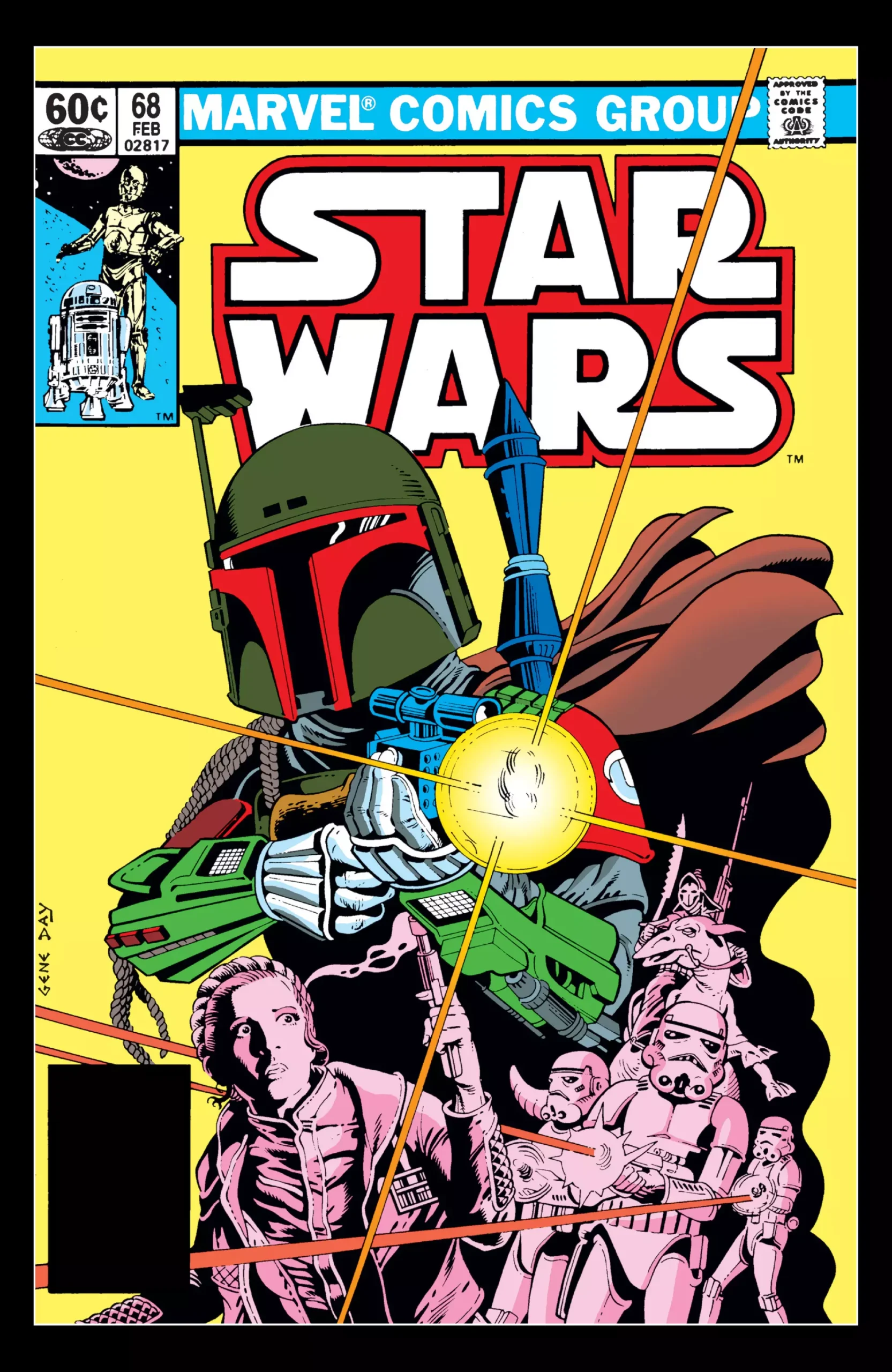
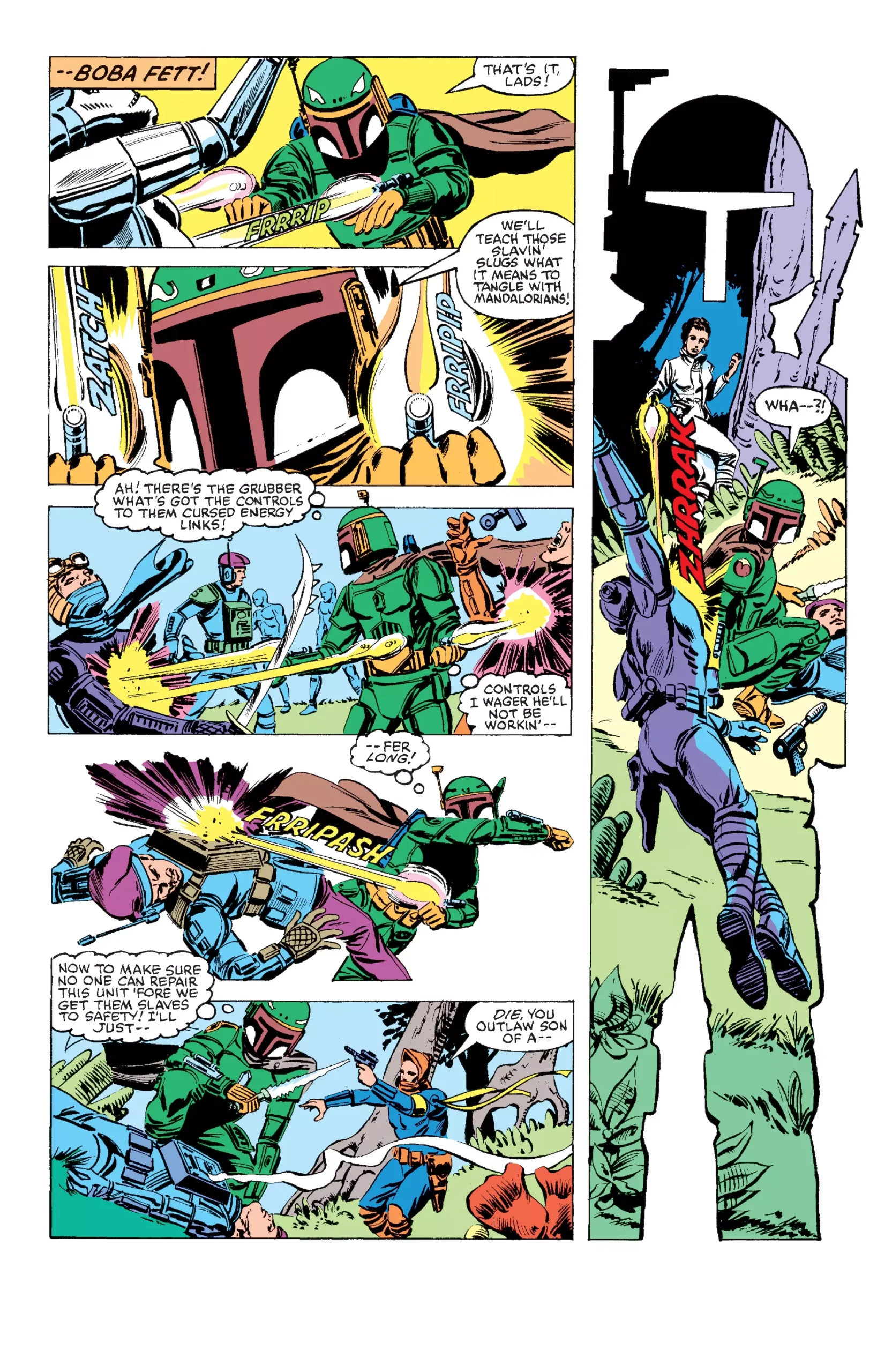
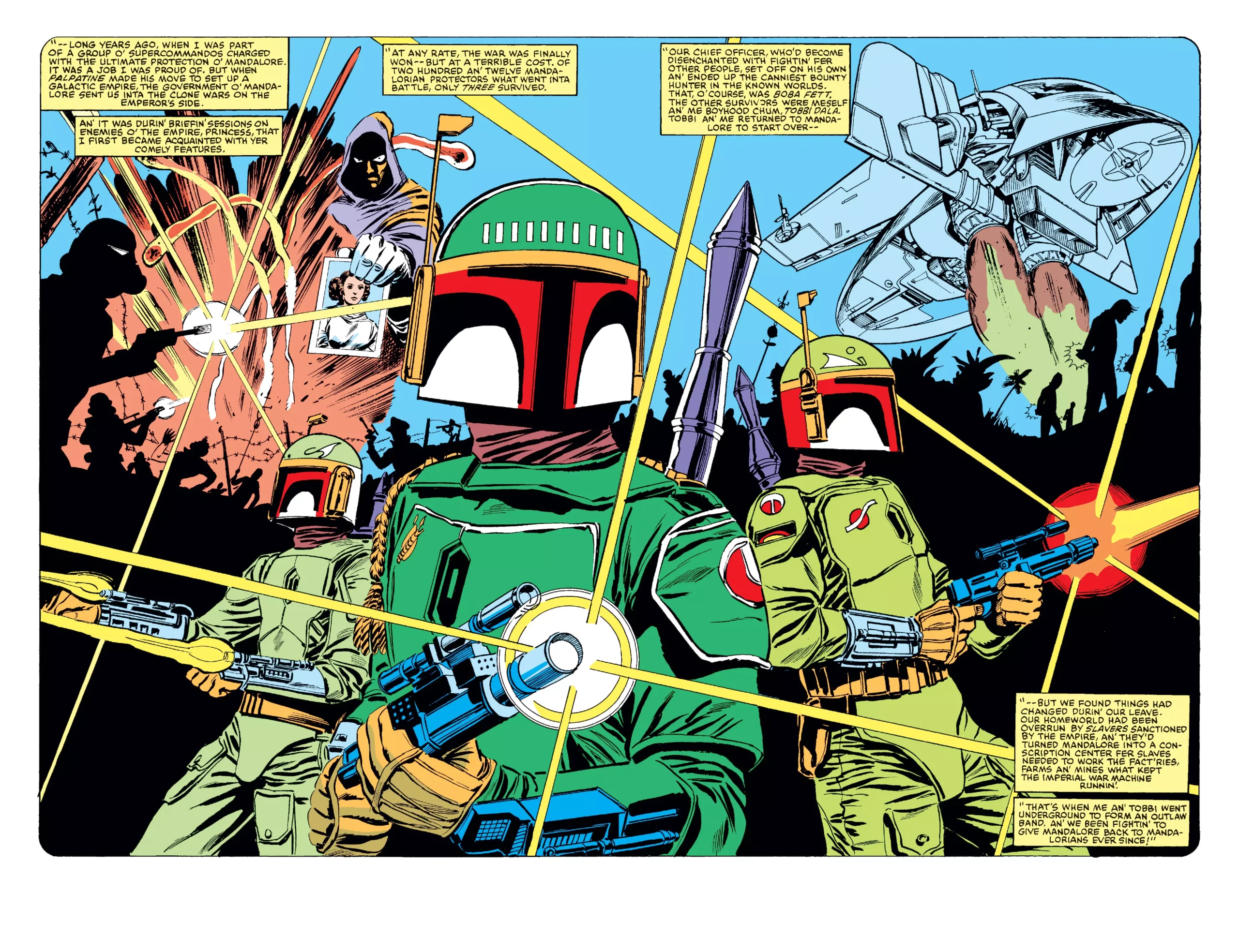
Pintura
Mats Gunnarsson pintó una obra de arte tamaño real de la figura de acción de Boba Fett. Esta pintura se publicó en el sitio TieFigthers.

Gentle Giant Life-Size Boba Fett Vintage Figure Monument
En septiembre de 2014, Gentle Giant se enorgulleció de presentar la última incorporación a su línea de populares monumentos a tamaño real con el Monumento Vintage de Boba Fett en tamaño real, inspirado en Kenner. Fue escaneado digitalmente a partir de una figura de acción auténtica en perfecto estado de 3 ¾” y reproducido a una asombrosa escala de 1.83 (6 pies). La altura del actor Jeremy Bullock, quien interpretó a Boba Fett medía 1.83 metros. Este monumento, totalmente articulado, también incluyó una réplica auténtica del accesorio bláster, reescalado. ¡Una pieza impresionante para la exhibición de cualquier coleccionista!
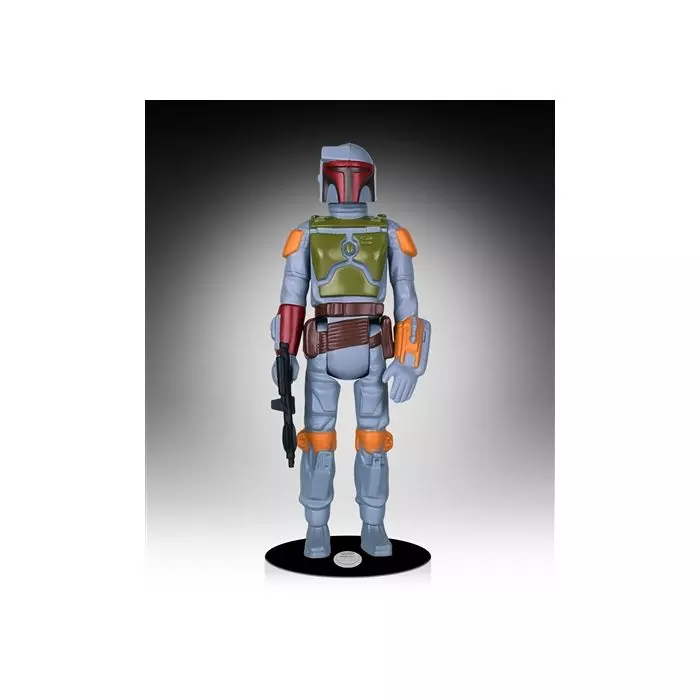
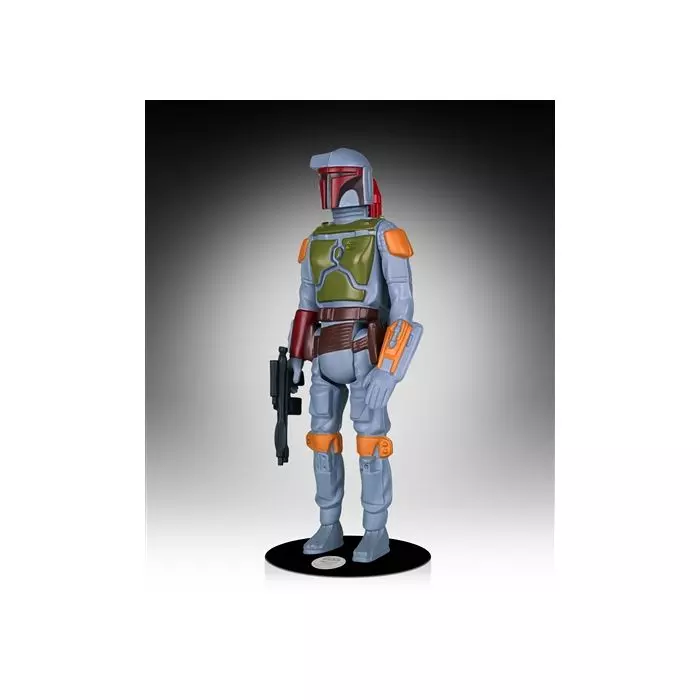
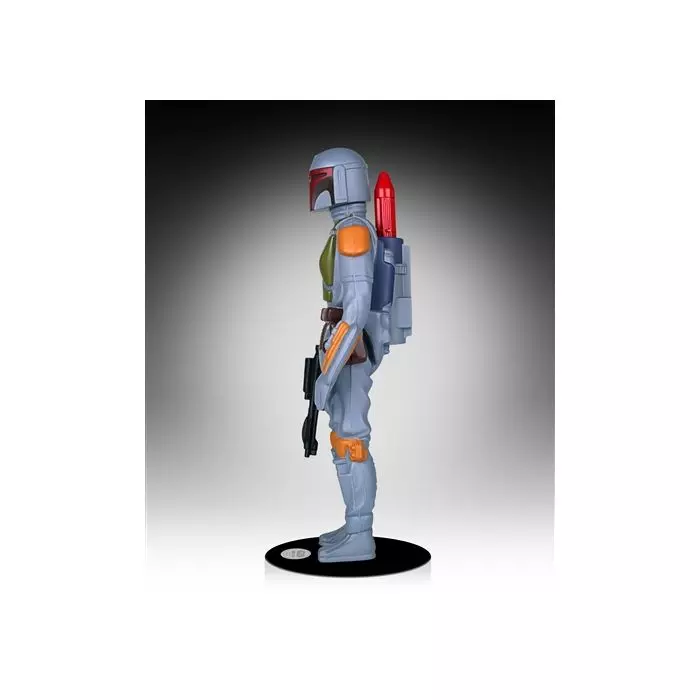
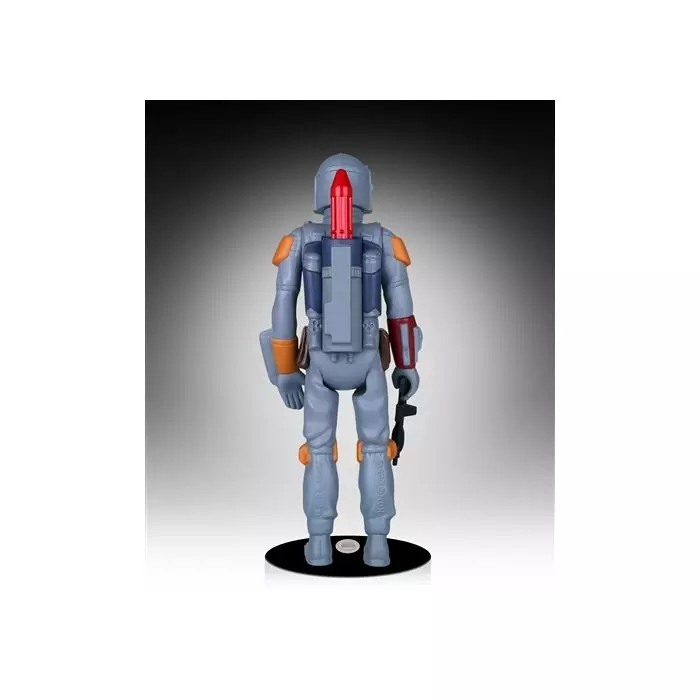
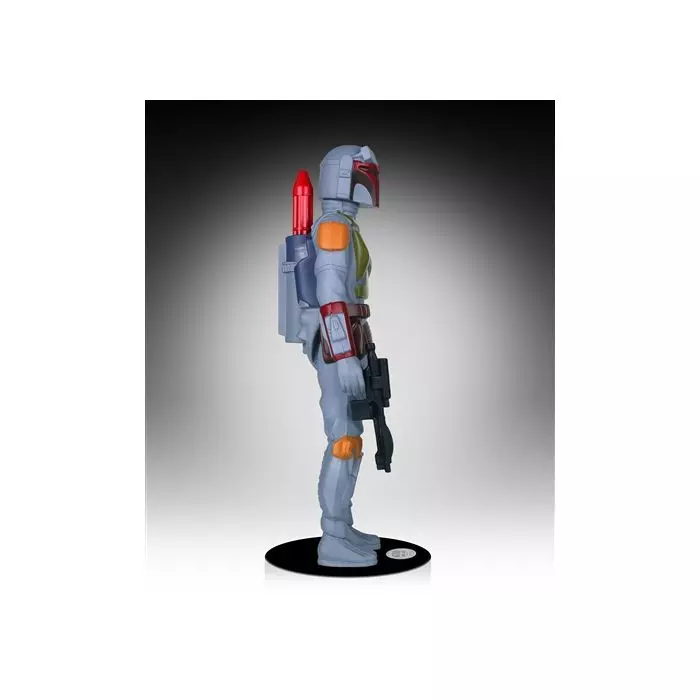
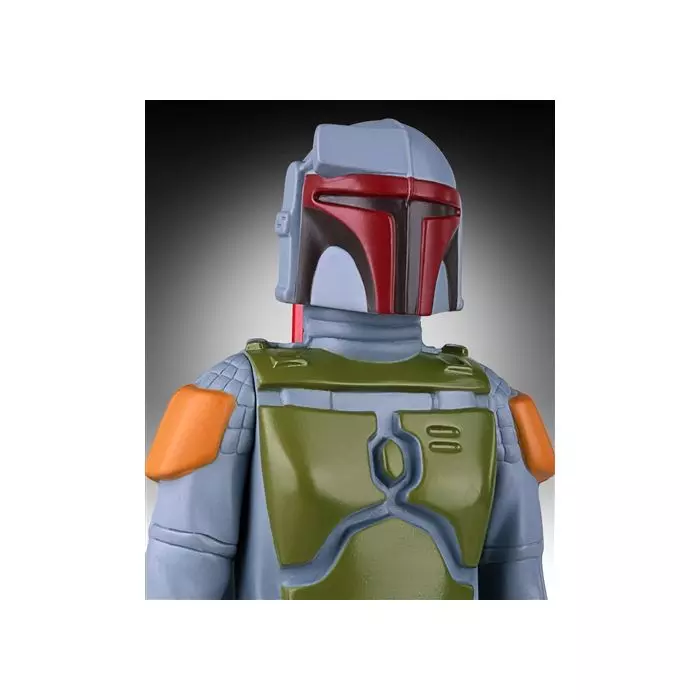
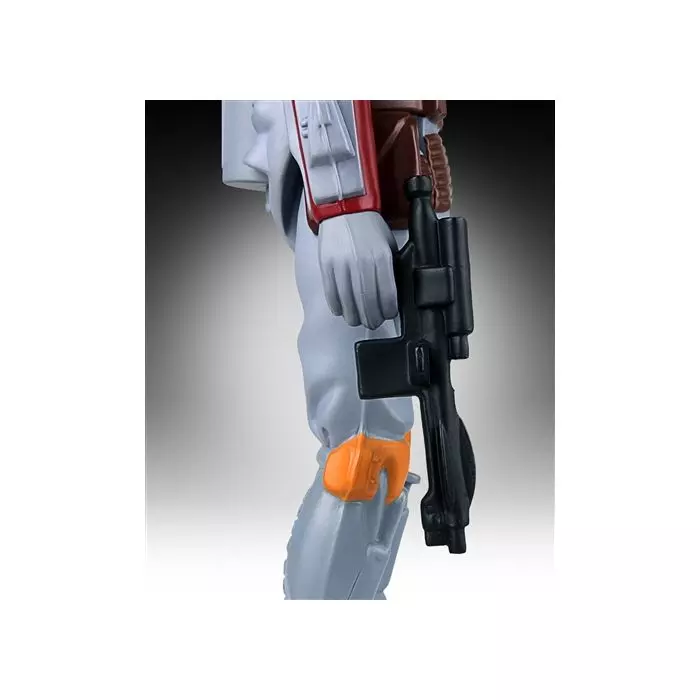
Boba Fett Infographic by Lili Ledy
Thanks to the work of my good friend Lily Ledy Star Wars, I’m sharing this great infographic of this beloved and iconic figure.
First Appearances: San Anselmo and Holiday Special
This figure brought the total to 21 basic figures, 6 vehicles and spaceships, one creature, and several playsets. This character made his world debut in the 1978 Holiday Special during the animated short (which was the highlight of the television program). Two months prior to this special, on September 24th of the same year, Boba Fett made his first public appearance in a parade at the San Anselmo Fair in Marin County, California, USA.
Special Edition
In a Galaxy Nearby, it wasn’t until the Special Edition version that Boba Fett appeared in A New Hope, the first film released in the saga under the name Star Wars. Therefore, this figure, originally released under the Star Wars series, was a preview of The Empire Strikes Back in 1979, a year before the release of the new film in this adventure. Kenner offered the first mail-order promotion with this figure (after the Early Bird shipments), requiring four proof of purchase to obtain this coveted action figure.
The Most Expensive Toy in History
In August 2024, an iteration of the J-slot prototype rocket-firing Boba Fett sold for $1.342 million, making it the most valuable toy in the world.
It is believed that approximately 100 prototypes of the rocket-firing Boba Fett still exist.
Of the surviving prototypes, approximately 70 would have the initial L-slot version of the firing mechanism, while the rest would be J-slot. Hand-painted as a prototype for its sample mailing, included in the auction along with Boba’s rockets and blaster rifle, only three of its type are known to exist, and the prototype sold is the only known “J-slot” mailing to have been publicly sold. Two months earlier, a J-slot had sold for $525,000.
ET the Extra-Terrestrial
The massive figure is also highly sought after by fans, and in addition to appearing in the Star Wars universe, it appears in the movie ET, when Elliot stays home pretending to be sick and shows Greedo, Hammerhead, Walrus Man, Snaggletooth (it’s not clear to me if it’s the blue or red one), Lando Calrissian Bespin Fatigues, and Boba Fett to his new friend of space.
Ted
2:14
In 1985 as a Christmas present, a child receives as a gift a case of Star Wars action figures in the shape of Darth Vader complete with figures of the time, are appreciated Organa, Luke Skywalker, Obi-Wan Kenobi, . Madine, Boba Fett, Chewbacca, Emperor’s Royal Guard, FX7 href=”https://jhantorlars.com/han-solo-bespin/”>Han Solo Bespin, Stormtrooper, , R2-D2, Cloud Car Pilot, Prune Face href=”https://jhantorlars.com/lando-calrissian/”>Lando Calrissian y Yoda.
The Mandalorian
In the series The Mandalorian, they bring back this weapon of Fett’s from the animated short in the Christmas Special and link it to Vader’s line to Fett in the film The Empire Strikes Back – “No disintegrations” – when he hires a gang of bounty hunters to pursue the Millennium Falcon.
Novel
In the novel The Empire Strikes Back, written by Donald F. Glut and published in May 1980, Boba Fett is mentioned:
“[..] A battered and tarnished chrome-colored droid named IG-88 was also with the group, standing next to the notorious Boba Fett. A human bounty hunter, Fett was known for his extremely ruthless methods. He was dressed in a weapon-covered, armored spacesuit, the kind worn by a group of evil warriors defeated by the Jedi Knights during the Clone Wars. A few braided scalps completed his unsavory image. The very sight of Boba Fett sent a shudder of revulsion through the admiral.”
The Adventures of Obi-Wan Kenobi: The Journal of the Whills
In the text of Fall of the Republic, adapted by John L. Flynn in 1983 from George Lucas’s “The Adventures of Obi-Wan Kenobi” The Journal of the Whills, a Boba Fett character appears very similar to the one we know, as well as to the history of Mandalore.
In particular, in the chapter “Jhantor, in Palpatine’s Senate Chambers,” the following is mentioned:
“Palpatine sends his guards to bring the slave trader he captured to his senate chamber. Upon his arrival, he pauses, carefully observing his surroundings, examining his position and the chains that bind him, and contemplating his fate. Boba Fett, the sole survivor of a commando group defeated by the Jedi in the Battles of Mandalore during the Clone Wars, revels in the interstellar slavery he imposes and the cold-blooded murder of Jedi Kane Starkiller. The contemptuous smile on his scarred face is a testament to the mercenary life Boba Fett has led. Fett defends himself against the charges against him by alluding to his actions as “virtuous revenge.” The malevolent president stares at Boba Fett for a moment, then offers him his freedom and his confiscated slave ship in exchange for the extermination of The Jedi Knights. He also promises him a free price for every Jedi he exterminates if he brings him proof of their deaths, without using blasters. Fett smiles broadly and replies that he will have difficulty locating them since they have spread throughout the galaxy. But Palpatine reassures him, saying the task will be easy with the president’s top-secret weapon. Boba Fett reluctantly agrees, then he is freed from his chains and escorted out of the chamber. As the slave trader leaves, Prince Valarium, accompanied by a few personal guards, announces to Palpatine the arrival of Darth Vader. Palpatine whispers to Valarium and advises him to personally oversee the execution of Lady Arcadia. At that moment, Darth Vader enters, looking tall and menacing in flowing black robes and armor, and kneels before him. master.”
Marvel
In the Star Wars comic #68 Marvel Star Wars, The Sea Begins, released in February 1983, a story is told in which Leia ventures out in search of Han after his capture by Boba Fett. This maintains the concept of Boba Fett (and his followers) and his participation in the Clone Wars. Fenn Shysa (a Mandalorian) tells Leia:
“– long years ago, when I was part of a group o’ supercommandos charged with the ultimate protection o’ Mandalore. It was a job I was proud of. But when Palpatine made his move to set up a Galactic Empire, the government o’ Mandalore sent us inta the Clone Wars on the Emperor’s side.
An’ it was durin’ briefin’ sessions on the enemies o’ the Empire, Princess, that I became acquainted with yer comely features.
At any rate, the war was finally won–but at a terrible cost. Of two hundred an’ twleve Mandalorian Protectors what went inta battle, only three survived.
Our chief officer, who’d become disenchanted with fightin’ fer other people, set off on his own an’ ended up the canniest bounty hunter in the known worlds. That, o’ course, was Boba Fett. The other survivors were meself an’ me boyhood chum, Tobbi Dala. Tobbi an’ me returned to Mandalore to start over, but we found things had changed durin’ our leave. Our homeworld had been overrun by slavers, sanctioned by the Empire, an’ they’d turned Mandalore into a conscription center fer slaves needed to work the fact’ries. farms an’ mines what kept the Imperial war machine runnin’. That’s when me an’ Tobbi went underground to form an outlaw band. An’ we’ve been fightin’ to give Mandalore back to Mandalorians ever since!”
Painting
Mats Gunnarsson painted a life-size artwork of the Boba Fett action figure. This painting was published on the Tie Fighters website.
Gentle Giant Life-Size Boba Fett Vintage Figure Monument
In September 2014, Gentle Giant proudly unveiled the latest addition to its line of popular life-size monuments: the Kenner-inspired Boba Fett Vintage Monument. It was digitally scanned from an authentic, mint-condition 3 ¾” action figure and reproduced at an astounding 1.83” (6 ft) scale. Actor Jeremy Bullock, who portrayed Boba Fett, stood 1.83 meters tall. This fully articulated monument also included an authentic, rescaled replica of the blaster accessory. A stunning piece for any collector’s display!