Line Extension Presentation, The Epic Continues
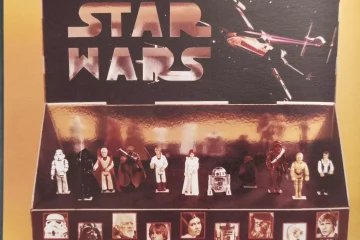
Line Extension Presentation, The Epic Continues posiblemente se llevó a cabo en el año 1984 o bien a inicios de 1985, y consistió en una reunión entre Kenner y Lucasfilm en que los primeros expusieron los juguetes para lanzamiento en el año 1985, así como una nueva línea de juguetes conocida como “The Epic Continues” para ser lanzada en 1986.
Al menos participaron en esta reunión, de parte del equipo Kenner, Tim Effler y Mark Bourdreaux, quienes tenían en sus manos las exitosas líneas de pleno diseño e invención Kenner, los Body-Rig de Effler en la colección Power of the Force, y los Mini-Rigs de Boudreaux en las colecciones Empire Strikes Back. Varias veces, los diseñadores de Kenner jugaban con los vehículos de juguete existentes, modificándolos en un proceso de kitbashing, obteniendo piezas y elementos de ellos, o incluso kits de modelos aleatorios para crear diseños completamente nuevos.
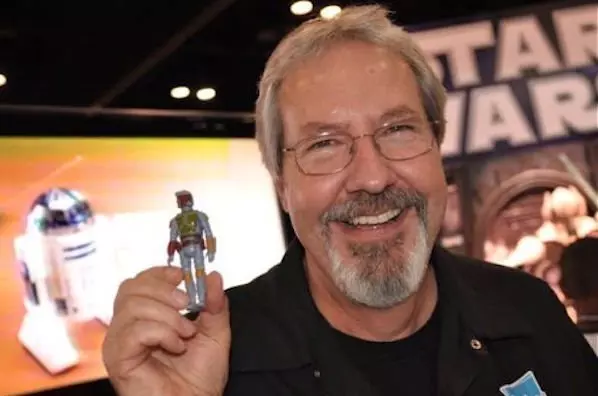
Mark Boudreaux, quien nos dejó en mayo del año 2023, fue un diseñador de juguetes de Star Wars desde 1978; trabajando en el Departamento de Diseño Preliminar de Kenner Products en Cincinnati, Ohio; finalmente se mudó con Hasbro a Pawtucket, Rhode Island en 2001, después de que Hasbro comprara Kenner en la década de 1990.
Tim Effler es un diseñador y director creativo con más de 40 años en la industria del juguete, Effler comenzó su carrera en Kenner, donde fue parte del equipo responsable del set de la Estrella de la Muerte y las figuras de 12 pulgadas de StarWars. Tras un breve periodo en Mattel, regresó a Kenner, donde como director conceptual de productos contribuyó al éxito de colecciones clásicas como Ghostbusters, Batman, Jurassic Park y los últimos años de la línea Star Wars.
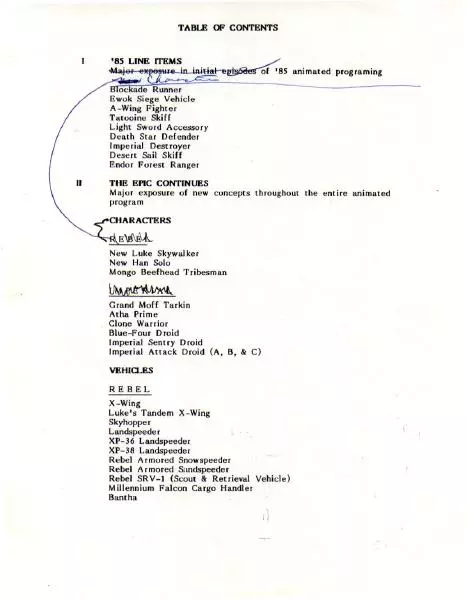
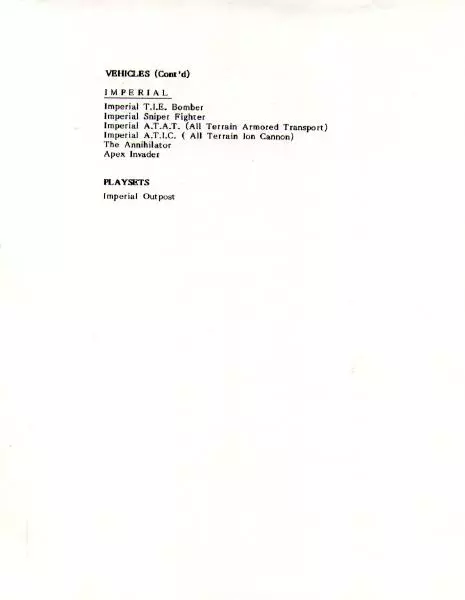
Por algún motivo, en la presentación cambiaron el orden de la misma queriendo mostrar primero las nuevas figuras de acción. Se hace mención a que las figuras y vehículos del 85 aparezcan con mayor protagonismo en las series animadas, que ya sabemos fueron Ewoks y Droids. También se hace la misma referencia para la nueva línea propuesta, “The Epic Continues”, por lo que se sugiere que esta tendría su propia serie animada. Esto mucho antes de la aparición de un proyecto como “Shadows of The Empire”
Juguetes para 1985
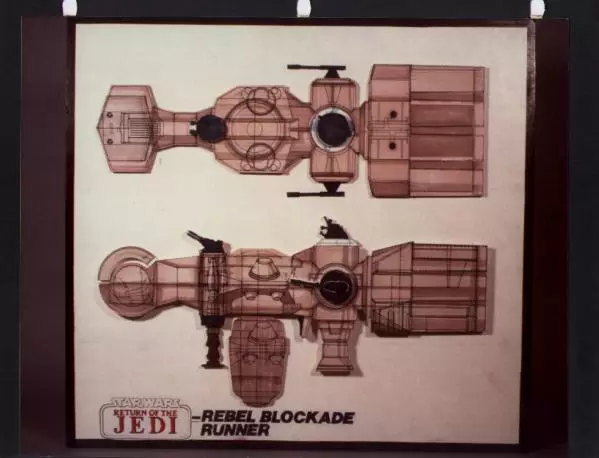
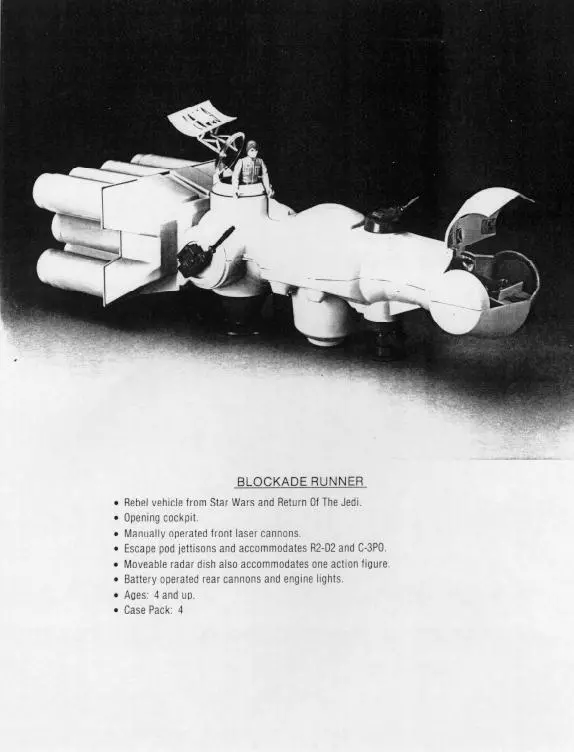
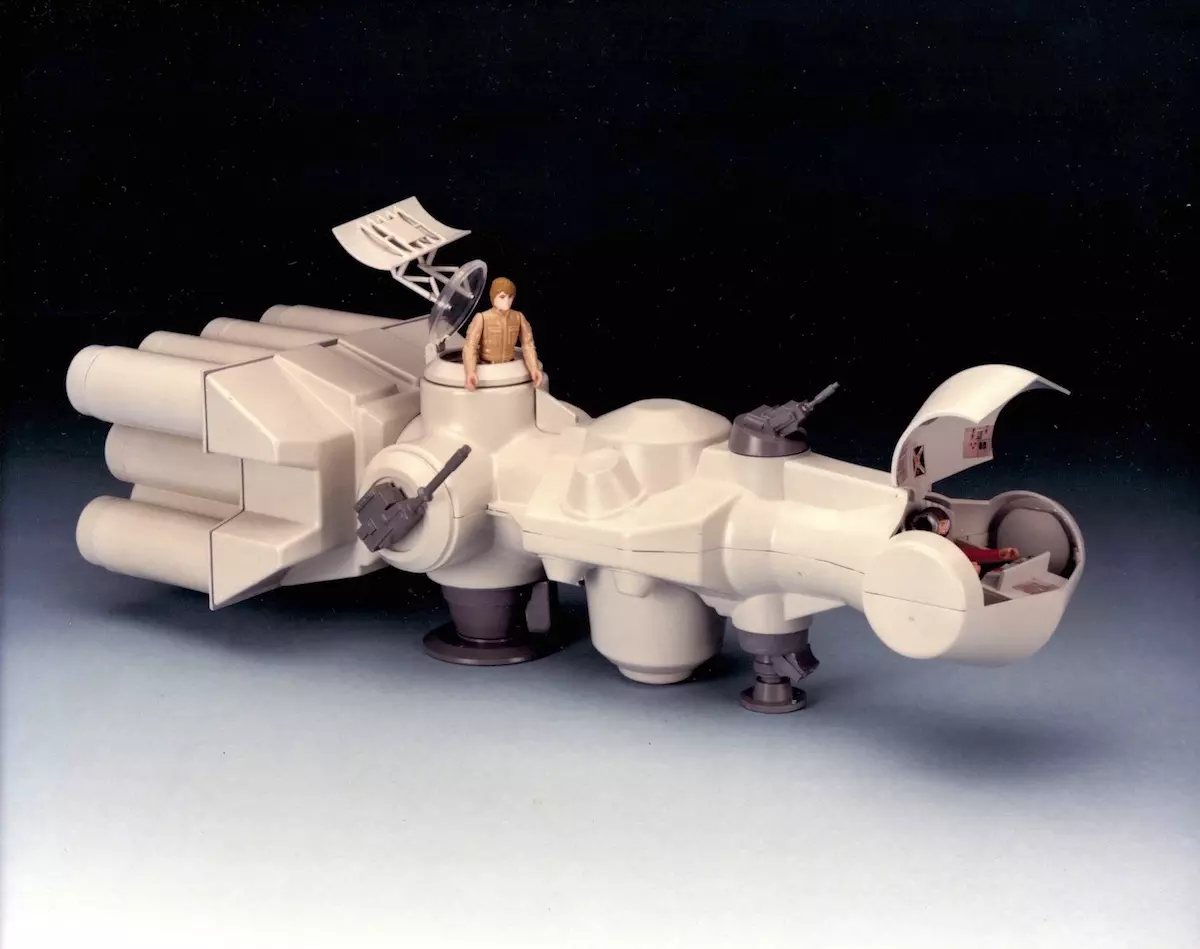
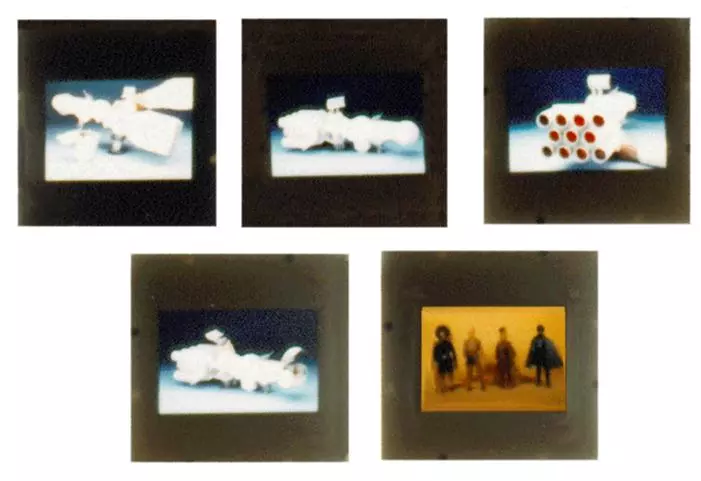
Como se presentó el “Blockade Runner” fue con una vista de un modelo 3D de espuma con varias partes móviles. El logotipo del Regreso del Jedi indica que esta imagen probablemente existió un tiempo antes de que se usara para esta presentación. También existe un prototipo de plástico del “Blockade Runner”, pero, de lo que se sabe, no formó parte de esta reunión.
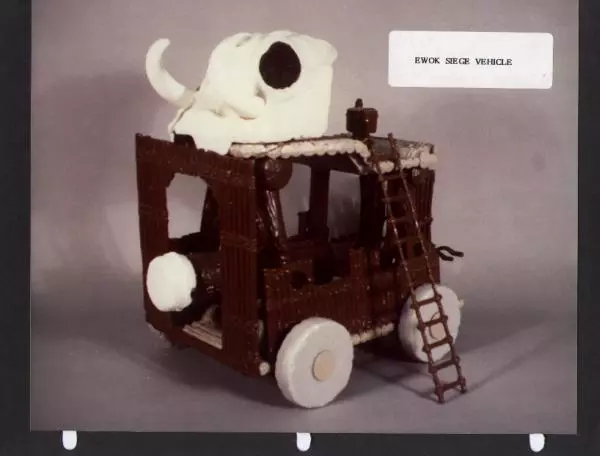
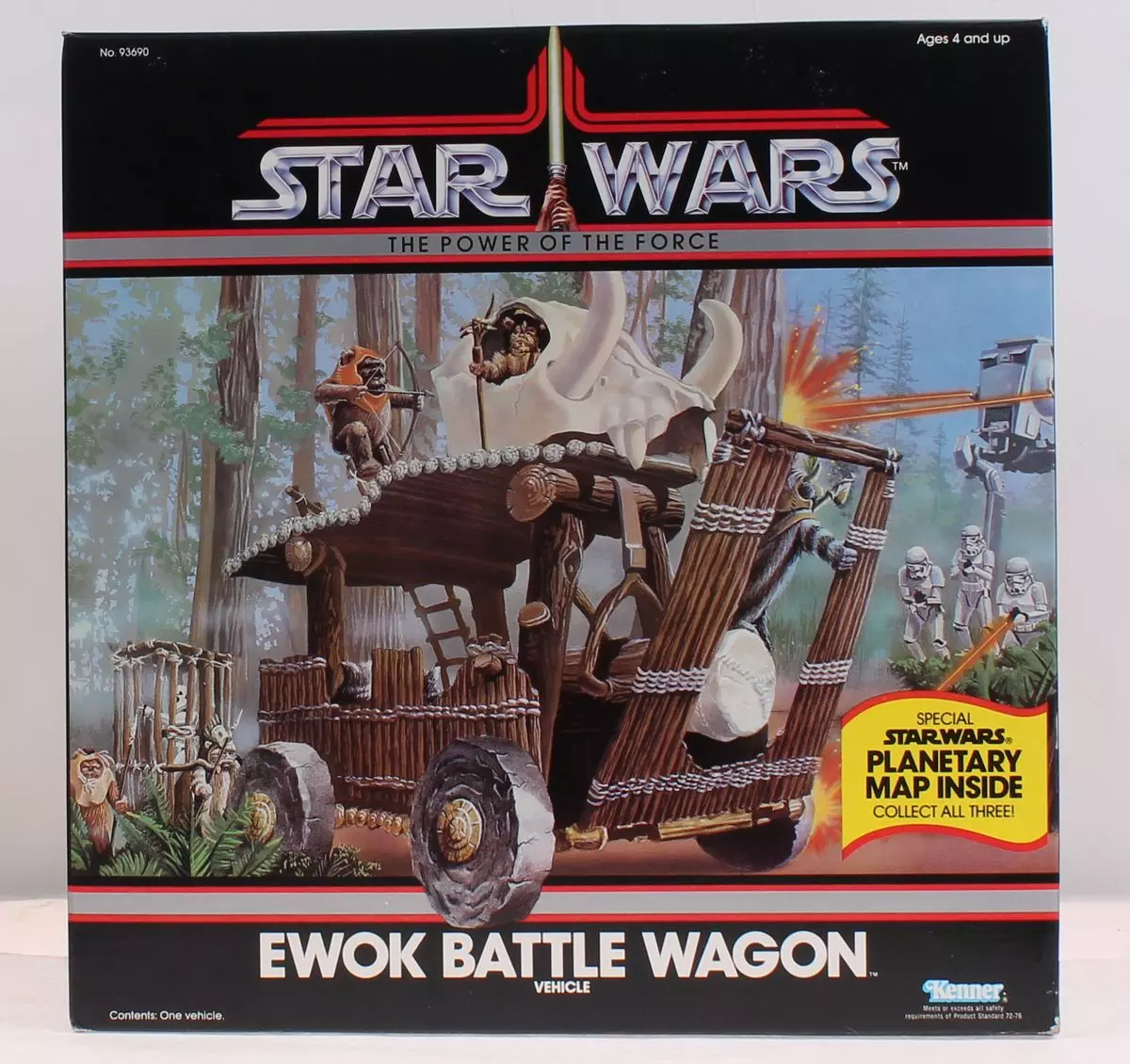
El “Ewok Siege Vehicle” fue una vehículo que se lanzó dentro de la línea Power of the Force bajo el nombre “Ewok Battle Wagon”.
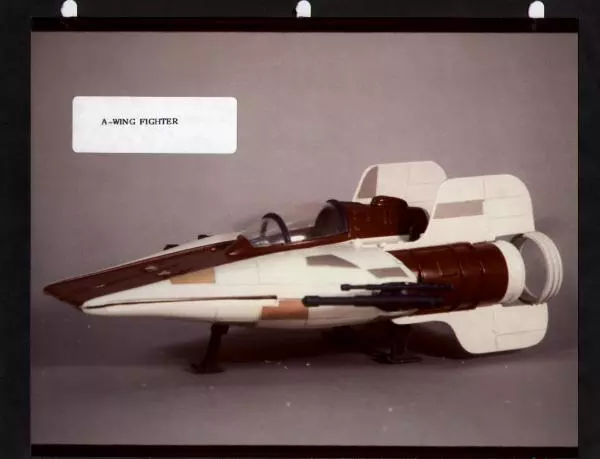
La nave del “A-Wing Fighter” fue lanzada dentro de la serie Droids. Así también dentro de esta serie se repitió el lanzamiento de la figura de acción A-Wing Pilot lanzada antes en la colección Power of the Force.

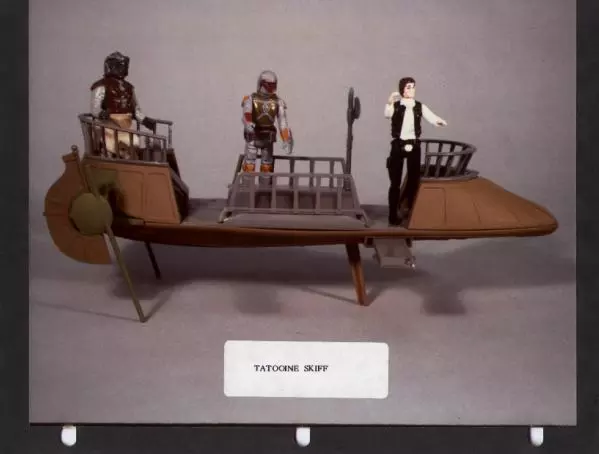
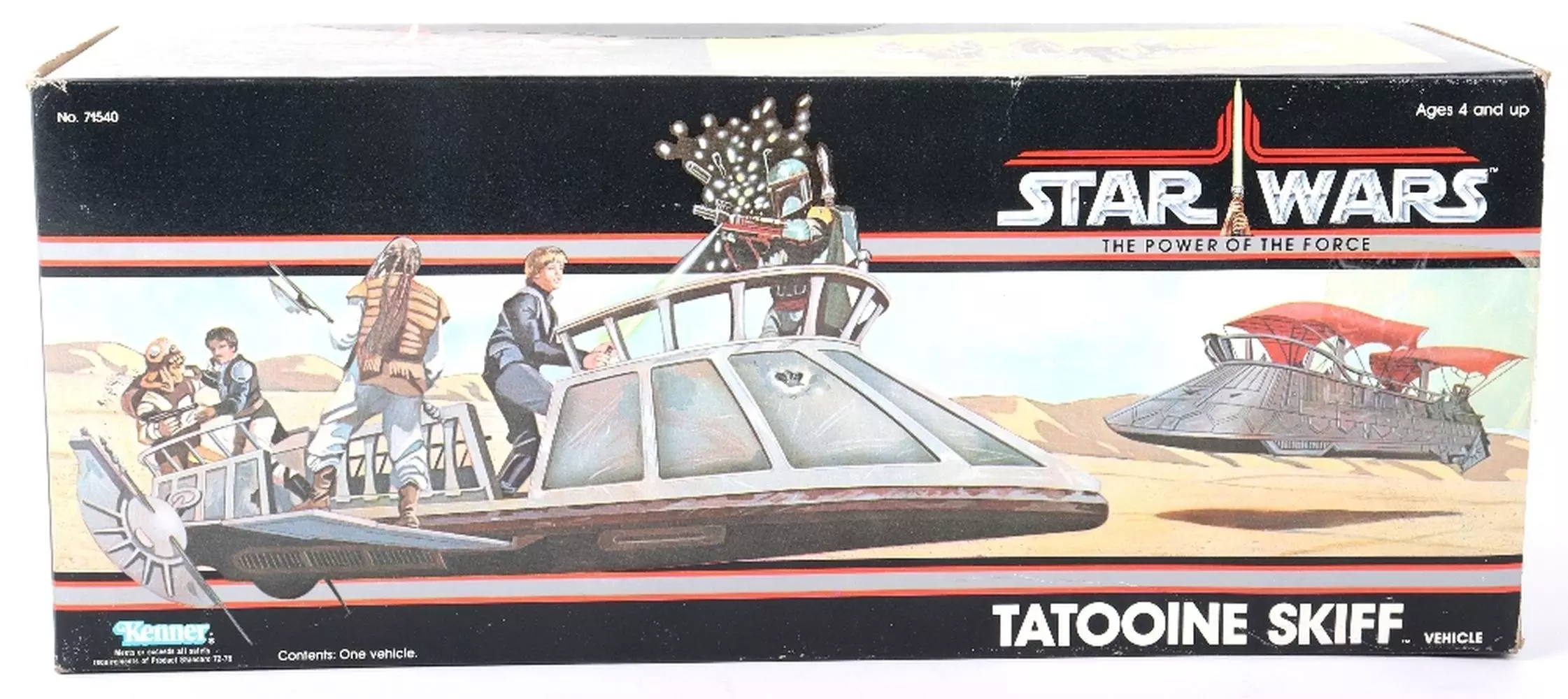
La “Tatooine Skiff” fue lanzada dentro de la colección Power of the Force.
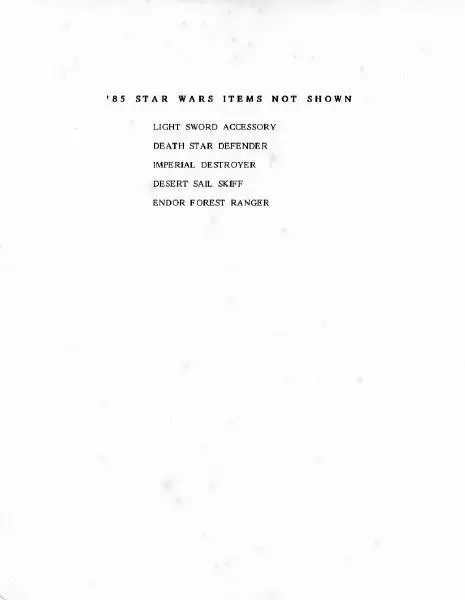
A pesar de que estaban en la lista inicial, hubo elementos que finalmente no se presentaron en la carpeta. Tal vez, a esa altura, ya varios estaban aceptados como veremos a continuación.
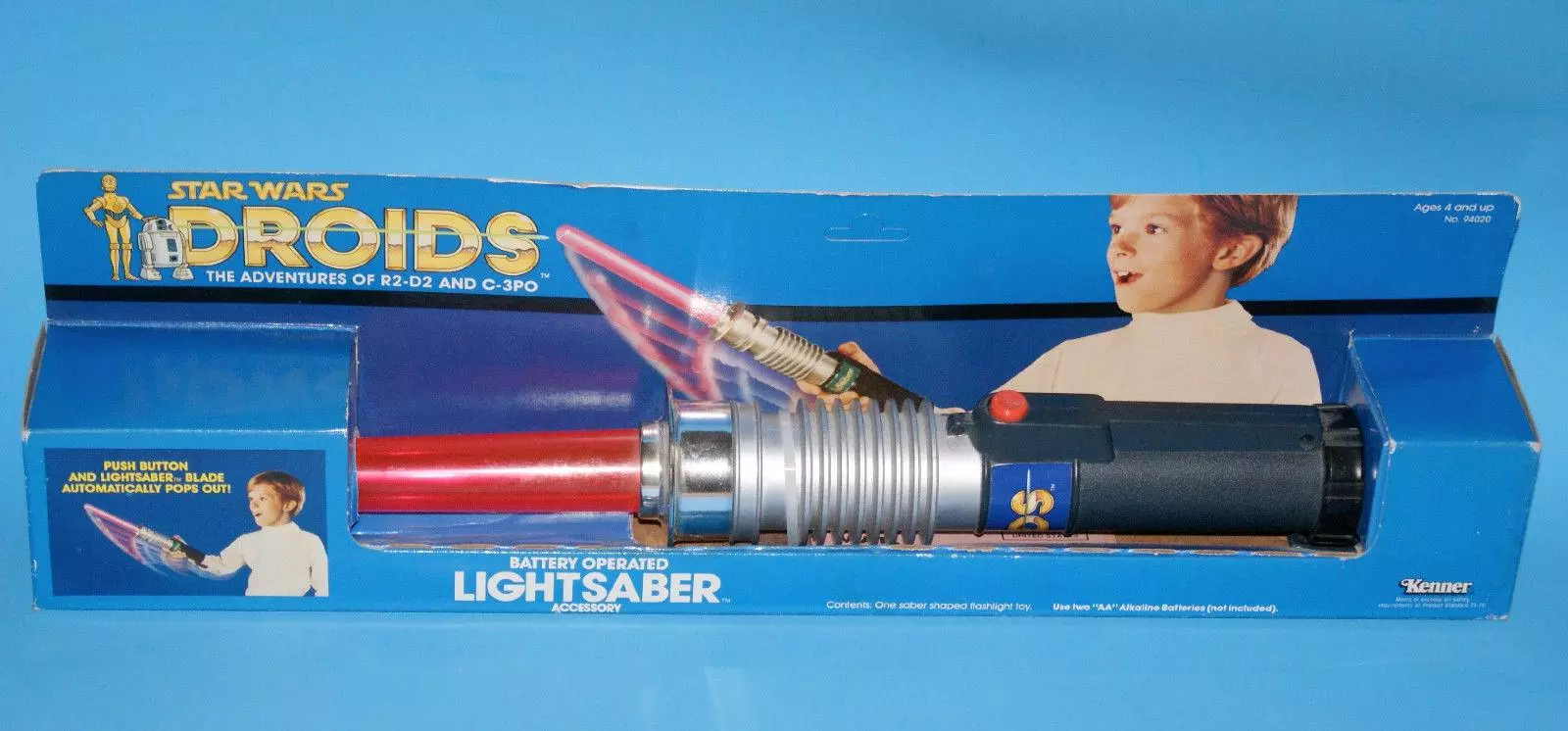
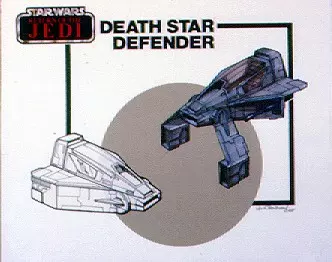
El “Lightsaber” fue lanzado como parte de los accesorios de cosplay de la serie Droids. Por otro lado, el “Death Star Defender” se transformó finalmente en el “ATL Interceptor” lanzado en la misma serie.
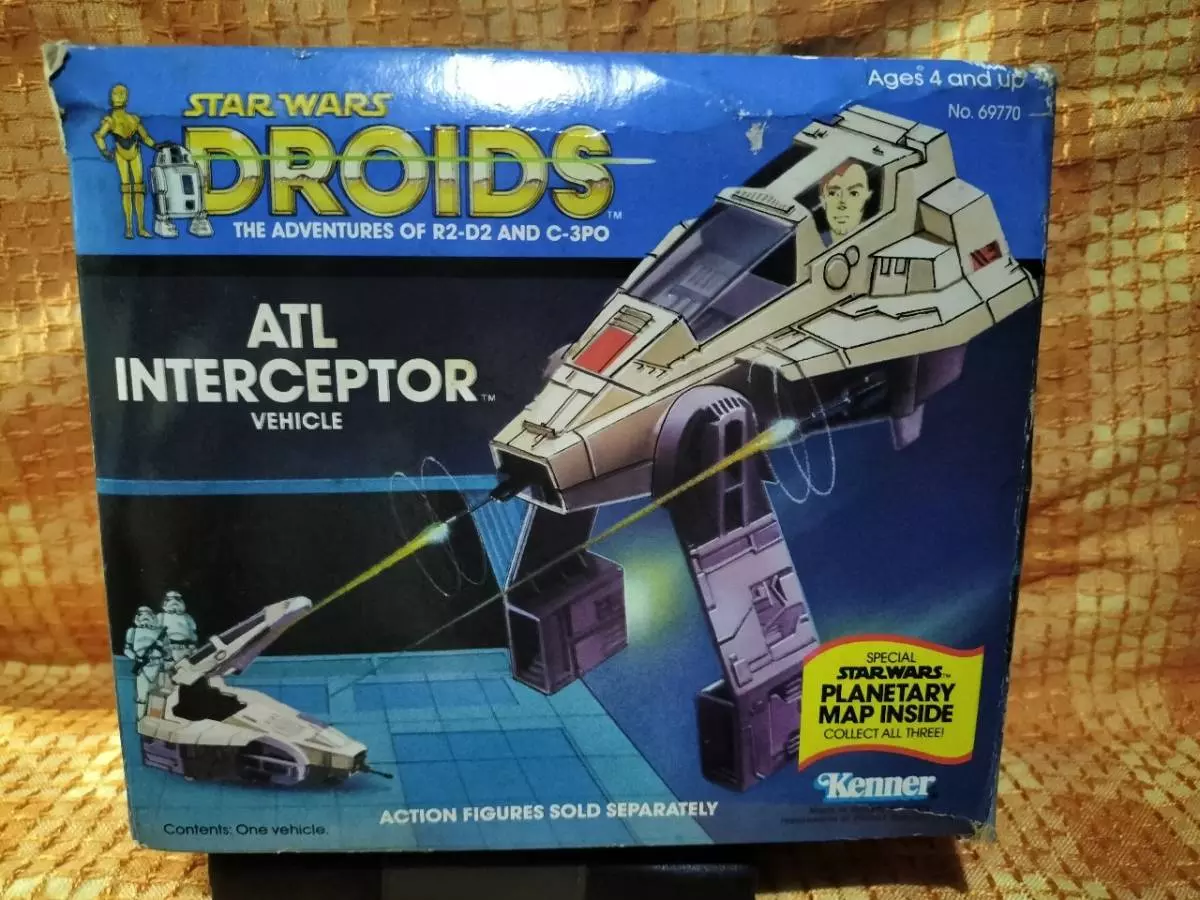
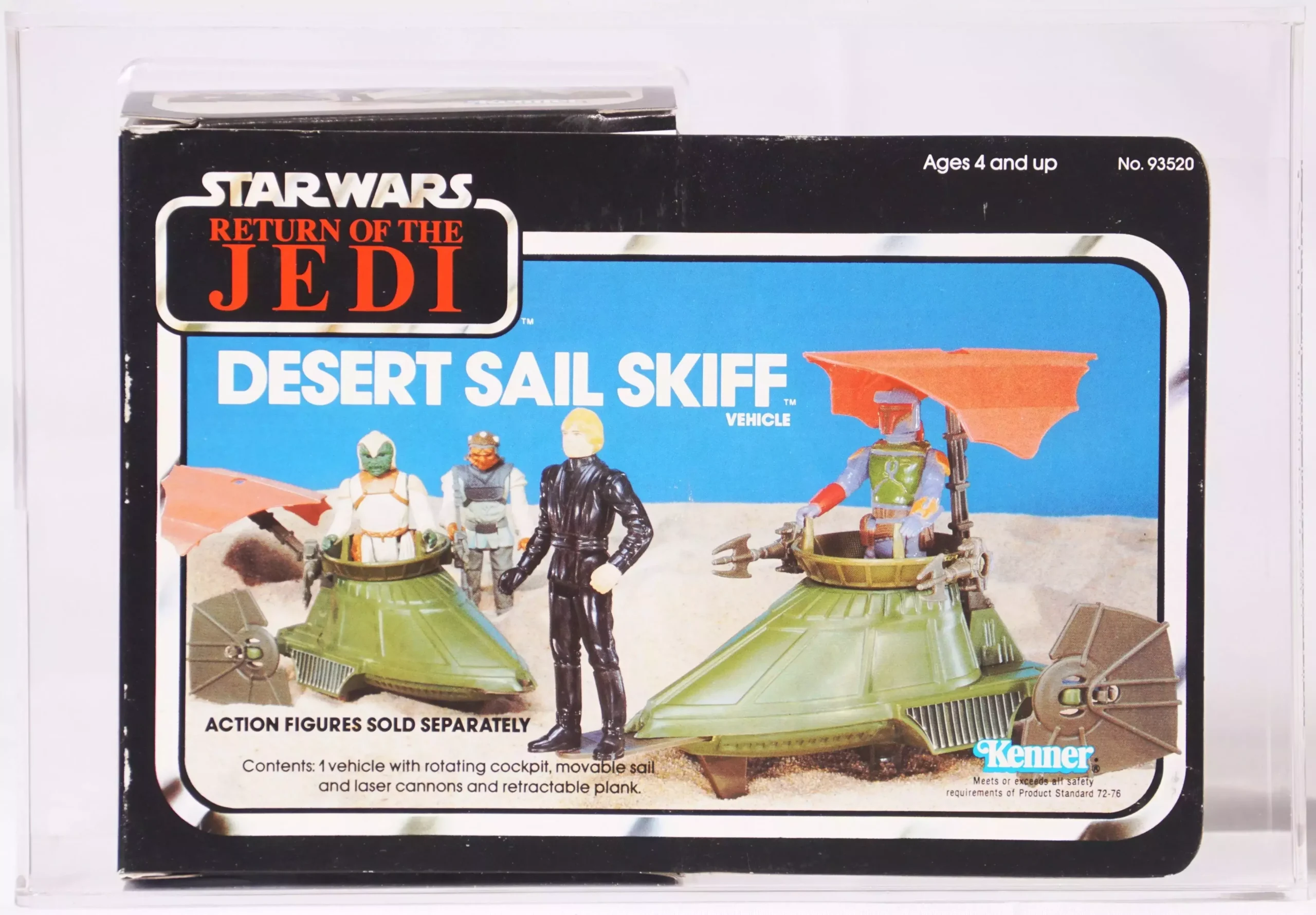
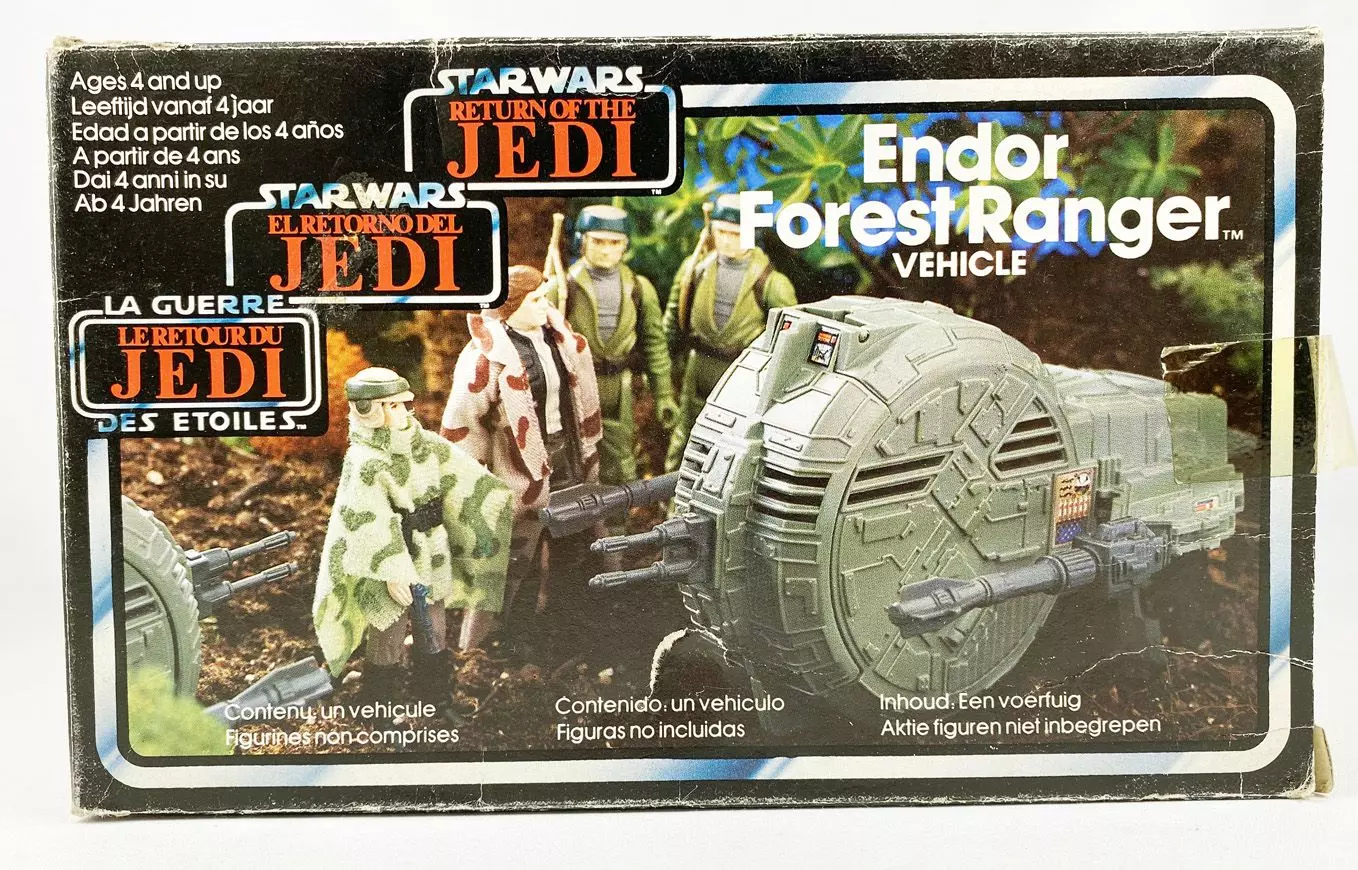
El “Desert Sail Skiff” y el “Endor Forest Ranger” se lanzaron como parte de la colección del Regreso del Jedi en la categoría de mini-Rig.
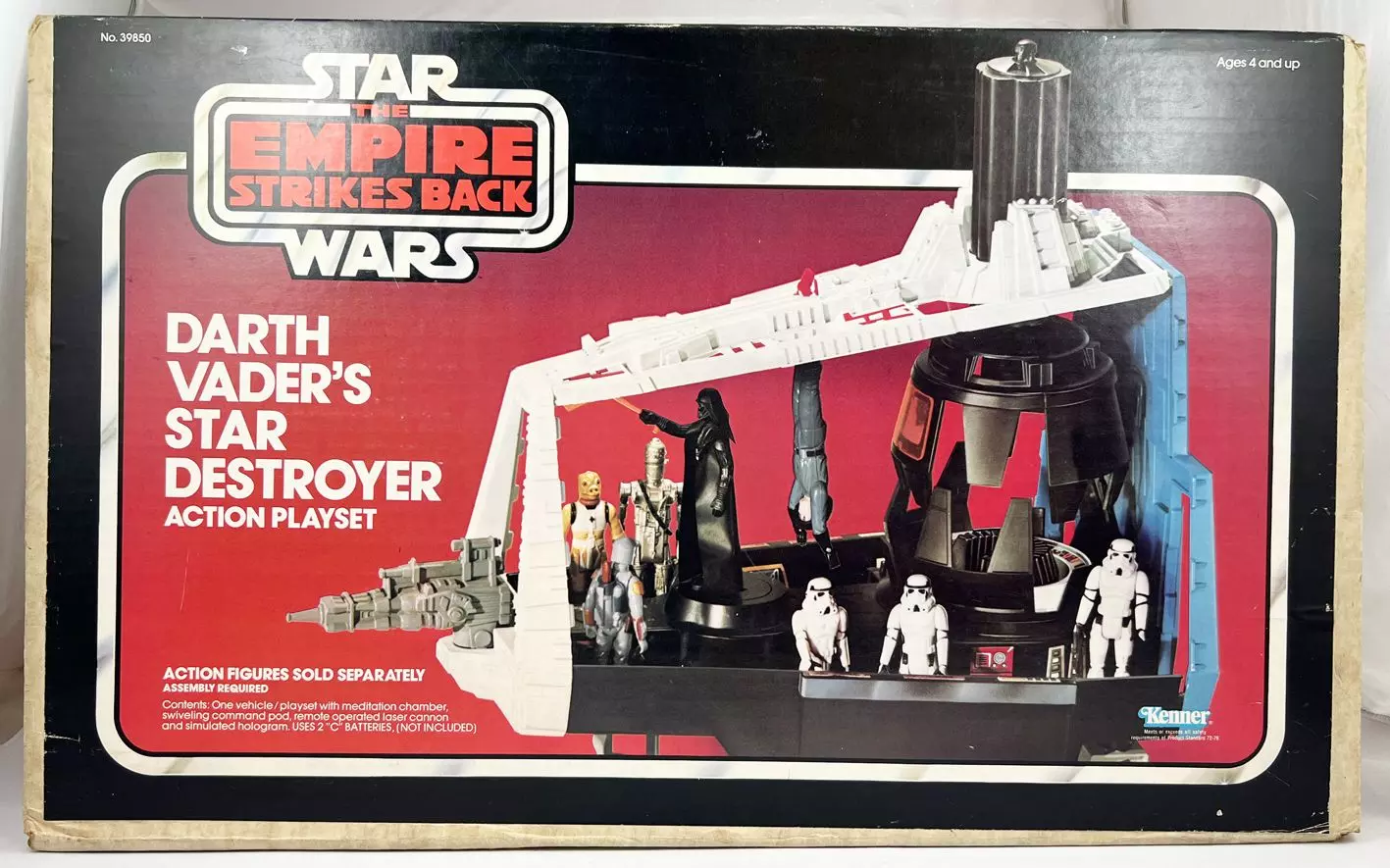
Sobre el “Imperial Destroyer” no se sabe si sería un relanzamiento del “Darth Vader Star Destroyer” que apareció para la colección del Imperio Contraataca pero que no se lanzó bajo la colección del Regreso del Jedi o bien si hubiese sido un nuevo playset para la colección Power of the Force o de alguna serie animada Droids o Ewoks.
The Epic Continues
Tim Effler creó una nueva trama que le daría contexto a una nueva línea de figuras, vehículos y playsets para ser lanzados por Kenner en el año 1986 y así seguir con el legado de Star Wars luego del final de la primera trilogía en el 84 con el estreno del Regreso del Jedi. El proyecto incluía una línea de juguetes, un programa de televisión animado (en la misma línea de Droids y Ewoks del 85) e incluso se menciona en algunos sitios que podría haber tenido una serie de cómics asociada.
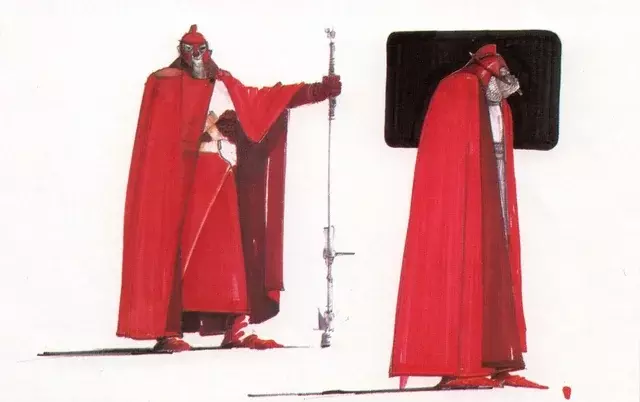
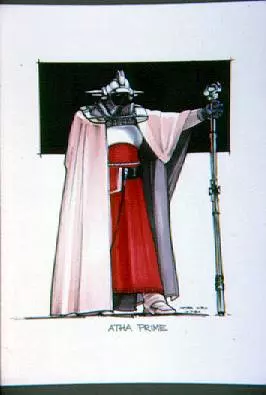
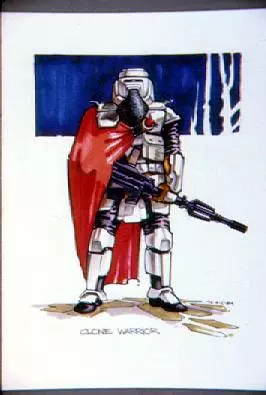
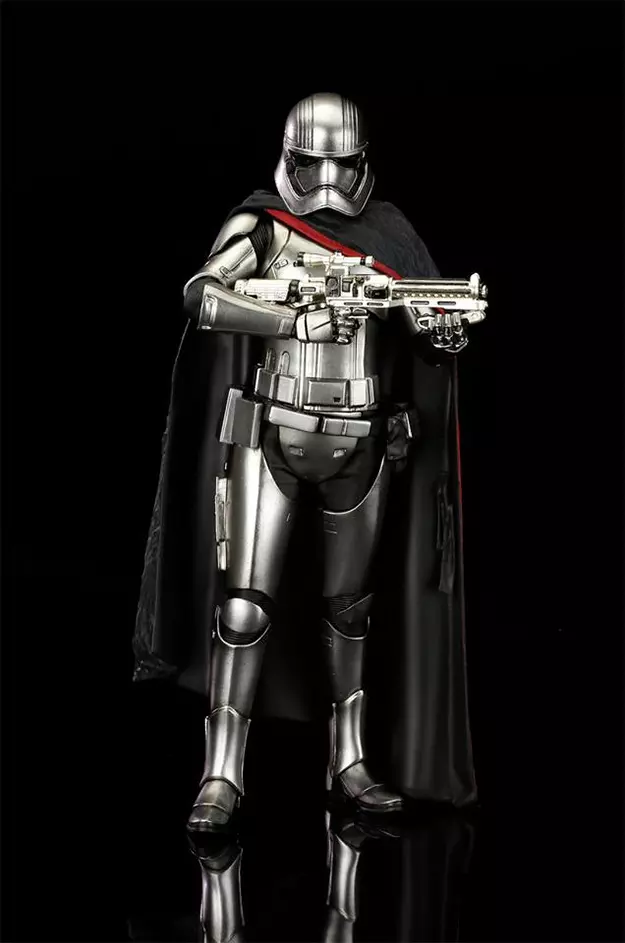
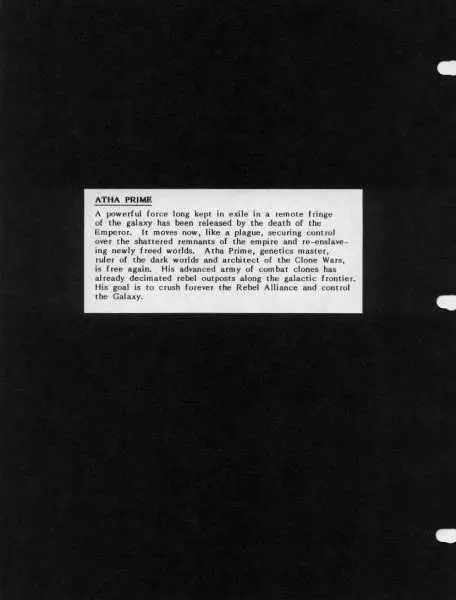
Según la narrativa de Effler, la muerte del Emperador Palpatine provocó el colapso absoluto del Imperio y el regreso a las mismas Guerras Clon que permitieron a Palpatine ascender en primer lugar. De las cenizas surgió Atha Prime (basado en diseños rechazados para los guardias del Emperador realizado por Nilo Rodis Jamero), un maestro de la genética y gobernante de mundos oscuros que había sido desterrado por Palpatine. Su objetivo era apoderarse de la Galaxia con sus Guerreros Clon, destruyendo cualquier planeta que se le opusiera. El concepto del guerrero clon con su capa puede haber sido inspirador para el personaje de la Capitana Phasma.
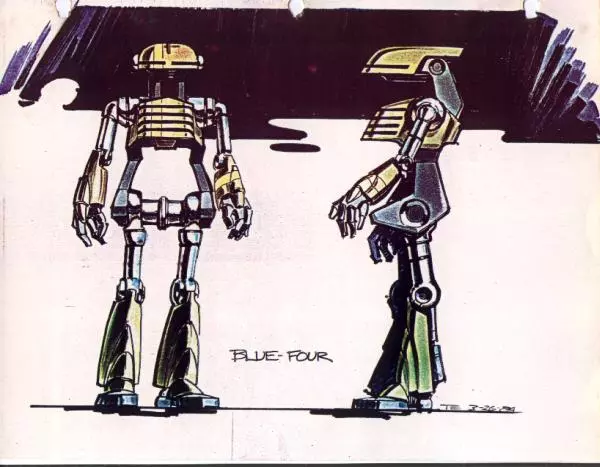
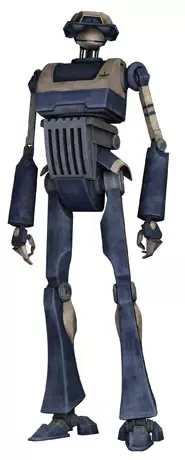
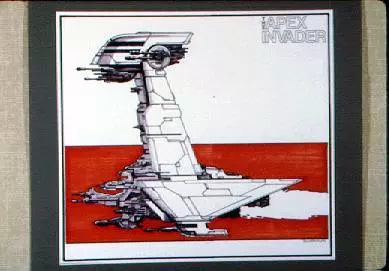
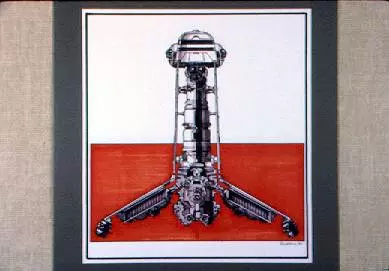
El principal activo de Prime era el “Annihilator”, una nave de mando del tamaño de una ciudad que también contenía el caza de “Atha Prime“, el “Apex Invader”, que era pilotado por el droide Blue-Four, su único ayudante y confidente. Tengo la sospecha que el diseño del robot Táctico de las fuerzas separatistas en Clone Wars estuvo inspirado en el diseño de este droide Blue Four.
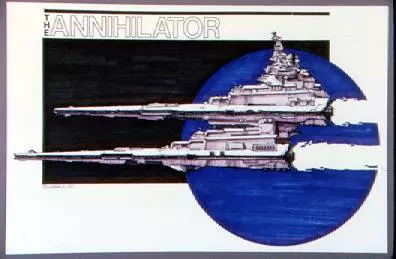
El “Apex Invader” tenía un diseño único que consistía en la torre superior de un “Star Destroyer”, en este caso del “Annihilator”, en donde se acoplaba.
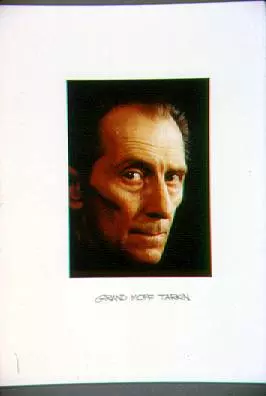
Por algún motivo, nunca se lanzó la figura de Moff Tarkin (Recomendado: ¿Cómo habrá sido la selección de personajes Kenner?) y tenían la intensión de rectificar esa situación. Por esto, es que en la historia lo incluyen y así tener la excusa de lanzar su figura. Según yo, este fundamento no tiene mucho peso ya que en la colección Power of the Force lanzaron a Luke Skywalker (Imperial Stormtrooper Outfit) y un Imperial Gunner sin problema.
Entonces, en el mismo período del alzamiento de “Atha Prime“, el gran “Moff Tarkin“, habiendo sobrevivido sorprendentemente a la destrucción de la “Estrella de la Muerte”, intentaría liderar la reconstrucción del Imperio. Para lograr su objetivo, operó desde un puesto de avanzada imperial (“Imperial Outpost” que sería un playset), empleando droides de ataque imperiales (“Imperial Attack Droid A“, “Imperial Attack Droid B” y “Imperial Attack Droid C“), un “Imperial Sentry Droid“) y nuevos vehículos (“AT-AT” y “AT-IC”).
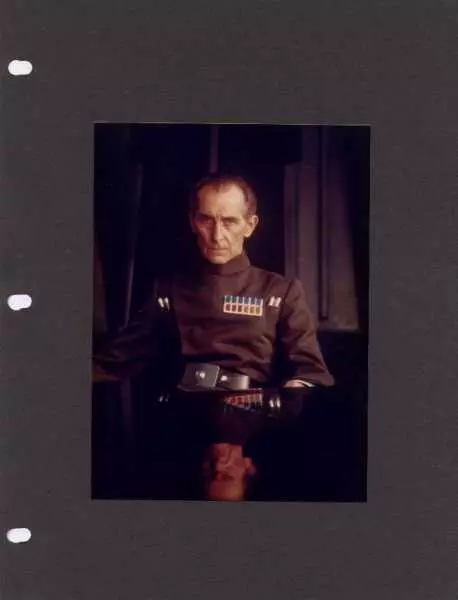
De Tarkin no se hizo un prototipo ni esquema, sólo se usó una foto del personaje en la película.
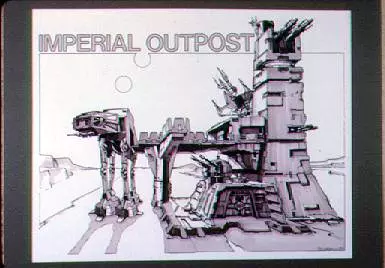
El “Imperial Outpust” prometía ser un playset gigantesco con muchas opciones de juego y que se unía con la jugabilidad de un “AT-AT”. El arte conceptual fue diseñado por Boudreaux, quien combinó elementos preexistentes, como una torre de armas de la “Estrella de la Muerte”, con la plataforma de aterrizaje y el complejo de búnker que se ve en Endor en El Regreso del Jedi.
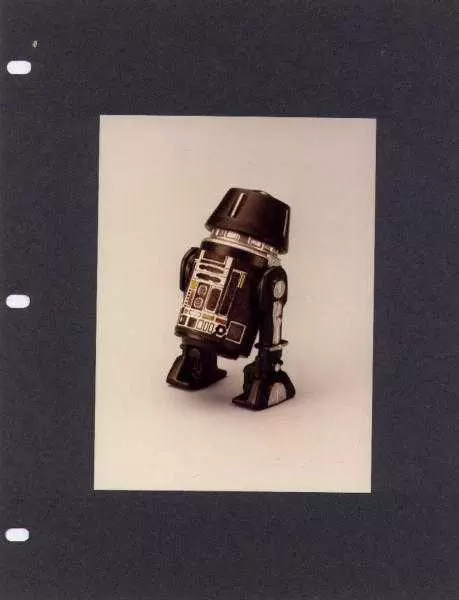
El “Imperial Sentry Droid” se podría referir al astromecánico R5-J2 que aparece en El Regreso del Jedi.

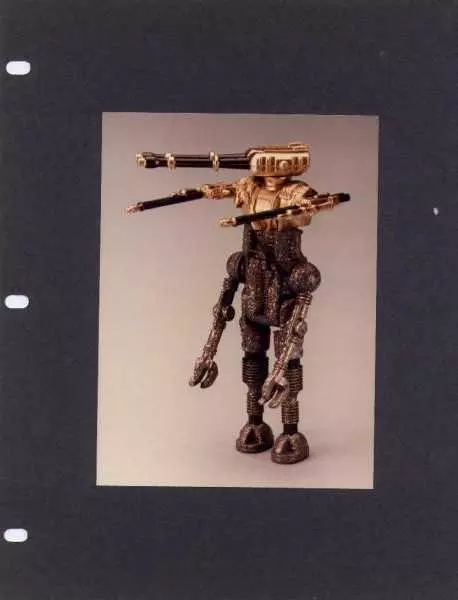
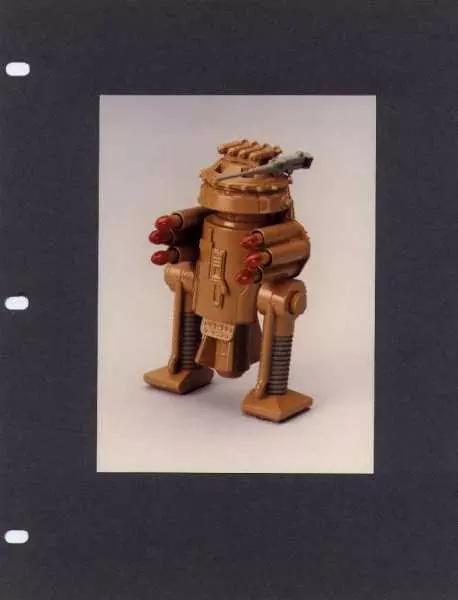
El prototipo del “Imperial Attack Droid A” fue hecho con piernas y brazos de 2-1B, un torso de IG-88, y el cañón de arriba de una “Y-Wing”, y al parecer el arma larga del IG-88.
El prototipo del “Imperial Attack Droid B” se hizo en base a Zuckuss y 2-1B, con una pistola de 4-LOM.
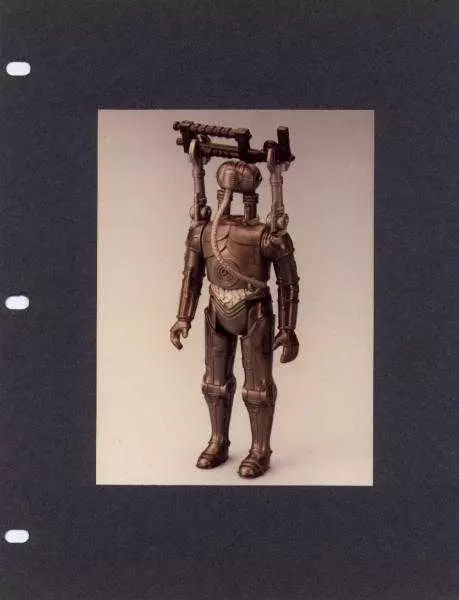
El último prototipo de los tres droides de ataque imperial, el “Imperial Attack Droid C“, fue hecho con partes de FX-7, un Power Droid, al parecer un cuerpo de R2 e incluso una parte del torpedo de un “Y-Wing”, y con mucho armamento, al parecer nuevo.
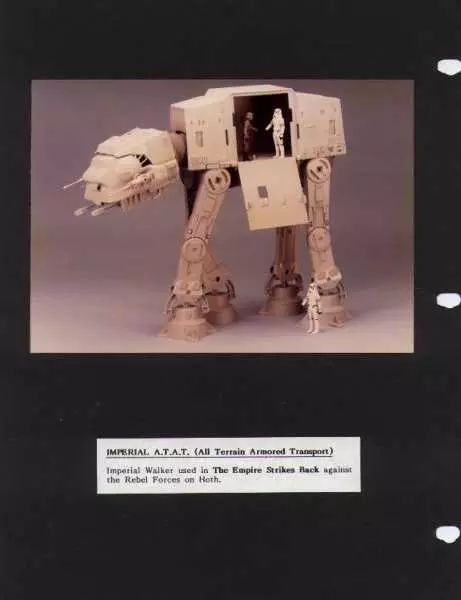
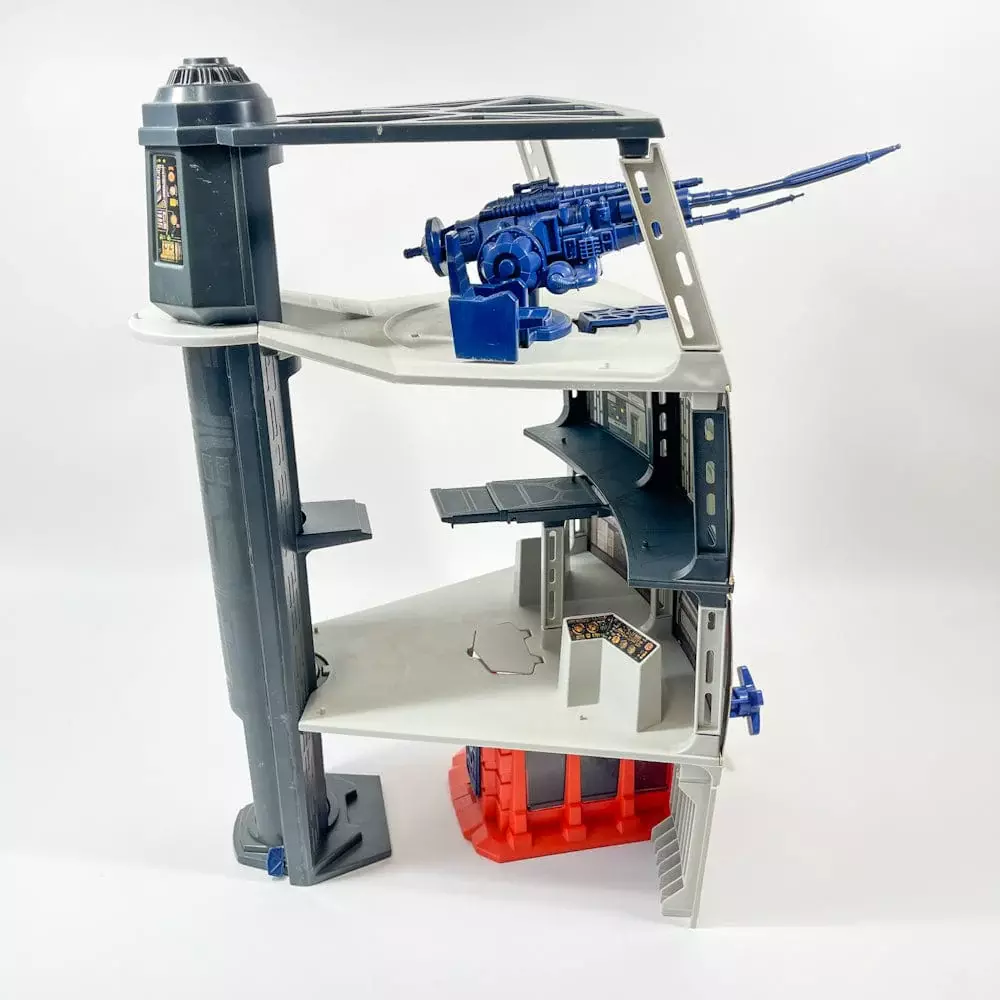
El AT-IC es básicamente un AT-AT recortado con un arma extraída del playset de “Death Star Space Station” de la colección Star Wars.

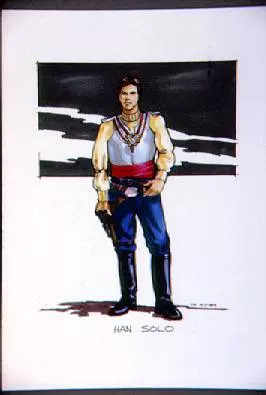
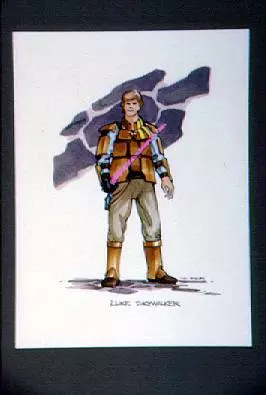
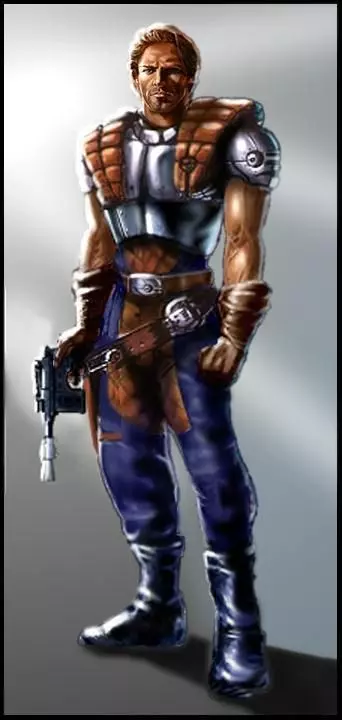
Del lado rebelde se presenta a un Han Solo más maduro y rediseñado con una camisa principesca con volantes digna de su posición (seguramente por estar junto a una princesa), y a un Caballero Jedi Luke Skywalker con una armadura que de algún modo me recuerda a Dash Rendar de la historia Shadows of the Empire.
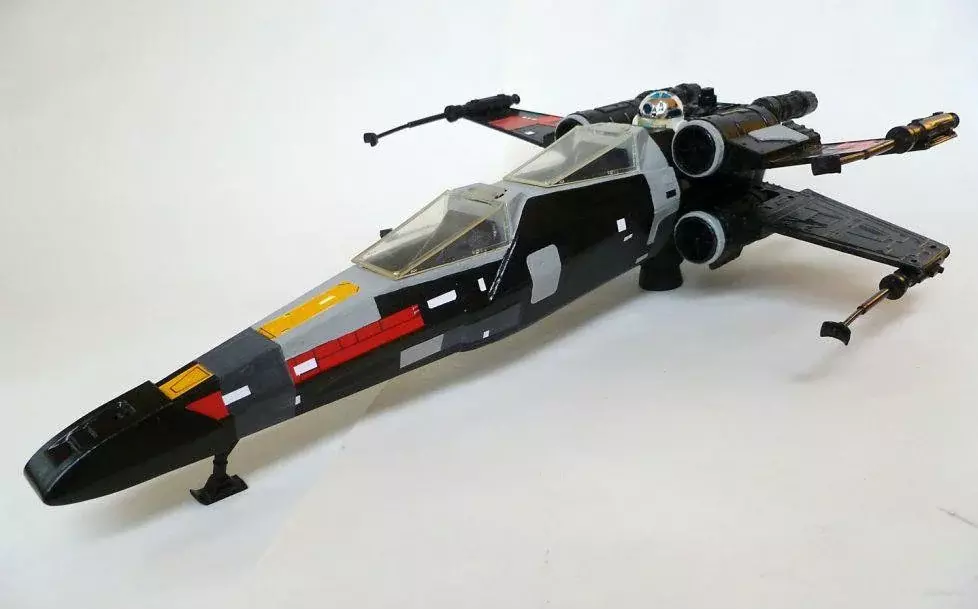
Luke tendría una nueva nave, una “Luke’s Tandem X-Wing”.
Se plantearon nuevos deslizadores terrestres, el “XP-38” de Luke, cuyo modelo se menciona en A New Hope cuando Luke vende su viejo “X-34 Landspeeder”, y un nuevo “XP-36”.
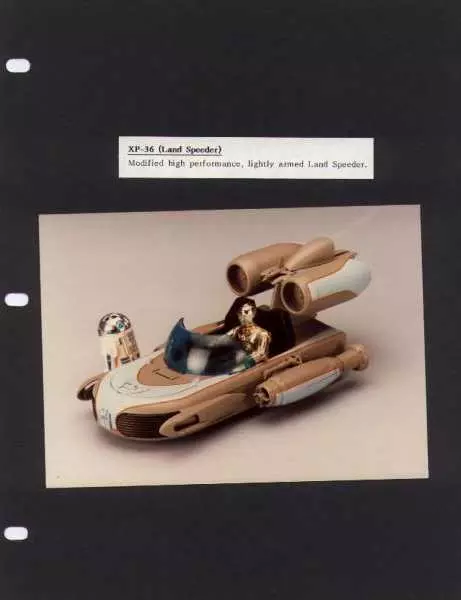
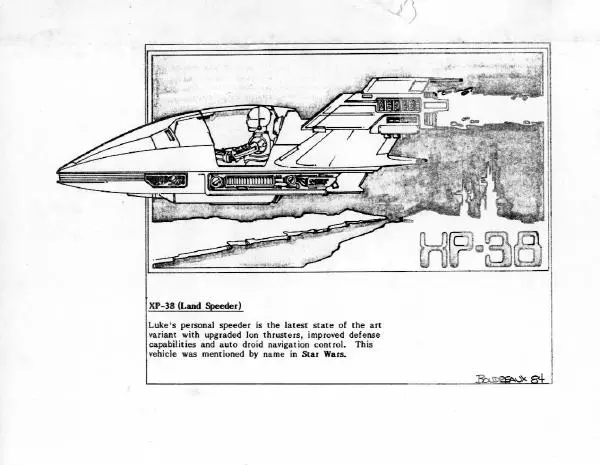
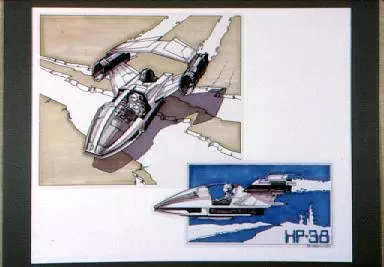
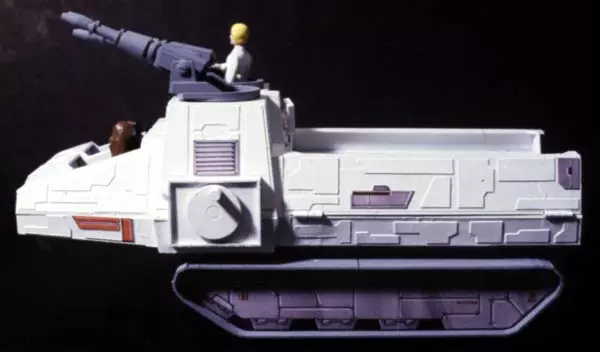
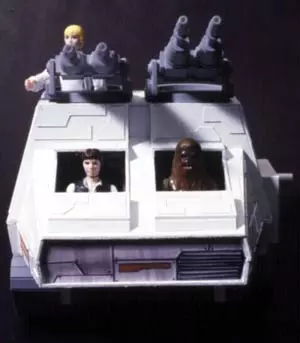
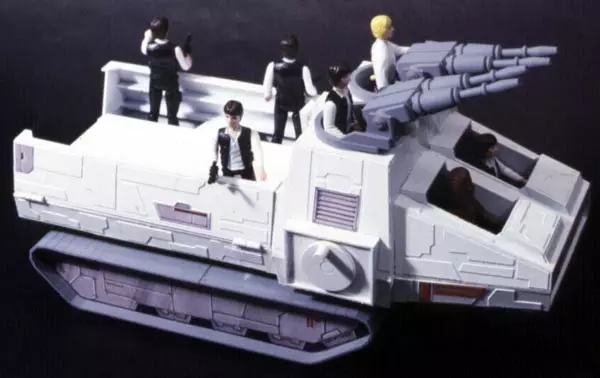
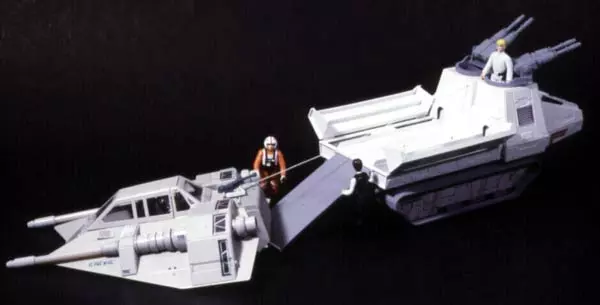
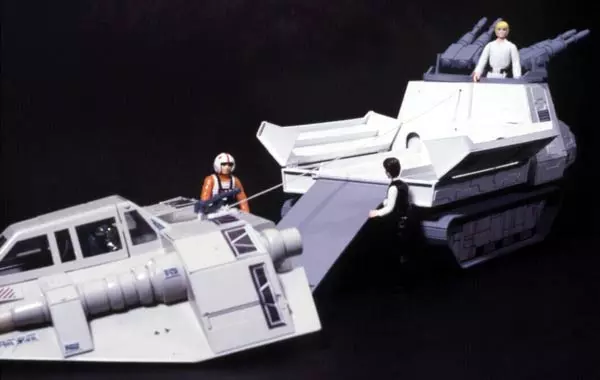
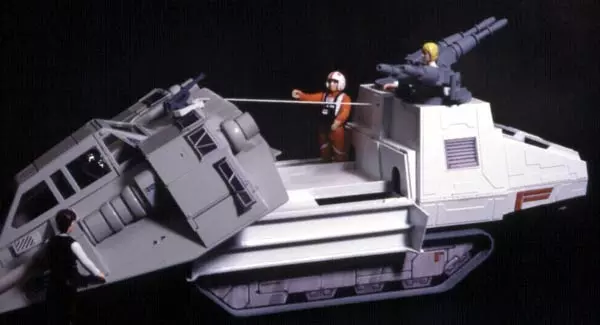
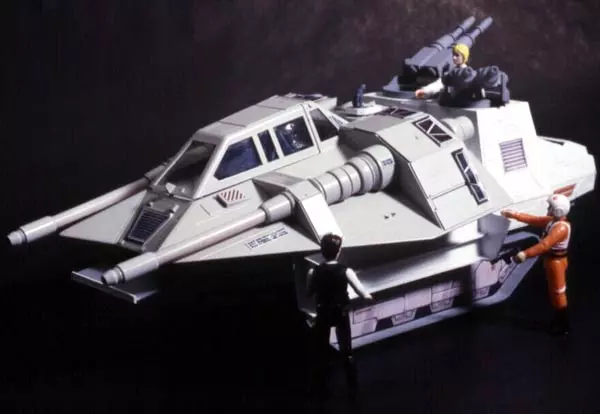
Además de los deslizadores, se plantea un vehículo de apoyo, el “SRV-1 (Scout & Retrieval Vehicle)”.
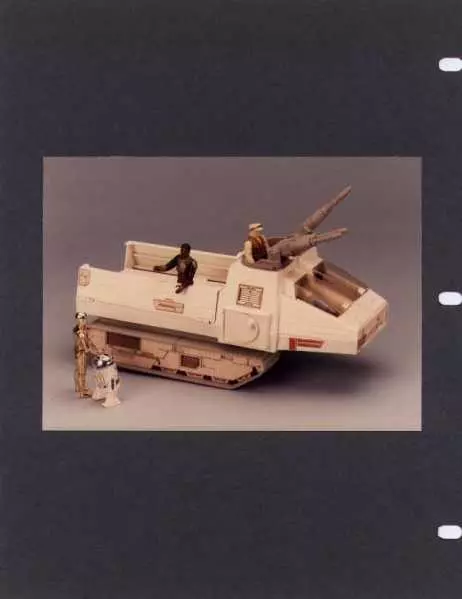
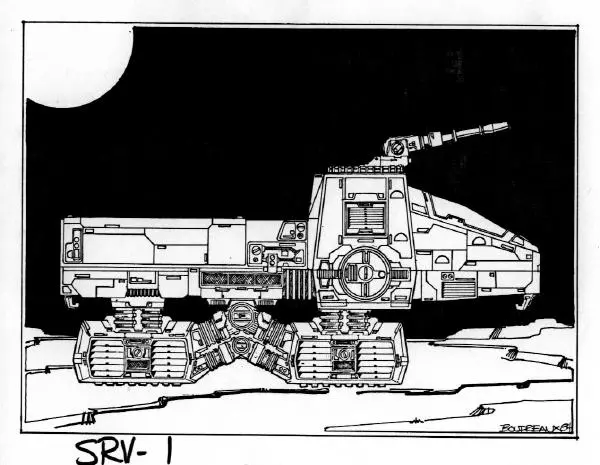
Este juguete ya había sido planteado para la línea de Empire Strikes Back bajo la lógica de los rebeldes en Hoth como apoyo para el movimiento de las naves “Snowpeeder”. Dado que ahora se plantea el uso de un “Sandpeeder”, que se presenta más adelante, tiene sentido querer ecuperar este diseño.

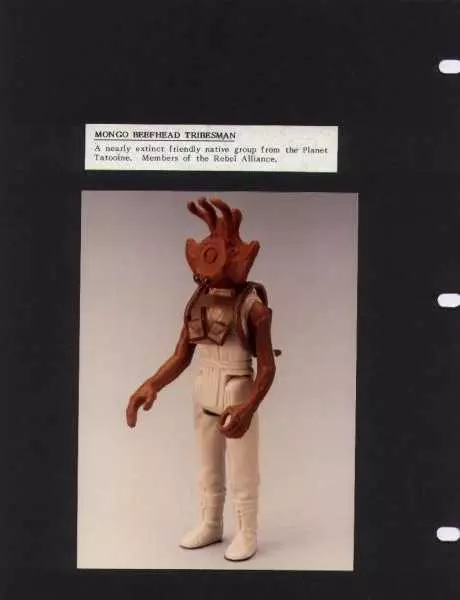
Del lado de los rebeldes estaría la tribu “Mongo Beefhead” del planeta Tatooine, los que pelearían junto a Luke y Han contra el nuevo imperio y los soldados clon. Notar que el prototipo de “Mongo Beefhead” estaba formado por el torso, las extremidades y la cabeza sin cuello de un Squid Head (rotada en 90 y en 180 grados y modificada un poco), los brazos de un Hammerhead y el arnés de pecho de 4-LOM.
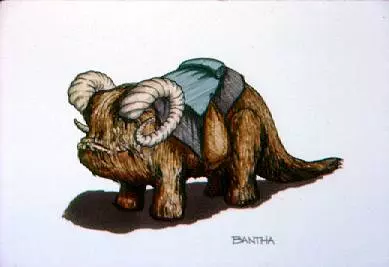
El hecho de que los “Mongo Beefhead” sean originarios de Tatooine daba pie para lanzar juguetes del “Bantha” (el que se lanzó finalmente para la colección The Power of the Force) y tal vez volver a lanzar la “X-34 Landspeeder” que conocimos en A New Hope. O bien, se hace referencia a esta en la presentación sólo como base para los nuevos landspeeder.
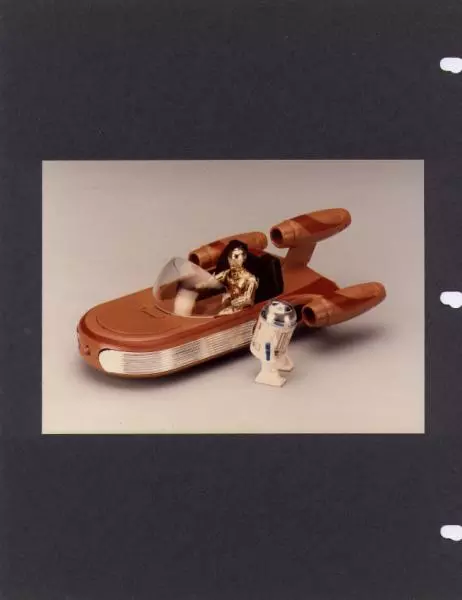
Como el combate se lleva a cabo esencialmente en Taootine, también se plantean los nuevos “Rebel Armored Sandspeeder” y el “Skyhopper”. Este último es simplemente una fotocopia de un boceto de Joe Johnston de The Star Wars Sketchbook (el juguete fue lanzado finalmente en 1996, en la colección The Power of the Force).
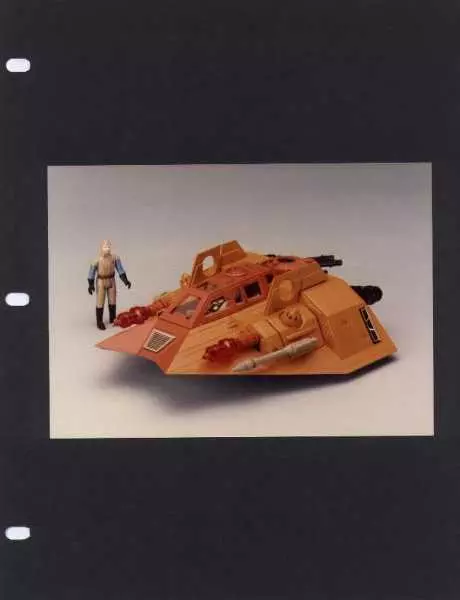
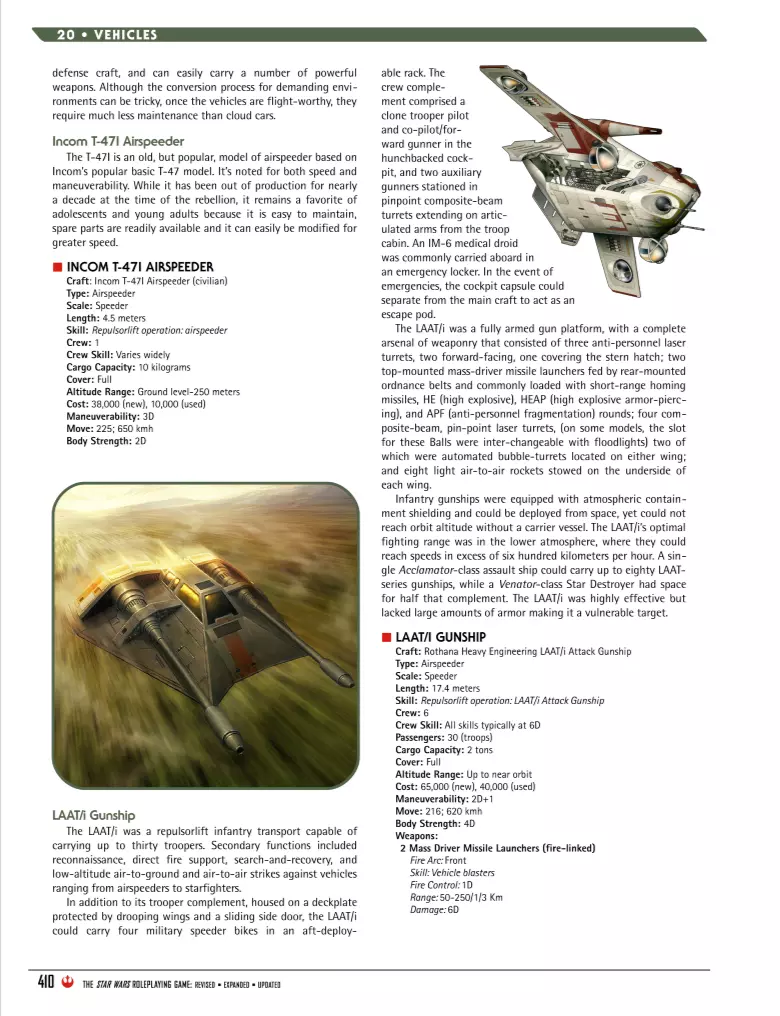
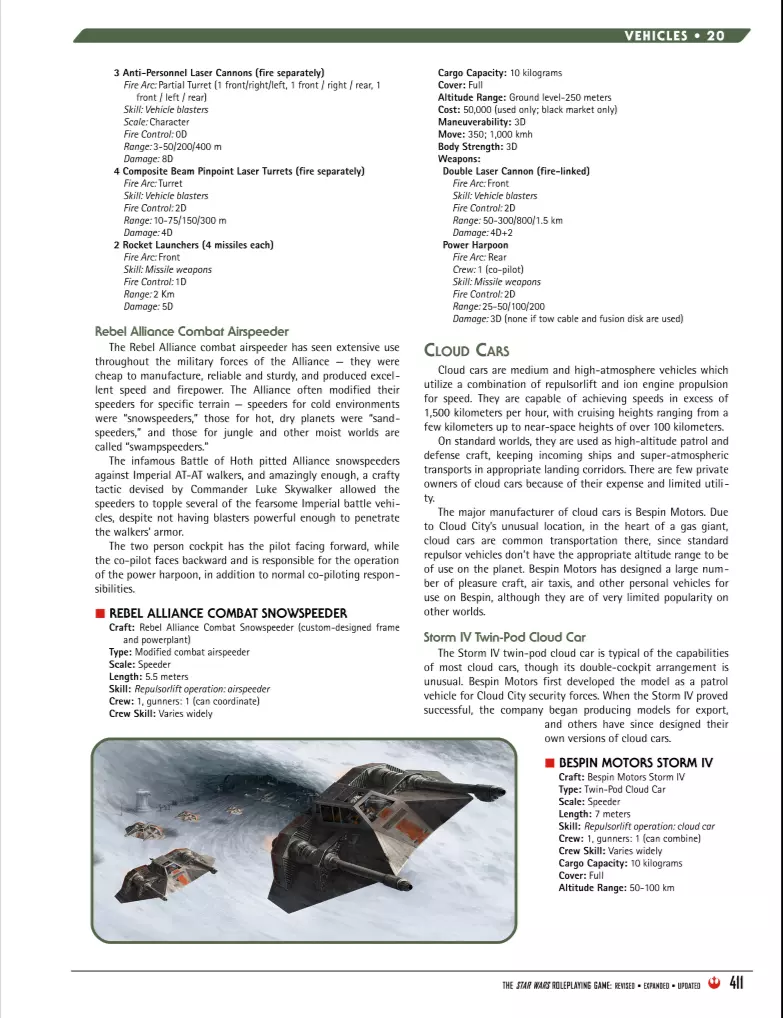
En el libro de “Star Wars: Roleplaying Game”, se toma un poco este concepto y se habla de un transporte civil “Incom T-471 Airspeeder” que sería la base para la nave de combate del “Snowspeeder”, y por qué no, del “Sandspeeder”.
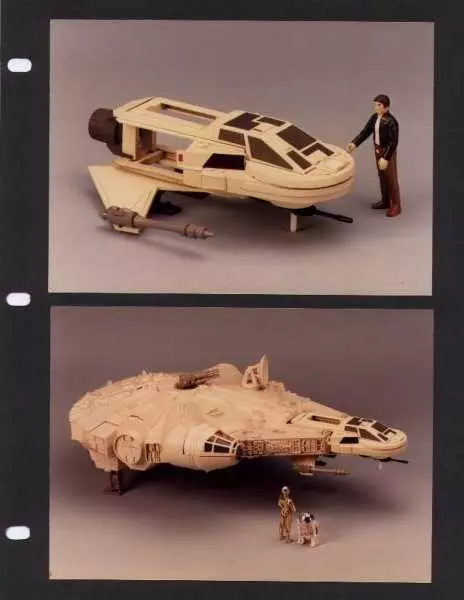
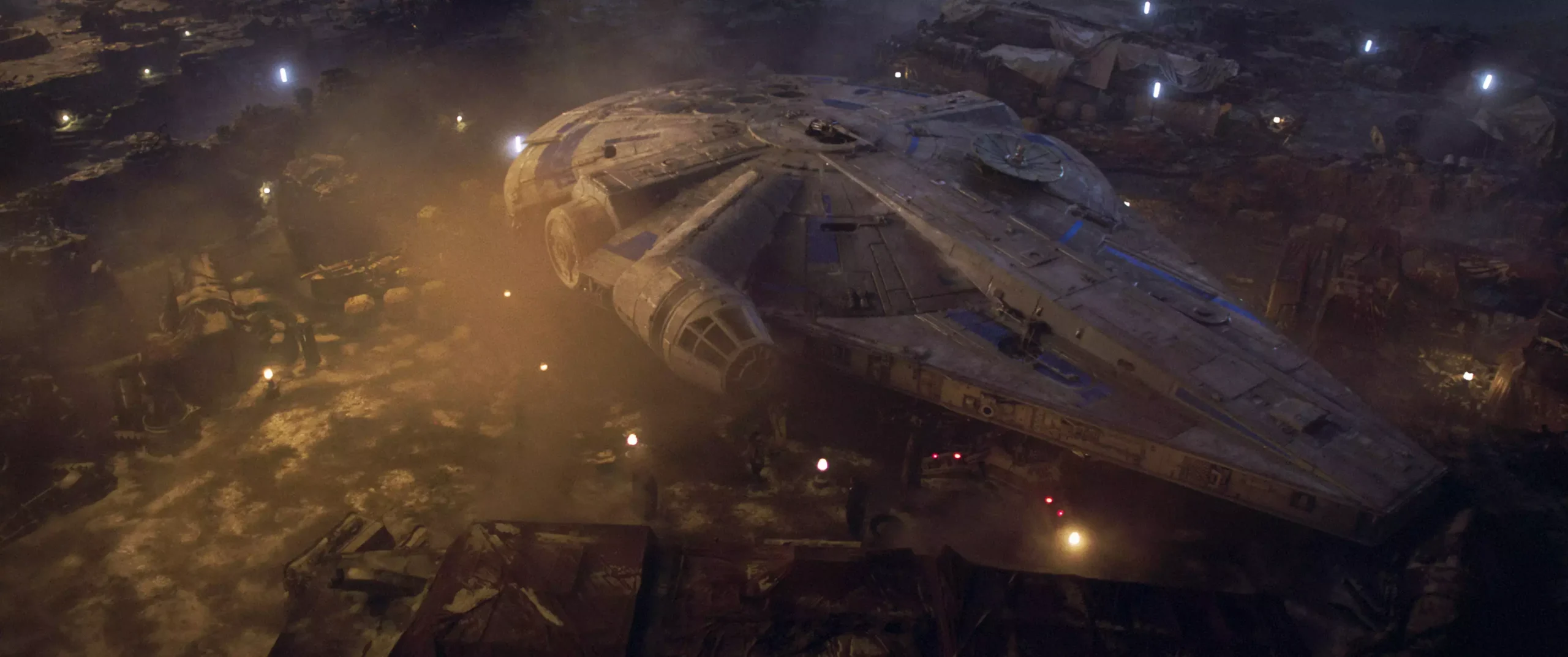
Junto con todos estos vehículos, también se presentó la idea de lanzar un “Millennium Falcon Cargo Handler” que sería un anexo para conectar con la parte frontal del “Millenium Falcon” y que sería lanzado en formato de Mini-Rig. Si bien, no se hizo exactamente igual a este diseño, la idea se usó en la película “Solo, Una Historia Star Wars”.
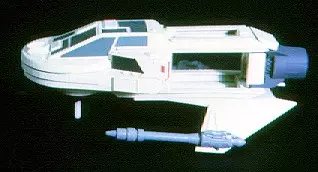
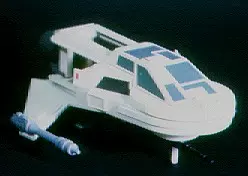
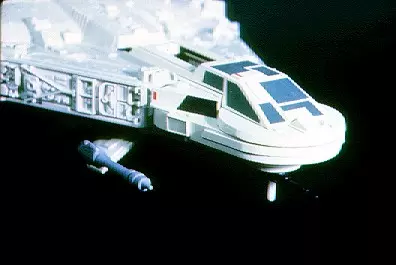
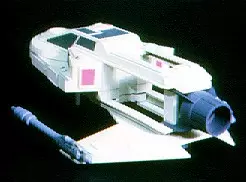
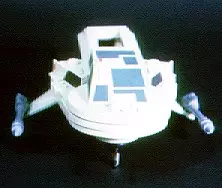
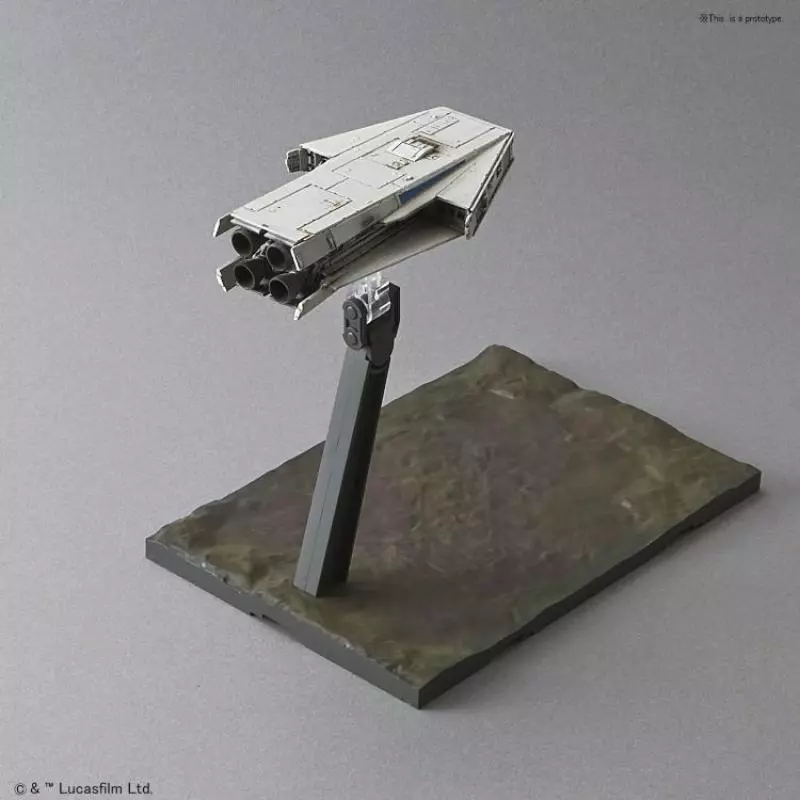
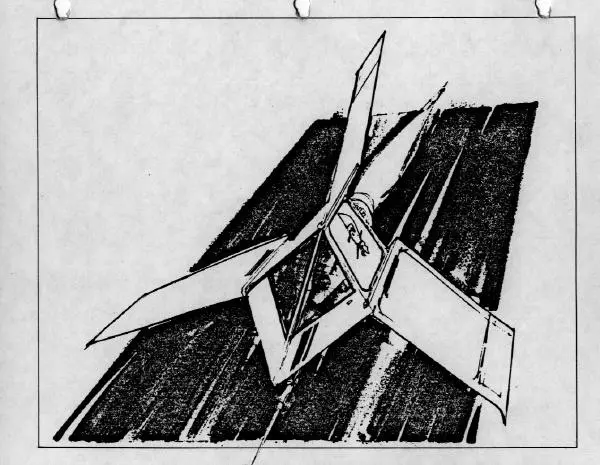
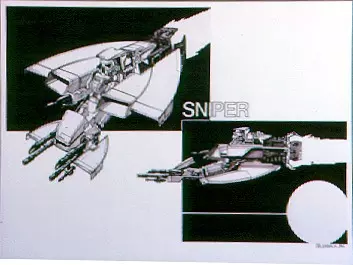
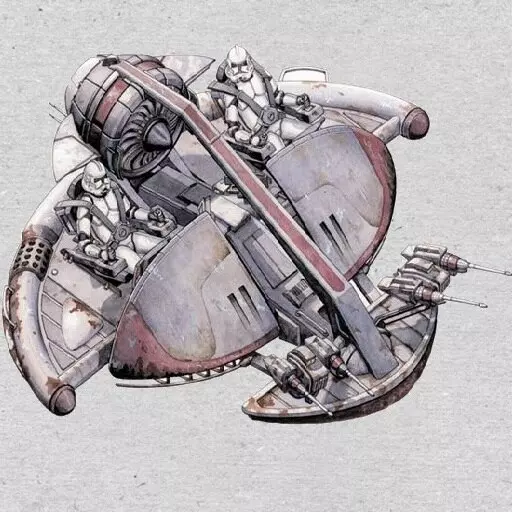
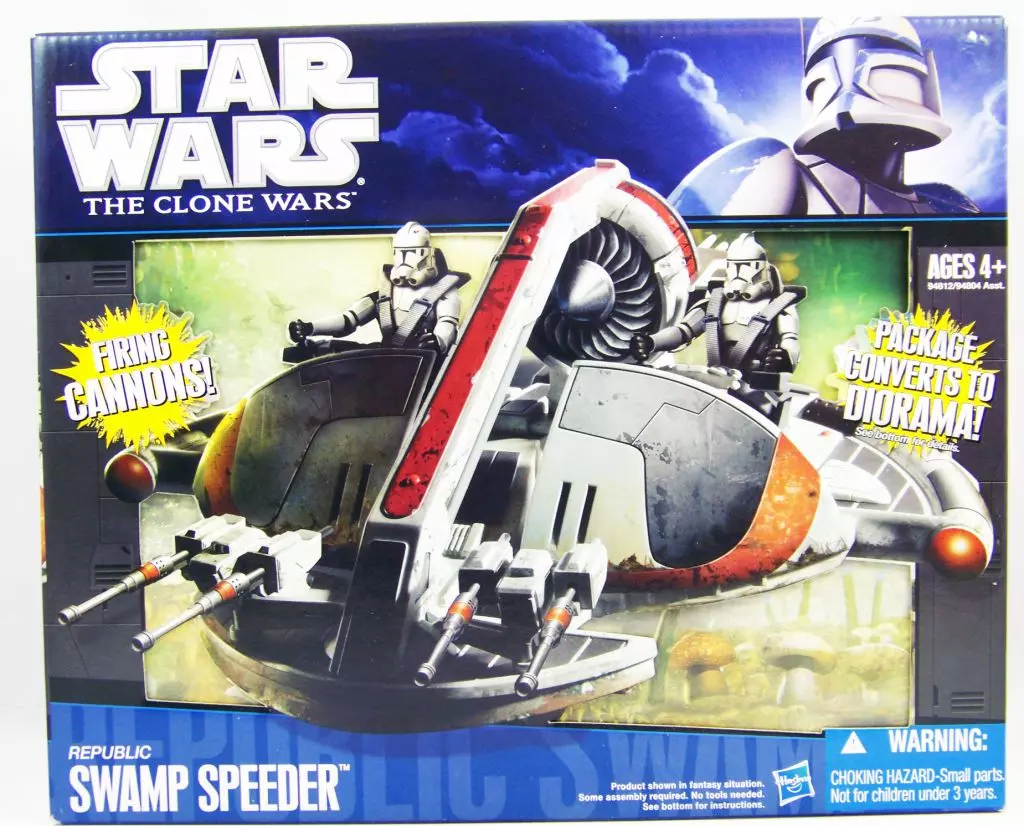
El imperio agregaba un nuevo vehículo, el “Imperial Sniper Fighter” que sospecho dicho concepto se reutilizó en el “Swamp Speeder” de la serie Clone Wars.

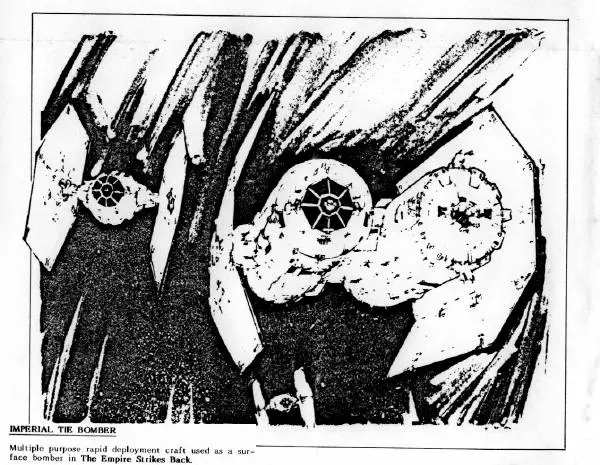
Una muy buena idea, pero que no vio la luz, era la de lanzar el “Imperial TIE Bomber”, el que finalmente fue lanzado en la colección The Power of the Jedi. Lo que se presentó fue una fotocopia de un boceto de Joe Johnston de The Star Wars Sketchbook.
Con esta historia fue que Effler y Boudreaux diseñaron y crearon prototipos de vehículos. En particular, Effler se encargó también del diseño en 2D de todos los personajes. Así también Effler tenía la idea del rango de precios en que se podían ofrecer los vehículos y playset diseñados.
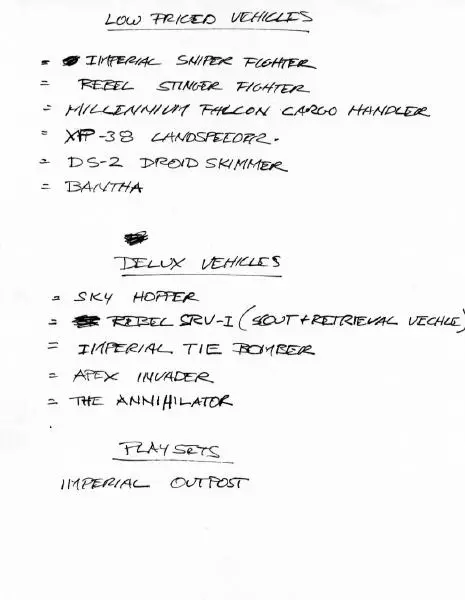
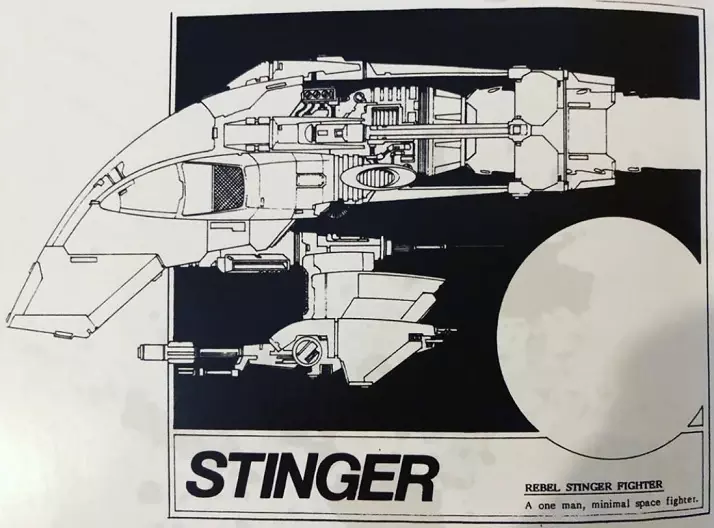
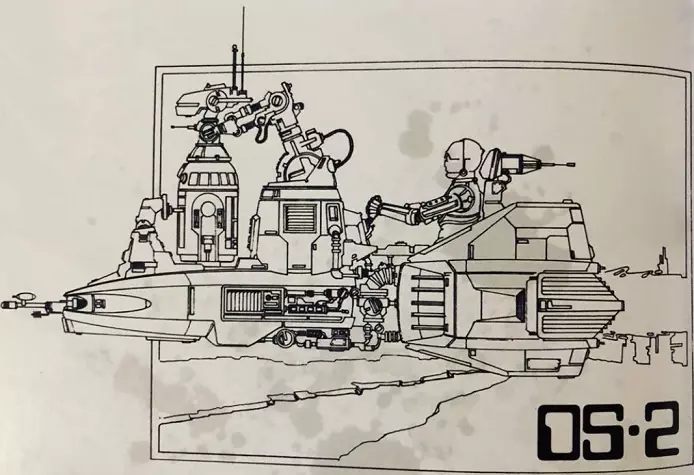
Si bien, El “Rebel Stinger Fighter” de Boudreaux y el “OS2” de Effel no aparecen en el listado de la presentación, se atribuye que fueron presentados en esta.
Impresiones
Effler afirma que Lucasfilm Ltd. aprobó los planes de Kenner para continuar con su línea de Star Wars, pero que no estaba interesado en apoyarla con nuevos medios y por tanto dependía sólo de Kenner si continuaban o no. Entonces, la jerarquía de Kenner continuó con su plan de cancelar la línea, después de que la investigación de mercado, a principios de 1984, revelara una disminución de interés por juguetes de la saga.
Mark comentó al respecto de la impresión de Lucasfilm respecto a la presentación realizada.

En una entrevista de 1995, Boudreaux dijo que Lucasfilm estaba satisfecha con el hecho de que la compañía de juguetes había pasado por tanto esfuerzo, pero que no estaban listos para llevar a cabo intentos coordinados para desarrollar la galaxia de Star Wars más allá de las películas
Así entonces, esta historia lamentablemente nunca salió a la luz ni como juguetes, ni como serie animada y ni siquiera como cómic. Pero no todo fue perdido, así como ya se ha mencionado que varias ideas se concretaron como juguetes en nuevas colecciones de la saga, también fueron fuente de inspiración en algunos aspectos del Universo Expandido, ahora conocido como Legends.
Legends
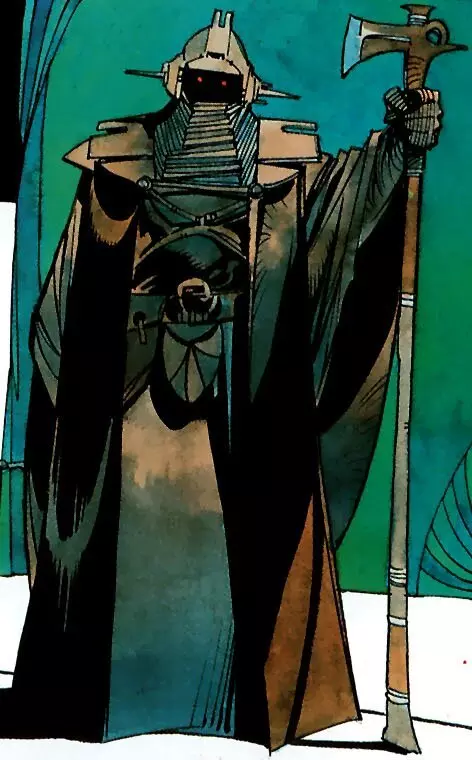
A inicios de los 90s, bajo la pluma de Cam Kennedy en la historia Imperio Oscuro, “Atha Prime” tomó vida en imagen bajo un Sentinela Imperial. Luego, en la década del 2000, Abel Piña aportó el personaje Zeta Magnus, un especialista clonador, en un cómic de SkyWalkers: A Clone Wars Story.

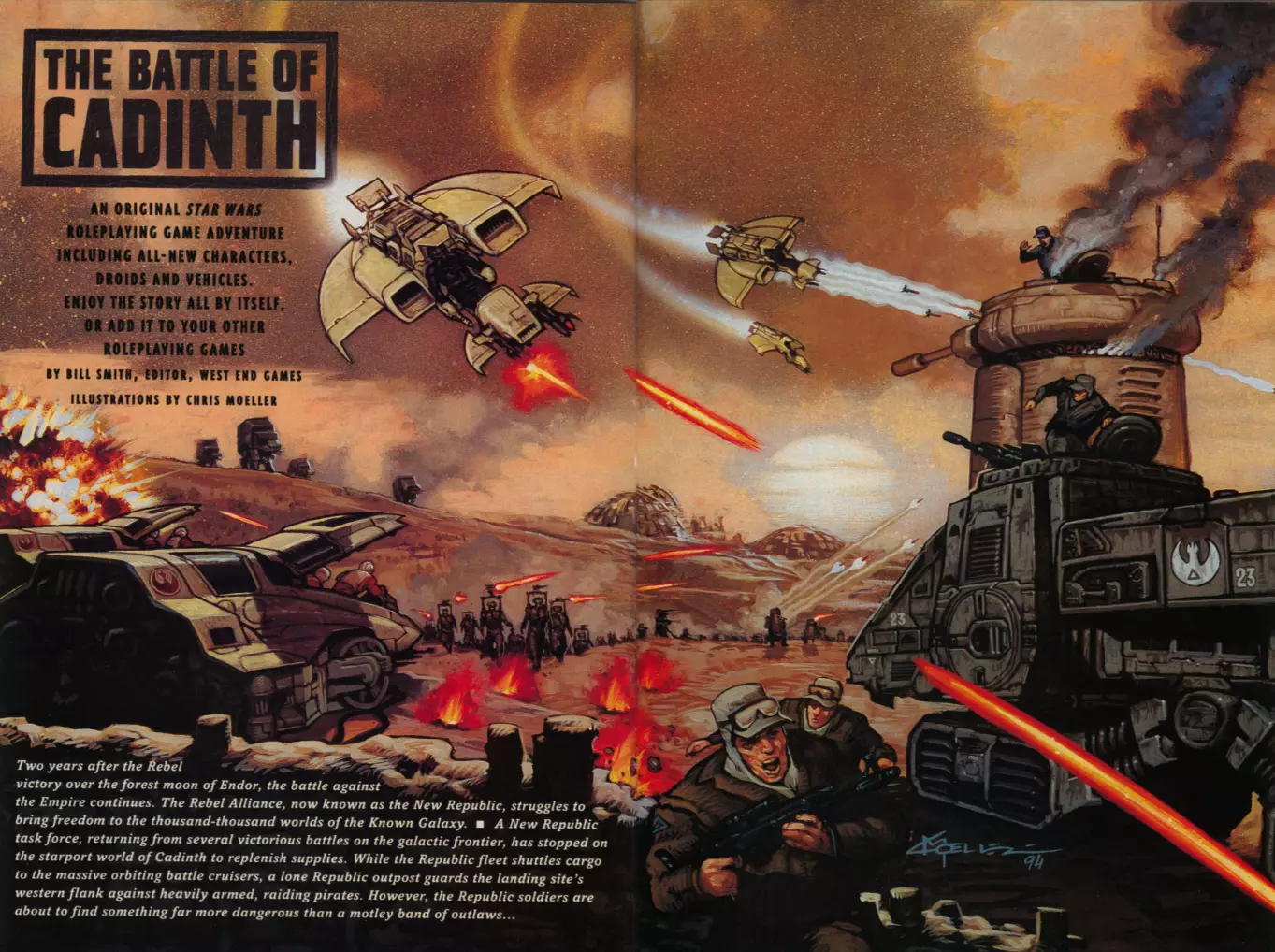
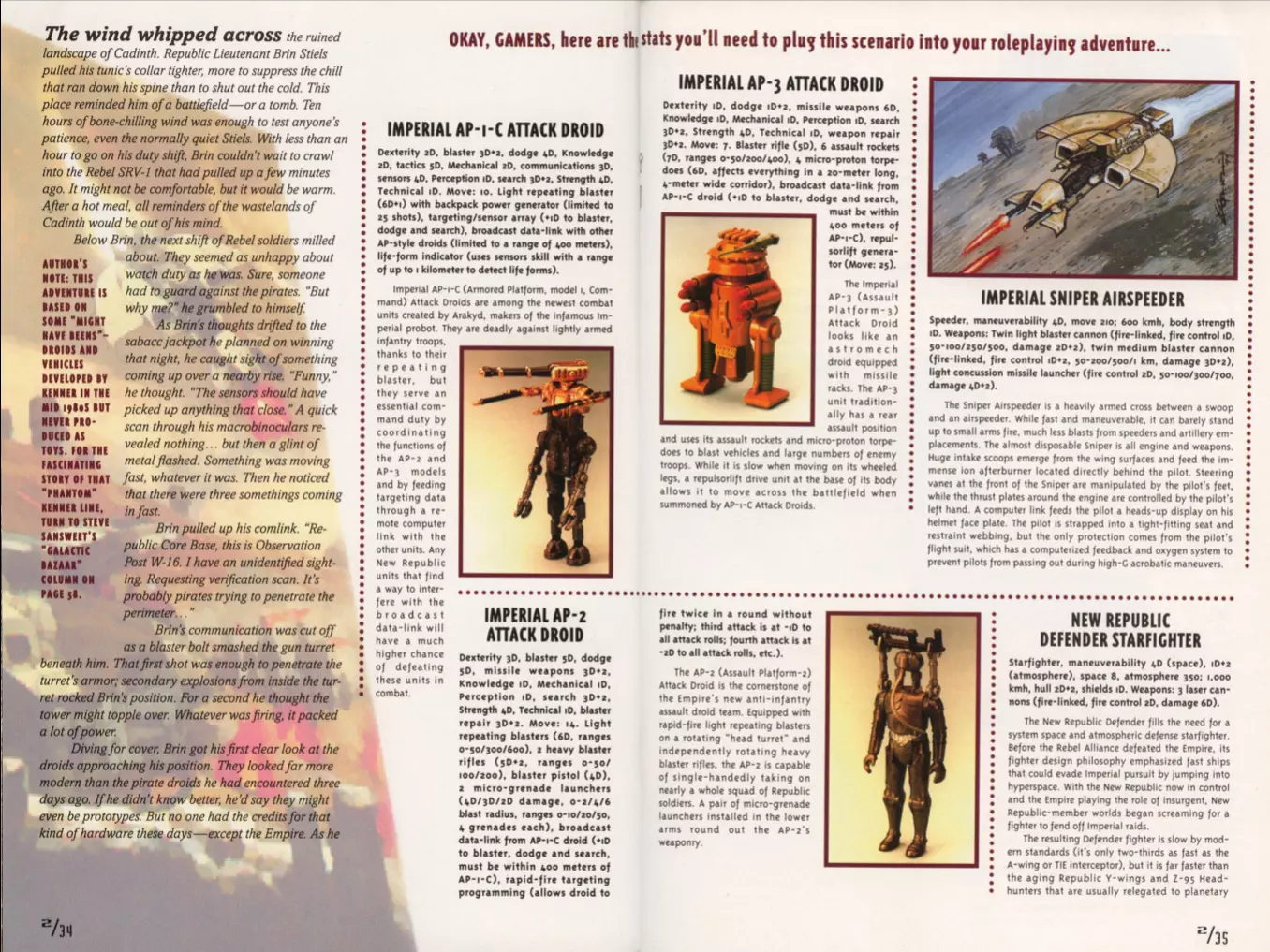
En 1995, Bill Smith presentó una historia para juego de Rol en el segundo número de la revista “Star Wars: Galaxy Magazine”, de nombre “The Battle of Candinth”, con las ilustraciones de Chris Moeller. Si bien cambió un poco los nombres de los droides imperiales, se mantuvo la esencia de la creación de Effler y Boudreaux. En la ilustración de Moeller se puede apreciar quizás lo que hubiese sido un cómic o una serie animada como la que soñaron los diseñadores de Kenner. El 23 de febrero de 2007, esta misma historia fue publicada en Hyperspace.
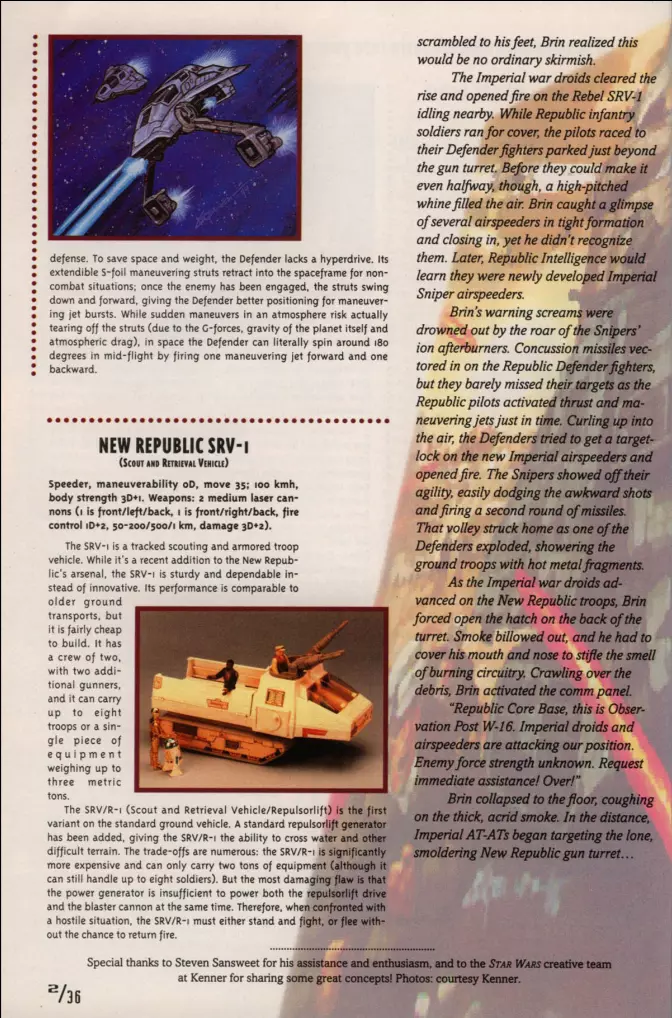
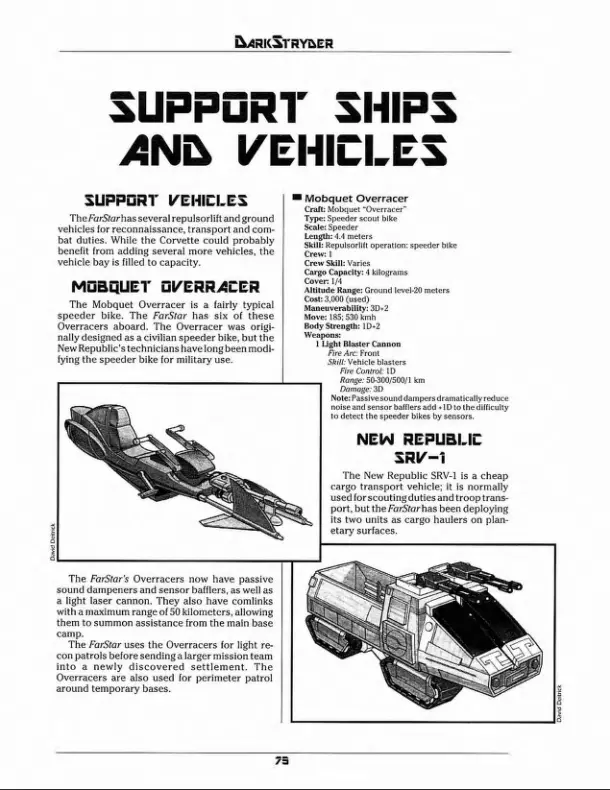
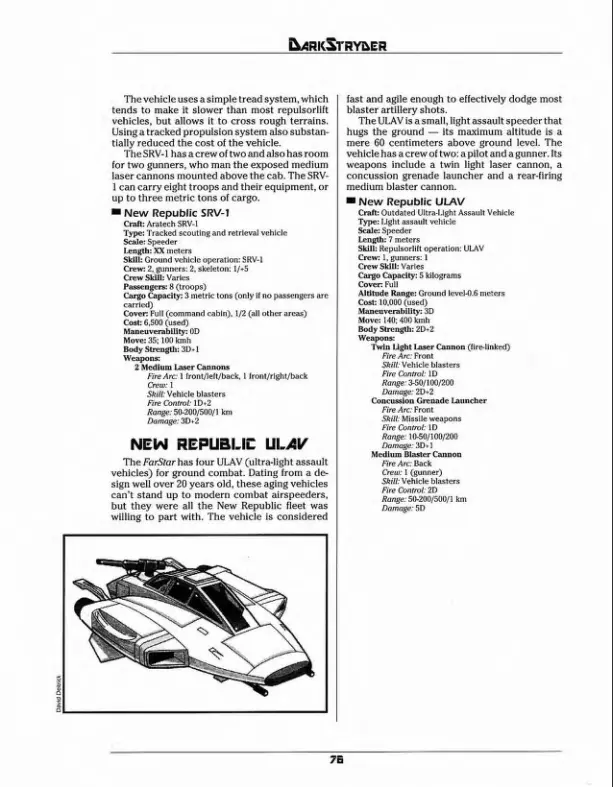
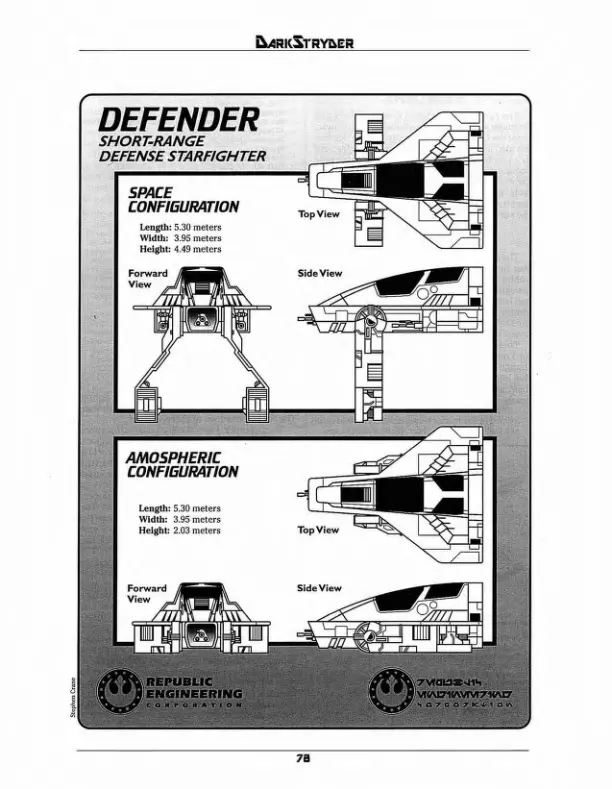
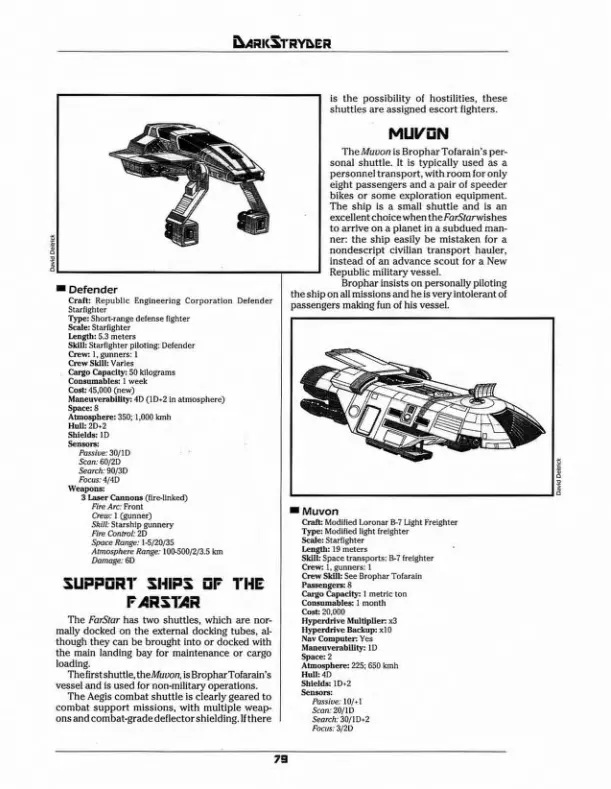
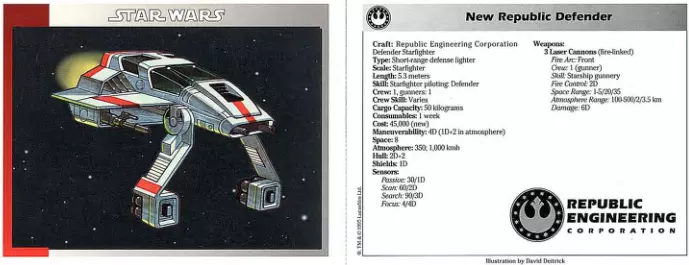
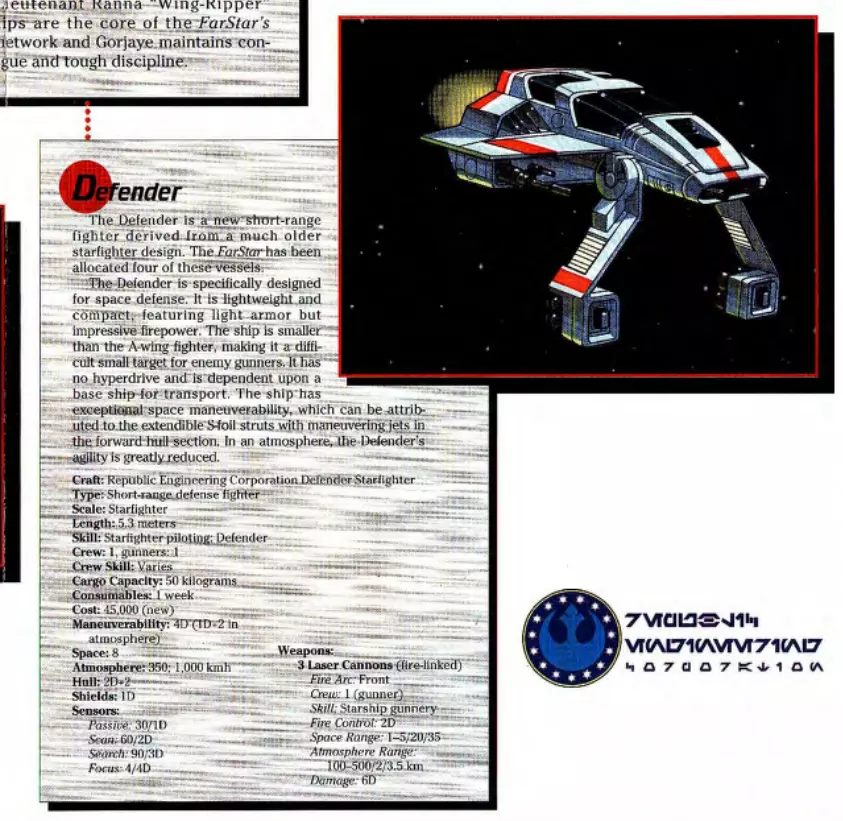
En la campaña de juego de rol de Star Wars, “The DarkStryder Campaign” publicada en 1995, aparece el vehículo “SRV1” bajo el nombre de “New Republic SRV1”. En este mismo juego, también aparece el “Death Star Defender”, que recordemos que ya se había usado como el “ATL Interceptor” en Droids. Acá recupera parte de su nombre original quedando sólo como “Defender” y asociada a la República no al Imperio.
La mayoría de las fotografías de los prototipos presentados en este artículo provienen desde la colección de Lisa Stevens, Vic Wertz, Steve Denny y Tim Eckholdt.
Coleccción
Collection
Revisa cómo hubiese sido este lanzamiento
Ingresar
The Line Extension Presentation for “The Epic Continues” was likely carried out in 1984 or early 1985, and consisted of a meeting between Kenner and Lucasfilm in which Kenner presented the toys planned for release in 1985, as well as a new toy line known as “The Epic Continues,” intended for release in 1986.
At least two members of the Kenner team participated in this meeting: Tim Effler and Mark Boudreaux. Both were responsible for highly successful Kenner‑designed and Kenner‑invented lines — Effler’s Body‑Rigs from the Power of the Force collection, and Boudreaux’s Mini‑Rigs from the Empire Strikes Back collections. Many times, Kenner designers experimented with existing toy vehicles, modifying them through kitbashing — taking parts and elements from them, or even from random model kits — to create entirely new designs.
Mark Boudreaux, who passed away in May 2023, had been a Star Wars toy designer since 1978. He worked in the Preliminary Design Department at Kenner Products in Cincinnati, Ohio, and eventually moved with Hasbro to Pawtucket, Rhode Island in 2001, after Hasbro acquired Kenner in the 1990s.
Tim Effler is a designer and creative director with more than 40 years in the toy industry. Effler began his career at Kenner, where he was part of the team responsible for the Death Star playset and the 12‑inch Star Wars figures. After a brief period at Mattel, he returned to Kenner, where as conceptual product director he contributed to the success of classic lines such as Ghostbusters, Batman, Jurassic Park, and the final years of the Star Wars line.
For some reason, the presentation changed its order, choosing to show the new action figures first. It is mentioned that the 1985 figures and vehicles would appear prominently in the animated series — which we now know were Ewoks and Droids. The same reference is made for the proposed new line, “The Epic Continues,” suggesting that it would have its own animated series. This was long before a project like “Shadows of the Empire” existed.
Toys for 1985
The “Blockade Runner” was presented using a 3D foam model with several movable parts. The Return of the Jedi logo indicates that this image likely existed some time before being used for this presentation. There is also a plastic prototype of the “Blockade Runner,” but as far as is known, it was not part of this meeting.
The “Ewok Siege Vehicle” was a vehicle released within the Power of the Force line under the name “Ewok Battle Wagon.”
The “A‑Wing Fighter” was released within the Droids series. Within that same line, the A‑Wing Pilot action figure was also reissued, having previously appeared in the Power of the Force collection.
The “Tatooine Skiff” was released within the Power of the Force collection.
Although these items appeared in the initial list, several were ultimately not shown in the presentation folder. Perhaps by that stage many of them had already been approved, as we will see below.
The “Lightsaber” was released as part of the role‑play accessories in the Droids series. Meanwhile, the “Death Star Defender” ultimately became the “ATL Interceptor,” also launched in that same line.
The “Desert Sail Skiff” and the “Endor Forest Ranger” were released as part of the Return of the Jedi collection in the Mini‑Rig category.
Regarding the “Imperial Destroyer,” it is unknown whether it was intended as a re‑release of the “Darth Vader Star Destroyer,” which appeared in the Empire Strikes Back collection but was never released under Return of the Jedi, or whether it would have been a new playset for the Power of the Force line or one of the animated series, Droids or Ewoks.
The Epic Continues
Tim Effler created a new storyline that would give context to an entirely new line of figures, vehicles, and playsets to be released by Kenner in 1986, continuing the legacy of Star Wars after the end of the original trilogy in 1984 with the premiere of *Return of the Jedi*. The project included a toy line, an animated television program (in the same spirit as Droids and Ewoks from 1985), and some sources even mention the possibility of an associated comic series.
According to Effler’s narrative, the death of Emperor Palpatine triggered the complete collapse of the Empire and a return to the same Clone Wars that had allowed Palpatine to rise to power in the first place. From the ashes emerged Atha Prime — based on unused concept designs for the Emperor’s Royal Guards by Nilo Rodis Jamero — a master geneticist and ruler of dark worlds who had been exiled by Palpatine. His goal was to conquer the galaxy with his Clone Warriors, destroying any planet that opposed him.
The concept of the caped Clone Warrior may even have served as inspiration decades later for the character of Captain Phasma.
The main asset of Prime was the “Annihilator,” a city‑sized command ship that also contained Atha Prime’s starfighter, the “Apex Invader,” which was piloted by the droid Blue‑Four, his only assistant and confidant. I suspect that the design of the Tactical Droid used by the Separatist forces in *The Clone Wars* was inspired by the design of this droid, Blue‑Four.
The “Apex Invader” had a unique design consisting of the upper tower of a Star Destroyer — in this case, the “Annihilator” — into which it docked.
For some reason, the Moff Tarkin figure was never released (Recommended: How might Kenner have selected its characters?), and they intended to rectify that situation. Because of this, he is included in the story, giving them an excuse to release his figure. In my view, this reasoning doesn’t hold much weight, since in the Power of the Force collection they released Luke Skywalker (Imperial Stormtrooper Outfit) and an Imperial Gunner without any issue.
Thus, during the same period of Atha Prime’s rise, the great Moff Tarkin, having surprisingly survived the destruction of the Death Star, would attempt to lead the reconstruction of the Empire. To achieve his goal, he operated from an Imperial outpost (“Imperial Outpost,” which would have been a playset), employing Imperial attack droids (“Imperial Attack Droid A,” “Imperial Attack Droid B,” and “Imperial Attack Droid C”), an “Imperial Sentry Droid,” and new vehicles (“AT‑AT” and “AT‑IC”).
No prototype or sketch was made for Tarkin; only a photo of the character from the film was used.
The “Imperial Outpost” promised to be a gigantic playset with many play options, designed to integrate with the playability of an “AT‑AT.” The concept art was created by Boudreaux, who combined pre‑existing elements — such as a Death Star gun tower — with the landing platform and bunker complex seen on Endor in *Return of the Jedi*.
The “Imperial Sentry Droid” may refer to the astromech droid R5‑J2 that appears in *Return of the Jedi*.
The prototype of the “Imperial Attack Droid A” was built using the legs and arms of 2‑1B, the torso of IG‑88, the top cannon from a Y‑Wing, and apparently the long rifle of IG‑88.
The prototype of the “Imperial Attack Droid B” was made using parts from Zuckuss and 2‑1B, along with a blaster from 4‑LOM.
The last of the three Imperial attack droid prototypes, the “Imperial Attack Droid C,” was built using parts from FX‑7, a Power Droid, apparently an R2 body, and even a section of a Y‑Wing torpedo — plus a large amount of weaponry, seemingly newly designed.
The AT‑IC is essentially a shortened AT‑AT with a weapon taken from the “Death Star Space Station” playset from the Star Wars collection.
On the Rebel side, a more mature and redesigned Han Solo is presented, wearing a princely ruffled shirt befitting his status (surely due to being alongside a princess), and a Jedi Knight Luke Skywalker with armor that in some way reminds me of Dash Rendar from the *Shadows of the Empire* storyline.
Luke would have a new starfighter, a “Luke’s Tandem X‑Wing.”
New landspeeders were proposed: Luke’s “XP‑38,” whose model is mentioned in *A New Hope* when Luke sells his old “X‑34 Landspeeder,” and a new “XP‑36.”
In addition to the landspeeders, a support vehicle was proposed: the “SRV‑1 (Scout & Retrieval Vehicle).”
This vehicle had already been proposed for the Empire Strikes Back line, following the logic of the Rebels on Hoth using it as support for the movement of “Snowspeeder” craft. Since a “Sandpeeder” is now introduced — which appears later in the presentation — it makes sense that they wanted to recover this design.
On the Rebel side we find the “Mongo Beefhead” tribe from the planet Tatooine, who would fight alongside Luke and Han against the new Empire and the clone soldiers. Note that the prototype of “Mongo Beefhead” was made from the torso, limbs, and neckless head of a Squid Head (rotated 90 and 180 degrees and slightly modified), the arms of a Hammerhead, and the chest harness of 4‑LOM.
The fact that the “Mongo Beefhead” originate from Tatooine opened the door to releasing a “Bantha” toy (which was eventually released in the Power of the Force collection), and perhaps re‑releasing the “X‑34 Landspeeder” we first saw in *A New Hope*. Alternatively, it may simply be referenced in the presentation as a basis for the new landspeeders.
Since the battle takes place essentially on Tatooine, the new “Rebel Armored Sandspeeder” and the “Skyhopper” were also proposed. The latter is simply a photocopy of a sketch by Joe Johnston from The Star Wars Sketchbook (the toy was finally released in 1996 in the Power of the Force collection).
In the book *Star Wars: Roleplaying Game*, this concept is explored further, describing a civilian transport — the “Incom T‑471 Airspeeder” — which would serve as the basis for the combat craft known as the “Snowspeeder,” and why not, for the “Sandspeeder” as well.
Along with all these vehicles, the idea of releasing a “Millennium Falcon Cargo Handler” was also presented — an attachment meant to connect to the front section of the “Millennium Falcon,” released in Mini‑Rig format. Although it was not produced exactly as shown in this design, the concept was later used in the film *Solo: A Star Wars Story*.
The Empire added a new vehicle, the “Imperial Sniper Fighter,” and I suspect this concept was later reused for the “Swamp Speeder” seen in the Clone Wars series.
A very good idea — though one that never saw the light of day — was the release of the “Imperial TIE Bomber,” which was eventually launched in the Power of the Jedi collection. What was shown in the presentation was simply a photocopy of a sketch by Joe Johnston from The Star Wars Sketchbook.
With this storyline, Effler and Boudreaux designed and created vehicle prototypes. In particular, Effler also handled the 2D design of all the characters. Effler likewise had an idea of the price range in which the vehicles and playsets could be offered.
Although Boudreaux’s “Rebel Stinger Fighter” and Effler’s “OS2” do not appear in the presentation list, it is believed that they were shown during the meeting.
Impressions
Effler states that Lucasfilm Ltd. approved Kenner’s plans to continue its Star Wars line, but that they were not interested in supporting it with new media, and therefore it depended solely on Kenner whether they would continue or not. Thus, Kenner’s leadership proceeded with its plan to cancel the line, after market research in early 1984 revealed a decline in interest in toys from the saga.
Mark commented on Lucasfilm’s reaction to the presentation.
In a 1995 interview, Boudreaux said that Lucasfilm was pleased that the toy company had gone to such lengths, but that they were not ready to undertake coordinated efforts to develop the Star Wars galaxy beyond the films.
Thus, this story unfortunately never came to light — not as toys, not as an animated series, and not even as a comic. But not everything was lost: as already mentioned, several ideas eventually materialized as toys in later collections of the saga, and they also served as inspiration for certain aspects of the Expanded Universe, now known as Legends.
Legends
In the early 1990s, under the pen of Cam Kennedy in the *Dark Empire* storyline, “Atha Prime” took visual form as an Imperial Sentinel. Later, in the 2000s, Abel Peña introduced the character Zeta Magnus, a cloning specialist, in a comic from SkyWalkers: A Clone Wars Story.
In 1995, Bill Smith presented a role‑playing story in the second issue of “Star Wars: Galaxy Magazine,” titled “The Battle of Candinth,” with illustrations by Chris Moeller. Although he changed some of the names of the Imperial droids, the essence of Effler and Boudreaux’s creation was preserved. In Moeller’s illustration one can glimpse what might have been a comic or animated series like the one Kenner’s designers dreamed of. On February 23, 2007, this same story was published in Hyperspace.
In the Star Wars role‑playing campaign “The DarkStryder Campaign,” published in 1995, the vehicle “SRV1” appears under the name “New Republic SRV1.” In this same game, the “Death Star Defender” also appears — which, as we recall, had already been used as the “ATL Interceptor” in Droids. Here it regains part of its original name, remaining simply as “Defender,” and is associated with the New Republic rather than the Empire.
Most of the prototype photographs presented in this article come from the collections of Lisa Stevens, Vic Wertz, Steve Denny, and Tim Eckholdt.
Collection
Collection
See how this release might have looked
Enter