¿Pudo el Diseño Centrado en el Usuario haber definido a una generación?
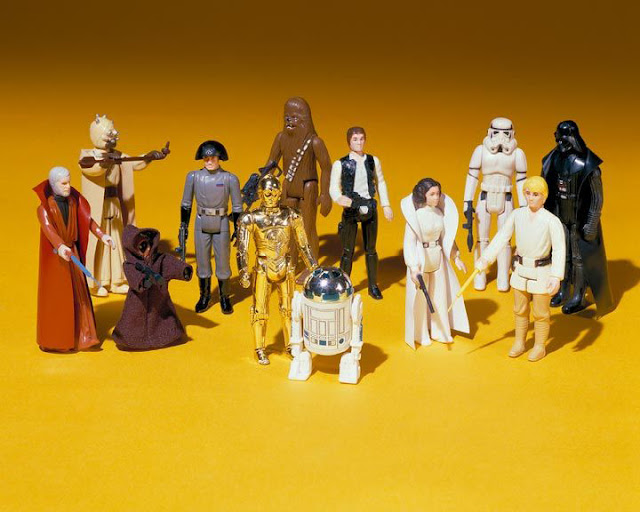
Si recuerdan, escribí un artículo hace un tiempo donde abordaba el tema de cómo, posiblemente, los ejecutivos de Kenner habrían tomado en cuenta sus decisiones respecto a los personajes seleccionados par que fueran convertidos en figuras. Ahí abordaba el tema desde el impacto que generó la película en la audiencia y cómo éste podría haber marcado el camino en las decisiones de qué juguetes elaborar.
El diseño centrado en el usuario (DCU) es un enfoque de diseño que coloca al usuario como el centro del proceso, buscando comprender sus necesidades, objetivos y limitaciones para crear productos que resuelvan problemas específicos y mejoren la experiencia de uso. Lo que busca es lograr que cada decisión de diseño esté fundamentada en cómo beneficiará a los usuarios, no sólo en términos funcionales, sino también de experiencia y satisfacción.
¿Qué mejor que conocer cómo impactó la película en su audiencia para tomar decisiones de qué juguetes fabricar?
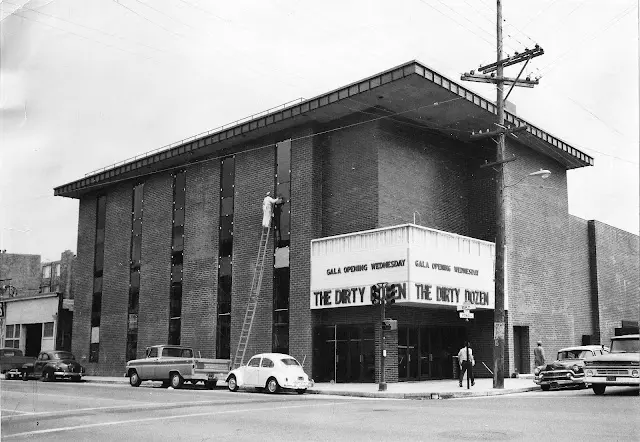
El 28 de junio del año 1967 se inauguró el Teatro Northpoint con “The Dirty Dozen”. En el sitio San Francisco Theaters, Jack Tillmany comparte una foto de su apertura tomada por Tom Gray. Notar que en esta foto no aparece el nombre del teatro, sólo el de la película. Este cine se ubicaba en la esquina de las calles Powell y Bay en San Francisco. Curiosamente, este cine no estuvo dentro del listado del gran estreno de Star Wars, lo que se corrobora con la información que aparece en el sitio de blog San Francisco Theaters.
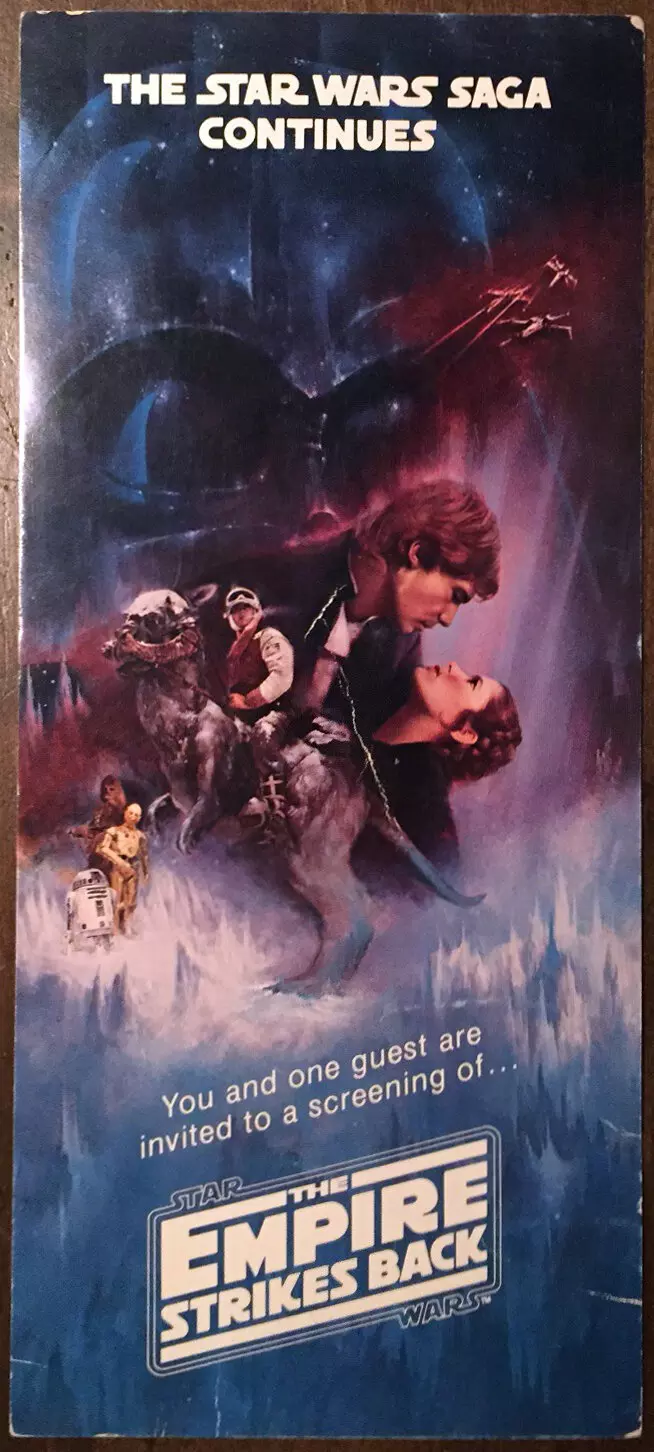
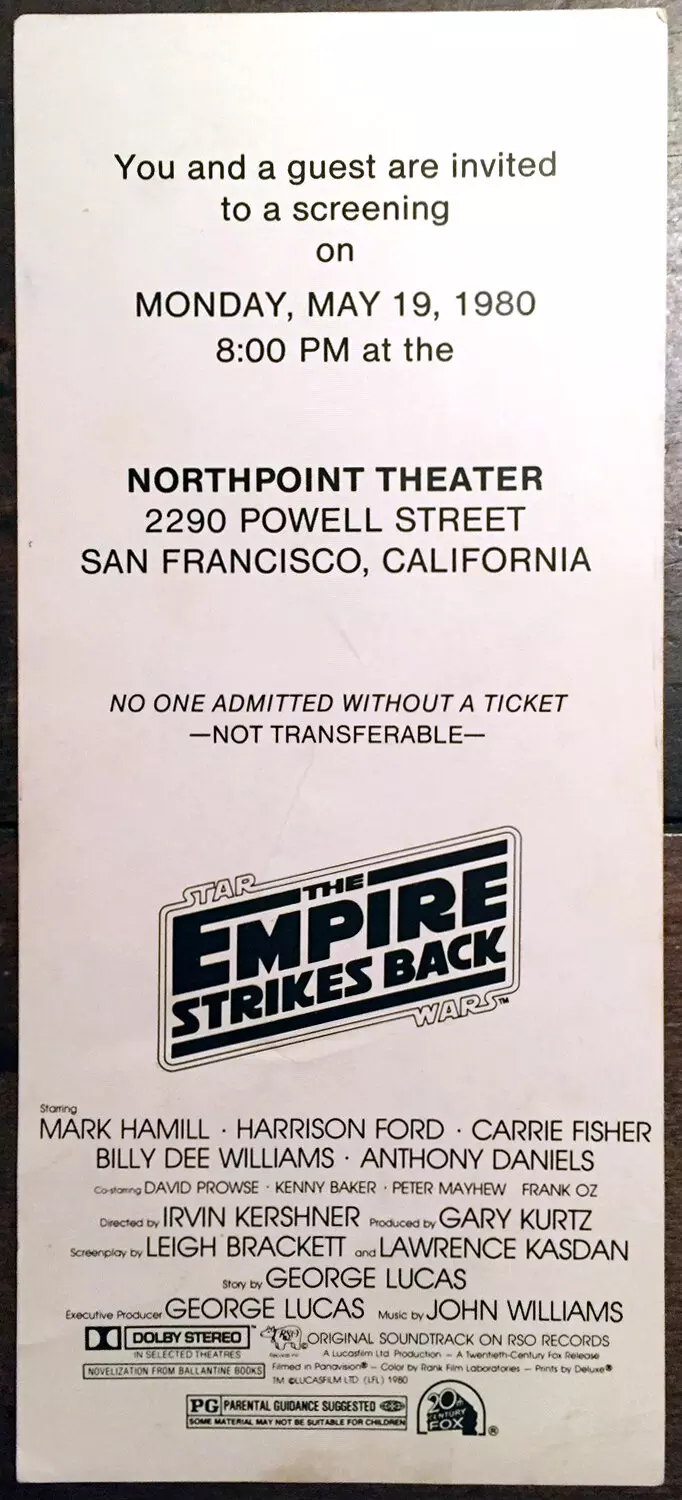
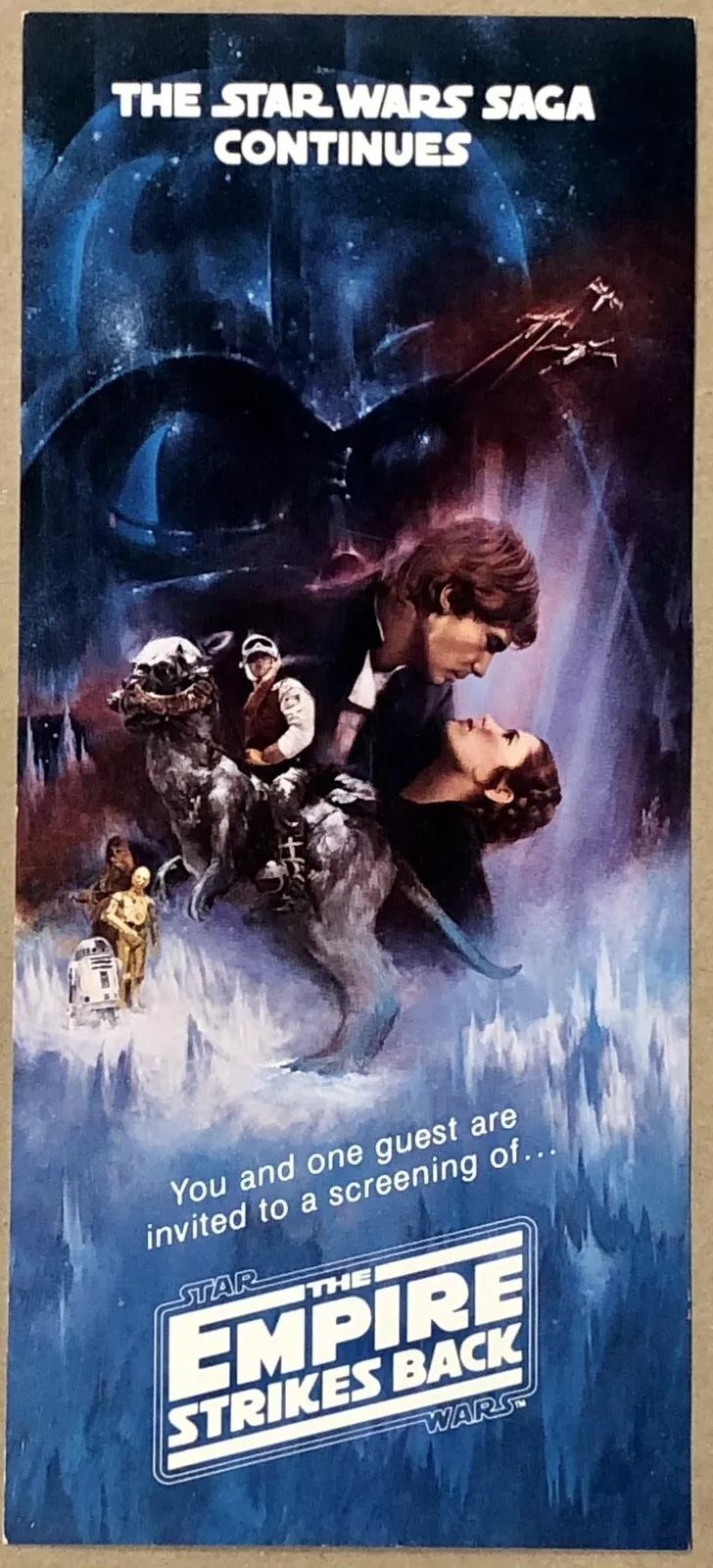
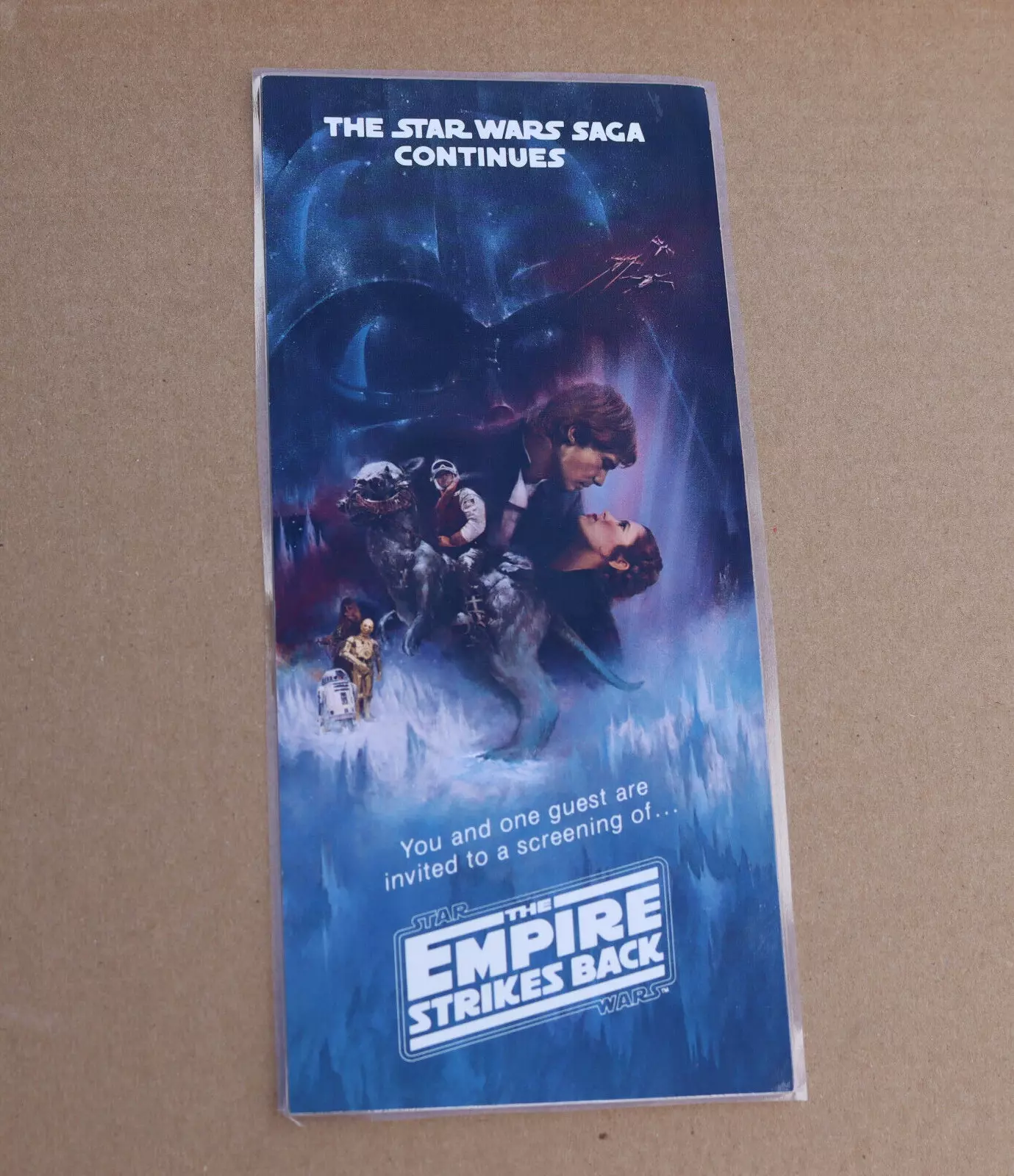
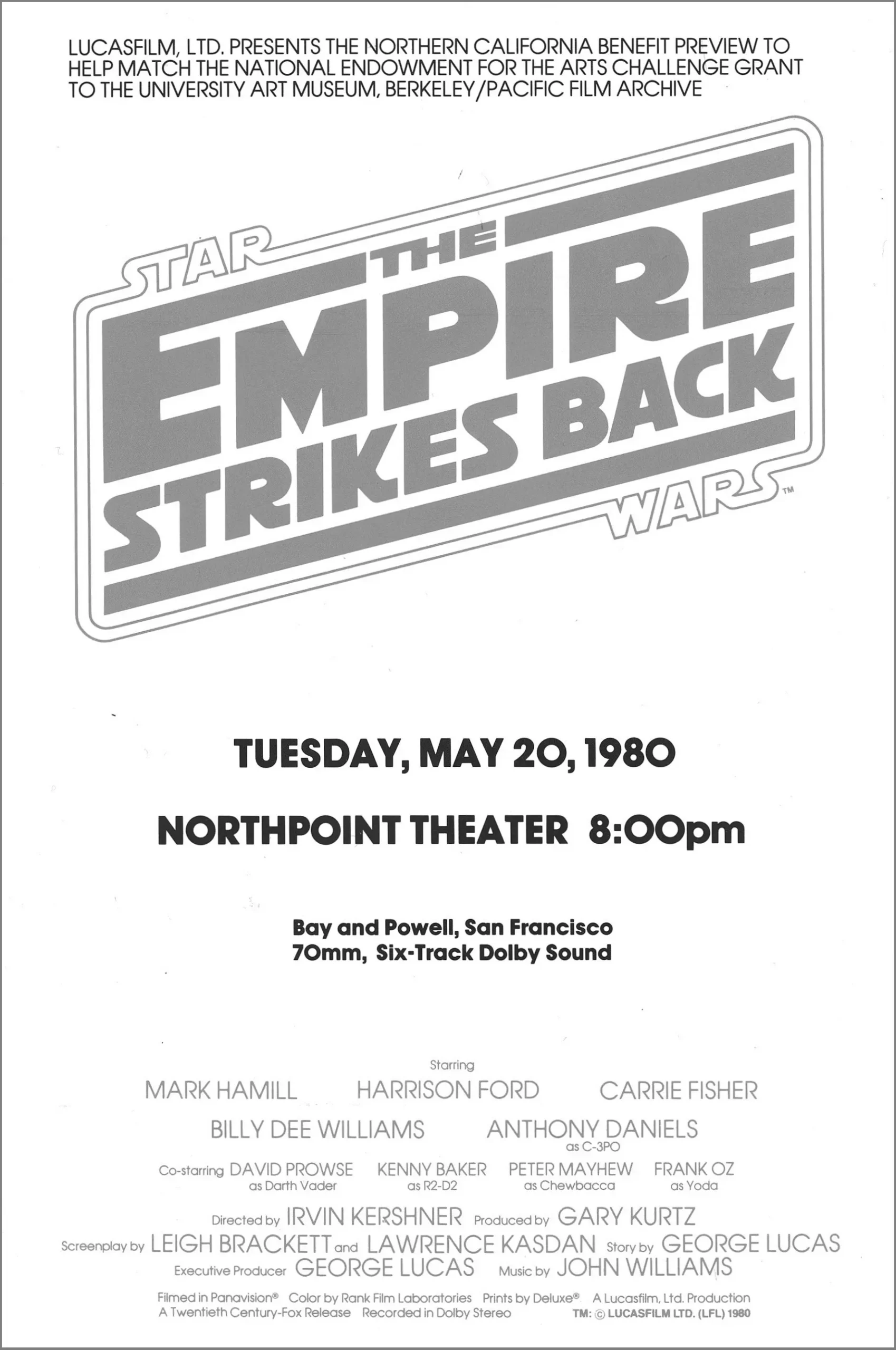
El 19 de mayo de 1980 se realizó una función previa para Empire Strikes Back en este teatro de San Francisco. Este tipo de preview fue algo que se dio en varios cines en diferentes fechas (y tal vez también en forma simultánea), tal como se aprecia en las invitaciones presentadas además del video de una noticia de CBS 8 San Diego.

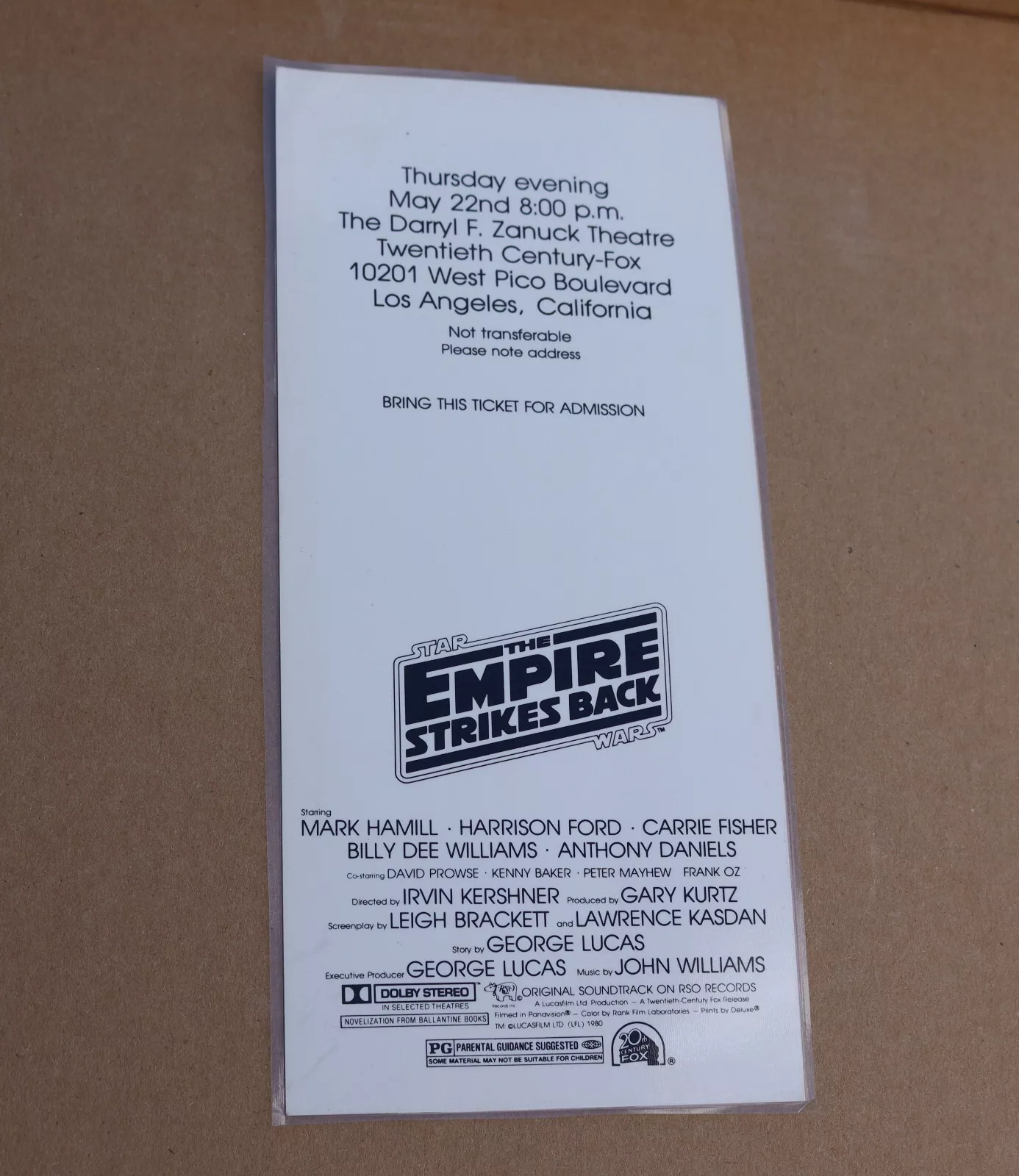
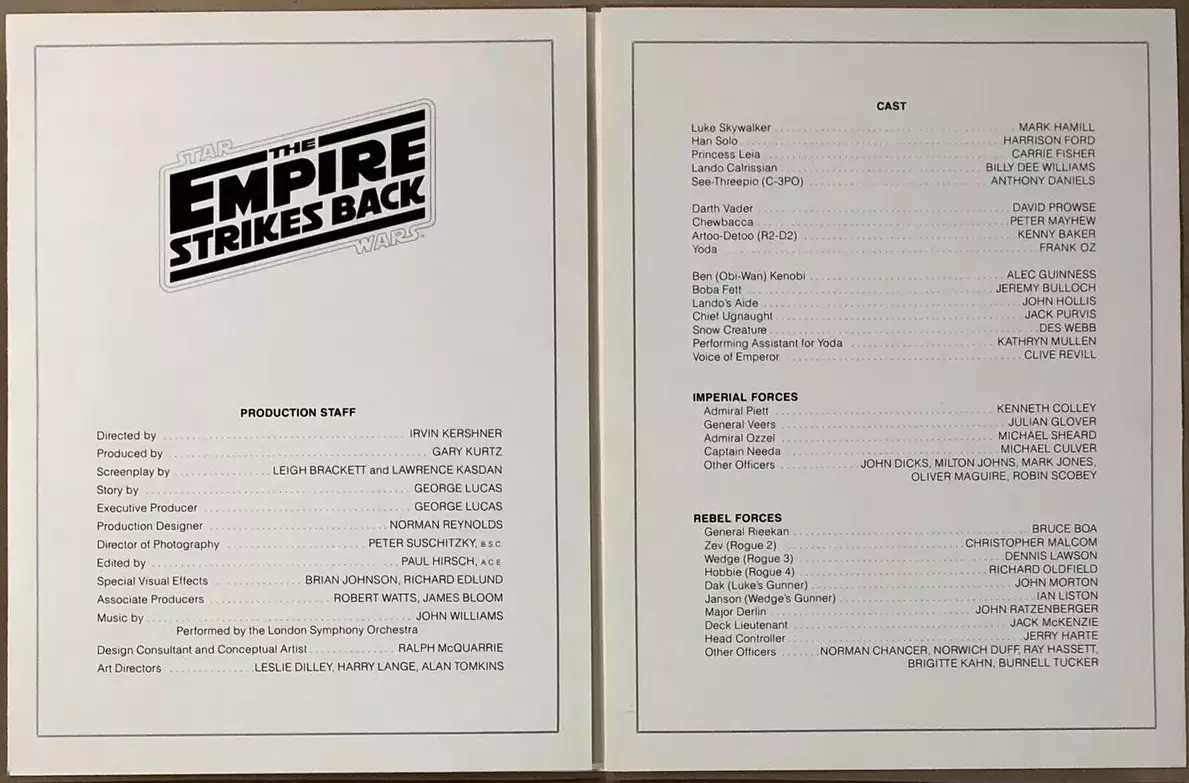
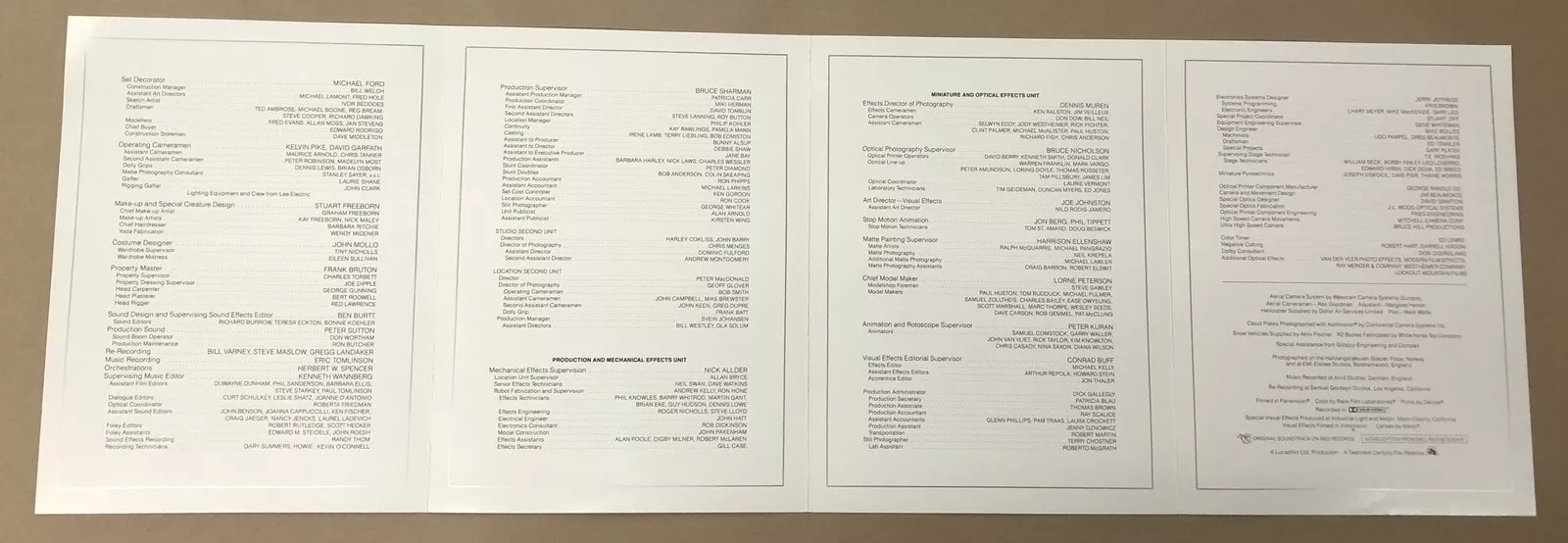
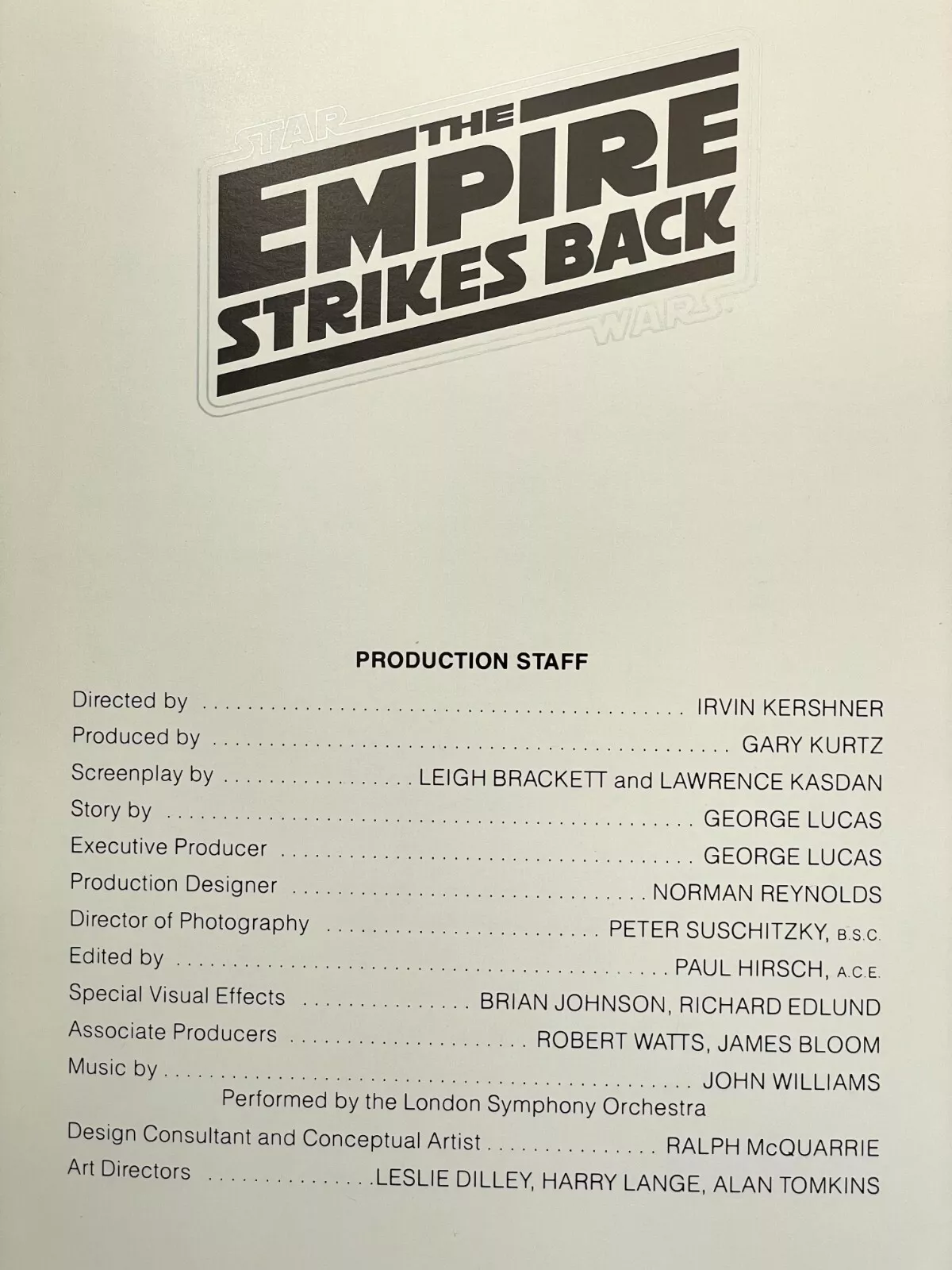
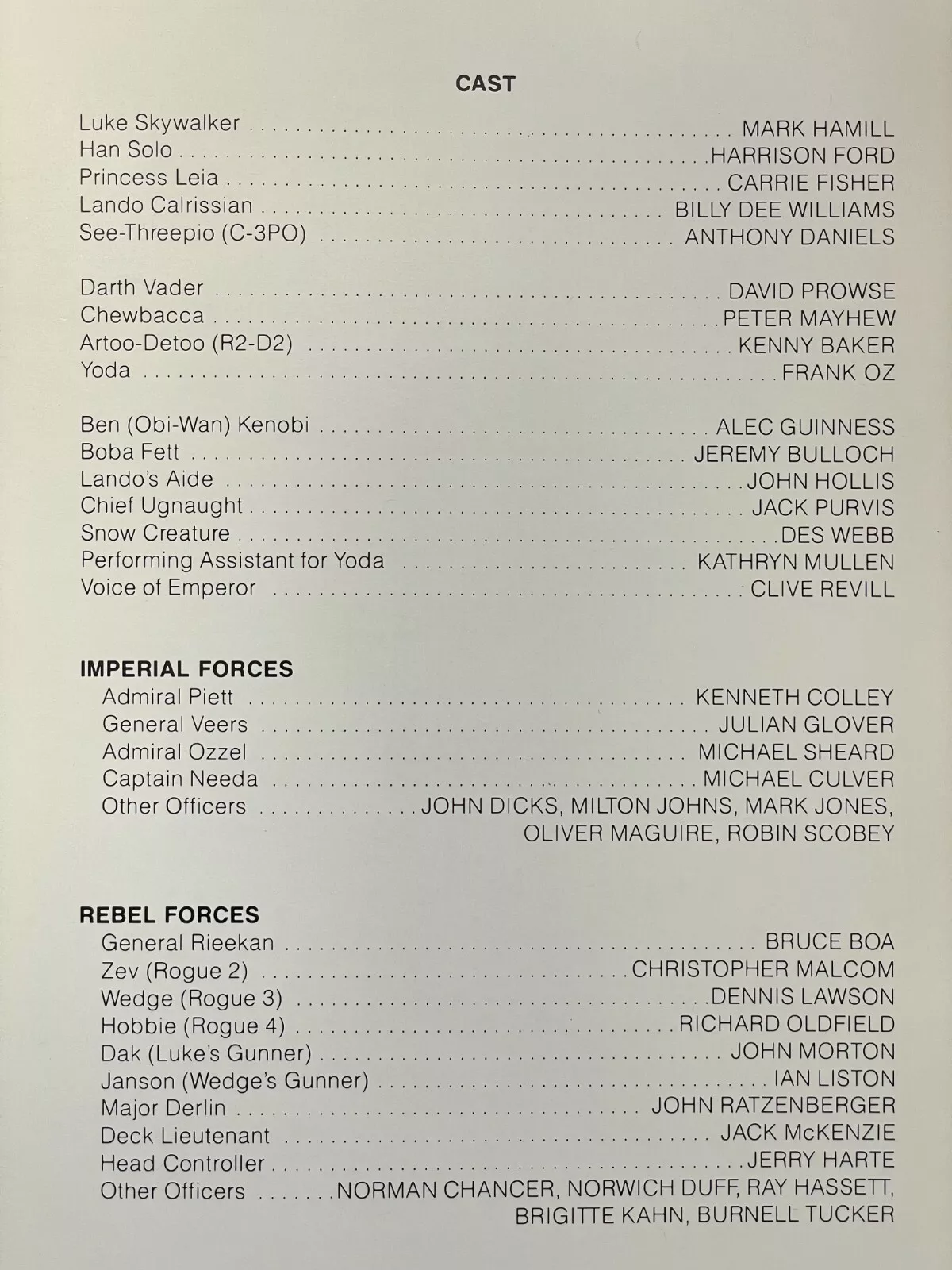
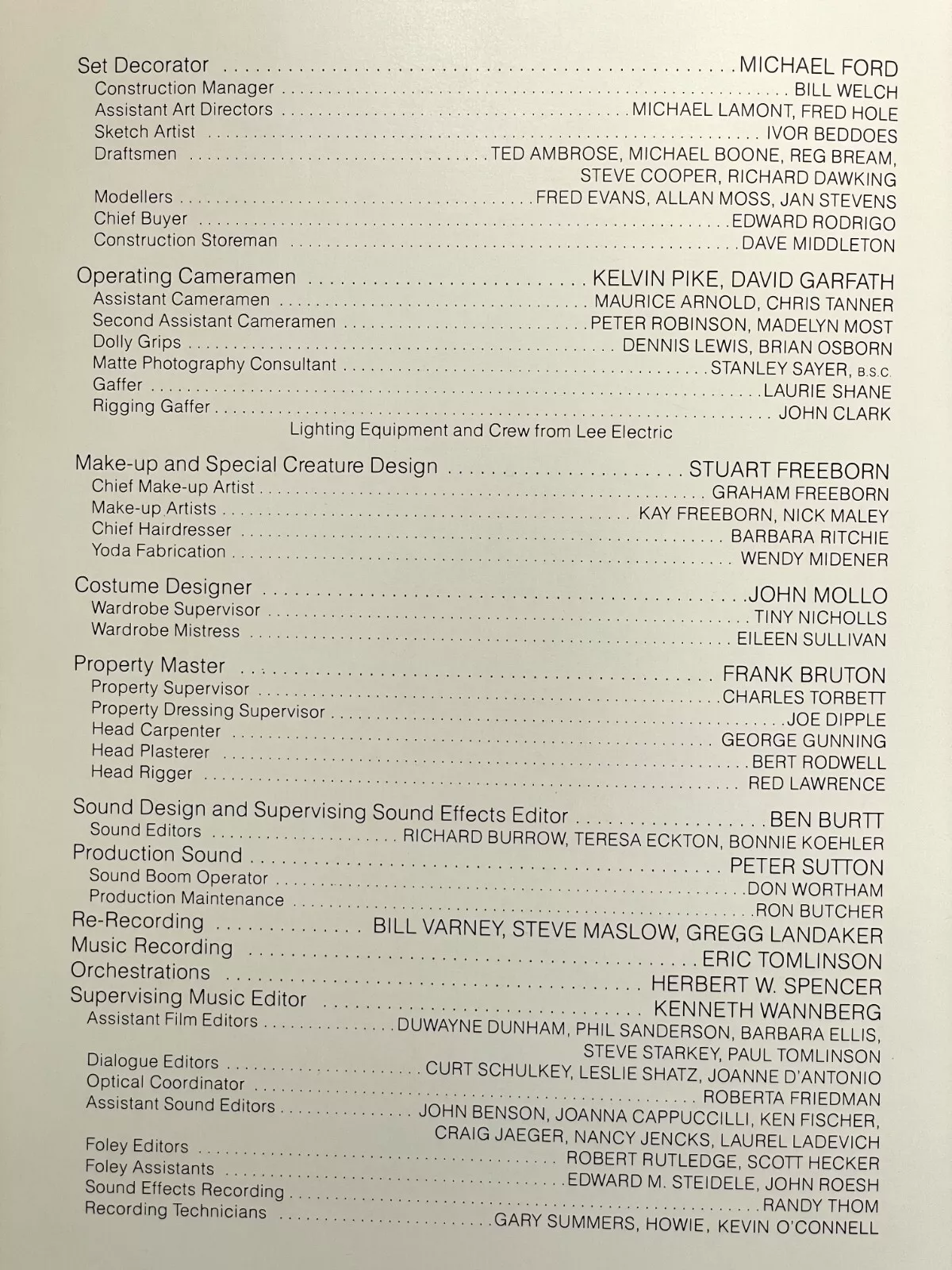
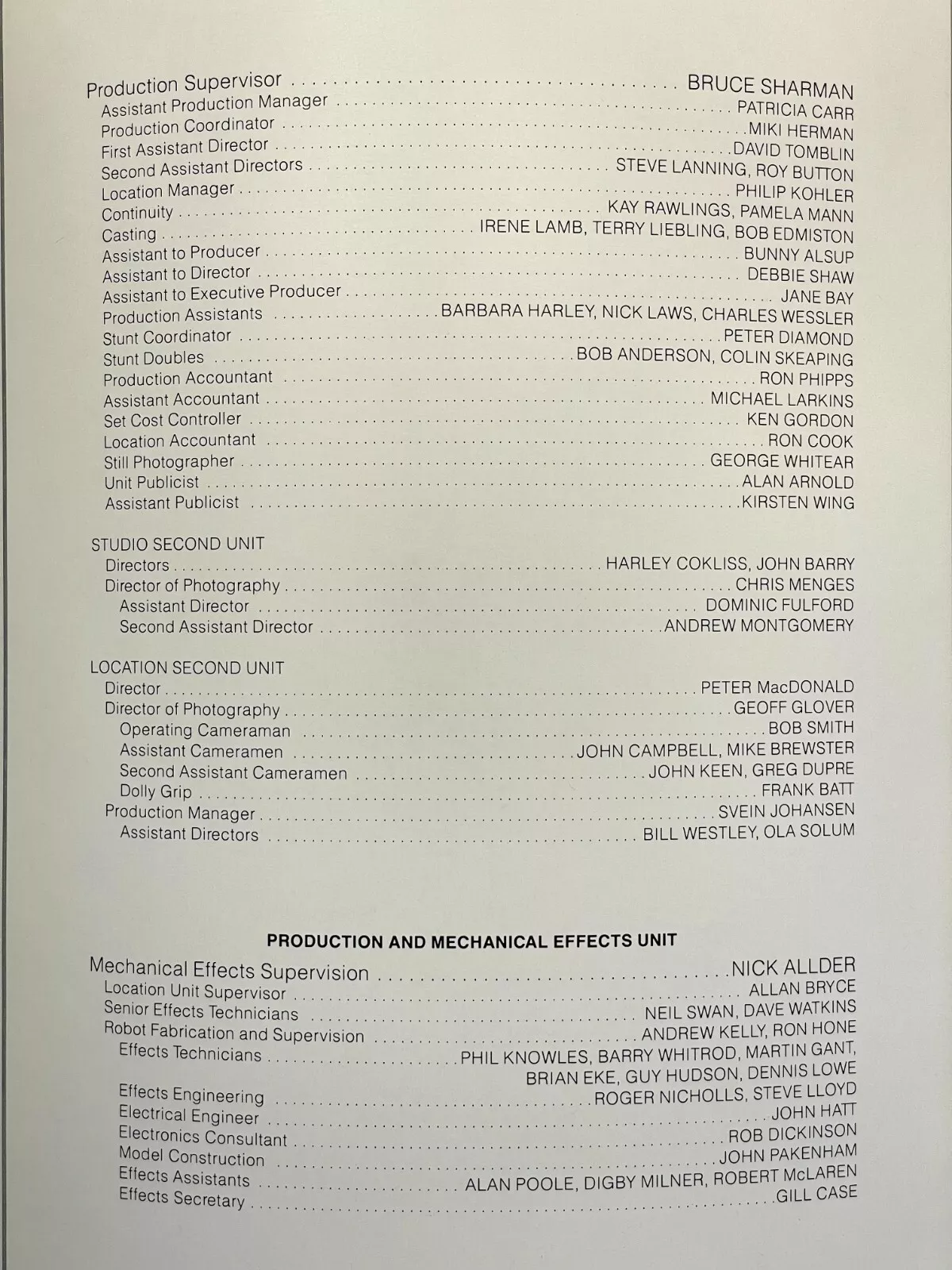
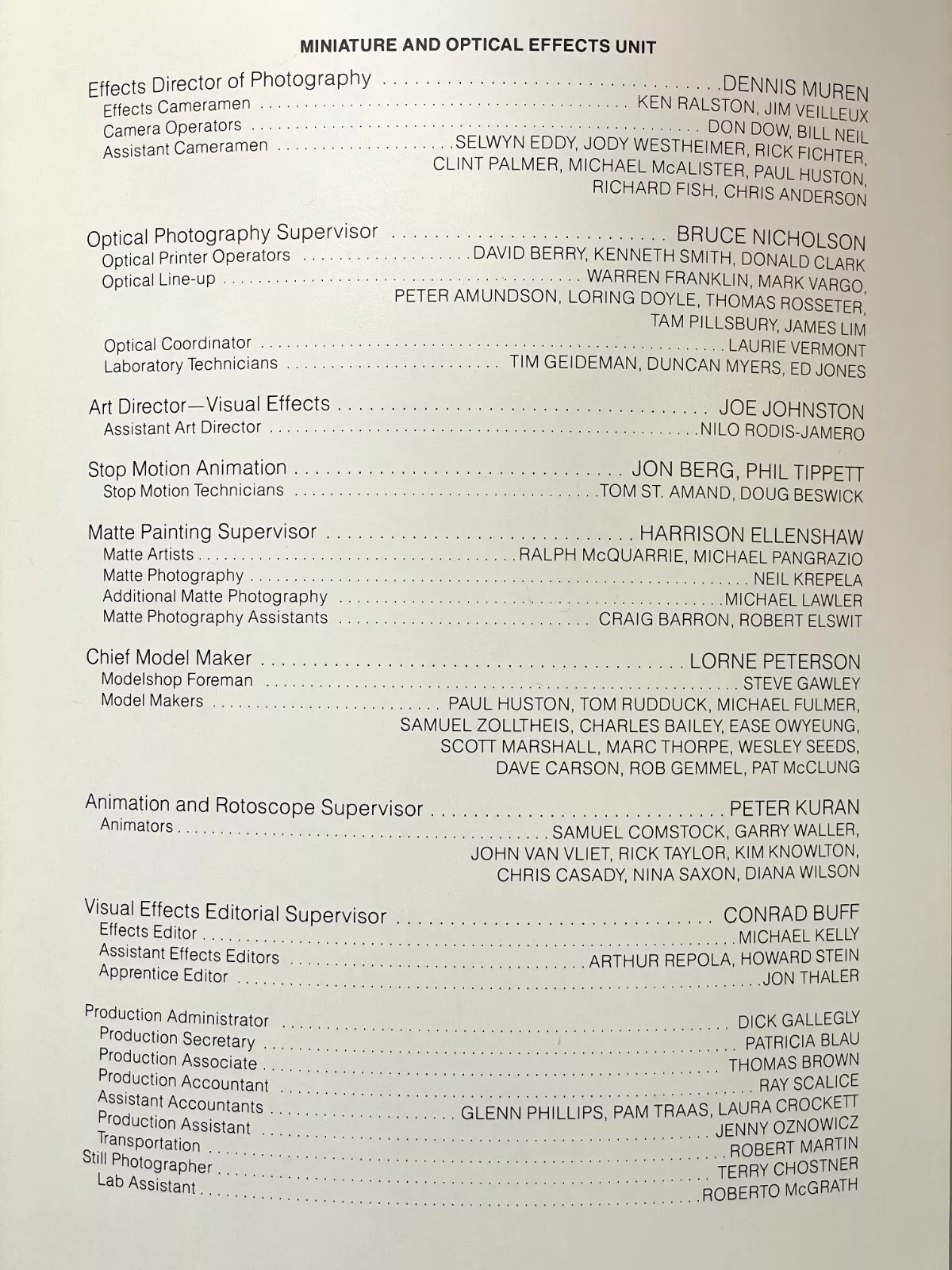
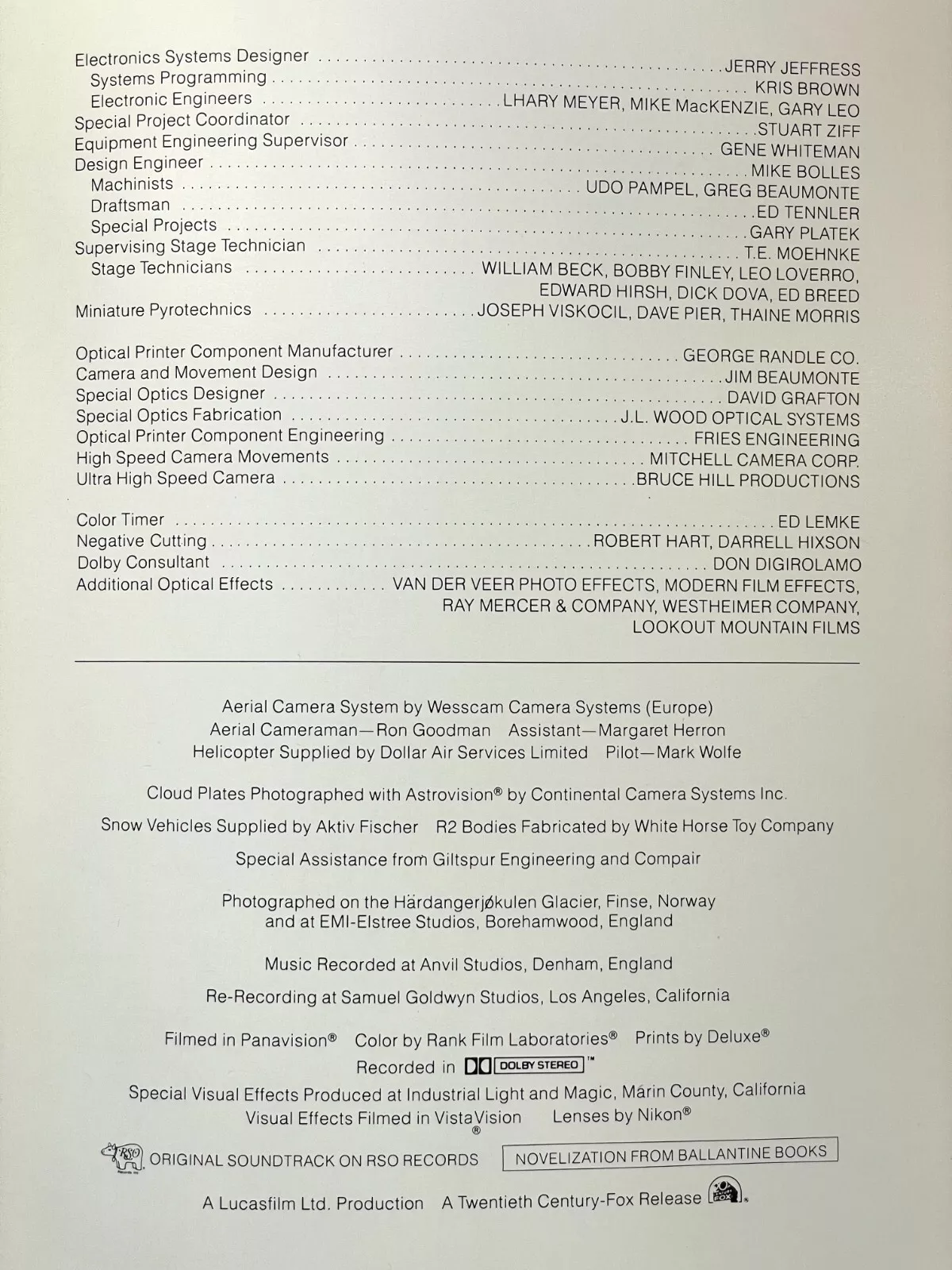
Además, el 20 de mayo del año 1980, se tuvo una proyección de beneficencia de Empire Strikes Back, donde además de poder disfrutar la película, te llevabas una polera recordando el momento. La última película que se exhibió en este cine fue The Lost World: Jurassic Park en el año 1997, cerrando sus puertas dos meses después.
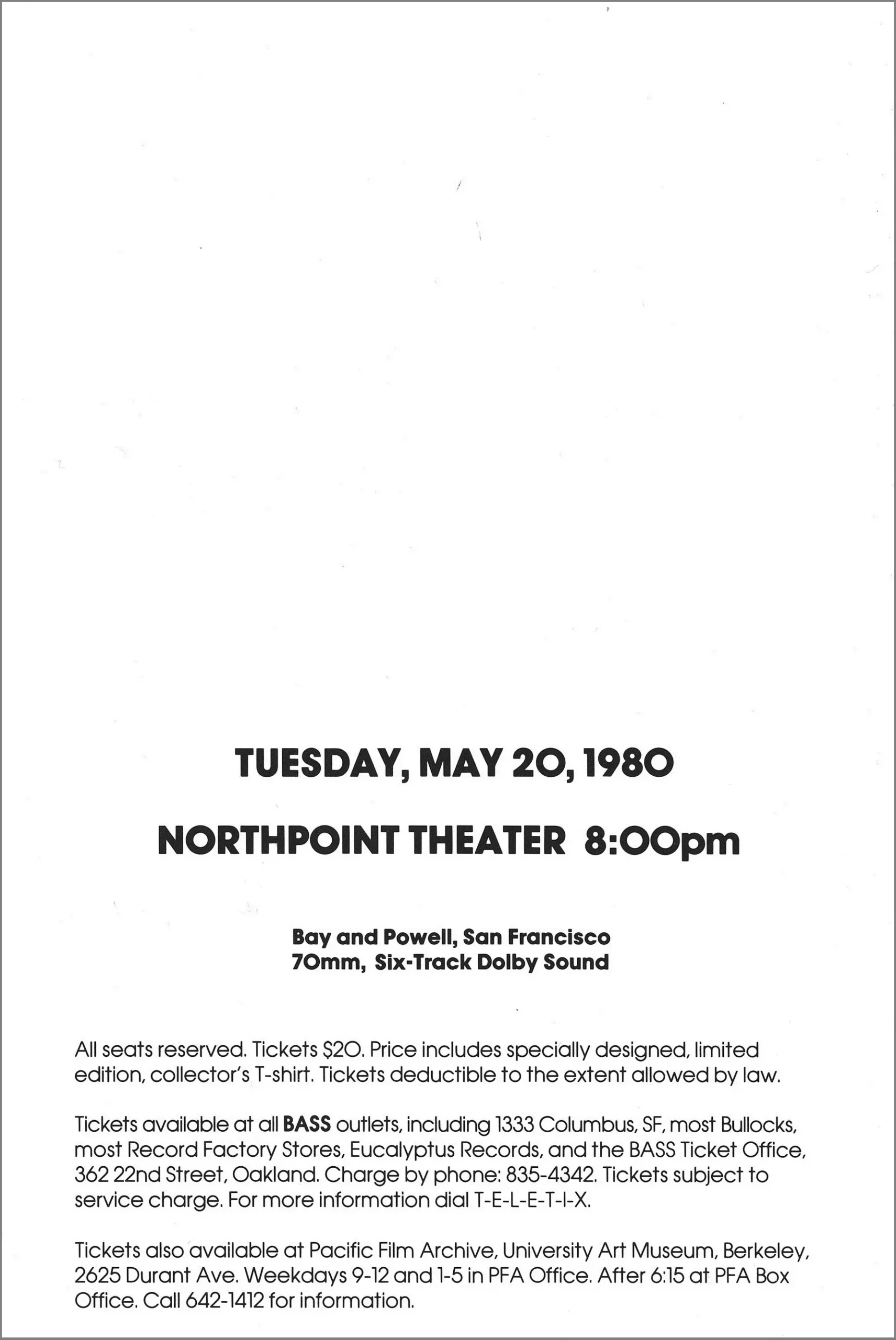
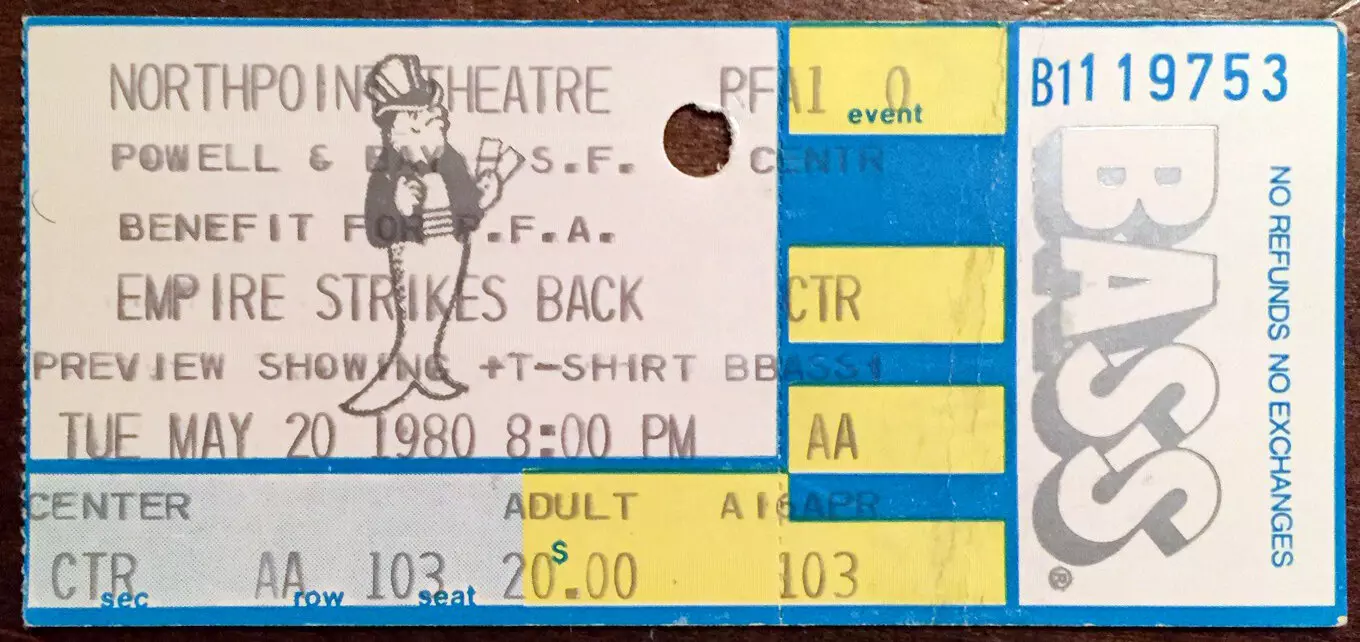
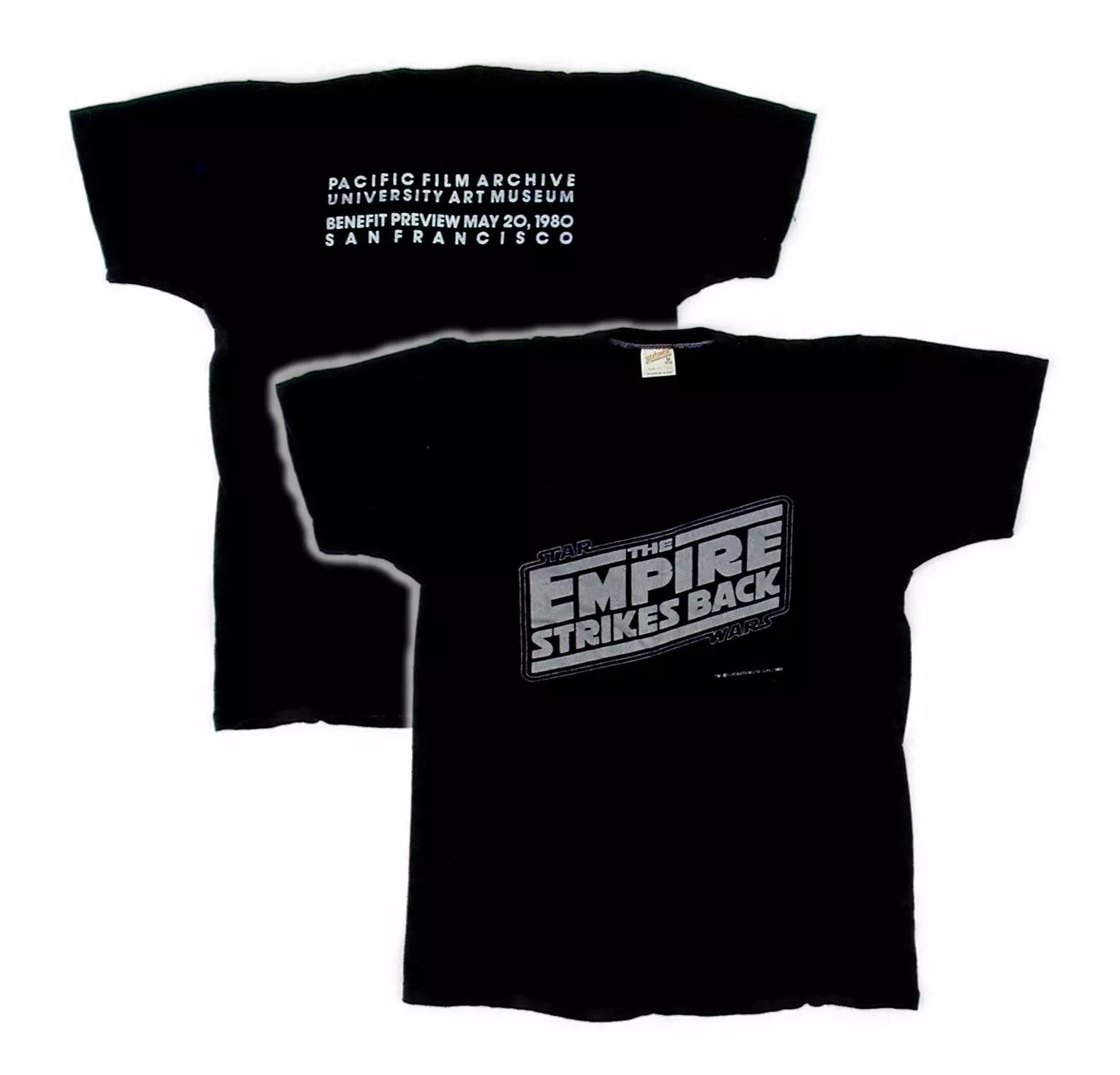
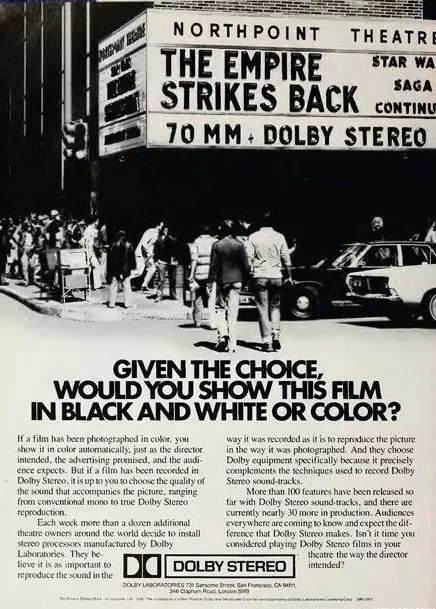
El Imperio Contraataca estuvo en cartelera en este cine durante las no despreciables de 28 semanas (7 meses), donde al contar con tecnología Dolby Stereo, se aprovechó dicha película para promocionar esa calidad de sonido. El Regreso del Jedi no fue una película que estuviera en la cartelera de este cine en forma inicial. Sí lo estuvo durante dos semanas, para su reestreno de 1985.
Preview y estudio Star Wars
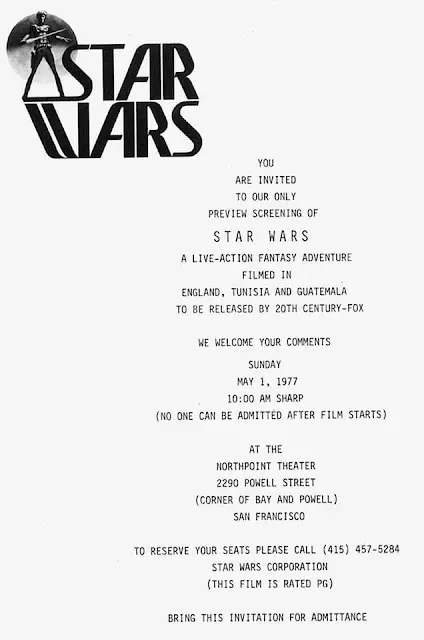
El 1ero de mayo de 1977 se estrenó una proyección previa de Star Wars, la que se describe como una aventura de fantasía en acción real filmada en Inglaterra, Túnez y Guatemala que será lanzada por 20th Century-Fox, cerrando con “Esperamos tus Comentarios“. Por cierto, ¿Se imaginan los que no fueron o que llegaron tarde y no los dejaron entrar?
Algunas preguntas interesantes de este cuestionario son conocer la edad de las personas que vieron la película, pudiendo entender mejor su audiencia, y si estas personas son o no asiduos al cine. Las preguntas 6 y 7 son clave para conocer una impresión general de la película Star Wars y su impacto en los participantes de esta función. Luego ya llegamos a dos preguntas (8 y 9 )muy relevantes respecto al gusto por los personajes humanos y no humanos dentro de la película. Finalmente, la pregunta 12 consulta directamente sobre las escenas que más gustaron a los que asistieron a la función, considerando las siguientes opciones en forma directa, “Los Jawas secuestran a Artoo-Detoo y venden los robots”, “Luke en la cantina del puerto espacial”, “Rescate de la princesa en la sala de detención de la Estrella de la Muerte”, “Sala de basura/compactadora”, “Luke y la princesa cruzan el cañón metálico”, “Duelo de sables de luz entre Darth Vader y Ben Kenobi”, “Escape de la Estrella de la Muerte durante la batalla aérea” y “Batalla espacial final sobre la Estrella de la Muerte”. Existe una pregunta sobre los equipos que más gustaron, considerando “R2-D2 y C-3PO”, “Han Solo y Chewbacca”, “Ben Kenobi y Darth Vader” y “Luke y la Princesa”.
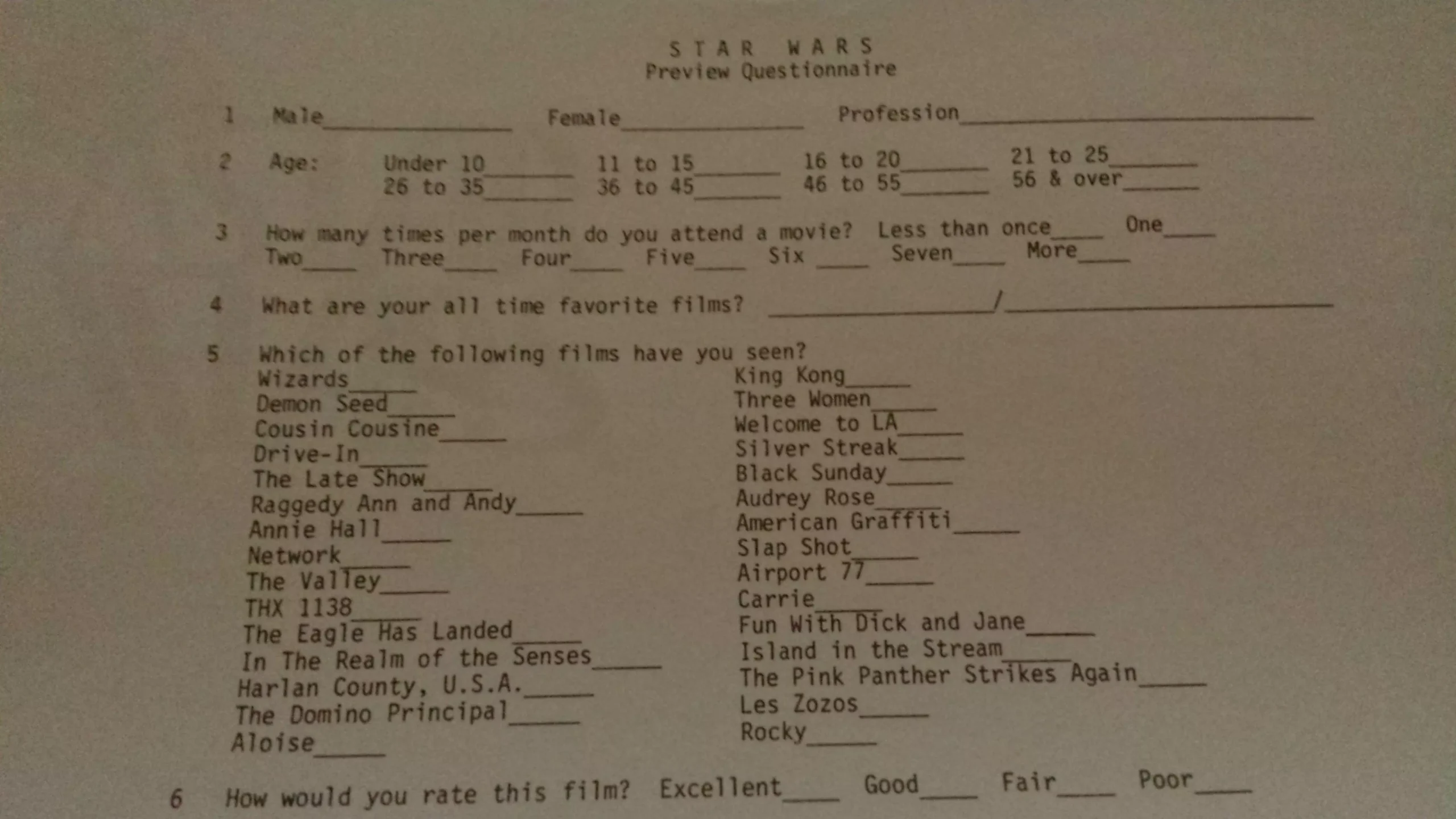
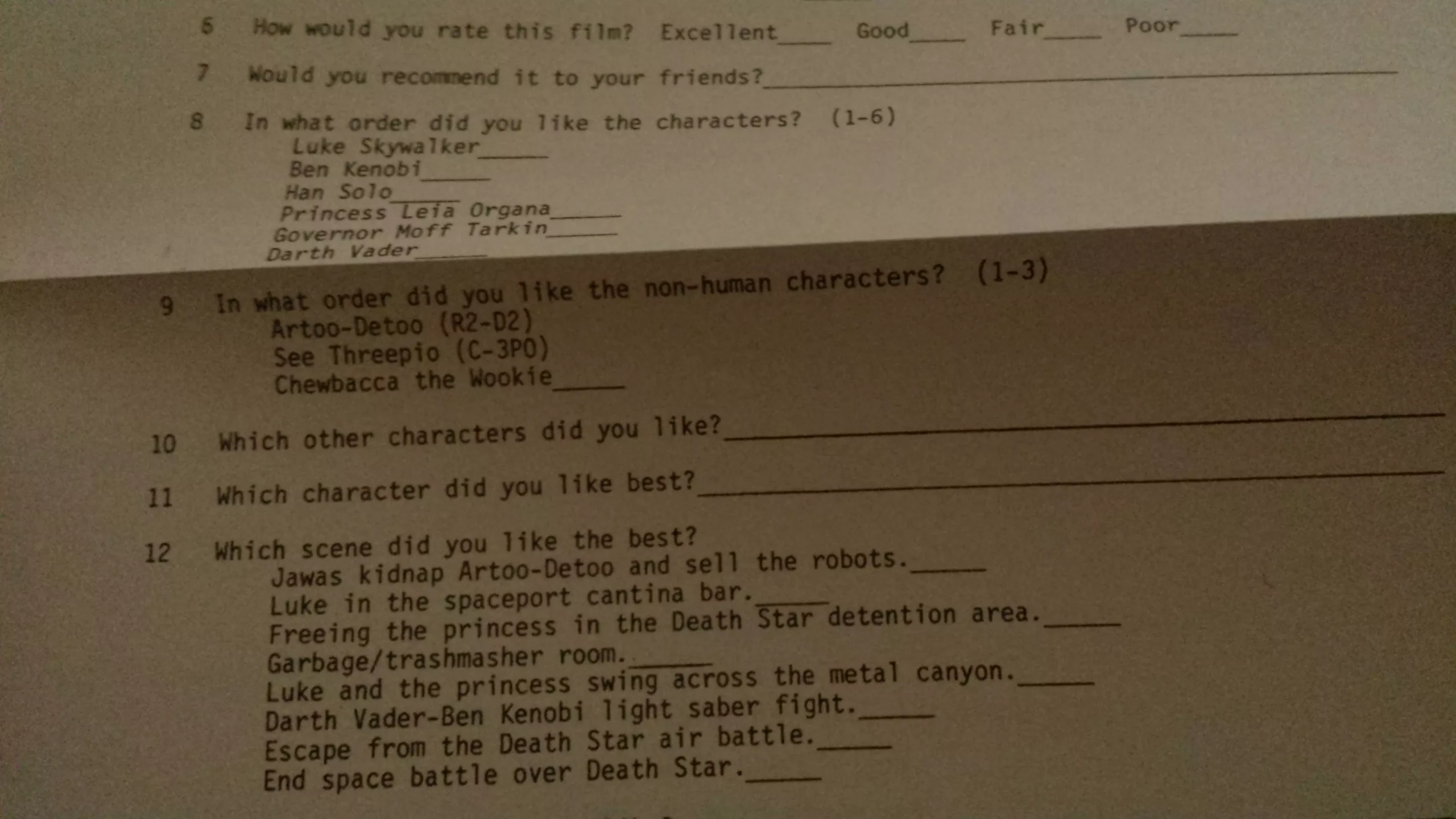
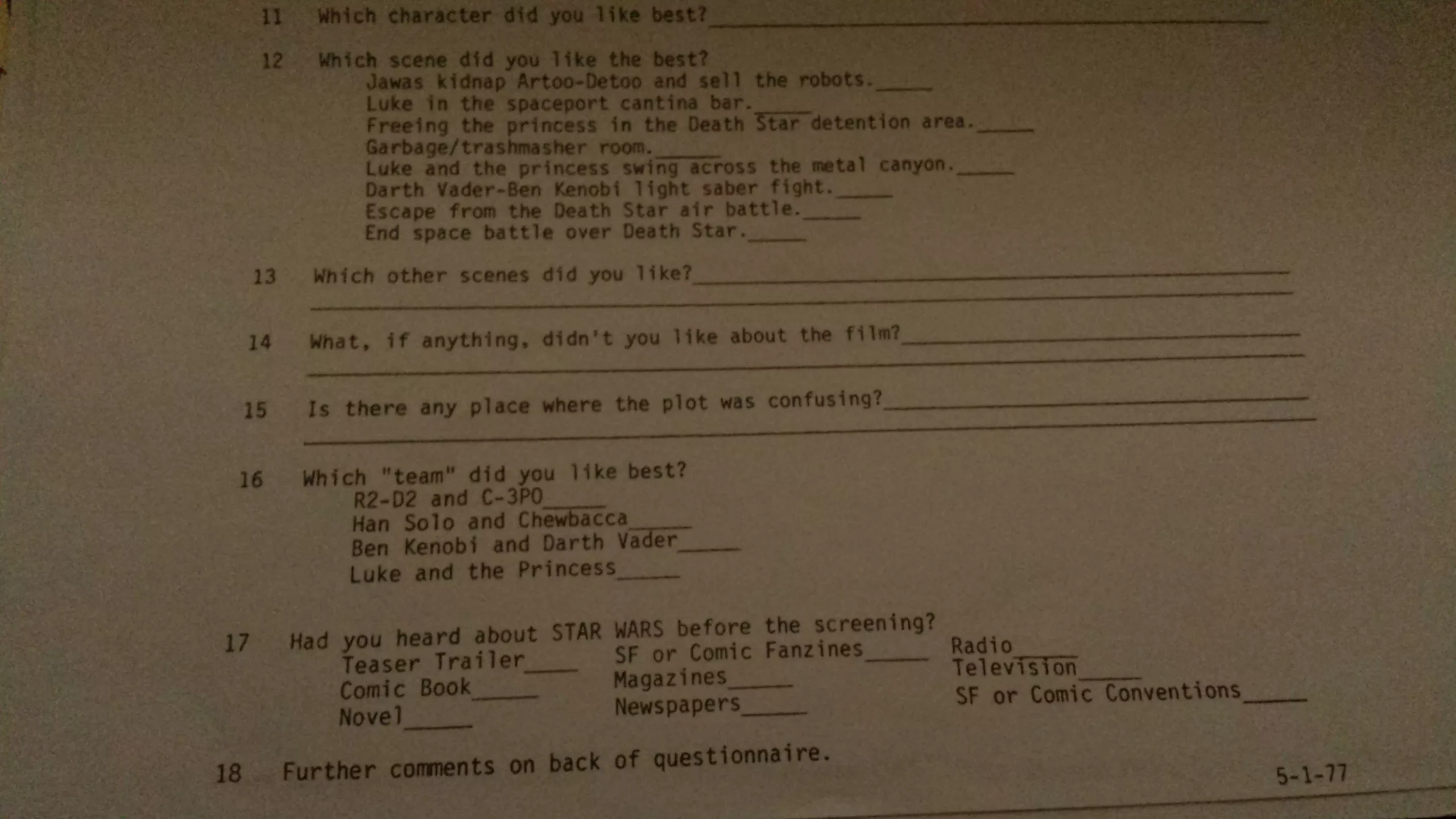
En el libro Engineering an Empire: The Creators of Kenner’s Star Wars Toys, aparecen parte de los resultados a esta encuesta llevada a cabo en mayo de 1977. Este cuestionario, elaborado por el equipo de marketing de 20th Century Fox, fue compartido en sus resultados con los ejecutivos de Kenner con el objetivo de que estos entendieran mejor el contexto del impacto que tuvo la película en los espectadores y posibles futuros compradores de los juguetes. No se conoce el real impacto que pudo haber tenido estos resultados a las decisiones finales en cuanto a la selección de personajes y otros para generar juguetes, pero sin duda viene a dar más luces al tema planteado en el artículo anterior. Por el atraso de Kenner al sumarse a lo que sería el fenómeno de Star Wars, esta fecha coincide cuando Kenner comenzaba al desarrollo de su línea de juguetes.
Resultados
Las personas que asistieron a esta función previa fueron 637 personas. El rango de edad muy variado desde menores de 10 años hasta mayores de 56 años, pero el grueso de la audiencia se encuentra entre los 21 y los 35 años, sumando en total 344 personas (54%).
Sobre la pregunta acerca del gusto que se tuvo sobre la película Star Wars, fue un éxito rotundo. 489 (77%) personas la califican como “Excelente” y 136 (21%) como “Buena”. Es decir, la aprobación fue de un 98%!
Acá ya un dato muy interesante para Kenner respecto a la pregunta ¿En qué orden te gustaron los personajes? (1-6)
Ben Kenobi
Luke Skywalker
Han Solo
Princesa Leia Organa
Darth Vader
Gobernador Moff Tarkin
Acá, el gobernador Moff Tarkin quedó relegado al último lugar, siendo el único personaje del listado que no llegó a tener su figura. Este resultado va un poco de la mano con lo dicho en mi artículo previo, ¿Cómo habrá sido la selección de personajes Kenner?, en que la prensa de la época tampoco le dio un rol muy relevante a este personaje.
Para esta otra pregunta, ¿En qué orden te gustaron los personajes no humanos? (1-3), el resultado fue el siguiente:
- Artoo-Detoo (R2-D2)
- See Threepio (C-3PO)
- Chewbacca el Wookiee
Donde la pareja de droides queda mejor posicionada que nuestro querido wookie.
Ahora bien, estos listados no cuadra del todo con las primeras figuras asociadas al Early Bird Certificate Package, donde claramente esto sirvió como entrada para la toma de decisiones, pero hubo algo más (Luke Skywalker, Princess Leia, R2-D2 and Chewbacca).
Otra pregunta relevante para la fábrica Kenner debe haber sido sobre las escenas que gustaron de la película. Esto porque sería una incidencia directa sobre los posibles playsets, figuras, vehículos y criaturas. El orden obtenido es el siguiente:
- Luke en la cantina del puerto espacial
- Batalla espacial final sobre la Estrella de la Muerte
- Luke y la princesa cruzan el cañón metálico
- Duelo de sables de luz entre Darth Vader y Ben Kenobi
- Escape de la Estrella de la Muerte durante la batalla aérea
- Los Jawas secuestran a Artoo-Detoo y venden los robots
- Rescate de la princesa en la sala de detención de la Estrella de la Muerte
- Sala de basura/compactadora
Sobre el gusto por los equipos, el resultado fue:
- R2-D2 y C-3PO
- Han Solo y Chewbacca
- Ben Kenobi y Darth Vader
- Luke y la Princesa
Tomando en cuenta todos estos resultados, se puede tener respuesta al porqué Kenner se decidió por lanzar los playsets, figuras y vehículos en su colección Star Wars. Estos datos podrían explicar porqué la cantina tuvo dos lanzamientos, y la creación de criaturas asociadas a la cantina, más que otros personajes como el ya nombrado Tarkin o los tíos de Luke. Estos últimos aparecen más tiempo en pantalla y con más interacción que un Hammerhead o un Snaggletooth.
Por último, teniendo en cuenta sólo esta información, el Sandpeople me queda fuera de cualquier opción de haber tenido su figura. Esto ya que varias de los top relacionados con los personajes, escenas y equipos, no justifican la creación de ese producto.
Preview y estudio Empire Strikes Back
El 19 de abril de 1980, también hubo una función previa al lanzamiento para Empire Strikes Back. En el libro The Making of The Empire Strikes Back de J.W. Rinzler, aparecen algunas respuestas recopiladas luego de esta función, pero se mencionan datos subjetivos de respuestas abiertas desde donde la información no es relevante para Kenner. No he encontrado si existieron datos más estructurados y dirigidos como la primera encuesta de 1977.
Hombres de 16 a 20 años: “Estas películas tenían un significado. Los mates de Bespin no tenían un aspecto realista. Todo lo demás fue impecable. Es una de las pocas secuelas tan buenas o mejores que la original”.
Mujeres de 16 a 20 años: “¡Espero que encuentres a Han Solo!”
Hombres de 21 a 25 años: “Me sorprendió que la historia fuera buena. Disfruté de la magia de la Fuerza. Pero lo del ejército, no para mí”.
Hombres de 56 años o más: “Tendrás a los niños de Estados Unidos parados de cabeza practicando psicoquinesis. Los paralelismos bíblicos de la historia son notables y fascinantes. Me conmueve su voluntad de ‘ir a por todas’. Fabulosa serie de películas. Apoyo tu intención”.
Preview y estudio Return of the Jedi
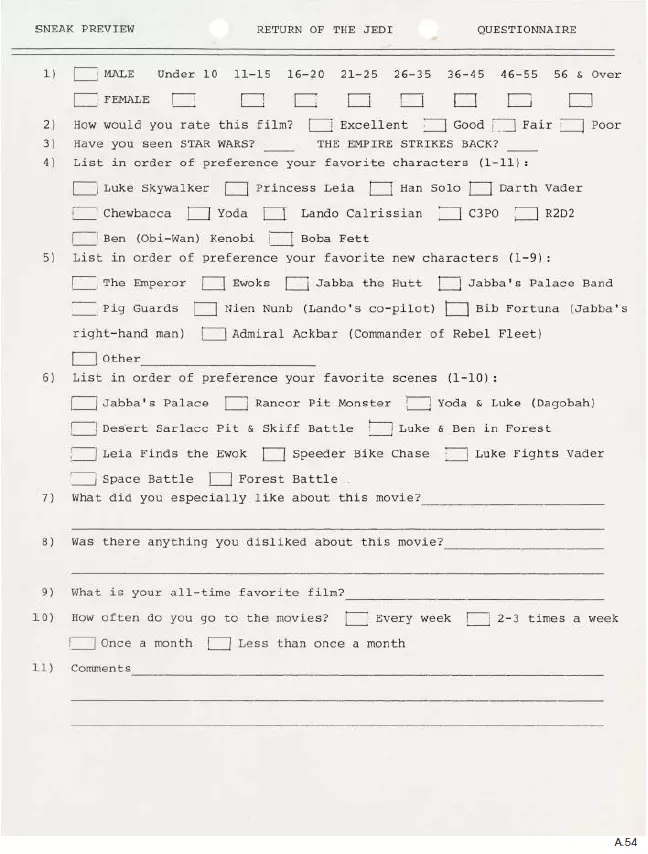
El 9 de abril de 1983 se hizo lo propio para Return of the Jedi, pero no he encontrado resultados al respecto. Desde un cuestionario como este, si sus resultados fueran compartidos con Kenner, también podrían haber servido para la toma decisiones respecto a cómo enfrentar sus líneas de juguetes.
If you recall, I wrote an article some time ago in which I addressed how Kenner’s executives may have considered their decisions regarding which characters would be turned into action figures. In that piece, I approached the topic from the impact the film had on its audience and how that impact could have shaped the path toward deciding which toys to produce.
User‑Centered Design (UCD) is a design approach that places the user at the center of the process, seeking to understand their needs, goals, and limitations in order to create products that solve specific problems and improve the user experience. Its aim is to ensure that every design decision is grounded in how it will benefit users — not only in functional terms, but also in experience and satisfaction.
What better way to decide which toys to manufacture than by understanding how the film impacted its audience?
On June 28, 1967, the Northpoint Theatre opened with “The Dirty Dozen.” On the San Francisco Theaters site, Jack Tillmany shares a photo of its opening taken by Tom Gray. Note that the name of the theater does not appear in the photo — only the film title. This cinema was located at the corner of Powell and Bay Streets in San Francisco. Curiously, it was not included in the list of theaters for the major Star Wars premiere, which is confirmed by the information on the San Francisco Theaters blog.
On May 19, 1980, a preview screening of The Empire Strikes Back was held at this San Francisco theater. These types of previews took place in several cinemas on different dates (and perhaps also simultaneously), as seen in the invitations presented and in the CBS 8 San Diego news video.
Additionally, on May 20, 1980, a charity screening of The Empire Strikes Back was held, where attendees not only enjoyed the film but also received a commemorative T‑shirt marking the occasion. The last movie shown at this theater was The Lost World: Jurassic Park in 1997, and it closed its doors two months later.
The Empire Strikes Back ran at this theater for a remarkable 28 weeks (7 months). Since it was equipped with Dolby Stereo technology, the film was used to promote that enhanced sound quality. Return of the Jedi was not part of the theater’s initial lineup, though it did play there for two weeks during its 1985 re‑release.
Preview and Star Wars Study
On May 1, 1977, a preview screening of Star Wars was shown. It was described as a live‑action fantasy adventure filmed in England, Tunisia, and Guatemala, to be released by 20th Century‑Fox, ending with the line: “We look forward to your comments.” One can only imagine those who didn’t attend — or who arrived late and weren’t allowed in.
Some of the most interesting questions in this survey aimed to learn the ages of the attendees, helping to better understand the film’s audience, and whether these people were regular moviegoers. Questions 6 and 7 were key to capturing a general impression of Star Wars and its impact on those who attended the preview.
Then we reach two very relevant questions (8 and 9), focused on preferences for human and non‑human characters in the film. Finally, question 12 asked directly about the scenes viewers liked most, offering the following options: “The Jawas capture Artoo‑Detoo and sell the robots,” “Luke in the spaceport cantina,” “Rescue of the Princess in the Death Star detention block,” “Trash compactor room,” “Luke and the Princess cross the metal chasm,” “Lightsaber duel between Darth Vader and Ben Kenobi,” “Escape from the Death Star during the aerial battle,” and “Final space battle over the Death Star.”
There was also a question about favorite character pairings, with the options: “R2‑D2 and C‑3PO,” “Han Solo and Chewbacca,” “Ben Kenobi and Darth Vader,” and “Luke and the Princess.”
In the book Engineering an Empire: The Creators of Kenner’s Star Wars Toys, part of the results from this survey carried out in May 1977 are presented. This questionnaire, prepared by 20th Century Fox’s marketing team, was shared with Kenner executives so they could better understand the context of the film’s impact on viewers and potential future toy buyers. The real influence these results may have had on final decisions regarding character selection and other toy‑development choices is unknown, but they certainly shed more light on the topic discussed in the previous article. Due to Kenner’s delay in joining what would become the Star Wars phenomenon, this date coincides with the moment Kenner began developing its toy line.
Results
A total of 637 people attended this preview screening. The age range was very broad, from under 10 years old to over 56, but the bulk of the audience fell between 21 and 35 years old, totaling 344 people (54%).
Regarding the question about how much they liked the film Star Wars, it was an overwhelming success. 489 people (77%) rated it “Excellent,” and 136 (21%) rated it “Good.” In other words, approval reached 98%!
Here we already find a very interesting data point for Kenner regarding the question: “In what order did you like the characters?” (1–6)
- Ben Kenobi
- Luke Skywalker
- Han Solo
- Princess Leia Organa
- Darth Vader
- Governor Moff Tarkin
Here, Governor Moff Tarkin was relegated to last place, being the only character on the list who never received an action figure. This result aligns somewhat with what was stated in my previous article, How Might Kenner Have Selected Its Characters?, where the press of the time also did not give this character a very relevant role.
For the next question, “In what order did you like the non‑human characters?” (1–3), the results were:
- Artoo‑Detoo (R2‑D2)
- See Threepio (C‑3PO)
- Chewbacca the Wookiee
Where the droid duo ranked higher than our beloved Wookiee.
Now, these lists do not fully match the first figures associated with the Early Bird Certificate Package, where clearly this served as input for decision‑making, but there was something more (Luke Skywalker, Princess Leia, R2‑D2 and Chewbacca).
Another relevant question for Kenner must have been about the scenes people liked from the film, since this would directly influence possible playsets, figures, vehicles, and creatures. The ranking obtained was:
- Luke in the spaceport cantina
- Final space battle over the Death Star
- Luke and the Princess cross the metal chasm
- Lightsaber duel between Darth Vader and Ben Kenobi
- Escape from the Death Star during the aerial battle
- The Jawas capture Artoo‑Detoo and sell the robots
- Rescue of the Princess in the Death Star detention block
- Trash compactor room
Regarding favorite character teams, the results were:
- R2‑D2 and C‑3PO
- Han Solo and Chewbacca
- Ben Kenobi and Darth Vader
- Luke and the Princess
Taking all these results into account, one can understand why Kenner decided to release the playsets, figures, and vehicles in its Star Wars collection. These data could explain why the cantina had two releases, and why creatures associated with the cantina were created, rather than other characters such as the already mentioned Tarkin or Luke’s aunt and uncle. The latter appear longer on screen and with more interaction than a Hammerhead or a Snaggletooth.
Finally, taking into account only this information, the Sandpeople would fall outside any option of having received a figure, since several of the top results related to characters, scenes, and teams do not justify the creation of that product.
Preview and Study for The Empire Strikes Back
On April 19, 1980, there was also a preview screening for The Empire Strikes Back. In J.W. Rinzler’s book The Making of The Empire Strikes Back, some responses collected after this screening appear, but they mention subjective open‑ended answers from which the information is not relevant for Kenner. I have not found whether more structured and directed data existed, like the first 1977 survey.
Men aged 16–20: “These movies had meaning. The Bespin mattes didn’t look realistic. Everything else was flawless. It’s one of the few sequels as good or better than the original.”
Women aged 16–20: “I hope you find Han Solo!”
Men aged 21–25: “I was surprised the story was good. I enjoyed the magic of the Force. But the army stuff, not for me.”
Men aged 56 or older: “You’ll have the children of America standing on their heads practicing psychokinesis. The biblical parallels in the story are remarkable and fascinating. I’m moved by your willingness to ‘go all out.’ Fabulous series of films. I support your intention.”
Preview and Study for Return of the Jedi
On April 9, 1983, the same was done for Return of the Jedi, but I have not found results regarding it. From a questionnaire like this, if its results were shared with Kenner, they could also have helped guide decisions on how to approach their toy lines.