Las Míticas Toy Fair de Kenner (1978-1980) – Parte I
El negocio de los juguetes, tal como lo conocemos hoy, es un fenómeno relativamente moderno. Cuando en 1903 se celebró la primera Feria del Juguete de Nueva York, el evento estaba lejos de ser el espectáculo masivo que es en la actualidad. Algunos de los grandes éxitos de aquella temporada de 1903 fueron, sorprendentemente, los lápices de colores… ¡ahora en color! Binney & Smith presentaron su primer paquete de 8 crayones Crayola, mientras que los trenes Lionel trajeron al mundo de los juguetes la emoción del ferrocarril, miniaturizando el principal medio de transporte del país. Con el paso de los años, el auge del automóvil también se reflejó en juguetes que capturaron la imaginación de los niños. Clásicos como Erector Sets, Tinkertoys y Lincoln Logs hicieron su debut en aquellos primeros años y, sorprendentemente, todavía se fabrican hoy en día.
A medida que la Feria del Juguete crecía, también lo hacía la industria. En 1919, A.C. Gilbert, uno de los fundadores de la Asociación del Juguete, declaraba con orgullo: “La palabra ‘juguetes’ ya no significa ‘hecho en Alemania’”. Era una señal de que los juguetes estadounidenses estaban consolidándose como una potencia en el mercado. Para 1939, la feria ya atraía a 1.700 compradores, y por primera vez, comerciantes europeos viajaban a Nueva York para descubrir las novedades del sector. En esos años, los juguetes comenzaron a ser más que un negocio: se convirtieron en un fenómeno cultural. En 1930, se publicó uno de los primeros estudios sobre el impacto del juego en el desarrollo infantil, reafirmando su importancia en la educación y en la vida cotidiana de los niños.
La influencia de la feria siguió creciendo y, con el tiempo, la industria encontró un hogar permanente en The Toy Center, ubicado en la Quinta Avenida con la calle 23. Este edificio, que alguna vez fue un lujoso hotel, se transformó en un epicentro del juguete, albergando exclusivamente salas de exhibición. Para 1981, más de 600 empresas operaban desde allí, y siguió siendo la sede principal de la feria hasta el año 2000, cuando se trasladó al Javits Center, en el West Side de Nueva York.
Entre los años 60 y 90, la Feria del Juguete se convirtió en un evento de relevancia nacional e internacional. Reporteros de todo el mundo acudían para conocer los últimos lanzamientos, disfrutar de exclusivas fiestas y sumergirse en un espectáculo que no sólo servía para vender, sino que celebraba a toda la industria. En aquellos años, la feria no sólo reunía a fabricantes y distribuidores, sino que también ofrecía una ventana al futuro. Los asistentes internacionales tenían el privilegio de ver en primicia lo que llegaría a sus mercados al año siguiente.
Para los que amamos los juguetes de Star Wars, haber estado en una Toy Fair habría sido el epicentro donde todo comenzaba. Cada febrero, Nueva York se convertía en el escenario donde las grandes marcas mostraban al mundo sus apuestas para el año. Ahí, minoristas de todo el planeta cerraban acuerdos, hacían pedidos y, en definitiva, decidían qué figuras y vehículos llenarían las estanterías de nuestras tiendas favoritas.
Si bien el auge del comercio electrónico y gigantes como Wal-Mart y Toys ‘R’ Us ha restado protagonismo a este evento, en su época dorada la Toy Fair era el punto de partida de cada nueva línea de figuras de acción. Y es justo ahí donde Kenner brilló con luz propia.
Lo que se revisa en estos artículos es un verdadero tesoro para cualquier coleccionista de Star Wars. Son algunas de las únicas imágenes que existen de los showrooms de Kenner en las Toy Fair de finales de los años 70 y principios de los 80, con fotografías pertenecientes a las colecciones de Todd Chamberlain, Chris Georgoulias, Ron Salvatore, John Kellerman, Gus López y Will Grief, todos del gran sitio de Gus López, The Star Wars Collectors Archive.
Más que un Showroom: Una Obra de Arte de Kenner
Kenner no se conformaba con mostrar sus figuras en simples estantes. No, señor. La compañía diseñaba elaborados dioramas y exhibiciones para asegurarse de que cada juguete fuera presentado con el impacto que merecía. Estas fotos nos permiten ver con detalle esos montajes, muchos de los cuales han terminado en manos de coleccionistas con el paso de los años.
Todos recordamos con nostalgia haber visto figuras de Star Wars en los escaparates cuando éramos niños, pero ¿alguna vez te preguntaste cómo llegaban ahí? ¿Cómo convencía Kenner a los minoristas para apostar por ciertos productos?
¿Qué figuras tenían más protagonismo cada año en la Toy Fair?
Gracias a estos artículos podemos responder algunas de esas preguntas. Observar la evolución de las exhibiciones de 1978 a 1984 es como ver crecer a Kenner junto con la franquicia. Con cada año, las presentaciones se volvían más impresionantes, reflejando el éxito arrollador de Star Wars y consolidando a Kenner como el rey indiscutible de las figuras de acción.
Así que, amigo coleccionista, prepárate para un viaje en el tiempo a los salones de la Toy Fair donde Kenner nos mostró, año tras año, por qué sus juguetes se convirtieron en historia viva del coleccionismo. ¡Disfruta la galería y que la Fuerza te acompañe en tu búsqueda de piezas legendarias!
1978: El Primer Showroom de Star Wars en la Toy Fair
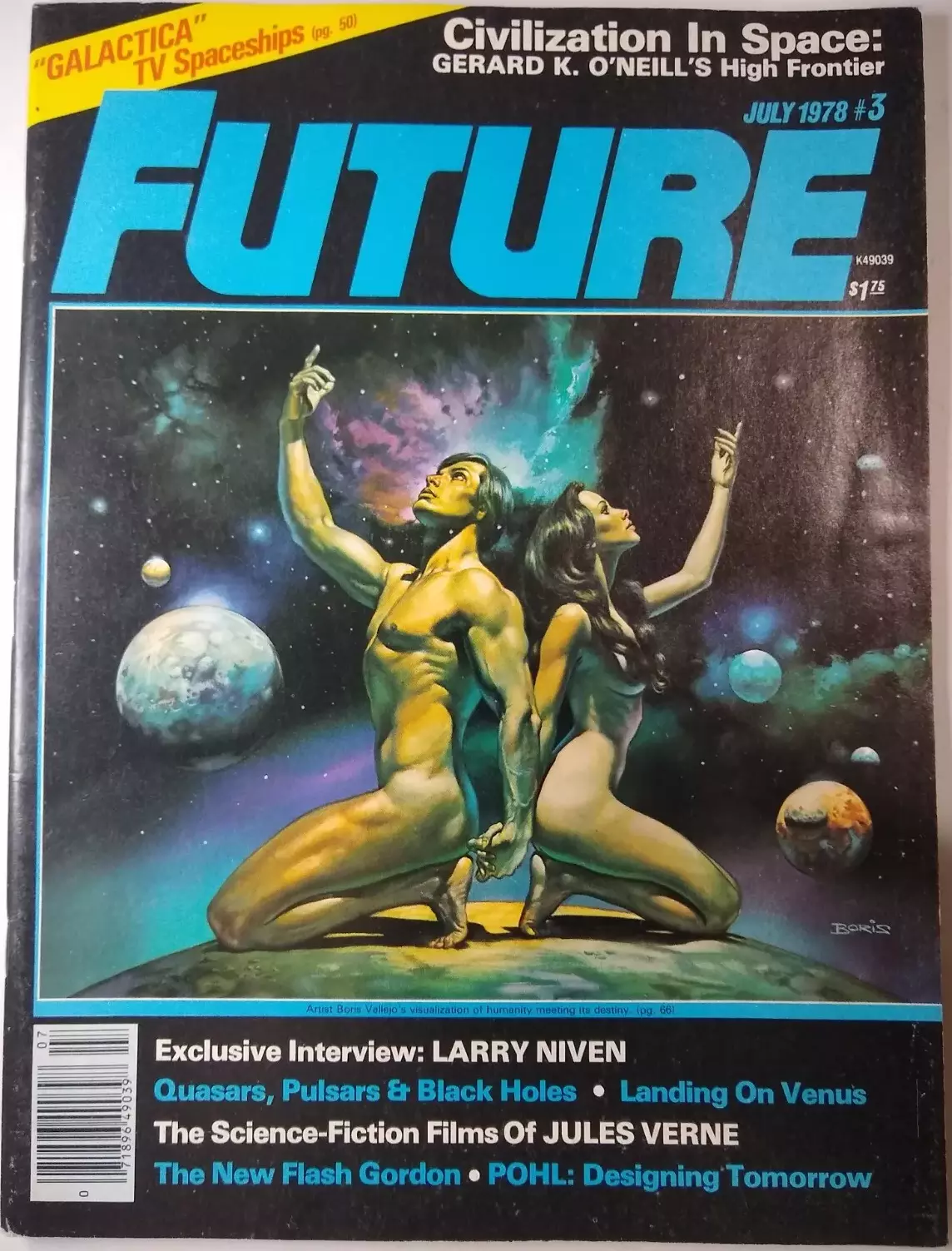
La Toy Fair de 1978 fue el gran debut de Star Wars en el mundo del coleccionismo, y la siguiente imagen es la única prueba visual conocida de aquel showroom. Lo curioso es que, a diferencia del resto de la galería, esta foto no proviene de los archivos de Kenner, sino de una revista desaparecida llamada Future (número #3, publicado en 1978). Esta fotografía funciona como una ventana a los primeros días del fenómeno Star Wars en la Toy Fair. ¡Así comenzaba la era dorada del coleccionismo galáctico!
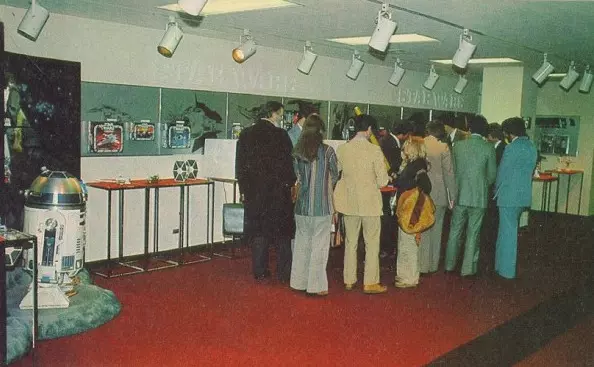
Aunque la multitud de compradores oculta parte de las mesas de exhibición, aún podemos hacernos una buena idea de cómo estaba organizado el showroom. A la izquierda, aunque difícil de distinguir en la imagen, se encontraba el primer Action Display Stand con sus 12 figuras originales en blister. Más al fondo, hacia la derecha, se exhibían las figuras de Luke y Leia en formato 12″, aunque lamentablemente no es posible apreciarlas en detalle.
En la pared trasera, se pueden ver algunos de los grandes vehículos y sets de juego de la época:
Como detalle curioso, en el centro de la imagen, una mujer rubia sostiene uno de los icónicos sables de luz inflables de la época. Y, hacia la izquierda, una sorpresa: ¡un R2-D2 a tamaño real! Probablemente fue prestado por Lucasfilm para darle un toque extra de autenticidad al stand de Kenner.
1979: La Expansión del Universo Kenner en la Toy Fair
Si 1978 marcó el debut de Star Wars en la Toy Fair, 1979 fue el año en que Kenner subió la apuesta. Con un catálogo cada vez más robusto y la fiebre galáctica en pleno auge, la compañía no escatimó esfuerzos en presentar sus productos de manera impactante. Desde el primer diorama de Toy Fair hasta la legendaria promoción de Boba Fett con cohete lanzable, este año dejó huella en la historia del coleccionismo.
El Primer Diorama de Star Wars en la Toy Fair
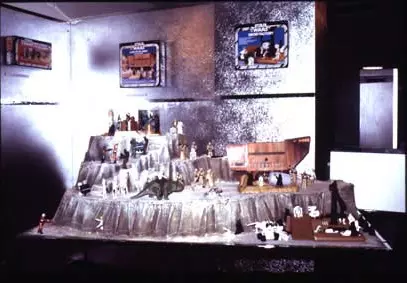
En 1978 Kenner no usó dioramas en su exhibición, pero para 1979 cambiaron las reglas del juego. Aquí nació el primer diorama de la saga en una Toy Fair, con una especie de montaña que servía de escenario para algunas de las primeras grandes piezas de la línea, como:
En la pared sobre el diorama se podían ver las cajas de varios de estos juguetes, dejando claro que Kenner estaba construyendo un universo en miniatura.
La Estrategia de Kenner en las Tiendas
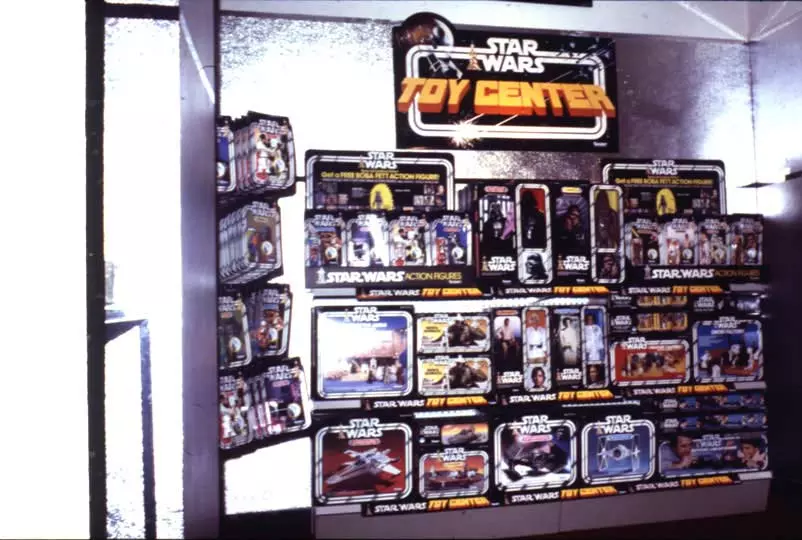
Para los minoristas, la presentación en tienda es clave. Un buen despliegue de productos puede marcar la diferencia entre el éxito y el olvido. Kenner lo sabía, y en 1979 presentó una estrategia de exhibición con:
- Estanterías organizadas con los productos más populares
- Letreros promocionales en puntos de compra
- Contenedores con figuras en cartón 20-back
Arriba de todo, en la pared, destacaba el enorme cartel de Toy Center, coronando la exhibición con un diseño llamativo que atrapaba a cualquier fan de Star Wars al instante.
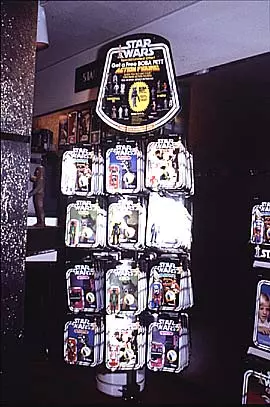
Una de las piezas más raras de la historia del coleccionismo Kenner se mostró en la Toy Fair de 1979. Kenner ofrecía a los minoristas un estante con alambres donde se podía ordenar una selección de figuras. Lo que realmente hace especial esta exhibición es el cartel que la acompañaba: El famoso “Get a Free Boba Fett” hanger. Este cartel promocionaba la icónica oferta de Boba Fett por correo, convirtiéndolo en uno de los displays más difíciles de encontrar hoy en día. En el estante, todas las figuras en blister 20-back incluían la codiciada oferta de Boba Fett.
La Leyenda del Carded Rocket-Firing Boba Fett
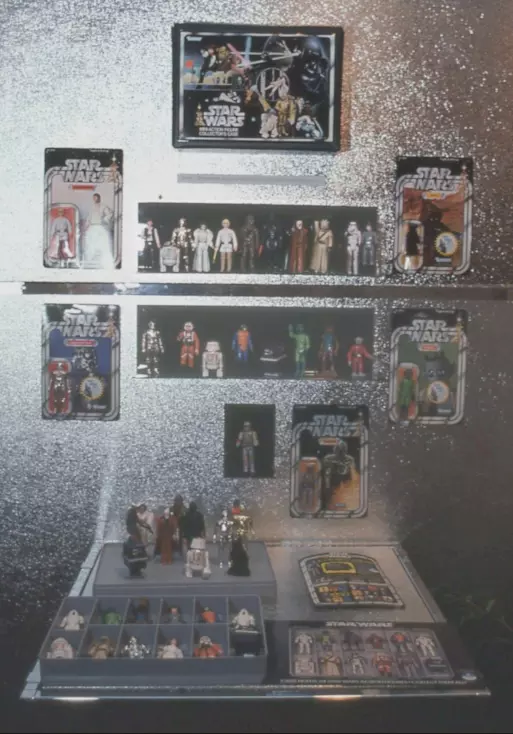
Si hay una imagen de la Toy Fair de 1979 que brilla con luz propia, es el display de figuras que incluía una selección de los nuevos lanzamientos de Kenner, pero lo realmente especial era la presentación de Boba Fett.
Abajo en el centro se aprecia un Rocket-Firing Boba Fett suelto, el que probablemente iba a ser usado para mostrar su mecanismo de disparo a los compradores. Justo a su derecha, un blister prototipo de Boba Fett en cartón 21-back con un diseño inicial de la explosión en el cartón y un J-Slot Rocket Fett sellado en su burbuja. Sin duda, este Rocket-Firing Boba Fett ya había sido cancelado dado el cartón 20 back que se aprecia dado vuelta en que aparece tapada la figura disparando y en su lugar hay una calcomanía con su descripción. Junto al gran Boba Fett, se aprecian todas las 20 primeras figuras de la colección junto con el case de almacenamiento de Star Wars.
Las nuevas Estrellas del Showroom de 1979
Death Star Playset – Una pieza esencial en cualquier exhibición de Kenner.
Sandcrawler y R2-D2 a control remoto – Productos de alto precio en la línea de Star Wars, acompañados por una pantalla de video mostrando comerciales de TV.
Imperial Troop Transporter – Un vehículo exclusivo de Kenner, no basado en la película, pero que se convirtió en un favorito de los fans.
Bop Bags de Star Wars – Incluyendo el clásico Chewbacca Bop Bag, un juguete que permitió a los niños “entrenar” como verdaderos Jedi golpeando al Wookiee (pobre Chewie).
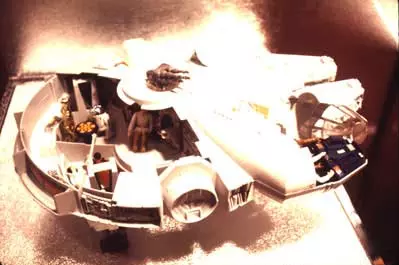
Millennium Falcon – Abierta para mostrar su interior, dejando claro que era la nave insignia de la línea.
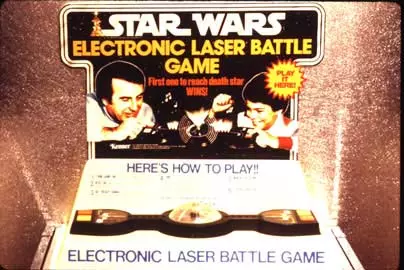
Electronic Laser Battle Game – Una de las piezas más raras de Kenner, junto con su super-exclusivo display de tienda.
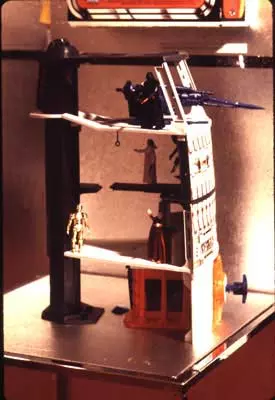
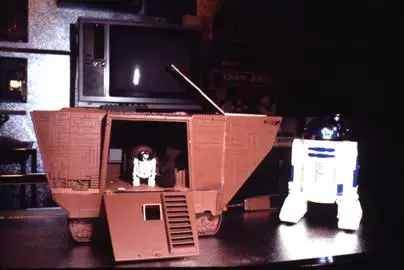
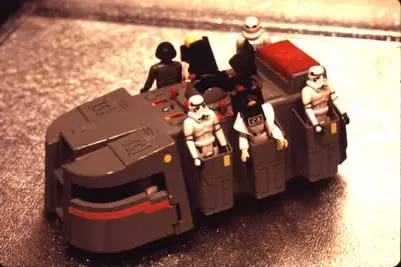
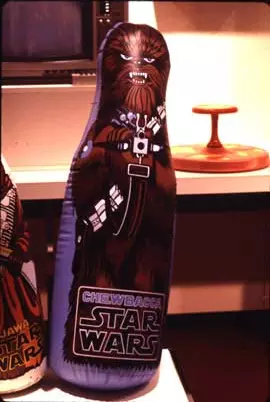
1979 marcó un antes y un después en la forma en que Kenner presentaba Star Wars. Con dioramas detallados, estrategias de retail bien planificadas y el auge de la fiebre por Boba Fett, esta Toy Fair consolidó a Kenner como el líder absoluto del mercado de figuras de acción.
Para los coleccionistas, estos momentos son historia pura. Cada una de estas imágenes no sólo nos transporta al pasado, sino que nos ayuda a comprender cómo se forjó la mitología de Star Wars en el mundo del juguete. ¡Un verdadero viaje en el tiempo para cualquier fan!
1980: El Año del Imperio y la Consagración de Kenner en la Toy Fair
Si había alguna duda de que Star Wars había pasado de ser una película de éxito a un fenómeno cultural de larga duración, la Toy Fair de 1980 se encargó de despejarla. Con la inminente llegada de The Empire Strikes Back, Kenner aprovechó la feria para lanzar su nueva línea de juguetes y consolidarse como la referencia absoluta en figuras de acción.
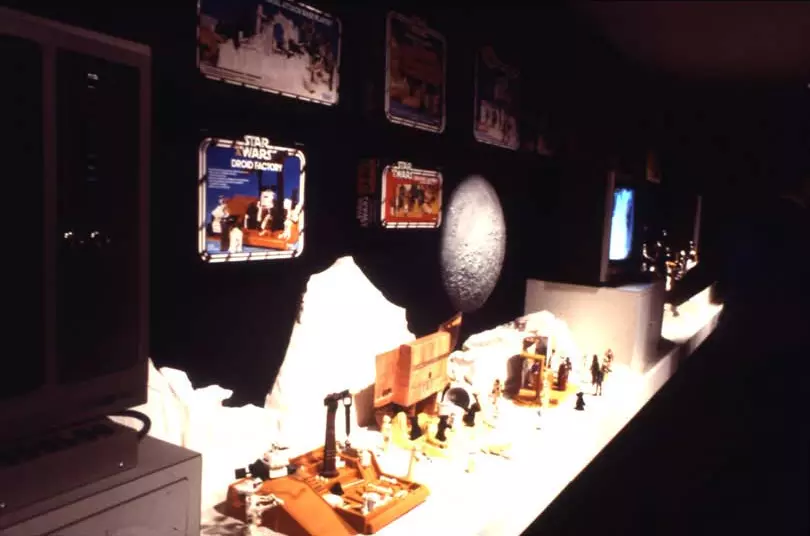
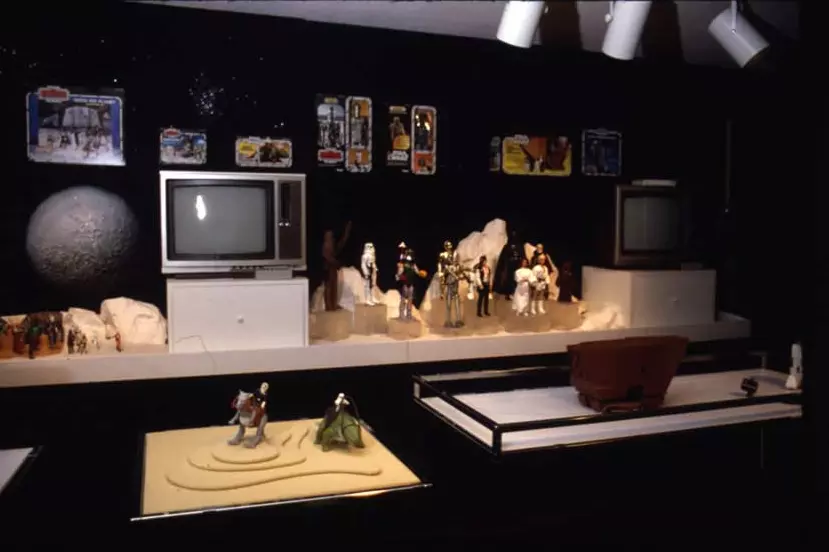
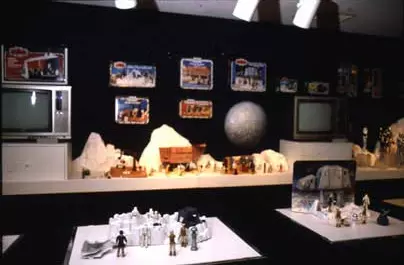
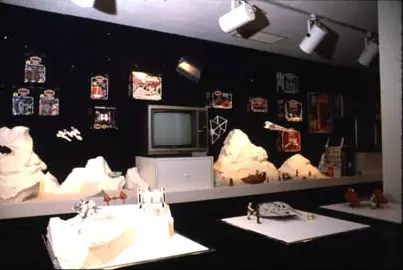
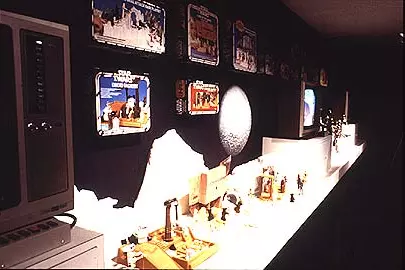
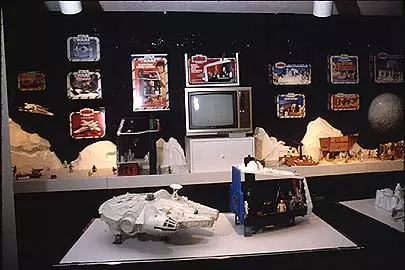
A diferencia de años anteriores, el showroom de Kenner en 1980 era más grande, más llamativo y mucho más elaborado. Con una pared completamente decorada con estrellas, planetas y formaciones rocosas que parecían sacadas del espacio, el evento sirvió como el gran lanzamiento de El Imperio Contraataca en el mundo del juguete.
El Gran Muro de Kenner
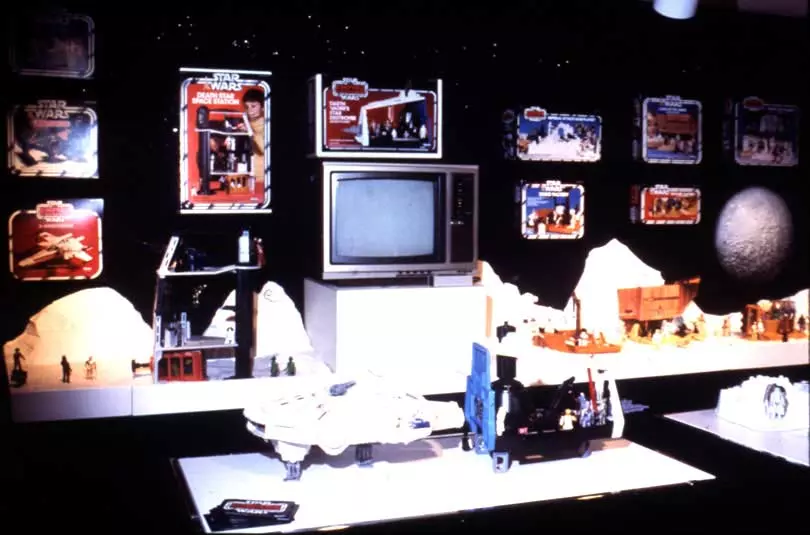
Con un despliegue épico, toda una pared estaba dedicada a exhibir las novedades de 1980, combinando juguetes de Star Wars y Empire Strikes Back. Dado que era un año de transición, algunos productos aún tenían el empaque clásico de Star Wars, mientras que otros ya lucían la nueva identidad de ESB. Mientras el TIE Fighter aún venía en su caja original de Star Wars, el X-Wing ya tenía su versión con el nuevo empaque de Empire Strikes Back.
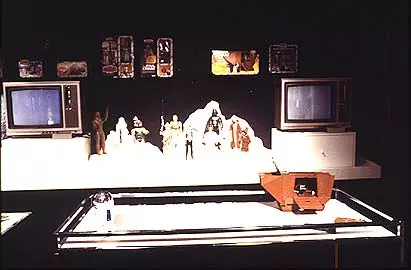
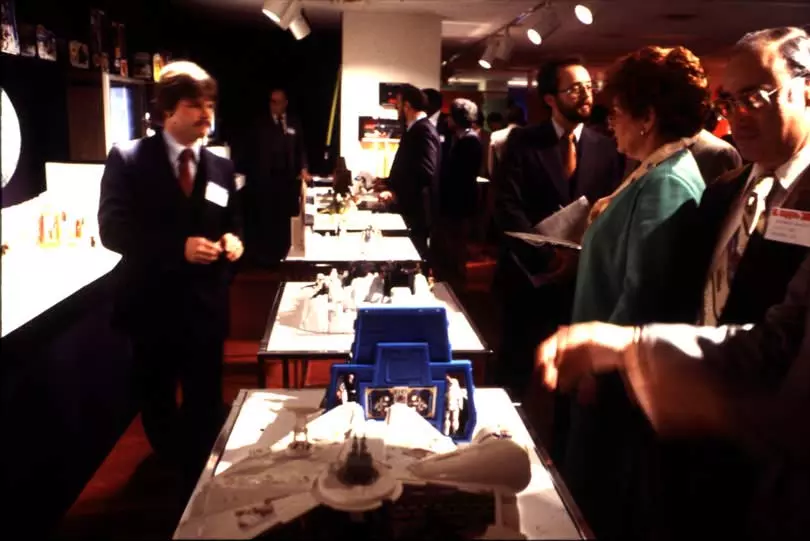
Toy Fair 1980 se llevó a cabo cuatro meses antes del estreno de la película, por lo que muchos compradores vieron por primera vez escenarios como Hoth o la cámara de meditación de Darth Vader a través de los nuevos juguetes de Kenner. En el centro del showroom, varias mesas exhibían productos como el Star Destroyer de Darth Vader. Vendedores de Kenner se situaban detrás de estas mesas para demostrar las características de los juguetes en acción y repartir catálogos de ESB a los compradores interesados. En la pared del fondo, un televisor proyectaba anuncios comerciales, asegurando que nadie saliera sin haber sentido la fiebre de Star Wars.
La Montaña de Hoth y el Diorama de Figuras
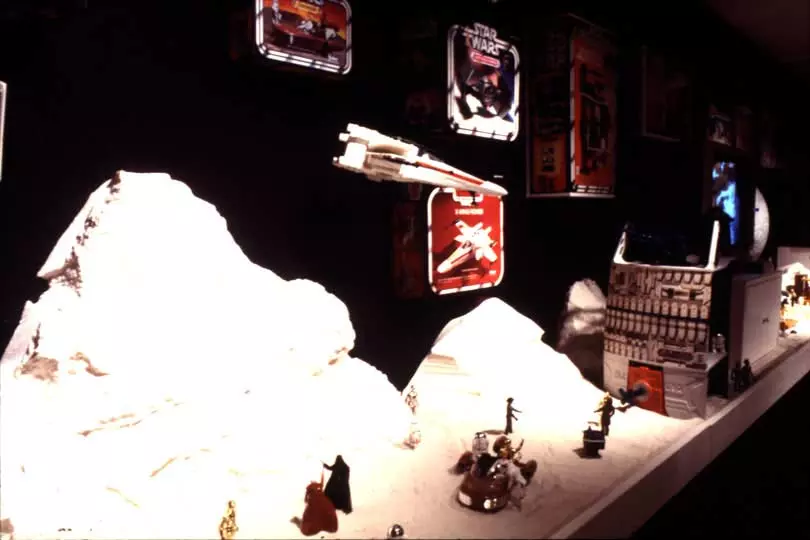
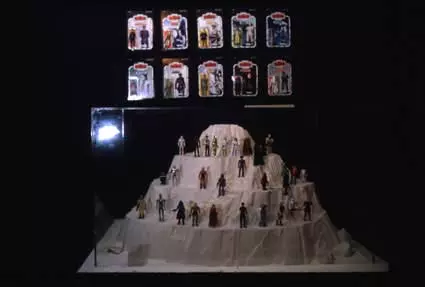
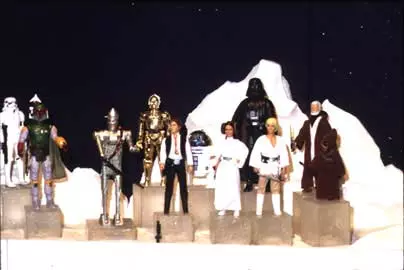
Uno de los elementos más llamativos del showroom fue el diorama de figuras de acción, que marcó el debut de las primeras 10 figuras de la línea ESB que se sumaban a las anteriores totalizando 31 figuras. Estos juguetes estaban cuidadosamente organizadas en una montaña nevada, simulando los paisajes helados de Hoth. Encima de ellas, en la pared, se podían ver las versiones en blister con el diseño 31-back de Empire Strikes Back. Este diorama no sólo ayudó a promocionar los nuevos personajes de ESB, sino que también fijó un estándar para las futuras exhibiciones de Kenner, donde la ambientación jugaría un papel clave para atraer a compradores.
El Darth Vader Carrying Case y la Promoción del “Figura Secreta”
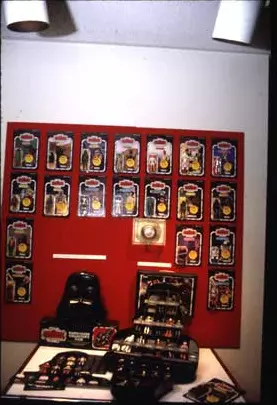
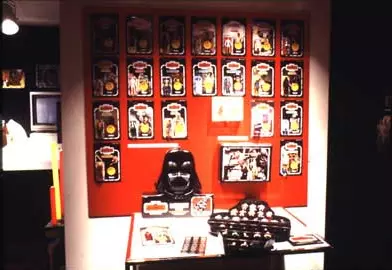
Entre los elementos más destacados de la exhibición estaba el Darth Vader Carrying Case, una maleta en forma del casco de Vader diseñada para guardar figuras de acción. Todos los blisters de la línea llevaban la leyenda “Secret Action Figure Offer”, una estrategia de marketing que mantenía a los compradores intrigados. ¿Quién era la figura secreta? Nada menos que Bossk, el reptiliano cazarrecompensas que más tarde sería revelado como la exclusiva figura por correo del año.
Los Juguetes que Brillaron en el Showroom de 1980
Las figuras de 12” – Exhibidas contra la pared, con IG-88 como el último lanzamiento de la línea.
Sandcrawler y R2-D2 a Control Remoto – Mostrados en una mesa con bordes de seguridad para evitar accidentes.
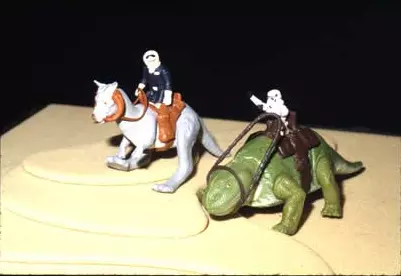
Tauntaun y Dewback – Expuestos sobre una plataforma arenosa para simular un entorno natural.
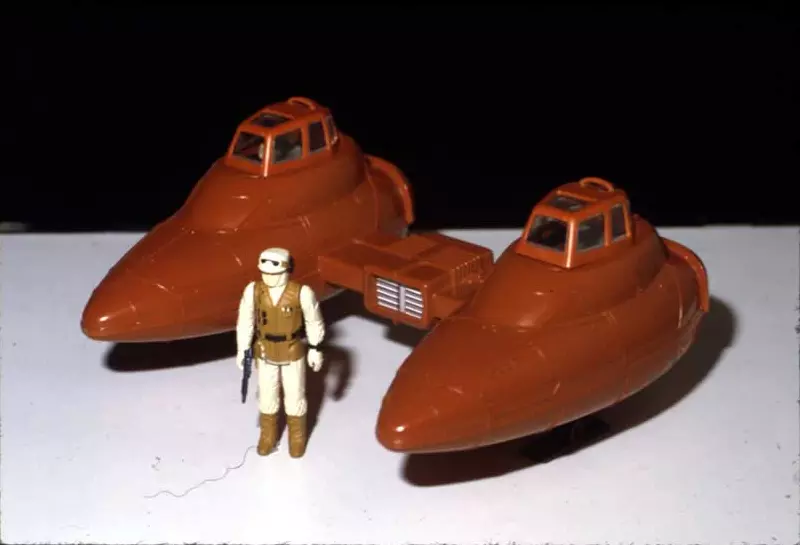
Twin Pod Cloud Car – Uno de los nuevos lanzamientos de 1980, acompañado de la figura del Hoth Rebel Soldier.
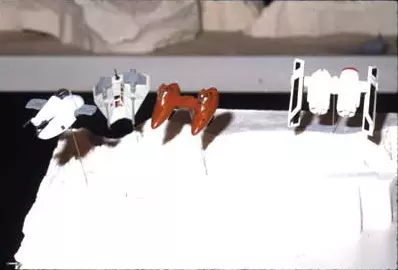
ESB Die-Cast Vehicles – Entre ellos, el legendario TIE Bomber, suspendido con alfileres para simular que flotaba en el aire.
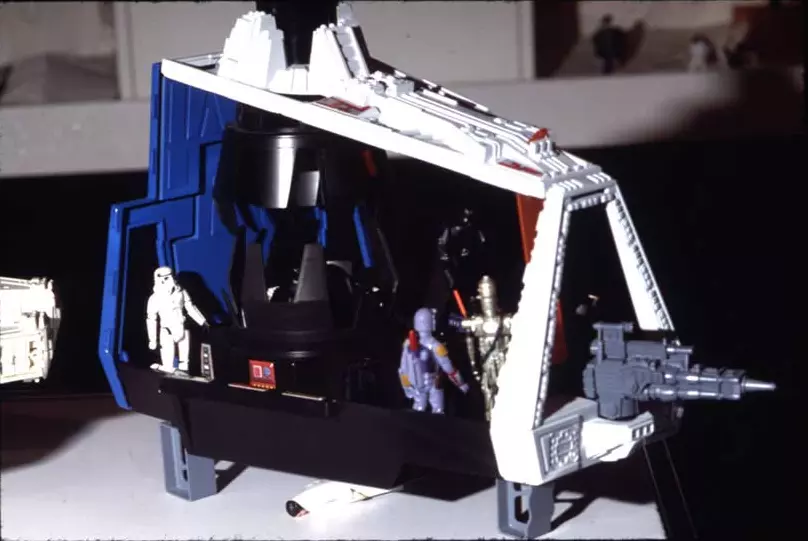
Darth Vader’s Star Destroyer – Uno de los productos estrella de la feria, que incluía la icónica cámara de meditación de Vader.
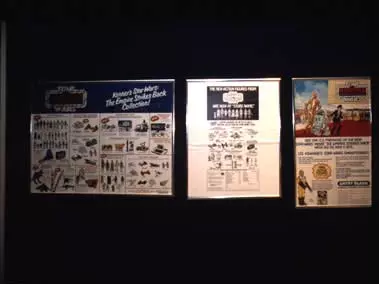
Publicidad y Anuncios – Kenner mostró materiales promocionales, incluyendo impresos con Bossk como la figura de la promoción por correo y adelantos de anuncios de televisión.
La Batalla de los Vendedores: Convenciendo a los Compradores
Las Toy Fair no eran sólo vitrinas de juguetes, sino batallas comerciales entre representantes de ventas y compradores mayoristas.
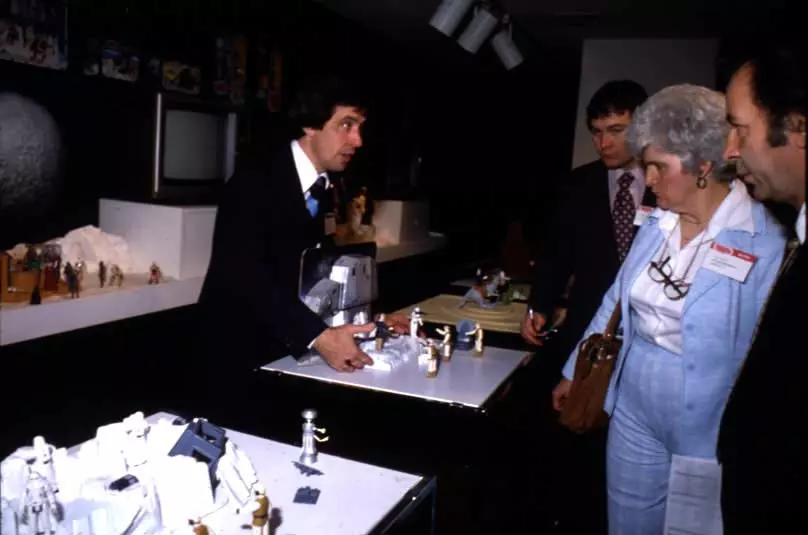
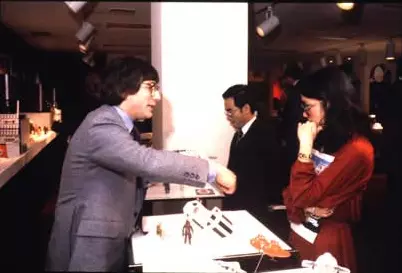
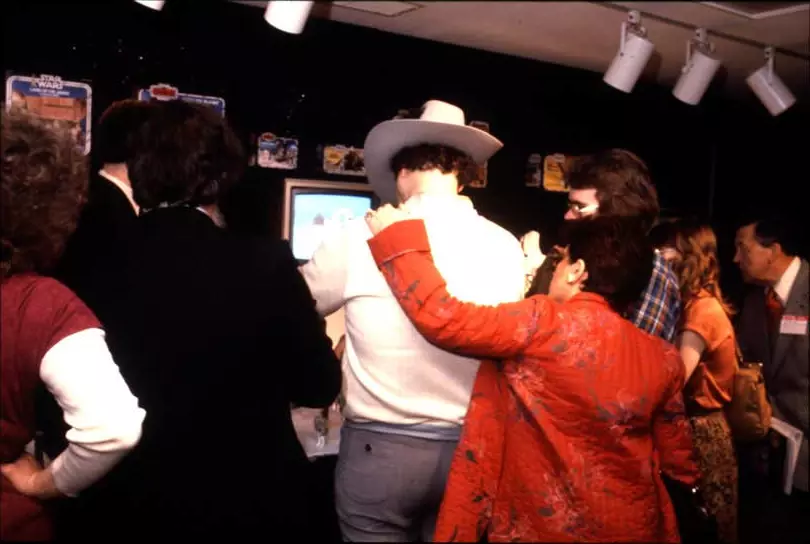
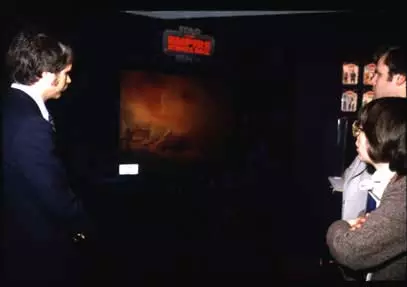
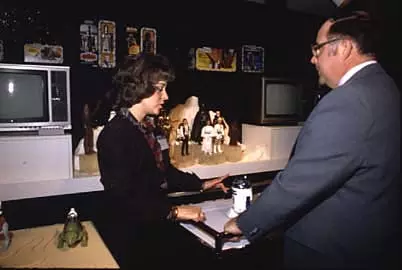
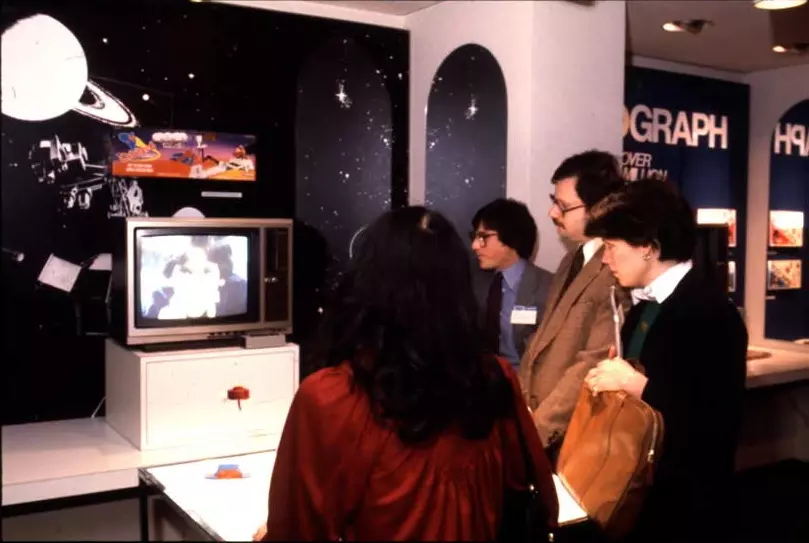
Los vendedores de Kenner se esforzaban en explicar cada característica de los juguetes, a veces frente a compradores escépticos. Una imagen curiosa muestra a un representante de ventas tratando de convencer a una mujer sobre los vehículos die-cast, quien parece no estar muy impresionada. Es posible apreciar también a una multitud de compradores rodeando la exhibición de Star Wars, posiblemente probando alguna de las figuras o vehículos. En el showroom, Kenner proyectaba comerciales de sus productos en un televisor (en la fotografía se aprecia el Orbiter 6 Shuttle Command), el concepto de usar publicidad audiovisual en la Toy Fair se convirtió en una estrategia clave para vender líneas de juguetes.
La Toy Fair de 1980 no sólo fue la plataforma de lanzamiento de Empire Strikes Back, sino la consolidación de Star Wars como una línea de juguetes permanente. Con un showroom espectacular, dioramas bien pensados y una estrategia de marketing que mantenía a los fans en vilo, Kenner no sólo vendió juguetes, sino que reforzó la mitología de la saga a través del coleccionismo. Para los coleccionistas de hoy, cada una de estas imágenes es un testimonio del momento exacto en que Star Wars dejó de ser solo una película y se convirtió en un legado.
The toy business, as we know it today, is a relatively modern phenomenon. When the first New York Toy Fair was held in 1903, the event was far from the massive spectacle it has become. Some of the big hits of that 1903 season were, surprisingly, colored pencils… now in color! Binney & Smith introduced their first pack of 8 Crayola crayons, while Lionel trains brought the excitement of railroads into the toy world, miniaturizing the country’s main mode of transportation. Over the years, the rise of the automobile was also reflected in toys that captured children’s imaginations. Classics like Erector Sets, Tinkertoys, and Lincoln Logs made their debut in those early years and, surprisingly, are still manufactured today.
As the Toy Fair grew, so did the industry. In 1919, A.C. Gilbert, one of the founders of the Toy Association, proudly declared: “The word ‘toys’ no longer means ‘made in Germany’”. It was a sign that American toys were establishing themselves as a powerhouse in the market. By 1939, the fair was attracting 1,700 buyers, and for the first time, European merchants traveled to New York to discover the latest innovations. In those years, toys became more than a business: they became a cultural phenomenon. In 1930, one of the first studies on the impact of play on child development was published, reaffirming its importance in education and everyday life.
The influence of the fair continued to grow, and over time, the industry found a permanent home in The Toy Center, located at Fifth Avenue and 23rd Street. This building, once a luxurious hotel, transformed into a toy epicenter, housing exclusively showrooms. By 1981, more than 600 companies operated from there, and it remained the main venue of the fair until the year 2000, when it moved to the Javits Center on New York’s West Side.
Between the 1960s and 1990s, the Toy Fair became an event of national and international relevance. Reporters from around the world attended to learn about the latest releases, enjoy exclusive parties, and immerse themselves in a spectacle that not only served to sell but celebrated the entire industry. In those years, the fair not only brought together manufacturers and distributors but also offered a window into the future. International attendees had the privilege of seeing in advance what would arrive in their markets the following year.
For those of us who love Star Wars toys, attending a Toy Fair would have been the epicenter where everything began. Every February, New York became the stage where major brands showcased their bets for the year. There, retailers from around the world closed deals, placed orders, and ultimately decided which figures and vehicles would fill the shelves of our favorite stores.
Although the rise of e‑commerce and giants like Wal‑Mart and Toys ‘R’ Us has reduced the event’s prominence, in its golden age the Toy Fair was the starting point for every new action figure line. And it was precisely there where Kenner shined brightest.
What is reviewed in these articles is a true treasure for any Star Wars collector. These are some of the only existing images of Kenner’s showrooms at the Toy Fairs of the late 1970s and early 1980s, with photographs belonging to the collections of Todd Chamberlain, Chris Georgoulias, Ron Salvatore, John Kellerman, Gus López, and Will Grief, all from Gus López’s great site, The Star Wars Collectors Archive.
More Than a Showroom: A Kenner Work of Art
Kenner didn’t settle for displaying its figures on simple shelves. Not at all. The company designed elaborate dioramas and exhibits to ensure each toy was presented with the impact it deserved. These photos allow us to see those setups in detail, many of which have ended up in the hands of collectors over the years.
We all fondly remember seeing Star Wars figures in store windows when we were kids, but did you ever wonder how they got there? How did Kenner convince retailers to bet on certain products?
Which figures had the most prominence each year at the Toy Fair?
Thanks to these articles, we can answer some of those questions. Observing the evolution of the exhibits from 1978 to 1984 is like watching Kenner grow alongside the franchise. Each year, the presentations became more impressive, reflecting the overwhelming success of Star Wars and cementing Kenner as the undisputed king of action figures.
So, fellow collector, get ready for a journey through time to the halls of the Toy Fair where Kenner showed us, year after year, why its toys became living history in the world of collecting. Enjoy the gallery, and may the Force accompany you in your search for legendary pieces!
1978: The First Star Wars Showroom at the Toy Fair
The 1978 Toy Fair was the grand debut of Star Wars in the collecting world, and the following image is the only known visual proof of that showroom. Curiously, unlike the rest of the gallery, this photo does not come from Kenner’s archives, but from a now‑defunct magazine called Future (issue #3, published in 1978). This photograph serves as a window into the early days of the Star Wars phenomenon at the Toy Fair. This is how the golden age of galactic collecting began!
Although the crowd of buyers hides part of the display tables, we can still get a good idea of how the showroom was organized. On the left, although difficult to distinguish in the image, was the first Action Display Stand with its 12 original figures on card. Further back, toward the right, the 12″ Luke and Leia figures were displayed, although unfortunately they cannot be seen in detail.
On the back wall, several of the major vehicles and playsets of the era can be seen:
As a fun detail, in the center of the image, a blonde woman is holding one of the iconic inflatable lightsabers of the era. And, toward the left, a surprise: a life‑size R2‑D2! It was likely loaned by Lucasfilm to give Kenner’s booth an extra touch of authenticity.
1979: The Expansion of the Kenner Universe at the Toy Fair
If 1978 marked the debut of Star Wars at the Toy Fair, 1979 was the year Kenner raised the stakes. With an increasingly robust catalog and galactic fever at its peak, the company spared no effort in presenting its products in an impactful way. From the first Toy Fair diorama to the legendary rocket‑firing Boba Fett promotion, this year left a mark on collecting history.
The First Star Wars Diorama at the Toy Fair
In 1978 Kenner did not use dioramas in its display, but by 1979 they changed the rules of the game. This was the birth of the first Star Wars diorama at a Toy Fair, featuring a sort of mountain that served as a stage for some of the early major pieces of the line, such as:
On the wall above the diorama, the boxes of several of these toys could be seen, making it clear that Kenner was building a miniature universe.
Kenner’s Strategy in Stores
For retailers, in‑store presentation is key. A strong product display can make the difference between success and being forgotten. Kenner knew this, and in 1979 it introduced a display strategy featuring:
- Shelves organized with the most popular products
- Promotional signage at points of purchase
- Bins with 20‑back carded figures
Above everything, on the wall, stood the enormous Toy Center sign, crowning the display with a striking design that instantly grabbed the attention of any Star Wars fan.
One of the rarest pieces in the history of Kenner collecting was shown at the 1979 Toy Fair. Kenner offered retailers a wire rack where a selection of figures could be arranged. What truly makes this display special is the sign that accompanied it: the famous “Get a Free Boba Fett” hanger. This sign promoted the iconic mail‑away offer for Boba Fett, making it one of the hardest displays to find today. On the rack, all the 20‑back carded figures included the coveted Boba Fett offer.
The Legend of the Carded Rocket‑Firing Boba Fett
If there is one image from the 1979 Toy Fair that shines above all others, it is the figure display that included a selection of Kenner’s new releases — but the truly special highlight was the presentation of Boba Fett.
At the bottom center, you can see a loose Rocket‑Firing Boba Fett, likely intended to demonstrate its firing mechanism to buyers. Just to its right, there is a prototype blister of Boba Fett on a 21‑back card, featuring an early explosion design on the card and a sealed J‑Slot Rocket Fett inside the bubble. Without a doubt, this Rocket‑Firing Boba Fett had already been cancelled, as shown by the 20‑back card displayed upside down, where the firing figure is covered and replaced with a sticker describing the character.
Next to the large Boba Fett, you can see all 20 first figures of the collection, along with the Star Wars storage case.
The New Stars of the 1979 Showroom
Death Star Playset – Una pieza esencial en cualquier exhibición de Kenner.
Sandcrawler y R2-D2 a control remoto – Productos de alto precio en la línea de Star Wars, acompañados por una pantalla de video mostrando comerciales de TV.
Imperial Troop Transporter – Un vehículo exclusivo de Kenner, no basado en la película, pero que se convirtió en un favorito de los fans.
Bop Bags de Star Wars – Incluyendo el clásico Chewbacca Bop Bag, un juguete que permitió a los niños “entrenar” como verdaderos Jedi golpeando al Wookiee (pobre Chewie).
Millennium Falcon – Abierta para mostrar su interior, dejando claro que era la nave insignia de la línea.
Electronic Laser Battle Game – Una de las piezas más raras de Kenner, junto con su super-exclusivo display de tienda.
Kenner’s Strategy in Stores
1979 marked a turning point in how Kenner presented Star Wars. With detailed dioramas, well‑planned retail strategies, and the rising fever around Boba Fett, this Toy Fair cemented Kenner as the absolute leader of the action‑figure market.
For collectors, these moments are pure history. Each of these images not only transports us to the past but also helps us understand how the mythology of Star Wars was forged in the toy world. A true time‑travel experience for any fan!
1980: The Year of the Empire and Kenner’s Triumph at the Toy Fair
If there was any doubt that Star Wars had evolved from a hit movie into a long‑lasting cultural phenomenon, the 1980 Toy Fair erased it completely. With the imminent arrival of The Empire Strikes Back, Kenner used the fair to launch its new toy line and establish itself as the undisputed reference in action figures.
Unlike previous years, Kenner’s 1980 showroom was larger, more eye‑catching, and far more elaborate. With a wall fully decorated with stars, planets, and rock formations that looked straight out of outer space, the event served as the grand launch of The Empire Strikes Back in the toy world.
The Great Kenner Wall
With an epic setup, an entire wall was dedicated to showcasing the 1980 releases, combining toys from both Star Wars and Empire Strikes Back. Since it was a transition year, some products still had the classic Star Wars packaging, while others already featured the new ESB identity. While the TIE Fighter still came in its original Star Wars box, the X‑Wing already had its version with the new Empire Strikes Back packaging.
The 1980 Toy Fair took place four months before the film’s release, meaning many buyers saw settings like Hoth or Darth Vader’s meditation chamber for the first time through Kenner’s new toys. At the center of the showroom, several tables displayed products such as the Darth Vader’s Star Destroyer. Kenner sales representatives stood behind these tables to demonstrate the toys’ features in action and hand out ESB catalogs to interested buyers.
On the back wall, a television played commercial ads, ensuring that no one left without feeling the full Star Wars excitement.
The Hoth Mountain and the Action Figure Diorama
One of the most striking elements of the showroom was the action‑figure diorama, which marked the debut of the first 10 figures from the ESB line, bringing the total to 31 figures. These toys were carefully arranged on a snow‑covered mountain, recreating the icy landscapes of Hoth. Above them, on the wall, you could see the blister versions featuring the 31‑back Empire Strikes Back design. This diorama not only helped promote the new ESB characters, but also set a standard for future Kenner displays, where immersive environments would play a key role in attracting buyers.
The Darth Vader Carrying Case and the “Secret Figure” Promotion
Among the most notable elements of the display was the Darth Vader Carrying Case, a suitcase shaped like Vader’s helmet designed to store action figures. All blister cards in the line featured the phrase “Secret Action Figure Offer”, a marketing strategy that kept buyers intrigued. Who was the secret figure? None other than Bossk, the reptilian bounty hunter who would later be revealed as the exclusive mail‑away figure of the year.
The Toys That Shined in the 1980 Showroom
Las figuras de 12” – Exhibidas contra la pared, con IG-88 como el último lanzamiento de la línea.
Sandcrawler y R2-D2 a Control Remoto – Mostrados en una mesa con bordes de seguridad para evitar accidentes.
Tauntaun y Dewback – Expuestos sobre una plataforma arenosa para simular un entorno natural.
Twin Pod Cloud Car – Uno de los nuevos lanzamientos de 1980, acompañado de la figura del Hoth Rebel Soldier.
ESB Die-Cast Vehicles – Entre ellos, el legendario TIE Bomber, suspendido con alfileres para simular que flotaba en el aire.
Darth Vader’s Star Destroyer – Uno de los productos estrella de la feria, que incluía la icónica cámara de meditación de Vader.
Publicidad y Anuncios – Kenner mostró materiales promocionales, incluyendo impresos con Bossk como la figura de la promoción por correo y adelantos de anuncios de televisión.
The Battle of the Sales Reps: Convincing the Buyers
The Toy Fairs were not just toy showcases — they were commercial battlegrounds between sales representatives and wholesale buyers.
Kenner’s sales reps worked hard to explain every feature of the toys, sometimes in front of skeptical buyers. One curious image shows a sales representative trying to convince a woman about the die‑cast vehicles, and she doesn’t seem very impressed. You can also see a crowd of buyers surrounding the Star Wars display, possibly testing some of the figures or vehicles.
In the showroom, Kenner projected commercials for its products on a television (the photo shows the Orbiter 6 Shuttle Command). The idea of using audiovisual advertising at the Toy Fair became a key strategy for selling toy lines.
The 1980 Toy Fair was not only the launch platform for Empire Strikes Back, but also the moment when Star Wars became a permanent toy line. With a spectacular showroom, well‑crafted dioramas, and a marketing strategy that kept fans on edge, Kenner didn’t just sell toys — it reinforced the saga’s mythology through collecting. For today’s collectors, each of these images is a testament to the exact moment when Star Wars stopped being just a movie and became a legacy.