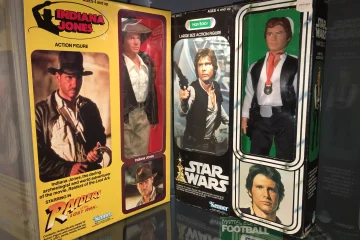
Atari, videojuegos de otra Galaxia
Atari fue una de las compañías más influyentes en la historia temprana de los videojuegos, y su auge durante los años 70 y 80 la posicionó como una de las marcas clave en la expansión de la cultura pop digital. Fundada en 1972 por Nolan Bushnell y Ted Dabney, Atari revolucionó el entretenimiento electrónico con juegos como Pong (1972), considerado el primer gran éxito comercial de los videojuegos. Con el tiempo, su influencia creció exponencialmente, convirtiéndose en sinónimo de videojuegos en los hogares gracias a consolas como la Atari 2600 (lanzada en 1977) y sus icónicas recreativas de arcade.
Atari y el Imperio de los Videojuegos
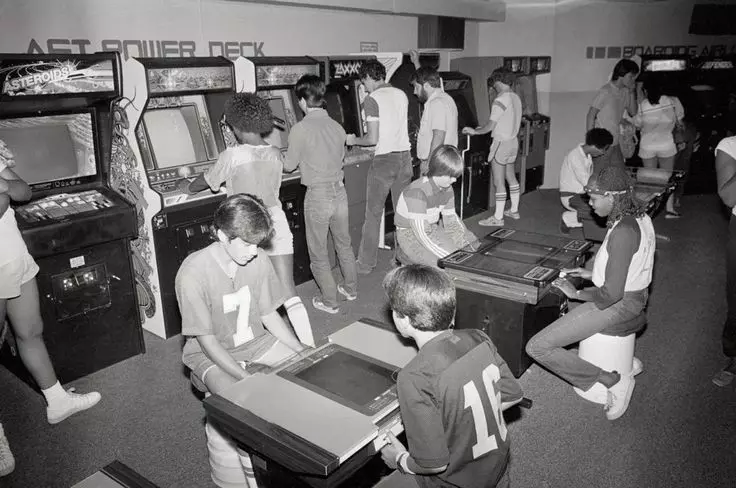
Durante los 70s, Atari estableció el modelo de negocio del arcade moderno y luego conquistó el mercado doméstico con su consola Atari 2600, que permitía a los usuarios jugar videojuegos intercambiables en cartuchos. El éxito de títulos como Space Invaders, Asteroids o Pac-Man consolidó su dominio en la industria.
Este poderío hizo que Atari, ya adquirida por Warner Communications en 1976, se transformara en la cara visible de una industria en pleno crecimiento, marcando el inicio de lo que se conocería como la primera “edad dorada de los videojuegos”. A principios de los 80, Atari era un coloso que generaba cientos de millones de dólares al año.
La era de los Arcade
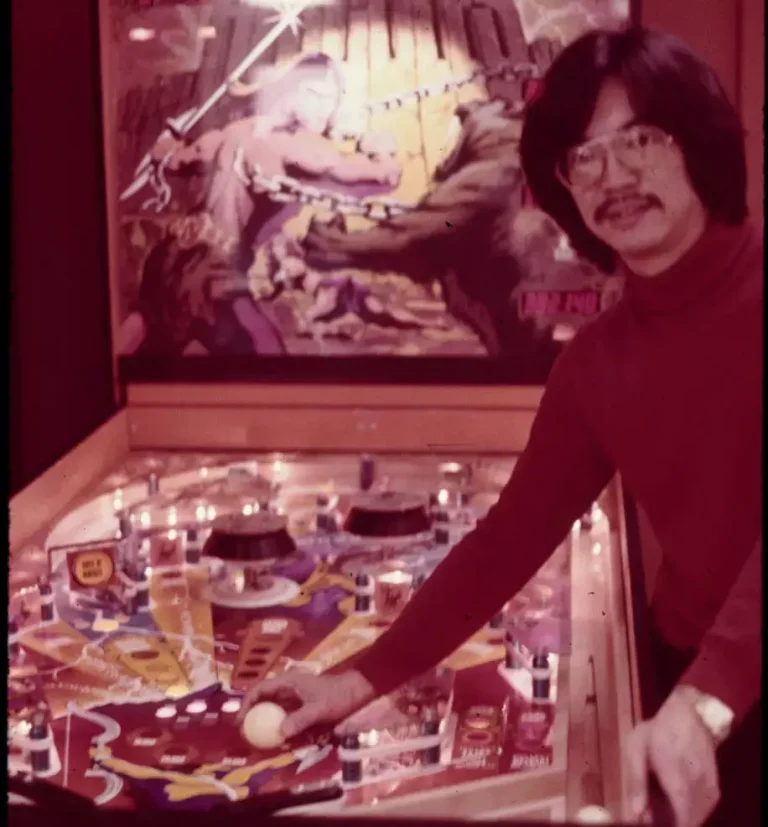
Formado en la Universidad Estatal de San José, Mike Jang se unió al equipo de Diseño Industrial de Atari a mediados de los años 70 y permaneció allí durante toda la década de los 80. Esto le permitió tener la fortuna de presenciar de primera mano el auge de Atari durante la Edad de Oro de los videojuegos arcade. Estuvo justo en el corazón de la compañía, contribuyendo activamente a la producción de juegos de la división de máquinas recreativas (coin-op).
Como diseñador industrial, su principal función era perfeccionar la ergonomía de los gabinetes arcade. Era un ferviente defensor de asegurarse de que la interfaz física que los jugadores utilizaban para interactuar con los gabinetes de Atari fuera la adecuada. Y si eso implicaba la necesidad de controles personalizados, piezas específicas o moldes únicos, él presionaba a la empresa para hacerlo realidad. Aportó su toque artístico a cada diseño, creando algunos de los gabinetes más icónicos de la época.
Es muy fácil dar por sentadas algunas de las decisiones de diseño de los gabinetes de Atari, pero todas fueron cuidadosamente pensadas por Mike y su equipo, probadas exhaustivamente y producidas –en su mayoría internamente–, lo que dio lugar al portafolio más variado de gabinetes arcade jamás producido por un solo fabricante. En este aspecto, Atari lideraba la industria con amplia ventaja. El trabajo de Mike fue extenso, y fue responsable de muchas de las patentes de Atari registradas a su nombre.
La conexión con Star Wars
La popularidad explosiva de Star Wars desde su estreno en 1977 no pasó desapercibida para Atari ni para los estudios que buscaban expandir la franquicia más allá del cine. En un contexto donde los videojuegos y la ciencia ficción estaban convergiendo como fenómenos culturales, Atari obtuvo los derechos para desarrollar algunos de los videojuegos oficiales de la saga. Esto no sólo fue estratégico, sino simbólico: dos imperios del entretenimiento se unían.
Star Wars: The Arcade Game
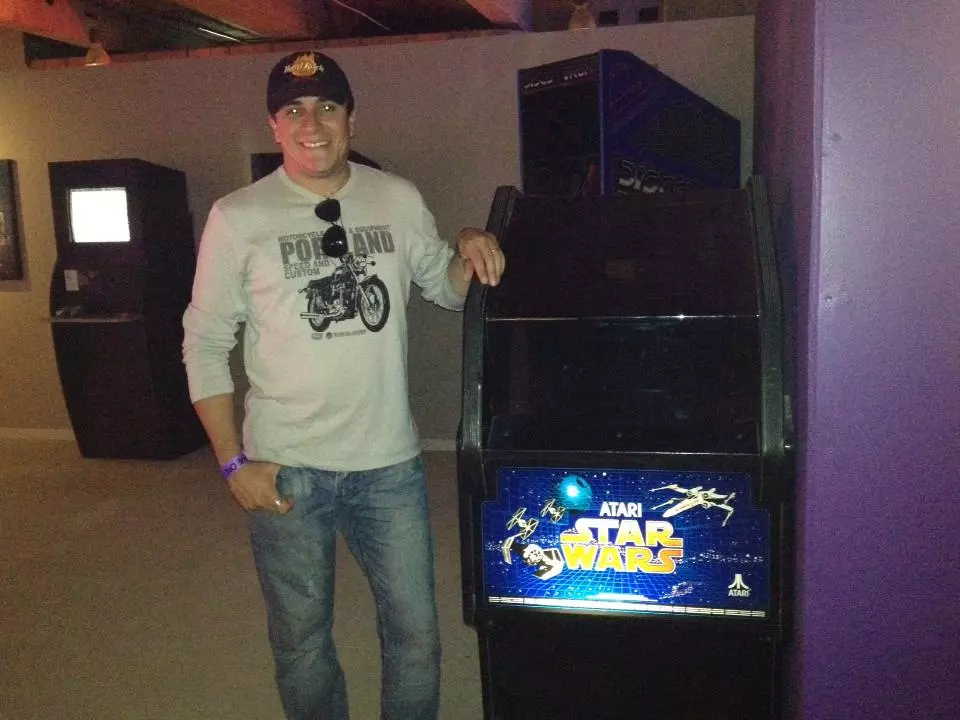
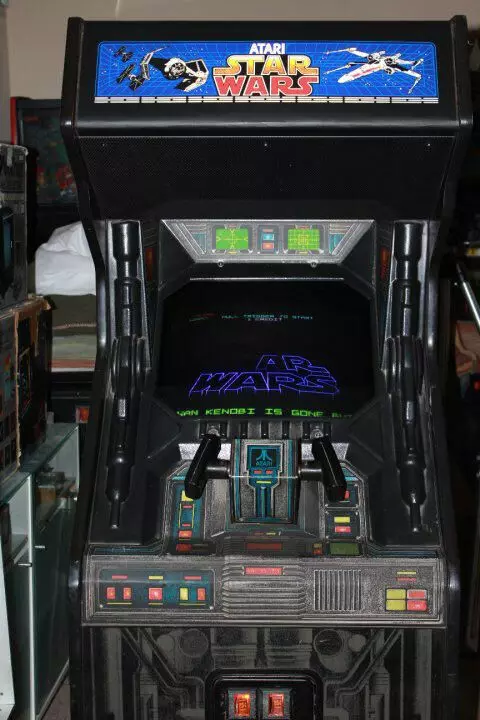
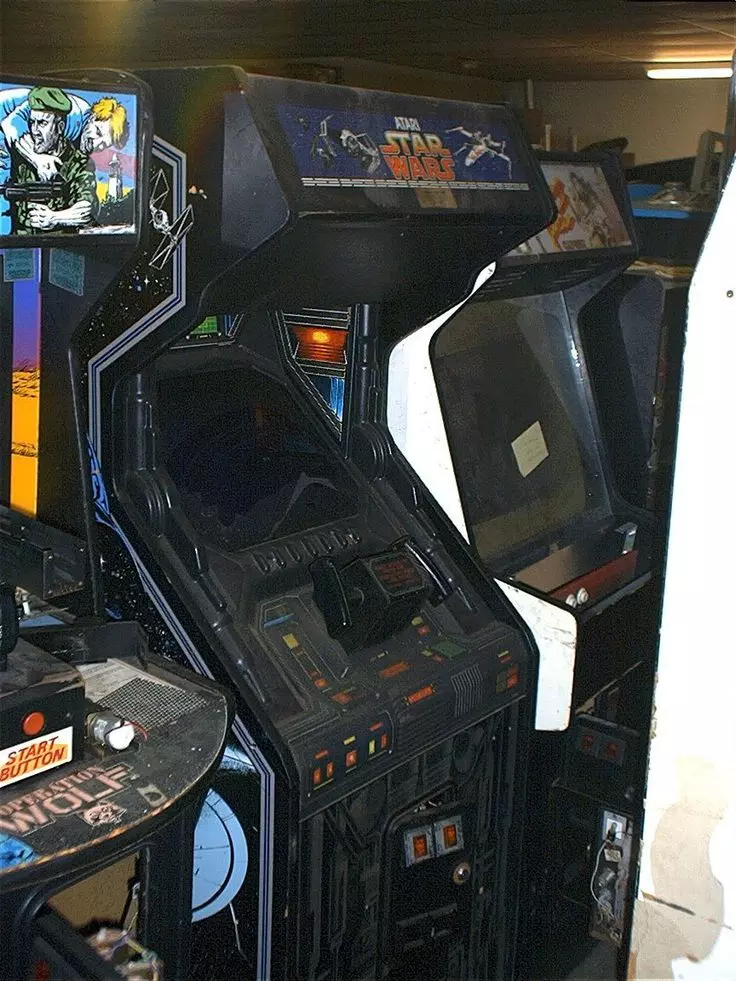
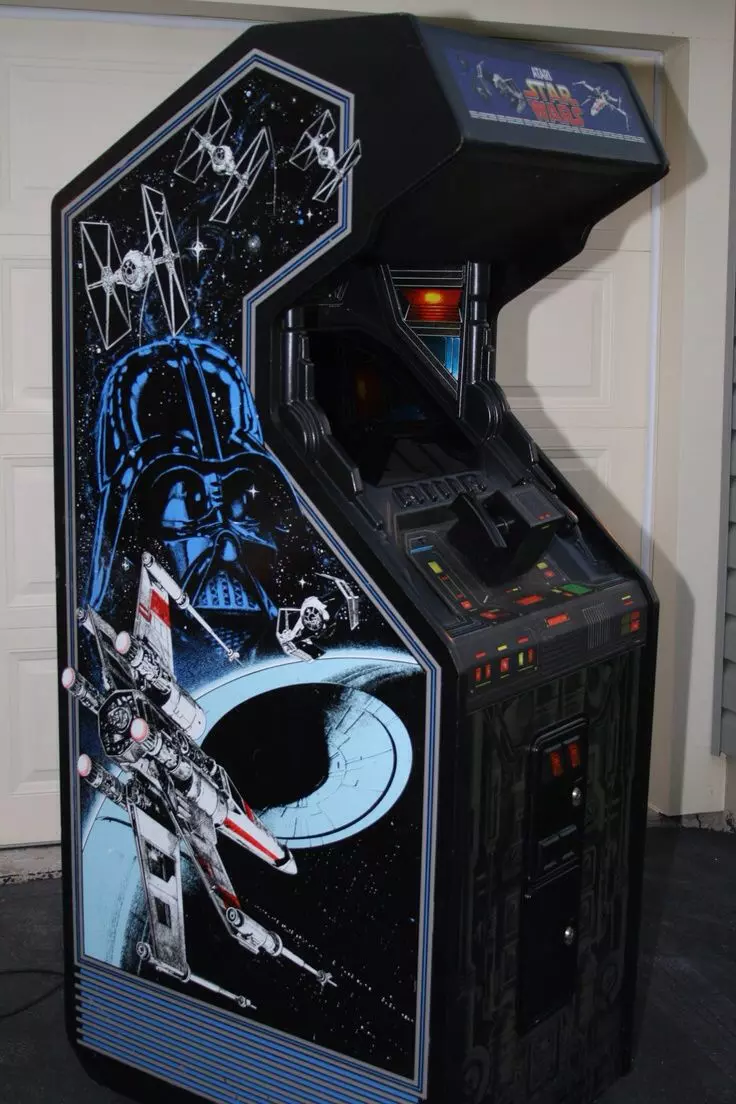
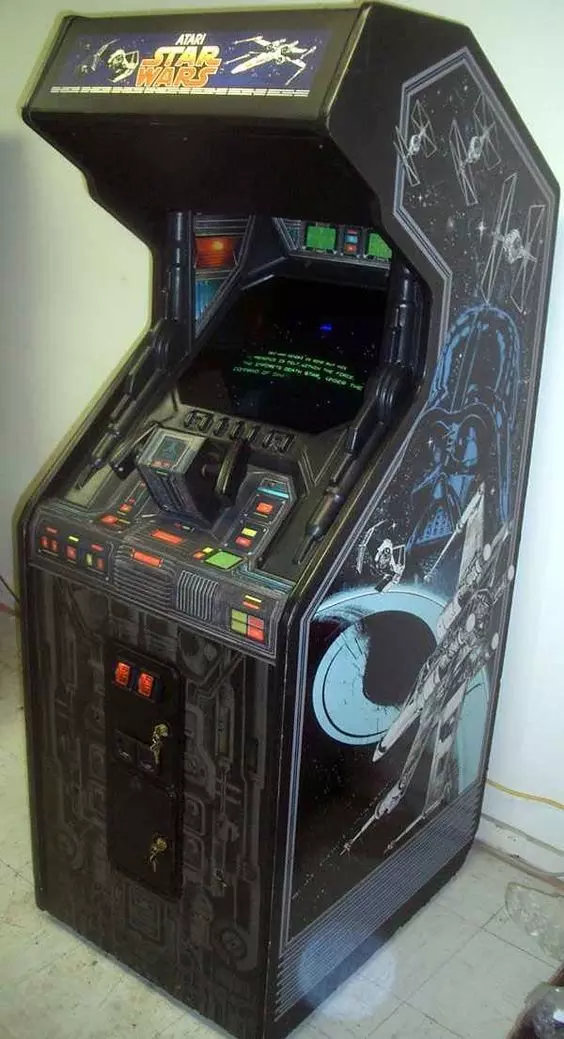
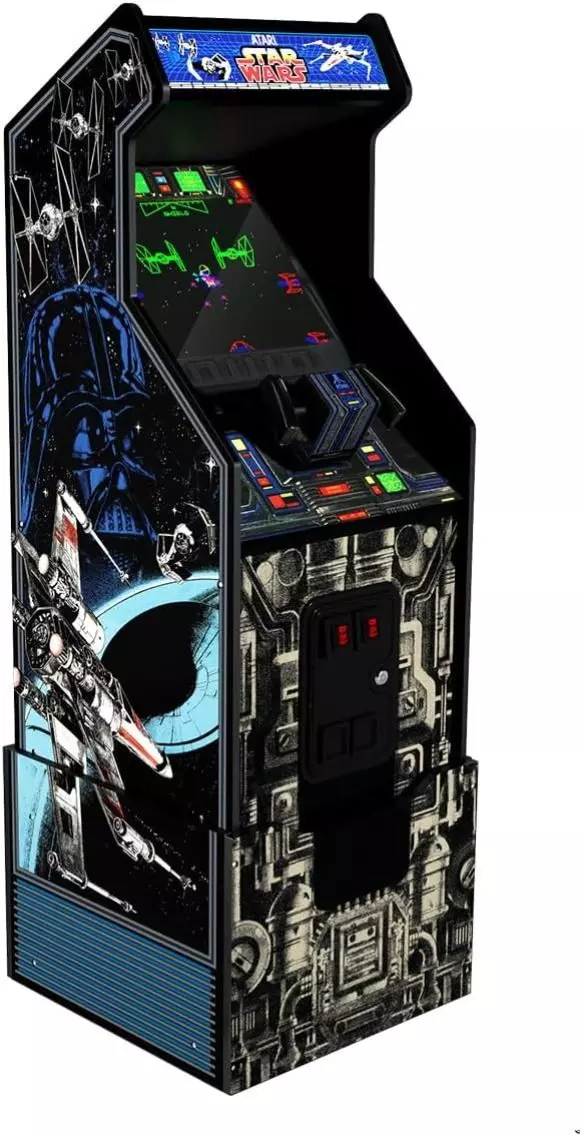
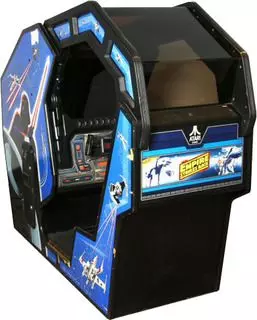
Lanzado un 5 de mayo de 1983, este es un juego vectorial para arcades que recreaba la batalla final de la Estrella de la Muerte. Fue un hito técnico y visual para su época, capturando la emoción de la película con gráficos inmersivos.
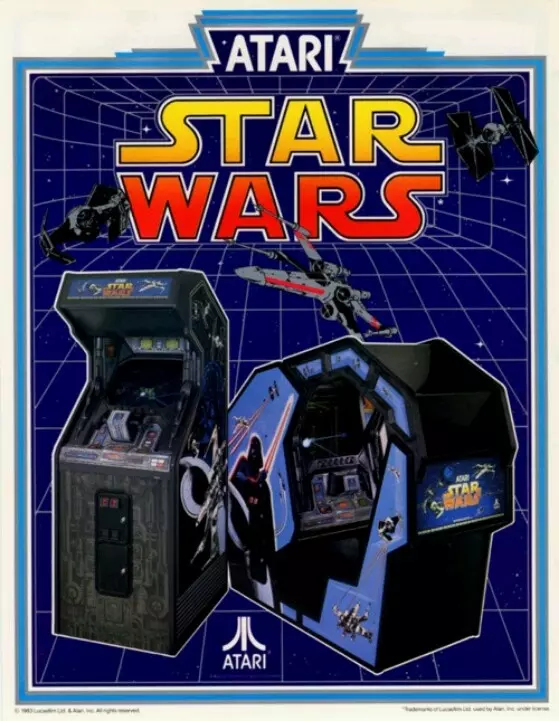
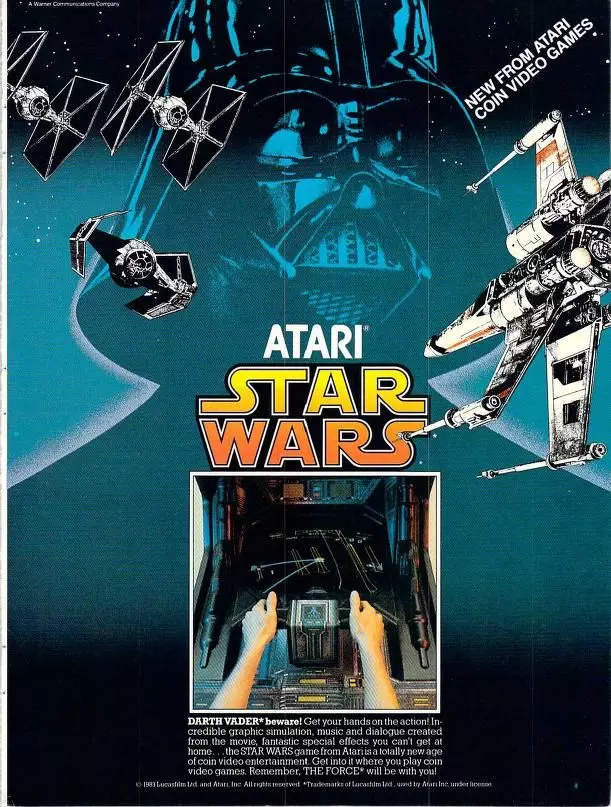
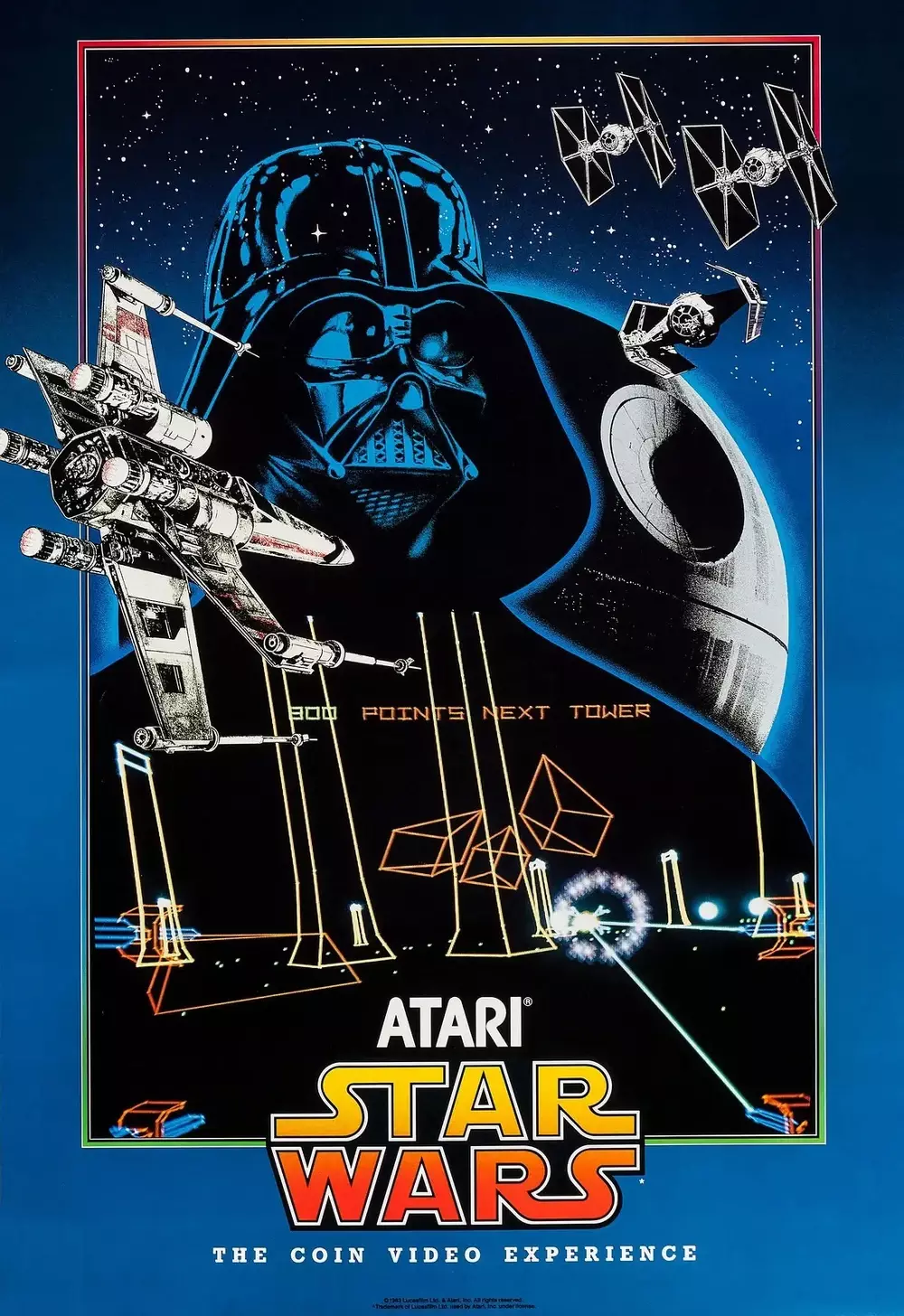
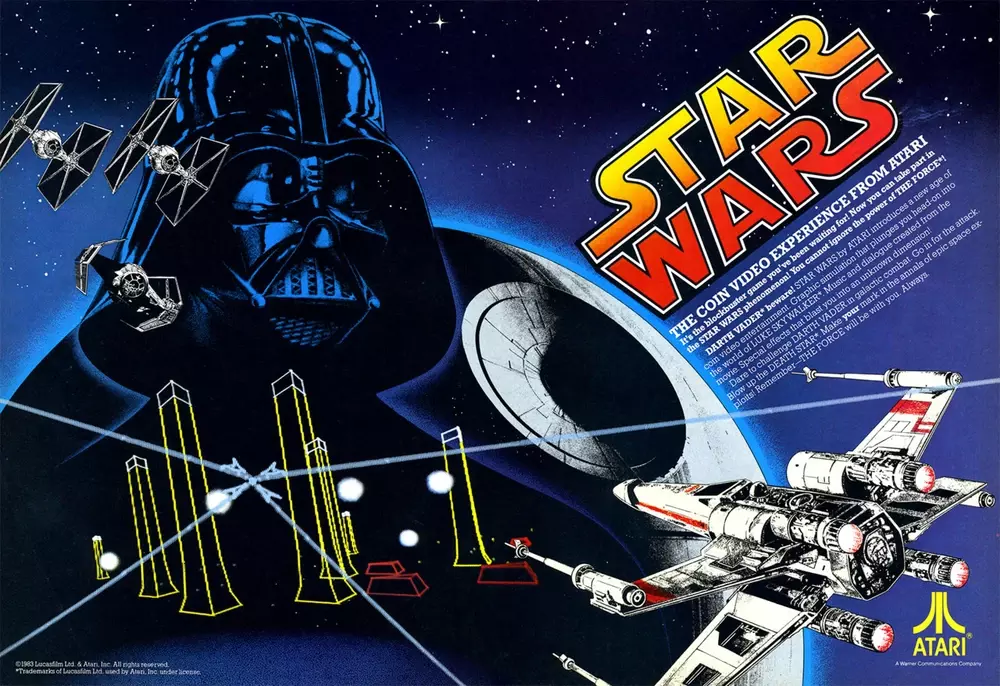
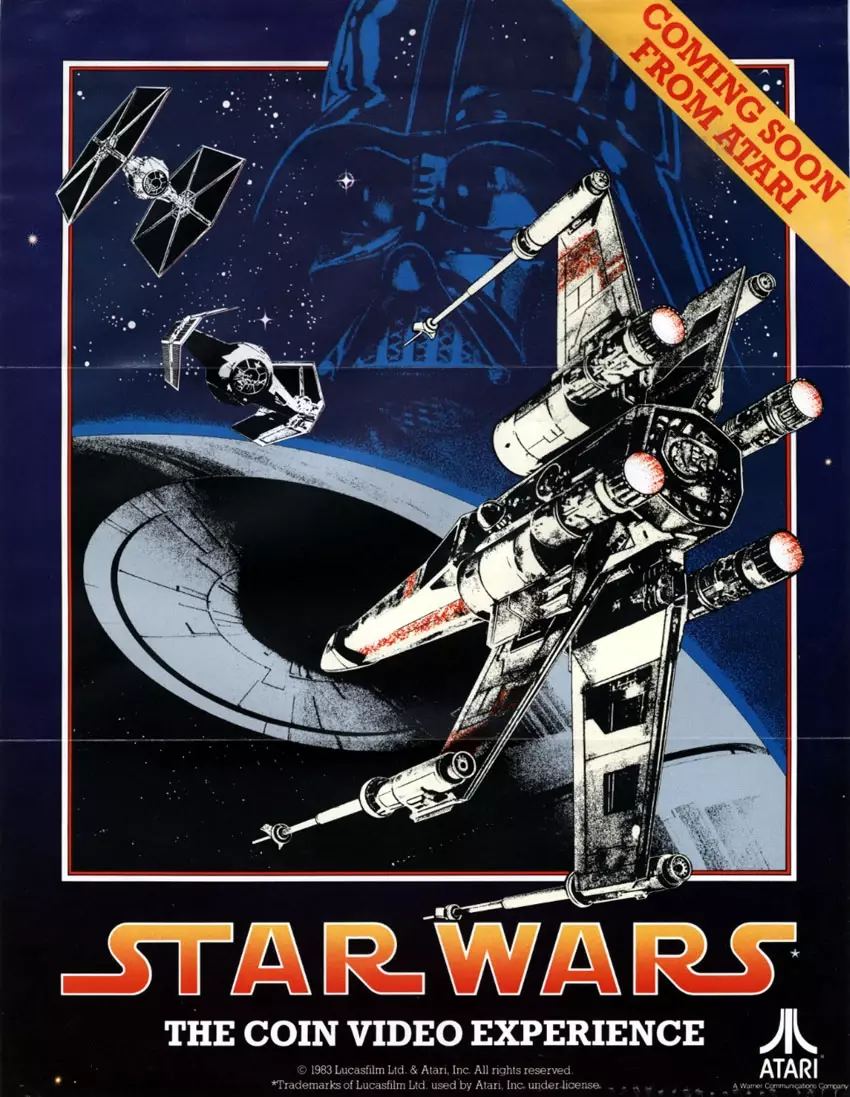
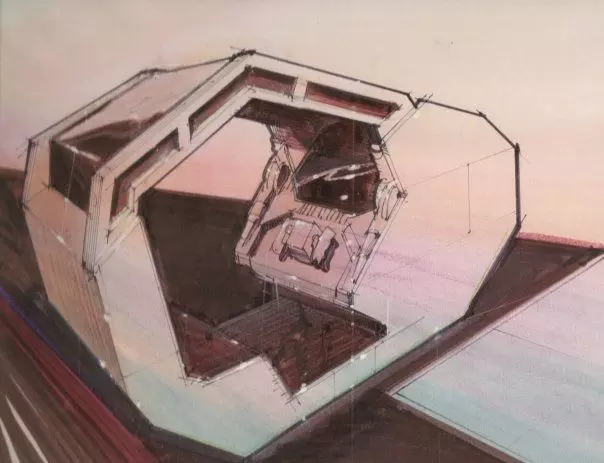
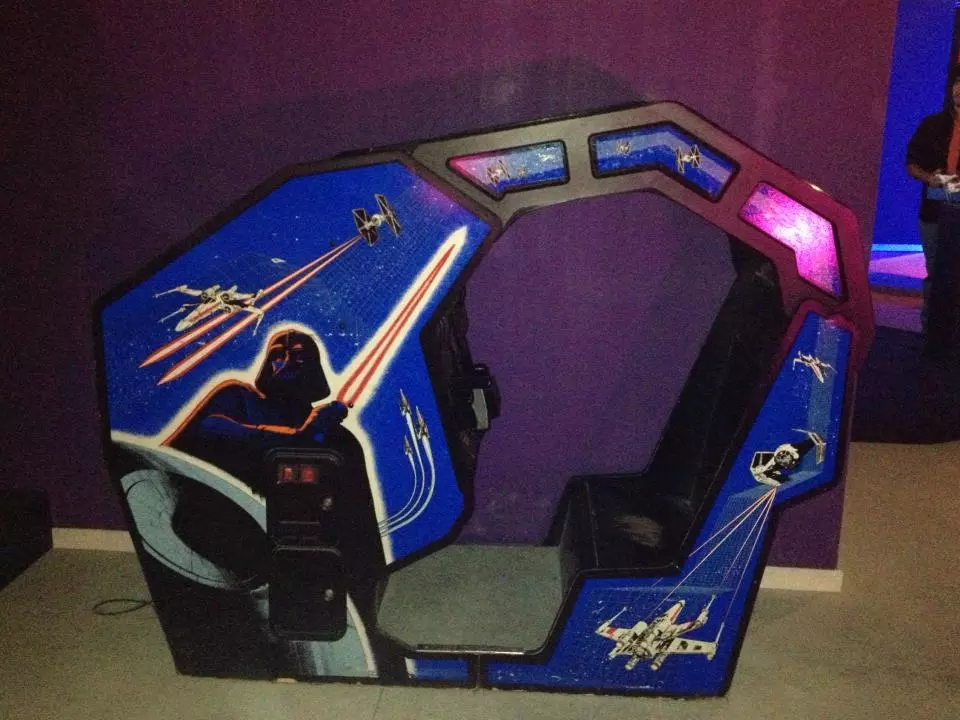
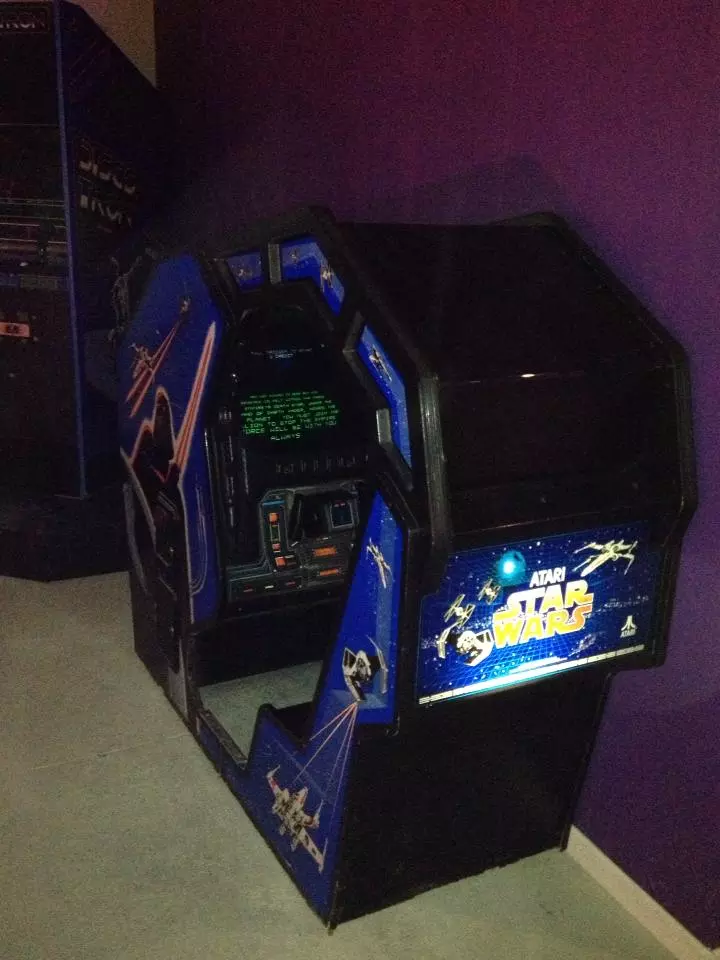
Gracias a esta cabina, además de sus gráficos y potente inmersión, este videojuego innovó con los jugadores ya que estos parecían estar piloteando un X-Wing, lo que hacía el cierre completo para esta fantástica entrega. Luego esta misma cabina apoyaba la inmersión al pilotear un Snowspeeder, el Halcón Milenario, una Speederbike y otros más.
Descarga el manual de este videojuego StarWars_1983_Atari
Return of the Jedi: The Arcade Game
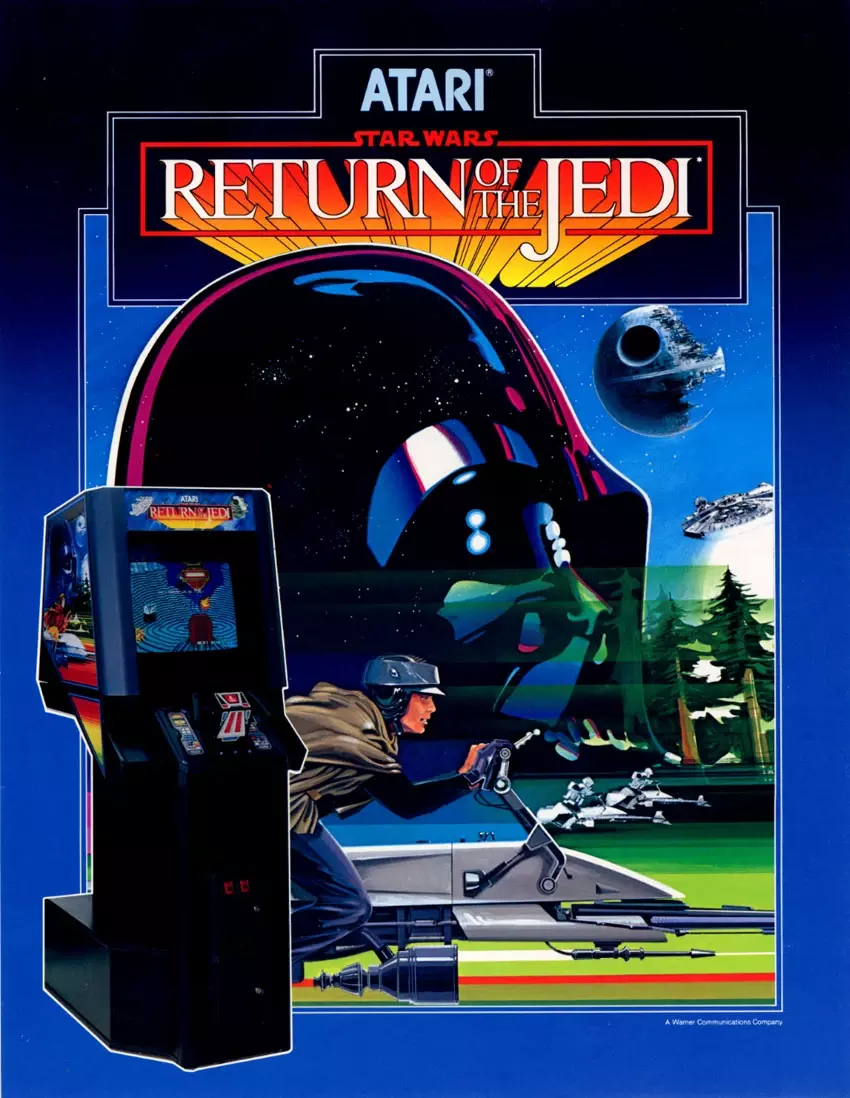
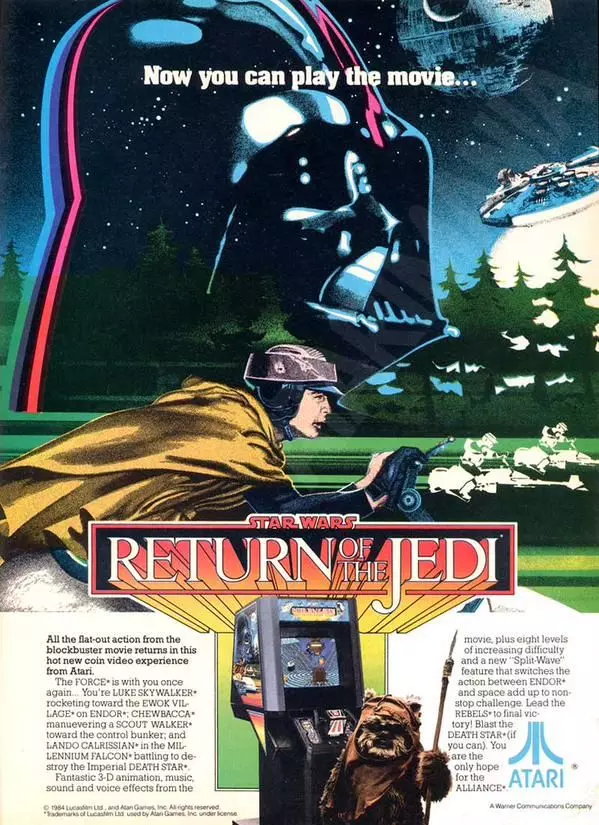
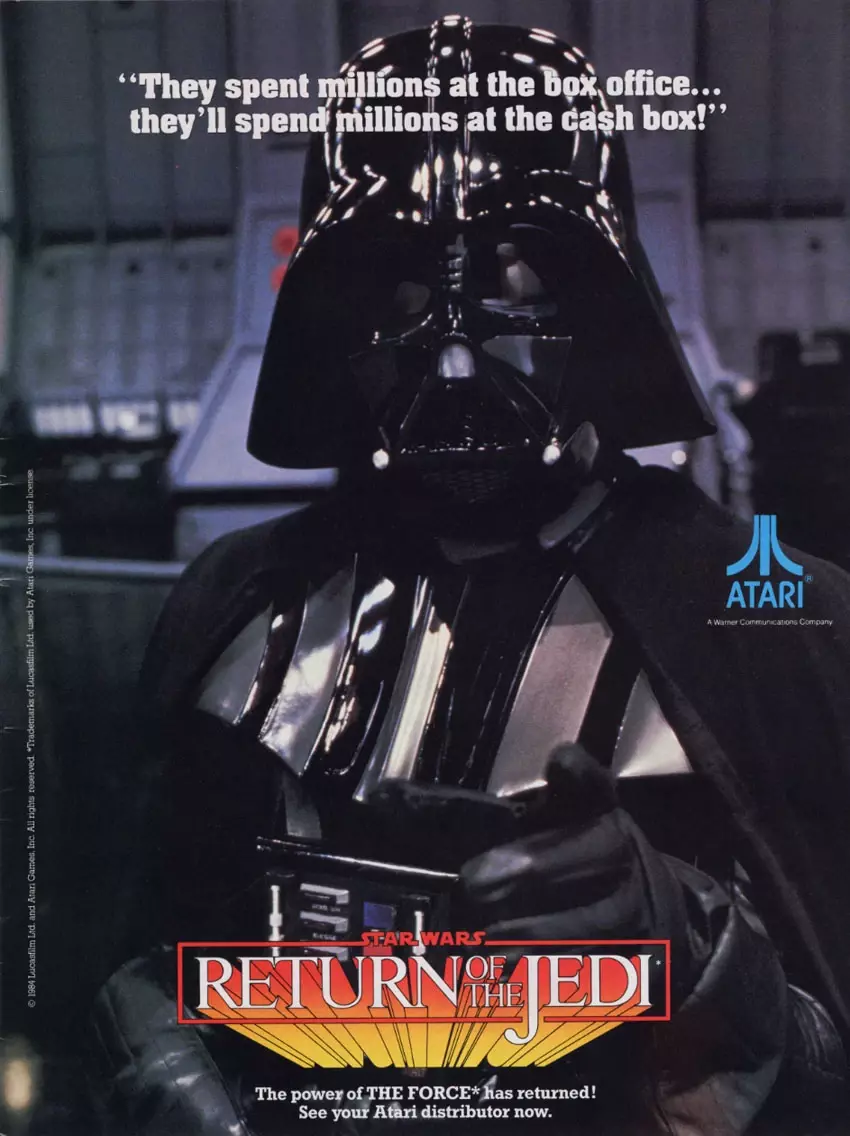
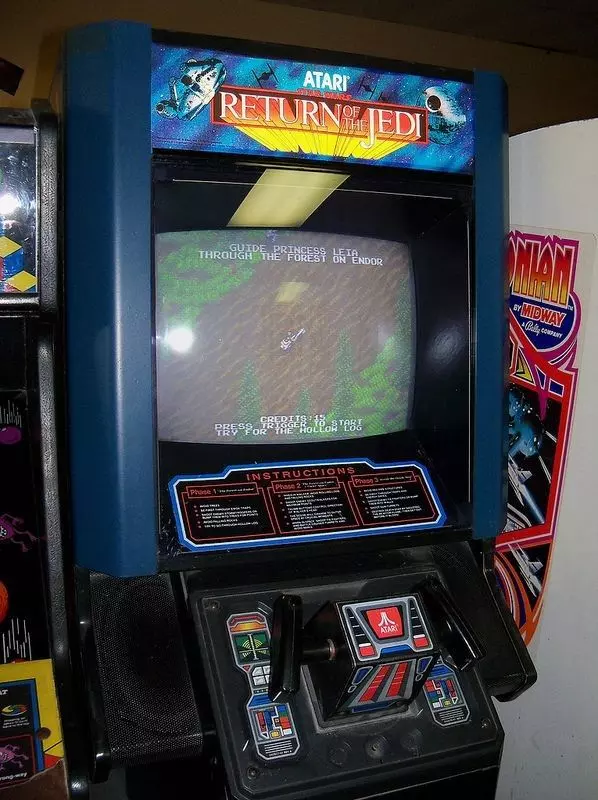
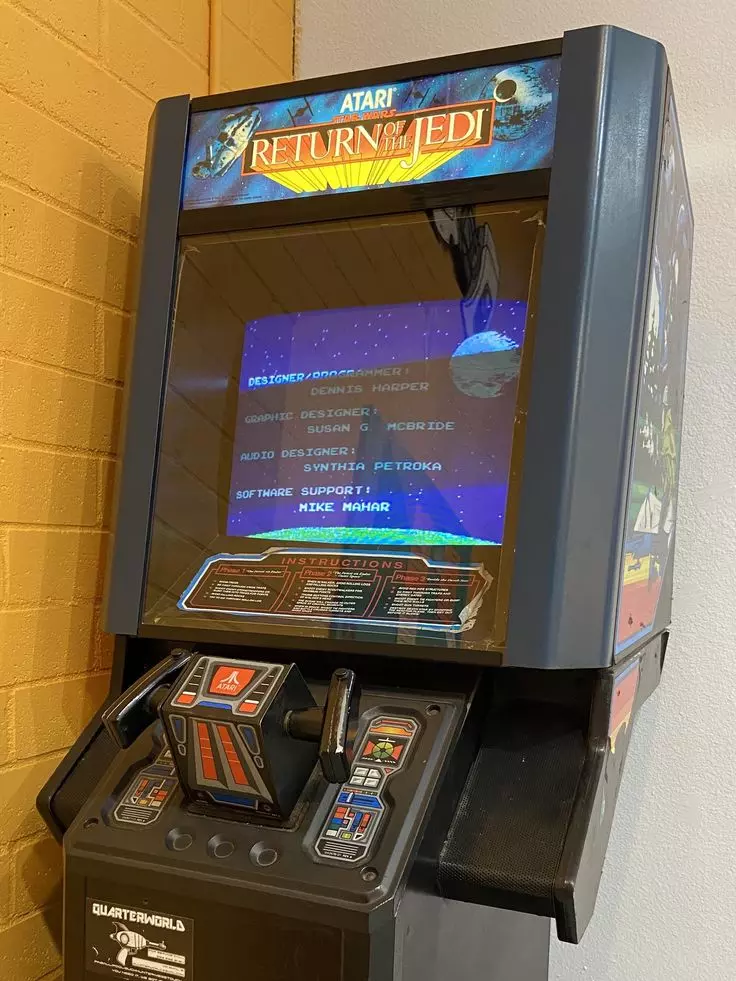
Curiosamente con un debut anterior al videojuego del Imperio, siendo estrenado en 1984 mientras que el del Imperio se estrenó un año después, traía una nueva línea gráfica y perspectiva comparada con el primero de Star Wars. Ya un juego en tercera persona, siempre del lado de los rebeldes.
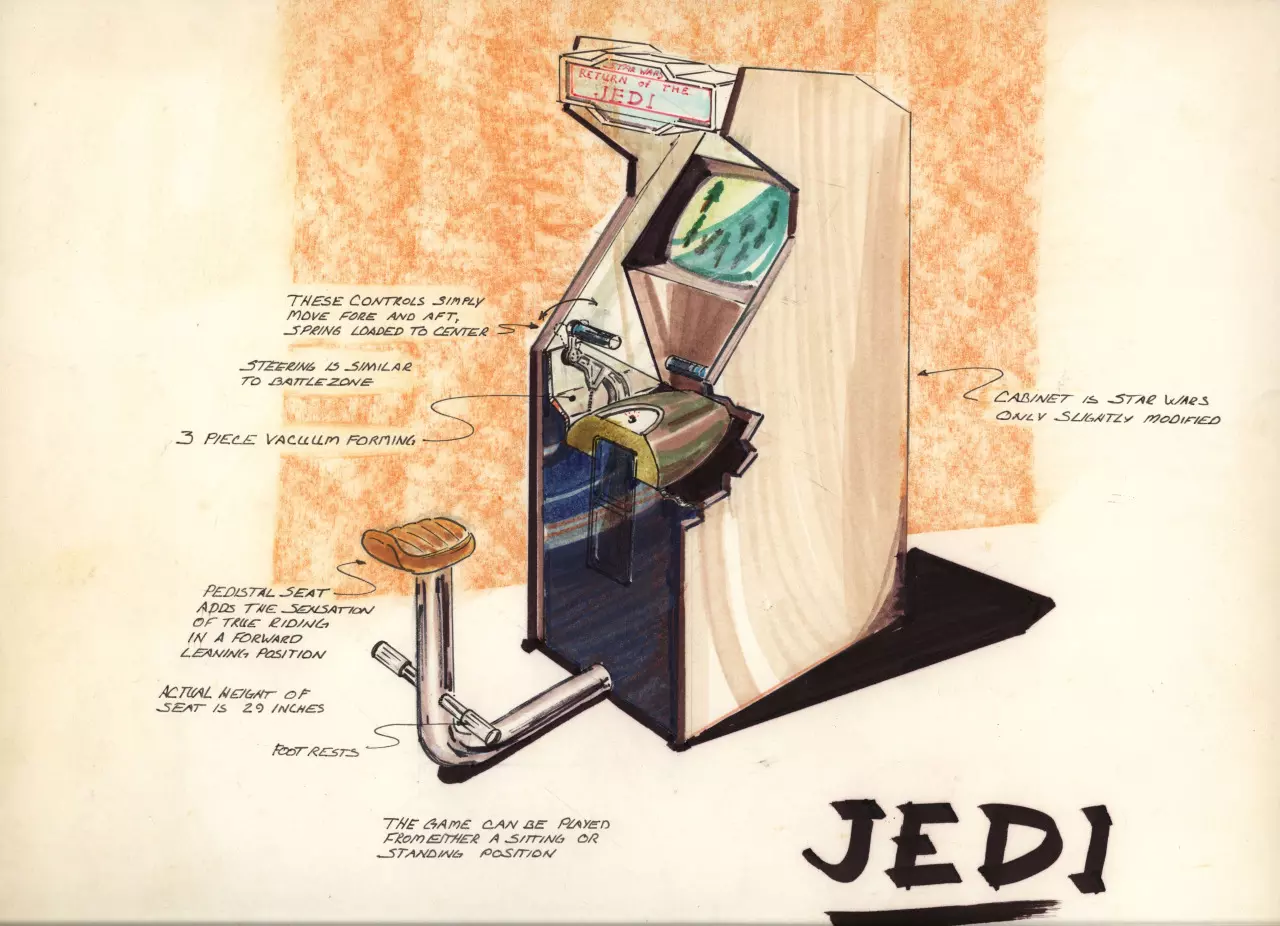
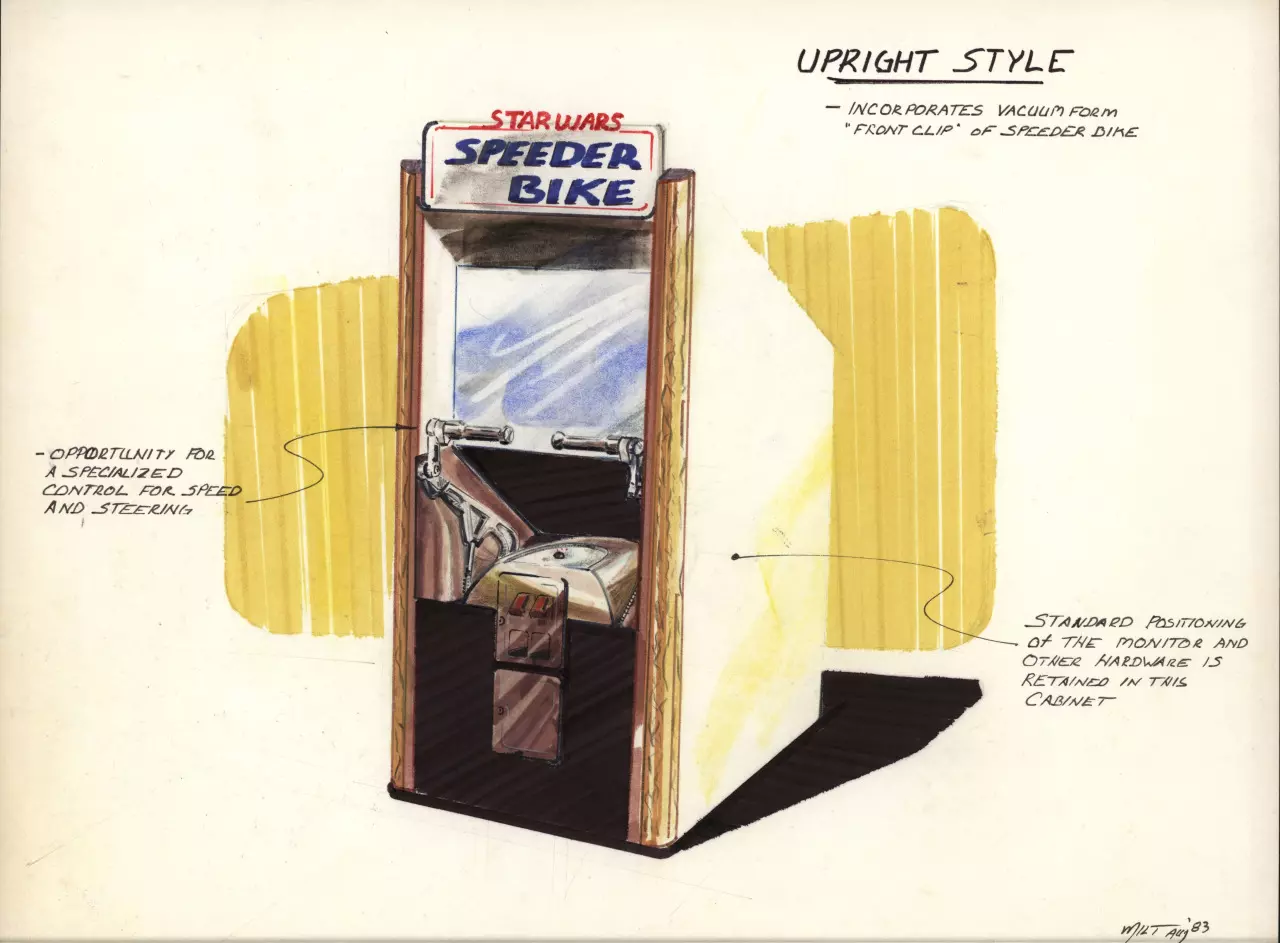
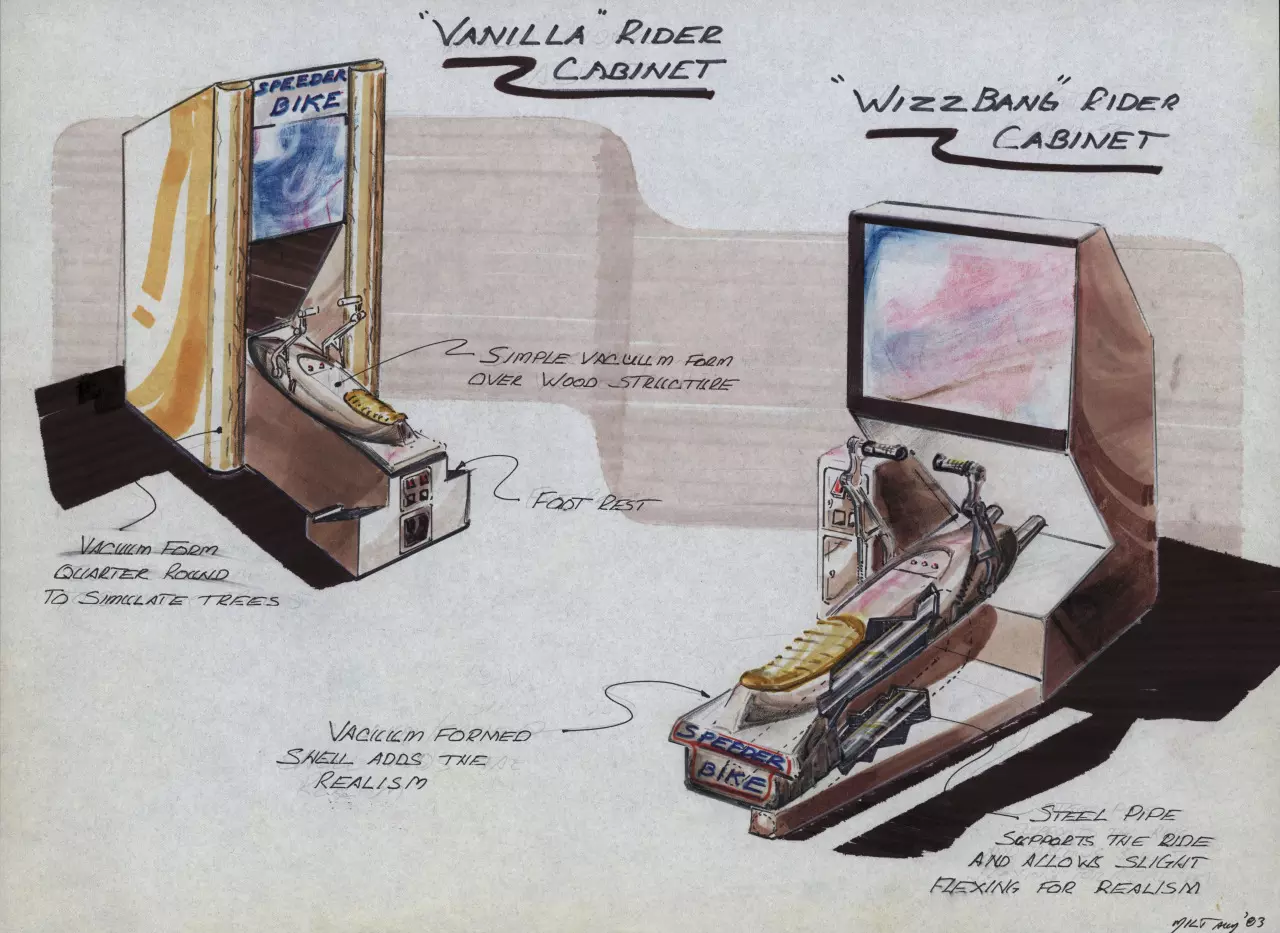
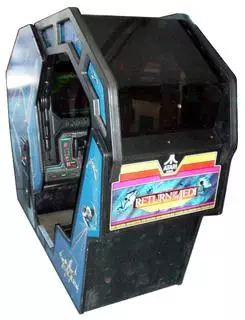
Para este videojuego Mark Jang había pensado unos diseños bastante interesantes para la cabina, simulando a una speeder bike. Realmente hubiera sido épico una entrega como esta, pero el costo se elevaba. Finalmente se llegó al mismo tipo de cabina para un jugador de pie que se tuvo para los juegos anteriores, sin considerar algo especial como la cabina que se había tenido para Star Wars y para The Empire Strikes Back.
Descarga el manual de este videojuego Return_of_the_Jedi__1984__Atari
The Empire Strikes Back: The Arcade Game
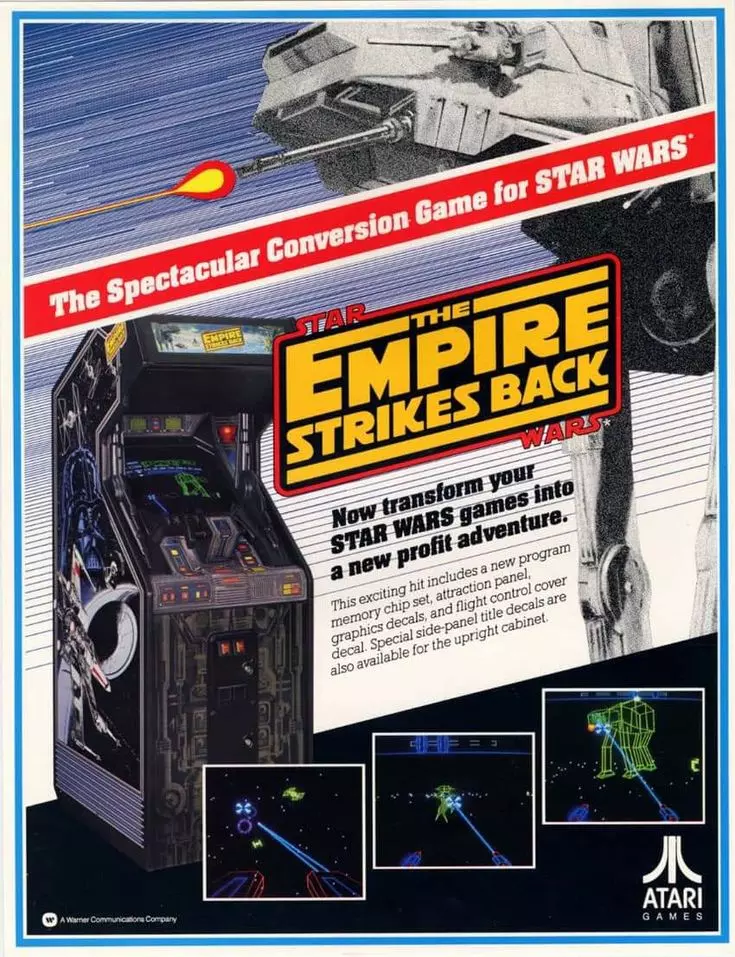
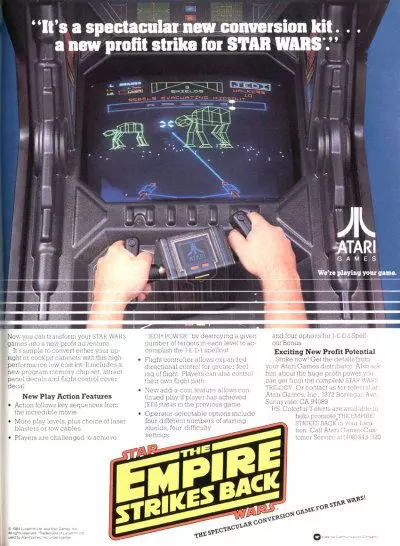
Lanzado en el año 1985 y siguiendo la misma línea de juego vectorial para arcades que recreaba la batalla final de la Estrella de la Muerte, en este se recreaba la batalla de Hoth y la persecución del Halcón Millenium. De hecho, este videojuego es un update del primer videojuego. El jugador simulaba estar a bordo de un Snowspeeder y atacar a caminantes imperiales además de sondas espías, y luego simulaba volar el Falcon.
Descarga el manual de este videojuego ESB_1985_Atari_ArcadeManual
Parker Brothers
Parker Brothers era una compañía tradicionalmente conocida por sus juegos de mesa como Monopoly y Clue. En los años 70 y 80, al igual que muchas otras empresas del entretenimiento, diversificó su negocio entrando al incipiente mercado de los videojuegos, especialmente para consolas caseras como la Atari 2600, ColecoVision y Intellivision.
Star Wars fue uno de los videojuegos arcade más populares de todos los tiempos. Gracias a sus elegantes gráficos vectoriales, síntesis de voz y una jugabilidad envolvente, se convirtió en un título imprescindible en los salones arcade durante muchos años.
Parker Brothers tenía los derechos exclusivos para desarrollar juegos de Star Wars en sistemas domésticos, Atari tuvo que licenciarles la conversión del arcade para consolas.
En 1985, Parker Brothers fue absorbida por Kenner, que ya era una subsidiaria de General Mills y más tarde de Tonka y Hasbro. Aunque esta absorción ocurrió después de su participación más activa en videojuegos, ambas marcas compartían la estrategia de licenciar franquicias populares como Star Wars para múltiples formatos: juguetes, juegos de mesa y videojuegos.
Entonces, durante la época de oro, Parker Brothers fue la encargada de desarrollar y distribuir varios de los primeros videojuegos caseros oficiales de Star Wars.
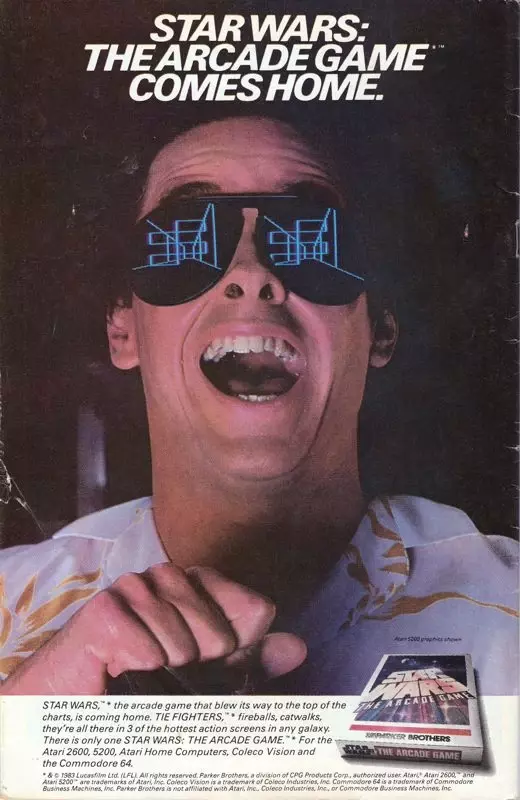
Star Wars
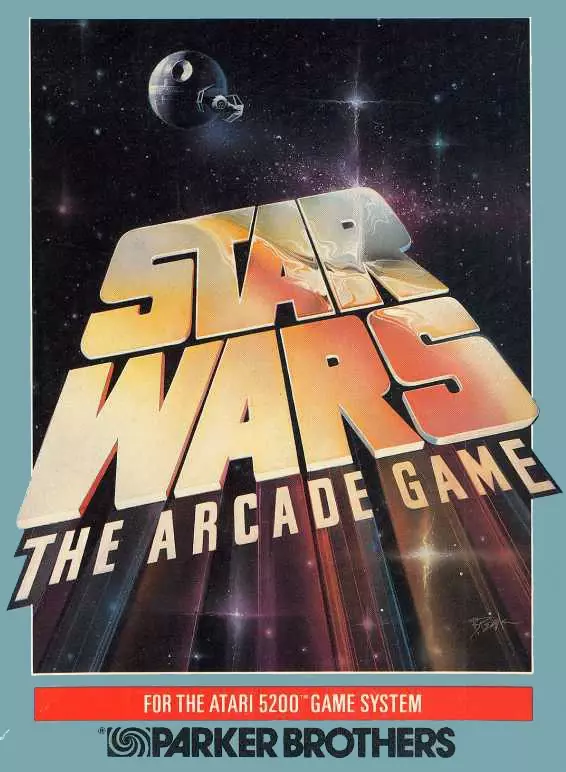
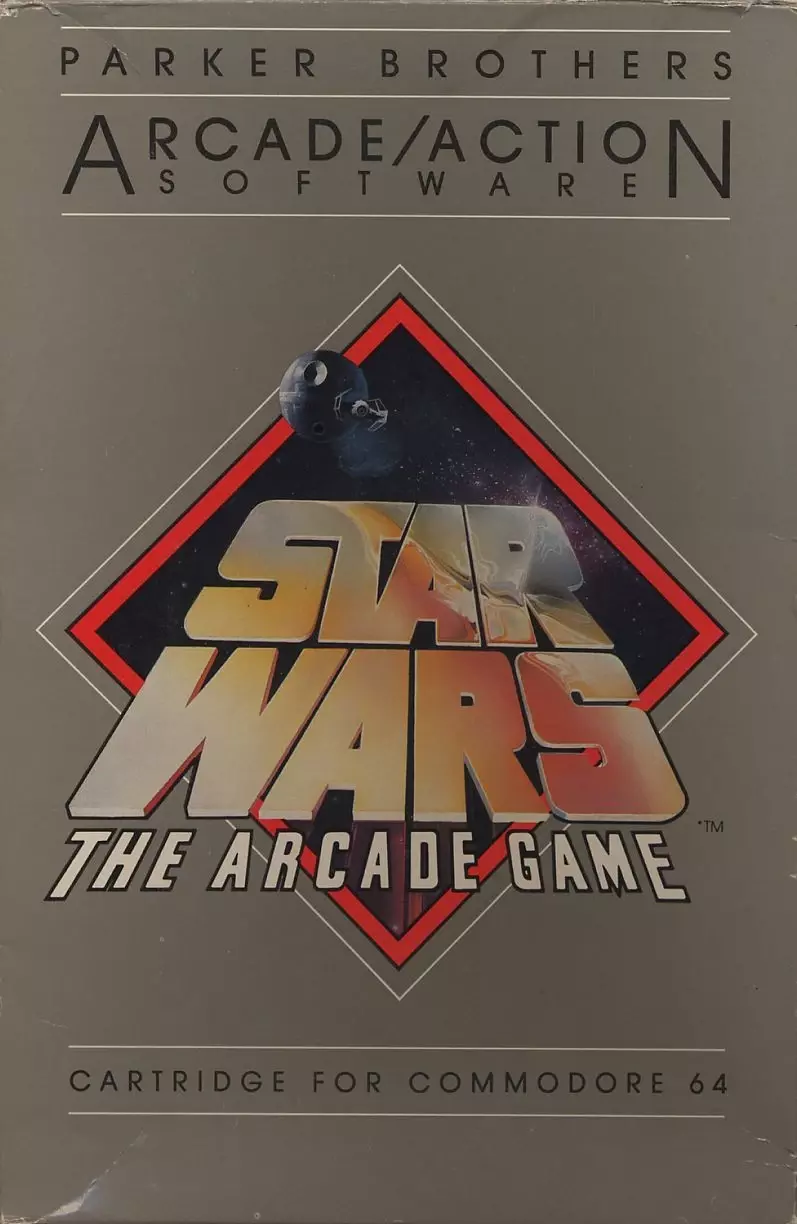
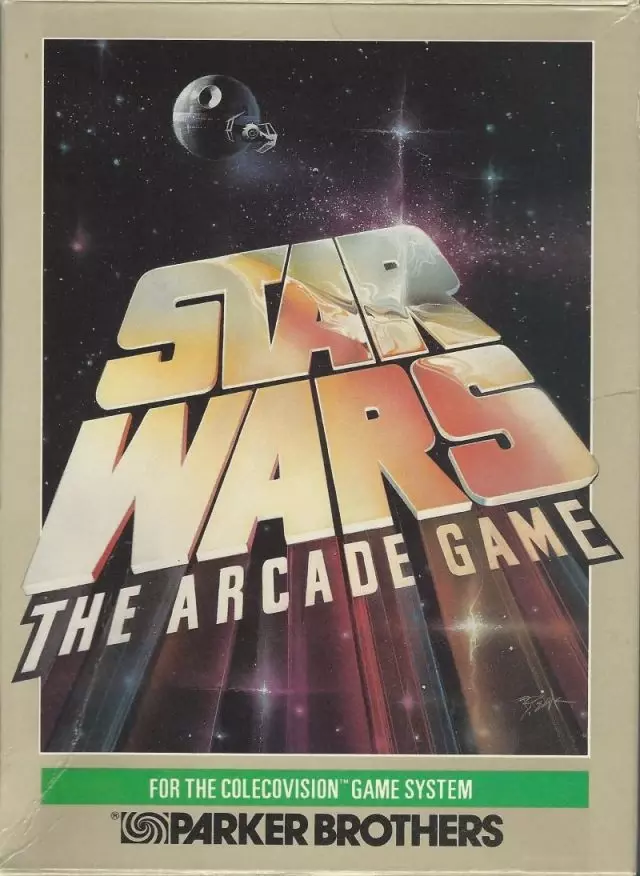
Para Atari 2600 y 5200, así como otros computadores como Commodore 64 y Colecovision, se distribuyó el mismo videojuego (adaptado) que había salido para los arcade.
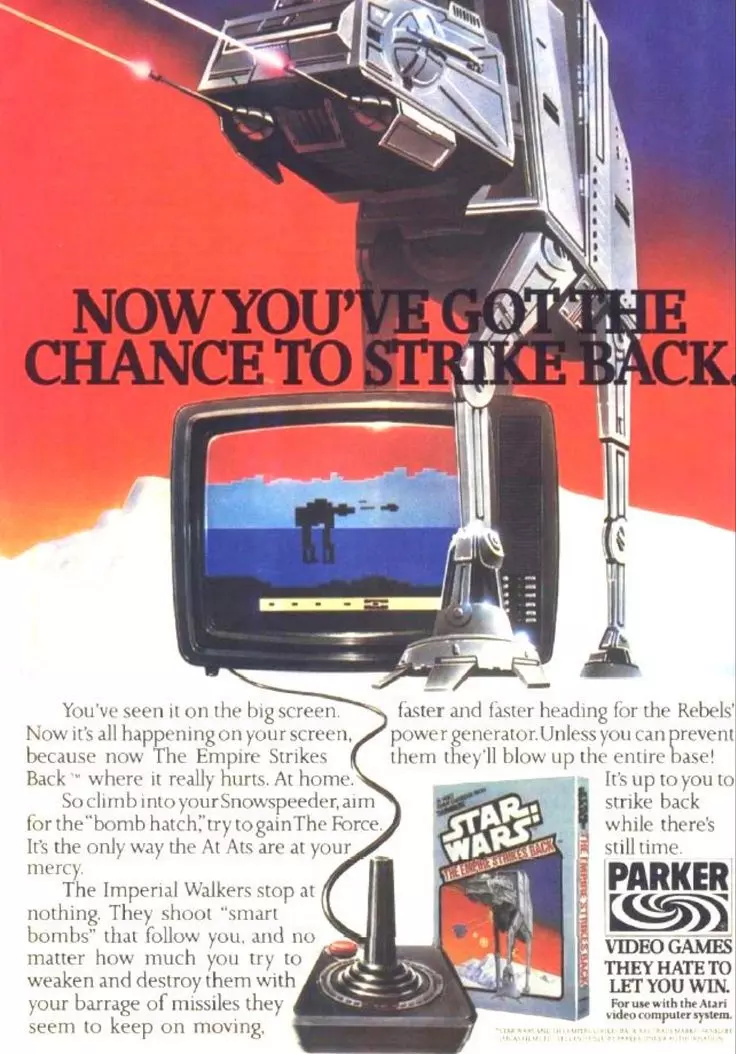
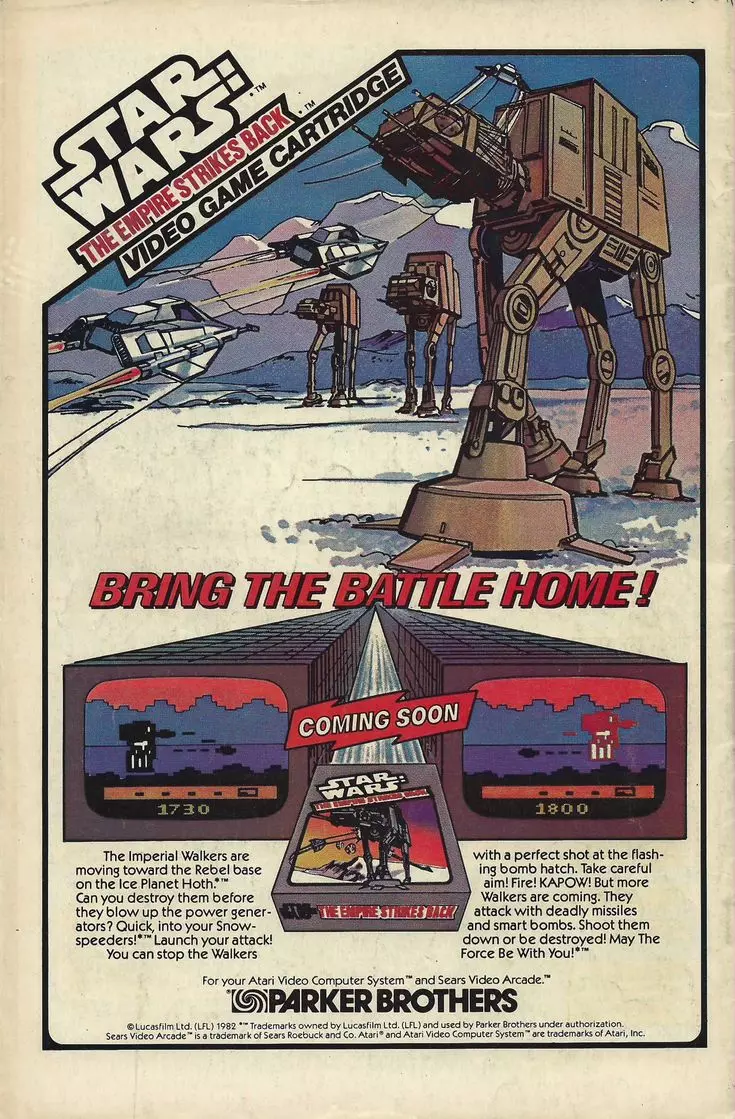
Star Wars: The Empire Strikes Back (1982)
Para Atari 2600. Uno de los primeros videojuegos licenciados oficialmente de Star Wars de la mano de Parker Brothers. El jugador controla un snowspeeder y debe destruir los AT-AT que se acercan a la base rebelde en Hoth.
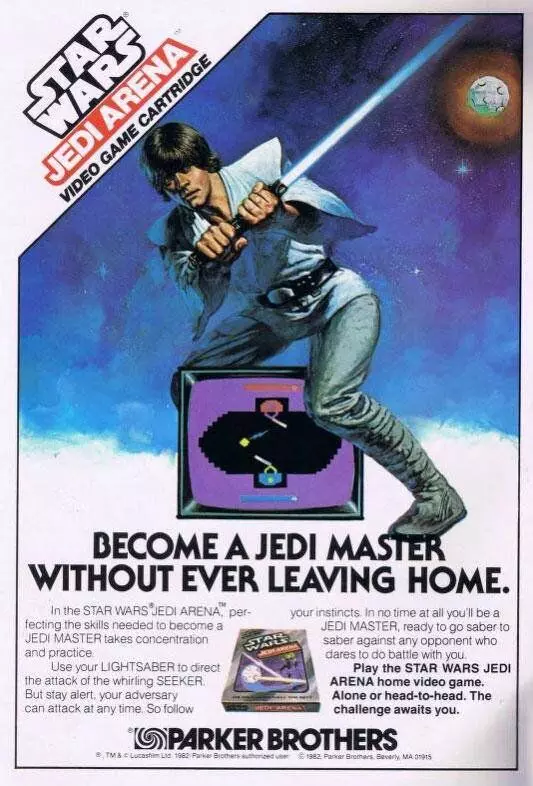
Star Wars: Jedi Arena (1983)
También para Atari 2600. Un juego de combate usando sables láser, inspirado en el entrenamiento Jedi. Aunque fue un experimento curioso, su jugabilidad fue criticada por lo abstracto de la mecánica. Fotos del videojuego gracias al sitio Atariprotos.com
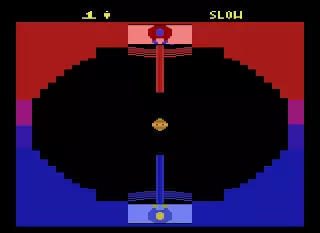
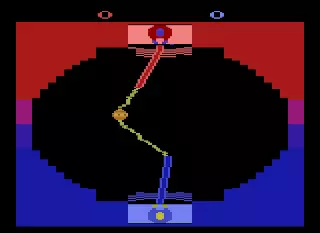
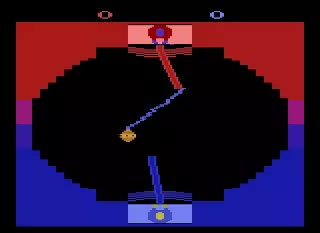
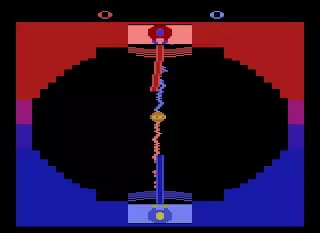
Star Wars: Death Star Battle (1983)
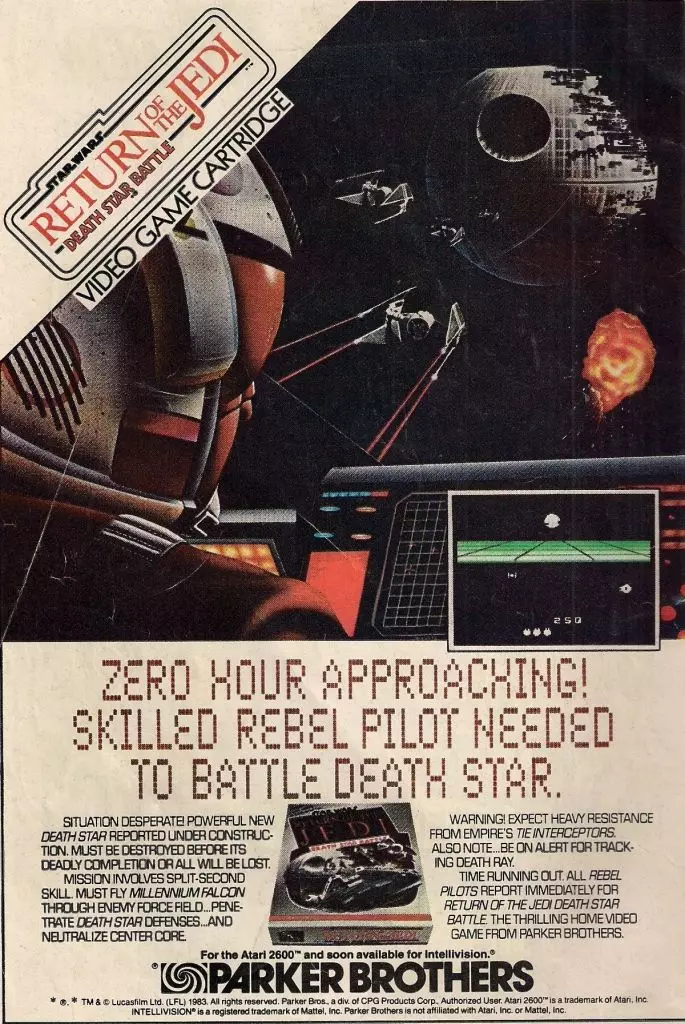
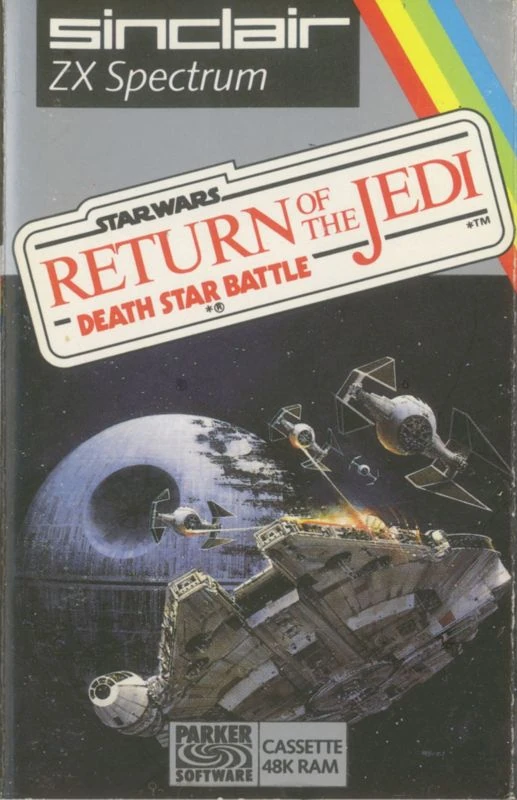
Inspirado en Return of the Jedi. También distribuido por Parker Brothers. Permitía al jugador atacar la Estrella de la Muerte en una versión pixelada del clímax de la película. Este juego además de lanzarse para Atari, se lanzó para otras plataformas, en particular el Sinclair ZX Spectrum.
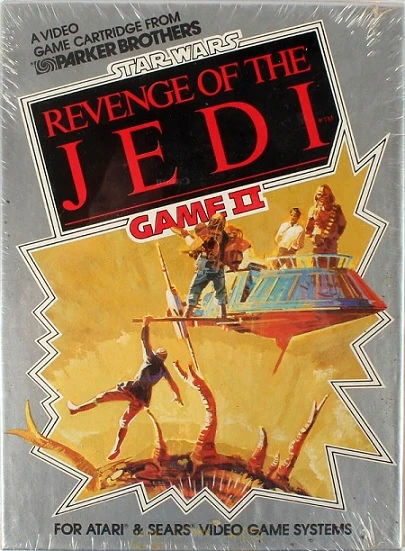
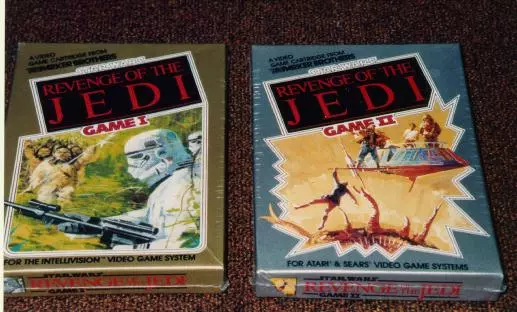
En los primeros materiales promocionales de Parker Brothers, el juego fue inicialmente titulado Star Wars: Revenge of the Jedi – Game II, y más tarde ajustado a Star Wars: Return of the Jedi – Game II, reflejando el cambio oficial de nombre de la película. Lo interesante es que el cancelado Ewok Adventure estaba concebido como el Game I dentro de esa misma línea.
Algunas versiones tempranas de estos materiales incluso mostraban ilustraciones provisorias basadas en la batalla del pozo del sarlacc, en lugar del combate espacial final de la película, lo que sugiere que el enfoque del juego aún estaba en desarrollo cuando fue archivado definitivamente.
En este clásico videojuego, tu misión es ponerte al mando del Halcón Milenario y destruir la segunda Estrella de la Muerte. Pero no será tan fácil: deberás enfrentarte a enjambres de interceptores TIE que intentarán detenerte a toda costa.
Este título, sencillo pero adictivo, puede encontrarse hoy en línea para jugar gratuitamente y sin límites, convirtiéndose en una joya accesible para los fans del universo Star Wars y los videojuegos retro.
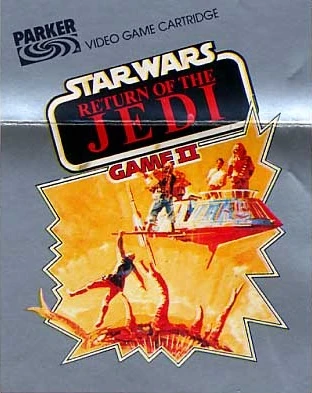
Star Wars: Ewok Adventure (1983) – Prototype
Originalmente llamado Revenge of the Jedi: Game I, incluso tuvo un prototipo de caja, pero no fue lanzado a producción. Lo interesante es que estuvo relacionado a Revenge of the Jedi y no a Return of the Jedi.
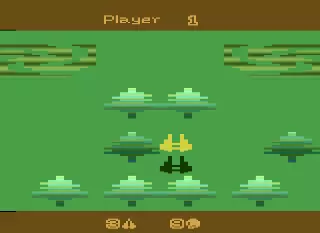
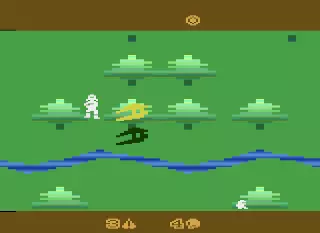
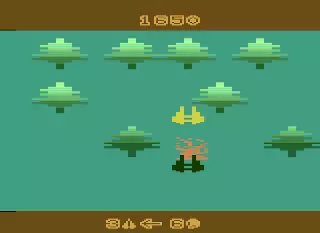
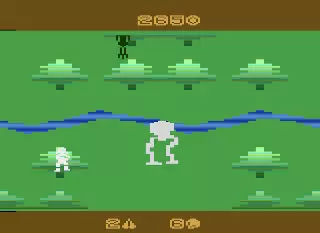
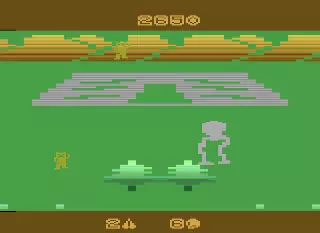
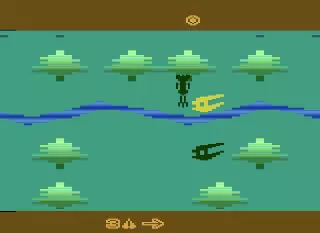
En Ewok Adventure, un prototipo no lanzado por Kenner para Atari 2600, tomabas el control de un planeador Ewok en una misión arriesgada para destruir el generador de escudos en la luna boscosa de Endor. El objetivo podía alcanzarse de dos formas: aterrizando directamente frente al búnker tras recoger explosivos, o apoderándote de un vehículo imperial, como un AT-ST o una Speeder Bike, al más puro estilo “comando Ewok”.
El juego combinaba mecánicas de vuelo (al estilo Sky Jinks) con acción terrestre (como Frontline), obligándote a esquivar obstáculos naturales —árboles, ríos y rocas— además de las fuerzas imperiales. Controlar el planeador requería precisión: podías ganar velocidad al descender, pero eso te ponía en la línea de fuego; al ascender, evitabas peligros, pero perdías impulso. Había “remolinos” en el bosque que te daban altura sin sacrificar velocidad, y también podías lanzar piedras (limitadas) desde el aire para defenderte.
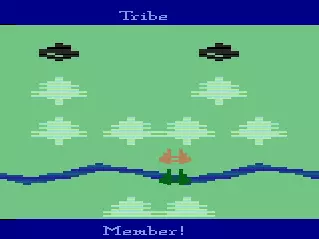
El juego se volvía más difícil con cada nivel: enemigos que disparan, planeadores dañados que solo se arreglan al encontrar a otro Ewok, y nuevos desafíos. Desde el segundo nivel, era obligatorio recoger explosivos para destruir el búnker si optabas por el planeador. Además, si lograbas completar seis niveles, el juego te llamaba “Tribe Member” como guiño a los jugadores más dedicados.
Una curiosidad oculta: si volabas hasta el límite inferior de la pantalla en ciertas zonas, podías encontrar las iniciales del programador, Larry Gelberg, ocultas entre las montañas.
Aunque nunca se lanzó oficialmente, Ewok Adventure sigue siendo una joya oculta y fascinante del universo Star Wars en los videojuegos.
El programador Larry Gelberg menciona respecto al porqué no se lanzó este videojuego al mercado:
“Tenía esta visión artística de la pureza en los controles del ala delta: inclinarse hacia adelante te hacía descender y ganar velocidad, ir hacia atrás te hacía ascender y te frenaba, y de vez en cuando podías mantener la altitud atrapando térmicas. Los tipos de marketing o no lo entendieron o simplemente no les gustó. Intentaron una y otra vez que agregara un modo en el que el planeador simplemente se moviera en la dirección en que apuntaras con el joystick. Pero yo era joven y arrogante, y me negué. Al final, cancelaron el juego. Lo siento, gente.”
Fotos y detalles gracias al sitio Atariprotos.com
Un mundo paralelo
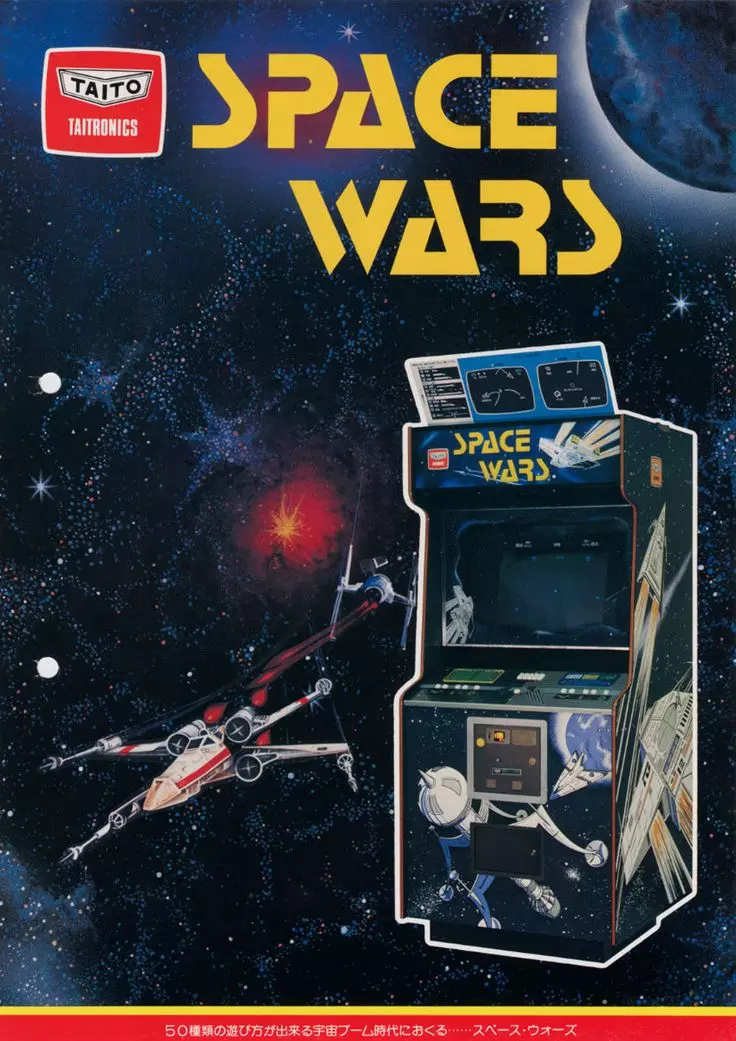
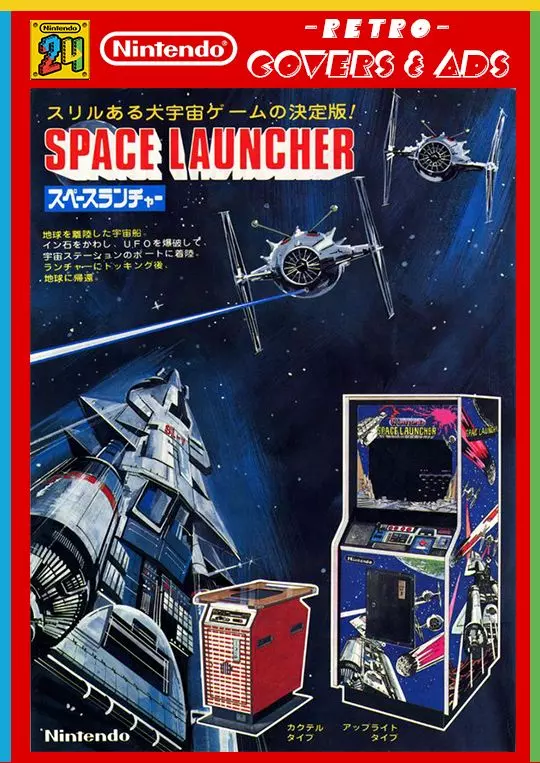
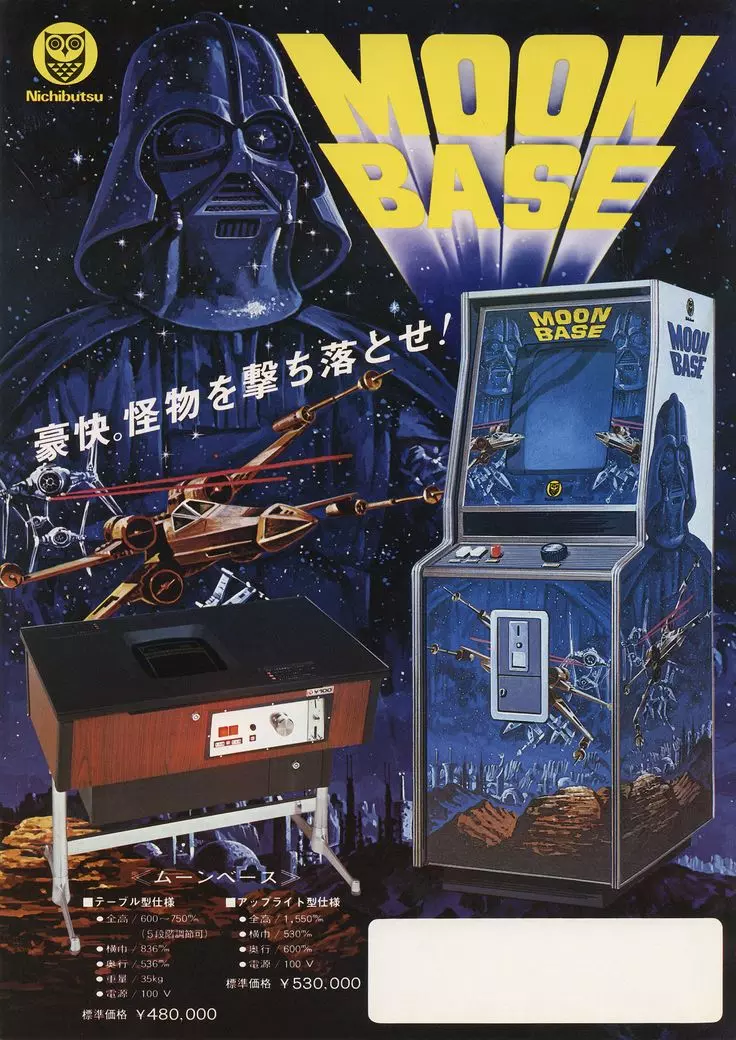
En una época en que era bastante difícil saber que se estaba haciendo con tu marca al otro lado del mundo, era sencillo que aparecieran otro videojuegos que usaran en su distribución imágenes de Star Wars de manera directa o indirecta, como es el caso del Space Launcher en que al menos algo cambian las naves. Si bien algunos de estos juegos se lanzaron también en Estados Unidos, fue en Japón donde aprovecharon de ocupar visuales que rememoraban a la saga.
Space Wars fue un videojuego desarrollado por Cinematronics en 1977, pensado exclusivamente para dos jugadores. En el juego, cada participante pilota su nave en el espacio con el objetivo de derribar a su oponente.
Space Launcher fue un videojuego con temática espacial lanzado por Nintendo en 1979. En él, el jugador controla una nave ubicada en la parte inferior de la pantalla, cuyo objetivo es disparar y destruir las naves enemigas que atacan desde lo alto.
Moon Base fue un videojuego lanzado por Nichibutsu en 1979, claramente inspirado en el exitoso Space Invaders. El juego replica la mecánica básica en la que el jugador debe defenderse de oleadas de enemigos que descienden desde la parte superior de la pantalla, disparando desde una base situada en la parte inferior.
El legado y el declive
El vínculo entre Atari y Star Wars reflejaba el potencial de los videojuegos como una extensión narrativa y comercial del cine. Sin embargo, el crecimiento acelerado de Atari también la llevó a una crisis: en 1983, la industria sufrió una caída masiva conocida como el “Crash del videojuego”, en parte debido a la saturación del mercado, la baja calidad de muchos juegos licenciados y decisiones empresariales cuestionables (como el infame E.T. the Extra-Terrestrial).
Irónicamente, aunque Star Wars representaba una apuesta segura, ni siquiera su poder fue suficiente para evitar el colapso. Atari fue dividida en varias partes en 1984, y el panorama de los videojuegos cambiaría con la llegada de Nintendo poco después.
¿Y cómo se relaciona Atari con Kenner?
Si se ve la caja del minirig del INT-4 este se promociona como un vehículo o nave que se puede transportar dentro del AT-AT, cosa que sucede dentro del videojuego. De esta forma, esta nave que no aparece en cámara se canoniza de alguna manera dentro del universo de Star Wars.
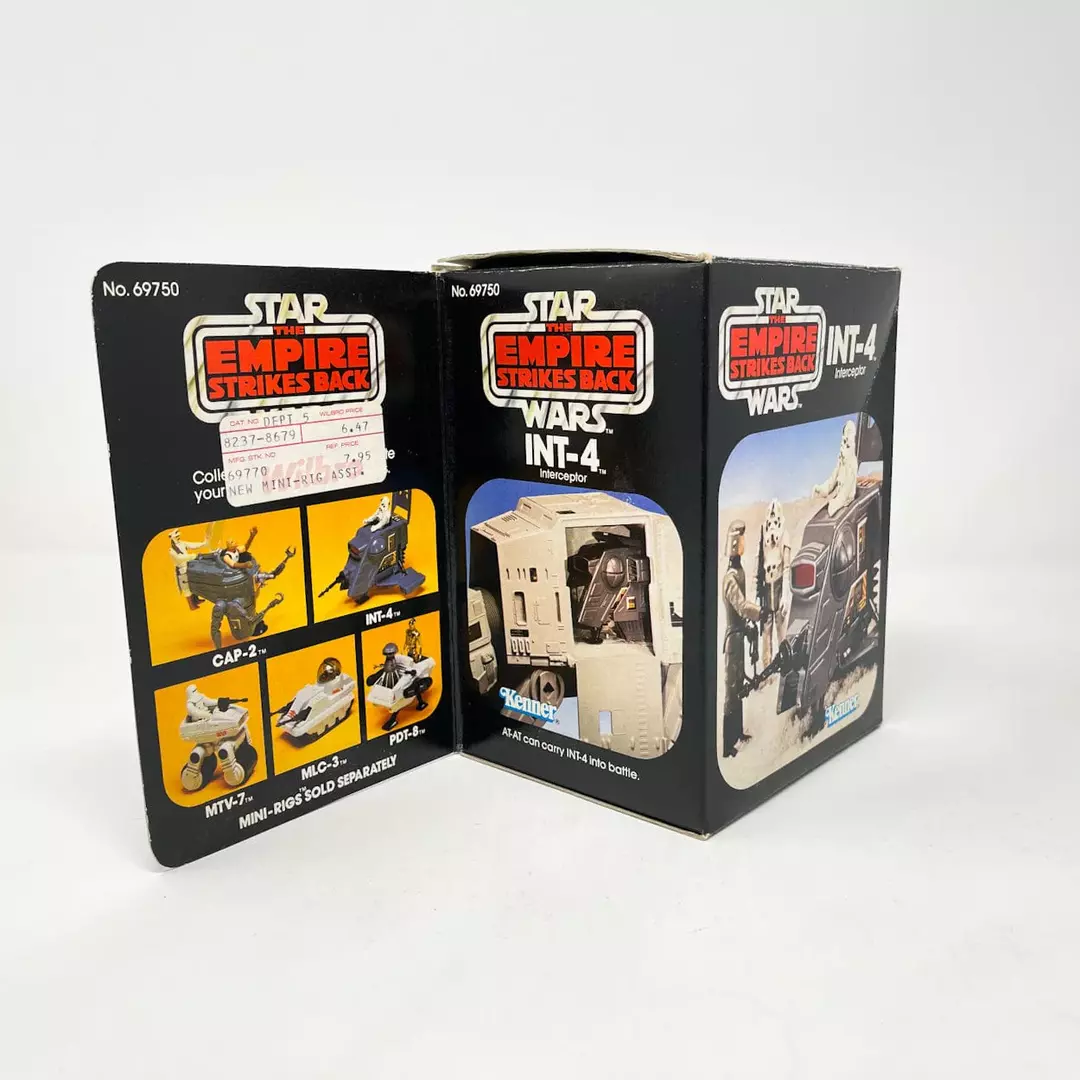
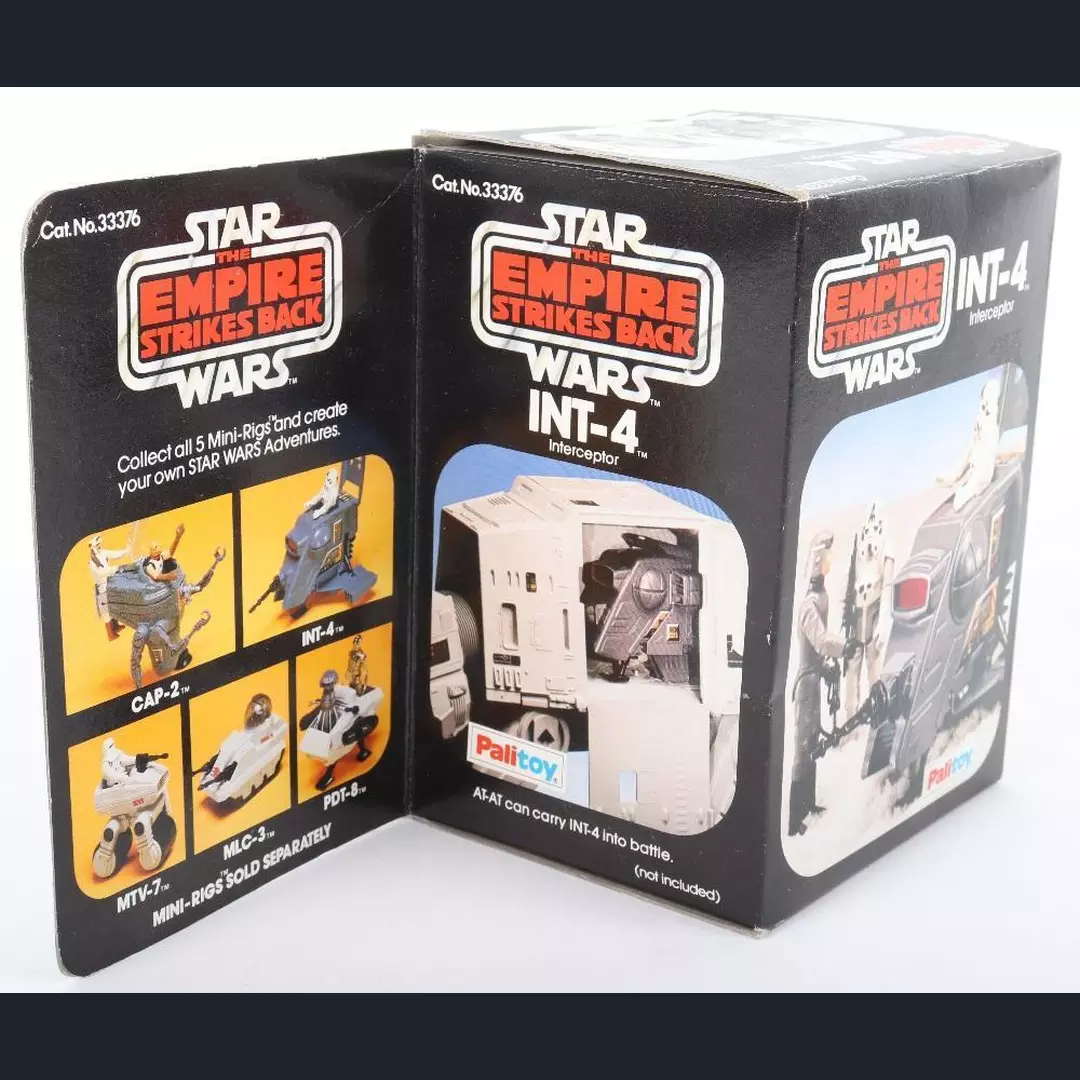
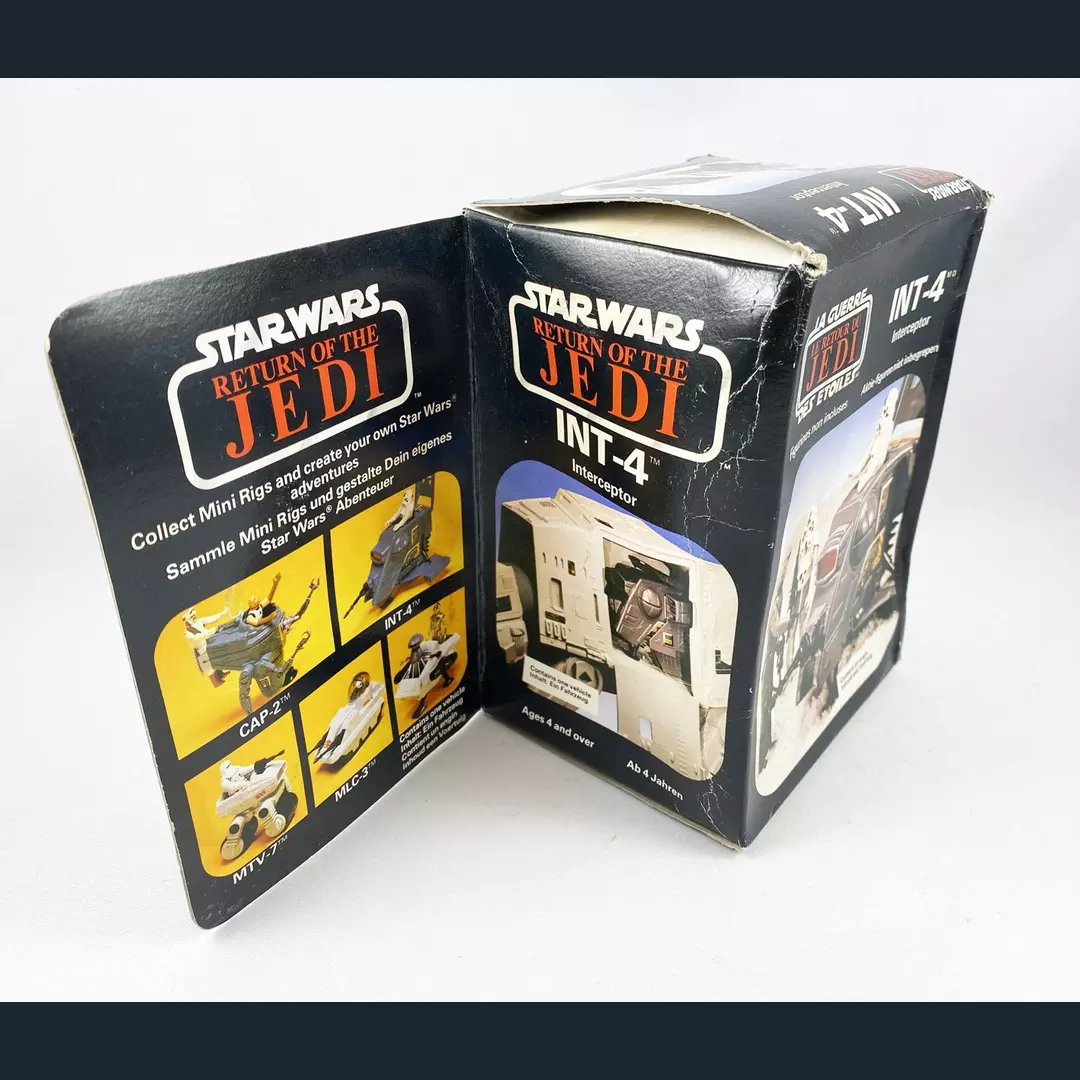
Los amigos de @thekennerrun y @the_kenner_strikes_back han notado de forma espectacular que el INT-4 aparece en el videojuego The Empire Strikes Back de Atari distribuido por Parker (partner Kenner). Además de haberlo revelado en un video en sus canales de Instagram, fue tema dentro del capítulo 26. “El momento Kenner” en el canal La Caverna del Niñosaurio.
Atari was one of the most influential companies in the early history of video games, and its rise during the 1970s and 1980s positioned it as one of the key brands in the expansion of digital pop culture. Founded in 1972 by Nolan Bushnell and Ted Dabney, Atari revolutionized electronic entertainment with games like Pong (1972), considered the first major commercial success in video game history. Over time, its influence grew exponentially, becoming synonymous with home video gaming thanks to consoles like the Atari 2600 (released in 1977) and its iconic arcade machines.
Atari and the Video Game Empire
During the 1970s, Atari established the business model of the modern arcade and later conquered the home market with its Atari 2600 console, which allowed users to play interchangeable cartridge‑based games. The success of titles like Space Invaders, Asteroids, and Pac‑Man cemented its dominance in the industry.
This strength made Atari—already acquired by Warner Communications in 1976—the visible face of a rapidly growing industry, marking the beginning of what would become known as the first “golden age of video games.” By the early 1980s, Atari was a giant generating hundreds of millions of dollars per year.
The Arcade Era
Educated at San José State University, Mike Jang joined Atari’s Industrial Design team in the mid‑1970s and remained there throughout the 1980s. This allowed him the fortune of witnessing firsthand Atari’s rise during the Golden Age of arcade video games. He was right at the heart of the company, actively contributing to the production of games in the coin‑op division.
As an industrial designer, his main role was to perfect the ergonomics of arcade cabinets. He was a strong advocate for ensuring that the physical interface players used to interact with Atari’s machines was the right one. And if that required custom controls, specific parts, or unique molds, he pushed the company to make it happen. He added his artistic touch to every design, creating some of the most iconic cabinets of the era.
It’s easy to take for granted some of the design decisions behind Atari’s cabinets, but all of them were carefully thought out by Mike and his team, thoroughly tested, and produced—mostly internally—resulting in the most varied portfolio of arcade cabinets ever produced by a single manufacturer. In this regard, Atari led the industry by a wide margin. Mike’s work was extensive, and he was responsible for many of Atari’s patents registered under his name.
The Connection with Star Wars
The explosive popularity of Star Wars since its 1977 release did not go unnoticed by Atari or by the studios seeking to expand the franchise beyond cinema. In a context where video games and science fiction were converging as cultural phenomena, Atari obtained the rights to develop several official video games for the saga. This was not only strategic but symbolic: two entertainment empires joining forces.
Star Wars: The Arcade Game
Released on May 5, 1983, this vector‑based arcade game recreated the final battle of the Death Star. It was a technical and visual milestone for its time, capturing the excitement of the film with immersive graphics.
Thanks to this cockpit — along with its graphics and powerful immersion — this video game innovated by making players feel as if they were actually piloting an X‑Wing, completing the fantasy of this fantastic release. Later, this same cockpit enhanced immersion when piloting a Snowspeeder, the Millennium Falcon, a Speeder Bike, and others.
Download the manual for this video game: StarWars_1983_Atari
Return of the Jedi: The Arcade Game
Curiously, this game debuted before the Empire arcade title, being released in 1984 while the Empire game arrived a year later. It introduced a new graphic style and perspective compared to the first Star Wars arcade game. This time it was a third‑person game, always from the Rebels’ side.
For this video game, Mark Jang had envisioned some very interesting cabinet designs, simulating a speeder bike. It truly would have been an epic release, but the cost was too high. In the end, the same type of upright single‑player cabinet used for the previous games was chosen, without considering anything special like the cockpit cabinet used for Star Wars and The Empire Strikes Back.
Download the manual for this video game: Return_of_the_Jedi__1984__Atari
The Empire Strikes Back: The Arcade Game
Released in 1985 and following the same vector‑based arcade style that recreated the final battle of the Death Star, this game instead recreated the Battle of Hoth and the Millennium Falcon chase. In fact, this video game is an update of the first arcade title. The player simulated being aboard a Snowspeeder, attacking Imperial walkers and probe droids, and later flying the Falcon.
Download the manual for this video game: ESB_1985_Atari_ArcadeManual
Parker Brothers
Parker Brothers was a company traditionally known for its board games such as Monopoly and Clue. In the 1970s and 1980s, like many other entertainment companies, it diversified its business by entering the emerging home‑video‑game market, especially for consoles such as the Atari 2600, ColecoVision, and Intellivision.
Star Wars was one of the most popular arcade video games of all time. Thanks to its elegant vector graphics, voice synthesis, and immersive gameplay, it became a must‑have title in arcades for many years.
Parker Brothers held the exclusive rights to develop Star Wars games for home systems, so Atari had to license the arcade conversion to them for consoles.
In 1985, Parker Brothers was absorbed by Kenner, which was already a subsidiary of General Mills and later of Tonka and Hasbro. Although this acquisition happened after their most active period in video games, both brands shared the strategy of licensing popular franchises like Star Wars across multiple formats: toys, board games, and video games.
Thus, during the golden era, Parker Brothers was responsible for developing and distributing several of the first official home video games based on Star Wars.
Star Wars
For the Atari 2600 and 5200, as well as computers like the Commodore 64 and ColecoVision, the same (adapted) video game that had been released for arcades was distributed.
Star Wars: The Empire Strikes Back (1982)
For the Atari 2600. One of the first officially licensed Star Wars video games developed by Parker Brothers. The player controls a snowspeeder and must destroy the AT‑ATs approaching the Rebel base on Hoth.
Star Wars: Jedi Arena (1983)
Also for the Atari 2600. A combat game using lightsabers, inspired by Jedi training. Although it was an interesting experiment, its gameplay was criticized for the abstract nature of its mechanics. Screenshots of the video game courtesy of Atariprotos.com
Star Wars: Death Star Battle (1983)
Inspired by Return of the Jedi. Also distributed by Parker Brothers. It allowed the player to attack the Death Star in a pixelated version of the film’s climactic battle. This game, in addition to being released for Atari, was also launched on other platforms, particularly the Sinclair ZX Spectrum.
In Parker Brothers’ early promotional materials, the game was initially titled Star Wars: Revenge of the Jedi – Game II, and later adjusted to Star Wars: Return of the Jedi – Game II, reflecting the official name change of the film. Interestingly, the canceled Ewok Adventure had been conceived as Game I within that same line.
Some early versions of these materials even showed provisional illustrations based on the battle at the Sarlacc pit, instead of the film’s final space combat, suggesting that the game’s focus was still in development when it was ultimately shelved.
In this classic video game, your mission is to take command of the Millennium Falcon and destroy the second Death Star. But it won’t be easy: you’ll have to face swarms of TIE Interceptors determined to stop you at all costs.
This title, simple yet addictive, can be found online today to play freely and without limits, making it an accessible gem for fans of the Star Wars universe and retro gaming.
Star Wars: Ewok Adventure (1983) – Prototype
Originally titled Revenge of the Jedi: Game I, it even had a prototype box, but was never released into production. Interestingly, it was tied to Revenge of the Jedi rather than Return of the Jedi.
In Ewok Adventure, an unreleased prototype by Kenner for the Atari 2600, you took control of an Ewok glider on a risky mission to destroy the shield generator on the forest moon of Endor. The objective could be achieved in two ways: landing directly in front of the bunker after collecting explosives, or commandeering an Imperial vehicle such as an AT‑ST or a Speeder Bike — pure “Ewok commando” style.
The game combined flight mechanics (similar to Sky Jinks) with ground action (like Frontline), forcing you to dodge natural obstacles — trees, rivers, and rocks — as well as Imperial forces. Controlling the glider required precision: descending increased speed but put you in the line of fire; ascending avoided danger but cost you momentum. There were “whirlwinds” in the forest that boosted altitude without sacrificing speed, and you could also throw stones (limited) from the air for defense.
The game became more difficult with each level: enemies firing at you, damaged gliders that could only be repaired by finding another Ewok, and new challenges. From the second level onward, collecting explosives was mandatory to destroy the bunker if you chose the glider route. And if you managed to complete six levels, the game called you “Tribe Member” as a nod to dedicated players.
A hidden curiosity: if you flew to the lower edge of the screen in certain areas, you could find the initials of the programmer, Larry Gelberg, hidden among the mountains.
Although it was never officially released, Ewok Adventure remains a fascinating hidden gem of the Star Wars video game universe.
The programmer Larry Gelberg explains why the game was never released:
“I had this artistic vision of purity in the hang‑glider controls: leaning forward made you descend and gain speed, leaning back made you ascend and slow down, and occasionally you could maintain altitude by catching thermals. The marketing guys either didn’t understand it or simply didn’t like it. They tried again and again to get me to add a mode where the glider just moved in the direction you pointed the joystick. But I was young and arrogant, and I refused. In the end, they canceled the game. Sorry, folks.”
Photos and details courtesy of Atariprotos.com
A Parallel World
In an era when it was quite difficult to know what was being done with your brand on the other side of the world, it was easy for other video games to appear using Star Wars imagery—directly or indirectly—in their distribution, as is the case with Space Launcher, where at least the ships were slightly altered. Although some of these games were also released in the United States, it was in Japan where they took full advantage of visuals reminiscent of the saga.
Space Wars was a video game developed by Cinematronics in 1977, designed exclusively for two players. In the game, each participant pilots their ship in space with the goal of shooting down their opponent.
Space Launcher was a space‑themed video game released by Nintendo in 1979. In it, the player controls a ship located at the bottom of the screen, whose objective is to shoot and destroy enemy ships attacking from above.
Moon Base was a video game released by Nichibutsu in 1979, clearly inspired by the successful Space Invaders. The game replicates the basic mechanic in which the player must defend against waves of enemies descending from the top of the screen, firing from a base located at the bottom.
The Legacy and the Decline
The link between Atari and Star Wars reflected the potential of video games as a narrative and commercial extension of cinema. However, Atari’s accelerated growth also led it into crisis: in 1983, the industry suffered a massive collapse known as the “video game crash,” partly due to market saturation, the low quality of many licensed games, and questionable business decisions (such as the infamous E.T. the Extra‑Terrestrial).
Ironically, although Star Wars represented a safe bet, not even its power was enough to prevent the collapse. Atari was split into several divisions in 1984, and the video game landscape would soon change with the arrival of Nintendo.
And How Does Atari Relate to Kenner?
If you look at the box of the INT‑4 minirig, it is promoted as a vehicle or craft that can be transported inside the AT‑AT—something that actually happens within the video game. In this way, this vehicle, which never appears on screen, becomes canonized in a sense within the Star Wars universe.
Our friends at @thekennerrun and @the_kenner_strikes_back have spectacularly noticed that the INT‑4 appears in the Atari The Empire Strikes Back video game distributed by Parker (Kenner’s partner). In addition to revealing it in a video on their Instagram channels, it was also discussed in episode 26, “El momento Kenner,” on the La Caverna del Niñosaurio channel.